

The Picture of Dorian Gray 1890
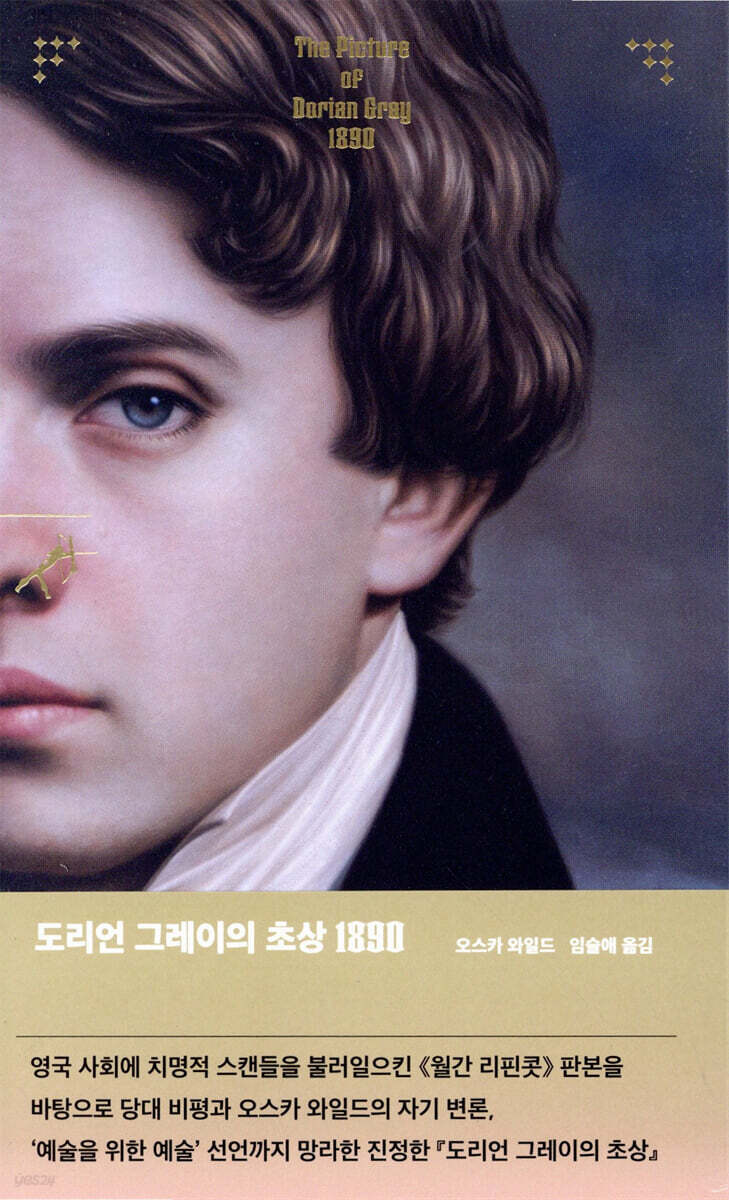 |
Description
Book Introduction
It caused a fatal scandal in British society. Based on the edition of ≪Lippincott Monthly≫, contemporary criticism and Oscar Wilde's self-defense, including his declaration of "art for art's sake." The truly comprehensive 『The Picture of Dorian Gray』 “The true mystery lies in what is seen, not in what is unseen.” From the text “A monumental work that challenges the taboos of the Victorian era. “A classic full of breathtaking imagination and wit.” The Guardian “A work that influenced not only William Yeats and James Joyce, but also the sexual liberation and Stonewall riots of the 20th century.” The New Yorker The Picture of Dorian Gray, 1890, the only full-length novel by Oscar Wilde, a representative writer of the Victorian era in England in the late 19th century and a pioneer of humanism who had a tremendous influence on culture and art in general, has been published in Minumsa's Thornsal Library. 『The Picture of Dorian Gray 1890』 is based on the 'first edition' published in Lippincott Monthly in 1890, rather than the '1891 edition' that has been used as the basis for 『The Picture of Dorian Gray』 up to now. The '1891 edition' in which Oscar Wilde finally revised and published the book has been considered the definitive edition, but thanks to recent research achievements such as queer criticism, new perspectives and interest are emerging surrounding the first manuscript of 'The Picture of Dorian Gray', that is, the 'Lippincott Monthly (1890) edition'. Of course, even the edition of Lippincott Monthly was edited by J. About 500 words were cut out by M. Stoddart under the pretext of “making it a work that even the most demanding reader can accept,” but this edition of “The Picture of Dorian Gray 1890” has restored all the previously unauthorized edits, providing an opportunity to get one step closer to Oscar Wilde’s true intention. And the portrait artist Jeong Jung-won's 'Words of Recommendation' and the work "Dorian Gray" (2022) as the cover image added to its value as a collection. It also includes contemporary criticism (the infamous Daily Chronicle review, and those of Julian Hawthorne and Walter Pater), reactions from Oscar Wilde, and even the preface to The Picture of Dorian Gray (1891), which has been called a "humanist manifesto." This is a valuable book that provides a more comprehensive overview of the monumental status of The Picture of Dorian Gray. |
- You can preview some of the book's contents.
Preview
index
Recommendation (Jeong Jung-won)
1
2
3
4
5
6
7
8
9
10
11
12
13
Daily Chronicle review
Oscar Wilde's response
The Impossible World of Fantasy (Julian Hawthorne)
On The Picture of Dorian Gray (Walter Pater)
Preface to The Picture of Dorian Gray (1891)
Translator's Note
1
2
3
4
5
6
7
8
9
10
11
12
13
Daily Chronicle review
Oscar Wilde's response
The Impossible World of Fantasy (Julian Hawthorne)
On The Picture of Dorian Gray (Walter Pater)
Preface to The Picture of Dorian Gray (1891)
Translator's Note
Publisher's Review
“The true mystery lies in what is seen, not in what is unseen.” From the text
“A monumental work that challenges the taboos of the Victorian era.
“A classic full of breathtaking imagination and wit.” The Guardian
“A work that influenced not only William Yeats and James Joyce, but also the sexual liberation and Stonewall riots of the 20th century.” The New Yorker
The Picture of Dorian Gray, 1890, the only full-length novel by Oscar Wilde, a representative writer of the Victorian era in England in the late 19th century and a pioneer of humanism who had a tremendous influence on culture and art in general, has been published in Minumsa's Thornsal Library.
『The Picture of Dorian Gray 1890』 is based on the 'first edition' published in Lippincott Monthly in 1890, rather than the '1891 edition' that has been used as the basis for 『The Picture of Dorian Gray』 up to now.
The '1891 edition' in which Oscar Wilde finally revised and published the book has been considered the definitive edition, but thanks to recent research achievements such as queer criticism, new perspectives and interest are emerging surrounding the first manuscript of 'The Picture of Dorian Gray', that is, the 'Lippincott Monthly (1890) edition'.
Of course, even the edition of Lippincott Monthly was edited by J.
About 500 words were cut out by M. Stoddart under the pretext of “making it a work that even the most demanding reader can accept,” but this edition of “The Picture of Dorian Gray 1890” has restored all the previously unauthorized edits, providing an opportunity to get one step closer to Oscar Wilde’s true intention.
And the portrait artist added value as a collection by using the work "Dorian Gray" (2022) as the cover image along with Jeong Jung-won's "Words of Recommendation."
It also includes contemporary criticism (the infamous Daily Chronicle review, and those of Julian Hawthorne and Walter Pater), reactions from Oscar Wilde, and even the preface to The Picture of Dorian Gray (1891), which has been called a "humanist manifesto."
This is a valuable book that provides a more comprehensive overview of the monumental status of The Picture of Dorian Gray.
Oscar Wilde once captivated the literary and social world with his flamboyant dressing like a 'dandy', his fluency in several foreign languages, and his unique wit and writing skills.
In particular, he was fascinated by the latest aestheticism, so-called 'humanism', including that of John Ruskin and Walter Pater, and shaped his life and work under the theme of 'art for art's sake'.
Wilde, who began to make a name for himself by publishing the poem "Ravenna" during his college years, solidified his reputation with the 1888 collection of fairy tales, "The Happy Prince," and continued to publish a number of works, including short stories, plays, and critical criticism, reigning as a darling of the contemporary art world.
In 1890, at the height of his popularity, Oscar Wilde developed a desire to synthesize (totally embody) his talents and artistic vision, and finally presented The Picture of Dorian Gray to the world.
Although published across the Atlantic in the United States, 'The Scandal of Dorian Gray' quickly spread to England, where it immediately sparked great controversy and heated debate.
Beyond criticism of the work itself, harsh criticism was directed at the subject matter, characters, and especially the 'homosexual implications' within the story.
Wilde staunchly defended his work and artistic vision in direct conflict with various critics and leading media outlets, but he was eventually forced to revise many parts of his work when he republished it as a single volume in 1891. He also wrote the preface to The Picture of Dorian Gray (1891) at this time as a sort of self-defense.
However, perhaps because he was conscious of the 'crime of gross indecency' (at the time, homosexuality was considered a crime and punishable in England), the author completely revised the manuscript and deleted a large number of 'homosexual depictions'.
When we look back at the circumstances in which parts of The Picture of Dorian Gray (1890) were quoted during the 'trial' that later led to Oscar Wilde's downfall, we can realize how fatal a love ("I poured all my extraordinary love into the picture of Dorian Gray") Basil Hallward's pure love for Dorian Gray (which was erased in the exaggeration of the original text) was.
After being sentenced to hard labor for homosexuality, Oscar Wilde, who once dominated the literary and artistic worlds, was completely forgotten.
“The Love That Cannot Be Named,” or “The Picture of Dorian Gray,” which was perhaps the author’s first confession (coming out) about his sexual identity, lost its original voice amidst numerous censorships and edits, but it still stands before us as a precious footstep on the road to liberation and freedom.
Shouldn't we now reclaim those scattered voices and unjust love?
“It is a very sad thing!” muttered Dorian Gray, his eyes still fixed on his own portrait.
“It’s so sad! I’m going to be so ugly and horrible when I get older.
But this portrait will never lose its youth.
I will not age a single day from this June… … .
How wonderful it would be if we were opposites! If I could remain forever young, but instead this portrait grew old and hideous! If only that could happen, if only that could happen, I would give anything! Yes, there is nothing I would not give! - From the text
On a bright summer day, the talented painter Basil Hallward is nearing the end of his life's work, "The Picture of Dorian Gray."
Across his canvas, Dorian Gray, the most beautiful creature on earth and the very embodiment of beauty, poses languidly.
Then, Sir Harry Wotton suddenly appears in the studio.
Sir Harry, a cynical hedonist, is immediately captivated when he sees the beautiful Dorian Gray, and begins whispering sweet words, as sweet as honey and fatal as poison, into the innocent Dorian's ear, who is unaware of his own beauty.
Only then does Dorian realize his own beauty and fleeting youth, and he falls into deep despair, and he becomes madly longing for the 'Dorian Gray' that Basil has painted in his stead, that perfect portrait, to grow old and ugly.
And yet, as if by a miracle, or rather a curse, Dorian's wish is granted! All his vices, all his cruel and merciless acts, leave no trace on Dorian, not even the dust of time, but they disgustingly stain and corrupt "The Picture of Dorian Gray."
In a fate entangled with terrible fear and sweet joy, what will Dorian Gray choose now?
“A monumental work that challenges the taboos of the Victorian era.
“A classic full of breathtaking imagination and wit.” The Guardian
“A work that influenced not only William Yeats and James Joyce, but also the sexual liberation and Stonewall riots of the 20th century.” The New Yorker
The Picture of Dorian Gray, 1890, the only full-length novel by Oscar Wilde, a representative writer of the Victorian era in England in the late 19th century and a pioneer of humanism who had a tremendous influence on culture and art in general, has been published in Minumsa's Thornsal Library.
『The Picture of Dorian Gray 1890』 is based on the 'first edition' published in Lippincott Monthly in 1890, rather than the '1891 edition' that has been used as the basis for 『The Picture of Dorian Gray』 up to now.
The '1891 edition' in which Oscar Wilde finally revised and published the book has been considered the definitive edition, but thanks to recent research achievements such as queer criticism, new perspectives and interest are emerging surrounding the first manuscript of 'The Picture of Dorian Gray', that is, the 'Lippincott Monthly (1890) edition'.
Of course, even the edition of Lippincott Monthly was edited by J.
About 500 words were cut out by M. Stoddart under the pretext of “making it a work that even the most demanding reader can accept,” but this edition of “The Picture of Dorian Gray 1890” has restored all the previously unauthorized edits, providing an opportunity to get one step closer to Oscar Wilde’s true intention.
And the portrait artist added value as a collection by using the work "Dorian Gray" (2022) as the cover image along with Jeong Jung-won's "Words of Recommendation."
It also includes contemporary criticism (the infamous Daily Chronicle review, and those of Julian Hawthorne and Walter Pater), reactions from Oscar Wilde, and even the preface to The Picture of Dorian Gray (1891), which has been called a "humanist manifesto."
This is a valuable book that provides a more comprehensive overview of the monumental status of The Picture of Dorian Gray.
Oscar Wilde once captivated the literary and social world with his flamboyant dressing like a 'dandy', his fluency in several foreign languages, and his unique wit and writing skills.
In particular, he was fascinated by the latest aestheticism, so-called 'humanism', including that of John Ruskin and Walter Pater, and shaped his life and work under the theme of 'art for art's sake'.
Wilde, who began to make a name for himself by publishing the poem "Ravenna" during his college years, solidified his reputation with the 1888 collection of fairy tales, "The Happy Prince," and continued to publish a number of works, including short stories, plays, and critical criticism, reigning as a darling of the contemporary art world.
In 1890, at the height of his popularity, Oscar Wilde developed a desire to synthesize (totally embody) his talents and artistic vision, and finally presented The Picture of Dorian Gray to the world.
Although published across the Atlantic in the United States, 'The Scandal of Dorian Gray' quickly spread to England, where it immediately sparked great controversy and heated debate.
Beyond criticism of the work itself, harsh criticism was directed at the subject matter, characters, and especially the 'homosexual implications' within the story.
Wilde staunchly defended his work and artistic vision in direct conflict with various critics and leading media outlets, but he was eventually forced to revise many parts of his work when he republished it as a single volume in 1891. He also wrote the preface to The Picture of Dorian Gray (1891) at this time as a sort of self-defense.
However, perhaps because he was conscious of the 'crime of gross indecency' (at the time, homosexuality was considered a crime and punishable in England), the author completely revised the manuscript and deleted a large number of 'homosexual depictions'.
When we look back at the circumstances in which parts of The Picture of Dorian Gray (1890) were quoted during the 'trial' that later led to Oscar Wilde's downfall, we can realize how fatal a love ("I poured all my extraordinary love into the picture of Dorian Gray") Basil Hallward's pure love for Dorian Gray (which was erased in the exaggeration of the original text) was.
After being sentenced to hard labor for homosexuality, Oscar Wilde, who once dominated the literary and artistic worlds, was completely forgotten.
“The Love That Cannot Be Named,” or “The Picture of Dorian Gray,” which was perhaps the author’s first confession (coming out) about his sexual identity, lost its original voice amidst numerous censorships and edits, but it still stands before us as a precious footstep on the road to liberation and freedom.
Shouldn't we now reclaim those scattered voices and unjust love?
“It is a very sad thing!” muttered Dorian Gray, his eyes still fixed on his own portrait.
“It’s so sad! I’m going to be so ugly and horrible when I get older.
But this portrait will never lose its youth.
I will not age a single day from this June… … .
How wonderful it would be if we were opposites! If I could remain forever young, but instead this portrait grew old and hideous! If only that could happen, if only that could happen, I would give anything! Yes, there is nothing I would not give! - From the text
On a bright summer day, the talented painter Basil Hallward is nearing the end of his life's work, "The Picture of Dorian Gray."
Across his canvas, Dorian Gray, the most beautiful creature on earth and the very embodiment of beauty, poses languidly.
Then, Sir Harry Wotton suddenly appears in the studio.
Sir Harry, a cynical hedonist, is immediately captivated when he sees the beautiful Dorian Gray, and begins whispering sweet words, as sweet as honey and fatal as poison, into the innocent Dorian's ear, who is unaware of his own beauty.
Only then does Dorian realize his own beauty and fleeting youth, and he falls into deep despair, and he becomes madly longing for the 'Dorian Gray' that Basil has painted in his stead, that perfect portrait, to grow old and ugly.
And yet, as if by a miracle, or rather a curse, Dorian's wish is granted! All his vices, all his cruel and merciless acts, leave no trace on Dorian, not even the dust of time, but they disgustingly stain and corrupt "The Picture of Dorian Gray."
In a fate entangled with terrible fear and sweet joy, what will Dorian Gray choose now?
GOODS SPECIFICS
- Publication date: April 29, 2022
- Page count, weight, size: 276 pages | 226g | 113*188*13mm
- ISBN13: 9788937429859
- ISBN10: 8937429853
You may also like
카테고리
korean


korean

![GQ KOREA Mark (Monthly): December [2025]](http://librairie.coreenne.fr/cdn/shop/files/8ef265dbbfbf186523ed75ba7319009d.jpg?v=1765340328&width=3840)


