

black flower
 |
Description
Book Introduction
Kim Young-ha's 'Black Flower',
Discover the definitive edition of a breathtaking epic!
The author himself stated, "If you had to read only one of my novels, it would be 'Black Flower'," and his masterpiece, 'Black Flower', has been republished in a revised edition.
From the time of its first publication, this novel brought a refreshing shock to both the literary world and the outside world, as evidenced by the evaluation that it "registered the genre of historical novels, which had lost its momentum, as a new realm of aesthetic possibility (Seo Young-chae)", and has also received steady support and love from readers, going through over 50 reprints to date.
At the time of winning the Dong-in Literary Award, it was praised as “a work that powerfully depicts the life management of the most powerless people in the weakest country” and “the best masterpiece produced by Korean literature this year,” and was selected as “Book of the Year” by various media outlets.
In the revised edition, the sentences were carefully polished and several key scenes were revised, “transforming it into a novel with a resolution quite different from the previous edition” (from ‘On the Publication of the Revised Edition’).
Additionally, commentary and critiques by Nam Jin-woo and Seo Young-chae are included at the end of the book to enable a richer and deeper understanding of 『Black Flower』.
Discover the definitive edition of a breathtaking epic!
The author himself stated, "If you had to read only one of my novels, it would be 'Black Flower'," and his masterpiece, 'Black Flower', has been republished in a revised edition.
From the time of its first publication, this novel brought a refreshing shock to both the literary world and the outside world, as evidenced by the evaluation that it "registered the genre of historical novels, which had lost its momentum, as a new realm of aesthetic possibility (Seo Young-chae)", and has also received steady support and love from readers, going through over 50 reprints to date.
At the time of winning the Dong-in Literary Award, it was praised as “a work that powerfully depicts the life management of the most powerless people in the weakest country” and “the best masterpiece produced by Korean literature this year,” and was selected as “Book of the Year” by various media outlets.
In the revised edition, the sentences were carefully polished and several key scenes were revised, “transforming it into a novel with a resolution quite different from the previous edition” (from ‘On the Publication of the Revised Edition’).
Additionally, commentary and critiques by Nam Jin-woo and Seo Young-chae are included at the end of the book to enable a richer and deeper understanding of 『Black Flower』.
- You can preview some of the book's contents.
Preview
index
Part 1
Part 2
Part 3
Epilogue
Commentary | Nam Jin-woo (poet and literary critic)
A long journey towards nothingness
Work Review | Seo Young-chae (Literary Critic)
Running irony
In the revised edition
Books that helped me
Part 2
Part 3
Epilogue
Commentary | Nam Jin-woo (poet and literary critic)
A long journey towards nothingness
Work Review | Seo Young-chae (Literary Critic)
Running irony
In the revised edition
Books that helped me
Into the book
As Lee Jeong buried his head in the swamp teeming with water weeds, so many things came rushing in at once.
It was a landscape of Jemulpo that I thought I had forgotten long ago.
Nothing was lost.
A flute-playing eunuch, a runaway bride, a shaman with a long nose, a fallen royal girl, a starving soldier, and even a revolutionary barber—all of them, with bright faces, gathered in front of a Japanese-style building on Jemulpo Hill, waiting for Lee Jeong.
--- p.11
They came from very far away.
Coarse sand rustled in my mouth.
A dry wind blew through the open-air tent.
In the country I left, war was still going on.
--- p.12
If someone gives you something to eat, count to a hundred and then eat.
And if anyone wants to buy what you have, tell them twice the price you have in mind.
Then no one will despise you.
The boy tried to do so, but it was not very successful.
There was no one to give them food, and no one to buy what they had.
The missionary opened his eyes wide.
Aren't you hungry? The boy's mouth twitched.
Eighty-two, eighty-three, eighty-four.
It was too much to ask for anymore.
The boy picked up a fragrant raisin muffin and began stuffing it into his mouth.
--- p.16
Every time a huge wave pushed against the side of the ship, the Koreans housed in the cargo holds below the waterline forgot their manners, etiquette, the Three Bonds of Relationships, and the Five Relationships and became entangled with one another.
Men and women, noblemen and commoners, were pushed into a corner and continued to create embarrassing scenes by rubbing their bodies against each other.
When the chamber pot overturned or broke, the vomit and sewage inside spilled onto the floor.
Swearing, lamenting, accusations, and fistfights were the order of the day, and the foul smells never went away.
--- p.45
It would have been even more so because there were no mountains anywhere.
The sunset in Yucatan was slow and steady, and then it disappeared in an instant.
The desolation of this plain felt even more intense to the Koreans who had never seen the horizon in their lives.
Only then did people realize that they were born between mountains, grew up looking at mountains, and went to bed watching the sun set over the mountain ridges.
The endless plains, with no Arirang Pass to cross, were a truly unfamiliar landscape, and people tossed and turned not because of the hard ground, but because of the vastness and emptiness of the horizon.
--- p.103
"Why?" Kim Yi-jeong asked, but Jang Yoon retorted, as if asking why such an obvious question.
So, are we supposed to be ruled by them? Lee Jeong-eun argued without giving in.
"Why do you think one must rule over another?" Park Gwang-su, who had been silent, spoke weakly.
Why? Because they're afraid we'll disappear.
We are a minority and the Mayans are countless.
I'm afraid that if I mix with them, I'll all disappear without a trace.
But we're all going to die anyway.
--- p.341
The dead cannot choose statelessness.
We all die as citizens of some country.
So we need our own country.
Even if we cannot die as citizens of the country we created, at least we can avoid dying as Japanese or Chinese.
Lee Jeong's logic was difficult.
It was not logic but passion that convinced them.
And that passion was strange.
It wasn't about what it wanted to be, it was about what it didn't want to be.
It was a landscape of Jemulpo that I thought I had forgotten long ago.
Nothing was lost.
A flute-playing eunuch, a runaway bride, a shaman with a long nose, a fallen royal girl, a starving soldier, and even a revolutionary barber—all of them, with bright faces, gathered in front of a Japanese-style building on Jemulpo Hill, waiting for Lee Jeong.
--- p.11
They came from very far away.
Coarse sand rustled in my mouth.
A dry wind blew through the open-air tent.
In the country I left, war was still going on.
--- p.12
If someone gives you something to eat, count to a hundred and then eat.
And if anyone wants to buy what you have, tell them twice the price you have in mind.
Then no one will despise you.
The boy tried to do so, but it was not very successful.
There was no one to give them food, and no one to buy what they had.
The missionary opened his eyes wide.
Aren't you hungry? The boy's mouth twitched.
Eighty-two, eighty-three, eighty-four.
It was too much to ask for anymore.
The boy picked up a fragrant raisin muffin and began stuffing it into his mouth.
--- p.16
Every time a huge wave pushed against the side of the ship, the Koreans housed in the cargo holds below the waterline forgot their manners, etiquette, the Three Bonds of Relationships, and the Five Relationships and became entangled with one another.
Men and women, noblemen and commoners, were pushed into a corner and continued to create embarrassing scenes by rubbing their bodies against each other.
When the chamber pot overturned or broke, the vomit and sewage inside spilled onto the floor.
Swearing, lamenting, accusations, and fistfights were the order of the day, and the foul smells never went away.
--- p.45
It would have been even more so because there were no mountains anywhere.
The sunset in Yucatan was slow and steady, and then it disappeared in an instant.
The desolation of this plain felt even more intense to the Koreans who had never seen the horizon in their lives.
Only then did people realize that they were born between mountains, grew up looking at mountains, and went to bed watching the sun set over the mountain ridges.
The endless plains, with no Arirang Pass to cross, were a truly unfamiliar landscape, and people tossed and turned not because of the hard ground, but because of the vastness and emptiness of the horizon.
--- p.103
"Why?" Kim Yi-jeong asked, but Jang Yoon retorted, as if asking why such an obvious question.
So, are we supposed to be ruled by them? Lee Jeong-eun argued without giving in.
"Why do you think one must rule over another?" Park Gwang-su, who had been silent, spoke weakly.
Why? Because they're afraid we'll disappear.
We are a minority and the Mayans are countless.
I'm afraid that if I mix with them, I'll all disappear without a trace.
But we're all going to die anyway.
--- p.341
The dead cannot choose statelessness.
We all die as citizens of some country.
So we need our own country.
Even if we cannot die as citizens of the country we created, at least we can avoid dying as Japanese or Chinese.
Lee Jeong's logic was difficult.
It was not logic but passion that convinced them.
And that passion was strange.
It wasn't about what it wanted to be, it was about what it didn't want to be.
--- p.347
Publisher's Review
Kim Young-ha's 'Black Flower',
Discover the definitive edition of a breathtaking epic!
To celebrate the 25th anniversary of Kim Young-ha's debut in 2020, Bokbokseoga will be publishing a new novel and collection of short stories under the name 'Bokbokseoga x Kim Young-ha_Novel'.
After first releasing three volumes, 『Black Flower』, 『What Happened to the Man Stuck in the Elevator』, and 『Why Arang』, we plan to release a total of twelve volumes by 2022.
"Black Flower" is author Kim Young-ha's third full-length novel, first published by Munhakdongne in 2003.
The author himself stated, "If you had to read only one of my novels, it would be 'Black Flower'," and his masterpiece, 'Black Flower', has been republished in a revised edition.
From the time of its first publication, this novel brought a refreshing shock to both the literary world and the outside world, as evidenced by the evaluation that it "registered the genre of historical novels, which had lost its momentum, as a new realm of aesthetic possibility (Seo Young-chae)", and has also received steady support and love from readers, going through over 50 reprints to date.
At the time of winning the Dong-in Literary Award, it was praised as “a work that powerfully depicts the life management of the most powerless people in the weakest country” and “the best masterpiece produced by Korean literature this year,” and was selected as “Book of the Year” by various media outlets.
In the revised edition, the sentences were carefully polished and several key scenes were revised, “transforming it into a novel with a resolution quite different from the previous edition” (from ‘On the Publication of the Revised Edition’).
Additionally, commentary and critiques by Nam Jin-woo and Seo Young-chae are included at the end of the book to enable a richer and deeper understanding of 『Black Flower』.
“There is a novel I want to write forever.”
A grand requiem for all those lost to history and memory.
"Black Flower" is a novel depicting the history of immigration based on the true story of Koreans who left for Mexico in 1905, hoping for good jobs and a better future, when the Korean Empire was "slowly fading away like a drop of ink in water."
To write this novel, author Kim Young-ha traveled to Mexico and Guatemala to gather data, visit the local sites, and then stayed there to begin writing.
This novel, which at first glance appears to be a sentimental story of national suffering, takes the reader in a completely different direction from the beginning.
As readers follow the author's bold and dynamic writing style across continents and oceans, they are drawn into a world where everything violently collides and collapses.
In a situation where feudalism and modernity collide, indigenous beliefs and foreign religions clash, class and caste systems crumble, and the relationship between the state and the individual disintegrates, we naturally come to contemplate deeply about the absolute conditions of human destiny.
Kim Young-ha's depiction of a world where people who have lost everything struggle for survival and dignity is objective, cool-headed, and full of irony.
Sometimes it's even humorous.
The tone is calm, but the stories are as hot as a furnace.
This concise and plain style, and the mosaic-like structure that follows various characters without a clear central figure, show that the novel's goal is not to present a sentimental story of national suffering, but to reveal the fate of human existence in general, who fights against misfortune but ultimately cannot help but be defeated.
The literary ambition of young author Kim Young-ha, who sought to revolutionize the clichéd grammar of novels, becomes clear here.
In an interview, the author said this about the title 'Black Flower':
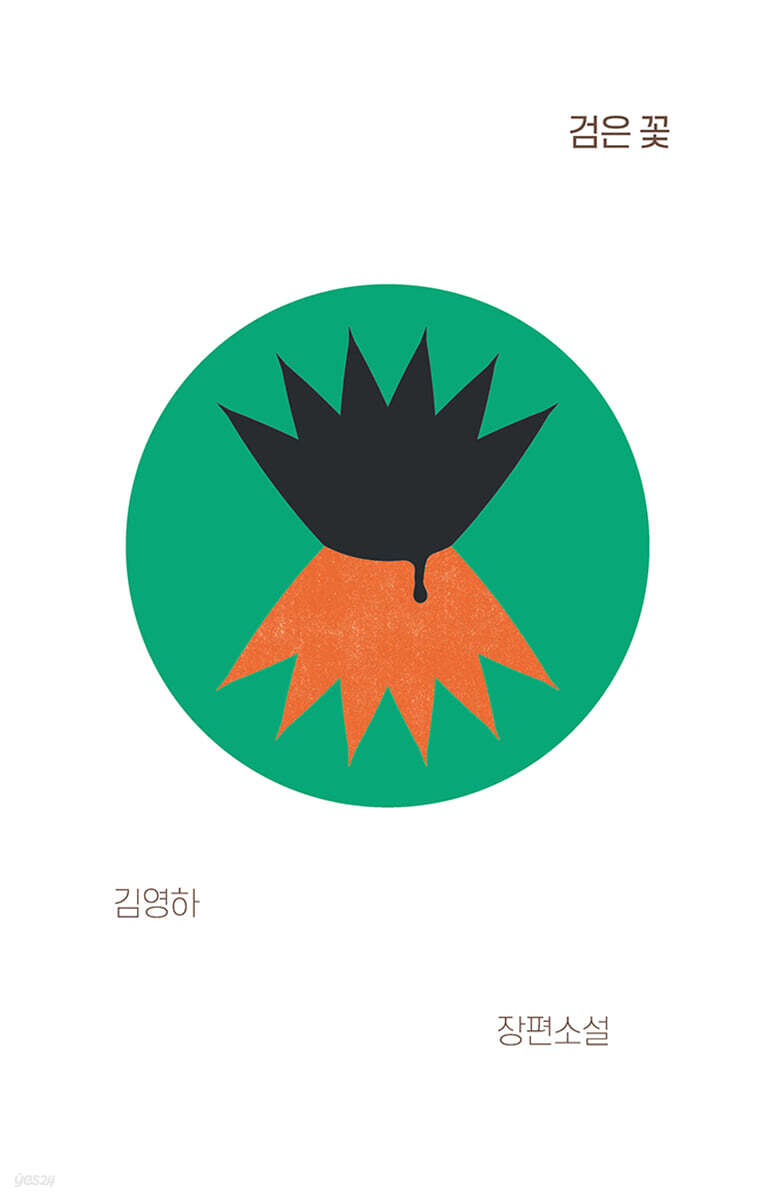
“Black flowers are flowers that do not exist in the world.
Black is the only color that can be achieved only by mixing all colors, and can be seen as something that transcends gender, age, class, culture, and race.
In that sense, flowers should be seen as having a utopian meaning.” 『Black Flower』 is a ‘condolence flower’ that the author sends to all the people who long for an unattainable utopia but are ultimately forgotten and not remembered by anyone.
Discover the definitive edition of a breathtaking epic!
To celebrate the 25th anniversary of Kim Young-ha's debut in 2020, Bokbokseoga will be publishing a new novel and collection of short stories under the name 'Bokbokseoga x Kim Young-ha_Novel'.
After first releasing three volumes, 『Black Flower』, 『What Happened to the Man Stuck in the Elevator』, and 『Why Arang』, we plan to release a total of twelve volumes by 2022.
"Black Flower" is author Kim Young-ha's third full-length novel, first published by Munhakdongne in 2003.
The author himself stated, "If you had to read only one of my novels, it would be 'Black Flower'," and his masterpiece, 'Black Flower', has been republished in a revised edition.
From the time of its first publication, this novel brought a refreshing shock to both the literary world and the outside world, as evidenced by the evaluation that it "registered the genre of historical novels, which had lost its momentum, as a new realm of aesthetic possibility (Seo Young-chae)", and has also received steady support and love from readers, going through over 50 reprints to date.
At the time of winning the Dong-in Literary Award, it was praised as “a work that powerfully depicts the life management of the most powerless people in the weakest country” and “the best masterpiece produced by Korean literature this year,” and was selected as “Book of the Year” by various media outlets.
In the revised edition, the sentences were carefully polished and several key scenes were revised, “transforming it into a novel with a resolution quite different from the previous edition” (from ‘On the Publication of the Revised Edition’).
Additionally, commentary and critiques by Nam Jin-woo and Seo Young-chae are included at the end of the book to enable a richer and deeper understanding of 『Black Flower』.
“There is a novel I want to write forever.”
A grand requiem for all those lost to history and memory.
"Black Flower" is a novel depicting the history of immigration based on the true story of Koreans who left for Mexico in 1905, hoping for good jobs and a better future, when the Korean Empire was "slowly fading away like a drop of ink in water."
To write this novel, author Kim Young-ha traveled to Mexico and Guatemala to gather data, visit the local sites, and then stayed there to begin writing.
This novel, which at first glance appears to be a sentimental story of national suffering, takes the reader in a completely different direction from the beginning.
As readers follow the author's bold and dynamic writing style across continents and oceans, they are drawn into a world where everything violently collides and collapses.
In a situation where feudalism and modernity collide, indigenous beliefs and foreign religions clash, class and caste systems crumble, and the relationship between the state and the individual disintegrates, we naturally come to contemplate deeply about the absolute conditions of human destiny.
Kim Young-ha's depiction of a world where people who have lost everything struggle for survival and dignity is objective, cool-headed, and full of irony.
Sometimes it's even humorous.
The tone is calm, but the stories are as hot as a furnace.
This concise and plain style, and the mosaic-like structure that follows various characters without a clear central figure, show that the novel's goal is not to present a sentimental story of national suffering, but to reveal the fate of human existence in general, who fights against misfortune but ultimately cannot help but be defeated.
The literary ambition of young author Kim Young-ha, who sought to revolutionize the clichéd grammar of novels, becomes clear here.
In an interview, the author said this about the title 'Black Flower':
“Black flowers are flowers that do not exist in the world.
Black is the only color that can be achieved only by mixing all colors, and can be seen as something that transcends gender, age, class, culture, and race.
In that sense, flowers should be seen as having a utopian meaning.” 『Black Flower』 is a ‘condolence flower’ that the author sends to all the people who long for an unattainable utopia but are ultimately forgotten and not remembered by anyone.
GOODS SPECIFICS
- Date of issue: July 20, 2020
- Page count, weight, size: 440 pages | 478g | 128*198*27mm
- ISBN13: 9791197021633
- ISBN10: 1197021639
You may also like
카테고리
korean


korean

![GQ KOREA Mark (Monthly): December [2025]](http://librairie.coreenne.fr/cdn/shop/files/8ef265dbbfbf186523ed75ba7319009d.jpg?v=1765340328&width=3840)


