

Dick translator
 |
Description
Book Introduction
About our culture, family, and love, where we help each other, share together, and make kimchi!
A picture book that blends communication and understanding between family members with a child's perspective in a fun way.
We are exposed to a lot of regional dialects and local speech through various movies, TV programs, and other media.
However, it is not easy for people who do not live in that area to properly understand and know its meaning.
In particular, the representative expression of Jeolla-do, ‘Geosigi’, is more difficult.
Because 'geoshigi' doesn't have just one meaning.
'Geosigi' is not a noun used as the name of a single thing, but rather a pronoun like 'that' that refers to different things at different times.
A pronoun is a word that can refer to anything depending on time, place, and situation.
So, to know the meaning of 'geoshigi', you have to observe when, where, and how the speaker is using it.
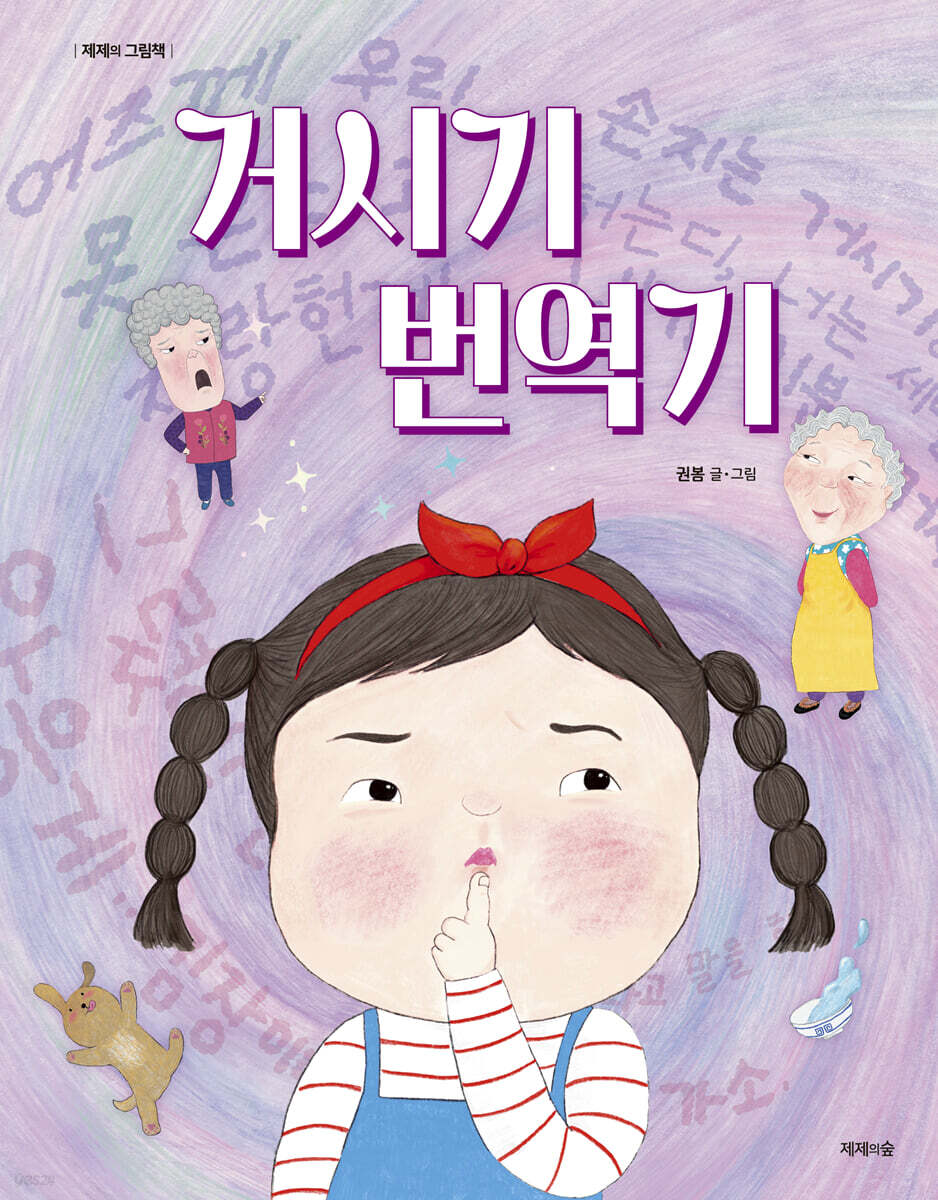
《The Giant Translator》 depicts a scene when the whole family and neighbors gather to make kimchi.
This is a picture book that contains an incident that occurs when a child misunderstands the dialect that the local people naturally use in their daily lives.
'Kimjang' is the process of making kimchi to eat during the winter, so you have to make enough kimchi to last a season.
So, since ancient times, families and neighbors have joined forces to help each other and make kimchi.
In our country, which has four seasons, it is a traditional culture to survive the midwinter.
Even today, when it comes to kimchi-making, most families gather together on a set day to make kimchi and eat delicious food. It is one of the family events.
In such cases, children who do not live in that area are unfamiliar with the dialects of their grandparents, relatives, and neighbors.
Sebyeol, the main character of the picture book “Geosigi Translator,” also has no idea what “Geosigi” is.
This book shows a hilarious incident that occurs when a child who is confused by the dialect fails to understand what his grandmother is saying.
This is a book that will make you think again about communication and understanding with your family and neighbors while reading it.
A picture book that blends communication and understanding between family members with a child's perspective in a fun way.
We are exposed to a lot of regional dialects and local speech through various movies, TV programs, and other media.
However, it is not easy for people who do not live in that area to properly understand and know its meaning.
In particular, the representative expression of Jeolla-do, ‘Geosigi’, is more difficult.
Because 'geoshigi' doesn't have just one meaning.
'Geosigi' is not a noun used as the name of a single thing, but rather a pronoun like 'that' that refers to different things at different times.
A pronoun is a word that can refer to anything depending on time, place, and situation.
So, to know the meaning of 'geoshigi', you have to observe when, where, and how the speaker is using it.
《The Giant Translator》 depicts a scene when the whole family and neighbors gather to make kimchi.
This is a picture book that contains an incident that occurs when a child misunderstands the dialect that the local people naturally use in their daily lives.
'Kimjang' is the process of making kimchi to eat during the winter, so you have to make enough kimchi to last a season.
So, since ancient times, families and neighbors have joined forces to help each other and make kimchi.
In our country, which has four seasons, it is a traditional culture to survive the midwinter.
Even today, when it comes to kimchi-making, most families gather together on a set day to make kimchi and eat delicious food. It is one of the family events.
In such cases, children who do not live in that area are unfamiliar with the dialects of their grandparents, relatives, and neighbors.
Sebyeol, the main character of the picture book “Geosigi Translator,” also has no idea what “Geosigi” is.
This book shows a hilarious incident that occurs when a child who is confused by the dialect fails to understand what his grandmother is saying.
This is a book that will make you think again about communication and understanding with your family and neighbors while reading it.
- You can preview some of the book's contents.
Preview
Detailed image

Publisher's Review
How does Mom know what "dick" Grandma is talking about?
What the heck is a 'Geosigi'! Mom must have a 'Geosigi translator'!
Sebyeol went to her maternal grandmother's house on an island to make kimchi.
And then it began.
What is it? It's Grandma's 'dick' storm!
“The seasoning tastes a bit strong.
“Sebyeol, come get your dick.”
Salt? Scissors? Red pepper powder? Sesame salt? A kimchi container? What should I bring? As Sebyeol was flustered, worrying about this and that, Grandma Bbanggeut told her that "salt" was a big deal.
“Sebyeol, go cheap and call the old lady.
“Why haven’t you come yet?”
So I brought the old lady from the 'Salt' house over, and gasp! It was the old lady from the 'Blue Gate' house!
What the heck is a "geoshigi"? Can someone please tell me what "geoshigi" my grandmother is talking about?
Huh? But how does Mom understand all of Grandma's 'dicks'?
“Sebyeol Emiya, you have to go get your dick.”
“Yes, here is the red pepper powder.”
“Oh my, where did your dick go?”
“Mom, here are the scissors.”
I guess my mom has a 'dick translator'.
Mom, I need a dick translator too!
All of us together
The dialect of the elderly
Let's find out!
In this book, the local dialect was used as is to ensure natural situations and conversational expressions in the book's content.
There are some words that I can understand quite well, like 'Wome', 'Gyeopge', and 'Ssage', but there are also some words that I don't know well.
So, I added the meaning of the dialect to make it easier for children reading the picture book to understand.
The whole family went to grandma's house to make kimchi!
Kimjang, an intangible cultural heritage of humanity, is a practice of helping one another by making and sharing kimchi together.
They say there's a K-craze going on all over the world, but you can't leave out 'K-FOOD'.
There are kimbap, tteokbokki, chicken, bibimbap, etc. sold at convenience stores and marts, but among them, kimchi can be said to be the food that represents our country.
Not only is it delicious and nutritious, but because it has been stored for a long time, it can be made in different ways and with different ingredients depending on the region and person.
Kimjang, the process of making this type of kimchi, was registered by UNESCO as an Intangible Cultural Heritage of Humanity in 2013.
It is an important event for our people, and it is part of our traditional culture where we can learn about togetherness and sharing.
Kimjang is the process of making kimchi to eat during the winter, so you need to make enough kimchi to last a whole season.
So, since ancient times, not only the whole family but also neighbors living in the same village have joined forces to help each other and make kimchi.
On kimchi-making days, it was natural to go to any house to help out.
Because it was a culture for surviving the middle of winter in our country, which has four seasons.
Even today, when it comes to kimchi-making, most families gather together on a set day to make kimchi and share delicious food. This is one of the family events.
The same goes for Sebyeol's family.
Sebyeol's maternal grandmother's house was on an island, so she came a long way by boat, suffering from seasickness.
Sebyeol's family, relatives, and neighbors gathered at her maternal grandmother's house to make kimchi.
Take a look at the picture book "Geosigi Translator" and see how kimchi is made!
What the heck is a 'Geosigi'! Mom must have a 'Geosigi translator'!
Sebyeol went to her maternal grandmother's house on an island to make kimchi.
And then it began.
What is it? It's Grandma's 'dick' storm!
“The seasoning tastes a bit strong.
“Sebyeol, come get your dick.”
Salt? Scissors? Red pepper powder? Sesame salt? A kimchi container? What should I bring? As Sebyeol was flustered, worrying about this and that, Grandma Bbanggeut told her that "salt" was a big deal.
“Sebyeol, go cheap and call the old lady.
“Why haven’t you come yet?”
So I brought the old lady from the 'Salt' house over, and gasp! It was the old lady from the 'Blue Gate' house!
What the heck is a "geoshigi"? Can someone please tell me what "geoshigi" my grandmother is talking about?
Huh? But how does Mom understand all of Grandma's 'dicks'?
“Sebyeol Emiya, you have to go get your dick.”
“Yes, here is the red pepper powder.”
“Oh my, where did your dick go?”
“Mom, here are the scissors.”
I guess my mom has a 'dick translator'.
Mom, I need a dick translator too!
All of us together
The dialect of the elderly
Let's find out!
In this book, the local dialect was used as is to ensure natural situations and conversational expressions in the book's content.
There are some words that I can understand quite well, like 'Wome', 'Gyeopge', and 'Ssage', but there are also some words that I don't know well.
So, I added the meaning of the dialect to make it easier for children reading the picture book to understand.
The whole family went to grandma's house to make kimchi!
Kimjang, an intangible cultural heritage of humanity, is a practice of helping one another by making and sharing kimchi together.
They say there's a K-craze going on all over the world, but you can't leave out 'K-FOOD'.
There are kimbap, tteokbokki, chicken, bibimbap, etc. sold at convenience stores and marts, but among them, kimchi can be said to be the food that represents our country.
Not only is it delicious and nutritious, but because it has been stored for a long time, it can be made in different ways and with different ingredients depending on the region and person.
Kimjang, the process of making this type of kimchi, was registered by UNESCO as an Intangible Cultural Heritage of Humanity in 2013.
It is an important event for our people, and it is part of our traditional culture where we can learn about togetherness and sharing.
Kimjang is the process of making kimchi to eat during the winter, so you need to make enough kimchi to last a whole season.
So, since ancient times, not only the whole family but also neighbors living in the same village have joined forces to help each other and make kimchi.
On kimchi-making days, it was natural to go to any house to help out.
Because it was a culture for surviving the middle of winter in our country, which has four seasons.
Even today, when it comes to kimchi-making, most families gather together on a set day to make kimchi and share delicious food. This is one of the family events.
The same goes for Sebyeol's family.
Sebyeol's maternal grandmother's house was on an island, so she came a long way by boat, suffering from seasickness.
Sebyeol's family, relatives, and neighbors gathered at her maternal grandmother's house to make kimchi.
Take a look at the picture book "Geosigi Translator" and see how kimchi is made!
GOODS SPECIFICS
- Date of issue: October 15, 2025
- Format: Hardcover book binding method guide
- Page count, weight, size: 36 pages | 200*260*15mm
- ISBN13: 9791158733315
- ISBN10: 1158733313
- KC Certification: Certification Type: Conformity Confirmation
You may also like
카테고리
korean


korean

![GQ KOREA Mark (Monthly): December [2025]](http://librairie.coreenne.fr/cdn/shop/files/8ef265dbbfbf186523ed75ba7319009d.jpg?v=1765340328&width=3840)


