

Hamlet
 |
Description
Book Introduction
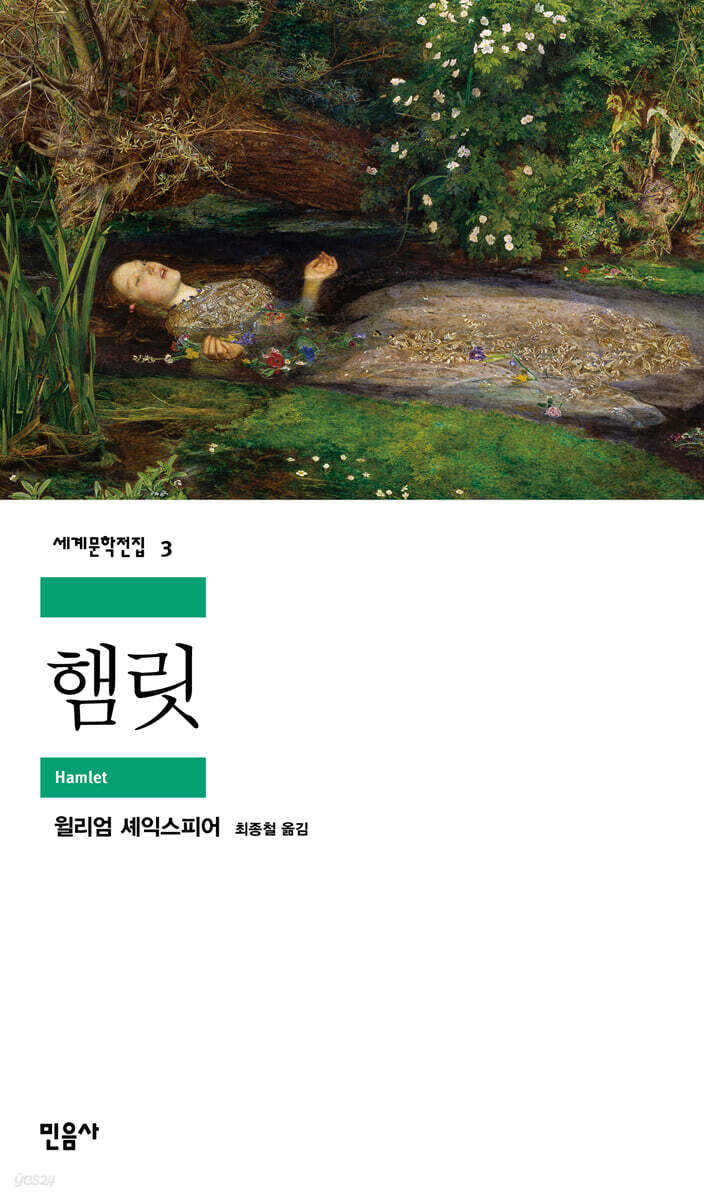
Hamlet, a problematic character born from Shakespeare, Britain's greatest playwright The essence of dramatic literature, containing life, death, and all human problems. Hamlet, the most famous and most popular of Shakespeare's four major tragedies. Created in 1601, this work is a product of the zeitgeist that reflects the turbulent flow of the Renaissance, and shows the archetype of a skeptical human being through Hamlet, who questions the reason for human existence while struggling between good and evil. Shakespeare, a contemporary of Galileo, conceived the idea of Hamlet after witnessing the British society being shaken by the new culture flowing in from Italy at the time, and the Earl of Essex, who had been greatly favored by the ruling Queen Elizabeth, suddenly turning into a rebel over the issue of succession to the throne. Shakespeare, using Hamlet as a problematic human being, asked what 'true good' is in the face of the power and limitations of intelligence in contrast to animals, and the anxiety and tragic situations caused by human polarity. Through Hamlet's struggle to find the truth of life at the risk of his own existence, we can ask ourselves the still valid ethical question, "What is a true human being?" |
- You can preview some of the book's contents.
Preview
Detailed image
Publisher's Review
The most faithful translation of the original work of Hamlet, the masterpiece of Shakespeare's four major tragedies!
The sophistication of the original composition of the Renaissance play Hamlet
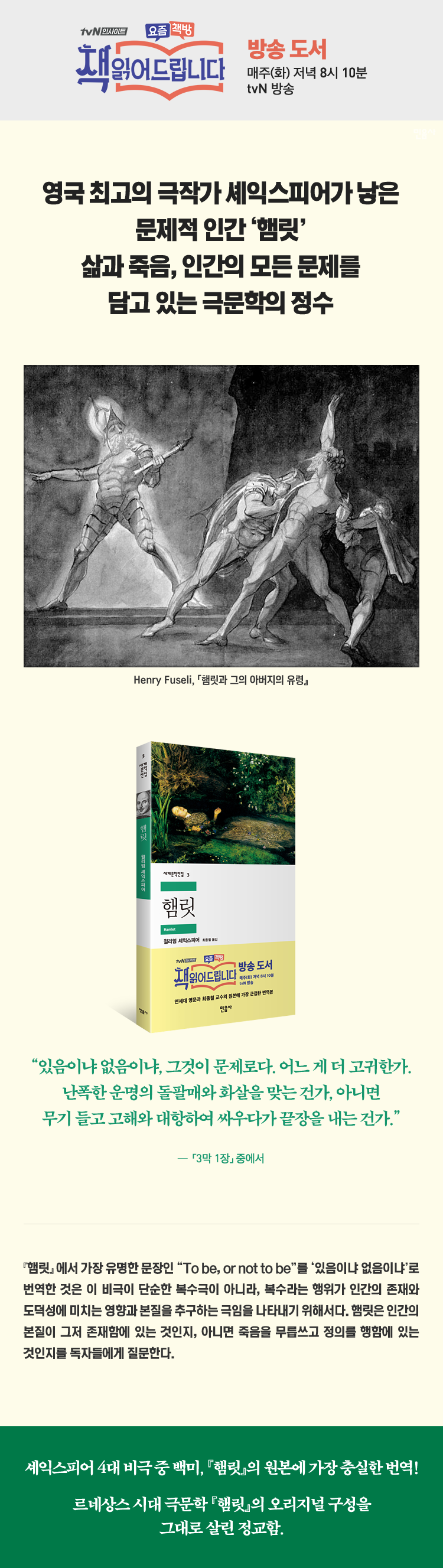
“To be or not to be, that is the question.”
Which one is more noble?
of violent fate
Are you getting hit by stones and arrows, or
Take up arms and fight against the devil
Is this the end?
To die is just to sleep,
Heartache inherited from the flesh in one sleep
If we say that thousands of innate conflicts will end,
“That is an ending to be longed for.” - From “Act 3, Scene 1”
Shakespeare demonstrates a genius for composing and creating new stories from existing oral traditions or given stories.
He took material from other works, combined them, added new episodes, and presented it to readers with contemporary themes and interpretations.
There are also various stories that can be assumed to be the original version of Hamlet.
Shakespeare, who also entered the theater world as an actor, was later promoted to a shareholder and exclusive writer of the theater company he belonged to, and was a writer who fully displayed his creative skills.
Therefore, all the plays he wrote were the property of the theater company, making it virtually impossible for them to be published. There are three existing editions of Hamlet, the first of which was a quarto edition published in 1603, in which the actor who played the role of Marcellus, the sentry in Act 1, Scene 1, leads the play.
The second edition, published in 1604, is a revised and enlarged version of the previous edition, and the final edition is known to have been a second edition published in 1623 by Shakespeare's fellow actors John Heming and Henry Condell, based on material preserved in their theatre company.
Therefore, since the original text of Hamlet was not published by Shakespeare himself, it is open to various interpretations by editors, translators, critics, and readers.
Is it because of these conditions?
Even today, Hamlet presents contemporary readers with open interpretations from various perspectives in plays and musicals, further enhancing the value of dramatic literature.
『Hamlet』, published as the third volume of Minumsa World Literature Collection, has made every effort to be faithful to the translation of this work with such a background.
Translator Professor Choi Jong-cheol used the Arden edition of Shakespeare's translation as his main text (he also referred to the New Cambridge edition and the Riverside edition), and translated Hamlet's most highlighted line, "To be, or not to be," as "To be, or not to be."
This reveals that Hamlet goes beyond the stage of pursuing human desire and originates from a deep reflection on ‘human existence.’
It also shows that Hamlet's tragedy is not a simple revenge play, but a play that pursues the nature and impact of revenge on human existence and morality.
“Shakespeare wrote Hamlet with the revenge drama popular at the time in mind, but this tragedy goes beyond the simple meaning of avenging one’s father’s enemy; it pursues the nature of revenge and the impact it has on human existence and morality.
As a result, all areas of existence form the framework of this tragedy.” - From “Commentary on the Work”
For Hamlet, life is death, and death is life.
Hamlet's conflict is a journey to find the truth, risking his own existence.
"Hamlet" is a work that contains the agony of Prince Hamlet, who had to avenge his father and restore national order.
In fact, there is no character that characterizes the work as much as Hamlet.
For most people, Hamlet without Hamlet is unimaginable, and the reason we read and watch Hamlet is to encounter Hamlet.
Hamlet's character is characterized by a combination of delaying extreme action, saving Claudius' life when he had the perfect opportunity to kill him, and stabbing Polonius, who was hiding behind a curtain, to death without hesitation, thinking he was Claudius.
Hamlet questions whether the essence of human nature lies in simply existing, or in doing justice even at the risk of death.
He also tried to look at the true reality of human existence and correct it, like Yorick, a fool who only talks the talk.
As Hamlet laments in the following lines:
“Rest, rest, restless spirit.
then,
I entrust myself to you with all my love.
And a poor man like Hamlet
The way to express love and friendship, if God wills,
It won't be lacking.
Let's go in together.
Also, always put your finger on your lips, please.
Twisted times.
Ah, what a cursed calamity,
I was born to fix that.
No, come on, let's go together." - From "Act 1, Scene 5"
Hamlet is also a character who maximizes human capabilities with his incomparable wit, humor, and deep reflection on the essence of existence.
Hamlet's abilities always appear polarized, and the conflict and opposition that arise from the clash of these contradictions become his mode of existence.
In this respect, Hamlet reflects the flaws of human beings.
This is because our universal thoughts and actions are based on dichotomous perceptions of things, such as existence and non-existence, good and evil, and fiction and reality.
Hamlet, who was unable to escape Denmark, which was divided into existence and non-existence, good and evil, and was in conflict and doubt, appears to reach a transcendental state in Act 5, Scene 2.
In the latter half of the play, we see that Hamlet is a character who belongs to a world of dichotomies, but also has the possibility of escaping from it.
But in the end, like all human beings, he suffers and dies because of the duality of existence.
Why did Shakespeare portray the archetype of a "thinking, agonizing man" like Hamlet? In this work, he addresses almost every issue that can arise between life and death.
The jealousy, intrigue, envy, and murder between brothers that began outside the play when Claudius killed his older brother, the late King Hamlet, are connected to the actions of Cain in the Bible.
Moreover, Hamlet's hatred and love for his mother, who married his uncle less than two months after his father's death, is a universal experience that humanity will experience as long as it maintains the structure of the family.
This play also includes the tragic love story between two young men and women, Hamlet and Ophelia.
Many of the events that occur in Hamlet are so comprehensive that they have meaning on an individual, family, national, and even cosmic scale.
Moreover, this tragedy constantly questions the nature of our thoughts and actions by juxtaposing conflicting concepts and values such as action and delay, fake and real madness, fiction and reality, reason and passion.
For Hamlet, life was death, and death was life.
He was a man who struggled with anxiety and emptiness on the border between life and death.
Therefore, Hamlet's conflict is not simply a conflict of desire that ends in revenge, but a journey to find the truth of life by risking his own existence.
This is where Shakespeare's true greatness is revealed.
The sophistication of the original composition of the Renaissance play Hamlet
“To be or not to be, that is the question.”
Which one is more noble?
of violent fate
Are you getting hit by stones and arrows, or
Take up arms and fight against the devil
Is this the end?
To die is just to sleep,
Heartache inherited from the flesh in one sleep
If we say that thousands of innate conflicts will end,
“That is an ending to be longed for.” - From “Act 3, Scene 1”
Shakespeare demonstrates a genius for composing and creating new stories from existing oral traditions or given stories.
He took material from other works, combined them, added new episodes, and presented it to readers with contemporary themes and interpretations.
There are also various stories that can be assumed to be the original version of Hamlet.
Shakespeare, who also entered the theater world as an actor, was later promoted to a shareholder and exclusive writer of the theater company he belonged to, and was a writer who fully displayed his creative skills.
Therefore, all the plays he wrote were the property of the theater company, making it virtually impossible for them to be published. There are three existing editions of Hamlet, the first of which was a quarto edition published in 1603, in which the actor who played the role of Marcellus, the sentry in Act 1, Scene 1, leads the play.
The second edition, published in 1604, is a revised and enlarged version of the previous edition, and the final edition is known to have been a second edition published in 1623 by Shakespeare's fellow actors John Heming and Henry Condell, based on material preserved in their theatre company.
Therefore, since the original text of Hamlet was not published by Shakespeare himself, it is open to various interpretations by editors, translators, critics, and readers.
Is it because of these conditions?
Even today, Hamlet presents contemporary readers with open interpretations from various perspectives in plays and musicals, further enhancing the value of dramatic literature.
『Hamlet』, published as the third volume of Minumsa World Literature Collection, has made every effort to be faithful to the translation of this work with such a background.
Translator Professor Choi Jong-cheol used the Arden edition of Shakespeare's translation as his main text (he also referred to the New Cambridge edition and the Riverside edition), and translated Hamlet's most highlighted line, "To be, or not to be," as "To be, or not to be."
This reveals that Hamlet goes beyond the stage of pursuing human desire and originates from a deep reflection on ‘human existence.’
It also shows that Hamlet's tragedy is not a simple revenge play, but a play that pursues the nature and impact of revenge on human existence and morality.
“Shakespeare wrote Hamlet with the revenge drama popular at the time in mind, but this tragedy goes beyond the simple meaning of avenging one’s father’s enemy; it pursues the nature of revenge and the impact it has on human existence and morality.
As a result, all areas of existence form the framework of this tragedy.” - From “Commentary on the Work”
For Hamlet, life is death, and death is life.
Hamlet's conflict is a journey to find the truth, risking his own existence.
"Hamlet" is a work that contains the agony of Prince Hamlet, who had to avenge his father and restore national order.
In fact, there is no character that characterizes the work as much as Hamlet.
For most people, Hamlet without Hamlet is unimaginable, and the reason we read and watch Hamlet is to encounter Hamlet.
Hamlet's character is characterized by a combination of delaying extreme action, saving Claudius' life when he had the perfect opportunity to kill him, and stabbing Polonius, who was hiding behind a curtain, to death without hesitation, thinking he was Claudius.
Hamlet questions whether the essence of human nature lies in simply existing, or in doing justice even at the risk of death.
He also tried to look at the true reality of human existence and correct it, like Yorick, a fool who only talks the talk.
As Hamlet laments in the following lines:
“Rest, rest, restless spirit.
then,
I entrust myself to you with all my love.
And a poor man like Hamlet
The way to express love and friendship, if God wills,
It won't be lacking.
Let's go in together.
Also, always put your finger on your lips, please.
Twisted times.
Ah, what a cursed calamity,
I was born to fix that.
No, come on, let's go together." - From "Act 1, Scene 5"
Hamlet is also a character who maximizes human capabilities with his incomparable wit, humor, and deep reflection on the essence of existence.
Hamlet's abilities always appear polarized, and the conflict and opposition that arise from the clash of these contradictions become his mode of existence.
In this respect, Hamlet reflects the flaws of human beings.
This is because our universal thoughts and actions are based on dichotomous perceptions of things, such as existence and non-existence, good and evil, and fiction and reality.
Hamlet, who was unable to escape Denmark, which was divided into existence and non-existence, good and evil, and was in conflict and doubt, appears to reach a transcendental state in Act 5, Scene 2.
In the latter half of the play, we see that Hamlet is a character who belongs to a world of dichotomies, but also has the possibility of escaping from it.
But in the end, like all human beings, he suffers and dies because of the duality of existence.
Why did Shakespeare portray the archetype of a "thinking, agonizing man" like Hamlet? In this work, he addresses almost every issue that can arise between life and death.
The jealousy, intrigue, envy, and murder between brothers that began outside the play when Claudius killed his older brother, the late King Hamlet, are connected to the actions of Cain in the Bible.
Moreover, Hamlet's hatred and love for his mother, who married his uncle less than two months after his father's death, is a universal experience that humanity will experience as long as it maintains the structure of the family.
This play also includes the tragic love story between two young men and women, Hamlet and Ophelia.
Many of the events that occur in Hamlet are so comprehensive that they have meaning on an individual, family, national, and even cosmic scale.
Moreover, this tragedy constantly questions the nature of our thoughts and actions by juxtaposing conflicting concepts and values such as action and delay, fake and real madness, fiction and reality, reason and passion.
For Hamlet, life was death, and death was life.
He was a man who struggled with anxiety and emptiness on the border between life and death.
Therefore, Hamlet's conflict is not simply a conflict of desire that ends in revenge, but a journey to find the truth of life by risking his own existence.
This is where Shakespeare's true greatness is revealed.
GOODS SPECIFICS
- Date of issue: February 28, 2001
- Page count, weight, size: 248 pages | 310g | 132*225*20mm
- ISBN13: 9788937460036
- ISBN10: 8937460033
You may also like
카테고리
korean


korean

![ELLE 엘르 스페셜 에디션 A형 : 12월 [2025]](http://librairie.coreenne.fr/cdn/shop/files/b8e27a3de6c9538896439686c6b0e8fb.jpg?v=1766436872&width=3840)


