

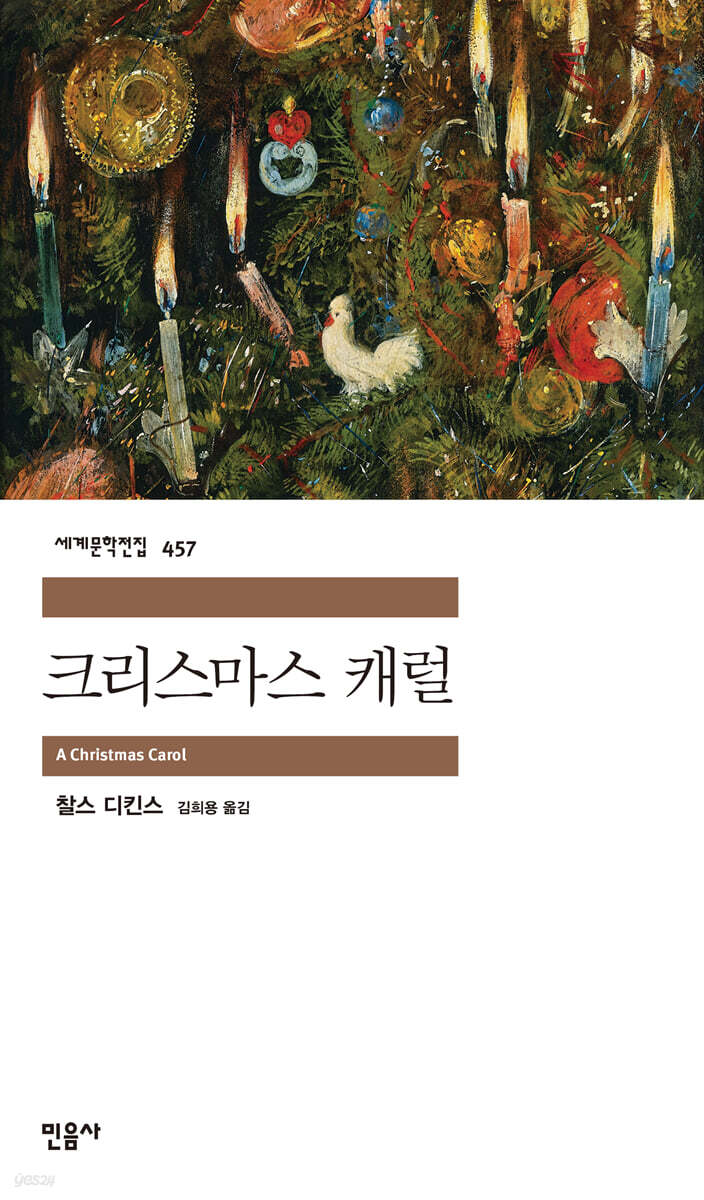
A Christmas Carol
 |
Description
Book Introduction
“Light as a feather, happy as an angel, and cheerful as a student.
I feel dizzy like a drunk person.
Merry Christmas everyone!
“I wish everyone in the world a happy new year!”
Charles Dickens, the great British writer who pioneered popular literature during the Victorian era
A heartwarming and touching Christmas miracle that reaches the foolish and unfortunate.
▶ A literary masterpiece that perfectly captures the spirit of Christmas.
─ The Times
▶ He was a champion of the poor, the suffering, and the persecuted, and with his death the world has lost one of its greatest writers.
─ Dickens's epitaph
▶ Dickens's works are more than just stories; they are powerful tools that awaken the conscience of society.
In particular, "A Christmas Carol" is one of the most important literary achievements of our time.
- Thomas Carlyle
A writer who sharply criticized class discrimination, poverty, and loss of humanity in Victorian British society.
A Christmas Carol, a collection of two short stories from the 'Christmas Series' by Charles Dickens, the most beloved British author, has been published in Minumsa's World Literature Collection.
Dickens was a writer who sharply criticized class discrimination, poverty, and the loss of humanity in Victorian British society, and his works have long held an important place in the history of literature.
His experience as a child, forced to work in a factory due to his father's debt from a poor family, became the foundation of his literary world.
Starting out as a journalist, he created a sensation in the literary world with his serialized work, "The Pickwick Club Travels," and through his representative works, such as "Oliver Twist" and "Great Expectations," he delved into the class discrimination, child labor, and contradictions of the education system in contemporary British society.
His works convey social messages based on rich characterization, delicate satire, and deep empathy for humanity.
Dickens, considered one of the most popular and artistic writers in 19th-century British literature, was a writer who demonstrated that literature is not simply art, but can be a powerful weapon for social reform.
Dickens is widely known as the man who invented Christmas.
Christmas traditions that we are so familiar with and take for granted, such as Christmas trees, cards, gifts, and carols, are either products of the Victorian era or were revived during that era.
Dickens had a greater influence than anyone else in reviving Christmas from its near-disappearance and creating a modern concept of Christmas.
Dickens believed that the best way to get people to care about poverty and social injustice was not through newspaper editorials or publicity materials, but through writing a Christmas story that everyone could relate to.
Beginning with "A Christmas Carol" in December 1843, Dickens published five novellas every December.
The Christmas series holds a unique place in literary history, making Christmas not just a simple festival but an opportunity for social reflection.
The tradition of looking after the less fortunate at Christmas, giving thanks for the past year, and making resolutions for the coming year has spread widely in the UK and around the world through the great success and revival of the Christmas series.
I feel dizzy like a drunk person.
Merry Christmas everyone!
“I wish everyone in the world a happy new year!”
Charles Dickens, the great British writer who pioneered popular literature during the Victorian era
A heartwarming and touching Christmas miracle that reaches the foolish and unfortunate.
▶ A literary masterpiece that perfectly captures the spirit of Christmas.
─ The Times
▶ He was a champion of the poor, the suffering, and the persecuted, and with his death the world has lost one of its greatest writers.
─ Dickens's epitaph
▶ Dickens's works are more than just stories; they are powerful tools that awaken the conscience of society.
In particular, "A Christmas Carol" is one of the most important literary achievements of our time.
- Thomas Carlyle
A writer who sharply criticized class discrimination, poverty, and loss of humanity in Victorian British society.
A Christmas Carol, a collection of two short stories from the 'Christmas Series' by Charles Dickens, the most beloved British author, has been published in Minumsa's World Literature Collection.
Dickens was a writer who sharply criticized class discrimination, poverty, and the loss of humanity in Victorian British society, and his works have long held an important place in the history of literature.
His experience as a child, forced to work in a factory due to his father's debt from a poor family, became the foundation of his literary world.
Starting out as a journalist, he created a sensation in the literary world with his serialized work, "The Pickwick Club Travels," and through his representative works, such as "Oliver Twist" and "Great Expectations," he delved into the class discrimination, child labor, and contradictions of the education system in contemporary British society.
His works convey social messages based on rich characterization, delicate satire, and deep empathy for humanity.
Dickens, considered one of the most popular and artistic writers in 19th-century British literature, was a writer who demonstrated that literature is not simply art, but can be a powerful weapon for social reform.
Dickens is widely known as the man who invented Christmas.
Christmas traditions that we are so familiar with and take for granted, such as Christmas trees, cards, gifts, and carols, are either products of the Victorian era or were revived during that era.
Dickens had a greater influence than anyone else in reviving Christmas from its near-disappearance and creating a modern concept of Christmas.
Dickens believed that the best way to get people to care about poverty and social injustice was not through newspaper editorials or publicity materials, but through writing a Christmas story that everyone could relate to.
Beginning with "A Christmas Carol" in December 1843, Dickens published five novellas every December.
The Christmas series holds a unique place in literary history, making Christmas not just a simple festival but an opportunity for social reflection.
The tradition of looking after the less fortunate at Christmas, giving thanks for the past year, and making resolutions for the coming year has spread widely in the UK and around the world through the great success and revival of the Christmas series.
- You can preview some of the book's contents.
Preview
index
A Christmas Carol 7
Preface 9
Verse 1: Ghost of Mali 11
Verse 2, First Spirit 43
Verse 3, Second Spirit 73
Verse 4, Last Spirit 111
End of the story in verse 5 137
The Possessed Man and the Ghost Deal 149
1 Given Gift 151
2 Widely Spread Gifts 194
3 Broken Gifts 261
Commentary on the work 307
Author's Chronology 318
Preface 9
Verse 1: Ghost of Mali 11
Verse 2, First Spirit 43
Verse 3, Second Spirit 73
Verse 4, Last Spirit 111
End of the story in verse 5 137
The Possessed Man and the Ghost Deal 149
1 Given Gift 151
2 Widely Spread Gifts 194
3 Broken Gifts 261
Commentary on the work 307
Author's Chronology 318
Detailed image

Into the book
“Living in a world full of fools like this.
Merry Christmas! Merry Christmas! What the hell is Christmas to you? It's when you have no money at all and still have to pay all the bills, when you realize you've aged a year while your wealth hasn't grown by an hour's wages, and when you balance your income and expenses, every single item on your ledger is a deficit for twelve months of the year.
It's just a matter of time before your eyes, isn't it?
---pp.16~17 From "A Christmas Carol"
“I came here tonight to tell you that there is still hope and a chance to avoid my fate.
“This is one chance and one hope I can give you, Ebenezer.”
---p.39 From "A Christmas Carol"
“So you don’t have to come back here again.
But first, we have to spend Christmas together.
And you're having the best time in the world.”
---pp.55~56 From "A Christmas Carol"
“There is nothing in the world that people treat as cruelly as poverty.
And yet, there is nothing that is so openly condemned as the pursuit of wealth!”
---p.65 From "A Christmas Carol"
Everyone on board, awake or asleep, good or bad, spoke kinder words to others on that day than on any other day of the year, and to some extent participated in the day's festivities, thinking of loved ones far away and knowing that they, too, were thinking of them and rejoicing.
---p.98 From "A Christmas Carol"
“Another Christmas, another year!” muttered the chemist with a melancholy sigh.
“The more we struggle to remember while suffering, the more things appear in the growing pool of memories.
Until death, mercilessly, mixes everything together and erases it all.”
---p.166 From "The Man Possessed by a Ghost and the Deal with the Ghost"
“What is your name?”
“There’s no such thing.”
“Where do you live?
“I’m alive! What is that?”
---p.192 From "The Man Possessed by a Ghost and the Deal with the Ghost"
"I am tainted by evil! I am the one who injects evil! I am filled with poison that I will inject into my own heart and the hearts of all mankind.
I am becoming stone-like insensible to situations where I used to feel concern, compassion, and sympathy.
Selfishness and ingratitude sprout from my footprints that make everything a mess.
“What makes me so much less vile than those poor people I despise is that I can hate them the moment they change.”
---p.234 From "The Man Possessed by a Ghost and the Deal with the Ghost"
“I haven’t learned anything, but I have many professors,” Millie said.
“I do things that are far from my thoughts, but you, Professor, are always thinking.
“May I tell you why I think it is good for us to remember the wrongs we have been through?”
"okay."
“Because I can forgive that.”
Merry Christmas! Merry Christmas! What the hell is Christmas to you? It's when you have no money at all and still have to pay all the bills, when you realize you've aged a year while your wealth hasn't grown by an hour's wages, and when you balance your income and expenses, every single item on your ledger is a deficit for twelve months of the year.
It's just a matter of time before your eyes, isn't it?
---pp.16~17 From "A Christmas Carol"
“I came here tonight to tell you that there is still hope and a chance to avoid my fate.
“This is one chance and one hope I can give you, Ebenezer.”
---p.39 From "A Christmas Carol"
“So you don’t have to come back here again.
But first, we have to spend Christmas together.
And you're having the best time in the world.”
---pp.55~56 From "A Christmas Carol"
“There is nothing in the world that people treat as cruelly as poverty.
And yet, there is nothing that is so openly condemned as the pursuit of wealth!”
---p.65 From "A Christmas Carol"
Everyone on board, awake or asleep, good or bad, spoke kinder words to others on that day than on any other day of the year, and to some extent participated in the day's festivities, thinking of loved ones far away and knowing that they, too, were thinking of them and rejoicing.
---p.98 From "A Christmas Carol"
“Another Christmas, another year!” muttered the chemist with a melancholy sigh.
“The more we struggle to remember while suffering, the more things appear in the growing pool of memories.
Until death, mercilessly, mixes everything together and erases it all.”
---p.166 From "The Man Possessed by a Ghost and the Deal with the Ghost"
“What is your name?”
“There’s no such thing.”
“Where do you live?
“I’m alive! What is that?”
---p.192 From "The Man Possessed by a Ghost and the Deal with the Ghost"
"I am tainted by evil! I am the one who injects evil! I am filled with poison that I will inject into my own heart and the hearts of all mankind.
I am becoming stone-like insensible to situations where I used to feel concern, compassion, and sympathy.
Selfishness and ingratitude sprout from my footprints that make everything a mess.
“What makes me so much less vile than those poor people I despise is that I can hate them the moment they change.”
---p.234 From "The Man Possessed by a Ghost and the Deal with the Ghost"
“I haven’t learned anything, but I have many professors,” Millie said.
“I do things that are far from my thoughts, but you, Professor, are always thinking.
“May I tell you why I think it is good for us to remember the wrongs we have been through?”
"okay."
“Because I can forgive that.”
---p.296 From "The Man Possessed by a Ghost and the Deal with the Ghost"
Publisher's Review
A Christmas Carol - The Triumph of Humanity Against the Cold-Bloodedness of Capitalism
"A Christmas Carol" is the most symbolic critique of the harsh capitalist reality of industrial Britain.
Ebenezer Scrooge meets three ghosts on Christmas Eve and reflects on his past, present, and future.
The ghosts of the past show the human emotions and innocence Scrooge abandoned in his youth, the ghosts of the present show the simple but warm human relationships around him, and the ghosts of the future show the tragic end he will face if he does not change.
Dickens delicately depicts Scrooge's inner landscape and depicts with remarkable consistency the process of recovering humanity lost in capitalist society.
The protagonist, Scrooge, is one of the most widely known characters among the famous novel characters created by Dickens.
Today, the Oxford English Dictionary lists 'Scrooge' as a common noun meaning 'miser' or 'misanthrope'.
According to Dickens's description, Scrooge is "a greedy, sinful old man, squeezing, twisting, grasping, scraping, grasping, and stretching; cold and sharp as a flint, which no matter what brush it strikes, never gives a good fire, secretive and shut-mouthed, as lonely as an oyster."
Through the journey Scrooge encounters with the three ghosts, he feels sorry for his childhood, reflects on his mistakes, and painfully reflects on the need to share kindness with those around him, which naturally evokes compassion in the reader.
The work was a huge success, selling out its first edition of 6,000 copies within a week of its publication, and helped to raise Dickens's reputation and place him among the greatest writers of his time.
Since its publication, it has never been out of print, establishing itself as a representative Christmas work around the world.
Although narrative structures such as 'reform and repentance' and 'punishment of evil and promotion of good' are not new to us, Dickens's works are loved across time as they remind us of those familiar lessons at the end of the year, sharing mercy and kindness.
"The Possessed Man and the Phantom Deal" - Memories of Pain and the Liberation of the Human Inner Self
The fifth and final work in the Christmas series, "The Possessed Man and the Ghost's Bargain" is a work in which Dickens explores the deepest abyss of the human mind.
The protagonist, Red, is a chemistry professor who wants to completely erase the painful memories of his past.
Instead of helping him forget painful memories, such as being betrayed by a trusted friend in his youth and losing his beloved sister early, Redro informs him that this 'forgetting' will be passed on to everyone he meets.
As Christmas approaches and memories of the past come back to haunt him, Red accepts the ghost's deal.
From then on, his life becomes even more empty and dry.
As soon as those memories disappeared, I lost my ability to feel compassion, sympathy, and empathy.
Gradually, we come to realize that the ghostly bargain is not a gift, but a cursed force, and that no matter how painful or painful the memory, it is the link that makes us more human and binds us together.
Through Ledlow, Dickens shows that the memory of pain is a key element in human identity.
It contains the profound insight that the act of erasing suffering is ultimately the same as erasing humanity itself.
The work delicately reveals the complexity of the human mind that cannot be captured by scientific rationality alone.
Critics say these works go beyond simple Christmas stories and offer profound reflections on human moral awakening and social conscience.
In particular, Dickens's unique satirical style and delicate psychological descriptions make readers reflect on social prejudice and coldness.
The climax of both "A Christmas Carol" and "The Phantom Man and the Ghost's Bargain" is when Scrooge and Professor Ledlow break free from their lonely and isolated lives to attend and host a Christmas dinner, reflecting on the importance of family, forgiveness, and compassion for others, and the spirit of Christmas leading to enlightenment for the reader.
"A Christmas Carol" is the most symbolic critique of the harsh capitalist reality of industrial Britain.
Ebenezer Scrooge meets three ghosts on Christmas Eve and reflects on his past, present, and future.
The ghosts of the past show the human emotions and innocence Scrooge abandoned in his youth, the ghosts of the present show the simple but warm human relationships around him, and the ghosts of the future show the tragic end he will face if he does not change.
Dickens delicately depicts Scrooge's inner landscape and depicts with remarkable consistency the process of recovering humanity lost in capitalist society.
The protagonist, Scrooge, is one of the most widely known characters among the famous novel characters created by Dickens.
Today, the Oxford English Dictionary lists 'Scrooge' as a common noun meaning 'miser' or 'misanthrope'.
According to Dickens's description, Scrooge is "a greedy, sinful old man, squeezing, twisting, grasping, scraping, grasping, and stretching; cold and sharp as a flint, which no matter what brush it strikes, never gives a good fire, secretive and shut-mouthed, as lonely as an oyster."
Through the journey Scrooge encounters with the three ghosts, he feels sorry for his childhood, reflects on his mistakes, and painfully reflects on the need to share kindness with those around him, which naturally evokes compassion in the reader.
The work was a huge success, selling out its first edition of 6,000 copies within a week of its publication, and helped to raise Dickens's reputation and place him among the greatest writers of his time.
Since its publication, it has never been out of print, establishing itself as a representative Christmas work around the world.
Although narrative structures such as 'reform and repentance' and 'punishment of evil and promotion of good' are not new to us, Dickens's works are loved across time as they remind us of those familiar lessons at the end of the year, sharing mercy and kindness.
"The Possessed Man and the Phantom Deal" - Memories of Pain and the Liberation of the Human Inner Self
The fifth and final work in the Christmas series, "The Possessed Man and the Ghost's Bargain" is a work in which Dickens explores the deepest abyss of the human mind.
The protagonist, Red, is a chemistry professor who wants to completely erase the painful memories of his past.
Instead of helping him forget painful memories, such as being betrayed by a trusted friend in his youth and losing his beloved sister early, Redro informs him that this 'forgetting' will be passed on to everyone he meets.
As Christmas approaches and memories of the past come back to haunt him, Red accepts the ghost's deal.
From then on, his life becomes even more empty and dry.
As soon as those memories disappeared, I lost my ability to feel compassion, sympathy, and empathy.
Gradually, we come to realize that the ghostly bargain is not a gift, but a cursed force, and that no matter how painful or painful the memory, it is the link that makes us more human and binds us together.
Through Ledlow, Dickens shows that the memory of pain is a key element in human identity.
It contains the profound insight that the act of erasing suffering is ultimately the same as erasing humanity itself.
The work delicately reveals the complexity of the human mind that cannot be captured by scientific rationality alone.
Critics say these works go beyond simple Christmas stories and offer profound reflections on human moral awakening and social conscience.
In particular, Dickens's unique satirical style and delicate psychological descriptions make readers reflect on social prejudice and coldness.
The climax of both "A Christmas Carol" and "The Phantom Man and the Ghost's Bargain" is when Scrooge and Professor Ledlow break free from their lonely and isolated lives to attend and host a Christmas dinner, reflecting on the importance of family, forgiveness, and compassion for others, and the spirit of Christmas leading to enlightenment for the reader.
GOODS SPECIFICS
- Date of issue: December 6, 2024
- Page count, weight, size: 332 pages | 378g | 132*225*17mm
- ISBN13: 9788937464577
- ISBN10: 8937464578
You may also like
카테고리
korean


korean

![GQ KOREA Mark (Monthly): December [2025]](http://librairie.coreenne.fr/cdn/shop/files/8ef265dbbfbf186523ed75ba7319009d.jpg?v=1765340328&width=3840)


