

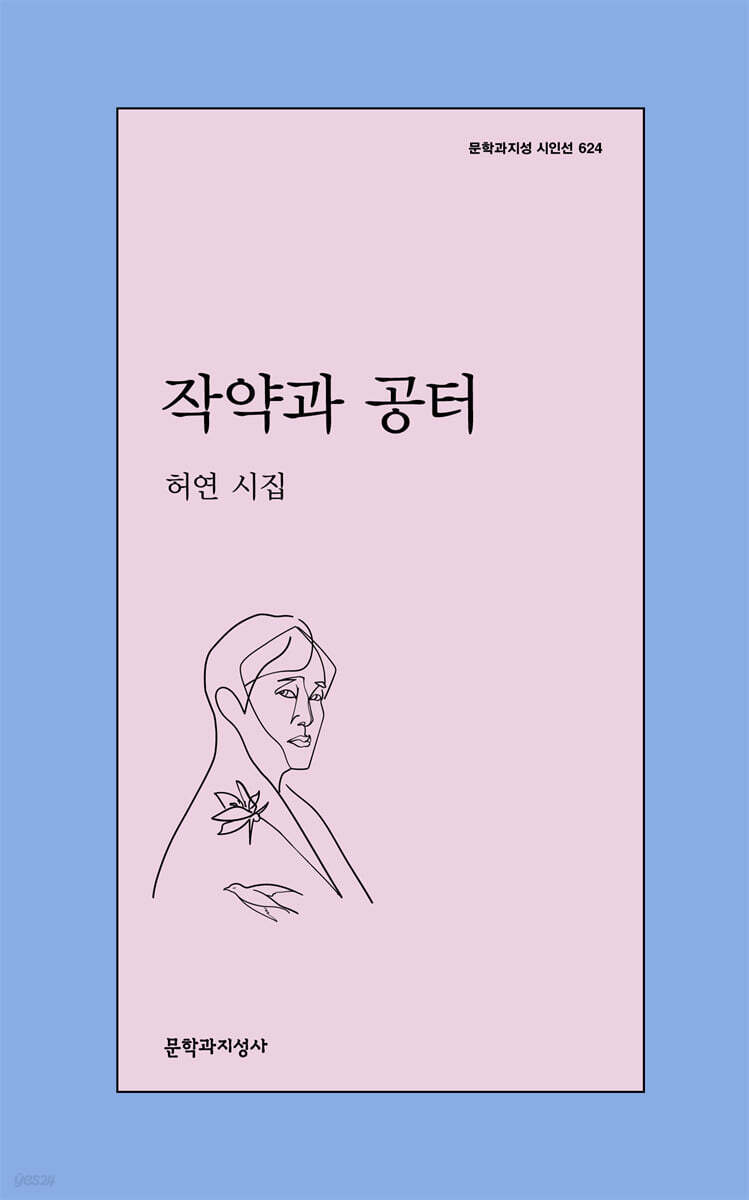
Peonies and vacant lots
 |
Description
Book Introduction
“I was sad and shy, so I was even more embarrassed.”
With the secret movements of a butterfly
The brilliance of existence found on the precipice of life
Heo Yeon's sixth poetry collection, which depicts the joy that blossoms amidst pain.
Poet Heo Yeon, who began her career by winning the Contemporary Poetry World New Writer's Award in 1991 and has been loved by critics and readers alike for her sharp and sophisticated sensibility and her unconventional writing style that leaves a deep impression, has digested various genres such as poetry, children's poems, and essays. This is the sixth poetry collection published in five years since her previous work, "When Will You Become a Song" (Munhak-kwa-Jiseongsa, 2020).
This year, in 2025, the poet won the 26th Contemporary Poetry Award with the comment, “While accumulating poetic experience amidst the wounds and anxieties of youth that appear as signs of the times, he never loses the cynical gaze of an outsider” (Judges: Oh Hyeong-yeop, Park Hye-jin, Yang Sun-mo, and Kim Eon), and the 37th Jeong Ji-yong Literary Award with the comment, “Beautiful, wondrous, yet sad lyricism” (Judges: Lee Geun-bae, Na Tae-ju, Shin Dal-ja, Lee Jae-mu, and Hong Yong-hee).
In his sixth collection of poems, Peonies and Empty Space, the poet stands alone in a quiet 'empty space' where the lingering sounds of poetry vibrate, and he gathers the will to confront the tragedy of life with his whole body.
With “a certain determination to arm one’s entire body with the color of sadness like camouflage and willingly blend into the midst of sadness” (poet Yoo Seon-hye), the book is divided into four parts and contains 66 poems carefully embracing the harsh landscape of a war-like life.
With the secret movements of a butterfly
The brilliance of existence found on the precipice of life
Heo Yeon's sixth poetry collection, which depicts the joy that blossoms amidst pain.
Poet Heo Yeon, who began her career by winning the Contemporary Poetry World New Writer's Award in 1991 and has been loved by critics and readers alike for her sharp and sophisticated sensibility and her unconventional writing style that leaves a deep impression, has digested various genres such as poetry, children's poems, and essays. This is the sixth poetry collection published in five years since her previous work, "When Will You Become a Song" (Munhak-kwa-Jiseongsa, 2020).
This year, in 2025, the poet won the 26th Contemporary Poetry Award with the comment, “While accumulating poetic experience amidst the wounds and anxieties of youth that appear as signs of the times, he never loses the cynical gaze of an outsider” (Judges: Oh Hyeong-yeop, Park Hye-jin, Yang Sun-mo, and Kim Eon), and the 37th Jeong Ji-yong Literary Award with the comment, “Beautiful, wondrous, yet sad lyricism” (Judges: Lee Geun-bae, Na Tae-ju, Shin Dal-ja, Lee Jae-mu, and Hong Yong-hee).
In his sixth collection of poems, Peonies and Empty Space, the poet stands alone in a quiet 'empty space' where the lingering sounds of poetry vibrate, and he gathers the will to confront the tragedy of life with his whole body.
With “a certain determination to arm one’s entire body with the color of sadness like camouflage and willingly blend into the midst of sadness” (poet Yoo Seon-hye), the book is divided into four parts and contains 66 poems carefully embracing the harsh landscape of a war-like life.
- You can preview some of the book's contents.
Preview
index
Poet's words
Part 1
charcoal
Pangyo
When I'm sad, I hide in the rain.
Peonies and vacant lots
The poem is black and the lover smiles
The dog of waiting
Seasonal feeling
To you who went in the summer
The Boy Who Crossed the Mountain
Heaven
October Poem
Beach stop
It's a mess
Useless arrows
Poor Street
Sad Cycle 1
Part 2
Past bird
adolescence
Night shift and village
gloomy plateau
Killing the goldfish
Border Motel
unknown
Copying of sutras
Talking about the heart
Seasons and Pillars
Kwon Jin-gyu
Mom burned down
To the old singer
Peacock City 2
Hyehwa-dong 1
Part 3
Sokcho Port
I was alone like a bell tower
April's illusion
The personal history of the river
desert
Stay safe
sick leave
You were a good person
burning train
At the subway stop
veranda garden
steppe
Reinterpretation of separation
Witness of that day
Adding sorrow to sorrow
Some things have names
Infinite loop
Hearing test
Hopeless days
tinnitus
Part 4
Stella
Growing moss
Hantangang River
It's already too late
A life that is on the decline
Older travel
Wetland Ecology Report
Sad Cycle 2
I decided to pretend not to know about life.
The waves save the child
I want to feel my heart pounding
Peonies and Vacant Lots 2
Landscape and lake
Y's Beach
Burnt Butterfly
epilogue
Champion of Sorrow, Yoo Seon-hye, who loses like a butterfly
Part 1
charcoal
Pangyo
When I'm sad, I hide in the rain.
Peonies and vacant lots
The poem is black and the lover smiles
The dog of waiting
Seasonal feeling
To you who went in the summer
The Boy Who Crossed the Mountain
Heaven
October Poem
Beach stop
It's a mess
Useless arrows
Poor Street
Sad Cycle 1
Part 2
Past bird
adolescence
Night shift and village
gloomy plateau
Killing the goldfish
Border Motel
unknown
Copying of sutras
Talking about the heart
Seasons and Pillars
Kwon Jin-gyu
Mom burned down
To the old singer
Peacock City 2
Hyehwa-dong 1
Part 3
Sokcho Port
I was alone like a bell tower
April's illusion
The personal history of the river
desert
Stay safe
sick leave
You were a good person
burning train
At the subway stop
veranda garden
steppe
Reinterpretation of separation
Witness of that day
Adding sorrow to sorrow
Some things have names
Infinite loop
Hearing test
Hopeless days
tinnitus
Part 4
Stella
Growing moss
Hantangang River
It's already too late
A life that is on the decline
Older travel
Wetland Ecology Report
Sad Cycle 2
I decided to pretend not to know about life.
The waves save the child
I want to feel my heart pounding
Peonies and Vacant Lots 2
Landscape and lake
Y's Beach
Burnt Butterfly
epilogue
Champion of Sorrow, Yoo Seon-hye, who loses like a butterfly
Into the book
This season I
yet again
I will endure each day with what is not enough
Like spores
--- From "When I'm sad, I hide in the rain"
Peony and I
I put down what I had here.
Look closely at the peonies
I was sad and shy, so I was even more embarrassed.
--- From "Peonies and Vacant Lots"
October is all about parting.
October only knows how to say goodbye.
That's why I kneel in October.
The world is as cold as it is full of encounters and partings.
--- From "Poem of October"
Feeding the last remaining carp
The death of an empty cicada
rather
As if to tell us about a summer full of joy
The last remaining carp
That our one season existed
That was the true realm
I was letting you know
--- From "Killing the Goldfish"
I shed tears
Stepping again
I remember the tears
Don't soak your feet in tears
That's life
--- From "Step"
I see it
It was all summer in the world
I was so happy I couldn't even speak.
I wish everything had abandoned me
The child keeps me alive
--- From "The Waves Save the Child - Stella"
In the vacant lot
Your beautiful country and
My terrible country
It was shining ominously
There are strange empty spaces in the world
There is an empty space that makes my mind blank
Because there are peonies
yet again
I will endure each day with what is not enough
Like spores
--- From "When I'm sad, I hide in the rain"
Peony and I
I put down what I had here.
Look closely at the peonies
I was sad and shy, so I was even more embarrassed.
--- From "Peonies and Vacant Lots"
October is all about parting.
October only knows how to say goodbye.
That's why I kneel in October.
The world is as cold as it is full of encounters and partings.
--- From "Poem of October"
Feeding the last remaining carp
The death of an empty cicada
rather
As if to tell us about a summer full of joy
The last remaining carp
That our one season existed
That was the true realm
I was letting you know
--- From "Killing the Goldfish"
I shed tears
Stepping again
I remember the tears
Don't soak your feet in tears
That's life
--- From "Step"
I see it
It was all summer in the world
I was so happy I couldn't even speak.
I wish everything had abandoned me
The child keeps me alive
--- From "The Waves Save the Child - Stella"
In the vacant lot
Your beautiful country and
My terrible country
It was shining ominously
There are strange empty spaces in the world
There is an empty space that makes my mind blank
Because there are peonies
--- From "Peonies and Vacant Lots 2"
Publisher's Review
Poet Heo Yeon, who began her career by winning the Contemporary Poetry World New Writer's Award in 1991 and has been loved by critics and readers alike for her sharp and sophisticated sensibility and her unconventional writing style that leaves a deep impression, has digested various genres such as poetry, children's poems, and essays. This is the sixth poetry collection published in five years since her previous work, "When Will You Become a Song" (Munhak-kwa-Jiseongsa, 2020).
This year, in 2025, the poet won the 26th Contemporary Poetry Award with the comment, “While accumulating poetic experience amidst the wounds and anxieties of youth that appear as signs of the times, he never loses the cynical gaze of an outsider” (Judges: Oh Hyeong-yeop, Park Hye-jin, Yang Sun-mo, and Kim Eon), and the 37th Jeong Ji-yong Literary Award with the comment, “Beautiful, wondrous, yet sad lyricism” (Judges: Lee Geun-bae, Na Tae-ju, Shin Dal-ja, Lee Jae-mu, and Hong Yong-hee).
The poet, who captivated countless young people with his legendary first poetry collection, 『Unsettling Black Blood』 (Minumsa, 2014; Segyesa, 1995) in 1995, broke a long silence of 13 years and rekindled the 'Heoyeon fever' with his second poetry collection, 『A Bad Boy Stands』 (Minumsa, 2008), living up to the expectations of readers who had been eagerly waiting for him with a work that contained the undying passion of rebellion toward the world and a cynical yet compassionate gaze.
Since then, while maintaining a distinct identity as a “nihilist walking around a secular city,” he has built his own unique poetic world by successively presenting poetry collections such as “The Angel I Want” (Munhak-kwa-Jiseongsa, 2012), “Fifty Meters” (Munhak-kwa-Jiseongsa, 2016), and “When Will You Become a Song” that reveal his passionate longing for freedom.
In his sixth collection of poems, Peonies and Empty Space, the poet stands alone in a quiet 'empty space' where the lingering sounds of poetry vibrate, and he gathers the will to confront the tragedy of life with his whole body.
With “a certain determination to arm one’s entire body with the color of sadness like camouflage and willingly blend into the midst of sadness” (poet Yoo Seon-hye), the book is divided into four parts and contains 66 poems carefully embracing the harsh landscape of a war-like life.
The important fact is that the poet's ability to perceive two worlds simultaneously governed by entirely different physical laws makes him a sad man.
[… … ] Well, anything is fine.
If he is still a butterfly, then what really matters is the existence of that star that only a butterfly can see.
The 'star' that made him fly even though he knew it would burn out.
―Yoo Seon-hye, from the preface to “The Champion of Sorrow, Defeated Like a Butterfly”
The beauty of drawing with a premonition of the end
The sad history of a heart blossoming with love
Where did all the songs he sang while drunk go?
Have we entered the stratum of meaningless life and death?
If you die and I live, will I sing those songs?
―The “Pangyo” section
In Heo Yeon's poetry, sadness, loneliness, and the pain that comes with them are inevitable.
For the speaker, life is like the foundation of death, close to darkness like a rag that can be swept away by even the slightest tension.
Love ends in abandonment, surge in sinking, desire in despair.
There is no proper reason for that.
It is the fatigue caused by the light and shapes of the world that penetrate the body immediately after opening one's eyes, and that feeling weighs down life by making one cling to vague possibilities.
And this is the fate of Heo Yeon as an individual and the innate sense he possesses as a poet.
Thus, the speaker of Heo Yeon's poem, who has only experienced "bad seasons and seasons that will get worse," creates a zone that only he can endure.
“There is a skill in sorrow,” so “we suffer pain and create seasons for this area.”
These choices, made solely for the sake of living, open a new path to the world and build a spiritual home where the sacred and the profane intersect.
“Cathedral” (from “Seasonal Sense”) is a literary realm where poetry reveals its transpersonal power, and a place that holds and embraces those who wander.
There, the speaker meets and part ways with “things that were once full” (“Poem of October”), each with their own story, such as an old father, a dead lover, and a stray cat from a time, and experiences “not becoming the same/but melting” (“Useless Arrow - Poetry Composition”).
In this way, “life becomes shabby for a moment and then becomes colorful again” (“Poor Street”).
Readers are deeply fascinated by the strange identification of life and death, and the story of human beings inheriting death but being reborn in their own forms.
In parts 2 and 3 of the poem, the speaker thinks about 'love' anew.
Looking into the soul of a young and pure girl who “even names clouds,” I earnestly hope for a future where “the child wins/and sorrow passes” (“Past Bird”).
While facing a six-year-old child, I cannot erase the wounds of my childhood that flash through my mind and the bitter traces that “remain on my back without leaking” (“Youth”), but I want to “let them know that there was a season/that was the true realm/when we leaned on each other until they were shiny like bronze statues” [“Unknown”) (“Killing a Goldfish”).
“Despite the overwhelming sadness,” aware that “when you die, you don’t die again,” the heart beats again, and the poet “promises to speak of the heart” [Speaking of the Heart - Poetry].
In this way, “life is created on the hill of death” so that “the desert comes alive” (“Desert”).
The train, which has slid down the hill, burns like a “very deep sunset” (“Burning Train”), carrying “all the lonely hearts in the world.”
By not stopping the attempt to “experience oneself” even in misfortune, one’s daily fate will change (“At the Subway Stop”).
Heo Yeon's poetry shows the birth of a sense that transcends sadness, shaking as if on the verge of collapse, through the experience of extreme love.
The determination to “remember the tears, but not to dip my feet in them” (“Step”) transcends personal suffering and leads to a fervent prayer for innocent beings to “be safe” (“Be Safe”).
“Even if you don’t believe in God/It’s like God’s voice is coming out” (“Tinnitus”) For the lonely beings who need a place to lean on in a world stained with sorrow, the poet cultivates a land of confession in the midst of darkness.
A strange season with crashing waves and rain
The song of the butterfly that flies without dying
Writing something about stars
It means confronting some long stories.
Things that shine on their own and become lonely
―Excerpt from "Burnt Butterfly"
The child's song continues.
As we read in the first poem of Part 4, the song, in which “adjectives that never existed in the world/appear out of order,” evokes feelings of “throbbing to the point of death” (“Stella”).
“Whether it is better to live or to die”, it wraps itself around the speaker’s lonely soul like the sound of a music box from childhood, heard at a time when he could not tell whether it was better to live or to die.
Something as cool as the “dawn sunlight” (“Hantan River”) that “enters your face” and encourages you to live.
When the innocent humming of a child overlaps with the tragic childhood memories, the speaker becomes a fighter who desperately tries to prevent the inheritance of sorrow.
Even as he grew older and “all the ideologies he believed in turned into farces” (“Old Journey”), the shame that gripped the young speaker “when white snow fell on the village” (“Wetland Ecology Report”) welled up from deep within his heart, making him dream of exile to an “empty space” instead of cursing and taking revenge on the world.
There is a sky that “only becomes clear when you cry” and a star that “keeps taking butterflies somewhere” (“Burnt Butterfly”).
“I have no strength, but for the first time in my life, I have become something” (“When I’m sad, I hide in the rain”) When the spores are carried by the wind and reach the ‘empty lot’, one day, the peonies that hide their many stories will bloom “sadly and shyly” (“Peonies and Empty Lots”).
After a long rainy season and endlessly repeated wars, one finally sees “the life I’ve always wondered about,” and a strange peace is born, with “your beautiful country/and my terrible country/shining ominously” (“Peonies and Vacant Lots 2”).
Heo Yeon's world of poetry ties this fleeting state through the communion of time and existence to a quiet time of death, "a sprout sprouting again from the fruit," "a turning on of the extinguished," and "a heart-pounding thing" ("I Want to Heart Pound"), and renews life.
As poet Yoo Seon-hye, who wrote the preface to the poetry collection, said, “Heo Yeon has somehow changed a little [……] The poet who has the talent to perceive the ‘silence in cruelty’ now ‘takes responsibility.’”
“The Republic of Heoyeon is closer to a sad democratic republic swayed by the majority of tears,” so in his territory, he “armors his whole body with the color of sadness like a protective color and willingly blends into the midst of sadness.”
Immersed in the waves of life, Heo Yeon's poetry flies with a 'final' flap of wings, whispering a gentle love that "I don't mind if everything I have abandons me" ("The Waves Keep the Child Alive - Stella").
Poet's words
A shout to those who flow without forgetting
Still, I think I'm a butterfly in the sunset
October 2025
Heo Yeon
This year, in 2025, the poet won the 26th Contemporary Poetry Award with the comment, “While accumulating poetic experience amidst the wounds and anxieties of youth that appear as signs of the times, he never loses the cynical gaze of an outsider” (Judges: Oh Hyeong-yeop, Park Hye-jin, Yang Sun-mo, and Kim Eon), and the 37th Jeong Ji-yong Literary Award with the comment, “Beautiful, wondrous, yet sad lyricism” (Judges: Lee Geun-bae, Na Tae-ju, Shin Dal-ja, Lee Jae-mu, and Hong Yong-hee).
The poet, who captivated countless young people with his legendary first poetry collection, 『Unsettling Black Blood』 (Minumsa, 2014; Segyesa, 1995) in 1995, broke a long silence of 13 years and rekindled the 'Heoyeon fever' with his second poetry collection, 『A Bad Boy Stands』 (Minumsa, 2008), living up to the expectations of readers who had been eagerly waiting for him with a work that contained the undying passion of rebellion toward the world and a cynical yet compassionate gaze.
Since then, while maintaining a distinct identity as a “nihilist walking around a secular city,” he has built his own unique poetic world by successively presenting poetry collections such as “The Angel I Want” (Munhak-kwa-Jiseongsa, 2012), “Fifty Meters” (Munhak-kwa-Jiseongsa, 2016), and “When Will You Become a Song” that reveal his passionate longing for freedom.
In his sixth collection of poems, Peonies and Empty Space, the poet stands alone in a quiet 'empty space' where the lingering sounds of poetry vibrate, and he gathers the will to confront the tragedy of life with his whole body.
With “a certain determination to arm one’s entire body with the color of sadness like camouflage and willingly blend into the midst of sadness” (poet Yoo Seon-hye), the book is divided into four parts and contains 66 poems carefully embracing the harsh landscape of a war-like life.
The important fact is that the poet's ability to perceive two worlds simultaneously governed by entirely different physical laws makes him a sad man.
[… … ] Well, anything is fine.
If he is still a butterfly, then what really matters is the existence of that star that only a butterfly can see.
The 'star' that made him fly even though he knew it would burn out.
―Yoo Seon-hye, from the preface to “The Champion of Sorrow, Defeated Like a Butterfly”
The beauty of drawing with a premonition of the end
The sad history of a heart blossoming with love
Where did all the songs he sang while drunk go?
Have we entered the stratum of meaningless life and death?
If you die and I live, will I sing those songs?
―The “Pangyo” section
In Heo Yeon's poetry, sadness, loneliness, and the pain that comes with them are inevitable.
For the speaker, life is like the foundation of death, close to darkness like a rag that can be swept away by even the slightest tension.
Love ends in abandonment, surge in sinking, desire in despair.
There is no proper reason for that.
It is the fatigue caused by the light and shapes of the world that penetrate the body immediately after opening one's eyes, and that feeling weighs down life by making one cling to vague possibilities.
And this is the fate of Heo Yeon as an individual and the innate sense he possesses as a poet.
Thus, the speaker of Heo Yeon's poem, who has only experienced "bad seasons and seasons that will get worse," creates a zone that only he can endure.
“There is a skill in sorrow,” so “we suffer pain and create seasons for this area.”
These choices, made solely for the sake of living, open a new path to the world and build a spiritual home where the sacred and the profane intersect.
“Cathedral” (from “Seasonal Sense”) is a literary realm where poetry reveals its transpersonal power, and a place that holds and embraces those who wander.
There, the speaker meets and part ways with “things that were once full” (“Poem of October”), each with their own story, such as an old father, a dead lover, and a stray cat from a time, and experiences “not becoming the same/but melting” (“Useless Arrow - Poetry Composition”).
In this way, “life becomes shabby for a moment and then becomes colorful again” (“Poor Street”).
Readers are deeply fascinated by the strange identification of life and death, and the story of human beings inheriting death but being reborn in their own forms.
In parts 2 and 3 of the poem, the speaker thinks about 'love' anew.
Looking into the soul of a young and pure girl who “even names clouds,” I earnestly hope for a future where “the child wins/and sorrow passes” (“Past Bird”).
While facing a six-year-old child, I cannot erase the wounds of my childhood that flash through my mind and the bitter traces that “remain on my back without leaking” (“Youth”), but I want to “let them know that there was a season/that was the true realm/when we leaned on each other until they were shiny like bronze statues” [“Unknown”) (“Killing a Goldfish”).
“Despite the overwhelming sadness,” aware that “when you die, you don’t die again,” the heart beats again, and the poet “promises to speak of the heart” [Speaking of the Heart - Poetry].
In this way, “life is created on the hill of death” so that “the desert comes alive” (“Desert”).
The train, which has slid down the hill, burns like a “very deep sunset” (“Burning Train”), carrying “all the lonely hearts in the world.”
By not stopping the attempt to “experience oneself” even in misfortune, one’s daily fate will change (“At the Subway Stop”).
Heo Yeon's poetry shows the birth of a sense that transcends sadness, shaking as if on the verge of collapse, through the experience of extreme love.
The determination to “remember the tears, but not to dip my feet in them” (“Step”) transcends personal suffering and leads to a fervent prayer for innocent beings to “be safe” (“Be Safe”).
“Even if you don’t believe in God/It’s like God’s voice is coming out” (“Tinnitus”) For the lonely beings who need a place to lean on in a world stained with sorrow, the poet cultivates a land of confession in the midst of darkness.
A strange season with crashing waves and rain
The song of the butterfly that flies without dying
Writing something about stars
It means confronting some long stories.
Things that shine on their own and become lonely
―Excerpt from "Burnt Butterfly"
The child's song continues.
As we read in the first poem of Part 4, the song, in which “adjectives that never existed in the world/appear out of order,” evokes feelings of “throbbing to the point of death” (“Stella”).
“Whether it is better to live or to die”, it wraps itself around the speaker’s lonely soul like the sound of a music box from childhood, heard at a time when he could not tell whether it was better to live or to die.
Something as cool as the “dawn sunlight” (“Hantan River”) that “enters your face” and encourages you to live.
When the innocent humming of a child overlaps with the tragic childhood memories, the speaker becomes a fighter who desperately tries to prevent the inheritance of sorrow.
Even as he grew older and “all the ideologies he believed in turned into farces” (“Old Journey”), the shame that gripped the young speaker “when white snow fell on the village” (“Wetland Ecology Report”) welled up from deep within his heart, making him dream of exile to an “empty space” instead of cursing and taking revenge on the world.
There is a sky that “only becomes clear when you cry” and a star that “keeps taking butterflies somewhere” (“Burnt Butterfly”).
“I have no strength, but for the first time in my life, I have become something” (“When I’m sad, I hide in the rain”) When the spores are carried by the wind and reach the ‘empty lot’, one day, the peonies that hide their many stories will bloom “sadly and shyly” (“Peonies and Empty Lots”).
After a long rainy season and endlessly repeated wars, one finally sees “the life I’ve always wondered about,” and a strange peace is born, with “your beautiful country/and my terrible country/shining ominously” (“Peonies and Vacant Lots 2”).
Heo Yeon's world of poetry ties this fleeting state through the communion of time and existence to a quiet time of death, "a sprout sprouting again from the fruit," "a turning on of the extinguished," and "a heart-pounding thing" ("I Want to Heart Pound"), and renews life.
As poet Yoo Seon-hye, who wrote the preface to the poetry collection, said, “Heo Yeon has somehow changed a little [……] The poet who has the talent to perceive the ‘silence in cruelty’ now ‘takes responsibility.’”
“The Republic of Heoyeon is closer to a sad democratic republic swayed by the majority of tears,” so in his territory, he “armors his whole body with the color of sadness like a protective color and willingly blends into the midst of sadness.”
Immersed in the waves of life, Heo Yeon's poetry flies with a 'final' flap of wings, whispering a gentle love that "I don't mind if everything I have abandons me" ("The Waves Keep the Child Alive - Stella").
Poet's words
A shout to those who flow without forgetting
Still, I think I'm a butterfly in the sunset
October 2025
Heo Yeon
GOODS SPECIFICS
- Date of issue: October 1, 2025
- Page count, weight, size: 176 pages | 246g | 128*205*12mm
- ISBN13: 9788932044620
You may also like
카테고리
korean


korean

![ELLE 엘르 스페셜 에디션 A형 : 12월 [2025]](http://librairie.coreenne.fr/cdn/shop/files/b8e27a3de6c9538896439686c6b0e8fb.jpg?v=1766436872&width=3840)


