

Find Yu Gwan-sun
 |
Description
Book Introduction
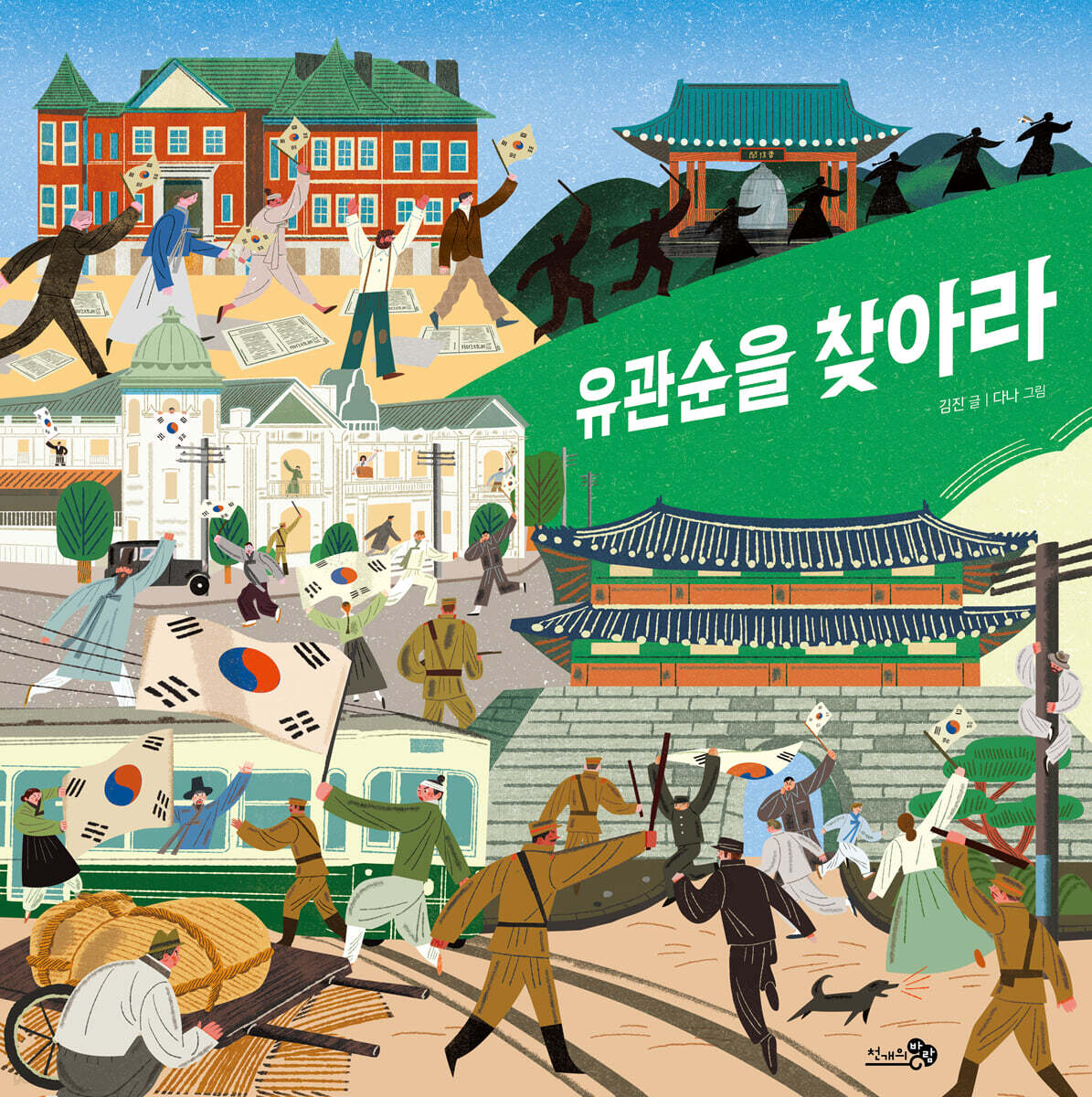
What's wrong with shouting for independence in my country! The story of Yu Gwan-sun, who took to the streets to support the independence movement A historical picture book that tells the story through hidden pictures Wind Picture Book Volume 151. This is the third story in the Find series, following “Find King Sejong” and “Find Jeong Yak-yong.” On March 1, 1919, people took to the streets. We waved the Taegeukgi and held a demonstration to protest against Japan, which had taken over our country. Yu Gwan-sun and her friends, who attended Ewha Haktang, also tried to join the independence movement. However, the principal and the headmaster did not let the students out because it was dangerous. Yu Gwan-sun and her friends did not bend their will. I wanted to contribute even a little to the country's independence. In the end, Yu Gwan-sun and her friends jumped over the school fence. The teachers were startled by the sight and ran out in a hurry. The streets were chaotic, with people shouting for independence and Japanese police trying to arrest them. Will Yu Gwan-sun, her friends, and her teachers all return safely? Will Korea's independence be achieved as everyone hopes? |
- You can preview some of the book's contents.
Preview
Detailed image
Publisher's Review
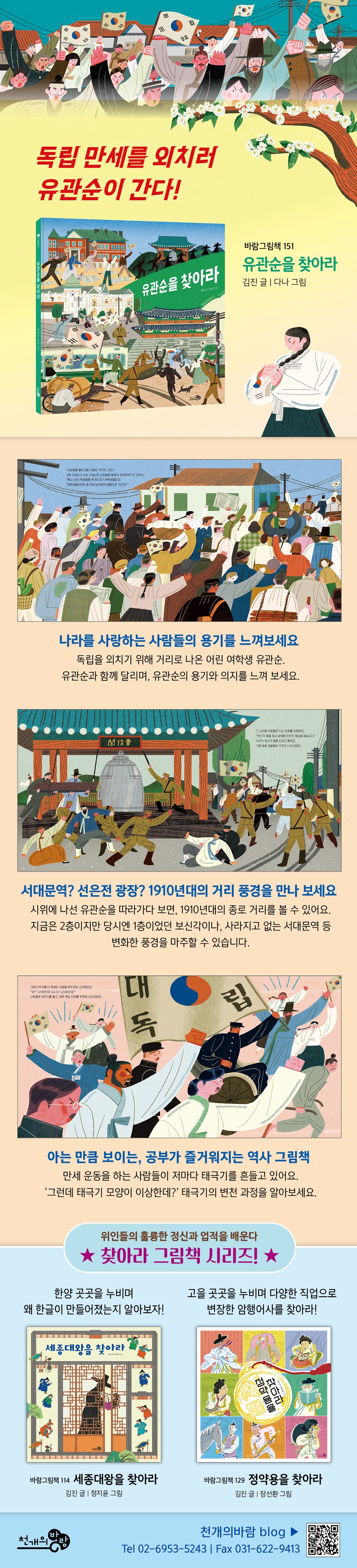
● March 1st Movement and Yu Gwan-sun
March 1, 1919.
People took to the streets of Jongno, shouting for independence and waving the Taegeukgi.
At this time, Yu Gwan-sun also took to the streets with her friends.
Why did such a young student take such a risky action? Author Kim Jin ponders how Yu Gwan-sun would have responded if asked this question, and captures it in her picture book.
“Teacher, I was taught to do the right thing.
I learned not to be a coward.
I learned to have courage.
What should I say now?”
In fact, it is said that when Yu Gwan-sun was captured by the Japanese police, she showed no fear and was brave, just like the confident image in the picture book.
- I am a Korean.
Is it a crime to shout for independence for the country?
- You have no right to convict me, and I have no reason to be judged by you Japanese.
- Long live independence while alive, long live independence even after death.
Today, we live in a peaceful and safe world thanks to Yu Gwan-sun and the people who took to the streets.
"Find Yu Gwan-sun" allows young readers to enjoy the fun of finding Yu Gwan-sun hidden in every scene, while also feeling the meaning of independence and the courage and gratitude of those who led the independence movement.
● Taegeukgi in various shapes
In “Find Yu Gwan-sun,” a somewhat unfamiliar Taegeukgi appears.
When the March 1st Movement took place in 1910, the method of making the Taegeukgi had not been determined.
So at that time, the shape of the Taegeukgi drawn by each person was slightly different.
While artist Dana was contemplating what shape of the Taegeukgi to draw in “Find Yu Gwan-sun,” she drew the Taegeukgi using the woodblocks known to have been used to mass-produce Taegeukgi during the Manse Movement as a reference.
Also, other forms of the Taegeukgi were expressed in various places.
Through "Find Yu Gwan-sun," young readers will learn more accurately about the history of the Taegeukgi and its current shape.
And we can realize that what is more important than the shape of the Taegeukgi is the united hearts of people who love their country.
● A history picture book series that makes learning fun by showing the more you know
In “Find Yu Gwan-sun,” several buildings and landscapes built in the 1910s appear.
Starting with Seodaemun Station, which has now disappeared, the Bosingak Pavilion, which is now a two-story building but was once a single-story building, attracts attention.
Also, along with these buildings, utility poles rise up all over the streets, and trams run along the tracks.
Through the many buildings and landscapes, young readers can get a glimpse of the lives of people at that time.
"Find Yu Gwan-sun" goes beyond simply looking at a picture book, encouraging readers to expand their curiosity.
Knowing this, you can understand the buildings that remain today and the changed environment, and it makes you feel the importance and joy of studying.
March 1, 1919.
People took to the streets of Jongno, shouting for independence and waving the Taegeukgi.
At this time, Yu Gwan-sun also took to the streets with her friends.
Why did such a young student take such a risky action? Author Kim Jin ponders how Yu Gwan-sun would have responded if asked this question, and captures it in her picture book.
“Teacher, I was taught to do the right thing.
I learned not to be a coward.
I learned to have courage.
What should I say now?”
In fact, it is said that when Yu Gwan-sun was captured by the Japanese police, she showed no fear and was brave, just like the confident image in the picture book.
- I am a Korean.
Is it a crime to shout for independence for the country?
- You have no right to convict me, and I have no reason to be judged by you Japanese.
- Long live independence while alive, long live independence even after death.
Today, we live in a peaceful and safe world thanks to Yu Gwan-sun and the people who took to the streets.
"Find Yu Gwan-sun" allows young readers to enjoy the fun of finding Yu Gwan-sun hidden in every scene, while also feeling the meaning of independence and the courage and gratitude of those who led the independence movement.
● Taegeukgi in various shapes
In “Find Yu Gwan-sun,” a somewhat unfamiliar Taegeukgi appears.
When the March 1st Movement took place in 1910, the method of making the Taegeukgi had not been determined.
So at that time, the shape of the Taegeukgi drawn by each person was slightly different.
While artist Dana was contemplating what shape of the Taegeukgi to draw in “Find Yu Gwan-sun,” she drew the Taegeukgi using the woodblocks known to have been used to mass-produce Taegeukgi during the Manse Movement as a reference.
Also, other forms of the Taegeukgi were expressed in various places.
Through "Find Yu Gwan-sun," young readers will learn more accurately about the history of the Taegeukgi and its current shape.
And we can realize that what is more important than the shape of the Taegeukgi is the united hearts of people who love their country.
● A history picture book series that makes learning fun by showing the more you know
In “Find Yu Gwan-sun,” several buildings and landscapes built in the 1910s appear.
Starting with Seodaemun Station, which has now disappeared, the Bosingak Pavilion, which is now a two-story building but was once a single-story building, attracts attention.
Also, along with these buildings, utility poles rise up all over the streets, and trams run along the tracks.
Through the many buildings and landscapes, young readers can get a glimpse of the lives of people at that time.
"Find Yu Gwan-sun" goes beyond simply looking at a picture book, encouraging readers to expand their curiosity.
Knowing this, you can understand the buildings that remain today and the changed environment, and it makes you feel the importance and joy of studying.
GOODS SPECIFICS
- Date of issue: February 19, 2024
- Page count, weight, size: 40 pages | 500g | 278*278*8mm
- ISBN13: 9791165734749
- ISBN10: 1165734745
- KC Certification: Certification Type: Conformity Confirmation
You may also like
카테고리
korean


korean

![GQ KOREA Mark (Monthly): December [2025]](http://librairie.coreenne.fr/cdn/shop/files/8ef265dbbfbf186523ed75ba7319009d.jpg?v=1765340328&width=3840)


