

Lee Sun From
 |
Description
Book Introduction
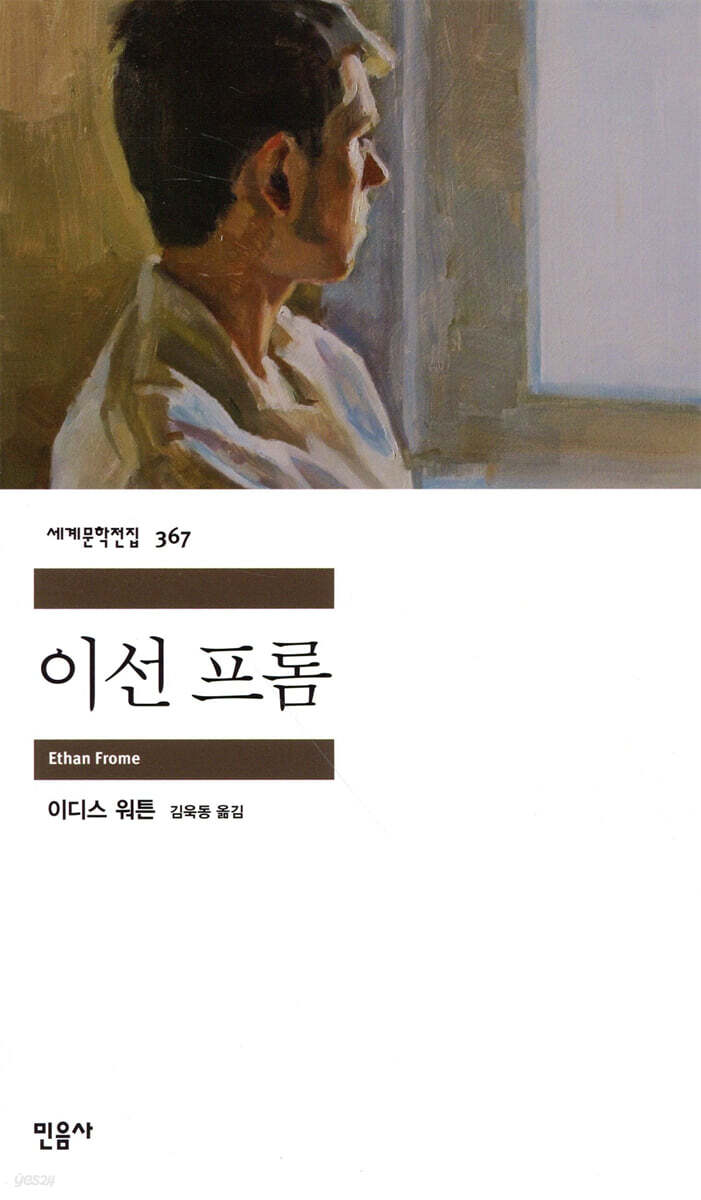
Lee Sun From lives like an "old abandoned ship" in a loveless marriage. A sad self-portrait of our inner selves, suppressed in the name of morality and ethics. An autobiographical work by Edith Wharton, the first female Pulitzer Prize-winning author Among Edith Wharton's works, Ethan Frome, the most widely read, was published as volume 367 in the Minumsa World Literature Collection. This work, which depicts the process of Lee Seon, who had been living listlessly in a loveless marriage, becoming aware of her inner desires, is evaluated to have delicately captured the inner world of an individual who stands up against the collective oppression of morality and convention. Ethan, a poor New England farmer and husband of a sickly wife, despairs as he realizes that he has been living a "life in death" between his wife, Gina, who represents social duty, and his wife, Matty, who represents personal freedom. This work, which was embroiled in moral controversy upon its publication in 1911, is an autobiographical novel reflecting the author's own life. Born into a storied New York upper-class family, Wharton entered society early and married, but struggled between a loveless marriage and her writing ambitions. It was re-examined in earnest after the feminist craze of the 1970s, and its groundbreaking ending has been recalled for a long time, and it has been reborn as a play and film several times. |
- You can preview some of the book's contents.
Preview
Into the book
Dennis Eadie was the son of Michael Eadie, an ambitious Irish grocer.
Michael was the first to show the residents of Stockfield what 'slick' salesmanship was, in a way that was both flattering and brazen.
His brick-built shop was a testament to the success of his endeavor.
The son, too, seemed to be following in his father's footsteps, and was, in the meantime, using the same techniques to subdue the maidens of Stockfield.
--- p.32
When his wife first suggested that they let Mattie out for an occasional evening out, Ethan was dissatisfied with the prospect of having to walk three kilometers back and forth to town after a hard day on the farm.
But it didn't take long for me to reach the point where I wanted a fun party every night at Stockfield.
--- p.33
To him, who had never been happy except when he was with Matty, her current happiness seemed to be a clear demonstration of her indifference.
The face she looked at her dancing partner with was the same one that always looked like a glass window bathed in the evening glow when facing Lee Sun.
I also noticed two or three gestures that I foolishly thought she was keeping for herself.
--- p.36
This sweet spiritual connection was most intensely felt when the two walked together at night toward the farmhouse.
He was always more sensitive to the beauty of nature than those around him.
The studies I had to drop out of midway gave shape to this sensibility.
Even in his most unfortunate moments, the sky and the plains spoke to him with deep and powerful persuasiveness.
But until now, that feeling had remained in my heart as a silent pain, with sadness covering the beauty it had evoked.
He didn't know if there was anyone else in the world who felt this way, or if he was the only victim of this pitiful privilege.
--- p.34
A single, twisted vine dangled from the entrance like a black ribbon hanging in front of a merchant's house door.
At that moment, the thought, ‘If that was really for Jina… …’ flashed through Lee Seon’s mind.
Then, a vivid image of my wife lying in the bedroom, her mouth slightly open, her dentures in a cup next to the bed, came to mind… … .
--- p.51
After the funeral, seeing Jinaga preparing to leave, Lee Seon was gripped by an unfounded fear that he would be left alone on the farm.
So, without even realizing what he was saying, he asked Gina to stay at his house.
Since then, he sometimes thought that if his mother had died in the spring instead of the winter, this wouldn't have happened...
--- p.67
'By this time tomorrow, my wife will be sitting in that chair, rocking and swaying,' Lee Seon thought.
'I've been wandering in a dream all this time.
'Today is the last night we'll spend together, just the two of us.' Returning from a dream to reality was as painful as regaining consciousness after being administered anesthesia.
--- p.89
“Matt, my hands and feet are tied up.
“There’s nothing I can do,” he said again.
“Mr. Lee, please write to me sometimes.”
“Oh, what good would a letter do? I want to reach out and touch you.
I want to do everything for you and take care of you.
“I want to be with you when you’re sick, when you’re lonely.”
Michael was the first to show the residents of Stockfield what 'slick' salesmanship was, in a way that was both flattering and brazen.
His brick-built shop was a testament to the success of his endeavor.
The son, too, seemed to be following in his father's footsteps, and was, in the meantime, using the same techniques to subdue the maidens of Stockfield.
--- p.32
When his wife first suggested that they let Mattie out for an occasional evening out, Ethan was dissatisfied with the prospect of having to walk three kilometers back and forth to town after a hard day on the farm.
But it didn't take long for me to reach the point where I wanted a fun party every night at Stockfield.
--- p.33
To him, who had never been happy except when he was with Matty, her current happiness seemed to be a clear demonstration of her indifference.
The face she looked at her dancing partner with was the same one that always looked like a glass window bathed in the evening glow when facing Lee Sun.
I also noticed two or three gestures that I foolishly thought she was keeping for herself.
--- p.36
This sweet spiritual connection was most intensely felt when the two walked together at night toward the farmhouse.
He was always more sensitive to the beauty of nature than those around him.
The studies I had to drop out of midway gave shape to this sensibility.
Even in his most unfortunate moments, the sky and the plains spoke to him with deep and powerful persuasiveness.
But until now, that feeling had remained in my heart as a silent pain, with sadness covering the beauty it had evoked.
He didn't know if there was anyone else in the world who felt this way, or if he was the only victim of this pitiful privilege.
--- p.34
A single, twisted vine dangled from the entrance like a black ribbon hanging in front of a merchant's house door.
At that moment, the thought, ‘If that was really for Jina… …’ flashed through Lee Seon’s mind.
Then, a vivid image of my wife lying in the bedroom, her mouth slightly open, her dentures in a cup next to the bed, came to mind… … .
--- p.51
After the funeral, seeing Jinaga preparing to leave, Lee Seon was gripped by an unfounded fear that he would be left alone on the farm.
So, without even realizing what he was saying, he asked Gina to stay at his house.
Since then, he sometimes thought that if his mother had died in the spring instead of the winter, this wouldn't have happened...
--- p.67
'By this time tomorrow, my wife will be sitting in that chair, rocking and swaying,' Lee Seon thought.
'I've been wandering in a dream all this time.
'Today is the last night we'll spend together, just the two of us.' Returning from a dream to reality was as painful as regaining consciousness after being administered anesthesia.
--- p.89
“Matt, my hands and feet are tied up.
“There’s nothing I can do,” he said again.
“Mr. Lee, please write to me sometimes.”
“Oh, what good would a letter do? I want to reach out and touch you.
I want to do everything for you and take care of you.
“I want to be with you when you’re sick, when you’re lonely.”
--- p.143
Publisher's Review
■ Edith Wharton, the towering figure of American literature
Edith Wharton, who was active from the late 19th century to the early 20th century, was the first American female writer to pursue pure literature.
Around this time, with the development of printing technology, the number of female writers writing popular novels increased explosively, but most of their works were forgotten with the passage of time.
However, Wharton's novels have become canonical in American literary history, and one of her masterpieces, The Age of Innocence, won her the Pulitzer Prize in 1921, the first woman to do so.
Especially after the feminist craze of the 1970s, Edith Wharton was re-evaluated, and works such as "Ethan Frome," which has a strong autobiographical element, and "Summer," which was the first American literary work to deal with women's sexual passion, began to be widely read.
Author Gore Vidal, winner of the 1993 National Medal of Arts, once said, “On the mountain of American literature, Henry James has occupied a slightly higher peak than Edith Wharton, but now he is on equal footing.”
■ Lee Sun Frome, wandering in a loveless marriage
/“This sweet spiritual connection was most intensely felt when the two walked together at night toward the farmhouse.
He was always more sensitive to the beauty of nature than those around him.
The studies I had to drop out of midway gave shape to this sensibility.
Even in his most unfortunate moments, the sky and the plains spoke to him with deep and powerful persuasiveness.
However, he did not know if there was anyone else in the world who felt this way, or if he was the only victim of this pitiful privilege.
Then I noticed another soul trembling with the same sense of wonder.
“It was a living being that lived right next to him, under the same roof, and ate the food he provided.” ―From “Ethan Frome”/
The protagonist, Lee Sun, is a poor farmer living in a rural New England village who once studied in a laboratory at an engineering college for about a year.
Then, as his parents' illness worsened, he gave up his dream of becoming an engineer and moved to the countryside.
After a loveless marriage to his cousin, Gina, and her subsequent illness, Iseon is completely confined to the village, but his brief studies remain as a legacy, helping him imagine life beyond the village and understand the vast, vague meanings that lie beneath the surface of everyday life.
His studies once became a refuge from his boring life and supported him.
Then one day, Matty, a relative of the wife, is hired by the couple to do housework for the sick wife.
Mattie is so inept at housekeeping that it's hard to describe her as a helper, but she's the only one in town with the sensitivity to appreciate the movement of stars and the beauty of the landscape.
Lee Sun is the first to notice this side of Mattie and experiences the vitality of life through conversations with her.
But the more I do that, the more I realize that my hands and feet are tied tightly.
This is because he, with his generous and indecisive personality, knows very well that he does not have the courage to betray his wife and those around him and forge a new destiny.
Meanwhile, Gina, whose illness has worsened, goes on an overnight trip to see a doctor, leaving the two of them alone in the country house in the middle of winter.
■ Wharton's autobiographical work, about his struggles between marriage and writing.
The Jones family, into which Wharton was born, was one of the most prestigious families in New York and was an elite group known as the "400." At the time, the expression "keeping up with the Joneses" was popular in high society.
At the time, it was common for upper-class women to marry, have children, and become mothers, but Wharton, who had developed an interest in reading at an early age, showed a deep interest in literature.
He wrote a novella at the age of fourteen, published a book of poetry at sixteen, and had poems published in The Atlantic Monthly.
Then, her mother, worried that her daughter was becoming obsessed with literature, introduced her to society at an early age, and eventually, at the age of twenty-three, she married Edward Wharton, a man thirteen years her senior.
The loveless marriage was unhappy from the start, and when her husband Edward eventually had an affair, Wharton was devastated.
To escape her suffocating marriage, she had a three-year relationship with Morton Fullerton, a young American journalist.
This choice caused a huge stir in American society, where the Puritan spirit still lives and breathes, and it remained a scandal that was disadvantageous to her as a woman.
It is said that she chose to become a writer as a way to combat her depressing marriage and oppressive social structure, but the more fame she gained as a writer, the more her relationship with her jealous husband deteriorated.
In light of these facts, "Ethan From", which tells the story of Ethan, who had dreamed of going to the city to study, becoming isolated in a rural village and struggling between his wife Gina and another woman, Mattie, can be said to be a work that faithfully reflects autobiographical elements, with the only difference being that the genders are slightly switched.
The Birth of Twin Novels - "Ethan Frome" and "Summer"
/“Why would you look at a loser like me? You want another friend… You chose the best you’ve ever seen… Well, that’s always been the case with me.” ―From “Summer”/
Published in 1911 and 1917, Ethan Frome and Summer are often called literary twins, as they were considered sister works by their author, Wharton.
In particular, both novels are very similar in that they depict rural New England towns and deal with love triangles between a man and a woman.
Another important similarity between the protagonists of 'Lee Sun From' and 'Charity' of 'Summer' is that they are both filled with a passion for learning.
However, due to the aforementioned geographical limitations, the two miss out on the opportunity to go to the city and receive an education, and end up frustrated.
'Lee Sun' and 'Charity' are in danger of falling in love without any affection, skipping the process of freely exploring each other in a small rural village the size of a palm.
Under these circumstances, it might be natural that the two men would fall for Matty and Honey, who came from outside the city.
These two works, which depict the social frustration and sexual isolation of young people living in early 20th-century New England farming society, offer the pleasure of reading by comparing the two protagonists' different reactions to the desire for love that remains alive like a dormant volcano.
▶ Wharton is one of the greatest writers of the 20th century.
─ [Observer]
Edith Wharton, who was active from the late 19th century to the early 20th century, was the first American female writer to pursue pure literature.
Around this time, with the development of printing technology, the number of female writers writing popular novels increased explosively, but most of their works were forgotten with the passage of time.
However, Wharton's novels have become canonical in American literary history, and one of her masterpieces, The Age of Innocence, won her the Pulitzer Prize in 1921, the first woman to do so.
Especially after the feminist craze of the 1970s, Edith Wharton was re-evaluated, and works such as "Ethan Frome," which has a strong autobiographical element, and "Summer," which was the first American literary work to deal with women's sexual passion, began to be widely read.
Author Gore Vidal, winner of the 1993 National Medal of Arts, once said, “On the mountain of American literature, Henry James has occupied a slightly higher peak than Edith Wharton, but now he is on equal footing.”
■ Lee Sun Frome, wandering in a loveless marriage
/“This sweet spiritual connection was most intensely felt when the two walked together at night toward the farmhouse.
He was always more sensitive to the beauty of nature than those around him.
The studies I had to drop out of midway gave shape to this sensibility.
Even in his most unfortunate moments, the sky and the plains spoke to him with deep and powerful persuasiveness.
However, he did not know if there was anyone else in the world who felt this way, or if he was the only victim of this pitiful privilege.
Then I noticed another soul trembling with the same sense of wonder.
“It was a living being that lived right next to him, under the same roof, and ate the food he provided.” ―From “Ethan Frome”/
The protagonist, Lee Sun, is a poor farmer living in a rural New England village who once studied in a laboratory at an engineering college for about a year.
Then, as his parents' illness worsened, he gave up his dream of becoming an engineer and moved to the countryside.
After a loveless marriage to his cousin, Gina, and her subsequent illness, Iseon is completely confined to the village, but his brief studies remain as a legacy, helping him imagine life beyond the village and understand the vast, vague meanings that lie beneath the surface of everyday life.
His studies once became a refuge from his boring life and supported him.
Then one day, Matty, a relative of the wife, is hired by the couple to do housework for the sick wife.
Mattie is so inept at housekeeping that it's hard to describe her as a helper, but she's the only one in town with the sensitivity to appreciate the movement of stars and the beauty of the landscape.
Lee Sun is the first to notice this side of Mattie and experiences the vitality of life through conversations with her.
But the more I do that, the more I realize that my hands and feet are tied tightly.
This is because he, with his generous and indecisive personality, knows very well that he does not have the courage to betray his wife and those around him and forge a new destiny.
Meanwhile, Gina, whose illness has worsened, goes on an overnight trip to see a doctor, leaving the two of them alone in the country house in the middle of winter.
■ Wharton's autobiographical work, about his struggles between marriage and writing.
The Jones family, into which Wharton was born, was one of the most prestigious families in New York and was an elite group known as the "400." At the time, the expression "keeping up with the Joneses" was popular in high society.
At the time, it was common for upper-class women to marry, have children, and become mothers, but Wharton, who had developed an interest in reading at an early age, showed a deep interest in literature.
He wrote a novella at the age of fourteen, published a book of poetry at sixteen, and had poems published in The Atlantic Monthly.
Then, her mother, worried that her daughter was becoming obsessed with literature, introduced her to society at an early age, and eventually, at the age of twenty-three, she married Edward Wharton, a man thirteen years her senior.
The loveless marriage was unhappy from the start, and when her husband Edward eventually had an affair, Wharton was devastated.
To escape her suffocating marriage, she had a three-year relationship with Morton Fullerton, a young American journalist.
This choice caused a huge stir in American society, where the Puritan spirit still lives and breathes, and it remained a scandal that was disadvantageous to her as a woman.
It is said that she chose to become a writer as a way to combat her depressing marriage and oppressive social structure, but the more fame she gained as a writer, the more her relationship with her jealous husband deteriorated.
In light of these facts, "Ethan From", which tells the story of Ethan, who had dreamed of going to the city to study, becoming isolated in a rural village and struggling between his wife Gina and another woman, Mattie, can be said to be a work that faithfully reflects autobiographical elements, with the only difference being that the genders are slightly switched.
The Birth of Twin Novels - "Ethan Frome" and "Summer"
/“Why would you look at a loser like me? You want another friend… You chose the best you’ve ever seen… Well, that’s always been the case with me.” ―From “Summer”/
Published in 1911 and 1917, Ethan Frome and Summer are often called literary twins, as they were considered sister works by their author, Wharton.
In particular, both novels are very similar in that they depict rural New England towns and deal with love triangles between a man and a woman.
Another important similarity between the protagonists of 'Lee Sun From' and 'Charity' of 'Summer' is that they are both filled with a passion for learning.
However, due to the aforementioned geographical limitations, the two miss out on the opportunity to go to the city and receive an education, and end up frustrated.
'Lee Sun' and 'Charity' are in danger of falling in love without any affection, skipping the process of freely exploring each other in a small rural village the size of a palm.
Under these circumstances, it might be natural that the two men would fall for Matty and Honey, who came from outside the city.
These two works, which depict the social frustration and sexual isolation of young people living in early 20th-century New England farming society, offer the pleasure of reading by comparing the two protagonists' different reactions to the desire for love that remains alive like a dormant volcano.
▶ Wharton is one of the greatest writers of the 20th century.
─ [Observer]
GOODS SPECIFICS
- Date of issue: August 14, 2020
- Format: Paperback book binding method guide
- Page count, weight, size: 212 pages | 292g | 132*225*12mm
- ISBN13: 9788937463679
- ISBN10: 8937463679
You may also like
카테고리
korean


korean

![GQ KOREA Mark (Monthly): December [2025]](http://librairie.coreenne.fr/cdn/shop/files/8ef265dbbfbf186523ed75ba7319009d.jpg?v=1765340328&width=3840)


