

Alain Badiou
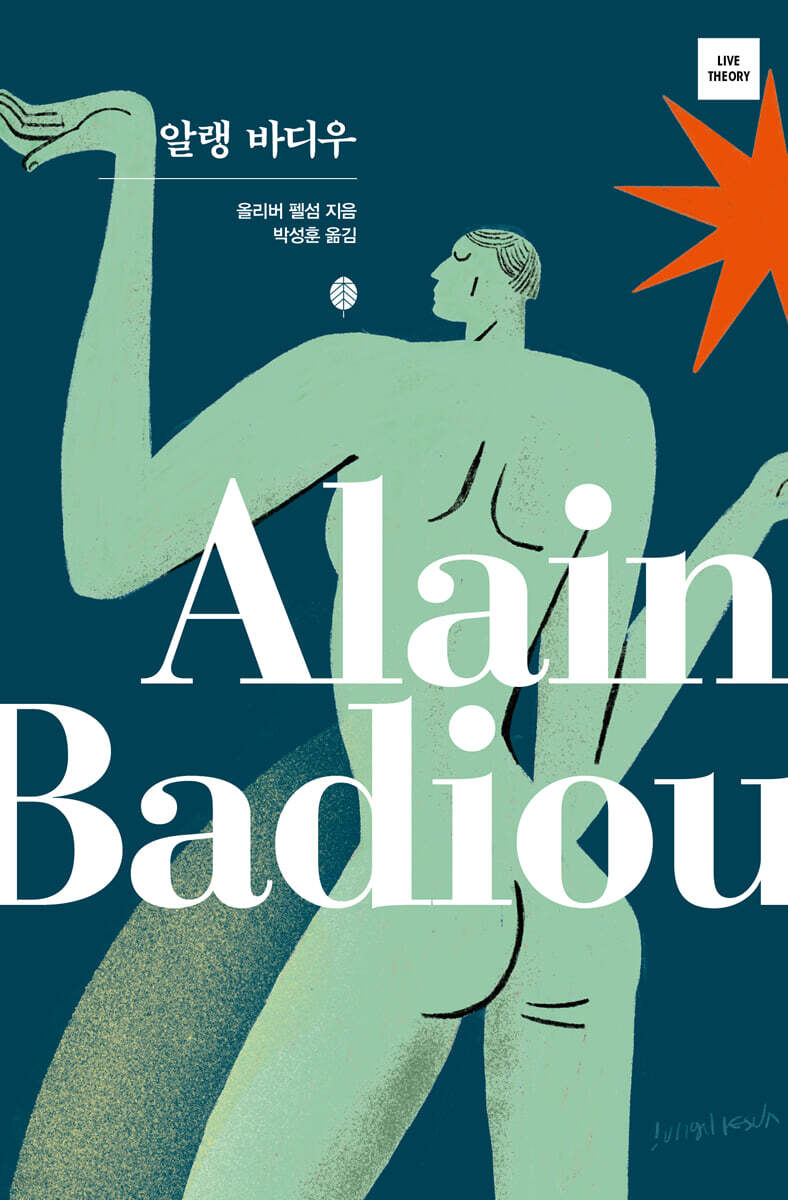 |
Description
Book Introduction
Introduction by the translator of the English edition of "Being and Event"
A general overview of the thought of Alain Badiou, a philosopher of truth and subjectivity.
Since the mid-to-late 20th century, when traditional concepts of truth began to lose their validity and skepticism and relativism began to rise, Alain Badiou has been a philosopher who has maintained the concepts of truth and subject in opposition to this trend.
Through his ontology based on the infinite multitude, his unique conception that politics, love, science, and art constitute the four realms of truth-events, and his efforts to restore a subject that was thought to have been dismantled, Badiou has bucked the trend and risen to the ranks of the most original and powerfully philosophically structured thinkers of his time.
Beginning in the 1990s, it began to receive serious attention not only in France but also in the English-speaking world, and later landed in Korea, where many of its works were translated and several introductory books were also introduced.
Although the systematic philosophy he established and the uncompromising political stance that formed its foundation attracted considerable interest and supporters in Korea, he also faced various criticisms, and above all, his early works and major works after Being and Event have not yet been translated, making it difficult to confirm the overall aspect of Badiou's philosophy.
In this context, the publication of Alain Badiou by Oliver Feltham, the English translator of Being and Event, can be said to be an event that can fill this gap.
- You can preview some of the book's contents.
Preview
index
List of abbreviations
Chapter 1: The Althusserian Period: Epistemology and the Production of Change
introduction
structural changes within society
Structural Changes in Perception: Science and Ideology
The concept of mathematical models and scientific changes
Chapter 2 Maoism and Dialectics
Introduction: There is no such thing as a science of history.
The Maoist Turn: The Priority of Practice
Structural Dialectics and Its Periodization
Consistency and Historical Dialectics
Chapter 3: Building a Set-Theoretic Ontology and a Model of Change
Introduction: Maoism's Devaluation
set-theoretic ontology
Incidents and Interventions
Force and legacy
method
Chapter 4: Badiou Now: A Conversation with Alain Badiou, Paris, December 2007
Acknowledgements
Translator's Note
main
References
Detailed image

Into the book
When Badiou reconstructs Althusser's theory, the location of the immanent and concrete agent of change forms an important concern, which he refers to as the problem of structural causality.
Another important concern of Badiou is to explain the coherence of society as a whole.
In his view, this is what is lacking in Althusser's theory of social change, namely the absence of the concept of the totality of social practices.
--- p.20
If Being and Event brought about a ‘mathematical turn’ in Badiou’s work, it was in fact a return.
His philosophical work begins with a collaboration with mathematics, particularly with Althusser's task of theorizing the collective unity? consistency? of 'complex structures that are always already given.'
--- p.23
Therefore, the site of the Bachelard-Althusserian gesture is Badiou's declaration that mathematics is ontology.
Consequently, if we compare Badiou and Althusser, mathematics actually takes the place of the famous 'social science', even in his early works.
Therefore, philosophy maintains the position and tasks of ‘dialectical materialism.’
--- p.49
Despite instances of such continuity throughout his philosophical writings, the sharpest break occurs during the Maoist period, which immediately followed the publication of The Concept of a Model.
Badiou put aside all epistemological research on mathematics.
When he employs mathematics, it is in his philosophical work, Theory of the Subject, which concludes this period, and moreover, it is done in a strictly analogical manner.
--- p.65
In Badiou's previous project—developing a materialist epistemology of mathematics—truth was condemned as an ideological category, together with the subject, a category that conceals the multiplicity of mechanisms of selection or layering.
In the essays “The Theory of Contradiction” and “On Ideology,” written in the mid-1970s, we can witness the restoration of the category of truth.
--- p.70
Badiou's main argument is simple.
That there is more than one ideology.
For example, any theory of ideology should not be limited to merely explaining the dominant ideology; it must also explain the possibility of a 'proletarian ideology', for without doing so, it cannot explain the outbreak of the uprising.
In response to Deleuze and Guattari, Badiou argues that even if the masses are deceived not by their belief in the dominant ideology but by their desires and subjectively identify with those desires, there is still a need to explain the slave uprising of Spartacus.
--- p.71
Badiou's argument is that any Marxist text is itself a distillation of the militant political experience of past struggles.
The theory of historical dialectics is itself an expression of a specific historical situation.
The traces of such a situation in Theory of the Subject—characterized by May 1968 in France or the Cultural Revolution in China—emphasize that a dialectical theory can explain overall political change.
--- p.85
Therefore, Lacan's concise formula for dialogue therapy is “treating the real through the symbolic.”
In Badiou's judgment, this also functions as a definition suitable for Marxist practice.
That is, the reality of social dysfunction—class antagonism—is treated through Marxist theory and the symbolic order of the party organization.
--- p.99
Dialectical materialism distinguishes thinking from being, stipulates that the process of knowing begins with being, and models the process as a spiral that involves repetition but ends in new knowledge.
The form corresponding to truth is distortion.
Drawing inspiration from the Maoist theme of the struggle between old and new ideas, Badiou concludes that all truth is new.
This thesis will become the cornerstone of his philosophy.
--- p.106
In Theory of the Subject, Badiou undertakes the task of thinking about Marxist politics beyond the Leninist party as a rigid state organization.
To do this, he rethinks the party as a subject, that is, as the disappearance of the state—which occurs within the four aspects of subjectivity.
But it is not just a question of the emergence of change.
It is also a question of how to maintain and sustain political change.
--- p.121
We do not 'believe' in the truth process, but we are caught up in it when—and only when—we recognize that the initial event is irrelevant to the situation, and we become involved in the resulting political process, say, when we decide that it is right for migrant workers to demand political rights.
--- p.239
For Badiou, the state is an ontological concept and is not equivalent to the political state.
It is a principle of secondary structuring that brings together all possible reorganized groups of the multitude manifested in a situation after the initial counting as one.
Therefore, acknowledging the ubiquity of these structuring principles is not the same as embracing the permanence of injustice.
That is, the state of the newly supplemented situation is not the same as the state of the original situation - that is why it is called a counterstate while it is being constructed.
--- p.241
The general rule of Badiou's philosophy is not that one must engage in pure interpretation, but that one must always develop one's arguments on the basis of the conditioning of philosophy.
Such conditioning could be mathematical and could lead to a supplement or reorganization of Badiou's metaontology.
As a result, the original thesis that 'mathematics is ontology' can only be criticized or supported through further philosophical experience with conditioning.
--- p.259
Middle schools should be abolished.
All young people between the ages of 11 and 15 should be engaged in productive work without exception, and should be allowed to spend only half or a quarter of their time studying.
They will return to full-time student life when they turn 16, and they will all have the appearance of persistent 'workers'.
These latter studies will not determine their future, but they will provide a kind of initiation into the truth procedures.
After that, labor will have to be organized in various ways, and everyone will become a 'polymorphous' worker.
In fact, this is a communist program.
--- p.280~281
Publisher's Review
Meet the living intellectual sources of our time
Live Theory series
Jacques Derrida, Judith Butler, Alain Badiou, Donna Haraway, Frederic Jameson, and Gayatri Chakravorty Spivak—these are theorists who are considered the intellectual fountainheads of our time, and authors who are like mountains that readers of the humanities and social sciences must climb.
Although these have been constantly cited in Korea as conceptual resources and theoretical inspiration in various fields, attempts to comprehensively explain their respective theories are still lacking.
Accordingly, Book World Publishing is publishing a translation of the 'Live Theory' series published by Bloomsbury.
This series, which captures the lives and intellectual activities of leading contemporary theorists, as well as vivid interviews, in an appropriate volume, will allow readers to grasp their critical awareness and observe the trajectory of their thinking.
Introduction by the translator of the English edition of Being and Event
A general overview of the thought of Alain Badiou, a philosopher of truth and subjectivity.
Since the mid-to-late 20th century, when traditional concepts of truth began to lose their validity and skepticism and relativism began to rise, Alain Badiou has been a philosopher who has maintained the concepts of truth and subject in opposition to this trend.
Through his ontology based on the infinite multitude, his unique conception that politics, love, science, and art constitute the four realms of truth-events, and his efforts to restore a subject that was thought to have been dismantled, Badiou has bucked the trend and risen to the ranks of the most original and powerfully philosophically structured thinkers of his time.
Beginning in the 1990s, it began to receive serious attention not only in France but also in the English-speaking world, and later landed in Korea, where many of its works were translated and several introductory books were also introduced.
Although the systematic philosophy he established and the uncompromising political stance that formed its foundation attracted considerable interest and supporters in Korea, he also faced various criticisms, and above all, his early works and major works after Being and Event have not yet been translated, making it difficult to confirm the overall aspect of Badiou's philosophy.
In this context, the publication of Alain Badiou by Oliver Felsom, the English translator of Being and Event, can be said to be an event that fills this gap.
From materialist epistemology to Maoism to mathematical ontology
Following the trajectory of Badiou's thought, we examine his concerns and answers.
Badiou's philosophical question can be condensed into 'How is it possible for one state to change into another?'
However, he did not stick to one answer for a long time.
Rather, his philosophy is comprised of intermediate destinations in a process that has been continuously updated and revised in line with sociopolitical changes.
Therefore, rather than assuming a fixed philosophy of Badiou, examining the way his thinking has changed over time is a useful way to understand his philosophical system.
The most distinctive feature of this book, Alain Badiou, is that it divides Badiou's thought into periods, reveals the characteristics of each period, and clarifies the revisions it underwent to reach a mature stage.
Author Oliver Felsom divides Badiou's path of thought into three stages.
Badiou, a young man in his twenties in the mid-1960s, developed a materialist epistemology by accepting and simultaneously criticizing the philosophy of his teacher Louis Althusser.
From the 1970s to the early 1980s, under the strong influence of Maoism, it emphasized the primacy of practice and focused on historical dialectics as opposed to the so-called structural dialectics.
Finally, from the mid-1980s onwards, he elaborated the conceptual structure of truth, events, conditions, and subjects in his own way based on mathematical ontology.
The three periods that Felsom distinguishes reveal the path that led Badiou to his seminal work, Being and Event, while also revealing that the works of each period themselves contain rich implications.
For example, Felsom shows how Badiou's early works, within the context of the structuralist fervor that gripped France and Althusser's reconstruction of Marx, drew on mathematics to explore structural change within society and the possibilities of scientific knowledge.
Also, the concepts of horlieu and esplace, as well as the modes of subjectification composed of anxiety, courage, superego, and justice, that Badiou developed in his 1982 book Theory of the Subject are political-philosophical concepts that have significant implications for today's reality.
Because his major works from his early and mid-period, such as The Concept of the Model (1970), Theory of Contradiction (1975), and Theory of the Subject (1982), had not yet been translated into Korean, Badiou's philosophy at this time remained unknown to most domestic readers.
Through this book by Oliver Feltham, readers will be able to glimpse not only the maturation of Badiou's philosophy, but also the unique characteristics and intellectual significance of each period.
Beyond empty formalism and idealistic voluntarism
An attempt to elucidate the multilayered voices contained in Badiou's philosophy.
This book emphasizes the status of mathematics in Badiou's philosophy.
As is well known, Badiou built his ontology on the basis of mathematical set theory in his major work, Being and Event, which has led to criticism that his philosophy is nothing more than empty formalism.
In interpreting Badiou's mathematical ontology, Felsom suggests viewing it as a 'return' rather than a 'mathematical turn'.
Because Badiou had already used mathematics as his main basis in the late 1960s when he focused on the problem of epistemology.
Through this proposal, Felsom reveals not only the differences but also the consistency in the methods Badiou used across periods, and furthermore, he reveals how the method of invoking mathematics in philosophy can be justified.
On the other hand, Badiou's philosophy is often criticized by contemporary critics as being 'will-theoretic'.
For example, the ‘subject’ of the truth event is no different from the ‘sovereign’ of decisionism.
In response, Felsom argues that these criticisms are based on an unfair judgment that emphasizes only one aspect of Badiou's philosophy.
Badiou himself is already aware of this danger, and anyone who carefully examines his philosophy will discover other tendencies.
As Felsom repeatedly emphasizes, Badiou's philosophy displays a tendency to present a subject that transcends the law, as well as a tendency to view events as gradual and slow revisions of situations, and a tendency to view history from a distance and identify rules and patterns.
The distinction between these three tendencies is Felsom's own interpretation, and it will provide readers with a conceptual framework for understanding the complementary and sometimes conflicting aspects of Badiou's philosophy.
Alain Badiou became a Maoist after being baptized in the 1968 revolution and experienced the decline of Western social democracy and the fall of communism.
His mature philosophy is the product of a process of self-transformation that confronts these social changes and the discourses associated with them.
Oliver Feltham's book, which meticulously analyzes what persists and what changes as he traces the trajectory of his thinking, provides us with the key to a more complete picture of the thinker Alain Badiou.
GOODS SPECIFICS
- Publication date: April 15, 2022
- Page count, weight, size: 320 pages | 392g | 138*210*30mm
- ISBN13: 9791159318306
- ISBN10: 1159318301
You may also like
카테고리
korean


korean


