

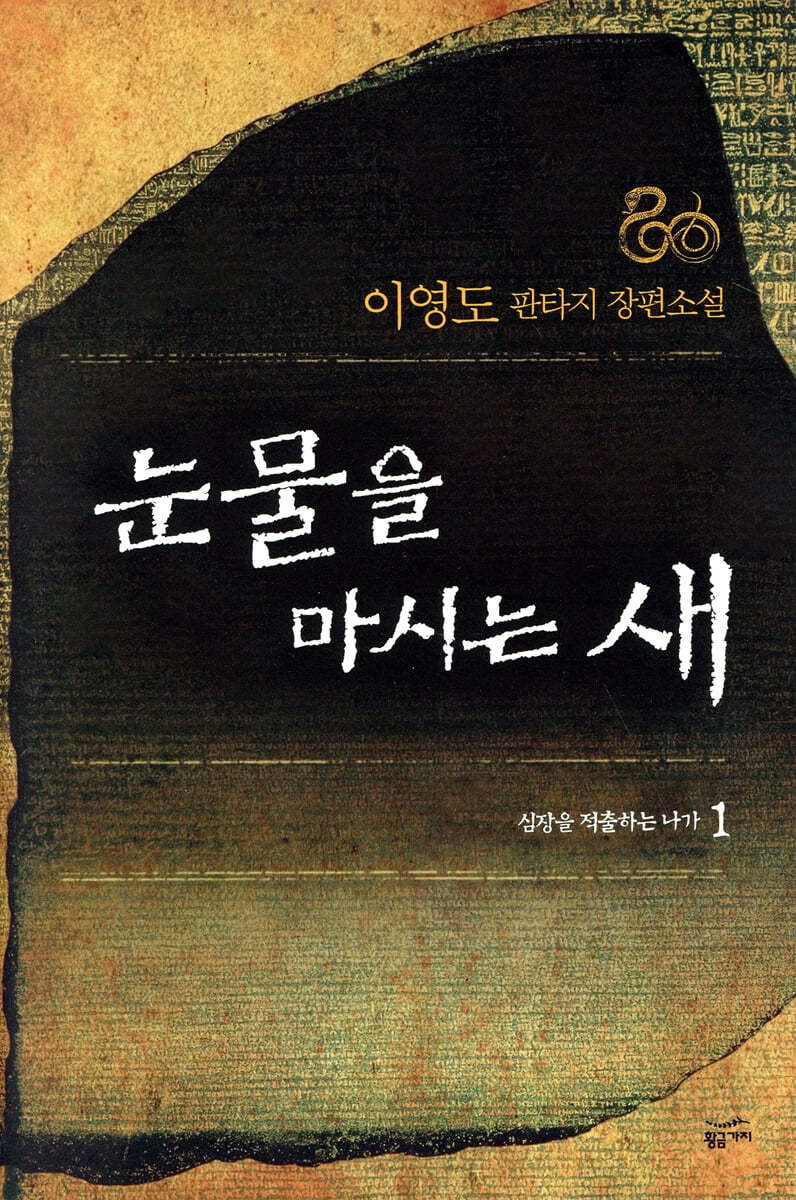
The Bird That Drinks Tears 1
 |
Description
Book Introduction
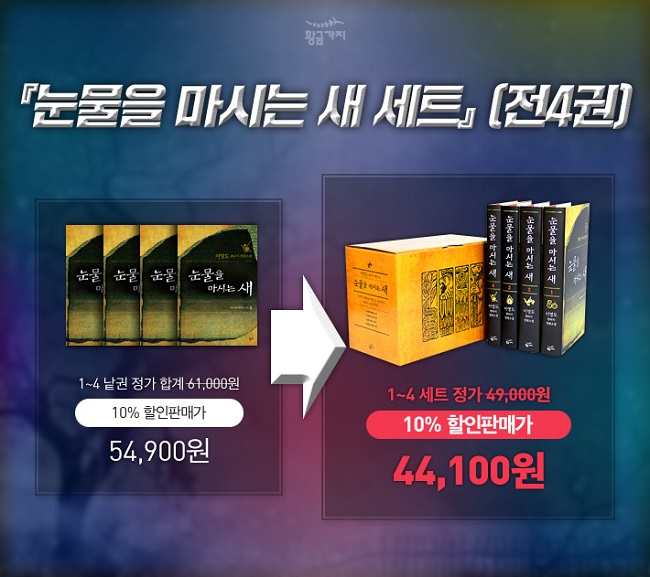
This bundle consists of the following products:
1.
[Book] The Bird That Drinks Tears 1: Naga, the Heartbreaker (Hardcover) | Author | Golden Bough
2.
[Book] The Bird That Drinks Tears 2: Recon in Pursuit of a Long-Desired Wish (Hardcover) | Author | Golden Bough
3.
[Book] The Bird That Drinks Tears 3: The Goblin Who Controls Fire (Hardcover) | Author | Golden Bough
4.
[Book] The Bird That Drinks Tears 4 (Complete): The Man Who Wanders in Search of the King (Hardcover) | Author | Golden Bough
1.
[Book] The Bird That Drinks Tears 1: Naga, the Heartbreaker (Hardcover) | Author | Golden Bough
2.
[Book] The Bird That Drinks Tears 2: Recon in Pursuit of a Long-Desired Wish (Hardcover) | Author | Golden Bough
3.
[Book] The Bird That Drinks Tears 3: The Goblin Who Controls Fire (Hardcover) | Author | Golden Bough
4.
[Book] The Bird That Drinks Tears 4 (Complete): The Man Who Wanders in Search of the King (Hardcover) | Author | Golden Bough
- You can preview some of the book's contents.
Preview
index
introduction
Chapter 1 Rescue Team
Chapter 2 Silver Tears
Chapter 3: Death Flowing Like Tears
Chapter 4: The King-Eating Monster
Chapter 5: Iron and Blood
Chapter 1 Rescue Team
Chapter 2 Silver Tears
Chapter 3: Death Flowing Like Tears
Chapter 4: The King-Eating Monster
Chapter 5: Iron and Blood
Detailed image
Into the book
Amidst the sound of the pounding rain, Tinahan, Bihyung, and Ryun listened to Kagan's monotonous voice tell the comical tale of the romantic (but hardly clever) dragon Quidoburita, who loved the sky, and the unbelievable tale of the great tiger Byeolbi, whom the Kitaljeo hunters had challenged for three generations and barely defeated.
But Kagan had no particular criteria for choosing stories, so the three of them heard the dark and horrifying tales of the Arajit warriors, some of the most brutal humans in history, told through the same voice.
"All the women were killed, and all the men were raped."
Lun was a little surprised, but Bihyung and Tinahan were extremely embarrassed.
"Oh, isn't that backwards?"
"no.
I know it might sound a bit bizarre, but there was a reasonable reason for it.
The Arajit warriors could not have children without the king's permission.
So that's what I did.
If the other person is a man, there will be no children."
The three groaned.
In any case, Kagan provided food, safety, and even entertainment to his companions in this way.
Before they knew it, they couldn't imagine a world without Kagan.
You could call it love, trust, or dependence.
Maybe that's all there is to it.
The evening of the fifth day.
That's probably why the three of them felt terrible when Kagan didn't return until late at night.
But Kagan had no particular criteria for choosing stories, so the three of them heard the dark and horrifying tales of the Arajit warriors, some of the most brutal humans in history, told through the same voice.
"All the women were killed, and all the men were raped."
Lun was a little surprised, but Bihyung and Tinahan were extremely embarrassed.
"Oh, isn't that backwards?"
"no.
I know it might sound a bit bizarre, but there was a reasonable reason for it.
The Arajit warriors could not have children without the king's permission.
So that's what I did.
If the other person is a man, there will be no children."
The three groaned.
In any case, Kagan provided food, safety, and even entertainment to his companions in this way.
Before they knew it, they couldn't imagine a world without Kagan.
You could call it love, trust, or dependence.
Maybe that's all there is to it.
The evening of the fifth day.
That's probably why the three of them felt terrible when Kagan didn't return until late at night.
--- pp.
274∼275
274∼275
"What would it be like to live with a heart?"
Naga's hearing was so poor that he could barely hear a single army of goblins marching behind him, but thanks to Hatengraju's unusual silence, Hwarit was able to understand his friend's words.
Hwarit was embarrassed and couldn't even think of blaming his friend for his rudeness.
Lun Pay sensed that Hwarit's Nirm was very confused.
Not wanting to embarrass his friend any further, Lun kept his mouth shut.
And Lun lifted his right hand and placed it on his chest.
If Hwarit had done the same, he could have felt his own heartbeat, but he didn't.
Because it is so embarrassing.
Hwarit felt that he had been too harsh and added:
Lun lowered his right hand.
Then he turned his body and looked at the center of Hatengraju.
There, the Heart Tower rose dozens of times higher than the tallest buildings in Hatengraju.
The eyes of Lun, who was looking at the Heart Tower, were a mixture of disgust and fear.
His hands, gripping the balcony railing, were trembling slightly.
"What would it be like to live with a heart?"
Naga's hearing was so poor that he could barely hear a single army of goblins marching behind him, but thanks to Hatengraju's unusual silence, Hwarit was able to understand his friend's words.
Hwarit was embarrassed and couldn't even think of blaming his friend for his rudeness.
Lun Pay sensed that Hwarit's Nirm was very confused.
Not wanting to embarrass his friend any further, Lun kept his mouth shut.
And Lun lifted his right hand and placed it on his chest.
If Hwarit had done the same, he could have felt his own heartbeat, but he didn't.
Because it is so embarrassing.
Hwarit felt that he had been too harsh and added:
Lun lowered his right hand.
Then he turned his body and looked at the center of Hatengraju.
There, the Heart Tower rose dozens of times higher than the tallest buildings in Hatengraju.
The eyes of Lun, who was looking at the Heart Tower, were a mixture of disgust and fear.
His hands, gripping the balcony railing, were trembling slightly.
Naga's hearing was so poor that he could barely hear a single army of goblins marching behind him, but thanks to Hatengraju's unusual silence, Hwarit was able to understand his friend's words.
Hwarit was embarrassed and couldn't even think of blaming his friend for his rudeness.
Lun Pay sensed that Hwarit's Nirm was very confused.
Not wanting to embarrass his friend any further, Lun kept his mouth shut.
And Lun lifted his right hand and placed it on his chest.
If Hwarit had done the same, he could have felt his own heartbeat, but he didn't.
Because it is so embarrassing.
Hwarit felt that he had been too harsh and added:
Lun lowered his right hand.
Then he turned his body and looked at the center of Hatengraju.
There, the Heart Tower rose dozens of times higher than the tallest buildings in Hatengraju.
The eyes of Lun, who was looking at the Heart Tower, were a mixture of disgust and fear.
His hands, gripping the balcony railing, were trembling slightly.
"What would it be like to live with a heart?"
Naga's hearing was so poor that he could barely hear a single army of goblins marching behind him, but thanks to Hatengraju's unusual silence, Hwarit was able to understand his friend's words.
Hwarit was embarrassed and couldn't even think of blaming his friend for his rudeness.
Lun Pay sensed that Hwarit's Nirm was very confused.
Not wanting to embarrass his friend any further, Lun kept his mouth shut.
And Lun lifted his right hand and placed it on his chest.
If Hwarit had done the same, he could have felt his own heartbeat, but he didn't.
Because it is so embarrassing.
Hwarit felt that he had been too harsh and added:
Lun lowered his right hand.
Then he turned his body and looked at the center of Hatengraju.
There, the Heart Tower rose dozens of times higher than the tallest buildings in Hatengraju.
The eyes of Lun, who was looking at the Heart Tower, were a mixture of disgust and fear.
His hands, gripping the balcony railing, were trembling slightly.
--- pp.
20-21
20-21
Publisher's Review
『The Bird That Drinks Tears』, a new work by author Lee Young-do, who has attempted various experiments with the fantasy genre through 『Future Walker』 and 『Polaris Rhapsody』, has been published by Golden Bough.
JRR
Unlike other Korean fantasy novels that were influenced by Tolkien's The Lord of the Rings, this one has a complete framework for a fantasy novel that creates an original world based on Korean materials.
In particular, while existing works were dreamlike stories confined to a fantasy world, 『The Bird that Drinks Tears』 attempted a bold transformation into an advanced form of epic fantasy novel that presents the framework of a modern emperor based on a grand scale like a historical drama.
Not only that, but the entire world within the work, including the language, lifestyle, and even the characteristics of each race, was created purely by author Lee Young-do, just like Tolkien.
This is a typical example of original and complete fantasy, and it is suggesting a new direction for Korean fantasy novels that have been unable to escape the influence of American and Japanese fantasy novels.
A new form of fantasy novel that attempts to approach and understand the ruler seriously.
JRR's novel depicts the conflict between absolute evil and those in power who had to control power against that evil during World War II.
The reason Tolkien's 'The Lord of the Rings' has been read by many readers for half a century is because it was a novel written in the feudal era that allowed for a thorough examination of the internal structure of the 'king', the symbol of power, and the power surrounding him.
However, this unique characteristic of fantasy novels has come to require new conditions as time goes by.
In a reality where the Cold War system was collapsing and the power order was being reorganized, a new topic to address this issue was desperately needed.
"The Bird That Drinks Tears" can be seen as a challenge to such a topic.
The word "king," which encompasses the entire work, represents this. In "The Bird That Drinks Tears," characters with a one-sided desire for a "king" (either to become king themselves or to become a follower of the king) appear, leading the story in a completely different direction, and by constantly discussing and reasoning about the king, they ask the reader, "What is the ruling class?"
Yet, the author reveals his own answer in the title of the work.
The title, 'The Bird that Drinks Tears', means 'a king who drinks the tears that his people should shed'.
This means that the condition of a king is not a large army, wealth, or talent, but that the people must bear the pain of sorrow, guilt, and other suffering on his behalf, and that because of the tears that the king drinks on his behalf, the people can become cruel, persecute others, and start wars.
Moreover, 'tears' are harmful to humans and are expelled from the body, and a king who drinks them cannot live long.
The author conveys the weight and original meaning of the word "king-ruler" to humans who only have vague fantasies about the powerful "king" that runs through the title and the entire work, and the fear that can arise due to the "king" that is put forward as a symbol of such humans, making the most of the characteristics of a fantasy novel.
A new epic fantasy novel based on Eastern philosophy
There is another thing that clearly distinguishes 『The Bird That Drinks Tears』 from existing Korean fantasy novels.
Existing Korean fantasy novels are mostly set in medieval Europe, influenced by American or Japanese fantasy novels.
However, 『The Bird That Drinks Tears』 was written with oriental colors, especially Korean sentiment, as its basic foundation.
This is represented by the case of the 'Dokkaebi', one of the four main races that appear. They enjoy wrestling and Yut Nori, and enjoy wearing a Dokkaebi hat and surprising others, but they are similar to the traditional Korean Dokkaebi in that they fear blood and hate violence.
Additionally, the language of the ancient kingdom, which serves as an important clue in the work, is borrowed directly from our old language (the language used in the mid-Joseon period), and the names of the creatures that appear are also made up of pure Korean words such as ‘Du-eok-sini’ and ‘Maru-na-rae’, which also proves this.
Unlike existing fantasy novels that only deal with priests, clergy, and archbishops, it is also new to see temples, monks, and chief priests appearing.
Lee Young-do's unique setting and story progression.
In 『The Bird That Drinks Tears』, as in his previous works, Lee Young-do's unique and mysterious story captures the reader's attention.
In particular, the unique races divided into four groups fit the story of the work and create new twists in each element of the incident.
The most notable of these is the human race, which resembles modern humans.
The fact that the race is full of aspiring kings, each of whom is growing their own power, but is actually the weakest of the four races, shows the contradictions of humanity.
Other races have similar contradictory characteristics.
The Recon tribe, which resembles a chicken, is the most powerful of the four races in terms of individual strength, with a height of up to 3 meters, strong physical strength, and weapons gifted from the gods. However, due to their individualism, which focuses solely on achieving their own desires, they are unable to unite as a race and always have the weakness of fighting alone.
The goblin, who can freely manipulate fire, can kill hundreds of thousands of people at once if he wants to, but because he fundamentally fears violence and blood, he cannot have any influence on the world.
Naga, who has scales like a snake and a cold-blooded constitution, communicates with humans through 'Nirum', a mental communication method rather than 'speech', and has become semi-immortal by removing his heart, but has a constitutional limitation that makes it unable to withstand the cold temperatures of the northern region due to his cold-blooded constitution.
None of the races in the entire work remain in a perfect state.
Proverbs and sayings used in the work also make the most of ethnic characteristics to pique the interest of readers.
In the case of Recon, who has the characteristic of being afraid of water, there are also curses such as 'Fall into the carp mansion and die' and 'Small ice will be turned over', and Nagas who use the mental language called Nirm instead of words also use variant language such as 'Nireumdoan-da (nonsense)' and 'Nireum-jalmeo-ma-ra (don't cut off words)'.
Also, the 'commander' and 'toll road party' that appear beyond race are unique to Lee Young-do's novels.
The Commander is a body that has multiple souls inhabiting it for a long period of time, and a similar body can be seen in the movie Being John Malkovich.
This commander, born from the desire of living beings to live forever, always claims, "I will die and not pass on anymore," but when it comes to death, it shows a weak side by passing on eternal life to others.
The group called 'Toll Road Party' is a unique group that collects tolls instead of maintaining the roads in the work. Passengers who pay to use the roads are customers, and those who use the roads without paying are unconditionally classified as customers.
However, due to this strict regulation, even the enemies of all humanity are considered customers if they pay money, which leads to the contradiction.
JRR
Unlike other Korean fantasy novels that were influenced by Tolkien's The Lord of the Rings, this one has a complete framework for a fantasy novel that creates an original world based on Korean materials.
In particular, while existing works were dreamlike stories confined to a fantasy world, 『The Bird that Drinks Tears』 attempted a bold transformation into an advanced form of epic fantasy novel that presents the framework of a modern emperor based on a grand scale like a historical drama.
Not only that, but the entire world within the work, including the language, lifestyle, and even the characteristics of each race, was created purely by author Lee Young-do, just like Tolkien.
This is a typical example of original and complete fantasy, and it is suggesting a new direction for Korean fantasy novels that have been unable to escape the influence of American and Japanese fantasy novels.
A new form of fantasy novel that attempts to approach and understand the ruler seriously.
JRR's novel depicts the conflict between absolute evil and those in power who had to control power against that evil during World War II.
The reason Tolkien's 'The Lord of the Rings' has been read by many readers for half a century is because it was a novel written in the feudal era that allowed for a thorough examination of the internal structure of the 'king', the symbol of power, and the power surrounding him.
However, this unique characteristic of fantasy novels has come to require new conditions as time goes by.
In a reality where the Cold War system was collapsing and the power order was being reorganized, a new topic to address this issue was desperately needed.
"The Bird That Drinks Tears" can be seen as a challenge to such a topic.
The word "king," which encompasses the entire work, represents this. In "The Bird That Drinks Tears," characters with a one-sided desire for a "king" (either to become king themselves or to become a follower of the king) appear, leading the story in a completely different direction, and by constantly discussing and reasoning about the king, they ask the reader, "What is the ruling class?"
Yet, the author reveals his own answer in the title of the work.
The title, 'The Bird that Drinks Tears', means 'a king who drinks the tears that his people should shed'.
This means that the condition of a king is not a large army, wealth, or talent, but that the people must bear the pain of sorrow, guilt, and other suffering on his behalf, and that because of the tears that the king drinks on his behalf, the people can become cruel, persecute others, and start wars.
Moreover, 'tears' are harmful to humans and are expelled from the body, and a king who drinks them cannot live long.
The author conveys the weight and original meaning of the word "king-ruler" to humans who only have vague fantasies about the powerful "king" that runs through the title and the entire work, and the fear that can arise due to the "king" that is put forward as a symbol of such humans, making the most of the characteristics of a fantasy novel.
A new epic fantasy novel based on Eastern philosophy
There is another thing that clearly distinguishes 『The Bird That Drinks Tears』 from existing Korean fantasy novels.
Existing Korean fantasy novels are mostly set in medieval Europe, influenced by American or Japanese fantasy novels.
However, 『The Bird That Drinks Tears』 was written with oriental colors, especially Korean sentiment, as its basic foundation.
This is represented by the case of the 'Dokkaebi', one of the four main races that appear. They enjoy wrestling and Yut Nori, and enjoy wearing a Dokkaebi hat and surprising others, but they are similar to the traditional Korean Dokkaebi in that they fear blood and hate violence.
Additionally, the language of the ancient kingdom, which serves as an important clue in the work, is borrowed directly from our old language (the language used in the mid-Joseon period), and the names of the creatures that appear are also made up of pure Korean words such as ‘Du-eok-sini’ and ‘Maru-na-rae’, which also proves this.
Unlike existing fantasy novels that only deal with priests, clergy, and archbishops, it is also new to see temples, monks, and chief priests appearing.
Lee Young-do's unique setting and story progression.
In 『The Bird That Drinks Tears』, as in his previous works, Lee Young-do's unique and mysterious story captures the reader's attention.
In particular, the unique races divided into four groups fit the story of the work and create new twists in each element of the incident.
The most notable of these is the human race, which resembles modern humans.
The fact that the race is full of aspiring kings, each of whom is growing their own power, but is actually the weakest of the four races, shows the contradictions of humanity.
Other races have similar contradictory characteristics.
The Recon tribe, which resembles a chicken, is the most powerful of the four races in terms of individual strength, with a height of up to 3 meters, strong physical strength, and weapons gifted from the gods. However, due to their individualism, which focuses solely on achieving their own desires, they are unable to unite as a race and always have the weakness of fighting alone.
The goblin, who can freely manipulate fire, can kill hundreds of thousands of people at once if he wants to, but because he fundamentally fears violence and blood, he cannot have any influence on the world.
Naga, who has scales like a snake and a cold-blooded constitution, communicates with humans through 'Nirum', a mental communication method rather than 'speech', and has become semi-immortal by removing his heart, but has a constitutional limitation that makes it unable to withstand the cold temperatures of the northern region due to his cold-blooded constitution.
None of the races in the entire work remain in a perfect state.
Proverbs and sayings used in the work also make the most of ethnic characteristics to pique the interest of readers.
In the case of Recon, who has the characteristic of being afraid of water, there are also curses such as 'Fall into the carp mansion and die' and 'Small ice will be turned over', and Nagas who use the mental language called Nirm instead of words also use variant language such as 'Nireumdoan-da (nonsense)' and 'Nireum-jalmeo-ma-ra (don't cut off words)'.
Also, the 'commander' and 'toll road party' that appear beyond race are unique to Lee Young-do's novels.
The Commander is a body that has multiple souls inhabiting it for a long period of time, and a similar body can be seen in the movie Being John Malkovich.
This commander, born from the desire of living beings to live forever, always claims, "I will die and not pass on anymore," but when it comes to death, it shows a weak side by passing on eternal life to others.
The group called 'Toll Road Party' is a unique group that collects tolls instead of maintaining the roads in the work. Passengers who pay to use the roads are customers, and those who use the roads without paying are unconditionally classified as customers.
However, due to this strict regulation, even the enemies of all humanity are considered customers if they pay money, which leads to the contradiction.
GOODS SPECIFICS
- Date of issue: January 18, 2003
- Format: Hardcover book binding method guide
- Page count, weight, size: 581 pages | 790g | 153*224*35mm
- ISBN13: 9788982735745
- ISBN10: 8982735747
You may also like
카테고리
korean


korean

![GQ KOREA Mark (Monthly): December [2025]](http://librairie.coreenne.fr/cdn/shop/files/8ef265dbbfbf186523ed75ba7319009d.jpg?v=1765340328&width=3840)


