

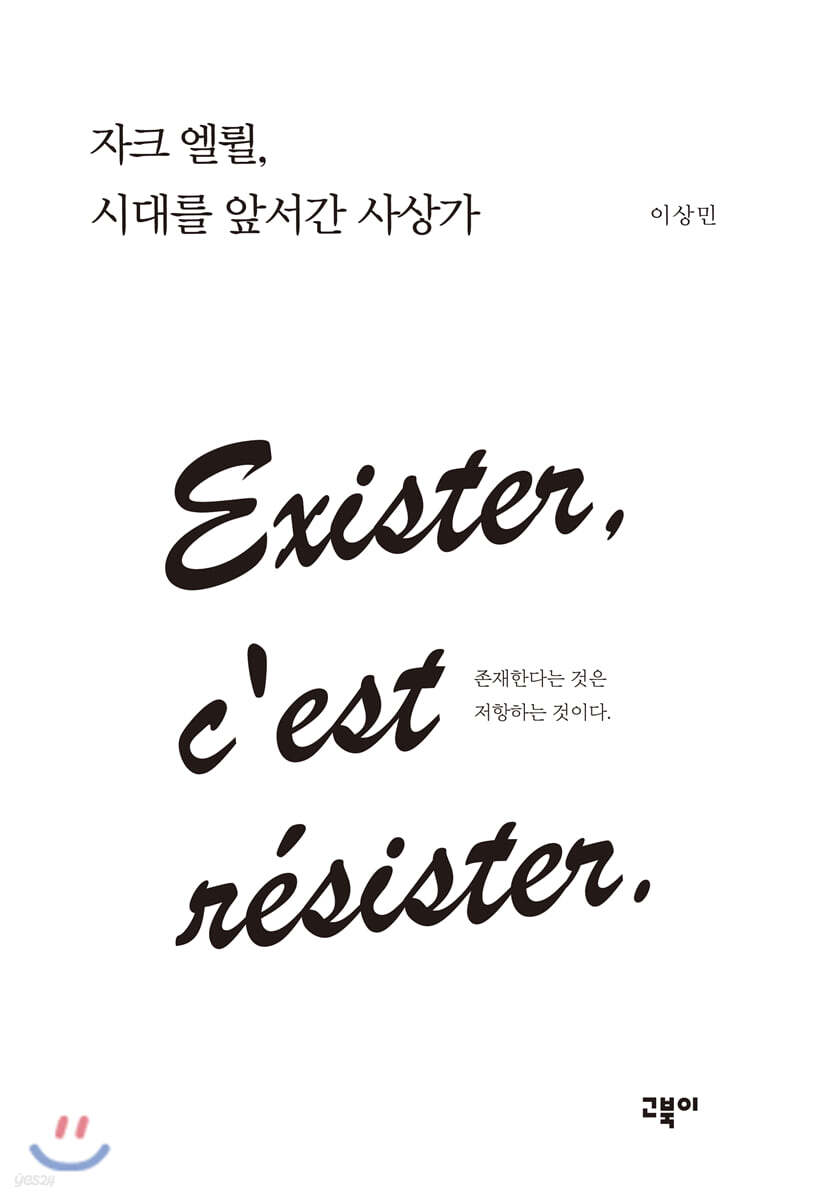
Jacques Ellul, a thinker ahead of his time
 |
Description
Book Introduction
Jacques Ellul (1912-1994) was a French jurist, historian, sociologist, and Protestant theologian.
Primarily known as a thinker who criticized the technological civilization of the 20th century, he wrote over 60 books and hundreds of articles, crossing three fields of study: history, sociology, and theology.
Despite this prolific writing, he remains little known in Parisian intellectual circles as a sociologist and in Protestant circles as a theologian.
Yet, his studies of technology and biblical texts, as well as his 'trilogy on ethics', place him among the first French intellectuals in the United States.
He is also recognized for his active research into his ideas.
Of course, recently, research on Ellul's thought has become active in France, and academic societies and symposiums related to Ellul's thought are being actively held.
The reason why Ellul is relatively well-recognized in France after his death is probably related to various issues and phenomena that are seriously highlighted in the present age.
That is, social crises such as the global financial crisis, the increasing risk of environmental destruction due to uncontrolled development, climate change and abnormal weather caused by increased greenhouse gases, nuclear disasters such as the Chernobyl and Fukushima nuclear accidents, genetically modified foods and mad cow disease, and the possibility of human cloning starting from animal cloning.
However, when faced with such crises, dangers, and disasters, we search for solutions, but we cannot find a thinker who can offer a clear and satisfying solution.
In such a situation, looking back at Ellul's thoughts centered on technology, I found a clue and a clue to the solution.
This book was written with the purpose of introducing Ellul's thoughts to readers in a systematic and clear manner.
Primarily known as a thinker who criticized the technological civilization of the 20th century, he wrote over 60 books and hundreds of articles, crossing three fields of study: history, sociology, and theology.
Despite this prolific writing, he remains little known in Parisian intellectual circles as a sociologist and in Protestant circles as a theologian.
Yet, his studies of technology and biblical texts, as well as his 'trilogy on ethics', place him among the first French intellectuals in the United States.
He is also recognized for his active research into his ideas.
Of course, recently, research on Ellul's thought has become active in France, and academic societies and symposiums related to Ellul's thought are being actively held.
The reason why Ellul is relatively well-recognized in France after his death is probably related to various issues and phenomena that are seriously highlighted in the present age.
That is, social crises such as the global financial crisis, the increasing risk of environmental destruction due to uncontrolled development, climate change and abnormal weather caused by increased greenhouse gases, nuclear disasters such as the Chernobyl and Fukushima nuclear accidents, genetically modified foods and mad cow disease, and the possibility of human cloning starting from animal cloning.
However, when faced with such crises, dangers, and disasters, we search for solutions, but we cannot find a thinker who can offer a clear and satisfying solution.
In such a situation, looking back at Ellul's thoughts centered on technology, I found a clue and a clue to the solution.
This book was written with the purpose of introducing Ellul's thoughts to readers in a systematic and clear manner.
- You can preview some of the book's contents.
Preview
index
Starting the book 06
Recommendation
A Theoretical Study of the Entire Thought of Jacques Ellul_Bongho Son 08
A book introducing the meaning of Jacques Ellul's life and thought_Shin Guk-won 10
Tools Needed to Accept the Message of the Prophet Jacques Ellul_Frédéric Rognon 14
Guide and Map for Climbing Mount Jacques Ellul_Park Dong-yeol 16
Note 20
Part 1: An Overview of the Life and Thought of Jacques Ellul
Chapter 1 Introduction 24
Chapter 2 Activities within Protestantism 26
Chapter 3 Social Participation Activities 41
Chapter 4: Characteristics of Ellul's Thought 54
Chapter 5, verse 75
Part 2: Jacques Ellul's Technological Thought and its Evaluation
Chapter 1 Introduction 80
Chapter 2: Ellul's Technological Thought 84
Chapter 3: An Evaluation of Ellul's Technological Thought 107
Chapter 4, verse 126
Part 3: Jacques Ellul's Theological Thought and its Evaluation
Chapter 1 Introduction 132
Chapter 2: The Background of Ellul's Theological Thought 134
Chapter 3: Characteristics of Ellul's Theological Thought 146
Chapter 4: An Evaluation of Ellul's Theological Thought 198
Chapter 5, 217
Part 4: Jacques Ellul's Personalist Movement and Revolutionary Christianity
Chapter 1 Introduction 224
Chapter 2: Ellul's Personalist Movement 228
Chapter 3: Analysis of Revolution and the Search for a New Revolution 241
Chapter 4: Ellul's Revolutionary Christianity 258
Chapter 5, verse 264
Part 5: The Influence of Jacques Ellul's Thought and Its Application in the Present Age
Chapter 1 Introduction 270
Chapter 2: The Influence and Acceptance of Ellul's Thought 274
Chapter 3: Application of Ellul's Thought in the Present Era 289
Chapter 4, verse 312
Reference 318
Appendix 1.
Personalist Movement Platform 322
Appendix 2.
List of works by Jacques Ellul and related materials 346
Week 358
French Table of Contents 380
Foreign Language Summary 384
Search 388
Jacques Ellul Chronology 403
Recommendation
A Theoretical Study of the Entire Thought of Jacques Ellul_Bongho Son 08
A book introducing the meaning of Jacques Ellul's life and thought_Shin Guk-won 10
Tools Needed to Accept the Message of the Prophet Jacques Ellul_Frédéric Rognon 14
Guide and Map for Climbing Mount Jacques Ellul_Park Dong-yeol 16
Note 20
Part 1: An Overview of the Life and Thought of Jacques Ellul
Chapter 1 Introduction 24
Chapter 2 Activities within Protestantism 26
Chapter 3 Social Participation Activities 41
Chapter 4: Characteristics of Ellul's Thought 54
Chapter 5, verse 75
Part 2: Jacques Ellul's Technological Thought and its Evaluation
Chapter 1 Introduction 80
Chapter 2: Ellul's Technological Thought 84
Chapter 3: An Evaluation of Ellul's Technological Thought 107
Chapter 4, verse 126
Part 3: Jacques Ellul's Theological Thought and its Evaluation
Chapter 1 Introduction 132
Chapter 2: The Background of Ellul's Theological Thought 134
Chapter 3: Characteristics of Ellul's Theological Thought 146
Chapter 4: An Evaluation of Ellul's Theological Thought 198
Chapter 5, 217
Part 4: Jacques Ellul's Personalist Movement and Revolutionary Christianity
Chapter 1 Introduction 224
Chapter 2: Ellul's Personalist Movement 228
Chapter 3: Analysis of Revolution and the Search for a New Revolution 241
Chapter 4: Ellul's Revolutionary Christianity 258
Chapter 5, verse 264
Part 5: The Influence of Jacques Ellul's Thought and Its Application in the Present Age
Chapter 1 Introduction 270
Chapter 2: The Influence and Acceptance of Ellul's Thought 274
Chapter 3: Application of Ellul's Thought in the Present Era 289
Chapter 4, verse 312
Reference 318
Appendix 1.
Personalist Movement Platform 322
Appendix 2.
List of works by Jacques Ellul and related materials 346
Week 358
French Table of Contents 380
Foreign Language Summary 384
Search 388
Jacques Ellul Chronology 403
Into the book
Ellul's thought as a whole is clearly divided into sociological and theological aspects.
However, it is characterized by the two aspects maintaining unity and consistency while forming a single whole.
In particular, he was simultaneously influenced by two things: Marx's ideas and the Bible.
Marx's ideas, which were passed on to him through 『Das Kapital』, became a tool for discovering and interpreting the reality of this world.
However, biblical revelation offers him an explanation of personal problems and life that Marxist thought cannot explain, from a different perspective.
He can neither rule out either of them nor synthesize them.
Finally, he leads his entire research with a dialectical approach, studying two areas: sociological and theological aspects.
Ellul explains why he has been actively involved in the work for 20 years: as a Christian, he could not remain indifferent to the misfortune of those young people.
He cannot say that there is nothing good in the young people he has come into direct contact with; he sees them as simply filled with weakness and misery.
Jesus Christ approached the weak and unfortunate not because of any potential goodness within them, but simply because they were weak and unfortunate.
So he confesses that through this activity he has moved towards a more open theology and his preaching has become more concrete.
He even reveals that while he was running the club, he led a Bible study class for young people interested in religious matters.
Ellul argues that the world is not driven by economics, politics, ethical values, or spiritual values, and he makes the following groundbreaking argument:
That is, technology determines all other aspects of society, reshapes them according to its own logic, and gradually reshapes humans themselves.
First, technology becomes an artificial environment that replaces the natural environment and turns it into an equivalent surrounding environment.
Therefore, technology is no longer a set of tools that humans can use at different times.
Technology binds humans in every way and becomes the only environment that permeates humans.
From this point on, technology becomes an autonomous phenomenon that increasingly escapes human control and oppresses humans.
Today, technology, like nature in the past, is an environment, an autonomous process over which humans have no real control.
However, it is characterized by the two aspects maintaining unity and consistency while forming a single whole.
In particular, he was simultaneously influenced by two things: Marx's ideas and the Bible.
Marx's ideas, which were passed on to him through 『Das Kapital』, became a tool for discovering and interpreting the reality of this world.
However, biblical revelation offers him an explanation of personal problems and life that Marxist thought cannot explain, from a different perspective.
He can neither rule out either of them nor synthesize them.
Finally, he leads his entire research with a dialectical approach, studying two areas: sociological and theological aspects.
Ellul explains why he has been actively involved in the work for 20 years: as a Christian, he could not remain indifferent to the misfortune of those young people.
He cannot say that there is nothing good in the young people he has come into direct contact with; he sees them as simply filled with weakness and misery.
Jesus Christ approached the weak and unfortunate not because of any potential goodness within them, but simply because they were weak and unfortunate.
So he confesses that through this activity he has moved towards a more open theology and his preaching has become more concrete.
He even reveals that while he was running the club, he led a Bible study class for young people interested in religious matters.
Ellul argues that the world is not driven by economics, politics, ethical values, or spiritual values, and he makes the following groundbreaking argument:
That is, technology determines all other aspects of society, reshapes them according to its own logic, and gradually reshapes humans themselves.
First, technology becomes an artificial environment that replaces the natural environment and turns it into an equivalent surrounding environment.
Therefore, technology is no longer a set of tools that humans can use at different times.
Technology binds humans in every way and becomes the only environment that permeates humans.
From this point on, technology becomes an autonomous phenomenon that increasingly escapes human control and oppresses humans.
Today, technology, like nature in the past, is an environment, an autonomous process over which humans have no real control.
--- From the text
GOODS SPECIFICS
- Publication date: December 29, 2020
- Page count, weight, size: 408 pages | 571g | 152*223*30mm
- ISBN13: 9791197095801
- ISBN10: 1197095802
You may also like
카테고리
korean


korean

![GQ KOREA Mark (Monthly): December [2025]](http://librairie.coreenne.fr/cdn/shop/files/8ef265dbbfbf186523ed75ba7319009d.jpg?v=1765340328&width=3840)


