

Green is everywhere
 |
Description
Book Introduction
Dreaming of a triple whammy of author-work-reader
Consonant and Vowel Triple Series 20
The cold, hard blue of sadness, the gentle yellow of a ray of light
Green, the color of warm sadness that was completed in this way
The fastest way to meet new Korean literary writers.
The twentieth guide in the [Consonant and Vowel Triple Series].
The second collection of short stories by Lim Seon-woo, who debuted in 2019 with the Munhak Sasang New Writer's Award and has been developing his own unique world of novels, has been published.
This is the moment when Lim Seon-woo's unique magic of casually blending absurd fantasies into everyday life unfolds once again.
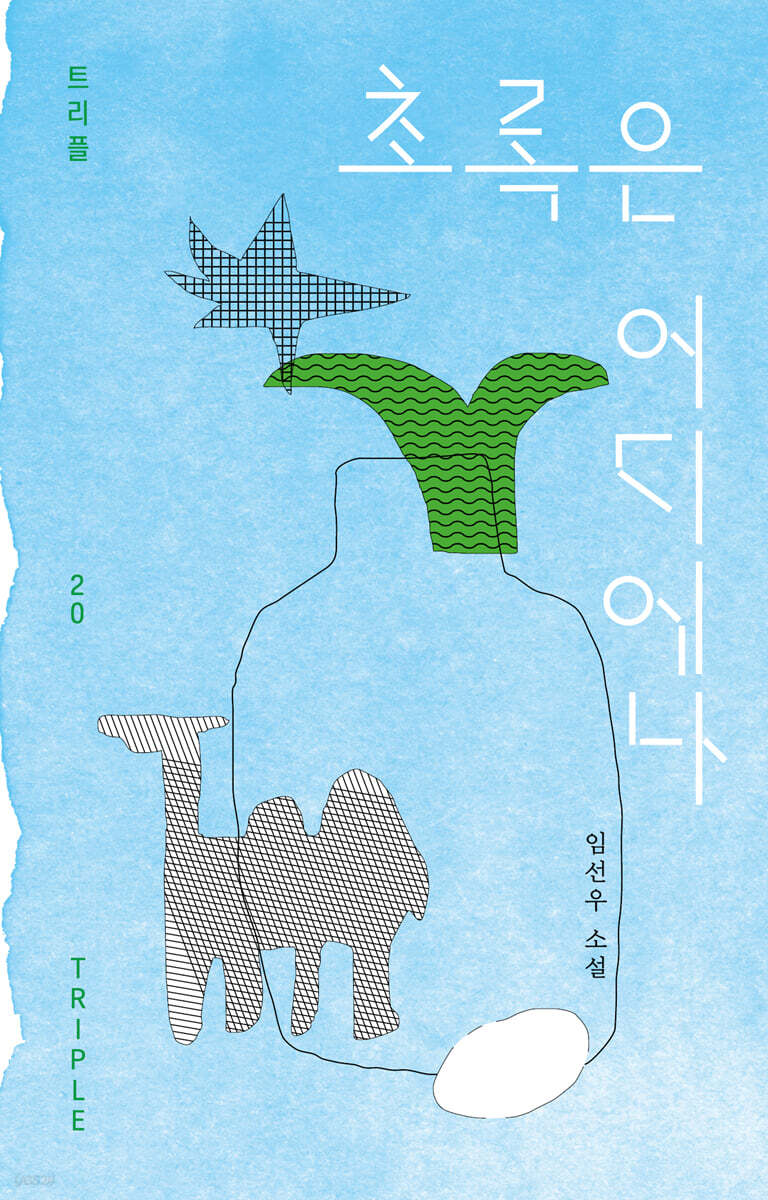
『Green is Everywhere』 contains various scenes of green that are placed everywhere around us.
Each of their sorrows, touches, gazes, and relationships, all different in color and temperature, harmonize in a seemingly indifferent way, providing stability to the ‘strange reality.’
In Lim Seon-woo's world, where all things extraordinary become natural, we gain the belief that any appearance or emotion can be understood.
The 2023 Kim Yu-jeong Award winning work, "The Camel and the Whale," has been included under the title "The Room with the Green Whale."
Consonant and Vowel Triple Series 20
The cold, hard blue of sadness, the gentle yellow of a ray of light
Green, the color of warm sadness that was completed in this way
The fastest way to meet new Korean literary writers.
The twentieth guide in the [Consonant and Vowel Triple Series].
The second collection of short stories by Lim Seon-woo, who debuted in 2019 with the Munhak Sasang New Writer's Award and has been developing his own unique world of novels, has been published.
This is the moment when Lim Seon-woo's unique magic of casually blending absurd fantasies into everyday life unfolds once again.
『Green is Everywhere』 contains various scenes of green that are placed everywhere around us.
Each of their sorrows, touches, gazes, and relationships, all different in color and temperature, harmonize in a seemingly indifferent way, providing stability to the ‘strange reality.’
In Lim Seon-woo's world, where all things extraordinary become natural, we gain the belief that any appearance or emotion can be understood.
The 2023 Kim Yu-jeong Award winning work, "The Camel and the Whale," has been included under the title "The Room with the Green Whale."
- You can preview some of the book's contents.
Preview
index
The Room with the Green Whale
Thoughtful Night, Blue Stone
It snowed in Okinawa
Essay abstracts are everywhere
Commentary: This Encounter is Not a Dream - Park Hye-jin
Thoughtful Night, Blue Stone
It snowed in Okinawa
Essay abstracts are everywhere
Commentary: This Encounter is Not a Dream - Park Hye-jin
Detailed image
.jpg)
Into the book
Yumi said that even if you live each day well, there are times when you are caught up in complete darkness, when you are so absorbed in dark thoughts that you do not take care of yourself at all, and when those days go on for a long time, you end up turning into a camel.
---From "The Room with the Green Whale"
Camels are animals that can smell water from several kilometers away.
Knowing that there is water far away allows us to continue walking through the seemingly vast desert.
But do you know what a camel does when there is no water within a few kilometers, when it cannot even see or feel the shadow of water? (……) It just walks.
One step at a time.
---From "The Room with the Green Whale"
As you take each step, there are times when you find yourself farther away from the wound.
These are Yumi's words.
Is that true?
If that's true, where are Yumi and I now? I was wondering, and Yumi added.
At least Doyeon's hands will become a little softer.
When your mind is at ease, you will clean less.
---From "The Room with the Green Whale"
The meaning of the saying that the heart is torn into a thousand and ten thousand pieces does not mean that one heart is torn into countless pieces, but that a thousand and ten thousand different sorrows are born.
---From "The Room with the Green Whale"
My throat tightened more than usual, and after a few gagging fits, I vomited a stone into my palm.
The sadness of a newborn was, as always, cold and blue.
---From "Thoughtful Night, Blue Stone"
Heejo envied the people who took a number at the bank and sat down to wait.
Because their wait always had an end.
---From "Thoughtful Night, Blue Stone"
"Why on earth do you want to pretend to be sad?" Seonyeong asked, seemingly incomprehensible.
There are people in the world who spit out stones for over five hundred days simply because they can't bear the sadness.
---From "Thoughtful Night, Blue Stone"
It takes a reticulated python two weeks to digest a human.
If you don't hear from me for two weeks, I'll assume that the Youngha you knew was eaten by a python.
---From "Thoughtful Night, Blue Stone"
The moment I saw the woman, I knew what it meant when they said it snowed in Okinawa.
That was another word for miracle.
---From "It Snowed in Okinawa"
At some point, early evening sunlight poured into the subway.
As I raised my head, I saw the friendly buildings with golden windows passing by outside the window.
Strange, at times like these, the city seemed like a joke no one understood.
---From "It Snowed in Okinawa"
People who don't hate others end up hating themselves.
It may sound like nonsense, but if you think about it carefully, it turns out to be true.
Because I was sure that he didn't like me.
---From "The Room with the Green Whale"
Camels are animals that can smell water from several kilometers away.
Knowing that there is water far away allows us to continue walking through the seemingly vast desert.
But do you know what a camel does when there is no water within a few kilometers, when it cannot even see or feel the shadow of water? (……) It just walks.
One step at a time.
---From "The Room with the Green Whale"
As you take each step, there are times when you find yourself farther away from the wound.
These are Yumi's words.
Is that true?
If that's true, where are Yumi and I now? I was wondering, and Yumi added.
At least Doyeon's hands will become a little softer.
When your mind is at ease, you will clean less.
---From "The Room with the Green Whale"
The meaning of the saying that the heart is torn into a thousand and ten thousand pieces does not mean that one heart is torn into countless pieces, but that a thousand and ten thousand different sorrows are born.
---From "The Room with the Green Whale"
My throat tightened more than usual, and after a few gagging fits, I vomited a stone into my palm.
The sadness of a newborn was, as always, cold and blue.
---From "Thoughtful Night, Blue Stone"
Heejo envied the people who took a number at the bank and sat down to wait.
Because their wait always had an end.
---From "Thoughtful Night, Blue Stone"
"Why on earth do you want to pretend to be sad?" Seonyeong asked, seemingly incomprehensible.
There are people in the world who spit out stones for over five hundred days simply because they can't bear the sadness.
---From "Thoughtful Night, Blue Stone"
It takes a reticulated python two weeks to digest a human.
If you don't hear from me for two weeks, I'll assume that the Youngha you knew was eaten by a python.
---From "Thoughtful Night, Blue Stone"
The moment I saw the woman, I knew what it meant when they said it snowed in Okinawa.
That was another word for miracle.
---From "It Snowed in Okinawa"
At some point, early evening sunlight poured into the subway.
As I raised my head, I saw the friendly buildings with golden windows passing by outside the window.
Strange, at times like these, the city seemed like a joke no one understood.
---From "It Snowed in Okinawa"
People who don't hate others end up hating themselves.
It may sound like nonsense, but if you think about it carefully, it turns out to be true.
Because I was sure that he didn't like me.
---From "It Snowed in Okinawa"
Publisher's Review
A miraculous encounter that transcends existence
Each of them embracing a warm, sad expression of green.
“I took great care to select a sadness of just the right size.
He handed me a small glass bottle containing it along with a cactus.
“The moment you take the stone out, you will be sad.”
Lim Seon-woo's novel collection
The whale that finally found water and the camel that returned to the desert,
Meeting and entering into each other to fill the void and loss
"The Room with the Green Whale" is a novel in which interaction takes place through knocking and responding.
The universal keywords of encounter and communication come to mind, but this is unlikely to unfold in an ordinary way.
The author places a giant camel in front of a woman who is knocking on the upstairs door because of a water leak in her apartment.
A camel that talks, is in trouble, and negotiates.
Just like a woman who naturally brings a camel into her home to repair a leak, even though she is a little embarrassed, the reader finds himself quietly bringing a dromedary camel into the 'that could be so' room in his heart.
“Can we think of them as camel-humans, similar to werewolves? (……) Yes, but it has nothing to do with the full moon.
(……) Were you a camel person from birth? No.
This has happened occasionally since I first transformed four years ago.
(……) At first, it was difficult because it was so big and walked on all fours, but now I think it’s fortunate that it’s a camel among many animals.
Because camels are animals that can withstand anything.
“If I become a camel, will I be able to endure anything? (……) If that’s true, then becoming a camel wouldn’t be so bad.” (Page 21)
It's not just camels that have changed their appearance due to sad circumstances.
A woman who has suffered failure, fallen into despair, and isolated herself from others by drinking alcohol, finds strange solace in bringing a camel into her self-imposed confinement room.
The green whale, who had hated himself, began to swim slowly at the camel's call.
The leak will be filled, and the whale, or rather the woman, will finally be able to swim freely.
It became cold and hard because it couldn't flow hotly
About the substance called sadness
In "Thoughtful Night, Blue Stone," a woman appears who vomits stones instead of shedding tears when she is sad.
The round, blue stone surrounded by mucus from the woman's mouth is condensed with anxiety and pain, and it is contagious, making those around her sad.
The best a woman who has literally 'poured out her sorrows' can do is to put a stone in a bottle and seal it.
Then one day, a stone delivered for a small revenge becomes the slime of an unexpected relationship.
“He said that he felt strangely relieved while crying.
It felt like everything that had been festering was bursting out.
(……) Heejo’s sadness seemed to have been building up somewhere inside her and then erupted in an unexpected way.
While I was thinking about whether stones could be helpful to someone in that way, Heejo asked me.
Then isn't the sadness I feel now mine? From the moment you become sad, it becomes your sadness.
I answered.” (page 72)
In fact, the reason the woman started vomiting stones was because of the loss of the person next to her.
The heart that denied reality and harbored vain hopes has now become a cold, hard stone due to its pain.
I thought that if I vomited it out, the sadness would disappear completely and it would be better, but there came a time when the woman did not want to vomit the stone.
“The day I spat out a stone while listening to Heejo’s story, I couldn’t even begin to feel Heejo’s sorrow.
The emotions that had welled up while listening to Heejo's story cooled down as if I was spitting out stones.
(……) Perhaps things like warmth, tears, and consideration were left to the living and hardened into a stone.
“Is it possible to correct it now?” (p. 90)
A desire to touch the sadness.
Couldn't we call it love?
Perhaps it is the only way to melt the cold, hardened stone, or rather, the woman.
Will our hopes of waiting for the melting blue stone to flow out come true?
Midsummer, a white miracle written on a note
An unrealistic reality suddenly witnessed
"It Snowed in Okinawa" begins with a conspiracy to smuggle gold.
It's not very secretive or very sinister.
From the seemingly bland success to the completely bizarre illegal activity, we are instantly transported to the heart of Osaka.
In fact, the two women did not come to Japan solely for smuggling.
Each of us had something we wanted to find.
Of course, they turn back without finding it, after confirming that they cannot find it, but they still have each other.
Young-ha, who encourages people to curse others by saying, “People who don’t hate others end up hating themselves,” and Joo-young, who loves her so much because she is the only one who “spoke to me when I thought all the good things in life were over.”
The two are unable to reconcile with their past selves and are unable to break free from themselves, and are almost about to return to Korea with wounds and resignation, but a brief miracle unfolds at the airport, hinting at their new gate.
It doesn't explain anything, but somehow it makes you believe that it's a happy ending.
“Something really strange happened.
Among the crowd of people, I found Youngha and me.
The two stood still among the moving people.
As I was blankly staring, I realized that they were me and Youngha from two days ago.
(……) I thought it was snowing in Okinawa right now.
“Our brief miracle that will never return.” (pp. 133-134)
Tender sorrows and indifferent comfort
Dreaming of a small miracle that will bloom within it
Critic Park Hye-jin, who wrote the commentary for “Green is Everywhere,” says that through the three novels, she “gained a new belief in the meaning and possibility of encounter.”
A meeting that is not a simple or conventional meeting, not a “meeting in a narrow sense,” but a meeting that is not blocked by the walls of reality and the logic of probability.
Through this new form of encounter that “opens our locked thoughts,” we can become resilient to change and experience a different world.
At every point where the meetings hosted by Lim Seon-woo connect, a gate where miracles can unfold may await.
Just as greenery is everywhere, miracles may also be everywhere.
Author's Note
While writing these three novels, I thought particularly about the many facets of sadness.
Whiskey in the cupboard, soft lumps, daffodils and dwarfs in full bloom, leaves stained by the cold, a graveyard of locusts, feathered hats, people on the bridge waving at the boat.
Scenes that each contain their own green.
― From “Green is Everywhere”
commentary
Encounters are the passage and exit of our lives.
Reading the novels included here, I not only gained a newfound faith in the meaning and possibilities of encounters, but also the belief that the countless connections between people established by Lim Seon-woo, who presides over the art and philosophy of encounters, and above all, encounters as stories, will become new passageways and exits in our lives.
― Park Hye-jin (literary critic)
Each of them embracing a warm, sad expression of green.
“I took great care to select a sadness of just the right size.
He handed me a small glass bottle containing it along with a cactus.
“The moment you take the stone out, you will be sad.”
Lim Seon-woo's novel collection
The whale that finally found water and the camel that returned to the desert,
Meeting and entering into each other to fill the void and loss
"The Room with the Green Whale" is a novel in which interaction takes place through knocking and responding.
The universal keywords of encounter and communication come to mind, but this is unlikely to unfold in an ordinary way.
The author places a giant camel in front of a woman who is knocking on the upstairs door because of a water leak in her apartment.
A camel that talks, is in trouble, and negotiates.
Just like a woman who naturally brings a camel into her home to repair a leak, even though she is a little embarrassed, the reader finds himself quietly bringing a dromedary camel into the 'that could be so' room in his heart.
“Can we think of them as camel-humans, similar to werewolves? (……) Yes, but it has nothing to do with the full moon.
(……) Were you a camel person from birth? No.
This has happened occasionally since I first transformed four years ago.
(……) At first, it was difficult because it was so big and walked on all fours, but now I think it’s fortunate that it’s a camel among many animals.
Because camels are animals that can withstand anything.
“If I become a camel, will I be able to endure anything? (……) If that’s true, then becoming a camel wouldn’t be so bad.” (Page 21)
It's not just camels that have changed their appearance due to sad circumstances.
A woman who has suffered failure, fallen into despair, and isolated herself from others by drinking alcohol, finds strange solace in bringing a camel into her self-imposed confinement room.
The green whale, who had hated himself, began to swim slowly at the camel's call.
The leak will be filled, and the whale, or rather the woman, will finally be able to swim freely.
It became cold and hard because it couldn't flow hotly
About the substance called sadness
In "Thoughtful Night, Blue Stone," a woman appears who vomits stones instead of shedding tears when she is sad.
The round, blue stone surrounded by mucus from the woman's mouth is condensed with anxiety and pain, and it is contagious, making those around her sad.
The best a woman who has literally 'poured out her sorrows' can do is to put a stone in a bottle and seal it.
Then one day, a stone delivered for a small revenge becomes the slime of an unexpected relationship.
“He said that he felt strangely relieved while crying.
It felt like everything that had been festering was bursting out.
(……) Heejo’s sadness seemed to have been building up somewhere inside her and then erupted in an unexpected way.
While I was thinking about whether stones could be helpful to someone in that way, Heejo asked me.
Then isn't the sadness I feel now mine? From the moment you become sad, it becomes your sadness.
I answered.” (page 72)
In fact, the reason the woman started vomiting stones was because of the loss of the person next to her.
The heart that denied reality and harbored vain hopes has now become a cold, hard stone due to its pain.
I thought that if I vomited it out, the sadness would disappear completely and it would be better, but there came a time when the woman did not want to vomit the stone.
“The day I spat out a stone while listening to Heejo’s story, I couldn’t even begin to feel Heejo’s sorrow.
The emotions that had welled up while listening to Heejo's story cooled down as if I was spitting out stones.
(……) Perhaps things like warmth, tears, and consideration were left to the living and hardened into a stone.
“Is it possible to correct it now?” (p. 90)
A desire to touch the sadness.
Couldn't we call it love?
Perhaps it is the only way to melt the cold, hardened stone, or rather, the woman.
Will our hopes of waiting for the melting blue stone to flow out come true?
Midsummer, a white miracle written on a note
An unrealistic reality suddenly witnessed
"It Snowed in Okinawa" begins with a conspiracy to smuggle gold.
It's not very secretive or very sinister.
From the seemingly bland success to the completely bizarre illegal activity, we are instantly transported to the heart of Osaka.
In fact, the two women did not come to Japan solely for smuggling.
Each of us had something we wanted to find.
Of course, they turn back without finding it, after confirming that they cannot find it, but they still have each other.
Young-ha, who encourages people to curse others by saying, “People who don’t hate others end up hating themselves,” and Joo-young, who loves her so much because she is the only one who “spoke to me when I thought all the good things in life were over.”
The two are unable to reconcile with their past selves and are unable to break free from themselves, and are almost about to return to Korea with wounds and resignation, but a brief miracle unfolds at the airport, hinting at their new gate.
It doesn't explain anything, but somehow it makes you believe that it's a happy ending.
“Something really strange happened.
Among the crowd of people, I found Youngha and me.
The two stood still among the moving people.
As I was blankly staring, I realized that they were me and Youngha from two days ago.
(……) I thought it was snowing in Okinawa right now.
“Our brief miracle that will never return.” (pp. 133-134)
Tender sorrows and indifferent comfort
Dreaming of a small miracle that will bloom within it
Critic Park Hye-jin, who wrote the commentary for “Green is Everywhere,” says that through the three novels, she “gained a new belief in the meaning and possibility of encounter.”
A meeting that is not a simple or conventional meeting, not a “meeting in a narrow sense,” but a meeting that is not blocked by the walls of reality and the logic of probability.
Through this new form of encounter that “opens our locked thoughts,” we can become resilient to change and experience a different world.
At every point where the meetings hosted by Lim Seon-woo connect, a gate where miracles can unfold may await.
Just as greenery is everywhere, miracles may also be everywhere.
Author's Note
While writing these three novels, I thought particularly about the many facets of sadness.
Whiskey in the cupboard, soft lumps, daffodils and dwarfs in full bloom, leaves stained by the cold, a graveyard of locusts, feathered hats, people on the bridge waving at the boat.
Scenes that each contain their own green.
― From “Green is Everywhere”
commentary
Encounters are the passage and exit of our lives.
Reading the novels included here, I not only gained a newfound faith in the meaning and possibilities of encounters, but also the belief that the countless connections between people established by Lim Seon-woo, who presides over the art and philosophy of encounters, and above all, encounters as stories, will become new passageways and exits in our lives.
― Park Hye-jin (literary critic)
GOODS SPECIFICS
- Date of issue: September 6, 2023
- Format: Hardcover book binding method guide
- Page count, weight, size: 164 pages | 196g | 116*183*20mm
- ISBN13: 9788954449496
- ISBN10: 8954449492
You may also like
카테고리
korean


korean

![ELLE 엘르 스페셜 에디션 A형 : 12월 [2025]](http://librairie.coreenne.fr/cdn/shop/files/b8e27a3de6c9538896439686c6b0e8fb.jpg?v=1766436872&width=3840)


