

Land 1
 |
Description
Book Introduction
Reborn with a modern sensibility after 54 years
The greatest classic of our time, 'Land'!
“Life is beautiful no matter what adversity we face.
“Nothing is as true as life.”
Park Kyung-ni's epic novel "Land," a true monumental work in Korean literature, has been reborn with a modern sensibility 54 years after its initial publication.
As is well known, 『Land』, which vividly records the major events of our modern history, is a work that sharply demonstrates the aesthetic sensibility of our language.
It is true that 『Land』 is a representative work of Korean literature that no one can deny and has been read nationwide to this day.
The epic novel "Land" vividly depicts the lives of the Korean people in a time of upheaval, encompassing the wounds of deprivation suffered by the modern Korean people from the late Joseon Dynasty to the Japanese colonial period.
This unparalleled masterpiece in Korean literature is ready to meet a new generation of readers, with editing that faithfully preserves the original text and a design that completely shatters preconceptions about classics.
The greatest classic of our time, 'Land'!
“Life is beautiful no matter what adversity we face.
“Nothing is as true as life.”
Park Kyung-ni's epic novel "Land," a true monumental work in Korean literature, has been reborn with a modern sensibility 54 years after its initial publication.
As is well known, 『Land』, which vividly records the major events of our modern history, is a work that sharply demonstrates the aesthetic sensibility of our language.
It is true that 『Land』 is a representative work of Korean literature that no one can deny and has been read nationwide to this day.
The epic novel "Land" vividly depicts the lives of the Korean people in a time of upheaval, encompassing the wounds of deprivation suffered by the modern Korean people from the late Joseon Dynasty to the Japanese colonial period.
This unparalleled masterpiece in Korean literature is ready to meet a new generation of readers, with editing that faithfully preserves the original text and a design that completely shatters preconceptions about classics.
- You can preview some of the book's contents.
Preview
index
introduction
Part 1: Footsteps in the Dark
Preface
Chapter 1: Seohee
Chapter 2 Tracking
Chapter 3: Lanterns in the Valley
Chapter 4: Riddles
Chapter 5 Market Day
Chapter 6: Village Women
Chapter 7: The commoner Yun Bo and the middle-class Mun Eui-won
Chapter 8: Five Great Dances
Chapter 9 News
Chapter 10: The Gunner I Met at the Inn
Chapter 11: The Enlightened Yangban
Chapter 12: Mount Sumeru in a Dream
Chapter 13: The Shaman
Chapter 14: The Villain and the Witch
Chapter 15: First Argument
Chapter 16 Oral Tradition
Chapter 17: Raid
Chapter 18: Temptation
Chapter 19: The Messenger
Part 2: Pursuit and Conspiracy
Chapter 1: The Missing Woman
Chapter 2: Yoon's Secret
Chapter 3 Failure
Chapter 4 Sky and Forest
Vocabulary Explanation
Part 1: Genealogy of Major Figures
Part 1: Footsteps in the Dark
Preface
Chapter 1: Seohee
Chapter 2 Tracking
Chapter 3: Lanterns in the Valley
Chapter 4: Riddles
Chapter 5 Market Day
Chapter 6: Village Women
Chapter 7: The commoner Yun Bo and the middle-class Mun Eui-won
Chapter 8: Five Great Dances
Chapter 9 News
Chapter 10: The Gunner I Met at the Inn
Chapter 11: The Enlightened Yangban
Chapter 12: Mount Sumeru in a Dream
Chapter 13: The Shaman
Chapter 14: The Villain and the Witch
Chapter 15: First Argument
Chapter 16 Oral Tradition
Chapter 17: Raid
Chapter 18: Temptation
Chapter 19: The Messenger
Part 2: Pursuit and Conspiracy
Chapter 1: The Missing Woman
Chapter 2: Yoon's Secret
Chapter 3 Failure
Chapter 4 Sky and Forest
Vocabulary Explanation
Part 1: Genealogy of Major Figures
Into the book
A little girl who had been walking stealthily, hiding behind the bridge of the nine-year-old carrying a bundle of rice, peeked out.
The child, who looks cute and healthy, is five years old.
Whatever the future holds, for now he is Choi Chi-soo's only blood relative.
People said that Seohee resembled her mother, Miss Byeoldang, and that she also had the appearance of a grandmother.
He said that his inability to be calm was due to his age, and that his strong temperament was due to his grandmother's temperament.
---From "Seohee"
Unable to gauge the children's pace, Yong-i continued to walk briskly without slowing down his pace.
The children, especially Bongsoon, follow along, practically running.
There were a lot of gravel on the village road.
There was also dried and hardened cow dung rolling around here and there.
Gilsang looks up at the sky.
It wasn't as blue as the autumn sky, but it was clear.
There's no way it'll rain in winter.
---From "Okwangdae"
The youngest daughter is swinging her sword at the air and screaming loudly.
Of course, this is what Kim Pyeong-san wants you to hear.
The thief who stole eggs and roasted and ate beans from the soybean field was Kim Pyeong-san's eldest son, Geobok.
Stealing eggs and roasting beans was caught and scolded right away, but in the case of pumpkins, they didn't grab the wrists that were picking them. Furthermore, since he was from a poor family, they called him a thug who exploited the rumors of gambling and a loser, and they didn't treat him like a human being behind his back, but since he was a nobleman, they couldn't say anything to his face, so they had no choice but to curse him indirectly.
---From "The Villain and the Witch"
Jo Joong-gu, who had received a considerable amount of money, enough to buy a rifle and considering his family's difficult circumstances, rode out of the suffocating village on a donkey with a big smile on his face.
After he left, Chisoo took Gilsang and locked himself in the study for several days, smelling the dust and rotting paper while organizing books. In the end, unable to find anything about firearms, he took out a few books about gunpowder and it seemed he was reading them these days.
---From "The Lion"
As he took his first step, his eyes went dark from excitement and tension, and it felt like his wife's gaze was fixed on the back of his head, so Gilsang felt like he couldn't breathe.
He barely managed to pick up the water bucket, and the moment he felt he had turned the corner and escaped Mrs. Yoon's gaze, he started running.
I came to the well in one go, let out all my breath that felt like it was going to burst, and looked up at the sky.
The sky was blue and cloudless.
The child, who looks cute and healthy, is five years old.
Whatever the future holds, for now he is Choi Chi-soo's only blood relative.
People said that Seohee resembled her mother, Miss Byeoldang, and that she also had the appearance of a grandmother.
He said that his inability to be calm was due to his age, and that his strong temperament was due to his grandmother's temperament.
---From "Seohee"
Unable to gauge the children's pace, Yong-i continued to walk briskly without slowing down his pace.
The children, especially Bongsoon, follow along, practically running.
There were a lot of gravel on the village road.
There was also dried and hardened cow dung rolling around here and there.
Gilsang looks up at the sky.
It wasn't as blue as the autumn sky, but it was clear.
There's no way it'll rain in winter.
---From "Okwangdae"
The youngest daughter is swinging her sword at the air and screaming loudly.
Of course, this is what Kim Pyeong-san wants you to hear.
The thief who stole eggs and roasted and ate beans from the soybean field was Kim Pyeong-san's eldest son, Geobok.
Stealing eggs and roasting beans was caught and scolded right away, but in the case of pumpkins, they didn't grab the wrists that were picking them. Furthermore, since he was from a poor family, they called him a thug who exploited the rumors of gambling and a loser, and they didn't treat him like a human being behind his back, but since he was a nobleman, they couldn't say anything to his face, so they had no choice but to curse him indirectly.
---From "The Villain and the Witch"
Jo Joong-gu, who had received a considerable amount of money, enough to buy a rifle and considering his family's difficult circumstances, rode out of the suffocating village on a donkey with a big smile on his face.
After he left, Chisoo took Gilsang and locked himself in the study for several days, smelling the dust and rotting paper while organizing books. In the end, unable to find anything about firearms, he took out a few books about gunpowder and it seemed he was reading them these days.
---From "The Lion"
As he took his first step, his eyes went dark from excitement and tension, and it felt like his wife's gaze was fixed on the back of his head, so Gilsang felt like he couldn't breathe.
He barely managed to pick up the water bucket, and the moment he felt he had turned the corner and escaped Mrs. Yoon's gaze, he started running.
I came to the well in one go, let out all my breath that felt like it was going to burst, and looked up at the sky.
The sky was blue and cloudless.
---From "The Disappeared Woman"
Publisher's Review
“If my life had been smooth, I wouldn’t be writing.
“Life comes before literature.”
It captures both the elegance of the classics and the sensibility of the new era.
Special edition commemorating the 15th anniversary of Park Kyung-ni's death
Park Kyung-ni, a master who debuted in 1957 with the short story "Calculation" and left a huge mark on the history of Korean literature with the epic novel "Land" written over 26 years.
To mark the 15th anniversary of her passing, Dasan Books is publishing a new collection of Park Kyung-ni's works.
This is a grand project that will sequentially publish Park Kyung-ni's novels, essays, and poetry collections, including "Land," which is considered a legacy of Korean literature. It is a meaningful work that fully captures the author's literary world without omission or distortion.
This project brings together Park Kyung-ni's vast works, which penetrate the core of Korean society and literature, and newly discovered, unpublished works will also be published after a meticulous editing process.
Park Kyung-ni's works, which were considered classics long ago, have not had the opportunity to be read anew.
This special edition, published this time, goes beyond preserving the original text's expressions and correcting previous errors, and presents a book with a completely different atmosphere from existing editions by imbuing it with a new sense of the times.
For readers who have previously read Park Kyung-ni's work, we have carefully composed it so that it can offer a fresh experience that breaks the mold, and for readers who are encountering her work for the first time, it can offer a taste of the dignity and excellence of a classic.
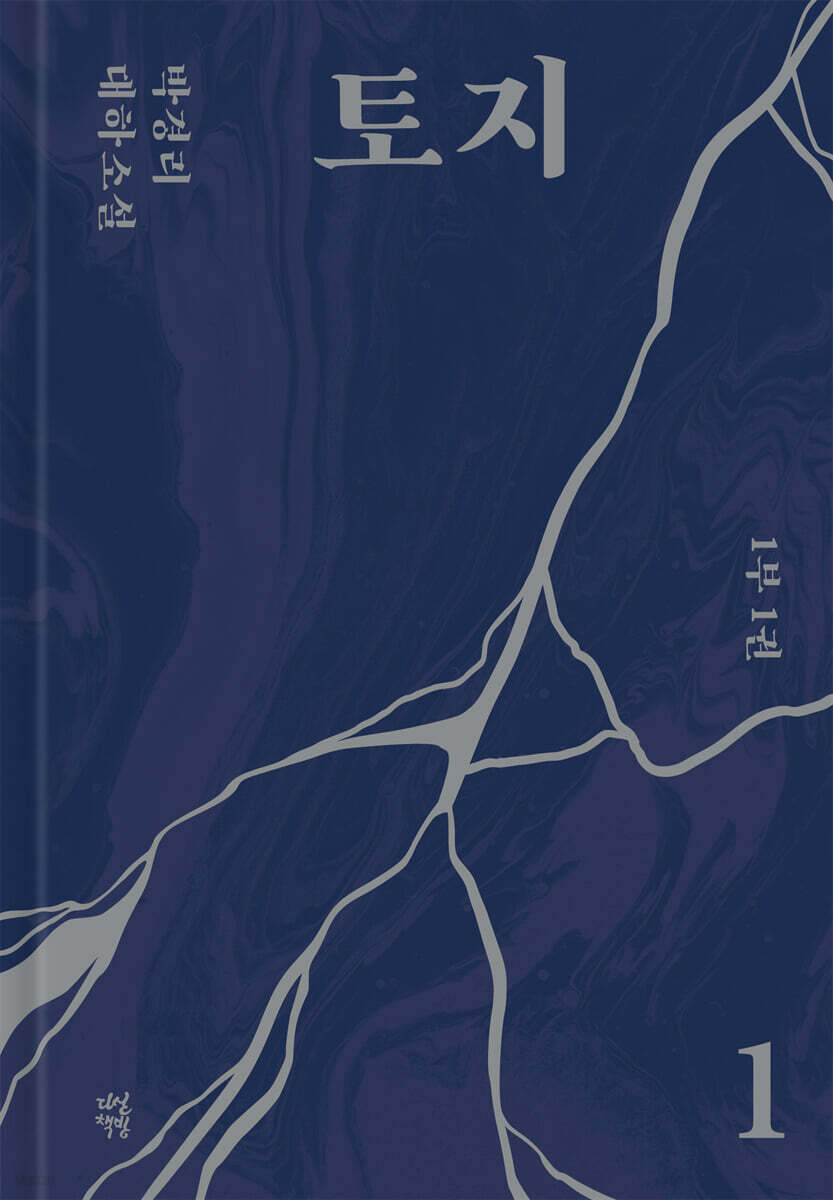
The cover design, which cleanly sheds the previous dullness while still maintaining the unique flavor of each work, makes it suitable for both reading and collecting.
We hope that you will experience the essence of Park Kyung-ni's literature, a name that will remain forever in the history of Korean literature, once again through Dasan Books' project.
“I think I have to ask myself again about literature.
“For the truth that wanders in the far, far away shore.”
The greatest classic of our time
Experience a masterpiece of Korean literature with a modern sensibility!
Park Kyung-ni's epic novel "Land," a true monumental work in Korean literature, is being reborn with a modern sensibility 54 years after its initial publication.
As is well known, 『Land』, which vividly records the major events of our modern history, is a work that sharply demonstrates the aesthetic sensibility of our language.
It is true that 『Land』 is a representative work of Korean literature that no one can deny and has been read nationwide to this day.
"Land" was written over a period of 26 years, from 1969 to 1994, and boasts a massive volume of approximately 40,000 pages of 200-character manuscript paper.
"Land" takes place from the end of the Joseon Dynasty to the day of liberation on August 15, 1945.
Through its fundamental exploration of human universality and vivid portrayal of the suffering of our people under Japanese colonial rule, the epic novel "Land" has established itself as the essence of 20th-century Korean literature.
2024 marks the 30th anniversary of the publication of "Land."
The 2023 edition of "Land," published by Dasan Books, has undergone a meticulous editing process, including months of research, to ensure that this work, which was completed 30 years ago, is delivered to readers with as few errors and minimal damage as possible.
We have also reorganized the vocabulary and genealogy chart to make it more concise and accurate for readers to understand.
Park Kyung-ni's essay, "The Years of Writing 'Land,'" which was not available in previous editions, has been included for the first time, helping readers to experience author Park Kyung-ni's reflections during the long period of time she spent writing 'Land,' from as close a distance as possible.
The first preface to "The Years of Writing 'Land'"
“Countless incidents, countless people,
“The breadth and depth of thought are like a jungle.”
“I feel extremely comfortable now and I don’t feel lonely.
I am now old and my children are doing quite well like everyone else, so I have nothing to complain about and no need to remember the unpleasant things. I am just grateful.
But there is one thing to remember.
There were many people who helped and encouraged us while we were writing "Land," and who warmly embraced us during the seven years of suffering.
I really can't forget it.
To be honest, I'm at a loss right now.
What did I do to deserve this gentle rain?
There is no life that is not lived fiercely.
It is painful for any living thing to survive.
And no matter what hardships we face, life is beautiful and nothing is as true as life.
Tragedy and comedy, happiness and unhappiness, death and birth, meeting and parting, beauty and ugliness, joy and sorrow, hope and despair, good fortune and bad fortune—a life that accepts and embraces all such contradictions is beautiful.
And nothing is as true as life itself.
Isn't literature an expression of the will to overcome that contradiction?
I feel like I'm back to square one now.
I guess I have to ask myself again about literature.
“For the truth that wanders in the far, far away shore.”
_Park Kyung-ni, from “The Years of Writing ‘Land’”
“Life comes before literature.”
It captures both the elegance of the classics and the sensibility of the new era.
Special edition commemorating the 15th anniversary of Park Kyung-ni's death
Park Kyung-ni, a master who debuted in 1957 with the short story "Calculation" and left a huge mark on the history of Korean literature with the epic novel "Land" written over 26 years.
To mark the 15th anniversary of her passing, Dasan Books is publishing a new collection of Park Kyung-ni's works.
This is a grand project that will sequentially publish Park Kyung-ni's novels, essays, and poetry collections, including "Land," which is considered a legacy of Korean literature. It is a meaningful work that fully captures the author's literary world without omission or distortion.
This project brings together Park Kyung-ni's vast works, which penetrate the core of Korean society and literature, and newly discovered, unpublished works will also be published after a meticulous editing process.
Park Kyung-ni's works, which were considered classics long ago, have not had the opportunity to be read anew.
This special edition, published this time, goes beyond preserving the original text's expressions and correcting previous errors, and presents a book with a completely different atmosphere from existing editions by imbuing it with a new sense of the times.
For readers who have previously read Park Kyung-ni's work, we have carefully composed it so that it can offer a fresh experience that breaks the mold, and for readers who are encountering her work for the first time, it can offer a taste of the dignity and excellence of a classic.
The cover design, which cleanly sheds the previous dullness while still maintaining the unique flavor of each work, makes it suitable for both reading and collecting.
We hope that you will experience the essence of Park Kyung-ni's literature, a name that will remain forever in the history of Korean literature, once again through Dasan Books' project.
“I think I have to ask myself again about literature.
“For the truth that wanders in the far, far away shore.”
The greatest classic of our time
Experience a masterpiece of Korean literature with a modern sensibility!
Park Kyung-ni's epic novel "Land," a true monumental work in Korean literature, is being reborn with a modern sensibility 54 years after its initial publication.
As is well known, 『Land』, which vividly records the major events of our modern history, is a work that sharply demonstrates the aesthetic sensibility of our language.
It is true that 『Land』 is a representative work of Korean literature that no one can deny and has been read nationwide to this day.
"Land" was written over a period of 26 years, from 1969 to 1994, and boasts a massive volume of approximately 40,000 pages of 200-character manuscript paper.
"Land" takes place from the end of the Joseon Dynasty to the day of liberation on August 15, 1945.
Through its fundamental exploration of human universality and vivid portrayal of the suffering of our people under Japanese colonial rule, the epic novel "Land" has established itself as the essence of 20th-century Korean literature.
2024 marks the 30th anniversary of the publication of "Land."
The 2023 edition of "Land," published by Dasan Books, has undergone a meticulous editing process, including months of research, to ensure that this work, which was completed 30 years ago, is delivered to readers with as few errors and minimal damage as possible.
We have also reorganized the vocabulary and genealogy chart to make it more concise and accurate for readers to understand.
Park Kyung-ni's essay, "The Years of Writing 'Land,'" which was not available in previous editions, has been included for the first time, helping readers to experience author Park Kyung-ni's reflections during the long period of time she spent writing 'Land,' from as close a distance as possible.
The first preface to "The Years of Writing 'Land'"
“Countless incidents, countless people,
“The breadth and depth of thought are like a jungle.”
“I feel extremely comfortable now and I don’t feel lonely.
I am now old and my children are doing quite well like everyone else, so I have nothing to complain about and no need to remember the unpleasant things. I am just grateful.
But there is one thing to remember.
There were many people who helped and encouraged us while we were writing "Land," and who warmly embraced us during the seven years of suffering.
I really can't forget it.
To be honest, I'm at a loss right now.
What did I do to deserve this gentle rain?
There is no life that is not lived fiercely.
It is painful for any living thing to survive.
And no matter what hardships we face, life is beautiful and nothing is as true as life.
Tragedy and comedy, happiness and unhappiness, death and birth, meeting and parting, beauty and ugliness, joy and sorrow, hope and despair, good fortune and bad fortune—a life that accepts and embraces all such contradictions is beautiful.
And nothing is as true as life itself.
Isn't literature an expression of the will to overcome that contradiction?
I feel like I'm back to square one now.
I guess I have to ask myself again about literature.
“For the truth that wanders in the far, far away shore.”
_Park Kyung-ni, from “The Years of Writing ‘Land’”
GOODS SPECIFICS
- Date of issue: June 7, 2023
- Format: Hardcover book binding method guide
- Page count, weight, size: 472 pages | 134*194*30mm
- ISBN13: 9791130699462
You may also like
카테고리
korean


korean

![GQ KOREA Mark (Monthly): December [2025]](http://librairie.coreenne.fr/cdn/shop/files/8ef265dbbfbf186523ed75ba7319009d.jpg?v=1765340328&width=3840)


