

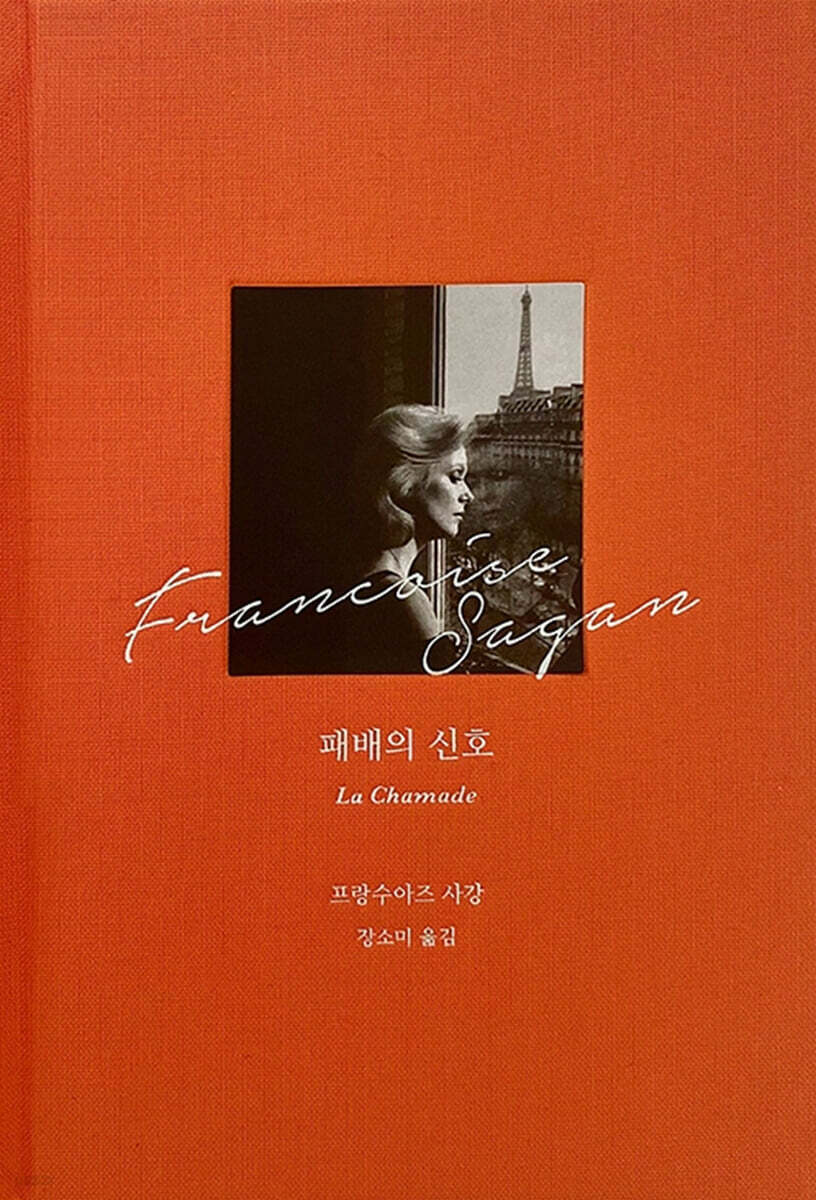
signal of defeat
 |
Description
Book Introduction
- A word from MD
- Françoise Sagan's sixth work is being introduced in Korea for the first time.
This work, which Sagang began writing in his thirties, stands out for its deeper sensuality and in-depth depiction of love compared to his previous works.
Where love has poured out, only the lonely backs of humans remain.
-Novel MD Kim So-jeong
『The Sign of Defeat』(La Chamade) is the sixth novel published by Françoise Sagan, who had just turned thirty in 1965, four years after 『The Curious Cloud』(1961).
This was after two marriages, two divorces, countless relationships in between, and becoming a mother of one child.
She said, “You can’t write what you don’t know.
You can't write what you can't feel.
He also said, "You can't write about things you haven't experienced."
So, how has Sa Kang's world of work changed now that he is in his thirties, 11 years after publishing "Goodbye, Sadness"?
Like his previous works, Sagang still deals with the themes of love and separation, but in this work, "Sign of Defeat," he shows a deeper sensuality.
Scenes of love and desire are expressed in greater detail than in previous works, and the work is filled with descriptions of the psychology that emerges when a person is fascinated by another person.
Just as the sentences express the uncontrollable love and desire to possess, the scenery of separation is also depicted delicately and beautifully.
She portrays human loneliness and fragility with a frighteningly cold-heartedness.
This was after two marriages, two divorces, countless relationships in between, and becoming a mother of one child.
She said, “You can’t write what you don’t know.
You can't write what you can't feel.
He also said, "You can't write about things you haven't experienced."
So, how has Sa Kang's world of work changed now that he is in his thirties, 11 years after publishing "Goodbye, Sadness"?
Like his previous works, Sagang still deals with the themes of love and separation, but in this work, "Sign of Defeat," he shows a deeper sensuality.
Scenes of love and desire are expressed in greater detail than in previous works, and the work is filled with descriptions of the psychology that emerges when a person is fascinated by another person.
Just as the sentences express the uncontrollable love and desire to possess, the scenery of separation is also depicted delicately and beautifully.
She portrays human loneliness and fragility with a frighteningly cold-heartedness.
- You can preview some of the book's contents.
Preview
index
At the beginning of the book
spring
summer
autumn
Translator's Note
spring
summer
autumn
Translator's Note
Detailed image
Into the book
The power, dangers, and virtues of shared laughter cannot be overemphasized.
Love is no more powerful than friendship, desire, or despair.
Antoine and Lucille shared a giggle like elementary school kids.
Loved, stripped naked, and desired by serious people, they both giggled hysterically in the corner of the banquet hall, knowing that they would be punished in some way.
--- p.43
When he stopped the car, her mind became complicated.
He pulled her into his arms and kissed her passionately.
She noticed that he was shaking just as much as she was.
He sat up and looked at her.
She looked straight at him without moving an inch.
His face came closer again and this time he kissed me gently and solemnly.
He kissed her temple, then her cheek, then returned to her lips.
As she gazed at this deep, gentle face upon her own, she realized that she would see it often from now on, and that she would be unable to resist it.
I had forgotten that it was possible to desire someone to this extent.
You must have had a dream.
How long? Two years, three years? But she couldn't remember any other faces.
Antoine's worried voice could be heard from within her hair.
“Why on earth am I doing this? Why on earth am I doing this…?”
--- p.64
“You hate it when I’m generous.
Don't worry, I'm not like that.
“I just wanted to check something, that’s all.”
“What did you check?”
“The look on your face as you enter the restaurant, the way you don’t look at him.
I know you.
“You like him.”
Lucille pulled away from him.
And said.
"So? Is it really impossible to like someone without causing them pain? Can I never be at peace? What kind of law is this? And what freedom did you have? So what…"
--- p.68
What could happen between a man and a woman who have a spark between them happened to them.
In an instant, they no longer remembered the pleasures they had once known, and they forgot the limits of their bodies.
Words like shame and courage have become so abstract.
The fact that they would have to part ways in an hour or two now seemed to them unacceptably immoral.
They already knew that no action of the other could ever be unpleasant, and they whispered, rediscovering the raw, childish language of physical love.
They constantly boasted and thanked each other for the pleasures they had given or received.
--- p.70
Many secret relationships are discovered in this way: by silence, by the absence of questions, by sentences that are not followed up, by ordinary words chosen with deliberate care, words so ordinary that they seem out of place.
In any case, no one who sees Lucille and Antoine's laughter or happy expression for the first time will fail to notice it.
They, too, vaguely guessed this, and perhaps arrogantly enjoyed this intermission that Boldini had given them, this brief moment when they could look at each other with ease and share excitement.
The presence of Claire and the others, whom they could not deny, doubled their joy.
They felt younger, almost younger.
I felt like one of those kids who had done something forbidden and still hadn't been punished.
--- p.83
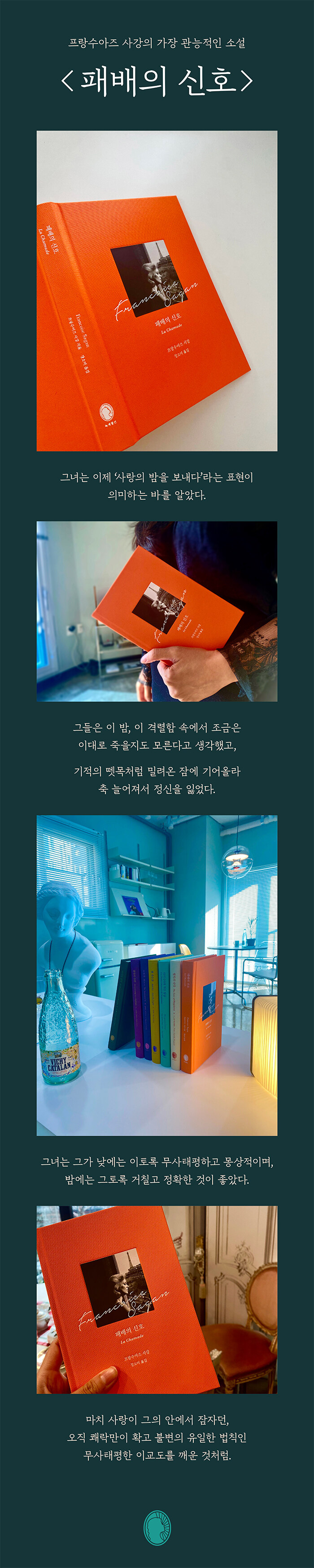
She now knew what the expression 'spend a night of love' meant.
They went dancing and didn't run into anyone.
And then we'd go back to his house and talk, have sex, smoke, talk some more, have sex until the sunlight illuminated the bed.
In this great peace, exhausted by excess, I was intoxicated with words and actions.
They thought they might die this night, in this fierceness, and they crawled onto the sleep that had washed over them like a miraculous raft, collapsed, and lost consciousness.
Anyway, they held each other's hands secretly as a final sign of solidarity.
She observed the profile of Antoine as he lay on his back.
The stubble growing on his neck and cheeks, and the bluish dark circles under his eyes.
It seemed impossible that she would wake up anywhere but by his side.
She liked how carefree and dreamy he was during the day, and so rough and precise at night.
As if love had awakened the peaceful pagan who had been sleeping within him, for whom pleasure alone was the only unchangeable law.
--- p.129
Lucille spoke in a calm voice, but she was constantly sobbing.
“Because we weren’t like that from the beginning.
We've been meeting in hiding for a long time, deceiving people and making them unhappy.
We can communicate by lying together and enjoying pleasure, but we can't be unhappy together.
We only see the good and we come together.
Antoine, you know very well… neither you nor I… are born like other people.”
Lucille lay down and rested her head on Antoine's shoulder.
“Sun, the beach, leisure, freedom… these are the things we enjoy, Antoine.
We can't help it either.
That's ingrained in our minds, in our skin.
Maybe we are the ones who say people are corrupt.
But when I pretend otherwise, I feel more corrupted.”
Love is no more powerful than friendship, desire, or despair.
Antoine and Lucille shared a giggle like elementary school kids.
Loved, stripped naked, and desired by serious people, they both giggled hysterically in the corner of the banquet hall, knowing that they would be punished in some way.
--- p.43
When he stopped the car, her mind became complicated.
He pulled her into his arms and kissed her passionately.
She noticed that he was shaking just as much as she was.
He sat up and looked at her.
She looked straight at him without moving an inch.
His face came closer again and this time he kissed me gently and solemnly.
He kissed her temple, then her cheek, then returned to her lips.
As she gazed at this deep, gentle face upon her own, she realized that she would see it often from now on, and that she would be unable to resist it.
I had forgotten that it was possible to desire someone to this extent.
You must have had a dream.
How long? Two years, three years? But she couldn't remember any other faces.
Antoine's worried voice could be heard from within her hair.
“Why on earth am I doing this? Why on earth am I doing this…?”
--- p.64
“You hate it when I’m generous.
Don't worry, I'm not like that.
“I just wanted to check something, that’s all.”
“What did you check?”
“The look on your face as you enter the restaurant, the way you don’t look at him.
I know you.
“You like him.”
Lucille pulled away from him.
And said.
"So? Is it really impossible to like someone without causing them pain? Can I never be at peace? What kind of law is this? And what freedom did you have? So what…"
--- p.68
What could happen between a man and a woman who have a spark between them happened to them.
In an instant, they no longer remembered the pleasures they had once known, and they forgot the limits of their bodies.
Words like shame and courage have become so abstract.
The fact that they would have to part ways in an hour or two now seemed to them unacceptably immoral.
They already knew that no action of the other could ever be unpleasant, and they whispered, rediscovering the raw, childish language of physical love.
They constantly boasted and thanked each other for the pleasures they had given or received.
--- p.70
Many secret relationships are discovered in this way: by silence, by the absence of questions, by sentences that are not followed up, by ordinary words chosen with deliberate care, words so ordinary that they seem out of place.
In any case, no one who sees Lucille and Antoine's laughter or happy expression for the first time will fail to notice it.
They, too, vaguely guessed this, and perhaps arrogantly enjoyed this intermission that Boldini had given them, this brief moment when they could look at each other with ease and share excitement.
The presence of Claire and the others, whom they could not deny, doubled their joy.
They felt younger, almost younger.
I felt like one of those kids who had done something forbidden and still hadn't been punished.
--- p.83
She now knew what the expression 'spend a night of love' meant.
They went dancing and didn't run into anyone.
And then we'd go back to his house and talk, have sex, smoke, talk some more, have sex until the sunlight illuminated the bed.
In this great peace, exhausted by excess, I was intoxicated with words and actions.
They thought they might die this night, in this fierceness, and they crawled onto the sleep that had washed over them like a miraculous raft, collapsed, and lost consciousness.
Anyway, they held each other's hands secretly as a final sign of solidarity.
She observed the profile of Antoine as he lay on his back.
The stubble growing on his neck and cheeks, and the bluish dark circles under his eyes.
It seemed impossible that she would wake up anywhere but by his side.
She liked how carefree and dreamy he was during the day, and so rough and precise at night.
As if love had awakened the peaceful pagan who had been sleeping within him, for whom pleasure alone was the only unchangeable law.
--- p.129
Lucille spoke in a calm voice, but she was constantly sobbing.
“Because we weren’t like that from the beginning.
We've been meeting in hiding for a long time, deceiving people and making them unhappy.
We can communicate by lying together and enjoying pleasure, but we can't be unhappy together.
We only see the good and we come together.
Antoine, you know very well… neither you nor I… are born like other people.”
Lucille lay down and rested her head on Antoine's shoulder.
“Sun, the beach, leisure, freedom… these are the things we enjoy, Antoine.
We can't help it either.
That's ingrained in our minds, in our skin.
Maybe we are the ones who say people are corrupt.
But when I pretend otherwise, I feel more corrupted.”
--- p.239
Publisher's Review
“Sun, the beach, leisure, freedom… these are the things we enjoy, Antoine.
We can't help it either.
That's ingrained in our minds, in our skin.
Maybe we are the ones who say people are corrupt.
But when I pretend otherwise, I feel more corrupted.”
The best work of Sagang.
Shining with insight like "Goodbye, Sadness" - TIME Magazine
"Sign of Defeat" is incomparably excellent.
Few writers can express as elegant honesty, as joy in life, as delight in the senses as Sagan. - Detroit Free Press
The Four Rivers are piercing the human heart - The New York Times
『Sign of Defeat』(La Chamade), which we are introducing to our readers for the first time in an official Korean translation, is the sixth novel published by Françoise Sagan, who had just turned thirty in 1965, four years after 『The Curious Cloud』(1961).
This was after two marriages, two divorces, countless relationships in between, and becoming a mother of one child.
She said, “You can’t write what you don’t know.
You can't write what you can't feel.
He also said, "You can't write about things you haven't experienced."
So, how has Sa Kang's world of work changed now that he is in his thirties, 11 years after publishing "Goodbye, Sadness"?
Like his previous works, Sagang still deals with the themes of love and separation, but in this work, "Sign of Defeat," he shows a deeper sensuality.
Scenes of love and desire are expressed in greater detail than in previous works, and the work is filled with descriptions of the psychology that emerges when a person is fascinated by another person.
Just as the sentences express the uncontrollable love and desire to possess, the scenery of separation is also depicted delicately and beautifully.
She portrays human loneliness and fragility with a frighteningly cold-heartedness.
In a word, Sa Kang is also a writer who 'shatters the illusion of romance with the most romantic sentences.'
If we were to apply moral standards to this novel, its plot might feel overly indulgent.
However, through the mouth of Lucille in the novel, Sagang says the following:
“Sun, the beach, leisure, freedom… these are the things we enjoy, Antoine.
We can't help it either.
That's what's ingrained in our minds, in our skin.
Maybe we are the ones who say people are corrupt.
But when I pretend not to, I feel more corrupted.” In “Signal of Defeat,” Sa Kang questions what we have believed to be moral righteousness.
After reading "Signs of Defeat," readers will experience all concepts of love and marriage, career and romance, happiness and loneliness being dismantled and reassembled.
The emotions that ignite the flame of love in our hearts, even if that flame eventually dies out due to a fateful separation, Sa-gang knew all too well that humans can endure future loneliness with such memories.
We can't help it either.
That's ingrained in our minds, in our skin.
Maybe we are the ones who say people are corrupt.
But when I pretend otherwise, I feel more corrupted.”
The best work of Sagang.
Shining with insight like "Goodbye, Sadness" - TIME Magazine
"Sign of Defeat" is incomparably excellent.
Few writers can express as elegant honesty, as joy in life, as delight in the senses as Sagan. - Detroit Free Press
The Four Rivers are piercing the human heart - The New York Times
『Sign of Defeat』(La Chamade), which we are introducing to our readers for the first time in an official Korean translation, is the sixth novel published by Françoise Sagan, who had just turned thirty in 1965, four years after 『The Curious Cloud』(1961).
This was after two marriages, two divorces, countless relationships in between, and becoming a mother of one child.
She said, “You can’t write what you don’t know.
You can't write what you can't feel.
He also said, "You can't write about things you haven't experienced."
So, how has Sa Kang's world of work changed now that he is in his thirties, 11 years after publishing "Goodbye, Sadness"?
Like his previous works, Sagang still deals with the themes of love and separation, but in this work, "Sign of Defeat," he shows a deeper sensuality.
Scenes of love and desire are expressed in greater detail than in previous works, and the work is filled with descriptions of the psychology that emerges when a person is fascinated by another person.
Just as the sentences express the uncontrollable love and desire to possess, the scenery of separation is also depicted delicately and beautifully.
She portrays human loneliness and fragility with a frighteningly cold-heartedness.
In a word, Sa Kang is also a writer who 'shatters the illusion of romance with the most romantic sentences.'
If we were to apply moral standards to this novel, its plot might feel overly indulgent.
However, through the mouth of Lucille in the novel, Sagang says the following:
“Sun, the beach, leisure, freedom… these are the things we enjoy, Antoine.
We can't help it either.
That's what's ingrained in our minds, in our skin.
Maybe we are the ones who say people are corrupt.
But when I pretend not to, I feel more corrupted.” In “Signal of Defeat,” Sa Kang questions what we have believed to be moral righteousness.
After reading "Signs of Defeat," readers will experience all concepts of love and marriage, career and romance, happiness and loneliness being dismantled and reassembled.
The emotions that ignite the flame of love in our hearts, even if that flame eventually dies out due to a fateful separation, Sa-gang knew all too well that humans can endure future loneliness with such memories.
GOODS SPECIFICS
- Date of issue: January 7, 2022
- Format: Hardcover book binding method guide
- Page count, weight, size: 264 pages | 356g | 135*195*18mm
- ISBN13: 9791196554866
- ISBN10: 1196554862
You may also like
카테고리
korean


korean

![GQ KOREA Mark (Monthly): December [2025]](http://librairie.coreenne.fr/cdn/shop/files/8ef265dbbfbf186523ed75ba7319009d.jpg?v=1765340328&width=3840)


