

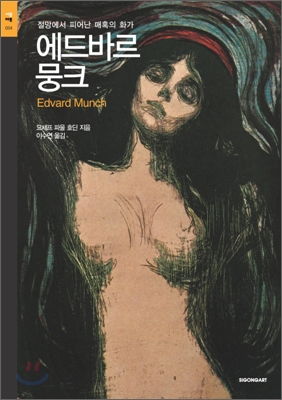
Edvard Munch
 |
Description
Book Introduction
Munch, the painter who expressed inner fear and anxiety through art
Edvard Munch is a painter who marked the beginning of expressionism by expressing his inner emotions on canvas.
The pain and anxiety he experienced in life were reborn as a lyrical feeling through beautiful colors and dynamic lines.
Munch experienced death early in his childhood, losing his beloved family, and he himself lived with the fear of death due to frequent illnesses.
The chaotic times of war and rapid social change, and the criticism he faced from critics and the public in his home country of Norway, left him with feelings of despair and anxiety.
This book says that Munch remained a true artist by filtering out the emotions of fear and anxiety and expressing them in his own way rather than simply expressing the painful reality.
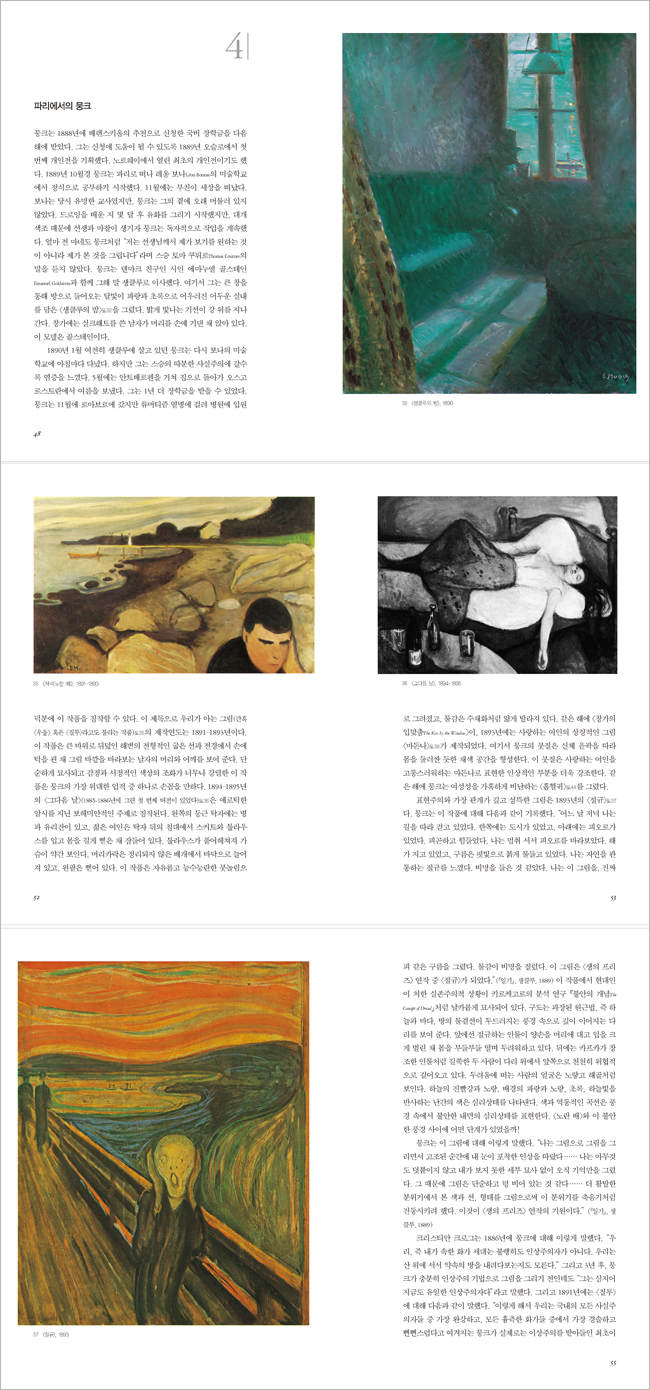
It weaves together around 160 of Munch's works, including "The Scream," born from a bloody sunset seen while strolling along the Norwegian coast, "Madonna," which powerfully depicts the pain of a woman in love, and "Vampire," a red-haired woman who is both eerie and captivating, along with his life.
Edvard Munch is a painter who marked the beginning of expressionism by expressing his inner emotions on canvas.
The pain and anxiety he experienced in life were reborn as a lyrical feeling through beautiful colors and dynamic lines.
Munch experienced death early in his childhood, losing his beloved family, and he himself lived with the fear of death due to frequent illnesses.
The chaotic times of war and rapid social change, and the criticism he faced from critics and the public in his home country of Norway, left him with feelings of despair and anxiety.
This book says that Munch remained a true artist by filtering out the emotions of fear and anxiety and expressing them in his own way rather than simply expressing the painful reality.
It weaves together around 160 of Munch's works, including "The Scream," born from a bloody sunset seen while strolling along the Norwegian coast, "Madonna," which powerfully depicts the pain of a woman in love, and "Vampire," a red-haired woman who is both eerie and captivating, along with his life.
- You can preview some of the book's contents.
Preview
index
introduction
1 Childhood and Early Works
2 The situation in Norway
3 Bohemia in Christiania
4 Munch in Paris
5 Freeze of Life
6 Munch in Berlin
7 Back in Paris
8 Munch's Lonely Road, Love and Death
9 Unstable Times
10 Crisis and Homecoming
11 University of Oslo murals
12 Memories and Premonitions
13 graphic works
14 How did Munch work?
Reviews
main
References
List of illustrations
Search
1 Childhood and Early Works
2 The situation in Norway
3 Bohemia in Christiania
4 Munch in Paris
5 Freeze of Life
6 Munch in Berlin
7 Back in Paris
8 Munch's Lonely Road, Love and Death
9 Unstable Times
10 Crisis and Homecoming
11 University of Oslo murals
12 Memories and Premonitions
13 graphic works
14 How did Munch work?
Reviews
main
References
List of illustrations
Search
Detailed image
Publisher's Review
Artistic talent blossomed during an unhappy childhood
Munch's childhood was filled with anxiety due to his father's violent and oppressive tendencies, which began after his mother's death, the death of his sister, and his own illness.
But it is undeniable that his misfortune became the driving force behind his art.
His mother's absence was the source of his lifelong love and hatred for women, and the successive deaths of his beloved family members left him with a fear of loss.
This inner quality of his allowed him to create unique works with his own method of expression, without being swayed by any of the artistic trends popular at the time.
For Munch, painting was a kind of autobiography, an obsession to relieve life's anxiety and solve problems.
Therefore, in order to understand his world of works, it is important to first look at how he lived.
The authenticity of Munch's art comes from themes based on his own emotional experiences.
From eccentric Norwegian painter to pioneer of Expressionism
Like most genius artists who were not recognized in their time, Munch was also criticized by critics and the public for a long time.
Munch, who wanted to depict living, breathing, suffering, and loving people in reality, rather than the clichéd subjects of beautiful natural landscapes or women reading and knitting indoors, incurred the animosity of the public, who were reluctant to reveal their weaknesses.
Also, unlike other painters who had mainly expressed the external impressions of their subjects on canvas until then, Munch was the first painter to express his inner world according to his own intentions.
However, at the time, his work was seen by critics as nothing more than 'disharmonious paint marks'.
The conservative French art world, which did not recognize artists from abroad, and the German art world, which dismissed Munch's work as an "insult to art," often dismissed him as an eccentric painter from Norway.
However, despite all the criticism, Munch continued to work, and his efforts earned him the recognition of a small group of innovative artists and patrons.
Munch led the formation of the Berlin Secession and went on to become renowned as the founder of Expressionism.
Munch's work cannot be defined in terms of any 'ism'.
He too has never been influenced by any trend in his life.
What sets him apart from later expressionist painters is that he creates shocking works without emphasizing 'ugliness'.
He chose beautiful figures to express the pain and sorrow of humanity, and he also incorporated beauty into the landscapes and vibrant lines in his works.
Munch's ability to lyrically express the tragedy and suffering of life made him a painter with a unique status throughout the history of art.
A Poem of Life and Death, Love and Pain, "The Frieze of Life"
Munch's "Frieze of Life" series, which he worked on throughout his life, can be said to be a poem about life.
The main theme was love and death, and the origin of this series was “The Scream.”
He says that while walking down the street, he happened to see a sky at sunset covered with blood-red clouds, and that he felt a scream piercing through nature from this sky.
Strong colors and dynamic curves express an anxious inner psychological state, and this became a formula in Munch's art.
In addition to “The Scream,” “Frieze of Life” also includes familiar paintings such as “The Vampire” and “Madonna,” and these paintings are unified in both style and content.
However, without an understanding of Munch's artistic world, it is difficult to see the unity.
He wanted to place the works included in the “Frieze of Life” in one place, believing that only then could they truly reveal their intentions.
Because they depict our lives themselves.
How did Munch work?
The book concludes with a discussion of Munch's working methods, a topic that many people are curious about.
Munch is famous as a painter who expressed his inner emotions, but the source of such expressiveness was also his constant drawing practice.
He left behind thousands of drawings, and through meticulous observation he depicted everything he saw - landscapes, people, animals - sometimes in a naturalistic, sometimes distorted, and sometimes caricatured way.
It is a little-known fact that he was faithful to the basic work of drawing, but this book will allow you to get one step closer to the world of Munch's work.
It clearly shows how many different drawing processes he went through before completing a single piece, and how much thought and effort he put into perfecting it.
Another unusual aspect of Munch's work was the way he handled his works.
He did not consider a work finished once he had finished painting it on canvas.
I believed that a work of art must have time to mature after leaving the artist's hands, being exposed to rain, wind, and being moved around by people.
Just like humans, I thought that paintings could only be completed after going through hardships over time.
This unique artistic world is probably the reason why his work still moves and resonates with many people.
Munch's childhood was filled with anxiety due to his father's violent and oppressive tendencies, which began after his mother's death, the death of his sister, and his own illness.
But it is undeniable that his misfortune became the driving force behind his art.
His mother's absence was the source of his lifelong love and hatred for women, and the successive deaths of his beloved family members left him with a fear of loss.
This inner quality of his allowed him to create unique works with his own method of expression, without being swayed by any of the artistic trends popular at the time.
For Munch, painting was a kind of autobiography, an obsession to relieve life's anxiety and solve problems.
Therefore, in order to understand his world of works, it is important to first look at how he lived.
The authenticity of Munch's art comes from themes based on his own emotional experiences.
From eccentric Norwegian painter to pioneer of Expressionism
Like most genius artists who were not recognized in their time, Munch was also criticized by critics and the public for a long time.
Munch, who wanted to depict living, breathing, suffering, and loving people in reality, rather than the clichéd subjects of beautiful natural landscapes or women reading and knitting indoors, incurred the animosity of the public, who were reluctant to reveal their weaknesses.
Also, unlike other painters who had mainly expressed the external impressions of their subjects on canvas until then, Munch was the first painter to express his inner world according to his own intentions.
However, at the time, his work was seen by critics as nothing more than 'disharmonious paint marks'.
The conservative French art world, which did not recognize artists from abroad, and the German art world, which dismissed Munch's work as an "insult to art," often dismissed him as an eccentric painter from Norway.
However, despite all the criticism, Munch continued to work, and his efforts earned him the recognition of a small group of innovative artists and patrons.
Munch led the formation of the Berlin Secession and went on to become renowned as the founder of Expressionism.
Munch's work cannot be defined in terms of any 'ism'.
He too has never been influenced by any trend in his life.
What sets him apart from later expressionist painters is that he creates shocking works without emphasizing 'ugliness'.
He chose beautiful figures to express the pain and sorrow of humanity, and he also incorporated beauty into the landscapes and vibrant lines in his works.
Munch's ability to lyrically express the tragedy and suffering of life made him a painter with a unique status throughout the history of art.
A Poem of Life and Death, Love and Pain, "The Frieze of Life"
Munch's "Frieze of Life" series, which he worked on throughout his life, can be said to be a poem about life.
The main theme was love and death, and the origin of this series was “The Scream.”
He says that while walking down the street, he happened to see a sky at sunset covered with blood-red clouds, and that he felt a scream piercing through nature from this sky.
Strong colors and dynamic curves express an anxious inner psychological state, and this became a formula in Munch's art.
In addition to “The Scream,” “Frieze of Life” also includes familiar paintings such as “The Vampire” and “Madonna,” and these paintings are unified in both style and content.
However, without an understanding of Munch's artistic world, it is difficult to see the unity.
He wanted to place the works included in the “Frieze of Life” in one place, believing that only then could they truly reveal their intentions.
Because they depict our lives themselves.
How did Munch work?
The book concludes with a discussion of Munch's working methods, a topic that many people are curious about.
Munch is famous as a painter who expressed his inner emotions, but the source of such expressiveness was also his constant drawing practice.
He left behind thousands of drawings, and through meticulous observation he depicted everything he saw - landscapes, people, animals - sometimes in a naturalistic, sometimes distorted, and sometimes caricatured way.
It is a little-known fact that he was faithful to the basic work of drawing, but this book will allow you to get one step closer to the world of Munch's work.
It clearly shows how many different drawing processes he went through before completing a single piece, and how much thought and effort he put into perfecting it.
Another unusual aspect of Munch's work was the way he handled his works.
He did not consider a work finished once he had finished painting it on canvas.
I believed that a work of art must have time to mature after leaving the artist's hands, being exposed to rain, wind, and being moved around by people.
Just like humans, I thought that paintings could only be completed after going through hardships over time.
This unique artistic world is probably the reason why his work still moves and resonates with many people.
GOODS SPECIFICS
- Date of publication: November 19, 2010
- Page count, weight, size: 224 pages | 484g | 148*210*20mm
- ISBN13: 9788952760142
- ISBN10: 895276014X
You may also like
카테고리
korean


korean

![GQ KOREA Mark (Monthly): December [2025]](http://librairie.coreenne.fr/cdn/shop/files/8ef265dbbfbf186523ed75ba7319009d.jpg?v=1765340328&width=3840)


