

ethical psychopath
 |
Description
Book Introduction
"Sometimes I have to face patients as myself, not as a doctor."
Patients and doctors, priorities and victims, minds and illness…
A story about the contradictions encountered in psychiatric practice.
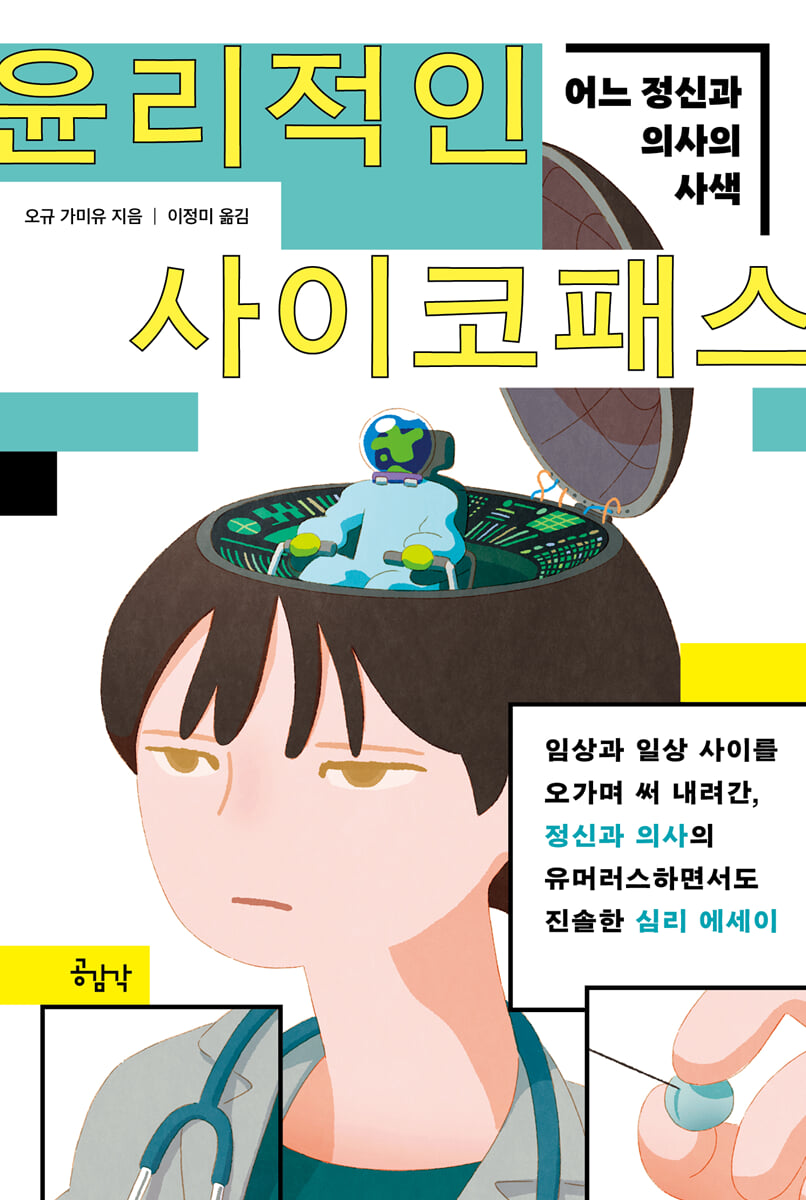
"Ethical Psychopaths - Reflections of a Psychiatrist" is a clinical essay written by psychiatrist and poet Kamiyu Oh, recording his experiences and reflections from ten years of clinical practice.
It humorously and honestly captures the moments when I had to constantly think about the balance between my role as a doctor and my role as a human being while facing the lives of patients closely.
Psychiatrists cannot shoulder all of their patients' suffering, nor can they completely ignore it.
So the author confesses, “I would rather be an ethical psychopath.”
Rather than embracing all the patients' wounds and breaking down, it is a pledge to maintain an 'attitude of returning and reflecting' even if it inevitably means putting someone's pain at the back of the priority list.
"The Ethical Psychopath" is not simply a psychiatrist's record.
The author's constant questioning behind the cool judgment of "Triage (emergency patient triage system for priority)" ultimately connects with the moments of choice that everyone faces in life.
In our relationships, at work, or within our families, we face ethical dilemmas, big and small, every day.
This book gently asks us what attitude we should have in those moments.
His writing, brimming with sharp insights and poetic prose, goes beyond mere clinical documentation to show how a human being can live while embracing self-contradiction.
It will provide a time of deep resonance and reflection not only for patients, but also for doctors, counselors, and 'all those who cannot turn a blind eye to someone's suffering.'
Patients and doctors, priorities and victims, minds and illness…
A story about the contradictions encountered in psychiatric practice.
"Ethical Psychopaths - Reflections of a Psychiatrist" is a clinical essay written by psychiatrist and poet Kamiyu Oh, recording his experiences and reflections from ten years of clinical practice.
It humorously and honestly captures the moments when I had to constantly think about the balance between my role as a doctor and my role as a human being while facing the lives of patients closely.
Psychiatrists cannot shoulder all of their patients' suffering, nor can they completely ignore it.
So the author confesses, “I would rather be an ethical psychopath.”
Rather than embracing all the patients' wounds and breaking down, it is a pledge to maintain an 'attitude of returning and reflecting' even if it inevitably means putting someone's pain at the back of the priority list.
"The Ethical Psychopath" is not simply a psychiatrist's record.
The author's constant questioning behind the cool judgment of "Triage (emergency patient triage system for priority)" ultimately connects with the moments of choice that everyone faces in life.
In our relationships, at work, or within our families, we face ethical dilemmas, big and small, every day.
This book gently asks us what attitude we should have in those moments.
His writing, brimming with sharp insights and poetic prose, goes beyond mere clinical documentation to show how a human being can live while embracing self-contradiction.
It will provide a time of deep resonance and reflection not only for patients, but also for doctors, counselors, and 'all those who cannot turn a blind eye to someone's suffering.'
- You can preview some of the book's contents.
Preview
index
Entering
Chapter 1: Ethical Psychopaths
ethical psychopath
Victims in the clinic
The opponent is none other than 'Yokoya'
Dropout
Treatment continues despite the hurt
Don't look at the disease, look at the sick person.
Guardian Spirit Theory
Precognitive ability
topper
Puberty, SNS, and Me
Chapter 2: Appropriate exposure level
Appropriate exposure level
Most of them are anonymous anyway
For celebrities, teeth are life
Multiple relationships
The illusion of 'two-handed swordsmanship'
He seems like a doctor or an older brother
I'm looking at the teacher's SNS
Routine without routine
Cosmetic surgeon's SNS
True appearance vs. role
Chapter 3 Personal Social Issues
personal social issues
A world where mental health is managed
MBTI
The disappearance of 'place'
Fit your body
Concerns about forced medical treatment
Why I, a psychiatrist, write books
Travel maladjustment
Surprise
silent majority
Hyperlipidemia
In conclusion
References
Chapter 1: Ethical Psychopaths
ethical psychopath
Victims in the clinic
The opponent is none other than 'Yokoya'
Dropout
Treatment continues despite the hurt
Don't look at the disease, look at the sick person.
Guardian Spirit Theory
Precognitive ability
topper
Puberty, SNS, and Me
Chapter 2: Appropriate exposure level
Appropriate exposure level
Most of them are anonymous anyway
For celebrities, teeth are life
Multiple relationships
The illusion of 'two-handed swordsmanship'
He seems like a doctor or an older brother
I'm looking at the teacher's SNS
Routine without routine
Cosmetic surgeon's SNS
True appearance vs. role
Chapter 3 Personal Social Issues
personal social issues
A world where mental health is managed
MBTI
The disappearance of 'place'
Fit your body
Concerns about forced medical treatment
Why I, a psychiatrist, write books
Travel maladjustment
Surprise
silent majority
Hyperlipidemia
In conclusion
References
Detailed image

Into the book
So I decided at this moment.
I won't become a simple 'psychopath'.
This moment refers to the moment when you realize the problem with psychopathic thinking.
In other words, while it is certainly necessary to have a psychopathic mindset at work, I have decided to become an "ethical psychopath" who reexamines and examines whether there are any areas that have been missed because of this.
--- p.24
While doctors naturally tend to focus on those who stand out when providing medical care, I also try to pay attention to the "victims" hidden among seemingly innocent people whenever possible.
It is about listening to the voices of victims who are not even aware of it.
Of course, sometimes that voice is a signal to leave it alone, but I also want to sense it and determine what it means.
--- p.34
But our words are like a scalpel, and speaking without thinking is no different from swinging a scalpel carelessly in a doctor's office.
The tip of the knife grazes the patient's cheek or, unfortunately, sometimes even stabs the chest.
“I still sometimes think about what you first said to me three years ago.”
--- p.58
The fact is that people simply call people who don't talk back, who don't get in trouble for something they deserve, and who don't show their dislike for something a 'good person.'
In other words, we judge whether a person is a good person or not by looking at his actions, not his heart.
--- p.105
When dealing with patients, there is a natural human relationship where they stand in the position of brothers and sisters (or older and younger brothers).
This seems to be caused by a combination of the patient's desire to find someone more mature than them and the doctor's desire to give advice like an elder.
However, if I act like my brother, as is inherent in human nature, I may end up repeating the negative relationship the patient has had with his brother-like person.
--- p.173
People who criticize others on social media or leave comments that border on malicious are usually people whose realistic judgment is clouded.
Because there is no distinction between this and that, anger builds up and arrows of criticism are fired directly.
Still, whenever I receive such criticism, my heart strangely aches.
In some ways, it's not a wrong statement, and I feel like it's understandable to hear such words.
I think there may be a strong feeling within me that a doctor must be a doctor 24 hours a day.
--- p.183
Moreover, online treatment, which can be accessed anytime and anywhere, lowers the threshold for treatment, so the meaning hidden in 'when and where' will be hidden.
In other words, the method of getting to the heart of the problem through information like, "You're an office worker, but you came here on a weekday afternoon?" or "You came all the way here to our hospital?" can naturally disappear.
Additionally, all the nonverbal information that can only be obtained when meeting someone face-to-face, such as the appearance in the waiting room, the atmosphere when entering the room, the gait when approaching and sitting in the chair, and the behavior displayed when facing another person, will be greatly reduced.
--- p.257
We have some idea of what might happen tomorrow, but it's still a premature judgment.
Your condition could suddenly worsen, or something unimaginable, like war or an epidemic, could happen and completely change your situation.
That is 'reality'.
The basic rule is to first accept the situation and then decide how to act.
But at some point, when something bad happens, we tend to deny that 'reality' and believe it is fake, and we often mistakenly believe that only the scenario we imagined is real.
--- p.263
This is because patients sometimes believe simple, definitive statements floating around on social media and give up on complex, persistent face-to-face treatment.
Just like people who believe in conspiracy theories, some patients hear information on social media that they can instantly escape all the pain that has been tormenting them, and they believe that the reason their reality has been so complex and difficult is because they did not know this one method.
This way, no matter how hard I explain, the logic becomes that the authoritative teacher on social media knows everything, while I, an ordinary psychiatrist I met at this hospital by chance, doesn't know anything.
--- p.282
Of course, you can act like a doctor to a certain extent.
Prescribing medication and performing tests are the things that connect me and my patients.
There are many cases where things end well if you just act calmly and play the role of a doctor.
But at some point, I have to face the patient as myself, not as a doctor.
When I have to answer a patient's question, the reaction that comes out unconsciously is actually my own, rather than my own, 'as a doctor'.
I won't become a simple 'psychopath'.
This moment refers to the moment when you realize the problem with psychopathic thinking.
In other words, while it is certainly necessary to have a psychopathic mindset at work, I have decided to become an "ethical psychopath" who reexamines and examines whether there are any areas that have been missed because of this.
--- p.24
While doctors naturally tend to focus on those who stand out when providing medical care, I also try to pay attention to the "victims" hidden among seemingly innocent people whenever possible.
It is about listening to the voices of victims who are not even aware of it.
Of course, sometimes that voice is a signal to leave it alone, but I also want to sense it and determine what it means.
--- p.34
But our words are like a scalpel, and speaking without thinking is no different from swinging a scalpel carelessly in a doctor's office.
The tip of the knife grazes the patient's cheek or, unfortunately, sometimes even stabs the chest.
“I still sometimes think about what you first said to me three years ago.”
--- p.58
The fact is that people simply call people who don't talk back, who don't get in trouble for something they deserve, and who don't show their dislike for something a 'good person.'
In other words, we judge whether a person is a good person or not by looking at his actions, not his heart.
--- p.105
When dealing with patients, there is a natural human relationship where they stand in the position of brothers and sisters (or older and younger brothers).
This seems to be caused by a combination of the patient's desire to find someone more mature than them and the doctor's desire to give advice like an elder.
However, if I act like my brother, as is inherent in human nature, I may end up repeating the negative relationship the patient has had with his brother-like person.
--- p.173
People who criticize others on social media or leave comments that border on malicious are usually people whose realistic judgment is clouded.
Because there is no distinction between this and that, anger builds up and arrows of criticism are fired directly.
Still, whenever I receive such criticism, my heart strangely aches.
In some ways, it's not a wrong statement, and I feel like it's understandable to hear such words.
I think there may be a strong feeling within me that a doctor must be a doctor 24 hours a day.
--- p.183
Moreover, online treatment, which can be accessed anytime and anywhere, lowers the threshold for treatment, so the meaning hidden in 'when and where' will be hidden.
In other words, the method of getting to the heart of the problem through information like, "You're an office worker, but you came here on a weekday afternoon?" or "You came all the way here to our hospital?" can naturally disappear.
Additionally, all the nonverbal information that can only be obtained when meeting someone face-to-face, such as the appearance in the waiting room, the atmosphere when entering the room, the gait when approaching and sitting in the chair, and the behavior displayed when facing another person, will be greatly reduced.
--- p.257
We have some idea of what might happen tomorrow, but it's still a premature judgment.
Your condition could suddenly worsen, or something unimaginable, like war or an epidemic, could happen and completely change your situation.
That is 'reality'.
The basic rule is to first accept the situation and then decide how to act.
But at some point, when something bad happens, we tend to deny that 'reality' and believe it is fake, and we often mistakenly believe that only the scenario we imagined is real.
--- p.263
This is because patients sometimes believe simple, definitive statements floating around on social media and give up on complex, persistent face-to-face treatment.
Just like people who believe in conspiracy theories, some patients hear information on social media that they can instantly escape all the pain that has been tormenting them, and they believe that the reason their reality has been so complex and difficult is because they did not know this one method.
This way, no matter how hard I explain, the logic becomes that the authoritative teacher on social media knows everything, while I, an ordinary psychiatrist I met at this hospital by chance, doesn't know anything.
--- p.282
Of course, you can act like a doctor to a certain extent.
Prescribing medication and performing tests are the things that connect me and my patients.
There are many cases where things end well if you just act calmly and play the role of a doctor.
But at some point, I have to face the patient as myself, not as a doctor.
When I have to answer a patient's question, the reaction that comes out unconsciously is actually my own, rather than my own, 'as a doctor'.
--- p.329
Publisher's Review
“I want to be an ethical psychopath.”
Written between clinical and daily life
A humorous and honest psychological essay by a psychiatrist
What image usually comes to mind when you think of 'psychopath'?
It brings to mind a person who has no empathy for others' feelings and will not hesitate to take any action for his own benefit.
But here's a psychiatrist who says, 'I want to become a psychopath.'
Even after careful consideration, the words 'psychopath' and 'psychiatrist' do not seem to go together, but the author considers the meaning of psychopath from a different perspective.
In fact, we all may have 'psychopathic aspects' in our daily lives, big and small.
“I see about 50 patients a day, and if I felt this way every time, I wouldn’t be in a good state of mind.
In times like these, we tend to think of them as 'psychopathic' and protect our mental health.
By treating the patient's mind as a 'disease' or putting it into a specific category, we avoid directly confronting those feelings.
Ultimately, thinking psychopathically means giving up on treating every patient equally and instead using my time and energy to optimize my own.
“It is absolutely necessary to complete the social task of medical treatment, but it does not free us from the question of whether we have examined each patient to the best of our ability.”
- In the text
The title of the book, 'Ethical Psychopath,' refers to the attitude the author seeks to pursue as a doctor.
If a psychiatrist were to try to understand the emotional pain of every patient who visits the psychiatrist, it would likely exhaust the doctor both physically and mentally.
To properly examine everyone, one must 'put someone's emotional wounds on the back burner', a so-called 'psychopathic' behavior.
While the author acknowledges the psychopathic coolness that is inevitably required in clinical settings, he reflects on the patient's mind and his own ethics within it.
I decide to become an "ethical psychopath" who re-examines and examines patients to see if there is anything I missed behind my rational judgment.
This book is a record of the author's clinical and daily life.
The author does not stop at simple self-reflection, but delves deeply into the lives of the patients he has encountered over the past ten years as a psychiatrist, as well as his own mind, which is constantly shaken by their presence.
This book, which honestly records the conflicts and times of recovery experienced as a doctor and as a human being facing the pain of patients, offers warm empathy and deep comfort to all of us living today.
When you're waiting in the consultation waiting room, anxious and waiting for your turn
A book that lets you know what kind of face the doctor is looking at when looking at the chart.
The number of people seeking psychiatric counseling is increasing every year.
According to data from the Ministry of Health and Welfare, the number of people who experienced mental health problems in the past year has increased significantly from the previous year, reaching 73.6%.
The rate of depression and anxiety among the 2030 generation is also high, and the number of people making appointments for first-time visits or considering counseling continues to increase.
However, actually knocking on the hospital door is still not easy.
If you are a patient about to have your first treatment, you may not be able to hide your feelings of nervousness, anxiety, and worry in an unfamiliar space and atmosphere.
The fear of “How will the doctor see me?” and “Will he/she listen to my story properly?” is the first hurdle that everyone faces.
"Ethical Psychopath" is a book that accompanies that very moment.
It shows the anxious reader waiting for his turn in the consulting room what the psychiatrist is thinking as he looks at the patient's chart and what kind of gaze he has when he greets the patient.
Rather than simply listing medical cases, it candidly addresses the concerns psychiatrists face when dealing with patients in their daily lives and the ethical dilemmas they constantly face in the field.
Through this, those considering counseling will be able to alleviate their vague fears, and those who are still hesitant will be able to receive reassurance and encouragement.
As you follow this book, which contains both expertise and warmth, your first steps toward psychiatric counseling will become lighter and more solid.
"The Ethical Psychopath" will be your most reliable guide before you open your heart.
Written between clinical and daily life
A humorous and honest psychological essay by a psychiatrist
What image usually comes to mind when you think of 'psychopath'?
It brings to mind a person who has no empathy for others' feelings and will not hesitate to take any action for his own benefit.
But here's a psychiatrist who says, 'I want to become a psychopath.'
Even after careful consideration, the words 'psychopath' and 'psychiatrist' do not seem to go together, but the author considers the meaning of psychopath from a different perspective.
In fact, we all may have 'psychopathic aspects' in our daily lives, big and small.
“I see about 50 patients a day, and if I felt this way every time, I wouldn’t be in a good state of mind.
In times like these, we tend to think of them as 'psychopathic' and protect our mental health.
By treating the patient's mind as a 'disease' or putting it into a specific category, we avoid directly confronting those feelings.
Ultimately, thinking psychopathically means giving up on treating every patient equally and instead using my time and energy to optimize my own.
“It is absolutely necessary to complete the social task of medical treatment, but it does not free us from the question of whether we have examined each patient to the best of our ability.”
- In the text
The title of the book, 'Ethical Psychopath,' refers to the attitude the author seeks to pursue as a doctor.
If a psychiatrist were to try to understand the emotional pain of every patient who visits the psychiatrist, it would likely exhaust the doctor both physically and mentally.
To properly examine everyone, one must 'put someone's emotional wounds on the back burner', a so-called 'psychopathic' behavior.
While the author acknowledges the psychopathic coolness that is inevitably required in clinical settings, he reflects on the patient's mind and his own ethics within it.
I decide to become an "ethical psychopath" who re-examines and examines patients to see if there is anything I missed behind my rational judgment.
This book is a record of the author's clinical and daily life.
The author does not stop at simple self-reflection, but delves deeply into the lives of the patients he has encountered over the past ten years as a psychiatrist, as well as his own mind, which is constantly shaken by their presence.
This book, which honestly records the conflicts and times of recovery experienced as a doctor and as a human being facing the pain of patients, offers warm empathy and deep comfort to all of us living today.
When you're waiting in the consultation waiting room, anxious and waiting for your turn
A book that lets you know what kind of face the doctor is looking at when looking at the chart.
The number of people seeking psychiatric counseling is increasing every year.
According to data from the Ministry of Health and Welfare, the number of people who experienced mental health problems in the past year has increased significantly from the previous year, reaching 73.6%.
The rate of depression and anxiety among the 2030 generation is also high, and the number of people making appointments for first-time visits or considering counseling continues to increase.
However, actually knocking on the hospital door is still not easy.
If you are a patient about to have your first treatment, you may not be able to hide your feelings of nervousness, anxiety, and worry in an unfamiliar space and atmosphere.
The fear of “How will the doctor see me?” and “Will he/she listen to my story properly?” is the first hurdle that everyone faces.
"Ethical Psychopath" is a book that accompanies that very moment.
It shows the anxious reader waiting for his turn in the consulting room what the psychiatrist is thinking as he looks at the patient's chart and what kind of gaze he has when he greets the patient.
Rather than simply listing medical cases, it candidly addresses the concerns psychiatrists face when dealing with patients in their daily lives and the ethical dilemmas they constantly face in the field.
Through this, those considering counseling will be able to alleviate their vague fears, and those who are still hesitant will be able to receive reassurance and encouragement.
As you follow this book, which contains both expertise and warmth, your first steps toward psychiatric counseling will become lighter and more solid.
"The Ethical Psychopath" will be your most reliable guide before you open your heart.
GOODS SPECIFICS
- Date of issue: October 20, 2025
- Page count, weight, size: 336 pages | 436g | 127*189*22mm
- ISBN13: 9791168262430
- ISBN10: 1168262437
You may also like
카테고리
korean


korean

![GQ KOREA Mark (Monthly): December [2025]](http://librairie.coreenne.fr/cdn/shop/files/8ef265dbbfbf186523ed75ba7319009d.jpg?v=1765340328&width=3840)


