

Beyond Chusa
 |
Description
Book Introduction
Even those who are not familiar with calligraphy hardly know the name of Chusa Kim Jeong-hui.
Everyone has probably heard of the excellent calligraphy he left behind, 'Chusa font', at least once or twice, but not many people actually know what Chusa font is or why it is so famous.
Moreover, the history of modern and contemporary calligraphers in Korea since Chusa is largely unknown to the general public.
This book contains stories about the lives and works of Chusa and six calligraphers before and after him.
The author, a calligraphy enthusiast, has included detailed introductions and explanations of the works of calligraphers he admires, so that readers can easily understand calligraphy.
In addition, basic information about calligraphy, such as its history, artistry, and appreciation methods, is also presented in a friendly manner.
Rather than explaining calligraphy-related terms or theories, 『Beyond Chusa』 focuses on explaining how a beginner can appreciate a calligraphy work for the first time.
Additionally, by including episodes about the author's collection of works, the author has made it possible for readers to enjoy and appreciate calligraphy, which can be perceived as difficult, as an art form that can be enjoyed.
Everyone has probably heard of the excellent calligraphy he left behind, 'Chusa font', at least once or twice, but not many people actually know what Chusa font is or why it is so famous.
Moreover, the history of modern and contemporary calligraphers in Korea since Chusa is largely unknown to the general public.
This book contains stories about the lives and works of Chusa and six calligraphers before and after him.
The author, a calligraphy enthusiast, has included detailed introductions and explanations of the works of calligraphers he admires, so that readers can easily understand calligraphy.
In addition, basic information about calligraphy, such as its history, artistry, and appreciation methods, is also presented in a friendly manner.
Rather than explaining calligraphy-related terms or theories, 『Beyond Chusa』 focuses on explaining how a beginner can appreciate a calligraphy work for the first time.
Additionally, by including episodes about the author's collection of works, the author has made it possible for readers to enjoy and appreciate calligraphy, which can be perceived as difficult, as an art form that can be enjoyed.
- You can preview some of the book's contents.
Preview
index
Part 1: Learning Calligraphy - Where Does the Beauty of Calligraphy Come From?
Calligraphy imbued with soul, the vibrant energy of a single stroke / The fruits of perseverance: dots and lines / The beauty of blank space, empty space is also letters and pictures /
The scholar's ideal world, the three elements of poetry, calligraphy, and painting, and the perfection of art / The scholar's living and dead writing / The yin and yang contained in writing / The universe contained in every inch of space, the seal / Read on - Calligraphy-related terms
Part 2: Encountering Calligraphy - The Pinnacle of Modern Calligraphy: Pangyo Jeongseop and Chusa Kim Jeonghui
China's first avant-garde folk writer who broke the mold of tradition, Pangyo Jeongseop / The three-part realm created by the solitary scholarly spirit, Chusa Kim Jeonghui / Read and go - Calligraphy through history
Part 3: Meeting the Masters: A Biography of Five Modern and Contemporary Korean Calligraphers
The soulful handwriting of Doma Ahn Jung-geun, imbued with patriotism and character / The handwriting that became a painting, Sojeon Son Jae-hyeong / If you can't hold the brush with your right hand, hold it with your left, Geomyeo Yu Hui-gang / The innocent and joyful handwriting of a transcendent Taoist, Sojidoin Kang Chang-won / The lonely path of the last scholar of this era who seeks to surpass Chusa, Songcheon Jeong Ha-geon
Calligraphy imbued with soul, the vibrant energy of a single stroke / The fruits of perseverance: dots and lines / The beauty of blank space, empty space is also letters and pictures /
The scholar's ideal world, the three elements of poetry, calligraphy, and painting, and the perfection of art / The scholar's living and dead writing / The yin and yang contained in writing / The universe contained in every inch of space, the seal / Read on - Calligraphy-related terms
Part 2: Encountering Calligraphy - The Pinnacle of Modern Calligraphy: Pangyo Jeongseop and Chusa Kim Jeonghui
China's first avant-garde folk writer who broke the mold of tradition, Pangyo Jeongseop / The three-part realm created by the solitary scholarly spirit, Chusa Kim Jeonghui / Read and go - Calligraphy through history
Part 3: Meeting the Masters: A Biography of Five Modern and Contemporary Korean Calligraphers
The soulful handwriting of Doma Ahn Jung-geun, imbued with patriotism and character / The handwriting that became a painting, Sojeon Son Jae-hyeong / If you can't hold the brush with your right hand, hold it with your left, Geomyeo Yu Hui-gang / The innocent and joyful handwriting of a transcendent Taoist, Sojidoin Kang Chang-won / The lonely path of the last scholar of this era who seeks to surpass Chusa, Songcheon Jeong Ha-geon
Into the book
While writing this book, I felt a sense of mission.
There are many excellent calligraphers and calligraphic works in our country, but it seems rare to find a book that kindly explains the joy of reading calligraphy for today's generation.
Of course, there are many capable mid-level calligraphers, but most of them are reluctant to write freely and objectively due to the so-called classism, which is a chronic culture in the calligraphy world of our country.
I am neither a professional calligrapher nor have I majored in calligraphy.
I am just a retired scholar who loves calligraphy.
That's why I thought I could write about calligraphy from a more free and objective standpoint than anyone else.
There are many excellent calligraphers and calligraphic works in our country, but it seems rare to find a book that kindly explains the joy of reading calligraphy for today's generation.
Of course, there are many capable mid-level calligraphers, but most of them are reluctant to write freely and objectively due to the so-called classism, which is a chronic culture in the calligraphy world of our country.
I am neither a professional calligrapher nor have I majored in calligraphy.
I am just a retired scholar who loves calligraphy.
That's why I thought I could write about calligraphy from a more free and objective standpoint than anyone else.
--- From the preface
Publisher's Review
Do you know why Chusa's handwriting is so excellent?
― A happy calligraphy journey of a man obsessed with calligraphy!
Author Kim Jong-heon, once the CEO of a large corporation, is a renowned calligraphy enthusiast.
I have been holding a brush since middle school, and even now, I seek out any calligraphy-related work.
The author, who has shared calligraphy and joys and sorrows for over 30 years, finally retired from work in 2002 and began the second act of his life as the owner of the bookstore and bakery café, 'Peace of Mind'.
Piece of Mind has become a famous place that could be called Korea's first calligraphy gallery, displaying various calligraphy works and related books collected by the author.
And now, the author has distilled his love of calligraphy, which has even shaped his life, into a single book. "Beyond Chusa: Stories of Calligraphers Who Lived and Died by the Brush" is not, like other art-related books, a textbook-like introduction to classic masterpieces or the information necessary for appreciating calligraphy.
The story of calligraphy, told with the author's unique inspiration, flows like a prelude, and the information is written in an easy-to-understand way to help beginners become more immersed in calligraphy.
So, even if you don't know much about calligraphy, those who have been captivated by the captivating scent of ink can enjoy this author's calligraphy journey with a light heart, free from the obsession with how to read and appreciate calligraphy works.
The ambiguity of the master called 'Chusa' played a large part in the author's motivation to write this book.
Even the author, who was exposed to calligraphy from a young age, said that he had a hard time understanding why the handwriting of Chusa Kim Jeong-hui, the greatest calligrapher in Korean history, was so good and why he was so famous.
Then, in the early 1980s, I was able to see calligraphy on a different level when I encountered the work of Jeongseop Pangyo at a gallery in Düsseldorf, Germany.
From then on, the author said that he was able to understand Chusa Kim Jeong-hui and his Chusa style through studying about Pangyo and Chusa.
In fact, even those who are not familiar with calligraphy know 'Chusa font'.
But if you were to ask, "What is Chusa's calligraphy?" or "Why is it so famous?" How many people would be able to answer? It's true that the numerous books on calligraphy, including Chusa's, that have been published over the years have fostered the sanctification of Chusa's work through difficult explanations without a concrete approach.
Additionally, the fact that only Chusa was mentioned and that later modern and contemporary calligraphers of our country were not well known has always been a source of regret for the author.
With this in mind, the author included in this book the lives and works of six calligraphers before and after Chusa.
The author has always tried to help readers easily understand calligraphy by introducing and explaining the works of calligraphers he admires.
And to help the younger generation become interested in calligraphy, it also kindly provides basic information about the history, artistry, and appreciation of calligraphy.
Why Go Beyond Chusa: The Fierce Lives and Artistic Worlds of Seven Master Calligraphers
It is said that poetry was ruined by Ziha, prose was ruined by Yeonam, and calligraphy was ruined by Chusa.
Poetry has reached its peak with Jaha, prose reached its peak with Yeonam, and calligraphy has not been surpassed by anyone since Chusa.
This is a statement that accurately reflects the reality of our country's calligraphy world.
Chusa style caused calligraphy to stagnate, and since then, many people have been busy writing and teaching Chusa style, just following it.
But the author thinks this is a meaningless task.
Learning and teaching Chusa's calligraphy is like learning and teaching a calligraphy that is already dead.
Even if you copy Chusa's calligraphy, you will only be able to copy the form of Chusa's calligraphy and will not be able to convey his deep and lofty intentions.
During the period when Pangyo Jeongseop and Chusa Kim Jeonghui, who are introduced in this book, were active, Chinese calligraphy was in a period of stagnation similar to today.
At that time, the Chinese calligraphy world diligently studied and wrote the calligraphy of some calligraphers, starting with Wang Xizhi, who had been favored by the imperial family and the literati throughout the thousands of years of calligraphy history.
Therefore, it was almost impossible to make a bold attempt that surpassed the level and style of the classic law book.
The calligrapher who found a breakthrough by pursuing a change in font style during this stagnant period is Pangyo Jeongseop.
He broke away from the standardized and conventional traditional brushwork and opened the way to modern expressionistic calligraphy, and opened a new realm in the three branches of poetry, calligraphy, and painting with his creative brushwork.
Our country's calligraphy could not escape the influence and level of China.
It has always been at the level of following the flow of the western part of China, one step behind.
Overcoming this, Kim Jeong-hui went beyond Pangyo Jeong-seop and left behind an immortal calligraphy called ‘Chusa font.’
His artistic realm was so great that it surpassed the Korean, Chinese, and Japanese calligraphy worlds of his time.
In short, Chusa is a person who led the renaissance of modern Korean calligraphy and pioneered a realm of art that transcended the modern era and continued into the present.
This book begins by introducing two calligraphers who have overcome the great peaks before them and reached the highest level.
And now, we shed light on the lives and artistic world of five calligraphers who struggled to surpass the great artist, Chusa, who remains a challenge for our time.
The handwriting of a soul imbued with personality, Doma Ahn Jung-geun
Although he may seem like a surprising figure to be considered a calligrapher, Ahn Jung-geun is the person in the history of Korean calligraphy who left behind a handwriting style that best reflects his personality.
Although he did not study calligraphy professionally, the author says that if he had studied calligraphy seriously, he would have definitely become a great calligrapher.
Of course, he did not have an artistic aspiration to overcome Chusa, but he was a calligrapher who exemplified the utility that calligraphy could leave behind, and expressed the ideals of national liberation and independence through calligraphy.
This is why the author chose him as one of the seven calligraphers.
Handwriting that became pictures, Sojeon, Son Jae-hyeong
Sojeon Son Jae-hyung is a person who deeply loved our traditional arts.
He was the most talented calligrapher since Chusa, but he was unable to surpass Chusa at the last moment due to his involvement in politics and other extracurricular activities outside of calligraphy.
Above all, his value lies in the fact that he opened a new realm of beautiful Korean calligraphy.
We must remember the contributions he made to laying the foundation for modern calligraphy in our country.
If you can't hold the brush with your right hand, hold it with your left, like a sword, Yu Hee-gang
Geomyeo Yu Hui-gang is a person who attained enlightenment through calligraphy.
He had an artistic goal of surpassing Chusa, but when his calligraphy was at its peak and he was about to blossom into a new art form, he suffered a stroke, which was fatal for a calligrapher, and experienced a moment of despair.
He is a calligrapher with a strong spirit who overcame this adversity and pioneered the art of left-handed writing.
The author says that if he had continued to develop his left-handed writing, he would have surpassed Chusa.
The innocent calligraphy of a transcendent Taoist, Soji Doin (昭志道人), Kang Chang-won
Soji Doin is a person who enjoys calligraphy and lives his whole life with it.
He did not hope to achieve fame or artistic success through calligraphy, but simply enjoyed writing and studying.
Because he was a person of innocence and innocence itself, and simply enjoyed writing, even the task of overcoming Chusa's mistakes would have been a burden to him.
However, without realizing it, his handwriting is beginning to resemble Chusa's.
Songcheon Jeong Ha-geon, the last scholar of this era who sought to surpass Chusa
Songcheon is an active artist who is marking the end of traditional calligraphy.
He is trying to maintain his integrity as a scholar and writes as if he is practicing the Tao.
In this respect, he is a calligrapher who stands in stark contrast to So Ji-do-in. While So Ji-do-in plays in the realm of a Taoist who has escaped the secular world, Song Cheon seeks to attain Taoism in the secular world.
That is why Songcheon has a burning passion and clear will to surpass Chusa until the end.
The author points out Songcheon as the last calligrapher who can solve the problem of surpassing Chusa.
Difficult calligraphy, a wonderful and wonderful way to enjoy it
《Beyond Chusa》 clearly shows the painstaking effort to break away from the difficult introductory books on art, especially calligraphy.
Rather than explaining calligraphy terms or theories, it focuses on the appreciation of calligraphy works from a beginner's perspective, and guides readers into the world of calligraphy through commentary on the works that convey the calligrapher's character and personality.
Additionally, various episodes related to the author's collection of works add to the enjoyment of reading.
In editing the book, we also tried to fully reflect the author's intentions.
Rather than simply displaying the calligraphy work within a frame, we used plates that highlight the font so that the brushwork and the beauty of the work can be fully appreciated.
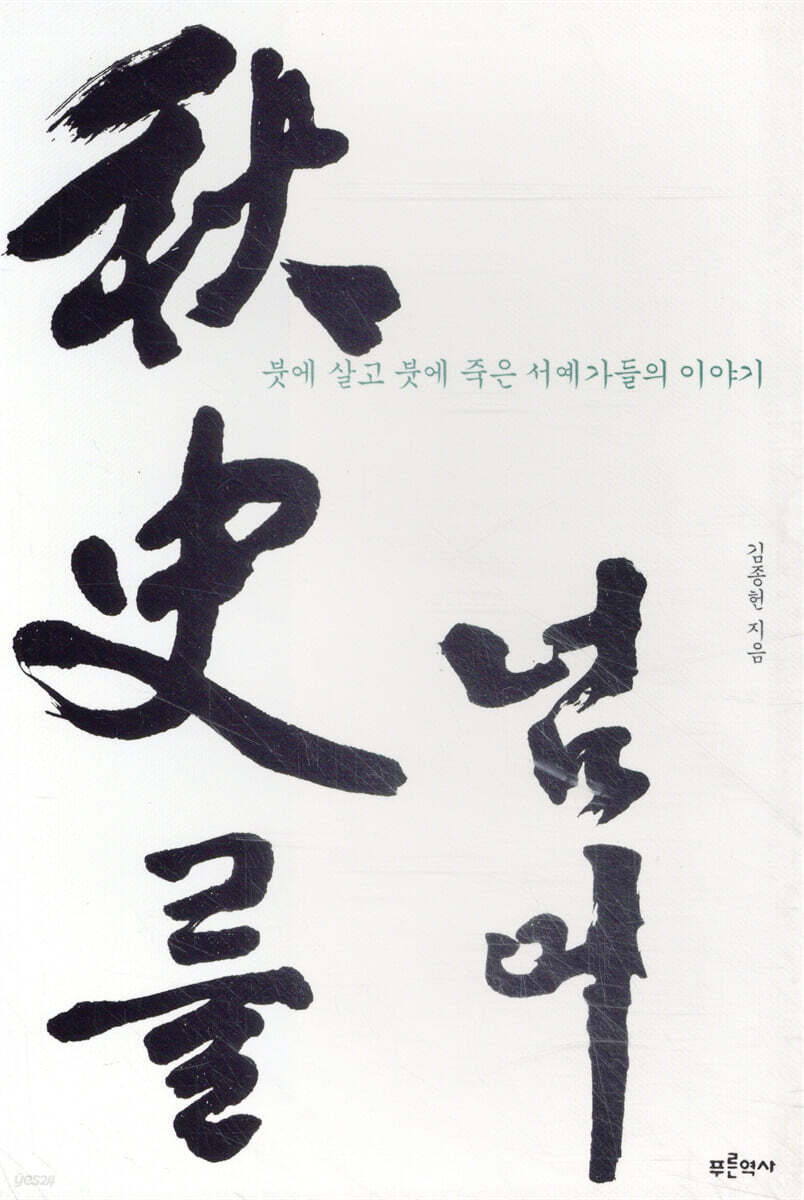
In addition, the calligrapher introduced in this book, Songcheon Jeong Ha-geon, who was also the author's teacher, wrote the title for his disciple, providing an opportunity to encounter another work of calligraphy.
As the title of the prologue of this book suggests, calligraphy runs in the blood of Koreans, so with just a little interest, you will be able to enjoy calligraphy works that may have seemed difficult in your own way.
Readers who have developed their discerning eye by encountering the works of various artists introduced in the book would do well to frequently encounter genuine works and look through catalogs and art books.
As you enjoy this process, you will develop the discernment and aesthetic eye to guess the condition of an authentic piece and visualize it in your mind just by looking at any catalog.
In that respect, this book is worth noting not only as a guide to appreciating calligraphy, but also as a part of our country's art history.
― A happy calligraphy journey of a man obsessed with calligraphy!
Author Kim Jong-heon, once the CEO of a large corporation, is a renowned calligraphy enthusiast.
I have been holding a brush since middle school, and even now, I seek out any calligraphy-related work.
The author, who has shared calligraphy and joys and sorrows for over 30 years, finally retired from work in 2002 and began the second act of his life as the owner of the bookstore and bakery café, 'Peace of Mind'.
Piece of Mind has become a famous place that could be called Korea's first calligraphy gallery, displaying various calligraphy works and related books collected by the author.
And now, the author has distilled his love of calligraphy, which has even shaped his life, into a single book. "Beyond Chusa: Stories of Calligraphers Who Lived and Died by the Brush" is not, like other art-related books, a textbook-like introduction to classic masterpieces or the information necessary for appreciating calligraphy.
The story of calligraphy, told with the author's unique inspiration, flows like a prelude, and the information is written in an easy-to-understand way to help beginners become more immersed in calligraphy.
So, even if you don't know much about calligraphy, those who have been captivated by the captivating scent of ink can enjoy this author's calligraphy journey with a light heart, free from the obsession with how to read and appreciate calligraphy works.
The ambiguity of the master called 'Chusa' played a large part in the author's motivation to write this book.
Even the author, who was exposed to calligraphy from a young age, said that he had a hard time understanding why the handwriting of Chusa Kim Jeong-hui, the greatest calligrapher in Korean history, was so good and why he was so famous.
Then, in the early 1980s, I was able to see calligraphy on a different level when I encountered the work of Jeongseop Pangyo at a gallery in Düsseldorf, Germany.
From then on, the author said that he was able to understand Chusa Kim Jeong-hui and his Chusa style through studying about Pangyo and Chusa.
In fact, even those who are not familiar with calligraphy know 'Chusa font'.
But if you were to ask, "What is Chusa's calligraphy?" or "Why is it so famous?" How many people would be able to answer? It's true that the numerous books on calligraphy, including Chusa's, that have been published over the years have fostered the sanctification of Chusa's work through difficult explanations without a concrete approach.
Additionally, the fact that only Chusa was mentioned and that later modern and contemporary calligraphers of our country were not well known has always been a source of regret for the author.
With this in mind, the author included in this book the lives and works of six calligraphers before and after Chusa.
The author has always tried to help readers easily understand calligraphy by introducing and explaining the works of calligraphers he admires.
And to help the younger generation become interested in calligraphy, it also kindly provides basic information about the history, artistry, and appreciation of calligraphy.
Why Go Beyond Chusa: The Fierce Lives and Artistic Worlds of Seven Master Calligraphers
It is said that poetry was ruined by Ziha, prose was ruined by Yeonam, and calligraphy was ruined by Chusa.
Poetry has reached its peak with Jaha, prose reached its peak with Yeonam, and calligraphy has not been surpassed by anyone since Chusa.
This is a statement that accurately reflects the reality of our country's calligraphy world.
Chusa style caused calligraphy to stagnate, and since then, many people have been busy writing and teaching Chusa style, just following it.
But the author thinks this is a meaningless task.
Learning and teaching Chusa's calligraphy is like learning and teaching a calligraphy that is already dead.
Even if you copy Chusa's calligraphy, you will only be able to copy the form of Chusa's calligraphy and will not be able to convey his deep and lofty intentions.
During the period when Pangyo Jeongseop and Chusa Kim Jeonghui, who are introduced in this book, were active, Chinese calligraphy was in a period of stagnation similar to today.
At that time, the Chinese calligraphy world diligently studied and wrote the calligraphy of some calligraphers, starting with Wang Xizhi, who had been favored by the imperial family and the literati throughout the thousands of years of calligraphy history.
Therefore, it was almost impossible to make a bold attempt that surpassed the level and style of the classic law book.
The calligrapher who found a breakthrough by pursuing a change in font style during this stagnant period is Pangyo Jeongseop.
He broke away from the standardized and conventional traditional brushwork and opened the way to modern expressionistic calligraphy, and opened a new realm in the three branches of poetry, calligraphy, and painting with his creative brushwork.
Our country's calligraphy could not escape the influence and level of China.
It has always been at the level of following the flow of the western part of China, one step behind.
Overcoming this, Kim Jeong-hui went beyond Pangyo Jeong-seop and left behind an immortal calligraphy called ‘Chusa font.’
His artistic realm was so great that it surpassed the Korean, Chinese, and Japanese calligraphy worlds of his time.
In short, Chusa is a person who led the renaissance of modern Korean calligraphy and pioneered a realm of art that transcended the modern era and continued into the present.
This book begins by introducing two calligraphers who have overcome the great peaks before them and reached the highest level.
And now, we shed light on the lives and artistic world of five calligraphers who struggled to surpass the great artist, Chusa, who remains a challenge for our time.
The handwriting of a soul imbued with personality, Doma Ahn Jung-geun
Although he may seem like a surprising figure to be considered a calligrapher, Ahn Jung-geun is the person in the history of Korean calligraphy who left behind a handwriting style that best reflects his personality.
Although he did not study calligraphy professionally, the author says that if he had studied calligraphy seriously, he would have definitely become a great calligrapher.
Of course, he did not have an artistic aspiration to overcome Chusa, but he was a calligrapher who exemplified the utility that calligraphy could leave behind, and expressed the ideals of national liberation and independence through calligraphy.
This is why the author chose him as one of the seven calligraphers.
Handwriting that became pictures, Sojeon, Son Jae-hyeong
Sojeon Son Jae-hyung is a person who deeply loved our traditional arts.
He was the most talented calligrapher since Chusa, but he was unable to surpass Chusa at the last moment due to his involvement in politics and other extracurricular activities outside of calligraphy.
Above all, his value lies in the fact that he opened a new realm of beautiful Korean calligraphy.
We must remember the contributions he made to laying the foundation for modern calligraphy in our country.
If you can't hold the brush with your right hand, hold it with your left, like a sword, Yu Hee-gang
Geomyeo Yu Hui-gang is a person who attained enlightenment through calligraphy.
He had an artistic goal of surpassing Chusa, but when his calligraphy was at its peak and he was about to blossom into a new art form, he suffered a stroke, which was fatal for a calligrapher, and experienced a moment of despair.
He is a calligrapher with a strong spirit who overcame this adversity and pioneered the art of left-handed writing.
The author says that if he had continued to develop his left-handed writing, he would have surpassed Chusa.
The innocent calligraphy of a transcendent Taoist, Soji Doin (昭志道人), Kang Chang-won
Soji Doin is a person who enjoys calligraphy and lives his whole life with it.
He did not hope to achieve fame or artistic success through calligraphy, but simply enjoyed writing and studying.
Because he was a person of innocence and innocence itself, and simply enjoyed writing, even the task of overcoming Chusa's mistakes would have been a burden to him.
However, without realizing it, his handwriting is beginning to resemble Chusa's.
Songcheon Jeong Ha-geon, the last scholar of this era who sought to surpass Chusa
Songcheon is an active artist who is marking the end of traditional calligraphy.
He is trying to maintain his integrity as a scholar and writes as if he is practicing the Tao.
In this respect, he is a calligrapher who stands in stark contrast to So Ji-do-in. While So Ji-do-in plays in the realm of a Taoist who has escaped the secular world, Song Cheon seeks to attain Taoism in the secular world.
That is why Songcheon has a burning passion and clear will to surpass Chusa until the end.
The author points out Songcheon as the last calligrapher who can solve the problem of surpassing Chusa.
Difficult calligraphy, a wonderful and wonderful way to enjoy it
《Beyond Chusa》 clearly shows the painstaking effort to break away from the difficult introductory books on art, especially calligraphy.
Rather than explaining calligraphy terms or theories, it focuses on the appreciation of calligraphy works from a beginner's perspective, and guides readers into the world of calligraphy through commentary on the works that convey the calligrapher's character and personality.
Additionally, various episodes related to the author's collection of works add to the enjoyment of reading.
In editing the book, we also tried to fully reflect the author's intentions.
Rather than simply displaying the calligraphy work within a frame, we used plates that highlight the font so that the brushwork and the beauty of the work can be fully appreciated.
In addition, the calligrapher introduced in this book, Songcheon Jeong Ha-geon, who was also the author's teacher, wrote the title for his disciple, providing an opportunity to encounter another work of calligraphy.
As the title of the prologue of this book suggests, calligraphy runs in the blood of Koreans, so with just a little interest, you will be able to enjoy calligraphy works that may have seemed difficult in your own way.
Readers who have developed their discerning eye by encountering the works of various artists introduced in the book would do well to frequently encounter genuine works and look through catalogs and art books.
As you enjoy this process, you will develop the discernment and aesthetic eye to guess the condition of an authentic piece and visualize it in your mind just by looking at any catalog.
In that respect, this book is worth noting not only as a guide to appreciating calligraphy, but also as a part of our country's art history.
GOODS SPECIFICS
- Date of issue: December 24, 2007
- Page count, weight, size: 323 pages | 568g | 153*224*30mm
- ISBN13: 9788991510586
- ISBN10: 8991510582
You may also like
카테고리
korean


korean

![GQ KOREA Mark (Monthly): December [2025]](http://librairie.coreenne.fr/cdn/shop/files/8ef265dbbfbf186523ed75ba7319009d.jpg?v=1765340328&width=3840)


