

Leonardo da Vinci Biography
 |
Description
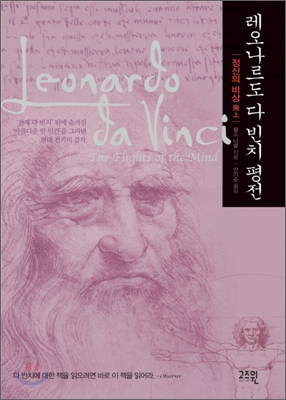
Book Introduction
A biography of Leonardo da Vinci's life.
It shows the life of Leonardo da Vinci, from his illegitimate birth in Tuscany to his completion of his great works and his final moments.
Unlike existing Leonardo books, this one contains the story of 'the human Leonardo da Vinci', who was previously unknown due to being overshadowed by 'the great Renaissance man and genius' Leonardo.
By unearthing materials from over 500 years ago that had not been properly evaluated or read until now, the book unravels Leonardo's lifelong dream of flying by connecting it to his childhood memories, and not only depicts his shy and reserved nature, but also his surprising side, such as his love of jokes and his enjoyment of surprising people, but also his daily life when he put down his pen and stood up to escape abstract thinking because the soup got cold, his warm side in interpersonal relationships, his suffering about not being free from the temptation of pleasure, and his nature as a scholar who maintained a thorough and skeptical attitude in his research.
Rather than simply observing and praising Leonardo's achievements, we can carefully examine why and how he achieved such great achievements by reading about his environment, daily life, and personality.
It shows the life of Leonardo da Vinci, from his illegitimate birth in Tuscany to his completion of his great works and his final moments.
Unlike existing Leonardo books, this one contains the story of 'the human Leonardo da Vinci', who was previously unknown due to being overshadowed by 'the great Renaissance man and genius' Leonardo.
By unearthing materials from over 500 years ago that had not been properly evaluated or read until now, the book unravels Leonardo's lifelong dream of flying by connecting it to his childhood memories, and not only depicts his shy and reserved nature, but also his surprising side, such as his love of jokes and his enjoyment of surprising people, but also his daily life when he put down his pen and stood up to escape abstract thinking because the soup got cold, his warm side in interpersonal relationships, his suffering about not being free from the temptation of pleasure, and his nature as a scholar who maintained a thorough and skeptical attitude in his research.
Rather than simply observing and praising Leonardo's achievements, we can carefully examine why and how he achieved such great achievements by reading about his environment, daily life, and personality.
- You can preview some of the book's contents.
Preview
index
Because the soup is cold
Part 1: Childhood (1452–1466)
birth
The Da Vinci family
Mother Katerina
My First Memory
At the mill
Conversation with animals
Our Lady of the Snows
education
Part 2: The Apprentice Period (1466–1477)
Life in the city
Renaissance man
Verrocchio's workshop
Classes to become an artist
A magnificent sight
The top tower above the cathedral dome
The first painting
Dragon
Ginevra
Saltarelli's Love Affair
Terracotta Angel Statue from Pistoia
Part 3: Independence (1477–1482)
Leonardo's studio
The hanged man
Scientists and engineers
musician
Saint Jerome and the Lion
Adoration of the Magi
Leaving Florence
Part 4: New Horizons (1482–1490)
Milan
Outsider
Our Lady of the Rocks
escape from the plague
First Note
Leonardo the Storyteller
architectural project
Ludovico Sforza's mistress
Milan studio
anatomist
Sforza's equestrian statue
At the Palazzo Corte Vecchia
Part 5: At the Court (1490-1499)
theater
About Shadow and Light
little devil
Casting of equestrian statues
Painting the Last Supper
The Shade of the Trees of Sala delle Asse
Sell what you can't take with you.
Part 6: Moving Forward (1500–1506)
Mantua and Venice
Back to Florence
The Persistent Marchioness
Cesare Borgia
Spending autumn in Imola
move the river
Mona Lisa
Anghiari Fresco (I)
Michelangelo
Father's death and a trip to his hometown of Vinci
Anghiari Fresco (II)
Bird's Soul
Part 7: Return to Milan (1506–1513)
French Governor Charles d'Amboise
Francesco Melzi
quarrel between brothers
dissection
Back to the Milan studio
The world of water
Milan Festival
La Cremona
Medical School
With Melchi
Portrait of the artist at age 60
Part 8: The Last Years (1513–1519)
Heading to Rome
At Villa Belvedere
John the Baptist and Bacchus, the god of wine
deluge
Disease, Mirror, and the Last Dissection
Last visit to Florence
Life in France
Cardinal's visit
The night is chased away
Great Sea
Part 1: Childhood (1452–1466)
birth
The Da Vinci family
Mother Katerina
My First Memory
At the mill
Conversation with animals
Our Lady of the Snows
education
Part 2: The Apprentice Period (1466–1477)
Life in the city
Renaissance man
Verrocchio's workshop
Classes to become an artist
A magnificent sight
The top tower above the cathedral dome
The first painting
Dragon
Ginevra
Saltarelli's Love Affair
Terracotta Angel Statue from Pistoia
Part 3: Independence (1477–1482)
Leonardo's studio
The hanged man
Scientists and engineers
musician
Saint Jerome and the Lion
Adoration of the Magi
Leaving Florence
Part 4: New Horizons (1482–1490)
Milan
Outsider
Our Lady of the Rocks
escape from the plague
First Note
Leonardo the Storyteller
architectural project
Ludovico Sforza's mistress
Milan studio
anatomist
Sforza's equestrian statue
At the Palazzo Corte Vecchia
Part 5: At the Court (1490-1499)
theater
About Shadow and Light
little devil
Casting of equestrian statues
Painting the Last Supper
The Shade of the Trees of Sala delle Asse
Sell what you can't take with you.
Part 6: Moving Forward (1500–1506)
Mantua and Venice
Back to Florence
The Persistent Marchioness
Cesare Borgia
Spending autumn in Imola
move the river
Mona Lisa
Anghiari Fresco (I)
Michelangelo
Father's death and a trip to his hometown of Vinci
Anghiari Fresco (II)
Bird's Soul
Part 7: Return to Milan (1506–1513)
French Governor Charles d'Amboise
Francesco Melzi
quarrel between brothers
dissection
Back to the Milan studio
The world of water
Milan Festival
La Cremona
Medical School
With Melchi
Portrait of the artist at age 60
Part 8: The Last Years (1513–1519)
Heading to Rome
At Villa Belvedere
John the Baptist and Bacchus, the god of wine
deluge
Disease, Mirror, and the Last Dissection
Last visit to Florence
Life in France
Cardinal's visit
The night is chased away
Great Sea
Into the book
Leonardo was imprisoned in 1476 for the Jacopo Saltarelli affair (accused of homosexuality)… We know that he was imprisoned at the time for the accusations.
It was probably only a short period of time, like being arrested by the night watchman and detained, but it must have left a scar on his heart.
It is in this context that we can understand that he later invented and drew a magical device to free people from prison.
A drawing of a device for removing window bars (see illustration on page 155) is included in the Codex Atlanticus, with the caption 'How to open a prison door from the inside'.
Leonardo once wrote that freedom is 'the most important of nature's gifts.'
As later generations have recognized, any form of constraint, whether physical, professional, intellectual, or emotional, was a source of distress for Leonardo.
It was probably only a short period of time, like being arrested by the night watchman and detained, but it must have left a scar on his heart.
It is in this context that we can understand that he later invented and drew a magical device to free people from prison.
A drawing of a device for removing window bars (see illustration on page 155) is included in the Codex Atlanticus, with the caption 'How to open a prison door from the inside'.
Leonardo once wrote that freedom is 'the most important of nature's gifts.'
As later generations have recognized, any form of constraint, whether physical, professional, intellectual, or emotional, was a source of distress for Leonardo.
--- p.134
Leonardo would have told people this joke, pretending to be serious and expressionless.
As Vasari enthusiastically asserted, people enjoyed Leonardo's delightful conversations.
Of course, there was a cold and blunt personality that was the complete opposite, but in any case, making people laugh with funny jokes was a part of Leonardo's life.
It is no coincidence that the most famous painting he painted was called 'La Gioconda', or 'The Merry (or Joking) Lady' in Italian.
Leonardo would have told people this joke, pretending to be serious and expressionless.
As Vasari enthusiastically asserted, people enjoyed Leonardo's delightful conversations.
Of course, there was a cold and blunt personality that was the complete opposite, but in any case, making people laugh with funny jokes was a part of Leonardo's life.
It is no coincidence that the most famous painting he painted was called 'La Gioconda', or 'The Merry (or Joking) Lady' in Italian.
As Vasari enthusiastically asserted, people enjoyed Leonardo's delightful conversations.
Of course, there was a cold and blunt personality that was the complete opposite, but in any case, making people laugh with funny jokes was a part of Leonardo's life.
It is no coincidence that the most famous painting he painted was called 'La Gioconda', or 'The Merry (or Joking) Lady' in Italian.
Leonardo would have told people this joke, pretending to be serious and expressionless.
As Vasari enthusiastically asserted, people enjoyed Leonardo's delightful conversations.
Of course, there was a cold and blunt personality that was the complete opposite, but in any case, making people laugh with funny jokes was a part of Leonardo's life.
It is no coincidence that the most famous painting he painted was called 'La Gioconda', or 'The Merry (or Joking) Lady' in Italian.
--- p.223
In 1505, Leonardo once again began to dream of the possibility of human flight.
He filled a small notebook with notes about his dreams, blueprints, and doodles related to his fantasies.
This notebook, now housed in the Royal Library in Turin under the title Turin Codex, is considered to be the clearest and most relevant text on human flight.
It also contains a famous passage declaring that a magnificent spectacle will unfold.
'A great bird will take its first flight on the back of the Great Cecero.
'To fill the whole universe with wonder, to fill all history with fame, to bring eternal glory to the nest from which he was born.' The 'great bird' clearly refers to Leonardo's flying machine.
Leonardo showed parts of the flying machine in refined and very detailed drawings, but did not reveal the entire thing to maintain secrecy.
According to his declaration, he seems to have planned to test-fly the machine on the summit of Mount Ceceri, north of Florence.
In 1505, Leonardo once again began to dream of the possibility of human flight.
He filled a small notebook with notes about his dreams, blueprints, and doodles related to his fantasies.
This notebook, now housed in the Royal Library in Turin under the title Turin Codex, is considered to be the clearest and most relevant text on human flight.
It also contains a famous passage declaring that a magnificent spectacle will unfold.
'A great bird will take its first flight on the back of the Great Cecero.
'To fill the whole universe with wonder, to fill all history with fame, to bring eternal glory to the nest from which he was born.' The 'great bird' clearly refers to Leonardo's flying machine.
Leonardo showed parts of the flying machine in refined and very detailed drawings, but did not reveal the entire thing to maintain secrecy.
According to his declaration, he seems to have planned to test-fly the machine on the summit of Mount Ceceri, north of Florence.
He filled a small notebook with notes about his dreams, blueprints, and doodles related to his fantasies.
This notebook, now housed in the Royal Library in Turin under the title Turin Codex, is considered to be the clearest and most relevant text on human flight.
It also contains a famous passage declaring that a magnificent spectacle will unfold.
'A great bird will take its first flight on the back of the Great Cecero.
'To fill the whole universe with wonder, to fill all history with fame, to bring eternal glory to the nest from which he was born.' The 'great bird' clearly refers to Leonardo's flying machine.
Leonardo showed parts of the flying machine in refined and very detailed drawings, but did not reveal the entire thing to maintain secrecy.
According to his declaration, he seems to have planned to test-fly the machine on the summit of Mount Ceceri, north of Florence.
In 1505, Leonardo once again began to dream of the possibility of human flight.
He filled a small notebook with notes about his dreams, blueprints, and doodles related to his fantasies.
This notebook, now housed in the Royal Library in Turin under the title Turin Codex, is considered to be the clearest and most relevant text on human flight.
It also contains a famous passage declaring that a magnificent spectacle will unfold.
'A great bird will take its first flight on the back of the Great Cecero.
'To fill the whole universe with wonder, to fill all history with fame, to bring eternal glory to the nest from which he was born.' The 'great bird' clearly refers to Leonardo's flying machine.
Leonardo showed parts of the flying machine in refined and very detailed drawings, but did not reveal the entire thing to maintain secrecy.
According to his declaration, he seems to have planned to test-fly the machine on the summit of Mount Ceceri, north of Florence.
--- p.366
GOODS SPECIFICS
- Date of issue: March 30, 2007
- Page count, weight, size: 480 pages | 778g | 148*210*30mm
- ISBN13: 9788991319899
- ISBN10: 8991319890
You may also like
카테고리
korean


korean

![GQ KOREA Mark (Monthly): December [2025]](http://librairie.coreenne.fr/cdn/shop/files/8ef265dbbfbf186523ed75ba7319009d.jpg?v=1765340328&width=3840)


