

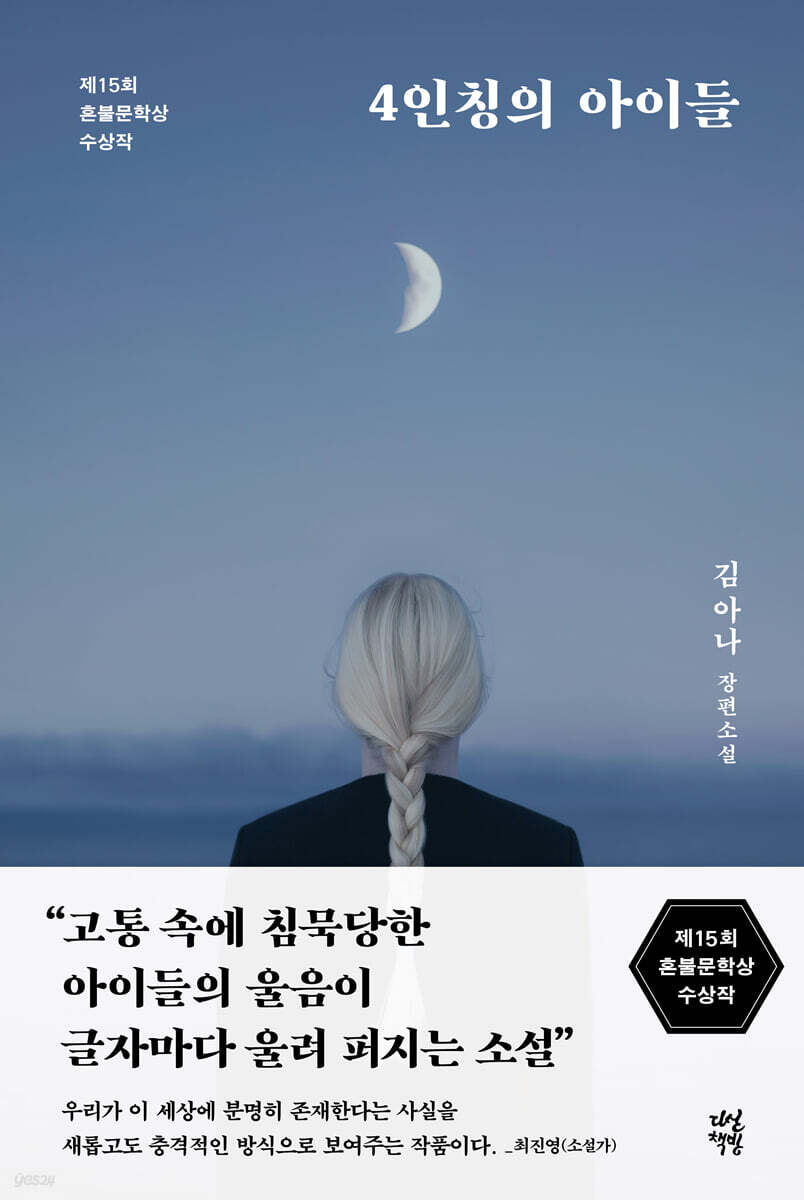
Children in the 4th person
 |
Description
Book Introduction
Kim A-na's novel "Children in the Fourth Person," winner of the 15th Honbul Literary Award
A story about girls and boys who move forward without compromise.
Kim A-na's "Children of the Fourth Person," winner of the 15th Honbul Literary Award, has been published.
This work was chosen after intense discussion by seven leading Korean writers, including Eun Hee-kyung, Jeon Seong-tae, Lee Gi-ho, Pyeon Hye-yeong, Baek Ga-heum, Choi Jin-yeong, and Park Jun.
This novel, which depicts the testimonies of children who lived in a facility called the 'Happy Children's Welfare Foundation,' was evaluated as a work that possessed both literary experimentation and narrative immersion.
The judges commented that “the way the uncompromising narrative moves from the third person to the 3.5 person and finally to the fourth person was unique,” and that the novel narrative approach presented by the work would vividly convey the voices of more people to us.
A story about girls and boys who move forward without compromise.
Kim A-na's "Children of the Fourth Person," winner of the 15th Honbul Literary Award, has been published.
This work was chosen after intense discussion by seven leading Korean writers, including Eun Hee-kyung, Jeon Seong-tae, Lee Gi-ho, Pyeon Hye-yeong, Baek Ga-heum, Choi Jin-yeong, and Park Jun.
This novel, which depicts the testimonies of children who lived in a facility called the 'Happy Children's Welfare Foundation,' was evaluated as a work that possessed both literary experimentation and narrative immersion.
The judges commented that “the way the uncompromising narrative moves from the third person to the 3.5 person and finally to the fourth person was unique,” and that the novel narrative approach presented by the work would vividly convey the voices of more people to us.
- You can preview some of the book's contents.
Preview
index
Ⅰ.
We are first-person children
Ⅱ.
We are the third-person children
Ⅲ.
We are 3.5 person children
Ⅳ.
We are the children of the fourth person
Judges' comments
Author's Note
We are first-person children
Ⅱ.
We are the third-person children
Ⅲ.
We are 3.5 person children
Ⅳ.
We are the children of the fourth person
Judges' comments
Author's Note
Detailed image
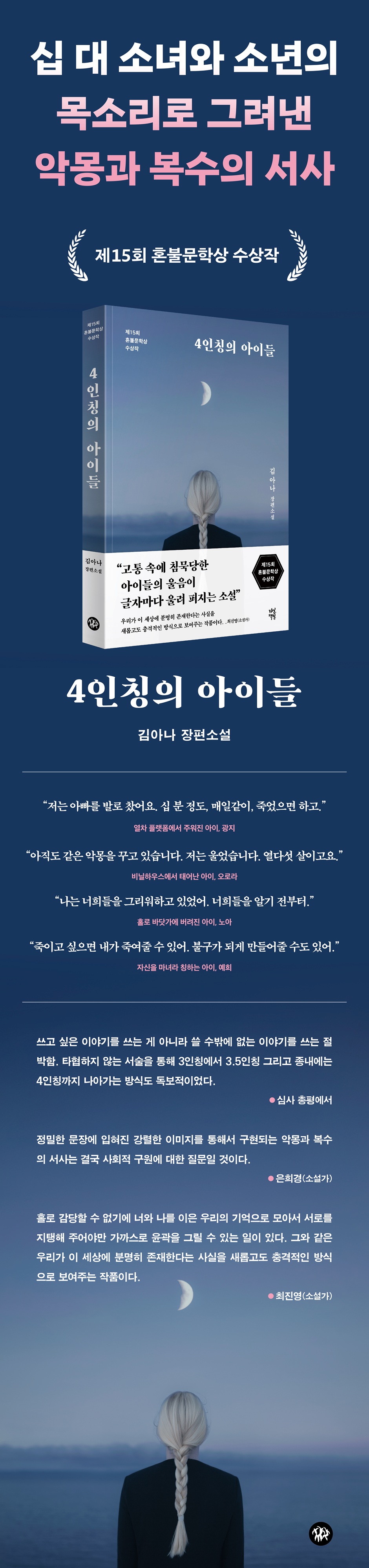
Into the book
I was two years old and sitting on the train platform.
No, it was in a stroller that someone had left on the train platform.
A man approached me.
He was the first man I ever saw and the first man I would ever call father.
I was only twenty-four months old, but I already sensed the dangers of men.
The man, the father, just pushed the stroller and left the platform.
It was only then that I was born.
My father and I decided that day would be my birthday.
September 3, 2010.
That's my birthday.
I remember the man just walking out onto the platform and smoking a cigarette in front of me, who was twenty-four months old.
I'm guessing it was Marlboro Light, as the cigarette case was painted gold.
How awful it smelled.
My father was a petty thief.
The reason the man took me was very simple.
sympathy.
That was the one.
It's not that he felt pity for me, he just used my pity to sell the stolen goods.
--- pp.10-11
I still have that nightmare.
It's not so much that I dream, but rather that dreams come to me.
I have these nightmares even though I don't drink.
Still, I think I'm really glad that it was a dream.
I can smell it, hear it, and feel it, but I'm so glad it's still a dream.
Because it's so scary and just thinking about it makes me pee my pants.
Even if you search for a frequency on YouTube and listen to it all day, nothing will change.
The frequency that restores confidence, the frequency that eliminates worries, the frequency that makes you stronger.
entire.
Dancing, my nationality.
I signed up for this class because I had a lot of questions.
I had a dream last night where I was still in the same place.
I cried.
I'm fifteen years old.
--- p.65
“When I was on the island, after my training hours were over, I would sit by the river and dream of a future as sparkling as the glitter of the water.
But the river we now faced was not at all emerald in color, but rather showed off the immense power of nature.
The surface of the river turned red, as if a fire had broken out on the mountain next to the river.
“I stared listlessly at the rippling surface of the river, then rubbed my eyes with the back of my hand.”
Aurora suddenly raised her hand.
His face was unusually pale, contrasting with his blue hair.
The piercing on my nose didn't shine as brightly today.
Mr. Q asked.
"Aurora.
“Is there a problem?”
“Same…….”
"what?"
“It’s the same.”
Aurora hesitated and then closed her mouth.
Mr. Q shrugged and gestured to Gwangji.
Gwangji continued reading the dream story.
He was so drunk that he kept staggering.
“I saw the river again.
I was out of breath.
It was not a river, but the writhing back and spine of some burning, suffering being.
Twisted flesh, scorched by fire and covered in blisters and wounds.
“Without realizing it, I called the person I thought I had the deepest emotional connection with.”
After reading the last sentence, Gwangji remained silent for a while.
The paper in my hand was crumpled little by little.
Gwangji read it again.
“His name is Jeffrey, Jeffrey.”
Aurora was sweating profusely as she listened to Gwangji's dream story.
Is this possible?
How on earth did this happen?
Gwangji continued reading.
“But when he heard my name, he came to me.”
Aurora spoke before Gwangji.
“She was a secretary.”
--- pp.89-90
Aurora also searched for follow-up articles.
Curiously, the perpetrator was not identified.
There was no article about Noah's current condition or hospital bills.
The political comments are completely wrong.
The article about the child found in a horrific condition on the island of Haengabok did not cover anything.
If this article had turned South Korea upside down, would Noah have had to wander so lonely near the hospital pavilion, looking around? Shouldn't he have lived his life with a glimmer of hope that the perpetrator would be severely punished? Why do we, fifteen-year-olds, have to smoke more often, drink more, and even see hallucinations more than adults? Aurora unconsciously clenched her molars.
--- p.161
“But there is something missing from the dream.
In my dreams, I go into that mountain range.”
Aurora stopped eating her snack and focused on M.
Aurora gestured for him to continue.
M said.
“When you go into the mountains, then, that... that's it.
Then things keep happening over and over again.
“That’s what Mr. Jeffrey Yang said.”
“What did that old man do?”
Aurora asked.
M asked with a look that said, “Do you not know?”
“Don’t you guys remember what that man did?”
“I didn’t know, but somehow I found out.”
"how?"
Aurora looked down at her fingernails and couldn't answer.
A feeling of something crumbling, descending, falling flashed across M's face, then quickly disappeared.
The child regained his composure and spoke.
“I remember everything clearly.”
--- pp.214-215
In dreams and in reality, the ones who damaged Miss Jeffrey were none other than the girls and boys who people thought would only be interested in tteokbokki and idol singers.
Contrary to what adults think, children don't laugh about everything.
He didn't cry or throw a tantrum about anything.
I didn't eat anything.
I didn't like idol singers in any way, as if I was in a romantic relationship with them.
The children of the fourth person, 'we', have many faces.
No, it was in a stroller that someone had left on the train platform.
A man approached me.
He was the first man I ever saw and the first man I would ever call father.
I was only twenty-four months old, but I already sensed the dangers of men.
The man, the father, just pushed the stroller and left the platform.
It was only then that I was born.
My father and I decided that day would be my birthday.
September 3, 2010.
That's my birthday.
I remember the man just walking out onto the platform and smoking a cigarette in front of me, who was twenty-four months old.
I'm guessing it was Marlboro Light, as the cigarette case was painted gold.
How awful it smelled.
My father was a petty thief.
The reason the man took me was very simple.
sympathy.
That was the one.
It's not that he felt pity for me, he just used my pity to sell the stolen goods.
--- pp.10-11
I still have that nightmare.
It's not so much that I dream, but rather that dreams come to me.
I have these nightmares even though I don't drink.
Still, I think I'm really glad that it was a dream.
I can smell it, hear it, and feel it, but I'm so glad it's still a dream.
Because it's so scary and just thinking about it makes me pee my pants.
Even if you search for a frequency on YouTube and listen to it all day, nothing will change.
The frequency that restores confidence, the frequency that eliminates worries, the frequency that makes you stronger.
entire.
Dancing, my nationality.
I signed up for this class because I had a lot of questions.
I had a dream last night where I was still in the same place.
I cried.
I'm fifteen years old.
--- p.65
“When I was on the island, after my training hours were over, I would sit by the river and dream of a future as sparkling as the glitter of the water.
But the river we now faced was not at all emerald in color, but rather showed off the immense power of nature.
The surface of the river turned red, as if a fire had broken out on the mountain next to the river.
“I stared listlessly at the rippling surface of the river, then rubbed my eyes with the back of my hand.”
Aurora suddenly raised her hand.
His face was unusually pale, contrasting with his blue hair.
The piercing on my nose didn't shine as brightly today.
Mr. Q asked.
"Aurora.
“Is there a problem?”
“Same…….”
"what?"
“It’s the same.”
Aurora hesitated and then closed her mouth.
Mr. Q shrugged and gestured to Gwangji.
Gwangji continued reading the dream story.
He was so drunk that he kept staggering.
“I saw the river again.
I was out of breath.
It was not a river, but the writhing back and spine of some burning, suffering being.
Twisted flesh, scorched by fire and covered in blisters and wounds.
“Without realizing it, I called the person I thought I had the deepest emotional connection with.”
After reading the last sentence, Gwangji remained silent for a while.
The paper in my hand was crumpled little by little.
Gwangji read it again.
“His name is Jeffrey, Jeffrey.”
Aurora was sweating profusely as she listened to Gwangji's dream story.
Is this possible?
How on earth did this happen?
Gwangji continued reading.
“But when he heard my name, he came to me.”
Aurora spoke before Gwangji.
“She was a secretary.”
--- pp.89-90
Aurora also searched for follow-up articles.
Curiously, the perpetrator was not identified.
There was no article about Noah's current condition or hospital bills.
The political comments are completely wrong.
The article about the child found in a horrific condition on the island of Haengabok did not cover anything.
If this article had turned South Korea upside down, would Noah have had to wander so lonely near the hospital pavilion, looking around? Shouldn't he have lived his life with a glimmer of hope that the perpetrator would be severely punished? Why do we, fifteen-year-olds, have to smoke more often, drink more, and even see hallucinations more than adults? Aurora unconsciously clenched her molars.
--- p.161
“But there is something missing from the dream.
In my dreams, I go into that mountain range.”
Aurora stopped eating her snack and focused on M.
Aurora gestured for him to continue.
M said.
“When you go into the mountains, then, that... that's it.
Then things keep happening over and over again.
“That’s what Mr. Jeffrey Yang said.”
“What did that old man do?”
Aurora asked.
M asked with a look that said, “Do you not know?”
“Don’t you guys remember what that man did?”
“I didn’t know, but somehow I found out.”
"how?"
Aurora looked down at her fingernails and couldn't answer.
A feeling of something crumbling, descending, falling flashed across M's face, then quickly disappeared.
The child regained his composure and spoke.
“I remember everything clearly.”
--- pp.214-215
In dreams and in reality, the ones who damaged Miss Jeffrey were none other than the girls and boys who people thought would only be interested in tteokbokki and idol singers.
Contrary to what adults think, children don't laugh about everything.
He didn't cry or throw a tantrum about anything.
I didn't eat anything.
I didn't like idol singers in any way, as if I was in a romantic relationship with them.
The children of the fourth person, 'we', have many faces.
--- p.231
Publisher's Review
★15th Honbul Literary Award Winner★
“The fact that we clearly exist in this world
“It is a work that shows in a new and shocking way.”_Choi Jin-young (novelist)
The 15th Honbul Literary Award-winning work, “Children of the Fourth Person,” has been published.
While last year's award-winning work, Woo Shin-young's "City View," delicately illuminated a cross-section of reality by meticulously depicting the obsessions, deficiencies, and fatigue of city dwellers, this year's award-winning work turns its gaze to a much deeper darkness.
Kim A-na's "Children in the Fourth Person" dissects the structure of violence and exploitation hidden under the name of protection through the stories of children who lived in a place called the "Happy Children's Welfare Foundation."
It mercilessly exposes the shadow of human-made goodwill and institutions, revealing that a foundation that ostensibly speaks of warm charity is actually a system that controls and exploits children's lives.
The Honbul Literary Award, now in its 15th year, was established to revive the immortality of humanity and the truth of language embodied in the late author Choi Myeong-hee's epic novel "Honbul" in today's literature.
The award-winning works that carry on that spirit have stared squarely at the wounds of the times and have suggested the ethical direction that Korean literature should take.
The judges were seven of the most active writers in the literary world today, including Eun Hee-kyung, Jeon Seong-tae, Lee Gi-ho, Pyeon Hye-young, Baek Ga-heum, Choi Jin-young, and Park Jun. This year, 『Children in the Fourth Person』 was selected from over 330 submissions.
Since her debut in 2021, Kim A-na has consistently published short stories and novels, and with this award, she has been praised as a writer who "will vividly convey the small voices of more people to us."
The cries of children silenced in pain
A novel that resonates with every letter
“I kicked my dad.
“For about ten minutes, every day, I wish I were dead.”
There are children who grew up in a place called the 'Happy Children's Welfare Foundation'.
"Children of the Fourth Person" begins by exposing the foundation's hidden side: exploitation and control disguised as protection.
Two children from 'P-eup', Gwang-ji and Aurora, are promised a new life under a glamorous sponsorship, but soon realize that the foundation is a system that controls and consumes the children's lives.
As they begin to dream the same dream, they discover that their memories are connected to those of other children, and they gather their voices to survive again without being forgotten.
This novel presents a new perspective, the "fourth person," to record the collective pain that cannot be expressed as "I," "you," or "he/she," and captures the moment when we define those who have lost their voices as "us," going beyond the individual history of wounds.
In a narrative that straddles the line between real violence and fantasy, the author asks how literature can serve as testimony.
"Children in the Fourth Person" shows the process of humanity ultimately moving toward solidarity through the narratives of children who grew up in abuse, poverty, exploitation, and silence.
Children are no longer victims.
Although born and raised within a structure of violence, we rewrite that language, support each other, and create a new grammar for survival.
The author responds by ensuring that literature does not remain a mere representation of the damage, but rather gives language back to those who could not speak.
The author's writing style feels rough and raw throughout, but there is a fierce ethical sense flowing within it.
This work, which moves from the third person to the 3.5 person and finally to the fourth person through an 'uncompromising narrative', shows a rare attempt to transform wounds into a collective language.
The testimonies of those who have overcome the cruel reality ultimately reach the most distant and passionate point that literature can reach: the place of 'us.'
Beyond letters and sentences, it becomes a voice,
A narrative of struggle in a vivid nightmare
“I still have the same nightmare.
I cried.
“I’m fifteen years old.”
"Children in the Fourth Person" is a novel that changes the very way we look at pain.
The author obsessively asks how far literature can reach the suffering of others, breaking down the boundaries between damage and testimony, memory and language.
The characters in this work are not 'someone else's story', but rather beings who have regained their own sentences.
They realize that the world's language cannot define them and call each other through a new perspective called the 'fourth person'.
The 'us' at this time are not a simple majority, but a multi-layered composite of beings who shared wounds and survived despite them.
The author does not ignore the scene of violence, but does not portray it as an emotional quagmire.
Instead, it weaves together fragments of memory in restrained language, suggesting the direction in which ‘literature after testimony’ should proceed.
This novel also addresses head-on the issues of social violence, collective silence, and the survivors within them, areas that Korean literature must now most fiercely question.
By presenting children as 'speaking beings' rather than 'beings that are spoken of,' it proves that literature can no longer be a language of comfort, but a language that endures reality.
Ultimately, 『Children of the Fourth Person』 is the memory of a generation and the record of those who still live and speak.
They share dreams, prove their survival to each other, and invent their own language.
In this way, children end up rewriting literature in a place that was considered 'outside of literature.'
That is the most passionate testimony this work leaves behind.
“The fact that we clearly exist in this world
“It is a work that shows in a new and shocking way.”_Choi Jin-young (novelist)
The 15th Honbul Literary Award-winning work, “Children of the Fourth Person,” has been published.
While last year's award-winning work, Woo Shin-young's "City View," delicately illuminated a cross-section of reality by meticulously depicting the obsessions, deficiencies, and fatigue of city dwellers, this year's award-winning work turns its gaze to a much deeper darkness.
Kim A-na's "Children in the Fourth Person" dissects the structure of violence and exploitation hidden under the name of protection through the stories of children who lived in a place called the "Happy Children's Welfare Foundation."
It mercilessly exposes the shadow of human-made goodwill and institutions, revealing that a foundation that ostensibly speaks of warm charity is actually a system that controls and exploits children's lives.
The Honbul Literary Award, now in its 15th year, was established to revive the immortality of humanity and the truth of language embodied in the late author Choi Myeong-hee's epic novel "Honbul" in today's literature.
The award-winning works that carry on that spirit have stared squarely at the wounds of the times and have suggested the ethical direction that Korean literature should take.
The judges were seven of the most active writers in the literary world today, including Eun Hee-kyung, Jeon Seong-tae, Lee Gi-ho, Pyeon Hye-young, Baek Ga-heum, Choi Jin-young, and Park Jun. This year, 『Children in the Fourth Person』 was selected from over 330 submissions.
Since her debut in 2021, Kim A-na has consistently published short stories and novels, and with this award, she has been praised as a writer who "will vividly convey the small voices of more people to us."
The cries of children silenced in pain
A novel that resonates with every letter
“I kicked my dad.
“For about ten minutes, every day, I wish I were dead.”
There are children who grew up in a place called the 'Happy Children's Welfare Foundation'.
"Children of the Fourth Person" begins by exposing the foundation's hidden side: exploitation and control disguised as protection.
Two children from 'P-eup', Gwang-ji and Aurora, are promised a new life under a glamorous sponsorship, but soon realize that the foundation is a system that controls and consumes the children's lives.
As they begin to dream the same dream, they discover that their memories are connected to those of other children, and they gather their voices to survive again without being forgotten.
This novel presents a new perspective, the "fourth person," to record the collective pain that cannot be expressed as "I," "you," or "he/she," and captures the moment when we define those who have lost their voices as "us," going beyond the individual history of wounds.
In a narrative that straddles the line between real violence and fantasy, the author asks how literature can serve as testimony.
"Children in the Fourth Person" shows the process of humanity ultimately moving toward solidarity through the narratives of children who grew up in abuse, poverty, exploitation, and silence.
Children are no longer victims.
Although born and raised within a structure of violence, we rewrite that language, support each other, and create a new grammar for survival.
The author responds by ensuring that literature does not remain a mere representation of the damage, but rather gives language back to those who could not speak.
The author's writing style feels rough and raw throughout, but there is a fierce ethical sense flowing within it.
This work, which moves from the third person to the 3.5 person and finally to the fourth person through an 'uncompromising narrative', shows a rare attempt to transform wounds into a collective language.
The testimonies of those who have overcome the cruel reality ultimately reach the most distant and passionate point that literature can reach: the place of 'us.'
Beyond letters and sentences, it becomes a voice,
A narrative of struggle in a vivid nightmare
“I still have the same nightmare.
I cried.
“I’m fifteen years old.”
"Children in the Fourth Person" is a novel that changes the very way we look at pain.
The author obsessively asks how far literature can reach the suffering of others, breaking down the boundaries between damage and testimony, memory and language.
The characters in this work are not 'someone else's story', but rather beings who have regained their own sentences.
They realize that the world's language cannot define them and call each other through a new perspective called the 'fourth person'.
The 'us' at this time are not a simple majority, but a multi-layered composite of beings who shared wounds and survived despite them.
The author does not ignore the scene of violence, but does not portray it as an emotional quagmire.
Instead, it weaves together fragments of memory in restrained language, suggesting the direction in which ‘literature after testimony’ should proceed.
This novel also addresses head-on the issues of social violence, collective silence, and the survivors within them, areas that Korean literature must now most fiercely question.
By presenting children as 'speaking beings' rather than 'beings that are spoken of,' it proves that literature can no longer be a language of comfort, but a language that endures reality.
Ultimately, 『Children of the Fourth Person』 is the memory of a generation and the record of those who still live and speak.
They share dreams, prove their survival to each other, and invent their own language.
In this way, children end up rewriting literature in a place that was considered 'outside of literature.'
That is the most passionate testimony this work leaves behind.
GOODS SPECIFICS
- Date of issue: October 27, 2025
- Page count, weight, size: 256 pages | 324g | 130*194*14mm
- ISBN13: 9791130672281
- ISBN10: 113067228X
You may also like
카테고리
korean


korean

![GQ KOREA Mark (Monthly): December [2025]](http://librairie.coreenne.fr/cdn/shop/files/8ef265dbbfbf186523ed75ba7319009d.jpg?v=1765340328&width=3840)


