

Alice Through the Looking Glass First Edition
 |
Description
Book Introduction
The fantastic adventure begins again!
Alice's second adventure through the looking glass!!
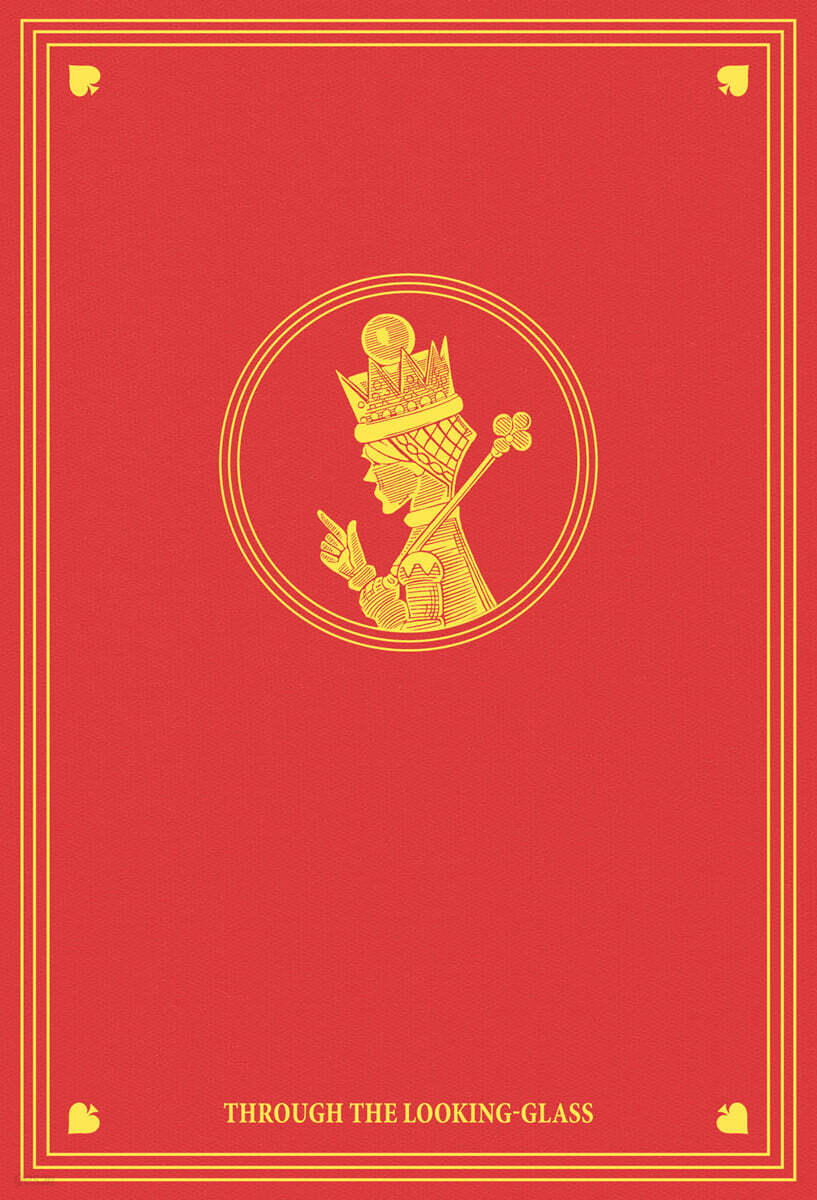
The Story's first edition, reviving the original cover from 1871.
Alice's Second Adventure on the Chessboard
The original first edition cover design of Alice Through the Looking Glass from 1871!
Lewis Carroll, a writer and professor of mathematics at Oxford University, was a typical scholar with a shy personality.
He visited the home of Liddell, who was a college president, and met Liddell's three young daughters, and the stories he told them became Alice's Adventures in Wonderland.
Lewis Carroll, who suddenly emerged as the greatest children's writer of his time, published "Through the Looking Glass," a sequel to "Alice's Adventures in Wonderland," in 1871.
Alice Through the Looking Glass is a novel full of the author's characteristic wit and humor, and is a story about Alice's adventures in a world beyond the looking glass.
In fact, Alice was the name of Liddell's second daughter and was Lewis Carroll's lifelong muse.
Lewis Carroll taught Alice how to play chess, and then used the game of chess as a storytelling tool to create the whimsical and delightful story Through the Looking Glass.
If Alice in Wonderland was set in midsummer, its sequel, Through the Looking Glass, is set in Christmas 1869, a few days before the end of the year.
Looking Glass is a world shaped like a chessboard, and features the Red Queen, the White Queen, the March Hare, the Mad Hatter, talking flowers, the Walrus, the Carpenter, Tweedledum and Tweedledee, and others.
All the characters in the novel are chess pieces and pawns. If you put name tags on them, open "Through the Looking Glass" and play the game, you can experience the unique fun of chess.
Or you can create a new story with your own new game and enjoy it.
In addition, The Story Publishing Company revived the cover of the first edition published by Macmillan in 1871, increasing the collection value of the masterpiece.
Alice's second adventure through the looking glass!!
The Story's first edition, reviving the original cover from 1871.
Alice's Second Adventure on the Chessboard
The original first edition cover design of Alice Through the Looking Glass from 1871!
Lewis Carroll, a writer and professor of mathematics at Oxford University, was a typical scholar with a shy personality.
He visited the home of Liddell, who was a college president, and met Liddell's three young daughters, and the stories he told them became Alice's Adventures in Wonderland.
Lewis Carroll, who suddenly emerged as the greatest children's writer of his time, published "Through the Looking Glass," a sequel to "Alice's Adventures in Wonderland," in 1871.
Alice Through the Looking Glass is a novel full of the author's characteristic wit and humor, and is a story about Alice's adventures in a world beyond the looking glass.
In fact, Alice was the name of Liddell's second daughter and was Lewis Carroll's lifelong muse.
Lewis Carroll taught Alice how to play chess, and then used the game of chess as a storytelling tool to create the whimsical and delightful story Through the Looking Glass.
If Alice in Wonderland was set in midsummer, its sequel, Through the Looking Glass, is set in Christmas 1869, a few days before the end of the year.
Looking Glass is a world shaped like a chessboard, and features the Red Queen, the White Queen, the March Hare, the Mad Hatter, talking flowers, the Walrus, the Carpenter, Tweedledum and Tweedledee, and others.
All the characters in the novel are chess pieces and pawns. If you put name tags on them, open "Through the Looking Glass" and play the game, you can experience the unique fun of chess.
Or you can create a new story with your own new game and enjoy it.
In addition, The Story Publishing Company revived the cover of the first edition published by Macmillan in 1871, increasing the collection value of the masterpiece.
index
1.
The Looking Glass House
2.
Garden of Living Flowers
3.
Insects of the Looking Glass
4.
Tweedledum and Tweedledee
5.
Wool and water
6.
Humpty Dumpty
7.
Lion and Unicorn
8.
I invented that.
9.
Queen Alice
10.
wave
11.
Wake up
12.
Who had this dream?
Commentary on the work
Author's chronology
The Looking Glass House
2.
Garden of Living Flowers
3.
Insects of the Looking Glass
4.
Tweedledum and Tweedledee
5.
Wool and water
6.
Humpty Dumpty
7.
Lion and Unicorn
8.
I invented that.
9.
Queen Alice
10.
wave
11.
Wake up
12.
Who had this dream?
Commentary on the work
Author's chronology
Into the book
“Wow, it’s so pretty.
“How nice it would be if you could speak!”
Alice said, looking at the flowers swaying gracefully in the wind.
“We can say it too.
“Only to those worth talking to.”
The primrose said.
--- From "The Garden of Living Flowers"
“I am real!”
Alice said, sobbing.
“Just because you cry doesn’t mean it becomes real.
“There’s no need to cry.”
Tweedledee said.
“If I weren’t real, I wouldn’t be able to cry.”
Alice said, crying and then laughing.
This whole situation was absurd.
--- From "Tweedledum and Tweedledee"
“In the mirror country, it’s the opposite, that’s why we live like this.
“At first, everyone feels a little dizzy.”
The queen spoke kindly.
"You live the opposite way! That's the first time I've heard of that!"
Alice cried out in surprise.
“But there is one big advantage.
People can remember both the future and the past.”
“I only remember things from the past.
“You can’t remember something that hasn’t happened yet.”
Alice said.
“You only remember the past, you have a terrible memory.”
--- From "Wool and Water"
Normally, I would have been surprised by the sight, but I was too excited to be surprised by anything.
Alice caught the little Red Queen jumping over the bottle on the table and spoke again.
“I’m going to shake you and turn you into a cat, I’m going to!”
“How nice it would be if you could speak!”
Alice said, looking at the flowers swaying gracefully in the wind.
“We can say it too.
“Only to those worth talking to.”
The primrose said.
--- From "The Garden of Living Flowers"
“I am real!”
Alice said, sobbing.
“Just because you cry doesn’t mean it becomes real.
“There’s no need to cry.”
Tweedledee said.
“If I weren’t real, I wouldn’t be able to cry.”
Alice said, crying and then laughing.
This whole situation was absurd.
--- From "Tweedledum and Tweedledee"
“In the mirror country, it’s the opposite, that’s why we live like this.
“At first, everyone feels a little dizzy.”
The queen spoke kindly.
"You live the opposite way! That's the first time I've heard of that!"
Alice cried out in surprise.
“But there is one big advantage.
People can remember both the future and the past.”
“I only remember things from the past.
“You can’t remember something that hasn’t happened yet.”
Alice said.
“You only remember the past, you have a terrible memory.”
--- From "Wool and Water"
Normally, I would have been surprised by the sight, but I was too excited to be surprised by anything.
Alice caught the little Red Queen jumping over the bottle on the table and spoke again.
“I’m going to shake you and turn you into a cat, I’m going to!”
--- From "Queen Alice"
Publisher's Review
Lively wordplay
If there are abstract painters in art, Lewis Carroll is said to be an abstract painter of language. He created new adjectives that did not exist in reality and wrote poems with them, putting them into his novels.
He was later praised as a 'pioneer of surrealism' in France and opened up the possibility that abstract language could also become literature.
In particular, "Alice Through the Looking Glass" uses many clever wordplays, including English homonyms and rhymes from the British nursery rhyme "Mother Goose."
However, since we are not an English-speaking country, it is a shame that we cannot fully enjoy Lewis Carroll's lively wordplay.
For example, the lullaby that the Red Queen sings to the White Queen while putting her to sleep is a rhyme from Mother Goose called 'rock-a bye baby' with lyrics changed.
And the characters are familiar to English-speaking children as they appear in Mother Goose.
Alice meets the characters in person in the Looking Glass World and talks to them, enjoying the childlike world of innocence to her heart's content.
If there are abstract painters in art, Lewis Carroll is said to be an abstract painter of language. He created new adjectives that did not exist in reality and wrote poems with them, putting them into his novels.
He was later praised as a 'pioneer of surrealism' in France and opened up the possibility that abstract language could also become literature.
In particular, "Alice Through the Looking Glass" uses many clever wordplays, including English homonyms and rhymes from the British nursery rhyme "Mother Goose."
However, since we are not an English-speaking country, it is a shame that we cannot fully enjoy Lewis Carroll's lively wordplay.
For example, the lullaby that the Red Queen sings to the White Queen while putting her to sleep is a rhyme from Mother Goose called 'rock-a bye baby' with lyrics changed.
And the characters are familiar to English-speaking children as they appear in Mother Goose.
Alice meets the characters in person in the Looking Glass World and talks to them, enjoying the childlike world of innocence to her heart's content.
GOODS SPECIFICS
- Date of issue: April 20, 2025
- Page count, weight, size: 224 pages | 128*188*20mm
- ISBN13: 9791194591870
- ISBN10: 1194591876
You may also like
카테고리
korean


korean

![GQ KOREA Mark (Monthly): December [2025]](http://librairie.coreenne.fr/cdn/shop/files/8ef265dbbfbf186523ed75ba7319009d.jpg?v=1765340328&width=3840)


