

Fanta Ray
 |
Description
Book Introduction
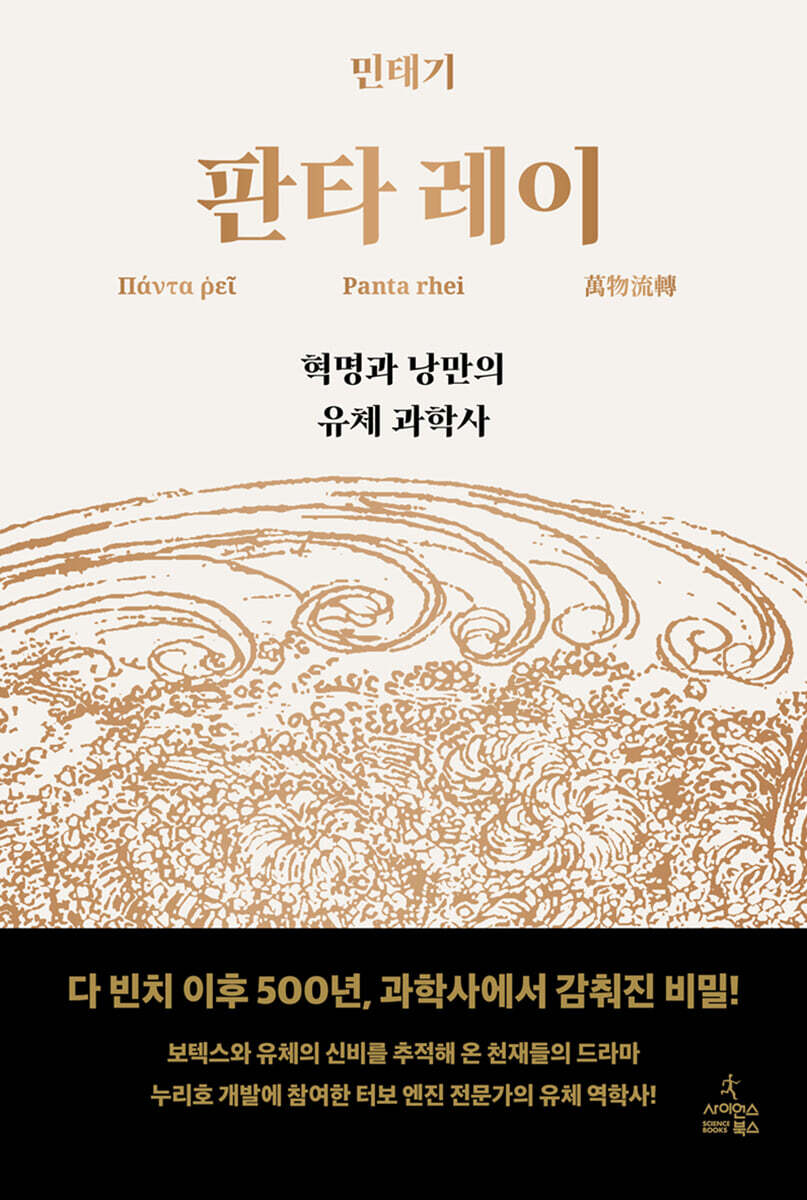
500 Years After Da Vinci: A Hidden Secret in the History of Science!
A drama about geniuses who have been pursuing the mysteries of vortexes and fluids.
Fluid dynamics expert of turbo engine who participated in the development of Nuriho!
The year 2021 can be said to be a turning point in the history of rocket science and technology in our country.
In May, the US-ROK missile range guidelines, which had served as a glass ceiling for the development of rocket technology, were lifted, and in October, the Nuri-ho, a Korean launch vehicle designed to launch South Korea's first practical low-orbit satellite, was launched with near success.
The second and third test launches are scheduled for May and December of next year, and if both the launch and the satellite's orbital placement are successful, it is expected that remarkable progress will be made not only in scientific and technological aspects but also in industry and culture.
But at the heart of rocket science and technology lies fluid dynamics.
Fluid dynamics is a required subject for students in engineering schools, including mechanical engineering, but it is notorious for its difficulty, which discourages many aspiring engineers.
Even today, with the increasing activity of field scientists and science communicators, the difficulty of fluid dynamics contributes to the lack of content, such as books and broadcasts, on the subject.
However, the history of science and technology over the past 2,500 years since ancient Greece could not have existed without fluid dynamics.
Since Heraclitus declared, “Everything flows,” countless geniuses and intellectuals have developed their thoughts and research around the vortex, a swirling flow, from philosophers and artists like Leonardo da Vinci, to modern natural philosophers and mathematicians like Descartes and Leibniz, to the great 19th-century scientist Lord Kelvin.
However, after Newton's theory of universal gravitation, which refuted Descartes' theory that explained the rotation and revolution of celestial bodies as vortices, spread, and with the development of chemistry, atomic theory was revived, and Einstein's theory of relativity and quantum mechanics were established, the study of 'fluids' disappeared behind the curtain of scientific history along with ether.
At the same time, unexplained holes appeared in the history of science and technology.
Why do we call the movement of electrons the flow of electricity? Why do economists refer to the movement of money as monetary liquidity and solve problems using the fluid equations developed by fluid dynamics engineers Navier and Stokes? Why did Newton and Leibniz argue? Why did Einstein develop the theory of relativity? Why is the Schrödinger equation of quantum mechanics a wave equation? These questions cannot be answered without knowing that the first discoverers of electromagnetism, economists, and countless scientists and mathematicians were researchers of vortices, or fluid dynamics.
Behind the missing link in the history of science was fluid dynamics.
Written by Min Tae-gi, director of SNH Technology Research Institute and developer of the turbo pump, a key component of the Nuri rocket engine launched in October of this year, and published by Science Books, "Panta Ray: A Revolutionary and Romantic History of Fluid Dynamics" traces the history of fluid dynamics, the history of science, and the history of the society and people that gave birth to that science by tracing the surprising missing link in the history of science called the vortex, which has never been discovered before.
Dr. Min Tae-gi, an engineer who dreams of harmony between science and humanity, while developing automobile turbo engine technology and supplying a turbo pump developed with pure domestic technology to Nuriho, and writing a column called “Science Story” in the Chosun Ilbo based on his extensive knowledge, starts with Da Vinci’s vortex sketch and looks at the nearly 600 years of history of fluid science, from the life of Qian Xuesen, the father of Chinese rocket technology. He meticulously and delicately examines how science changes the world and how the world evolves science and technology, and provides guidelines for navigating the huge vortex created by humanity and science through this book.
A drama about geniuses who have been pursuing the mysteries of vortexes and fluids.
Fluid dynamics expert of turbo engine who participated in the development of Nuriho!
The year 2021 can be said to be a turning point in the history of rocket science and technology in our country.
In May, the US-ROK missile range guidelines, which had served as a glass ceiling for the development of rocket technology, were lifted, and in October, the Nuri-ho, a Korean launch vehicle designed to launch South Korea's first practical low-orbit satellite, was launched with near success.
The second and third test launches are scheduled for May and December of next year, and if both the launch and the satellite's orbital placement are successful, it is expected that remarkable progress will be made not only in scientific and technological aspects but also in industry and culture.
But at the heart of rocket science and technology lies fluid dynamics.
Fluid dynamics is a required subject for students in engineering schools, including mechanical engineering, but it is notorious for its difficulty, which discourages many aspiring engineers.
Even today, with the increasing activity of field scientists and science communicators, the difficulty of fluid dynamics contributes to the lack of content, such as books and broadcasts, on the subject.
However, the history of science and technology over the past 2,500 years since ancient Greece could not have existed without fluid dynamics.
Since Heraclitus declared, “Everything flows,” countless geniuses and intellectuals have developed their thoughts and research around the vortex, a swirling flow, from philosophers and artists like Leonardo da Vinci, to modern natural philosophers and mathematicians like Descartes and Leibniz, to the great 19th-century scientist Lord Kelvin.
However, after Newton's theory of universal gravitation, which refuted Descartes' theory that explained the rotation and revolution of celestial bodies as vortices, spread, and with the development of chemistry, atomic theory was revived, and Einstein's theory of relativity and quantum mechanics were established, the study of 'fluids' disappeared behind the curtain of scientific history along with ether.
At the same time, unexplained holes appeared in the history of science and technology.
Why do we call the movement of electrons the flow of electricity? Why do economists refer to the movement of money as monetary liquidity and solve problems using the fluid equations developed by fluid dynamics engineers Navier and Stokes? Why did Newton and Leibniz argue? Why did Einstein develop the theory of relativity? Why is the Schrödinger equation of quantum mechanics a wave equation? These questions cannot be answered without knowing that the first discoverers of electromagnetism, economists, and countless scientists and mathematicians were researchers of vortices, or fluid dynamics.
Behind the missing link in the history of science was fluid dynamics.
Written by Min Tae-gi, director of SNH Technology Research Institute and developer of the turbo pump, a key component of the Nuri rocket engine launched in October of this year, and published by Science Books, "Panta Ray: A Revolutionary and Romantic History of Fluid Dynamics" traces the history of fluid dynamics, the history of science, and the history of the society and people that gave birth to that science by tracing the surprising missing link in the history of science called the vortex, which has never been discovered before.
Dr. Min Tae-gi, an engineer who dreams of harmony between science and humanity, while developing automobile turbo engine technology and supplying a turbo pump developed with pure domestic technology to Nuriho, and writing a column called “Science Story” in the Chosun Ilbo based on his extensive knowledge, starts with Da Vinci’s vortex sketch and looks at the nearly 600 years of history of fluid science, from the life of Qian Xuesen, the father of Chinese rocket technology. He meticulously and delicately examines how science changes the world and how the world evolves science and technology, and provides guidelines for navigating the huge vortex created by humanity and science through this book.
- You can preview some of the book's contents.
Preview
index
Prologue… 7
Part 1: The Book Will Kill the Building
Chapter 1: Revolution and Vortex… 21
Chapter 2: Vortices and Resistance… 37
Chapter 3: What Perishes and What Does Not Perish… 51
Part 2 It was an age of wisdom, and an age of foolishness.
Chapter 4: The Salon That Breeded the French Revolution… 67
Chapter 5: The West Surpasses the East in 1776… 87
Chapter 6: Heat and Resistance… 101
Chapter 7: The Luna Society and the Industrial Revolution… 117
Chapter 8: The Revolutionary Military School, École Polytechnique… 129
Chapter 9: Cannons and Gunpowder… 145
Chapter 10: The Industrial Revolution That Toppled Napoleon… 159
Chapter 11: Popularization of Engines and Popular Science… 175
Chapter 12: The Frustration of Revolution and Thermodynamics… 187
Part 3 Science is full of errors, but
It's good to make that mistake often
Chapter 13: The Unromantic Romantic Revolution… 203
Chapter 14: The Computer Created by the Engine… 215
Chapter 15: The Beginning of Telecommunications… 229
Chapter 16: Revolution and the Jews… 241
Chapter 17: Transformation, Not Disappearance… 255
Chapter 18: Ether, Again the Problem: Resistance and Vortex… 271
Chapter 19: Small Boats and Big Boats… 285
Chapter 20: Revolution and Evolution … 295
Chapter 21: The Undying Vortex… 309
Chapter 22: The Irreversible: Entropy… 321
Chapter 23: The Age of Civil War… 337
Part 4 It was truly beautiful back then
Chapter 24: Chaos and Irregularity… 353
Chapter 25: Continuity and Discontinuity… 365
Chapter 26: Pantaray and the Birth of a New Industry… 379
Chapter 27: Liquid Energy: Oil and the Automobile Revolution… 393
Chapter 28: The Emergency of Humanity… 409
Part 5: All that was obvious has disappeared.
Chapter 29: The Maelstrom of War… 425
Chapter 30: The Fall of an Empire… 439
Chapter 31: Liquidity and the Great Depression… 455
Chapter 32: The Politics of Rockets… 473
Epilogue … 483
Later Zhou… 488
References … 505
Copyright of the painting… 530
Search … 531
Part 1: The Book Will Kill the Building
Chapter 1: Revolution and Vortex… 21
Chapter 2: Vortices and Resistance… 37
Chapter 3: What Perishes and What Does Not Perish… 51
Part 2 It was an age of wisdom, and an age of foolishness.
Chapter 4: The Salon That Breeded the French Revolution… 67
Chapter 5: The West Surpasses the East in 1776… 87
Chapter 6: Heat and Resistance… 101
Chapter 7: The Luna Society and the Industrial Revolution… 117
Chapter 8: The Revolutionary Military School, École Polytechnique… 129
Chapter 9: Cannons and Gunpowder… 145
Chapter 10: The Industrial Revolution That Toppled Napoleon… 159
Chapter 11: Popularization of Engines and Popular Science… 175
Chapter 12: The Frustration of Revolution and Thermodynamics… 187
Part 3 Science is full of errors, but
It's good to make that mistake often
Chapter 13: The Unromantic Romantic Revolution… 203
Chapter 14: The Computer Created by the Engine… 215
Chapter 15: The Beginning of Telecommunications… 229
Chapter 16: Revolution and the Jews… 241
Chapter 17: Transformation, Not Disappearance… 255
Chapter 18: Ether, Again the Problem: Resistance and Vortex… 271
Chapter 19: Small Boats and Big Boats… 285
Chapter 20: Revolution and Evolution … 295
Chapter 21: The Undying Vortex… 309
Chapter 22: The Irreversible: Entropy… 321
Chapter 23: The Age of Civil War… 337
Part 4 It was truly beautiful back then
Chapter 24: Chaos and Irregularity… 353
Chapter 25: Continuity and Discontinuity… 365
Chapter 26: Pantaray and the Birth of a New Industry… 379
Chapter 27: Liquid Energy: Oil and the Automobile Revolution… 393
Chapter 28: The Emergency of Humanity… 409
Part 5: All that was obvious has disappeared.
Chapter 29: The Maelstrom of War… 425
Chapter 30: The Fall of an Empire… 439
Chapter 31: Liquidity and the Great Depression… 455
Chapter 32: The Politics of Rockets… 473
Epilogue … 483
Later Zhou… 488
References … 505
Copyright of the painting… 530
Search … 531
Detailed image
.jpg)
Publisher's Review
The history of revolution and romance gave birth to science.
Science prepares a new revolution and romance!
A look at the history of fluid dynamics from da Vinci to Einstein
The true relationship between science and revolution, science and romance!
This book is not simply a history of fluid dynamics, a missing link in the history of science.
Science is not a partial interpretation of natural phenomena, but a story about human society as a whole.
Fluid dynamics, once forgotten in physics, gained recognition as a field of engineering during the two world wars of the 20th century, when aircraft and rocket technology, crucial to the survival of nations, were crucial.
Moreover, the concepts of fluids are extended to the 'liquidity' of energy and economy, leading to important trends in modern society.
In this way, 'fluid dynamics' is a current that can view the concerns and controversies of the 'science of revolution and romance' era from a more consistent perspective, so we can call this period of 'science of revolution and romance', which was the most intense in the history of science, the era of 'fantasy ray' without hesitation.
-In the text
Everything flows! Heraclitus
When it flows and gets blocked, it turns around and sometimes swirls.
The Missing Link in the Wildly Shaking History of Science
A surprising exploration of the creation and destruction of 'fluids'
In a way, the history of science has been the history of the disappearance of fluids.
The last remaining fluid, the ether, gave rise to electromagnetism, but it was concluded that there was no ether, and quantum mechanics and the theory of relativity led to modern physics.
Since then, fluid dynamics has been gradually forgotten in physics, as ether has become unnecessary.
But at the same time, science, divided into individual sciences, lost its original form and became separated from society, losing its interconnectedness.
Science was not born from the solitary imagination of a genius isolated from society, but was an inevitable result of the socio-cultural background of the times in which he lived.
Scientists, too, were someone's sons or daughters, husbands or wives, and parents, and so they lived lives inseparable from the times in which they lived.
Just as it is important to know the times and lives of artists to understand their work, it is also important to know the times and lives of scientists to understand science.
This is to find the true nature of science today, which has become too distant from human history.
-In the text
The one and only history of fluid dynamics recommended by Jeong Jae-seung, Moon Yu-seok, and Choi Hae-cheon!
Pantaray, "Everything flows." If physics is the study of the motion of all matter in the universe, isn't fluid dynamics the most fundamental of physics? Fluid dynamics, a field known even among physicists as difficult and a subject that hasn't seen a single proper general science textbook, has now been published, offering a valuable book.
This is truly exciting news! This book fascinatingly describes the birth and development of modern physics, using fluid dynamics as a key word, beginning with Isaac Newton's 17th-century efforts to explain the motion of fluids with his dynamical theories, through the rise of the Industrial Revolution, the birth of thermodynamics and statistical mechanics, the ether debate, and finally the launch of rockets in the 20th century.
The virtue of this book lies not only in its friendly explanation of scientific knowledge about fluid dynamics, but also in its fascinating portrayal of the vivid thoughts and research processes of contemporary physicists.
I hope this book will captivate many readers with the beauty of fluid dynamics! - Jaeseung Jeong (brain researcher, physicist, author of "Science Concert" and "Twelve Footsteps")
One thing is certain.
Dr. Min Tae-gi is the most knowledgeable person I have ever met in my life.
I have been friends with Dr. Min for over 10 years and have had many conversations with him, and I am always amazed by his talent.
No, what kind of engineering doctor can sit down and explain everything from medieval European music to Russian literature to modern and contemporary American history without any hesitation?
Every time I listened to the story of history, literature, music, art, politics, economics, and the history of thought intersecting in a dazzling way as warp and weft, weaving it into one grand "story," with the heart of a grandson listening to his grandmother's old tales, the thought that came to me strongly was, "It's a shame to hear it alone!"
Listening to this good news alone goes against the spirit of Hongik Ingan.
So I've been nagging him to write a book for 10 years.
Now, I feel proud to finally receive the fruits of my labor in my hands.
The reason I liked his story is because it showed me that science is also a product of the lives, concerns, tastes, and interactions of the people of that time.
Whenever I discovered that something I thought was unrelated—a musical trend, a political event, a popular social custom—was connected to a surprising scientific discovery, I would get what they call a "goosebumps" these days.
After all, humans are social animals.
Living together, we influence each other.
Science, too, was not developed by eccentric geniuses alone on a remote island.
Whether it's science, art, or political thought, all of people's 'thoughts' change each other through intense interaction, never staying in one place, but constantly flowing.
And that thought changes the world.
So, right now, what kind of science are the thoughts of 21st century humanity creating?
Hope and fear intersect, and I become curious.
-Moon Yu-seok (writer, former judge)
This book clearly explains the stories of scientists who have had a great influence on the world from the time of Leonardo da Vinci to the 20th century from a fluid dynamics perspective.
You will be able to experience revolutionary discoveries in world history and countless stories related to them, such as Copernicus, who gave the word revolution its meaning; Descartes, a philosopher and physician well-known for “I think, therefore I am”; Newton and the coffee houses of London where new ideas, studies, and arts were discussed; Kant, a philosopher who was fascinated by Newtonian mechanics and received a doctorate in general natural history and celestial theory; Napoleon and the Industrial Revolution; Reynolds who studied turbulence; Sommerfeld and Heisenberg who created quantum mechanics; and their successes and failures.
From the first photo of 『Panta Ray』, Botticelli's Birth of Venus, to the last, the front page of the Dong-A Ilbo on June 26, 1950 (which carried news of North Korea's invasion and a column titled "Natural Science and the Interdisciplinary System"), the photos clearly show the development of science over the past several hundred years and the political and cultural situation at the time.
What sets this book apart from typical science books is that it doesn't focus solely on the scientists' genius, but rather on the political and cultural context in which they lived, drawing on extensive knowledge in science, history, art, and economics to describe the scientists' significant achievements.
This book invites you into the exciting world of renowned scientists whose important achievements you may have memorized during your school days.
Choi Hae-cheon (Vice President for Research, Seoul National University)
Science prepares a new revolution and romance!
A look at the history of fluid dynamics from da Vinci to Einstein
The true relationship between science and revolution, science and romance!
This book is not simply a history of fluid dynamics, a missing link in the history of science.
Science is not a partial interpretation of natural phenomena, but a story about human society as a whole.
Fluid dynamics, once forgotten in physics, gained recognition as a field of engineering during the two world wars of the 20th century, when aircraft and rocket technology, crucial to the survival of nations, were crucial.
Moreover, the concepts of fluids are extended to the 'liquidity' of energy and economy, leading to important trends in modern society.
In this way, 'fluid dynamics' is a current that can view the concerns and controversies of the 'science of revolution and romance' era from a more consistent perspective, so we can call this period of 'science of revolution and romance', which was the most intense in the history of science, the era of 'fantasy ray' without hesitation.
-In the text
Everything flows! Heraclitus
When it flows and gets blocked, it turns around and sometimes swirls.
The Missing Link in the Wildly Shaking History of Science
A surprising exploration of the creation and destruction of 'fluids'
In a way, the history of science has been the history of the disappearance of fluids.
The last remaining fluid, the ether, gave rise to electromagnetism, but it was concluded that there was no ether, and quantum mechanics and the theory of relativity led to modern physics.
Since then, fluid dynamics has been gradually forgotten in physics, as ether has become unnecessary.
But at the same time, science, divided into individual sciences, lost its original form and became separated from society, losing its interconnectedness.
Science was not born from the solitary imagination of a genius isolated from society, but was an inevitable result of the socio-cultural background of the times in which he lived.
Scientists, too, were someone's sons or daughters, husbands or wives, and parents, and so they lived lives inseparable from the times in which they lived.
Just as it is important to know the times and lives of artists to understand their work, it is also important to know the times and lives of scientists to understand science.
This is to find the true nature of science today, which has become too distant from human history.
-In the text
The one and only history of fluid dynamics recommended by Jeong Jae-seung, Moon Yu-seok, and Choi Hae-cheon!
Pantaray, "Everything flows." If physics is the study of the motion of all matter in the universe, isn't fluid dynamics the most fundamental of physics? Fluid dynamics, a field known even among physicists as difficult and a subject that hasn't seen a single proper general science textbook, has now been published, offering a valuable book.
This is truly exciting news! This book fascinatingly describes the birth and development of modern physics, using fluid dynamics as a key word, beginning with Isaac Newton's 17th-century efforts to explain the motion of fluids with his dynamical theories, through the rise of the Industrial Revolution, the birth of thermodynamics and statistical mechanics, the ether debate, and finally the launch of rockets in the 20th century.
The virtue of this book lies not only in its friendly explanation of scientific knowledge about fluid dynamics, but also in its fascinating portrayal of the vivid thoughts and research processes of contemporary physicists.
I hope this book will captivate many readers with the beauty of fluid dynamics! - Jaeseung Jeong (brain researcher, physicist, author of "Science Concert" and "Twelve Footsteps")
One thing is certain.
Dr. Min Tae-gi is the most knowledgeable person I have ever met in my life.
I have been friends with Dr. Min for over 10 years and have had many conversations with him, and I am always amazed by his talent.
No, what kind of engineering doctor can sit down and explain everything from medieval European music to Russian literature to modern and contemporary American history without any hesitation?
Every time I listened to the story of history, literature, music, art, politics, economics, and the history of thought intersecting in a dazzling way as warp and weft, weaving it into one grand "story," with the heart of a grandson listening to his grandmother's old tales, the thought that came to me strongly was, "It's a shame to hear it alone!"
Listening to this good news alone goes against the spirit of Hongik Ingan.
So I've been nagging him to write a book for 10 years.
Now, I feel proud to finally receive the fruits of my labor in my hands.
The reason I liked his story is because it showed me that science is also a product of the lives, concerns, tastes, and interactions of the people of that time.
Whenever I discovered that something I thought was unrelated—a musical trend, a political event, a popular social custom—was connected to a surprising scientific discovery, I would get what they call a "goosebumps" these days.
After all, humans are social animals.
Living together, we influence each other.
Science, too, was not developed by eccentric geniuses alone on a remote island.
Whether it's science, art, or political thought, all of people's 'thoughts' change each other through intense interaction, never staying in one place, but constantly flowing.
And that thought changes the world.
So, right now, what kind of science are the thoughts of 21st century humanity creating?
Hope and fear intersect, and I become curious.
-Moon Yu-seok (writer, former judge)
This book clearly explains the stories of scientists who have had a great influence on the world from the time of Leonardo da Vinci to the 20th century from a fluid dynamics perspective.
You will be able to experience revolutionary discoveries in world history and countless stories related to them, such as Copernicus, who gave the word revolution its meaning; Descartes, a philosopher and physician well-known for “I think, therefore I am”; Newton and the coffee houses of London where new ideas, studies, and arts were discussed; Kant, a philosopher who was fascinated by Newtonian mechanics and received a doctorate in general natural history and celestial theory; Napoleon and the Industrial Revolution; Reynolds who studied turbulence; Sommerfeld and Heisenberg who created quantum mechanics; and their successes and failures.
From the first photo of 『Panta Ray』, Botticelli's Birth of Venus, to the last, the front page of the Dong-A Ilbo on June 26, 1950 (which carried news of North Korea's invasion and a column titled "Natural Science and the Interdisciplinary System"), the photos clearly show the development of science over the past several hundred years and the political and cultural situation at the time.
What sets this book apart from typical science books is that it doesn't focus solely on the scientists' genius, but rather on the political and cultural context in which they lived, drawing on extensive knowledge in science, history, art, and economics to describe the scientists' significant achievements.
This book invites you into the exciting world of renowned scientists whose important achievements you may have memorized during your school days.
Choi Hae-cheon (Vice President for Research, Seoul National University)
GOODS SPECIFICS
- Date of issue: December 31, 2021
- Page count, weight, size: 548 pages | 1,100g | 148*220*35mm
- ISBN13: 9791191187328
- ISBN10: 1191187322
You may also like
카테고리
korean


korean

![GQ KOREA Mark (Monthly): December [2025]](http://librairie.coreenne.fr/cdn/shop/files/8ef265dbbfbf186523ed75ba7319009d.jpg?v=1765340328&width=3840)


