

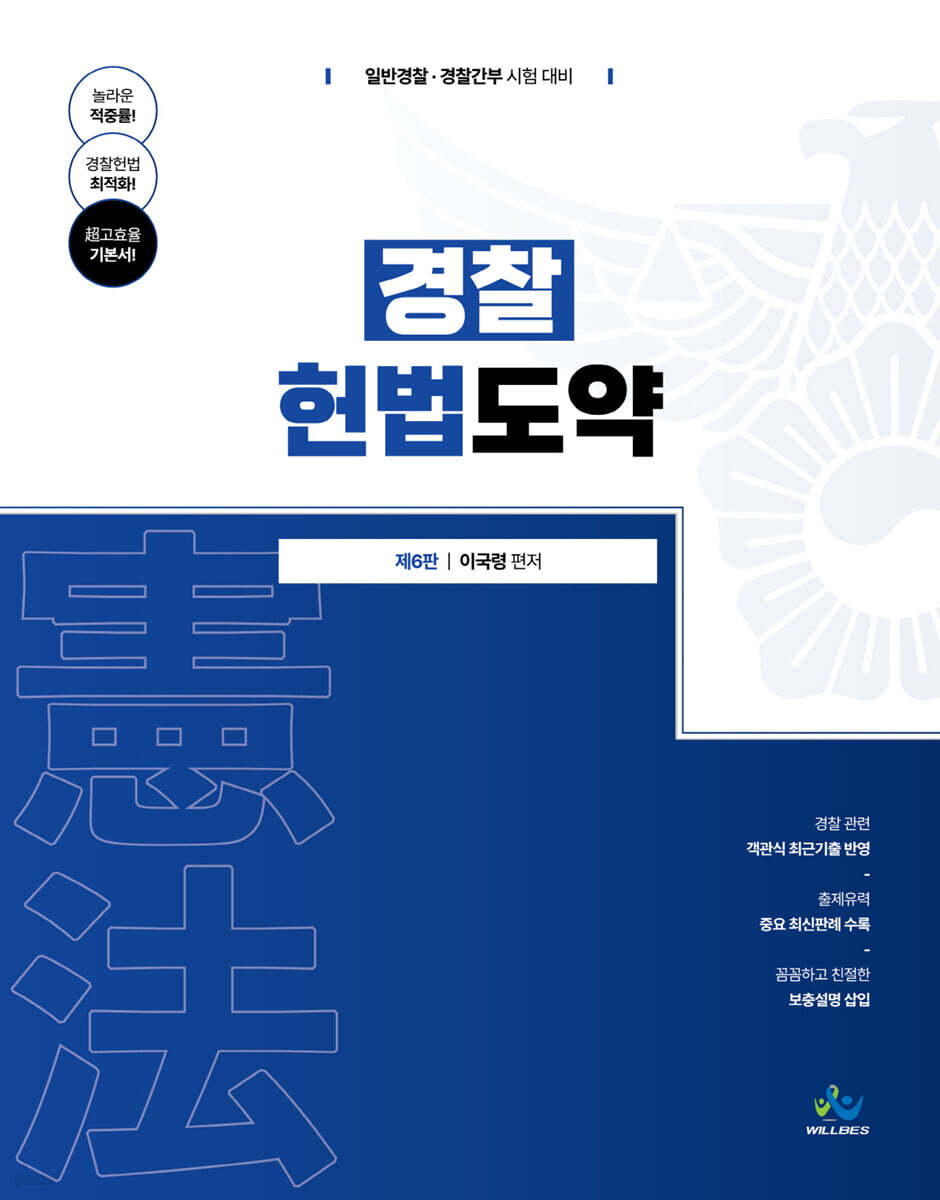
Police Constitutional Leap
 |
Description
Book Introduction
Criminal law is a combination of criminal law and criminal procedure law, so there is already a considerable amount of material to study. Police science is a subject that most test takers find difficult, so you should study it more frequently and invest a lot of time in it.
My role is to help you adjust the amount of constitutional study you need to do and select the content you need to pass the exam.
Because studying for a long time should not be our goal, but rather we should study to quickly graduate from the dark tunnel of exam preparation.
My role is to help you adjust the amount of constitutional study you need to do and select the content you need to pass the exam.
Because studying for a long time should not be our goal, but rather we should study to quickly graduate from the dark tunnel of exam preparation.
- You can preview some of the book's contents.
Preview
index
General Provisions of the Constitution 01
CHAPTER 01
Constitution and Constitutional Law 2
Section 1. Significance of the Constitution 2
Section 2: Concept and Classification of the Constitution 2
│Article 1│Concept of the Constitution ㆍ2
Article 2: Classification of the Constitution ㆍ3
Section 3: Characteristics and Functions of the Constitution 5
Section 4 Constitutional Law and Constitutional Interpretation 6
│Article 1│Constitutional Court ㆍ6
Article 2 Interpretation of the Constitution ㆍ7
Article 3 Constitutional Interpretation of Law ㆍ8
CHAPTER 02
Enactment and Amendment of the Constitution 13
Section 1 Establishment of the Constitution 13
Section 2 Amendment of the Constitution 13
CHAPTER 03
Evolution of the Constitution and its Protection 19
Section 1: Changes to the Constitution 19
Section 2 Protection of the Constitution 20
CHAPTER 04
Constitutional History of the Republic of Korea 24
Section 1. Constitution (1948) 24
Section 2, First Amendment to the Constitution (1952) / Excerpt from Amendment 25
Section 3, Second Amendment to the Constitution (1954) / Four-Four-Four Amendment to the Constitution 25
Section 4, Third Amendment to the Constitution (June 1960) / Constitution of the Second Republic, Vol. 26
Section 5, 4th Amendment to the Constitution (October 1960) 26
·
(omitted)
CHAPTER 05
General Theory of the Constitution of the Republic of Korea 29
Section 1: Structure of the Constitution of the Republic of Korea 29
Section 2: Basic Principles of the Constitution of the Republic of Korea 29
Article 1: Basic Liberal Democratic Order ㆍ29
Article 2 Principle of the Rule of Law ㆍ30
Article 3: Principle of Separation of Powers ㆍ48
Section 3, Preamble to the Constitution of the Republic of Korea, Article 55
Section 4 General Provisions of the Constitution of the Republic of Korea, Article 58
Article 1: Principles of National Constitution and Popular Sovereignty ㆍ58
Article 2 Protection of Citizens and Overseas Citizens ㆍ60
│Article 3│Territory ㆍ69
Article 4: Aiming for Peaceful Unification ㆍ71
Article 5: International Pacifism and the Political Neutrality of the Armed Forces ㆍ73
·
(omitted)
Fundamental Rights Theory 02
CHAPTER 01
General Theory of Fundamental Rights 92
Section 1: Concept of Fundamental Rights 92
Section 2 Scope of Fundamental Rights 94
Section 3: Legal Nature of Fundamental Rights 96
Section 4 Subjects of Fundamental Rights 98
Section 5. Effect of Fundamental Rights 107
·
(omitted)
CHAPTER 02
Fundamental Rights and Institutional Guarantees 146
Section 1 Institutional Guarantees 146
Section 2: Political Party System and Political Party Freedom 147
Article 1: The Concept of a Political Party ㆍ147
Article 2 Status of Political Parties ㆍ148
│Article 3│History of the Justification Clause ㆍ149
Article 4 of the Constitutional Law on Political Parties ㆍ149
Article 5: Establishment and Extinction of Political Parties ㆍ163
Article 6: Representative System and Party-State Democracy ㆍ167
Section 3 Local Autonomy System 169
Article 1: The Significance of the Local Autonomy System ㆍ169
Article 2: The Essence and Character of the Local Autonomy System ㆍ170
Article 3 Contents of the Local Autonomy System ㆍ173
CHAPTER 03
Comprehensive Fundamental Rights 184
Section 1: Human Dignity and Value, and the Right to Pursue Happiness 184
Section 2: Right to Equality 212
CHAPTER 04
Basic Rights of Liberty 239
Section 1: General Theory of Liberal Fundamental Rights 239
Section 2: Freedom and Rights Regarding the Body 239
Article 1 Right to Life ㆍ239
Article 2: Freedom of the Body ㆍ242
Section 3 Freedom of Private Life 288
Article 1 Freedom of Residence ㆍ288
Article 2: Privacy and Freedom of Life ㆍ291
Article 3 Freedom of Communication ㆍ308
Section 4 Freedom in the Mental Realm 315
Article 1 Freedom of Conscience ㆍ315
Article 2 Freedom of Religion ㆍ322
Article 3 Freedom of the Press and Publication ㆍ329
Article 4 Freedom of Assembly and Association ㆍ352
Article 5 Freedom of Academic and Artistic Rights ㆍ368
Section 5 Freedom in the Economic Sphere 374
Article 1 Freedom of Residence and Movement ㆍ374
Article 2 Freedom of Occupation ㆍ378
Article 3, Property Rights ㆍ396
CHAPTER 05
Basic rights to suffrage 415
Section 1: Voting Rights and Electoral Systems 415
Section 2: Right to Hold Public Office and the Career Civil Service System 435
Section 3 Direct Suffrage 448
·
(omitted)
Case Index _553
03
CHAPTER 01
Constitution and Constitutional Law 2
Section 1. Significance of the Constitution 2
Section 2: Concept and Classification of the Constitution 2
│Article 1│Concept of the Constitution ㆍ2
Article 2: Classification of the Constitution ㆍ3
Section 3: Characteristics and Functions of the Constitution 5
Section 4 Constitutional Law and Constitutional Interpretation 6
│Article 1│Constitutional Court ㆍ6
Article 2 Interpretation of the Constitution ㆍ7
Article 3 Constitutional Interpretation of Law ㆍ8
CHAPTER 02
Enactment and Amendment of the Constitution 13
Section 1 Establishment of the Constitution 13
Section 2 Amendment of the Constitution 13
CHAPTER 03
Evolution of the Constitution and its Protection 19
Section 1: Changes to the Constitution 19
Section 2 Protection of the Constitution 20
CHAPTER 04
Constitutional History of the Republic of Korea 24
Section 1. Constitution (1948) 24
Section 2, First Amendment to the Constitution (1952) / Excerpt from Amendment 25
Section 3, Second Amendment to the Constitution (1954) / Four-Four-Four Amendment to the Constitution 25
Section 4, Third Amendment to the Constitution (June 1960) / Constitution of the Second Republic, Vol. 26
Section 5, 4th Amendment to the Constitution (October 1960) 26
·
(omitted)
CHAPTER 05
General Theory of the Constitution of the Republic of Korea 29
Section 1: Structure of the Constitution of the Republic of Korea 29
Section 2: Basic Principles of the Constitution of the Republic of Korea 29
Article 1: Basic Liberal Democratic Order ㆍ29
Article 2 Principle of the Rule of Law ㆍ30
Article 3: Principle of Separation of Powers ㆍ48
Section 3, Preamble to the Constitution of the Republic of Korea, Article 55
Section 4 General Provisions of the Constitution of the Republic of Korea, Article 58
Article 1: Principles of National Constitution and Popular Sovereignty ㆍ58
Article 2 Protection of Citizens and Overseas Citizens ㆍ60
│Article 3│Territory ㆍ69
Article 4: Aiming for Peaceful Unification ㆍ71
Article 5: International Pacifism and the Political Neutrality of the Armed Forces ㆍ73
·
(omitted)
Fundamental Rights Theory 02
CHAPTER 01
General Theory of Fundamental Rights 92
Section 1: Concept of Fundamental Rights 92
Section 2 Scope of Fundamental Rights 94
Section 3: Legal Nature of Fundamental Rights 96
Section 4 Subjects of Fundamental Rights 98
Section 5. Effect of Fundamental Rights 107
·
(omitted)
CHAPTER 02
Fundamental Rights and Institutional Guarantees 146
Section 1 Institutional Guarantees 146
Section 2: Political Party System and Political Party Freedom 147
Article 1: The Concept of a Political Party ㆍ147
Article 2 Status of Political Parties ㆍ148
│Article 3│History of the Justification Clause ㆍ149
Article 4 of the Constitutional Law on Political Parties ㆍ149
Article 5: Establishment and Extinction of Political Parties ㆍ163
Article 6: Representative System and Party-State Democracy ㆍ167
Section 3 Local Autonomy System 169
Article 1: The Significance of the Local Autonomy System ㆍ169
Article 2: The Essence and Character of the Local Autonomy System ㆍ170
Article 3 Contents of the Local Autonomy System ㆍ173
CHAPTER 03
Comprehensive Fundamental Rights 184
Section 1: Human Dignity and Value, and the Right to Pursue Happiness 184
Section 2: Right to Equality 212
CHAPTER 04
Basic Rights of Liberty 239
Section 1: General Theory of Liberal Fundamental Rights 239
Section 2: Freedom and Rights Regarding the Body 239
Article 1 Right to Life ㆍ239
Article 2: Freedom of the Body ㆍ242
Section 3 Freedom of Private Life 288
Article 1 Freedom of Residence ㆍ288
Article 2: Privacy and Freedom of Life ㆍ291
Article 3 Freedom of Communication ㆍ308
Section 4 Freedom in the Mental Realm 315
Article 1 Freedom of Conscience ㆍ315
Article 2 Freedom of Religion ㆍ322
Article 3 Freedom of the Press and Publication ㆍ329
Article 4 Freedom of Assembly and Association ㆍ352
Article 5 Freedom of Academic and Artistic Rights ㆍ368
Section 5 Freedom in the Economic Sphere 374
Article 1 Freedom of Residence and Movement ㆍ374
Article 2 Freedom of Occupation ㆍ378
Article 3, Property Rights ㆍ396
CHAPTER 05
Basic rights to suffrage 415
Section 1: Voting Rights and Electoral Systems 415
Section 2: Right to Hold Public Office and the Career Civil Service System 435
Section 3 Direct Suffrage 448
·
(omitted)
Case Index _553
03
Publisher's Review
6th edition
After the Constitutional Court subject was introduced to the police examination, a total of seven examinations were administered: the 1st and 2nd examinations in 1922, the 1st and 2nd examinations in 1923, the 1st and 2nd examinations in 1924, and the 1st examination in 1925.
We will continue to think, work hard, and prepare for the future police exam to help you pass.
The Constitution is also a subject that can be endlessly expanded upon.
However, the reason I am trying to minimize the amount of material as much as possible despite the criticism is because I believe that in order to pass the police exam, which is administered twice a year, in the shortest possible time, it is important to study and digest the amount of material required to pass.
Criminal law is a combination of criminal law and criminal procedure law, so there is already a considerable amount of material to study. Police science is a subject that most test takers find difficult, so you should study it more frequently and invest a lot of time in it.
My role is to help you adjust the amount of constitutional study you need to do and select the content you need to pass the exam.
Because studying for a long time should not be our goal, but rather we should study to quickly graduate from the dark tunnel of exam preparation.
Just as your goal is to pass the exam, my goal is also for you to pass the exam.
My goal is the same as that of all of you test takers.
To repay the support we have received from all of you, we will continue to do our best to help you pass the exam.
If you move forward calmly without collapsing, spring will surely come.
The day will surely come when each of you will bloom.
I hope I will remain as a good memory in your exam preparation life.
I hope to see you again in a better place, and to remember this moment with a smile.
In the Noryangjin laboratory in March 2025
Lee Guk-ryeong's dream
After the Constitutional Court subject was introduced to the police examination, a total of seven examinations were administered: the 1st and 2nd examinations in 1922, the 1st and 2nd examinations in 1923, the 1st and 2nd examinations in 1924, and the 1st examination in 1925.
We will continue to think, work hard, and prepare for the future police exam to help you pass.
The Constitution is also a subject that can be endlessly expanded upon.
However, the reason I am trying to minimize the amount of material as much as possible despite the criticism is because I believe that in order to pass the police exam, which is administered twice a year, in the shortest possible time, it is important to study and digest the amount of material required to pass.
Criminal law is a combination of criminal law and criminal procedure law, so there is already a considerable amount of material to study. Police science is a subject that most test takers find difficult, so you should study it more frequently and invest a lot of time in it.
My role is to help you adjust the amount of constitutional study you need to do and select the content you need to pass the exam.
Because studying for a long time should not be our goal, but rather we should study to quickly graduate from the dark tunnel of exam preparation.
Just as your goal is to pass the exam, my goal is also for you to pass the exam.
My goal is the same as that of all of you test takers.
To repay the support we have received from all of you, we will continue to do our best to help you pass the exam.
If you move forward calmly without collapsing, spring will surely come.
The day will surely come when each of you will bloom.
I hope I will remain as a good memory in your exam preparation life.
I hope to see you again in a better place, and to remember this moment with a smile.
In the Noryangjin laboratory in March 2025
Lee Guk-ryeong's dream
GOODS SPECIFICS
- Date of issue: March 31, 2025
- Page count, weight, size: 552 pages | 1,490g | 210*270*23mm
- ISBN13: 9791166189203
- ISBN10: 1166189201
You may also like
카테고리
korean


korean

![GQ KOREA Mark (Monthly): December [2025]](http://librairie.coreenne.fr/cdn/shop/files/8ef265dbbfbf186523ed75ba7319009d.jpg?v=1765340328&width=3840)


