

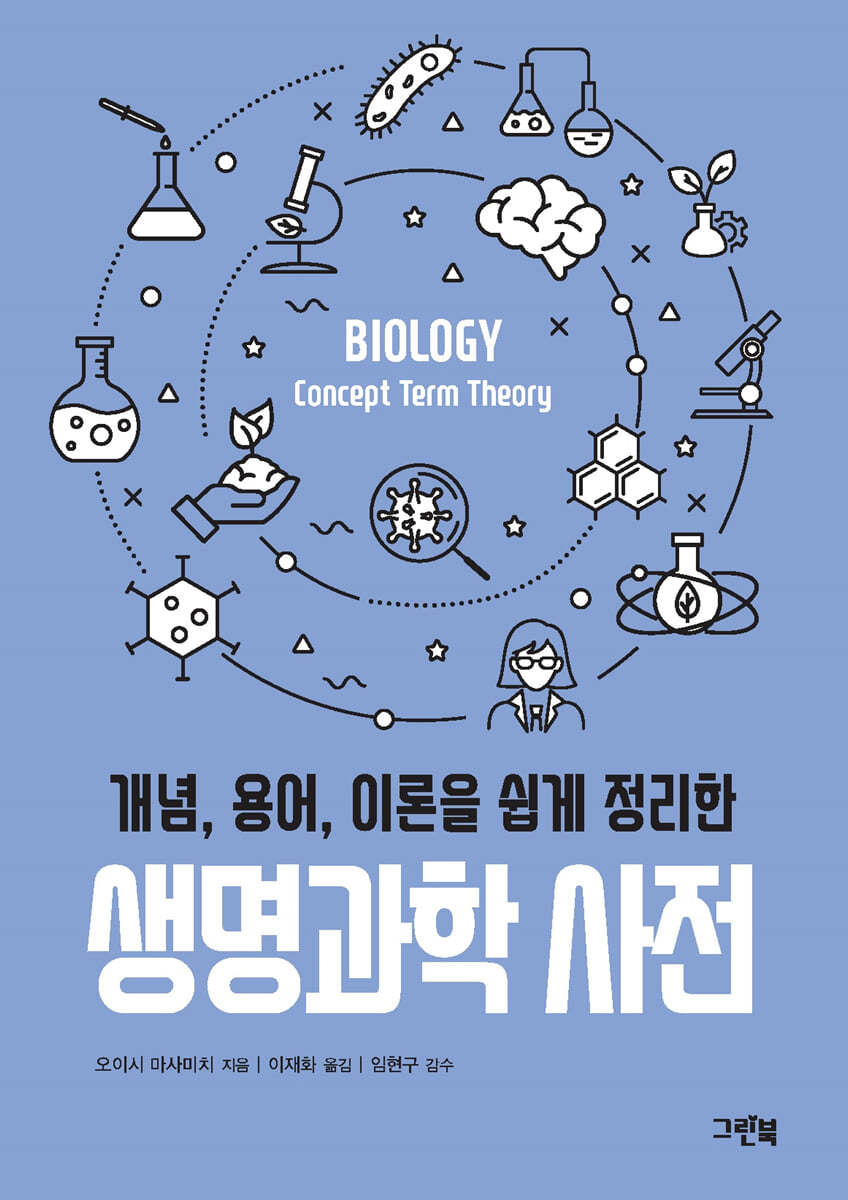
Life Science Dictionary
 |
Description
Book Introduction
Life Sciences: From the Origin of Life to Genetic Engineering, All in One Volume
A steady seller in the science and youth sectors, the Green Book Science Dictionary series is a new release.
A book has been published that comprehensively summarizes the basic concepts of life sciences in one volume.
The sixth book in the Green Book [Science Dictionary Series] is 『Life Science Dictionary』, which provides an easy-to-understand summary of concepts, terms, and theories.
[Science Dictionary Series] is a general education book that aims to organize the basic principles of each field of natural science, such as mathematics, physics, chemistry, and astronomy, into one volume.
It is receiving positive responses from middle school students with a strong interest in math and science, high school students who want to build a solid foundation in their subjects, college students majoring in or not majoring in each field who want to effectively organize concepts, and science enthusiasts.
Life sciences are a highly promising field of study that many students pursue.
It is not unrelated that the images that come to mind when thinking of life science these days are jobs related to genetic engineering, a cutting-edge field of study: molecular biologists who can freely cut and paste genes, genetic engineers who are working to solve humanity's food crisis, and medical doctors who save lives through gene therapy.
As such, life sciences have been developing rapidly and new information is overflowing even until recently.
This book explains the theories of life sciences through problems closely related to everyday life, making them more accessible to those lacking basic knowledge.
The author says that students seeking to systematically organize their life science curriculum, non-majors seeking to delve into the world of life science, and even those curious about the origins of their own existence will find answers in this book.
A steady seller in the science and youth sectors, the Green Book Science Dictionary series is a new release.
A book has been published that comprehensively summarizes the basic concepts of life sciences in one volume.
The sixth book in the Green Book [Science Dictionary Series] is 『Life Science Dictionary』, which provides an easy-to-understand summary of concepts, terms, and theories.
[Science Dictionary Series] is a general education book that aims to organize the basic principles of each field of natural science, such as mathematics, physics, chemistry, and astronomy, into one volume.
It is receiving positive responses from middle school students with a strong interest in math and science, high school students who want to build a solid foundation in their subjects, college students majoring in or not majoring in each field who want to effectively organize concepts, and science enthusiasts.
Life sciences are a highly promising field of study that many students pursue.
It is not unrelated that the images that come to mind when thinking of life science these days are jobs related to genetic engineering, a cutting-edge field of study: molecular biologists who can freely cut and paste genes, genetic engineers who are working to solve humanity's food crisis, and medical doctors who save lives through gene therapy.
As such, life sciences have been developing rapidly and new information is overflowing even until recently.
This book explains the theories of life sciences through problems closely related to everyday life, making them more accessible to those lacking basic knowledge.
The author says that students seeking to systematically organize their life science curriculum, non-majors seeking to delve into the world of life science, and even those curious about the origins of their own existence will find answers in this book.
- You can preview some of the book's contents.
Preview
index
Author's Note
Chapter 1: From the Birth of Life to the Emergence of Humanity
1-1 Where did life come from?
1-2 What did the first life look like?
1-3 What is the survival strategy of a creature that turns toxic oxygen into medicine?
1-4 Archaea are not old?
1-5 Emergence of multicellular organisms
1-6 Unicellular organisms are not simple
1-7 What is the Cambrian Explosion?
1-8 Organisms that have faced the threat of mass extinction several times
1-9 Is the evolution of living things true?
1-10 Evolution of Vertebrates
1-11 Are dinosaurs still alive today?
1-12 Where did humanity originate?
Chapter 2 From Cell Structure to Individual Formation
2-1 All living things are made up of cells.
2-2 There are two types of cells
A library containing blueprints for 2-3 cells
2-4 power plants in cells
2-5 Channels for intracellular substances (endoplasmic reticulum and Golgi apparatus)
Are there bones in cells 2-6?
How do 2-7 cells divide into two identical cells?
2-8 Recently discovered chromosome structure
2-9 Cells come together to form tissues
2-10 From organ to organ system
2-11 Why is the heart shifted to the left?
Chapter 3: The Substances That Make Up the Body
3-1 Why Are There So Few Silicon-Based Lifeforms?
3-2 Energy sources for life activities
3-3 The main character of life activities
3-4 The Blueprint of Life and Its Copies
3-5 What do lipids in the body do?
3-6 Why do our bodies need metal elements?
3-7 A substance called 'energy currency'
3-8 What are hormones?
3-9 Do plants have hormones?
Chapter 4: Discovering the Identity of Genes and DNA
4-1 What is passed on from parents to children?
What is the reality of the 4-2 gene?
4-3 Fruit fly research that helps human research
4-4 How to cut and paste genes
4-5 Current Status of Genetically Modified Agricultural Products
4-6 New genetic recombination technologies
4-7 How to Massively Increase Your Genes in a Short Time
4-8 Gene Sequence Determination Method
4-9 What is the human genome?
4-10 Why Many Koreans Can't Drink Well
Chapter 5: Principles of Animal Development
5-1 The Preformation and Postformation Theories Debate
What is 5-2 cell pluripotency?
5-3 From fertilized egg to embryo
5-4 Why do heart cells come together to form tissue, and why do liver cells come together to form tissue?
5-5 How is the fate of cells determined?
5-6 How are the directions of the front and back, back and stomach determined?
Genes that create 5-7 segment structures
5-8 How are limbs made?
5-9 The Birth of Cloned Sheep 'Dolly' and Cloned Humans
Chapter 6: Principles of Life Maintenance: Metabolism, Fermentation, and Photosynthesis
What is Ambassador 6-1?
6-2 What is an enzyme?
6-3 There are two channels for breathing?
6-4 What is fermentation?
6-5 How does a squid glow?
6-6 How do plants get nutrients?
6-7 Principle of absorbing nitrogen from the air into the body
Chapter 7: Mechanisms of biological response and regulation
7-1 How do muscles contract?
7-2 How can nerves transmit excitement quickly?
7-3 How are sound stimuli transmitted to the brain?
7-4 How are light stimuli transmitted to the brain?
7-5 Principle of smelling
7-6 Principles of Taste
7-7 Principle of sensing magnetic force
7-8 Two ways to investigate the brain
7-9 Blue light that destroys the biological clock
Chapter 8 Biodiversity and Endangered Species
8-1 Why are there so many living things in the world?
8-2 Why are humans called 'Homo sapiens' in biology?
8-3 A third living thing that is neither animal nor plant
8-4 I might not be able to eat eel in the future?
What is the 8-5 Washington Agreement?
8-6 A huge fine
8-7 Dangerous animals imported from abroad
8-8 Measures to increase the number of species at risk of extinction
8-9 How to preserve biodiversity
Chapter 9: How Living Things Survive in Their Environment
9-1 Producers and consumers that make up the ecosystem
9-2 What are habitats and status?
9-3 Plants with more patience than animals
9-4 Energy Pyramid of the Ecosystem
9-5 A good living environment determines the fate of living things.
9-6 How can we understand the behavioral patterns of deep-sea diving seals?
9-7 Bioaccumulation of pollutants
9-8 How to restore a destroyed ecosystem?
Search
Chapter 1: From the Birth of Life to the Emergence of Humanity
1-1 Where did life come from?
1-2 What did the first life look like?
1-3 What is the survival strategy of a creature that turns toxic oxygen into medicine?
1-4 Archaea are not old?
1-5 Emergence of multicellular organisms
1-6 Unicellular organisms are not simple
1-7 What is the Cambrian Explosion?
1-8 Organisms that have faced the threat of mass extinction several times
1-9 Is the evolution of living things true?
1-10 Evolution of Vertebrates
1-11 Are dinosaurs still alive today?
1-12 Where did humanity originate?
Chapter 2 From Cell Structure to Individual Formation
2-1 All living things are made up of cells.
2-2 There are two types of cells
A library containing blueprints for 2-3 cells
2-4 power plants in cells
2-5 Channels for intracellular substances (endoplasmic reticulum and Golgi apparatus)
Are there bones in cells 2-6?
How do 2-7 cells divide into two identical cells?
2-8 Recently discovered chromosome structure
2-9 Cells come together to form tissues
2-10 From organ to organ system
2-11 Why is the heart shifted to the left?
Chapter 3: The Substances That Make Up the Body
3-1 Why Are There So Few Silicon-Based Lifeforms?
3-2 Energy sources for life activities
3-3 The main character of life activities
3-4 The Blueprint of Life and Its Copies
3-5 What do lipids in the body do?
3-6 Why do our bodies need metal elements?
3-7 A substance called 'energy currency'
3-8 What are hormones?
3-9 Do plants have hormones?
Chapter 4: Discovering the Identity of Genes and DNA
4-1 What is passed on from parents to children?
What is the reality of the 4-2 gene?
4-3 Fruit fly research that helps human research
4-4 How to cut and paste genes
4-5 Current Status of Genetically Modified Agricultural Products
4-6 New genetic recombination technologies
4-7 How to Massively Increase Your Genes in a Short Time
4-8 Gene Sequence Determination Method
4-9 What is the human genome?
4-10 Why Many Koreans Can't Drink Well
Chapter 5: Principles of Animal Development
5-1 The Preformation and Postformation Theories Debate
What is 5-2 cell pluripotency?
5-3 From fertilized egg to embryo
5-4 Why do heart cells come together to form tissue, and why do liver cells come together to form tissue?
5-5 How is the fate of cells determined?
5-6 How are the directions of the front and back, back and stomach determined?
Genes that create 5-7 segment structures
5-8 How are limbs made?
5-9 The Birth of Cloned Sheep 'Dolly' and Cloned Humans
Chapter 6: Principles of Life Maintenance: Metabolism, Fermentation, and Photosynthesis
What is Ambassador 6-1?
6-2 What is an enzyme?
6-3 There are two channels for breathing?
6-4 What is fermentation?
6-5 How does a squid glow?
6-6 How do plants get nutrients?
6-7 Principle of absorbing nitrogen from the air into the body
Chapter 7: Mechanisms of biological response and regulation
7-1 How do muscles contract?
7-2 How can nerves transmit excitement quickly?
7-3 How are sound stimuli transmitted to the brain?
7-4 How are light stimuli transmitted to the brain?
7-5 Principle of smelling
7-6 Principles of Taste
7-7 Principle of sensing magnetic force
7-8 Two ways to investigate the brain
7-9 Blue light that destroys the biological clock
Chapter 8 Biodiversity and Endangered Species
8-1 Why are there so many living things in the world?
8-2 Why are humans called 'Homo sapiens' in biology?
8-3 A third living thing that is neither animal nor plant
8-4 I might not be able to eat eel in the future?
What is the 8-5 Washington Agreement?
8-6 A huge fine
8-7 Dangerous animals imported from abroad
8-8 Measures to increase the number of species at risk of extinction
8-9 How to preserve biodiversity
Chapter 9: How Living Things Survive in Their Environment
9-1 Producers and consumers that make up the ecosystem
9-2 What are habitats and status?
9-3 Plants with more patience than animals
9-4 Energy Pyramid of the Ecosystem
9-5 A good living environment determines the fate of living things.
9-6 How can we understand the behavioral patterns of deep-sea diving seals?
9-7 Bioaccumulation of pollutants
9-8 How to restore a destroyed ecosystem?
Search
Publisher's Review
A steady seller in the science and youth sectors, the Green Book Science Dictionary series is a new release.
Life Sciences: From the Origin of Life to Genetic Engineering, All in One Volume
Chapter 1 explores the origins of living things and humanity by asking the question, “Where did life come from?”
Through experiments on the synthesis of organic matter, we verify the claim that life arose from changes in the Earth's chemicals, and examine the appearance of primitive life, which began by distinguishing between the outside and the inside.
It also explains the birth of humanity by citing the latest research findings, including studies on the genomes of humans and chimpanzees.
Molecular phylogenetic analysis using genes estimates that all humans share a common ancestor 140,000 years ago.
Chapter 2 summarizes various theories about cells, which are essential in life science.
We will learn about the structure and function of cells, the differences between prokaryotic and eukaryotic cells, the nucleus that contains the blueprint for cells, mitochondria that serve as the power plants within cells, the endoplasmic reticulum and Golgi apparatus that are the passageways for intracellular substances, and the role of the cytoskeleton. We will also explain cell division and the structure of chromosomes.
Chapter 3 is about the substances that make up our bodies.
We will learn about the characteristics of carbohydrates, the energy source for life activities, and amino acids and protein compounds, which are the main players in life activities.
We will examine the blueprint of life and its copies, DNA and RNA, and learn about the various lipids that make up the cell membrane.
We also look at the characteristics and roles of trace elements that our body needs in large quantities.
Chapter 4 summarizes theories and concepts related to genes that have recently attracted increasing interest.
We summarize Mendel's laws and introduce research and experiments that revealed that the true nature of genes is DNA.
We will also learn about the genetics developed through Drosophila mutation research, the basics of genetic recombination, the pros and cons of GMOs and key issues, and the basic principles of gene editing technology and PCR.
Chapter 5 covers key concepts surrounding the principles of animal development.
We will discover interesting facts about our bodies by learning about the pre- and post-genesis debate before the discovery of genes, the technology to reset cells that have lost totipotency, the process from fertilized egg to embryo as seen through the development of sea urchins and frogs, the adhesive protein cadherin, the organizer that determines cell fate, the genes that determine the anteroposterior and dorsoventral axes, the genes that form the segment structure, and limb bud cells.
Chapter 6 focuses on metabolism, fermentation, and photosynthesis, which are the basic principles of sustaining life.
We will learn about metabolism and energy metabolism in the body, enzymes called biocatalysts, the principles of external and internal respiration, fermentation from a biological perspective, and the principles of photosynthesis in plants.
Chapter 7 summarizes interesting facts surrounding the reactions and regulation of living organisms.
Starting with basic questions such as how do muscles contract, how do nerves transmit excitement, and how are sound or light stimuli transmitted to the brain, the basic mechanisms are explained in an easy-to-understand manner.
Chapters 8 and 9 cover basic concepts and key issues in the field of ecology, including biodiversity and ecosystem structure.
It clearly summarizes the story of scientific names, the importance of biodiversity and efforts to protect endangered species, producers and consumers through the ecological pyramid, and the issue of environmental hormones.
A book that covers the fundamentals of life sciences and covers the latest issues.
The greatest strength of this book is that it comprehensively covers the fundamental theories and concepts of life sciences, while explaining them in a way that even those with limited basic knowledge can easily understand.
It is structured so that basic concepts can be approached through examples that anyone can relate to, without listing difficult terms or chemical formulas.
The abundant examples, diagrams, schematics, and tables that are characteristic of the science dictionary series also help readers understand.
One of the unique features of this book is that it remains faithful to the fundamental concepts of life science while also covering the latest research and issues.
It introduces issues related to the subject, such as the PCR method that is contributing to the development of molecular biology, the principle of creation of Dolly the cloned sheep, iPS cells that are attracting attention in the medical field, the international seed vault in the Arctic, the problem of environmental hormones, and biotopes for ecosystem restoration.
It is interesting to note that life science is a discipline that has been continuously developing and changing until recently.
Also, considering the trend of requiring an understanding of current issues in middle and high school curriculums, this is an area that cannot be overlooked.
《Life Science Dictionary: An Easy-to-Understand Guide to Concepts, Terminology, and Theories》 is a must-read not only for young readers who want to build a solid foundation in life sciences while enriching their knowledge of related topics, but also for general readers who want to explore the fundamentals of biology.
This book was reviewed by a current high school life science teacher to verify the biology terminology officially used in Korea and to reflect the scope and concepts covered in middle and high school curriculum.
Life Sciences: From the Origin of Life to Genetic Engineering, All in One Volume
Chapter 1 explores the origins of living things and humanity by asking the question, “Where did life come from?”
Through experiments on the synthesis of organic matter, we verify the claim that life arose from changes in the Earth's chemicals, and examine the appearance of primitive life, which began by distinguishing between the outside and the inside.
It also explains the birth of humanity by citing the latest research findings, including studies on the genomes of humans and chimpanzees.
Molecular phylogenetic analysis using genes estimates that all humans share a common ancestor 140,000 years ago.
Chapter 2 summarizes various theories about cells, which are essential in life science.
We will learn about the structure and function of cells, the differences between prokaryotic and eukaryotic cells, the nucleus that contains the blueprint for cells, mitochondria that serve as the power plants within cells, the endoplasmic reticulum and Golgi apparatus that are the passageways for intracellular substances, and the role of the cytoskeleton. We will also explain cell division and the structure of chromosomes.
Chapter 3 is about the substances that make up our bodies.
We will learn about the characteristics of carbohydrates, the energy source for life activities, and amino acids and protein compounds, which are the main players in life activities.
We will examine the blueprint of life and its copies, DNA and RNA, and learn about the various lipids that make up the cell membrane.
We also look at the characteristics and roles of trace elements that our body needs in large quantities.
Chapter 4 summarizes theories and concepts related to genes that have recently attracted increasing interest.
We summarize Mendel's laws and introduce research and experiments that revealed that the true nature of genes is DNA.
We will also learn about the genetics developed through Drosophila mutation research, the basics of genetic recombination, the pros and cons of GMOs and key issues, and the basic principles of gene editing technology and PCR.
Chapter 5 covers key concepts surrounding the principles of animal development.
We will discover interesting facts about our bodies by learning about the pre- and post-genesis debate before the discovery of genes, the technology to reset cells that have lost totipotency, the process from fertilized egg to embryo as seen through the development of sea urchins and frogs, the adhesive protein cadherin, the organizer that determines cell fate, the genes that determine the anteroposterior and dorsoventral axes, the genes that form the segment structure, and limb bud cells.
Chapter 6 focuses on metabolism, fermentation, and photosynthesis, which are the basic principles of sustaining life.
We will learn about metabolism and energy metabolism in the body, enzymes called biocatalysts, the principles of external and internal respiration, fermentation from a biological perspective, and the principles of photosynthesis in plants.
Chapter 7 summarizes interesting facts surrounding the reactions and regulation of living organisms.
Starting with basic questions such as how do muscles contract, how do nerves transmit excitement, and how are sound or light stimuli transmitted to the brain, the basic mechanisms are explained in an easy-to-understand manner.
Chapters 8 and 9 cover basic concepts and key issues in the field of ecology, including biodiversity and ecosystem structure.
It clearly summarizes the story of scientific names, the importance of biodiversity and efforts to protect endangered species, producers and consumers through the ecological pyramid, and the issue of environmental hormones.
A book that covers the fundamentals of life sciences and covers the latest issues.
The greatest strength of this book is that it comprehensively covers the fundamental theories and concepts of life sciences, while explaining them in a way that even those with limited basic knowledge can easily understand.
It is structured so that basic concepts can be approached through examples that anyone can relate to, without listing difficult terms or chemical formulas.
The abundant examples, diagrams, schematics, and tables that are characteristic of the science dictionary series also help readers understand.
One of the unique features of this book is that it remains faithful to the fundamental concepts of life science while also covering the latest research and issues.
It introduces issues related to the subject, such as the PCR method that is contributing to the development of molecular biology, the principle of creation of Dolly the cloned sheep, iPS cells that are attracting attention in the medical field, the international seed vault in the Arctic, the problem of environmental hormones, and biotopes for ecosystem restoration.
It is interesting to note that life science is a discipline that has been continuously developing and changing until recently.
Also, considering the trend of requiring an understanding of current issues in middle and high school curriculums, this is an area that cannot be overlooked.
《Life Science Dictionary: An Easy-to-Understand Guide to Concepts, Terminology, and Theories》 is a must-read not only for young readers who want to build a solid foundation in life sciences while enriching their knowledge of related topics, but also for general readers who want to explore the fundamentals of biology.
This book was reviewed by a current high school life science teacher to verify the biology terminology officially used in Korea and to reflect the scope and concepts covered in middle and high school curriculum.
GOODS SPECIFICS
- Date of issue: May 31, 2021
- Page count, weight, size: 248 pages | 428g | 148*210*20mm
- ISBN13: 9788955889703
- ISBN10: 8955889704
You may also like
카테고리
korean


korean

![GQ KOREA Mark (Monthly): December [2025]](http://librairie.coreenne.fr/cdn/shop/files/8ef265dbbfbf186523ed75ba7319009d.jpg?v=1765340328&width=3840)


