

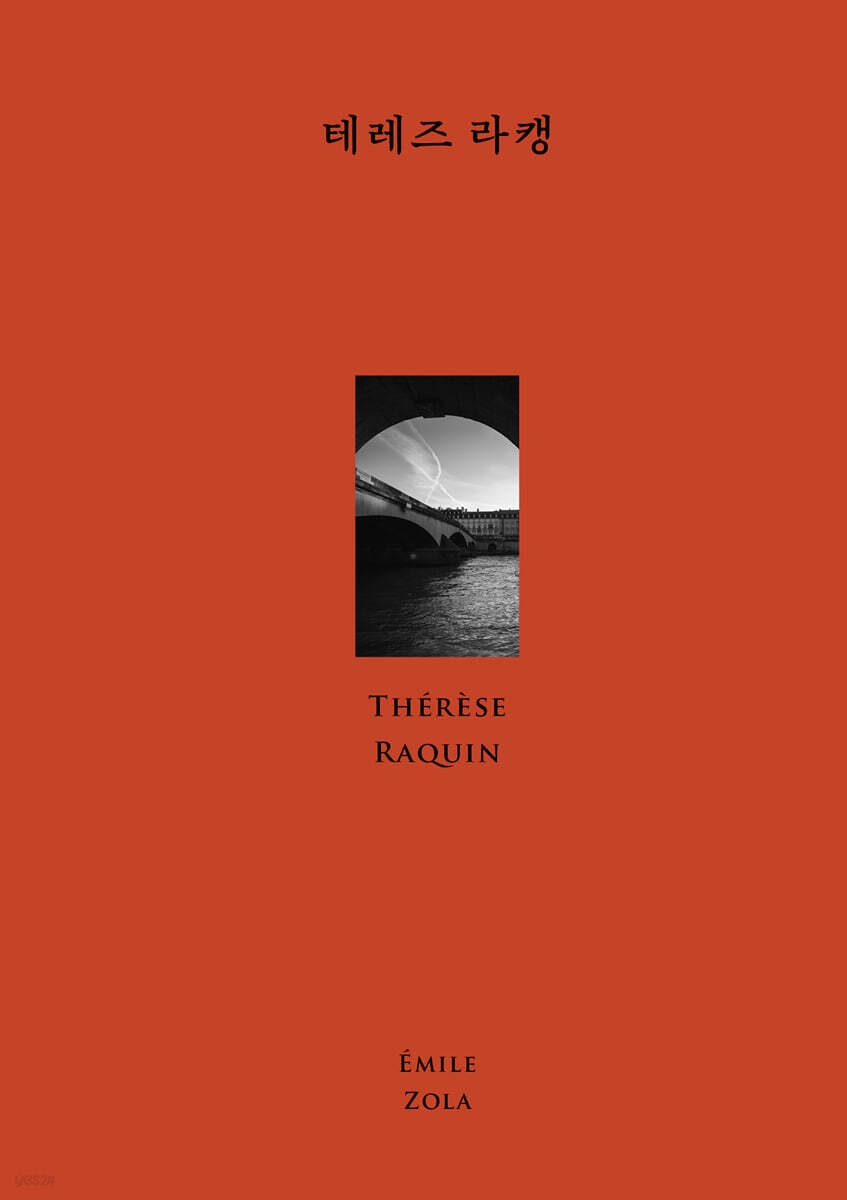
Therese Raquin
 |
Description
Book Introduction
· “The moment I read it, I wanted to make it into a movie.” _Park Chan-wook
· Émile Zola's controversial work that marked the beginning of naturalistic literature, and the original novel of the film "Die Fledermaus"
· Unstoppable descriptions and groundbreaking story that will keep you glued to your screen for even a moment
· Includes a preface by reporter Da-Hye Lee from Cine21!
The story of Thérèse, who had to marry her sickly cousin Camille, who grew up with her, and Laurent, Camille's colleague who fell in a forbidden love with Thérèse, and their destruction driven by a tangled web of hatred and lust.
"Thérèse Raquin" is considered a masterpiece by the great French writer Émile Zola, who established the foundation of naturalistic literature based on realism, as it depicts human desire with a meticulous and persistent gaze.
At the time of publication, it was criticized for its sensational subject matter, including adultery and murder. However, the author added a preface to the second edition that directly refuted such criticism, further solidifying his literary theory.
As the author said, "I wanted to study temperament, not character," this work deeply explores the inner self of human beings by going against their actions, and it became the prelude to the "Rougon-Macquart series," which later elevated Émile Zola to the ranks of masters.
It vividly portrays the weak and destructive side of human nature, and is the original work of director Park Chan-wook's film "Thirst." It is a masterpiece of the times that is constantly being reborn into plays, musicals, and operas.
· Émile Zola's controversial work that marked the beginning of naturalistic literature, and the original novel of the film "Die Fledermaus"
· Unstoppable descriptions and groundbreaking story that will keep you glued to your screen for even a moment
· Includes a preface by reporter Da-Hye Lee from Cine21!
The story of Thérèse, who had to marry her sickly cousin Camille, who grew up with her, and Laurent, Camille's colleague who fell in a forbidden love with Thérèse, and their destruction driven by a tangled web of hatred and lust.
"Thérèse Raquin" is considered a masterpiece by the great French writer Émile Zola, who established the foundation of naturalistic literature based on realism, as it depicts human desire with a meticulous and persistent gaze.
At the time of publication, it was criticized for its sensational subject matter, including adultery and murder. However, the author added a preface to the second edition that directly refuted such criticism, further solidifying his literary theory.
As the author said, "I wanted to study temperament, not character," this work deeply explores the inner self of human beings by going against their actions, and it became the prelude to the "Rougon-Macquart series," which later elevated Émile Zola to the ranks of masters.
It vividly portrays the weak and destructive side of human nature, and is the original work of director Park Chan-wook's film "Thirst." It is a masterpiece of the times that is constantly being reborn into plays, musicals, and operas.
- You can preview some of the book's contents.
Preview
index
Opening remarks · 6
Desire, and you shall obtain | Da-Hye Lee
Author's Preface · 15
Thérèse Raquin · 25
Translator's Note · 381
A few things missing from "Thérèse Raquin," which shakes us up
Desire, and you shall obtain | Da-Hye Lee
Author's Preface · 15
Thérèse Raquin · 25
Translator's Note · 381
A few things missing from "Thérèse Raquin," which shakes us up
Detailed image
.jpg)
Into the book
As you follow the banks of the Seine River and reach the end of the Guénégo, you will come across the Pont Neuf Passage.
---From the "first sentence"
For fifteen long years, Madame Raquin fought against a series of terrible illnesses that threatened to take her son from her arms.
And with the power of patience, nursing, and loving care, he overcame all his illnesses.
Camille, who survived the brink of death, always trembled like an aspen leaf due to all the pain that repeatedly tormented him even as an adult.
--- p.34
Therese had never seen a man so manly before.
So I was secretly surprised to see Laurent, who was tall, strong, and had a refreshing appearance.
Therese looked with secret admiration at his smooth forehead, his full cheeks, his red lips, his smooth, rosy face, visible through his thick, stiff black hair.
Then, for a moment, my gaze stopped at the nape of his neck.
The thick, short, oily neck looked strong.
Therese's gaze dipped lower and lingered for a long time on the man's thick hands, neatly placed on his lap.
--- p.61
But one day, Madame Raquin came up, worried that her niece might be sick.
It had been almost three hours since Therese had gone upstairs.
Therese had become so bold as to leave the door of her bedroom door unlocked.
--- p.86
The boat slowly entered the narrow, dark tributary between the two islands.
Beyond some island, the faint sound of boatmen singing, as if going up the Seine, could be heard.
There was no one far upstream.
At that moment, Laurent suddenly jumped up from his seat and grabbed Camille's waist with both arms.
--- p.131
For some time now, Therese has been acting like she has been suffering from a severe fever.
He was strangely capricious, like a boiling pot of porridge, and he would laugh and cry for no reason, showing an unpredictable behavior.
He was even more frightened by this unstable attitude because he had some idea of what was causing Therese's confusion and anxiety.
--- p.177
The thought that they had to be careful tore their bodies apart.
All we did was hold hands occasionally or share a short kiss.
Even after murdering Camille, when they were once again consumed by lust, they desperately wanted each other, but they suppressed their desires while waiting for the night of their wedding, when it could be legally recognized.
And finally, that day has come.
--- p.229
Fearing that such a miserable day would come, they timidly enjoyed their last happiness with anxious hearts.
I kept telling myself that today might be my last, and I entered the store, trying to keep a calm and gentle expression on my face while trembling with anxiety.
For over a year, they had not only lived with such anxiety and fear, but they could not even enjoy the game with peace of mind in the face of Madame Raquin's tears and Thérèse's silence.
--- p.264
The thought of going into the grave without knowing the ending suddenly made the thought of suicide seem foolish.
If I die like this now, I will suffer forever in the cold, desolate ground, never knowing what punishment the perpetrators received.
To sleep soundly, I needed to savor the joy of having taken revenge.
Madame Raquin needed to take into the ground the dream that would satisfy her hatred, the dream that would last forever.
He accepted the food his nephew offered him.
---From the "first sentence"
For fifteen long years, Madame Raquin fought against a series of terrible illnesses that threatened to take her son from her arms.
And with the power of patience, nursing, and loving care, he overcame all his illnesses.
Camille, who survived the brink of death, always trembled like an aspen leaf due to all the pain that repeatedly tormented him even as an adult.
--- p.34
Therese had never seen a man so manly before.
So I was secretly surprised to see Laurent, who was tall, strong, and had a refreshing appearance.
Therese looked with secret admiration at his smooth forehead, his full cheeks, his red lips, his smooth, rosy face, visible through his thick, stiff black hair.
Then, for a moment, my gaze stopped at the nape of his neck.
The thick, short, oily neck looked strong.
Therese's gaze dipped lower and lingered for a long time on the man's thick hands, neatly placed on his lap.
--- p.61
But one day, Madame Raquin came up, worried that her niece might be sick.
It had been almost three hours since Therese had gone upstairs.
Therese had become so bold as to leave the door of her bedroom door unlocked.
--- p.86
The boat slowly entered the narrow, dark tributary between the two islands.
Beyond some island, the faint sound of boatmen singing, as if going up the Seine, could be heard.
There was no one far upstream.
At that moment, Laurent suddenly jumped up from his seat and grabbed Camille's waist with both arms.
--- p.131
For some time now, Therese has been acting like she has been suffering from a severe fever.
He was strangely capricious, like a boiling pot of porridge, and he would laugh and cry for no reason, showing an unpredictable behavior.
He was even more frightened by this unstable attitude because he had some idea of what was causing Therese's confusion and anxiety.
--- p.177
The thought that they had to be careful tore their bodies apart.
All we did was hold hands occasionally or share a short kiss.
Even after murdering Camille, when they were once again consumed by lust, they desperately wanted each other, but they suppressed their desires while waiting for the night of their wedding, when it could be legally recognized.
And finally, that day has come.
--- p.229
Fearing that such a miserable day would come, they timidly enjoyed their last happiness with anxious hearts.
I kept telling myself that today might be my last, and I entered the store, trying to keep a calm and gentle expression on my face while trembling with anxiety.
For over a year, they had not only lived with such anxiety and fear, but they could not even enjoy the game with peace of mind in the face of Madame Raquin's tears and Thérèse's silence.
--- p.264
The thought of going into the grave without knowing the ending suddenly made the thought of suicide seem foolish.
If I die like this now, I will suffer forever in the cold, desolate ground, never knowing what punishment the perpetrators received.
To sleep soundly, I needed to savor the joy of having taken revenge.
Madame Raquin needed to take into the ground the dream that would satisfy her hatred, the dream that would last forever.
He accepted the food his nephew offered him.
--- p.346
Publisher's Review
A tragedy brought about by two souls consumed by forbidden desire and madness.
A bold narrative and groundbreaking story that will keep you glued to your screen for even a moment.
The very work that served as the motif for the movie “Thirst”!
“As soon as I read ‘Therese Raquin,’ I knew I wanted to make it into a film.” _Park Chan-wook
Left in the care of her aunt since childhood, Thérèse grows up with her sickly cousin Camille, suppressing her raging desires and living indifferently according to her aunt's will.
Madame Raquin, who watched Thérèse silently stay by the sick Camille's side, decided to marry them, hoping that Thérèse would fill her void in the future, and thus began their loveless marriage.
One day, after moving to the 'Pont Neuf Passage' and living an ordinary life, Camille's old friend Laurent visits the house, Thérèse's numb life begins to turn upside down.
Therese and Laurent, who are strongly attracted to each other, develop a relationship that satisfies their physical desires, and decide to kill Camille, who stands in their way, by drowning her in the Seine River.
But where desire has disappeared, only fear and anxiety remain.
"Thérèse Raquin," which delves into the dark side of human psychology and the dark side of desire, is a work filled with the realistic descriptions and explicit tone characteristic of Émile Zola, a master of naturalistic literature.
The character's neurotic temperament adds tension to the incident, and the spatial background of 'Passage', which has the light and dark of a big city, creates a cold and melancholic atmosphere.
The author's overwhelming writing ability, which coolly unfolds provocative material through these elements, instantly draws the reader into the story.
Director Park Chan-wook, who produced the 2009 film “Thirst” based on “Thérèse Raquin,” said, “My style is to find answers by experiencing moral dilemmas in extreme situations,” and “I wanted to turn it into a film the moment I read it.”
This work, which has been read and reread by countless readers over a long period of time and has been recognized for its artistic value, is a masterpiece among masterpieces that continues to inspire countless creators and is constantly being reborn in various forms.
Émile Zola's cold and persistent gaze on humanity
An important first step in naturalistic literature
“I simply applied analytical methods to two living bodies, much like a coroner performing an autopsy on a corpse.”
_From the “Author’s Preface” attached to the second edition in 1868
"Thérèse Raquin" is an important work that marks the beginning of naturalistic literature, hinting at the monumental masterpiece "The Rougon-Macquart Series" that later elevated Émile Zola to the ranks of masters.
However, when it was published in 1867, it was criticized by the public for its provocative subject matter, groundbreaking narrative, and explicit descriptions.
Critics slammed the work, calling it immoral and obscene, and claiming the author was "pleasingly enjoying pornography."
In response, Émile Zola, seeing that his work was being misinterpreted contrary to his intentions, added a preface to the second edition directly refuting the critics' opinions.
In this preface, the author clearly states his intention in writing the work, saying that he “wanted to study temperament, not character” and that he “applied analytical methods to two living bodies, as a coroner does an autopsy on a corpse.”
Furthermore, he clearly revealed his own thoughts based on natural science, which seemed to foreshadow the naturalistic literary world that Émile Zola would soon establish in his own unique way.
Reporter Da-Hye Lee, who wrote the book's opening remarks, says, "If this novel makes readers feel uncomfortable... it's because it forces them to open their covered eyes."
Émile Zola's novels are not made up of only beautiful scenes.
Because it delves deeper into human nature, which is like an unknown territory and a forbidden world.
But that is precisely why it offers insight into life and allows us to look at reality from various perspectives.
"Thérèse Raquin," which contains Zola's sharp gaze on humanity, will remain a meaningful work for us living in the present.
Literature of the Century in Modern Translation
Willbook Classic's sixth series, the 'Fireworks Collection'
The classic masterpieces 『The Awakening』, 『Thérèse Raquin』, and 『Their Eyes Were Watching God』, which contain stories of women escaping from untrue love and facing their true selves, have been reborn as the 'Spark Collection'.
These works explore the complex emotions of love and deeply portray the inner lives of women who dream of a free life, transcending the barriers of time and shining a new light.
Although their groundbreaking subject matter caused much controversy in their time, their literary achievements were only rediscovered in modern times.
The true nature of love, not just beauty, amidst human desire and agony, and the narrative of a woman who sets out in search of the object of her own desire, not the desires dictated by the outside world, even if it ultimately leads to destruction, will provide readers with food for thought, encompassing both past and present.
Discover works that have left a significant mark on the history of women's literature, through Willbook Classic's delicate and modern translation, along with expert forewords that closely connect the work and the reader.
A bold narrative and groundbreaking story that will keep you glued to your screen for even a moment.
The very work that served as the motif for the movie “Thirst”!
“As soon as I read ‘Therese Raquin,’ I knew I wanted to make it into a film.” _Park Chan-wook
Left in the care of her aunt since childhood, Thérèse grows up with her sickly cousin Camille, suppressing her raging desires and living indifferently according to her aunt's will.
Madame Raquin, who watched Thérèse silently stay by the sick Camille's side, decided to marry them, hoping that Thérèse would fill her void in the future, and thus began their loveless marriage.
One day, after moving to the 'Pont Neuf Passage' and living an ordinary life, Camille's old friend Laurent visits the house, Thérèse's numb life begins to turn upside down.
Therese and Laurent, who are strongly attracted to each other, develop a relationship that satisfies their physical desires, and decide to kill Camille, who stands in their way, by drowning her in the Seine River.
But where desire has disappeared, only fear and anxiety remain.
"Thérèse Raquin," which delves into the dark side of human psychology and the dark side of desire, is a work filled with the realistic descriptions and explicit tone characteristic of Émile Zola, a master of naturalistic literature.
The character's neurotic temperament adds tension to the incident, and the spatial background of 'Passage', which has the light and dark of a big city, creates a cold and melancholic atmosphere.
The author's overwhelming writing ability, which coolly unfolds provocative material through these elements, instantly draws the reader into the story.
Director Park Chan-wook, who produced the 2009 film “Thirst” based on “Thérèse Raquin,” said, “My style is to find answers by experiencing moral dilemmas in extreme situations,” and “I wanted to turn it into a film the moment I read it.”
This work, which has been read and reread by countless readers over a long period of time and has been recognized for its artistic value, is a masterpiece among masterpieces that continues to inspire countless creators and is constantly being reborn in various forms.
Émile Zola's cold and persistent gaze on humanity
An important first step in naturalistic literature
“I simply applied analytical methods to two living bodies, much like a coroner performing an autopsy on a corpse.”
_From the “Author’s Preface” attached to the second edition in 1868
"Thérèse Raquin" is an important work that marks the beginning of naturalistic literature, hinting at the monumental masterpiece "The Rougon-Macquart Series" that later elevated Émile Zola to the ranks of masters.
However, when it was published in 1867, it was criticized by the public for its provocative subject matter, groundbreaking narrative, and explicit descriptions.
Critics slammed the work, calling it immoral and obscene, and claiming the author was "pleasingly enjoying pornography."
In response, Émile Zola, seeing that his work was being misinterpreted contrary to his intentions, added a preface to the second edition directly refuting the critics' opinions.
In this preface, the author clearly states his intention in writing the work, saying that he “wanted to study temperament, not character” and that he “applied analytical methods to two living bodies, as a coroner does an autopsy on a corpse.”
Furthermore, he clearly revealed his own thoughts based on natural science, which seemed to foreshadow the naturalistic literary world that Émile Zola would soon establish in his own unique way.
Reporter Da-Hye Lee, who wrote the book's opening remarks, says, "If this novel makes readers feel uncomfortable... it's because it forces them to open their covered eyes."
Émile Zola's novels are not made up of only beautiful scenes.
Because it delves deeper into human nature, which is like an unknown territory and a forbidden world.
But that is precisely why it offers insight into life and allows us to look at reality from various perspectives.
"Thérèse Raquin," which contains Zola's sharp gaze on humanity, will remain a meaningful work for us living in the present.
Literature of the Century in Modern Translation
Willbook Classic's sixth series, the 'Fireworks Collection'
The classic masterpieces 『The Awakening』, 『Thérèse Raquin』, and 『Their Eyes Were Watching God』, which contain stories of women escaping from untrue love and facing their true selves, have been reborn as the 'Spark Collection'.
These works explore the complex emotions of love and deeply portray the inner lives of women who dream of a free life, transcending the barriers of time and shining a new light.
Although their groundbreaking subject matter caused much controversy in their time, their literary achievements were only rediscovered in modern times.
The true nature of love, not just beauty, amidst human desire and agony, and the narrative of a woman who sets out in search of the object of her own desire, not the desires dictated by the outside world, even if it ultimately leads to destruction, will provide readers with food for thought, encompassing both past and present.
Discover works that have left a significant mark on the history of women's literature, through Willbook Classic's delicate and modern translation, along with expert forewords that closely connect the work and the reader.
GOODS SPECIFICS
- Date of issue: October 2, 2023
- Format: Hardcover book binding method guide
- Page count, weight, size: 388 pages | 124*178*30mm
- ISBN13: 9791155816400
- ISBN10: 1155816404
You may also like
카테고리
korean


korean

![GQ KOREA Mark (Monthly): December [2025]](http://librairie.coreenne.fr/cdn/shop/files/8ef265dbbfbf186523ed75ba7319009d.jpg?v=1765340328&width=3840)


