

Resurrection 1
 |
Description
Book Introduction
Tolstoy, the most 'contemporary' writer of all time
It is a problematic work that exposes the irrational social structure and religious contradictions of 19th century Russia.
A masterpiece of the ages, exploring the possibility of resurrection in "The Shaking Man."
“Humans are like rivers.
Water is the same and unchanging wherever you are.
But every river is narrow and fast, and then widens again.
It becomes calm, clear, cool, cloudy, and warm.
“Humans are like that too.”
A revised edition of "Resurrection," by Leo Tolstoy, Russia's leading author, has been published in Minumsa's World Literature Collection. Translator Yeon Jin-hee, who showcased her youthful and delicate sensibility through "Anna Karenina" and "War and Peace," has created a new readership for Russian classics, has been in charge of the translation.
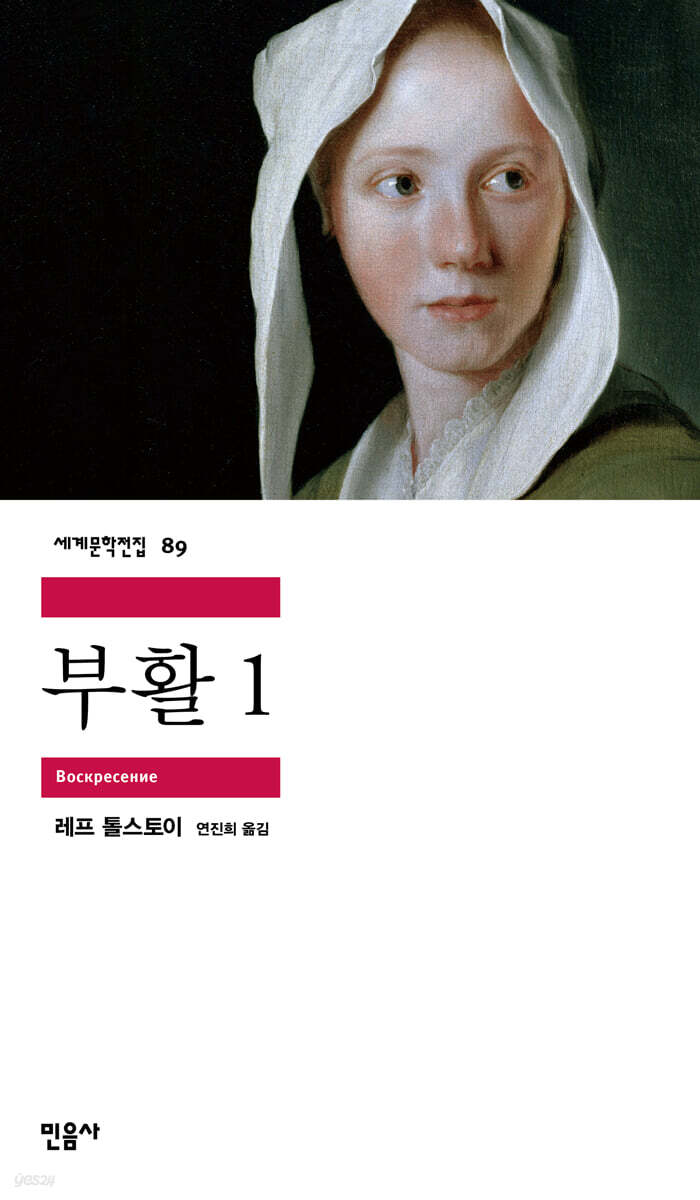
The illustrations by Leonid Pasternak, the father of Russian author Boris Pasternak, who is well known for his novel Doctor Zhivago, and a famous painter, have been added to help readers understand and enjoy the book.
"Resurrection" is Tolstoy's masterpiece, completed after he was over seventy. It is an homage to 19th-century Russian literature, including Gogol, Pushkin, and Dostoevsky, and contains the ultimate insight into humanity and salvation that connects with "War and Peace" and "Anna Karenina."
While Tolstoy points out the irrational social structure and religious contradictions of 19th-century Russia, he also discovers the possibility of spiritual 'resurrection' in the human figure shaken by love for others.
It is a problematic work that exposes the irrational social structure and religious contradictions of 19th century Russia.
A masterpiece of the ages, exploring the possibility of resurrection in "The Shaking Man."
“Humans are like rivers.
Water is the same and unchanging wherever you are.
But every river is narrow and fast, and then widens again.
It becomes calm, clear, cool, cloudy, and warm.
“Humans are like that too.”
A revised edition of "Resurrection," by Leo Tolstoy, Russia's leading author, has been published in Minumsa's World Literature Collection. Translator Yeon Jin-hee, who showcased her youthful and delicate sensibility through "Anna Karenina" and "War and Peace," has created a new readership for Russian classics, has been in charge of the translation.
The illustrations by Leonid Pasternak, the father of Russian author Boris Pasternak, who is well known for his novel Doctor Zhivago, and a famous painter, have been added to help readers understand and enjoy the book.
"Resurrection" is Tolstoy's masterpiece, completed after he was over seventy. It is an homage to 19th-century Russian literature, including Gogol, Pushkin, and Dostoevsky, and contains the ultimate insight into humanity and salvation that connects with "War and Peace" and "Anna Karenina."
While Tolstoy points out the irrational social structure and religious contradictions of 19th-century Russia, he also discovers the possibility of spiritual 'resurrection' in the human figure shaken by love for others.
- You can preview some of the book's contents.
Preview
index
Part 1
Part 2 (Part 1)
Part 2 (Part 1)
Into the book
As soon as Katyusha entered the room, or even a white apron was seen in the distance, everything seemed to be bathed in sunlight for Nekhlyudov, and everything seemed more interesting, more enjoyable, more meaningful.
Life has become much more enjoyable.
Katyusha experienced the same thing.
--- p.104
And all these terrible changes happened to him simply because he stopped trusting himself and started trusting others.
The reason he stopped believing in himself and started believing in others was because it was too difficult to live while believing in himself.
Believing in myself meant almost always having to go against it and ask myself all sorts of questions, not for the sake of my animalistic self, which seeks light pleasures.
--- p.110
And there are two important characteristics to her entire existence.
It was not only directed at him, but he knew it was a pure, unstained love directed at everyone and everything, not only good things, but even the beggar she had kissed, all that existed in the world.
--- p.130
"What a remarkable coincidence! This lawsuit had to fall on my turn! I, who have never seen her in a decade, am here in the dock, facing her! And how will this all end? Oh, if only it would be over soon!"
--- p.171
Then suddenly it occurred to him that the hatred he had felt lately towards people, especially towards the Duke, Sofya Vasilyevna, Missy and Korney, was nothing other than hatred towards himself.
And what was surprising was that in the very feeling of acknowledging one's own baseness there was something morbid yet joyful and comforting.
--- p.223
Everyone lived only for themselves and their own pleasure, and all talk about God and goodness was a deception.
Even if you wondered why everything in this world was made so evil, why everyone did evil to one another and suffered, you should not think about it.
When you feel depressed, you can smoke a cigarette or drink alcohol, and most importantly, you can make love to a man.
Then it passes.
--- p.284
He thought back to everything he had seen today.
A woman who raises her children alone, her husband imprisoned for secretly cutting down trees in his, that is, Nekhlyudov's, forest, a terrible Matryona who thinks, or at least says, that women in her situation should be their master's mistresses...
I also thought of her attitude toward children, the way she took them to orphanages, and the unfortunate baby who was dying of malnutrition, wearing a patchwork hat and smiling like an old woman.
--- p.470
At that very moment, he remembered the prison, the shaved head, the cells, the foul smell, the chains, and the indiscriminate luxury enjoyed by himself and all the nobles in the city and the capital.
Everything was so clear, beyond any doubt.
Life has become much more enjoyable.
Katyusha experienced the same thing.
--- p.104
And all these terrible changes happened to him simply because he stopped trusting himself and started trusting others.
The reason he stopped believing in himself and started believing in others was because it was too difficult to live while believing in himself.
Believing in myself meant almost always having to go against it and ask myself all sorts of questions, not for the sake of my animalistic self, which seeks light pleasures.
--- p.110
And there are two important characteristics to her entire existence.
It was not only directed at him, but he knew it was a pure, unstained love directed at everyone and everything, not only good things, but even the beggar she had kissed, all that existed in the world.
--- p.130
"What a remarkable coincidence! This lawsuit had to fall on my turn! I, who have never seen her in a decade, am here in the dock, facing her! And how will this all end? Oh, if only it would be over soon!"
--- p.171
Then suddenly it occurred to him that the hatred he had felt lately towards people, especially towards the Duke, Sofya Vasilyevna, Missy and Korney, was nothing other than hatred towards himself.
And what was surprising was that in the very feeling of acknowledging one's own baseness there was something morbid yet joyful and comforting.
--- p.223
Everyone lived only for themselves and their own pleasure, and all talk about God and goodness was a deception.
Even if you wondered why everything in this world was made so evil, why everyone did evil to one another and suffered, you should not think about it.
When you feel depressed, you can smoke a cigarette or drink alcohol, and most importantly, you can make love to a man.
Then it passes.
--- p.284
He thought back to everything he had seen today.
A woman who raises her children alone, her husband imprisoned for secretly cutting down trees in his, that is, Nekhlyudov's, forest, a terrible Matryona who thinks, or at least says, that women in her situation should be their master's mistresses...
I also thought of her attitude toward children, the way she took them to orphanages, and the unfortunate baby who was dying of malnutrition, wearing a patchwork hat and smiling like an old woman.
--- p.470
At that very moment, he remembered the prison, the shaved head, the cells, the foul smell, the chains, and the indiscriminate luxury enjoyed by himself and all the nobles in the city and the capital.
Everything was so clear, beyond any doubt.
--- p.470
Publisher's Review
Fallen Man Dreams of Spiritual Resurrection
“In the love between a man and a woman, there is always a moment when that love reaches its peak, when there is no consciousness, no reason, and not even sensuality.
“That Easter night was such a moment for Nekhlyudov.” (Volume 1, p. 130)
Prince Nekhlyudov sits on the jury at Katyusha's trial, where she is accused of murder.
During his college days, the Duke had a pure affection for Katyusha.
However, when they reunited as soldiers, he manipulated Katyusha's emotions and body as he had learned from other men, and gave her money, after which Katyusha fell into an endless abyss of distrust towards humans.
In the end, even in the retrial, the innocent are sentenced to prison due to irresponsible lawyers and jurors.
Witnessing this scene, Nekhlyudov, burdened by the guilt that had been weighing on him for a long time, begins to exert all his energy to get Katyusha out of prison.
A positive influence, a motivation to write
It is said that Tolstoy wrote "Resurrection" to help the Dukhoborites who were being oppressed by the government.
Dukhoborism was a Christian sect that existed in Russia since the 18th century. It denied the church and refused to pay taxes and serve in the military, and was therefore persecuted by the government.
During the government's forced relocation of these people, abuse and violence were committed, and upon hearing this news, Tolstoy made every effort to stop the violence, including appealing to international public opinion.
In particular, he broke his rule of not receiving royalties for works written after 1881 and desperately finished "Resurrection," which he was writing, and signed a publishing contract with the weekly magazine "Niva" for an advance payment of 12,000 rubles, which he used to cover his travel expenses.
In this way, 『Resurrection』 can be said to be a masterpiece of Tolstoy's later years, which began with questions about human society from the writing process, but still mobilized all of his abilities, believing in its positive influence.
Being a 'wavering human' is enough
“After that night, a completely new life began for Nekhlyudov.
Not so much because he had entered into new living conditions, but because everything that happened from then on took on a completely different meaning for him than before.
“The future will show how this new period of life will end.” (Volume 2, p. 446)
None of the characters in 'Resurrection' are absolutely good.
This is true not only of Nekhlyudov, who committed an unforgivable sin against the woman he loved, but also of Katyusha, who chose a life in a glamorous brothel instead of hard labor.
The corruption of society committed in the name of law and institutions is far more chronic and widespread.
Nevertheless, Tolstoy finds a faint possibility of spiritual 'resurrection' in the human figure shaken by shame in conscience and love for others.
And instead of exaggerating this faint light, it reveals a passionate critique and affection for human existence by describing it as a fragmented and unstable entity.
“In the love between a man and a woman, there is always a moment when that love reaches its peak, when there is no consciousness, no reason, and not even sensuality.
“That Easter night was such a moment for Nekhlyudov.” (Volume 1, p. 130)
Prince Nekhlyudov sits on the jury at Katyusha's trial, where she is accused of murder.
During his college days, the Duke had a pure affection for Katyusha.
However, when they reunited as soldiers, he manipulated Katyusha's emotions and body as he had learned from other men, and gave her money, after which Katyusha fell into an endless abyss of distrust towards humans.
In the end, even in the retrial, the innocent are sentenced to prison due to irresponsible lawyers and jurors.
Witnessing this scene, Nekhlyudov, burdened by the guilt that had been weighing on him for a long time, begins to exert all his energy to get Katyusha out of prison.
A positive influence, a motivation to write
It is said that Tolstoy wrote "Resurrection" to help the Dukhoborites who were being oppressed by the government.
Dukhoborism was a Christian sect that existed in Russia since the 18th century. It denied the church and refused to pay taxes and serve in the military, and was therefore persecuted by the government.
During the government's forced relocation of these people, abuse and violence were committed, and upon hearing this news, Tolstoy made every effort to stop the violence, including appealing to international public opinion.
In particular, he broke his rule of not receiving royalties for works written after 1881 and desperately finished "Resurrection," which he was writing, and signed a publishing contract with the weekly magazine "Niva" for an advance payment of 12,000 rubles, which he used to cover his travel expenses.
In this way, 『Resurrection』 can be said to be a masterpiece of Tolstoy's later years, which began with questions about human society from the writing process, but still mobilized all of his abilities, believing in its positive influence.
Being a 'wavering human' is enough
“After that night, a completely new life began for Nekhlyudov.
Not so much because he had entered into new living conditions, but because everything that happened from then on took on a completely different meaning for him than before.
“The future will show how this new period of life will end.” (Volume 2, p. 446)
None of the characters in 'Resurrection' are absolutely good.
This is true not only of Nekhlyudov, who committed an unforgivable sin against the woman he loved, but also of Katyusha, who chose a life in a glamorous brothel instead of hard labor.
The corruption of society committed in the name of law and institutions is far more chronic and widespread.
Nevertheless, Tolstoy finds a faint possibility of spiritual 'resurrection' in the human figure shaken by shame in conscience and love for others.
And instead of exaggerating this faint light, it reveals a passionate critique and affection for human existence by describing it as a fragmented and unstable entity.
GOODS SPECIFICS
- Publication date: December 27, 2019
- Page count, weight, size: 484 pages | 530g | 132*225*24mm
- ISBN13: 9788937443664
- ISBN10: 893744366X
You may also like
카테고리
korean


korean

![GQ KOREA Mark (Monthly): December [2025]](http://librairie.coreenne.fr/cdn/shop/files/8ef265dbbfbf186523ed75ba7319009d.jpg?v=1765340328&width=3840)


