

2026 Gas Engineer Written Exam
 |
Description
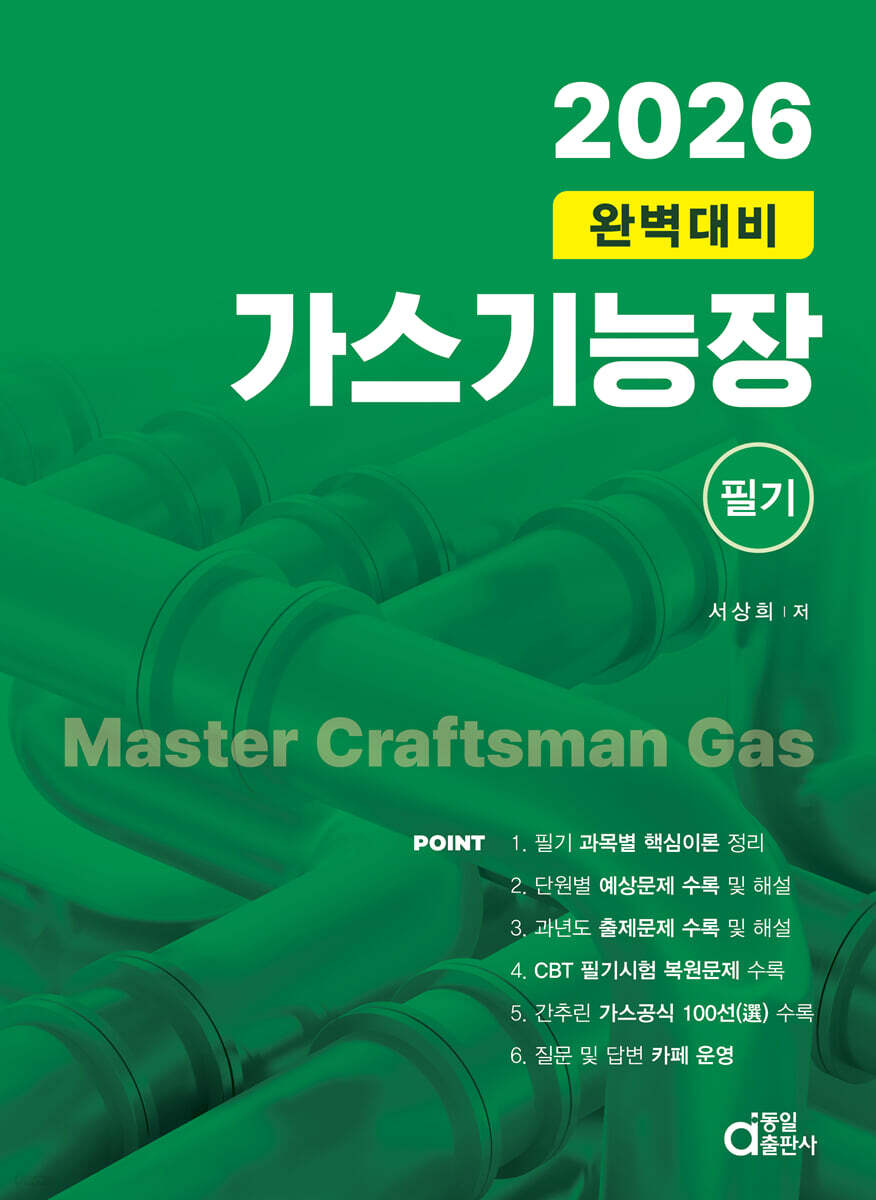
Book Introduction
The author has prepared related materials and lectures on gas on the podium for many years, and has since published the Gas Functional Engineer textbook in 2009 with the same publisher. After that, he has published a completely revised edition of the Gas Functional Engineer written textbook by reorganizing the theoretical content and expected questions.
This book is divided into four subjects: gas theory, gas manufacturing and equipment, gas-related laws and safety management, and industrial management, in accordance with the newly revised Korea Human Resources Development Institute of Korea's gas technician written exam criteria. It organizes the theory of each unit and analyzes recent exam questions to include expected questions with detailed explanations.
From the 45th exam questions in 2009 to the most recent exam questions, detailed explanations are included to help you understand recent exam trends and prepare for the exam.
In addition, as we are in the process of converting from engineering units to SI units, we have prevented confusion by explaining both engineering units and SI units in the contents and problems of each unit, and included a selection of 100 gas-related formulas as an appendix so that they can be applied to calculation problems.
This book is divided into four subjects: gas theory, gas manufacturing and equipment, gas-related laws and safety management, and industrial management, in accordance with the newly revised Korea Human Resources Development Institute of Korea's gas technician written exam criteria. It organizes the theory of each unit and analyzes recent exam questions to include expected questions with detailed explanations.
From the 45th exam questions in 2009 to the most recent exam questions, detailed explanations are included to help you understand recent exam trends and prepare for the exam.
In addition, as we are in the process of converting from engineering units to SI units, we have prevented confusion by explaining both engineering units and SI units in the contents and problems of each unit, and included a selection of 100 gas-related formulas as an appendix so that they can be applied to calculation problems.
index
Part 1: Gas Theory
Chapter 1 Properties of Gases
1.
Types and classification of high-pressure gases
2.
Fundamentals of Thermodynamics
3.
Basic laws of gases
4.
Reaction rate and equilibrium
○ Expected Questions
Chapter 2: Properties of Gases
1.
Combustion phenomenon
2.
Combustion calculation
3.
gas explosion
4.
detonations and other explosions
5.
Explosion prevention
○ Expected Questions
Chapter 3 Gas Measurement Equipment
1.
Gas detection method
2.
Gas analysis
3.
measuring instruments
○ Expected Questions
Part 2 Gas Production and Equipment
Chapter 1 Types and Characteristics of High-Pressure Gases
1.
hydrogen (H2)
2.
Oxygen (O2)
3.
Nitrogen (N2)
4.
noble gases
5.
carbon monoxide (CO)
6.
carbon dioxide (CO2)
7.
chlorine (Cl2)
8.
ammonia (NH3)
9.
Acetylene (C2H2)
10.
Methane (CH4)
11.
hydrogen cyanide (HCN)
12.
phosgene (COCl2)
13.
ethylene oxide (C2H4O)
14.
hydrogen sulfide (H2S)
15.
Other gases
16.
Purification of industrial gases
○ Expected Questions
Chapter 2 LPG and City Gas
1. General information about LPG
2.
General information about city gas
○ Expected Questions
Chapter 3 LPG and City Gas Facilities
1. LPG equipment
2.
City gas facilities
○ Expected Questions
Chapter 4 Compressors and Pumps
1.
Compressor
2.
Pump
○ Expected Questions
Chapter 5 Gas Facilities
1.
Materials for high-pressure equipment
2.
General gas production facilities
3.
Corrosion and corrosion protection of pipes
○ Expected Questions
Chapter 6 Structure of Gas Generation Equipment
1.
refrigeration cycle
2.
Gas-liquefaction separation device structure
3.
System and structure of gas-liquefaction separation device
○ Expected Questions
Part 3 Laws and Safety Management
Chapter 1 Gas-Related Laws
1.
High Pressure Gas Safety Management Act
2.
Liquefied Petroleum Gas Safety Management and Business Act
3.
City Gas Business Act
○ Expected Questions
Chapter 2 High-Pressure Gas Safety Management
1.
Storage capacity calculation criteria
2.
Shelter
3.
Standards for high-pressure gas production
4.
High-pressure gas storage and use standards
5.
High-pressure gas equipment manufacturing standards
6.
High-pressure gas transport standards
○ Expected Questions
Chapter 3 Liquefied Petroleum Gas Safety Management
1.
Charging business standards
2.
Liquefied petroleum gas storage and use
3.
Gas appliance manufacturing
○ Expected Questions
Chapter 4 City Gas Safety Management
1.
City gas wholesale business
2.
General city gas business
3.
City gas usage facilities
4.
car charging
○ Expected Questions
Chapter 5 Hydrogen Safety Management
1.
Act on Promotion of Hydrogen Economy and Safety Management
2.
Gas Technology Standards (KGS code)
○ Expected Questions
Part 4 Industrial Management
Chapter 1 General Quality Control
1.
Quality control
2.
Quality cost
3.
standardization
○ Expected Questions
Chapter 2 Statistical Quality Control
1.
Fundamentals of Statistical Methods
2.
Sampling inspection
3.
Management chart
○ Expected Questions
Chapter 3 Production Management
1.
production management
2.
Materials Management
3.
Schedule management
4.
Task Management
5.
Equipment maintenance
6.
Reliability Management
○ Expected Questions
Part 5 Past Year Problems
45th Written Examination [Administered on March 29, 2009]
46th Written Examination [Administered on July 12, 2009]
47th Written Examination [Administered on March 28, 2010]
48th Written Examination [Administered on July 11, 2010]
49th Written Examination [Administered on April 17, 2011]
50th Written Examination [Administered on July 31, 2011]
51st Written Examination [Administered on April 8, 2012]
52nd Written Examination [Administered on July 22, 2012]
53rd Written Examination [Administered on April 14, 2013]
54th Written Examination [Administered on July 21, 2013]
55th Written Examination [Administered on April 6, 2014]
56th Written Examination [Administered on July 20, 2014]
57th Written Examination [Administered on April 4, 2015]
58th Written Examination [Administered on July 19, 2015]
59th Written Examination [Administered on April 2, 2016]
60th Written Examination [Administered on July 10, 2016]
61st Written Examination [Administered on March 5, 2017]
62nd Written Examination [Administered on July 8, 2017]
63rd Written Examination [Administered on March 31, 2018]
Part 6 CBT Restoration Problems
2019 CBT Written Exam Restoration Questions (1)
2019 CBT Written Exam Restoration Questions (2)
2020 CBT Written Exam Restoration Questions (1)
2020 CBT Written Exam Restoration Questions (2)
2021 CBT Written Exam Restoration Questions (1)
2021 CBT Written Exam Restoration Questions (2)
2022 CBT Written Exam Restoration Questions (1)
2022 CBT Written Exam Restoration Questions (2)
2023 CBT Written Exam Restoration Questions (1)
2023 CBT Written Exam Restoration Questions (2)
2024 CBT Written Exam Restoration Questions (1)
2024 CBT Written Exam Restoration Questions (2)
2025 CBT Written Exam Restoration Questions (1)
2025 CBT Written Exam Restoration Questions (2)
supplement
100 Concise Gas Formulas
Types and characteristics of high-pressure gases
Periodic Table of Elements
Chapter 1 Properties of Gases
1.
Types and classification of high-pressure gases
2.
Fundamentals of Thermodynamics
3.
Basic laws of gases
4.
Reaction rate and equilibrium
○ Expected Questions
Chapter 2: Properties of Gases
1.
Combustion phenomenon
2.
Combustion calculation
3.
gas explosion
4.
detonations and other explosions
5.
Explosion prevention
○ Expected Questions
Chapter 3 Gas Measurement Equipment
1.
Gas detection method
2.
Gas analysis
3.
measuring instruments
○ Expected Questions
Part 2 Gas Production and Equipment
Chapter 1 Types and Characteristics of High-Pressure Gases
1.
hydrogen (H2)
2.
Oxygen (O2)
3.
Nitrogen (N2)
4.
noble gases
5.
carbon monoxide (CO)
6.
carbon dioxide (CO2)
7.
chlorine (Cl2)
8.
ammonia (NH3)
9.
Acetylene (C2H2)
10.
Methane (CH4)
11.
hydrogen cyanide (HCN)
12.
phosgene (COCl2)
13.
ethylene oxide (C2H4O)
14.
hydrogen sulfide (H2S)
15.
Other gases
16.
Purification of industrial gases
○ Expected Questions
Chapter 2 LPG and City Gas
1. General information about LPG
2.
General information about city gas
○ Expected Questions
Chapter 3 LPG and City Gas Facilities
1. LPG equipment
2.
City gas facilities
○ Expected Questions
Chapter 4 Compressors and Pumps
1.
Compressor
2.
Pump
○ Expected Questions
Chapter 5 Gas Facilities
1.
Materials for high-pressure equipment
2.
General gas production facilities
3.
Corrosion and corrosion protection of pipes
○ Expected Questions
Chapter 6 Structure of Gas Generation Equipment
1.
refrigeration cycle
2.
Gas-liquefaction separation device structure
3.
System and structure of gas-liquefaction separation device
○ Expected Questions
Part 3 Laws and Safety Management
Chapter 1 Gas-Related Laws
1.
High Pressure Gas Safety Management Act
2.
Liquefied Petroleum Gas Safety Management and Business Act
3.
City Gas Business Act
○ Expected Questions
Chapter 2 High-Pressure Gas Safety Management
1.
Storage capacity calculation criteria
2.
Shelter
3.
Standards for high-pressure gas production
4.
High-pressure gas storage and use standards
5.
High-pressure gas equipment manufacturing standards
6.
High-pressure gas transport standards
○ Expected Questions
Chapter 3 Liquefied Petroleum Gas Safety Management
1.
Charging business standards
2.
Liquefied petroleum gas storage and use
3.
Gas appliance manufacturing
○ Expected Questions
Chapter 4 City Gas Safety Management
1.
City gas wholesale business
2.
General city gas business
3.
City gas usage facilities
4.
car charging
○ Expected Questions
Chapter 5 Hydrogen Safety Management
1.
Act on Promotion of Hydrogen Economy and Safety Management
2.
Gas Technology Standards (KGS code)
○ Expected Questions
Part 4 Industrial Management
Chapter 1 General Quality Control
1.
Quality control
2.
Quality cost
3.
standardization
○ Expected Questions
Chapter 2 Statistical Quality Control
1.
Fundamentals of Statistical Methods
2.
Sampling inspection
3.
Management chart
○ Expected Questions
Chapter 3 Production Management
1.
production management
2.
Materials Management
3.
Schedule management
4.
Task Management
5.
Equipment maintenance
6.
Reliability Management
○ Expected Questions
Part 5 Past Year Problems
45th Written Examination [Administered on March 29, 2009]
46th Written Examination [Administered on July 12, 2009]
47th Written Examination [Administered on March 28, 2010]
48th Written Examination [Administered on July 11, 2010]
49th Written Examination [Administered on April 17, 2011]
50th Written Examination [Administered on July 31, 2011]
51st Written Examination [Administered on April 8, 2012]
52nd Written Examination [Administered on July 22, 2012]
53rd Written Examination [Administered on April 14, 2013]
54th Written Examination [Administered on July 21, 2013]
55th Written Examination [Administered on April 6, 2014]
56th Written Examination [Administered on July 20, 2014]
57th Written Examination [Administered on April 4, 2015]
58th Written Examination [Administered on July 19, 2015]
59th Written Examination [Administered on April 2, 2016]
60th Written Examination [Administered on July 10, 2016]
61st Written Examination [Administered on March 5, 2017]
62nd Written Examination [Administered on July 8, 2017]
63rd Written Examination [Administered on March 31, 2018]
Part 6 CBT Restoration Problems
2019 CBT Written Exam Restoration Questions (1)
2019 CBT Written Exam Restoration Questions (2)
2020 CBT Written Exam Restoration Questions (1)
2020 CBT Written Exam Restoration Questions (2)
2021 CBT Written Exam Restoration Questions (1)
2021 CBT Written Exam Restoration Questions (2)
2022 CBT Written Exam Restoration Questions (1)
2022 CBT Written Exam Restoration Questions (2)
2023 CBT Written Exam Restoration Questions (1)
2023 CBT Written Exam Restoration Questions (2)
2024 CBT Written Exam Restoration Questions (1)
2024 CBT Written Exam Restoration Questions (2)
2025 CBT Written Exam Restoration Questions (1)
2025 CBT Written Exam Restoration Questions (2)
supplement
100 Concise Gas Formulas
Types and characteristics of high-pressure gases
Periodic Table of Elements
Publisher's Review
The Gas Technician Certification started out as a High-Pressure Gas Machinery Technician and a High-Pressure Gas Chemical Technician in 1974, and was later revised to a High-Pressure Gas Technician in 1995 through the consolidation of similar qualifications, and then to a Gas Technician in 1999, leading to its current status.
There are many gas professionals who are interested in and want to take on the challenge of becoming a gas technician while performing tasks such as work management, guidance and supervision of field technicians, field training, and field intermediate management that organically connects management and production levels by obtaining gas qualifications (technician, industrial technician, and technician) and possessing the highest level of gas-related skills.
Accordingly, the author has prepared related materials and lectures on gas from the podium for many years, and since the publication of the 2009 Gas Functional Engineer textbook by the same publisher, he has published a completely revised edition of the Gas Functional Engineer written textbook by reorganizing the theoretical content and expected questions.
This book is structured to focus on the following areas:
First, in accordance with the newly revised Korea Human Resources Development Institute of Korea's written examination standards for gas technicians, we have divided the book into four subjects: gas theory, gas manufacturing and equipment, gas-related laws and safety management, and industrial management. We have organized the theory for each unit and analyzed recent exam questions to include expected questions with detailed explanations.
Second, we have included detailed explanations of questions from the 45th exam in 2009 to the most recent exam, so that you can understand recent trends in exam questions and prepare for the exam.
Third, as we are in the process of converting from engineering units to SI units, we have tried to prevent confusion by explaining both engineering units and SI units in the contents and problems of each unit.
Fourth, we have included a selection of 100 gas-related formulas as an appendix so that they can be applied to calculation problems.
Fifth, the author has opened an Internet cafe where students can share exam information along with questions and answers online.
NAVER Certification Study Group (cafe.naver.com/gas21)
There are many gas professionals who are interested in and want to take on the challenge of becoming a gas technician while performing tasks such as work management, guidance and supervision of field technicians, field training, and field intermediate management that organically connects management and production levels by obtaining gas qualifications (technician, industrial technician, and technician) and possessing the highest level of gas-related skills.
Accordingly, the author has prepared related materials and lectures on gas from the podium for many years, and since the publication of the 2009 Gas Functional Engineer textbook by the same publisher, he has published a completely revised edition of the Gas Functional Engineer written textbook by reorganizing the theoretical content and expected questions.
This book is structured to focus on the following areas:
First, in accordance with the newly revised Korea Human Resources Development Institute of Korea's written examination standards for gas technicians, we have divided the book into four subjects: gas theory, gas manufacturing and equipment, gas-related laws and safety management, and industrial management. We have organized the theory for each unit and analyzed recent exam questions to include expected questions with detailed explanations.
Second, we have included detailed explanations of questions from the 45th exam in 2009 to the most recent exam, so that you can understand recent trends in exam questions and prepare for the exam.
Third, as we are in the process of converting from engineering units to SI units, we have tried to prevent confusion by explaining both engineering units and SI units in the contents and problems of each unit.
Fourth, we have included a selection of 100 gas-related formulas as an appendix so that they can be applied to calculation problems.
Fifth, the author has opened an Internet cafe where students can share exam information along with questions and answers online.
NAVER Certification Study Group (cafe.naver.com/gas21)
GOODS SPECIFICS
- Date of issue: October 1, 2025
- Page count, weight, size: 1,124 pages | 190*260*60mm
- ISBN13: 9788938117113
- ISBN10: 8938117111
You may also like
카테고리
korean


korean

![GQ KOREA Mark (Monthly): December [2025]](http://librairie.coreenne.fr/cdn/shop/files/8ef265dbbfbf186523ed75ba7319009d.jpg?v=1765340328&width=3840)


