

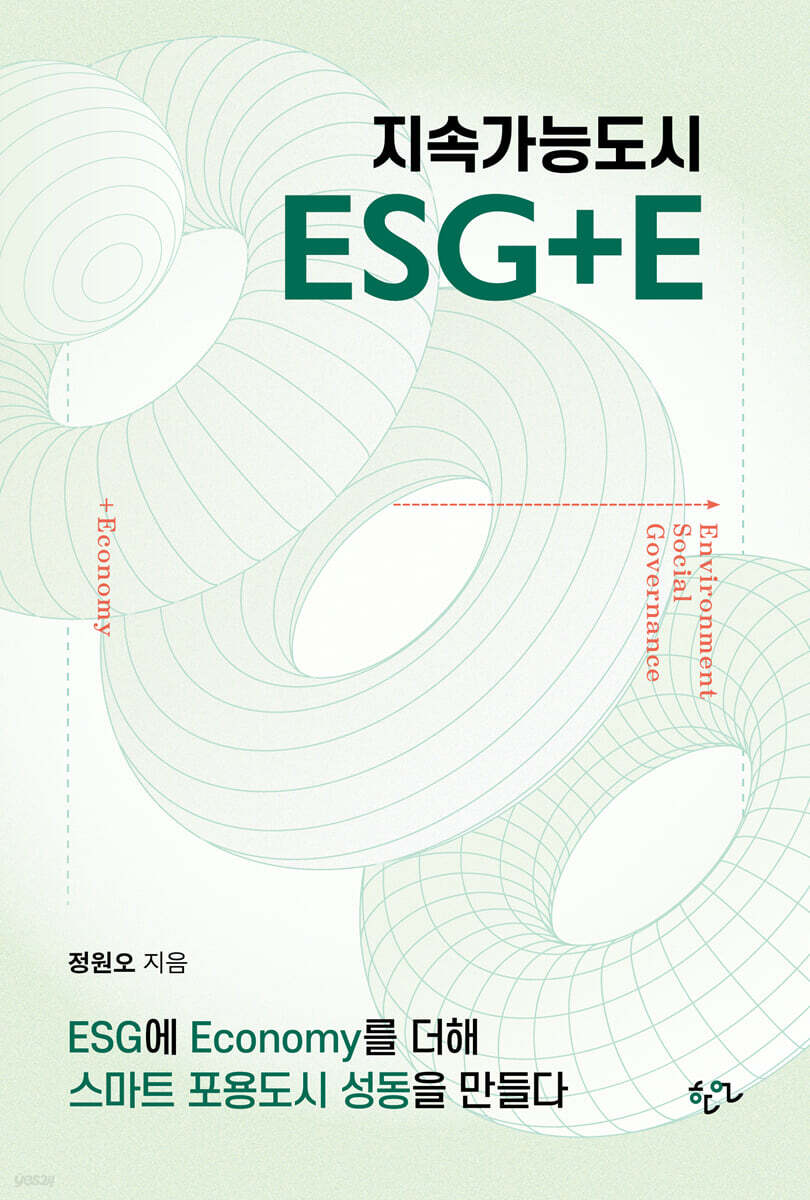
Sustainable City ESG+E
 |
Description
Book Introduction
As climate, economic, and social crises deepen, what must we do to ensure our society's sustainability and development? Global corporations have already declared ESG (Environment, Society, and Governance) as a key action plan.
However, the author, who has long been concerned about urban sustainability as an administrator, believes that this alone is not enough.
We need a new framework called 'ESG+E' that adds 'Economy'.
This is because, in order to seek sustainability in public policy, the sustainability of the economic system must first be guaranteed.
The author states that the three key elements of a sustainable city are innovation, inclusiveness, and resilience.
Cities are sustainable through constant innovation, and this innovation can only continue uninterrupted if it is supported by social inclusion.
Innovation is a "forward force" that creates new technologies and systems to overcome the current crisis, while inclusion is a "supporting force" that prevents social conflict and exclusion that can easily worsen in times of crisis and fosters unity among members of society.
Sustainability, and above all, the more friendly concept of resilience, refers to the ability to 'withstand' various crises that threaten the survival and prosperity of a city.
The author, who has been serving his third term as the mayor of Seongdong-gu, Seoul since taking office in 2014, is the only three-term mayor in Seoul and is considered a leading expert in urban planning and local administration.
In the book, the author first discusses the recurring growth, decline, and regeneration of cities from the 20th century to the present, and how to achieve sustainable cities.
Furthermore, we explored the methodology for creating sustainable cities and examined the practical examples of Seongdong-gu and other cities that have fostered urban sustainability from this perspective.
By following the author's story of overcoming the crises facing our times and seeking a new vision for society, we can envision a hopeful future of sustainable cities.
However, the author, who has long been concerned about urban sustainability as an administrator, believes that this alone is not enough.
We need a new framework called 'ESG+E' that adds 'Economy'.
This is because, in order to seek sustainability in public policy, the sustainability of the economic system must first be guaranteed.
The author states that the three key elements of a sustainable city are innovation, inclusiveness, and resilience.
Cities are sustainable through constant innovation, and this innovation can only continue uninterrupted if it is supported by social inclusion.
Innovation is a "forward force" that creates new technologies and systems to overcome the current crisis, while inclusion is a "supporting force" that prevents social conflict and exclusion that can easily worsen in times of crisis and fosters unity among members of society.
Sustainability, and above all, the more friendly concept of resilience, refers to the ability to 'withstand' various crises that threaten the survival and prosperity of a city.
The author, who has been serving his third term as the mayor of Seongdong-gu, Seoul since taking office in 2014, is the only three-term mayor in Seoul and is considered a leading expert in urban planning and local administration.
In the book, the author first discusses the recurring growth, decline, and regeneration of cities from the 20th century to the present, and how to achieve sustainable cities.
Furthermore, we explored the methodology for creating sustainable cities and examined the practical examples of Seongdong-gu and other cities that have fostered urban sustainability from this perspective.
By following the author's story of overcoming the crises facing our times and seeking a new vision for society, we can envision a hopeful future of sustainable cities.
- You can preview some of the book's contents.
Preview
index
Preface to the Revised Edition
introduction
Part 1: The End of Growth, the City's Future
01 Growing City, Long Shadow
Is growth a given?
Dual self-portrait, between concentration and extinction
Growth vs. Anti-Growth, or a Third Way?
02 Sustainability, a new paradigm for cities
The Urban Paradigm, a Copernican Shift
From Moses to Jacobs and beyond
UN SDGs and the New Urban Agenda
03 Sustainable City: What? How?
Resilience, endurance
Innovation, the power to move forward
Embracing, supporting power
Part 2: Sustainable City Practices, EESG
01 Economy: The charm of the city enjoyed by everyone
Urban Economy Action Plan 1: Bringing People Together
Urban Economy Action Plan 2: Strengthen the City's Attractiveness
Urban Economy Action Plan 3: Maintain Balance
02 Environment: Innovation and Participation to Protect the Earth
Urban Environment Action Plan 1: Shift Perception from Morality to Need
Urban Environment Action Plan 2: Support Eco-Friendly Technological Innovation
Urban Environment Action Plan 3: Activate Resource Recycling and Provide Incentives
03 Social: A Strong Society Supporting Sustainable Cities
Urban Social Action Plan 1: Promote Inclusion
Urban Social Practice Task 2: Establish a Life Cycle-Specific Social Service System
Urban Social Action Task 3: Revitalize the Social Economy
04 Governance: Ten people take one step toward sustainability
City Government Action Plan 1: Achieve rationality and anti-corruption through collective intelligence.
City Government Action Plan 2: Institutionalize Collective Intelligence
City Government Action Plan 3: Encourage the Effectiveness of Participation and Collaboration
Part 3: Sustainable Cities: Between Present and Future
01 Urban Economy: Finding Solutions in Design
Economy, the first clue to a sustainable city
Big cities and small cities: Same goal, different paths
Seongsu-dong Experience: Inclusive Design Drives Innovation
02 Advanced country South Korea, environmental revolution from below
Climate crisis: an environmental and economic problem
South Korea's environmental revolution led by local governments
Seongdong-gu's environmental revolution, together with startups
03 A strong society creates a sustainable city.
Social policies that create society
Social services, local government duties
Seongdong, a smart inclusive city
04 The Stepping Stones to a Sustainable City Are Participation and Cooperation
Collective Intelligence: The Power to Drive Innovation
Activating civic participation, specific agendas, and sufficient education
Seongdong-type governance: a flower blossoming amidst conflict
Americas
Browse the table
Find the picture
introduction
Part 1: The End of Growth, the City's Future
01 Growing City, Long Shadow
Is growth a given?
Dual self-portrait, between concentration and extinction
Growth vs. Anti-Growth, or a Third Way?
02 Sustainability, a new paradigm for cities
The Urban Paradigm, a Copernican Shift
From Moses to Jacobs and beyond
UN SDGs and the New Urban Agenda
03 Sustainable City: What? How?
Resilience, endurance
Innovation, the power to move forward
Embracing, supporting power
Part 2: Sustainable City Practices, EESG
01 Economy: The charm of the city enjoyed by everyone
Urban Economy Action Plan 1: Bringing People Together
Urban Economy Action Plan 2: Strengthen the City's Attractiveness
Urban Economy Action Plan 3: Maintain Balance
02 Environment: Innovation and Participation to Protect the Earth
Urban Environment Action Plan 1: Shift Perception from Morality to Need
Urban Environment Action Plan 2: Support Eco-Friendly Technological Innovation
Urban Environment Action Plan 3: Activate Resource Recycling and Provide Incentives
03 Social: A Strong Society Supporting Sustainable Cities
Urban Social Action Plan 1: Promote Inclusion
Urban Social Practice Task 2: Establish a Life Cycle-Specific Social Service System
Urban Social Action Task 3: Revitalize the Social Economy
04 Governance: Ten people take one step toward sustainability
City Government Action Plan 1: Achieve rationality and anti-corruption through collective intelligence.
City Government Action Plan 2: Institutionalize Collective Intelligence
City Government Action Plan 3: Encourage the Effectiveness of Participation and Collaboration
Part 3: Sustainable Cities: Between Present and Future
01 Urban Economy: Finding Solutions in Design
Economy, the first clue to a sustainable city
Big cities and small cities: Same goal, different paths
Seongsu-dong Experience: Inclusive Design Drives Innovation
02 Advanced country South Korea, environmental revolution from below
Climate crisis: an environmental and economic problem
South Korea's environmental revolution led by local governments
Seongdong-gu's environmental revolution, together with startups
03 A strong society creates a sustainable city.
Social policies that create society
Social services, local government duties
Seongdong, a smart inclusive city
04 The Stepping Stones to a Sustainable City Are Participation and Cooperation
Collective Intelligence: The Power to Drive Innovation
Activating civic participation, specific agendas, and sufficient education
Seongdong-type governance: a flower blossoming amidst conflict
Americas
Browse the table
Find the picture
Publisher's Review
Sustainable cities now require ESG+E, not just ESG.
ESG is a combination of Environment, Social, and Governance, and is a set of action items designated by global corporations when declaring sustainable management.
The author, who has long been contemplating how to realize a sustainable city, says that a new framework called 'ESG+E' is needed, which adds 'Economy' to it.
Corporations are parties to economic activity, so there is no need to discuss the economy in detail.
However, local governments must maintain and expand the sustainability of the economic system by ensuring creative economic activities, maintaining a fair competitive order, and ensuring the recovery of the disadvantaged who have been eliminated from competition through social welfare.
In other words, the local government's sustainable city implementation task should be 'ESG+E' as follows.
Environment: Strengthen incentives to encourage citizens to consider the climate crisis as a matter of life and voluntarily participate in energy conservation, waste separation, and resource recycling, and carefully support startups that promote eco-friendly technological innovation.
Social: Establish a social welfare system that enables all citizens to live with dignity and respect, and revitalize the social economy by creating jobs through the power of civil society.
Governance: The wisdom of the crowd is greater than the wisdom of a few geniuses.
Institutionalize collective intelligence and encourage greater citizen participation.
Economy: By establishing and managing the framework of the urban spatial structure where most economic activity takes place, we establish urban design policies that attract creative talent and innovative companies, and prevent and correct the imbalance in land use that causes economic polarization.
Three Forces Driving Sustainable Cities
Over the past 200 years, humanity has experienced an era of exceptional growth, and cities have grown continuously along with it.
Accordingly, the growth paradigm and the anti-growth paradigm for cities have been competing, but at this point, when we must worry about zero growth, we must discuss a third paradigm: the sustainable city.
A sustainable city is a city with strong resilience.
Resilience is the ability to withstand economic, climate, and social crises that threaten a city's survival and prosperity.
Innovation is the 'power to move forward'.
The crisis facing today's cities is an unfamiliar threat, one we have never experienced before.
Responding to this requires new technologies and systems, and only cities with strong innovation capabilities can weather the crisis and move toward a better future.
Inclusion is a 'supporting force'.
Innovation is created when the knowledge and wisdom of diverse people converge. A city that divides and conflicts over small differences will never be able to innovate, let alone withstand crises.
Only when the supporting force, that is, the inclusiveness of a city, is strong can it endure and move forward.
Contains exploration and practice of sustainability in a specific place called the city.
Theories and discourses are only organized and disseminated after reality unfolds. Before the ESG framework was established, local governments across the country recognized the deepening crisis of sustainability in economic, environmental, and social aspects and sought solutions.
The author believes that as the social crisis deepens, people's awareness of the severity of the crisis and the need for transformation will spread further, and this will lead to various agreements and actions being created and implemented by citizens in cities around the world.
I am also confident that modern society will progress again through this process.
So, I wanted to share with more people the experiences of exploring and practicing sustainability in a specific place called a city.
The author's many stories, spanning the past and present of Seongdong-gu and other cities, offer a compelling glimpse into the future of sustainable cities.
All policies are between the present and the future.
If low growth, polarization, job crises, and the climate crisis are causing social conflict and deepening divisions today, innovative policies that overcome the current crisis and implement a new social vision are the future of our cities.
ESG is a combination of Environment, Social, and Governance, and is a set of action items designated by global corporations when declaring sustainable management.
The author, who has long been contemplating how to realize a sustainable city, says that a new framework called 'ESG+E' is needed, which adds 'Economy' to it.
Corporations are parties to economic activity, so there is no need to discuss the economy in detail.
However, local governments must maintain and expand the sustainability of the economic system by ensuring creative economic activities, maintaining a fair competitive order, and ensuring the recovery of the disadvantaged who have been eliminated from competition through social welfare.
In other words, the local government's sustainable city implementation task should be 'ESG+E' as follows.
Environment: Strengthen incentives to encourage citizens to consider the climate crisis as a matter of life and voluntarily participate in energy conservation, waste separation, and resource recycling, and carefully support startups that promote eco-friendly technological innovation.
Social: Establish a social welfare system that enables all citizens to live with dignity and respect, and revitalize the social economy by creating jobs through the power of civil society.
Governance: The wisdom of the crowd is greater than the wisdom of a few geniuses.
Institutionalize collective intelligence and encourage greater citizen participation.
Economy: By establishing and managing the framework of the urban spatial structure where most economic activity takes place, we establish urban design policies that attract creative talent and innovative companies, and prevent and correct the imbalance in land use that causes economic polarization.
Three Forces Driving Sustainable Cities
Over the past 200 years, humanity has experienced an era of exceptional growth, and cities have grown continuously along with it.
Accordingly, the growth paradigm and the anti-growth paradigm for cities have been competing, but at this point, when we must worry about zero growth, we must discuss a third paradigm: the sustainable city.
A sustainable city is a city with strong resilience.
Resilience is the ability to withstand economic, climate, and social crises that threaten a city's survival and prosperity.
Innovation is the 'power to move forward'.
The crisis facing today's cities is an unfamiliar threat, one we have never experienced before.
Responding to this requires new technologies and systems, and only cities with strong innovation capabilities can weather the crisis and move toward a better future.
Inclusion is a 'supporting force'.
Innovation is created when the knowledge and wisdom of diverse people converge. A city that divides and conflicts over small differences will never be able to innovate, let alone withstand crises.
Only when the supporting force, that is, the inclusiveness of a city, is strong can it endure and move forward.
Contains exploration and practice of sustainability in a specific place called the city.
Theories and discourses are only organized and disseminated after reality unfolds. Before the ESG framework was established, local governments across the country recognized the deepening crisis of sustainability in economic, environmental, and social aspects and sought solutions.
The author believes that as the social crisis deepens, people's awareness of the severity of the crisis and the need for transformation will spread further, and this will lead to various agreements and actions being created and implemented by citizens in cities around the world.
I am also confident that modern society will progress again through this process.
So, I wanted to share with more people the experiences of exploring and practicing sustainability in a specific place called a city.
The author's many stories, spanning the past and present of Seongdong-gu and other cities, offer a compelling glimpse into the future of sustainable cities.
All policies are between the present and the future.
If low growth, polarization, job crises, and the climate crisis are causing social conflict and deepening divisions today, innovative policies that overcome the current crisis and implement a new social vision are the future of our cities.
GOODS SPECIFICS
- Date of issue: January 2, 2025
- Page count, weight, size: 304 pages | 152*225*30mm
- ISBN13: 9788955969528
- ISBN10: 895596952X
You may also like
카테고리
korean


korean

![GQ KOREA Mark (Monthly): December [2025]](http://librairie.coreenne.fr/cdn/shop/files/8ef265dbbfbf186523ed75ba7319009d.jpg?v=1765340328&width=3840)


