

fifth child
 |
Description
Book Introduction
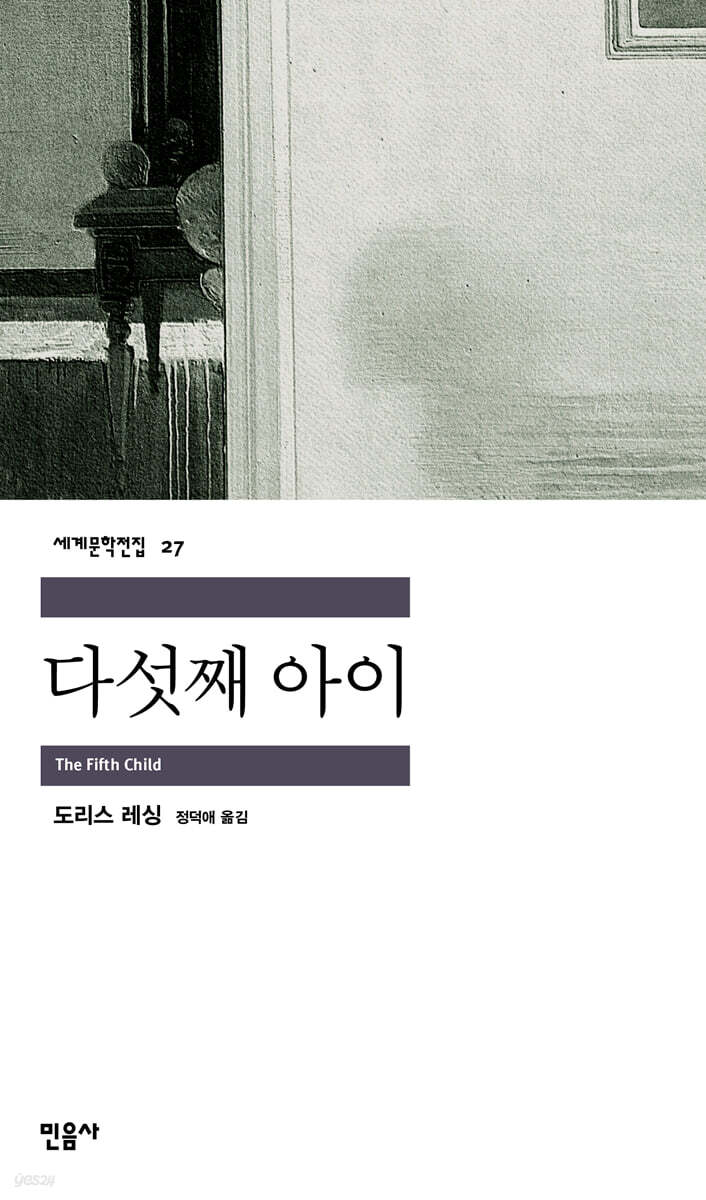
Doris Lessing, a leading British writer of the late 20th century, predicts a chilling future for humanity. The illusion of family ideology depicted through horror techniques and fundamental questions about humanity at the end of the century. “When I look at Ben, I think. “Everyone else who has ever lived on this earth, they are undoubtedly somewhere within us.” Two very normal men and women meet, fall in love, and start a family. As the surrounding family members tease, it is a rare case these days. They reject things like promiscuous premarital sex, divorce or extramarital affairs, birth control, and drugs, and they build happy families in the traditional sense. The elements of such a happy family include a large house where children can run around freely and where the scattered nuclear family can gather together, but above all, maternal love for children, a sense of responsibility as the head of the household, and the parental duty to be willing to help their children when they need it. But their 'fifth child' destroys their 'ideal' family. Racing depicts, in a concise and urgent style, the daily upheaval brought about by the birth of an abnormal child who is controlled by a strange gene that has been introduced at some unknown time. It also shows that traditional family values are nothing more than an illusion. Doris Lessing is a writer at the heart of contemporary British literature. Her narrative techniques and novel forms range from socialist realism, bildungsroman, and modernist techniques to fable, romance, and science fiction. Her interests also encompass all major intellectual issues of the 20th century, including psychoanalysis, Marxism, existentialism, and sociobiology, as well as mysticism such as Sufism. |
- You can preview some of the book's contents.
Preview
Into the book
This child was not a pretty baby.
He didn't look like a baby at all.
He had thick shoulders and a stooped appearance, as if he had been crouching there while lying down.
The baby's forehead sloped from the eyes toward the crown of the head.
The hair was thick and grayish, and grew in an odd shape, from two whorls down to the forehead in a triangular or wedge shape.
The hair on the sides and back was growing downwards, while the hair in the front was lying towards the forehead.
His hands were thick and his palms were muscular.
The baby opened his eyes and looked straight into his mother's face.
--- p.67
"This is a coincidence.
Anyone can have a kid like Ben.
"It's just a random gene, that's all."
"I don't think so."
She stubbornly insisted.
"We tried to be happy! No one was happy.
No, I've never met a happy person.
But that's what we were trying to do.
So that's when lightning struck."
--- p.159
I wondered if they would all leave soon, with no intention of returning.
She will sit by the quiet, soft glow of the table and wait for them to return, but they will not return.
He didn't look like a baby at all.
He had thick shoulders and a stooped appearance, as if he had been crouching there while lying down.
The baby's forehead sloped from the eyes toward the crown of the head.
The hair was thick and grayish, and grew in an odd shape, from two whorls down to the forehead in a triangular or wedge shape.
The hair on the sides and back was growing downwards, while the hair in the front was lying towards the forehead.
His hands were thick and his palms were muscular.
The baby opened his eyes and looked straight into his mother's face.
--- p.67
"This is a coincidence.
Anyone can have a kid like Ben.
"It's just a random gene, that's all."
"I don't think so."
She stubbornly insisted.
"We tried to be happy! No one was happy.
No, I've never met a happy person.
But that's what we were trying to do.
So that's when lightning struck."
--- p.159
I wondered if they would all leave soon, with no intention of returning.
She will sit by the quiet, soft glow of the table and wait for them to return, but they will not return.
--- From the text
Publisher's Review
Doris Lessing's latest work being introduced in Korea
Doris Lessing, the greatest living British writer, has published her book, The Fifth Child, in Minumsa's [World Literature Collection].
"The Fifth Child" is a 1988 work by Lessing, which is being introduced in Korea for the first time, and has already been evaluated as a "classic work" overseas.
In an interview with the New York Times after the publication of this work, Lessing shared two pieces of writing that inspired The Fifth Child.
It was an article from an archaeologist who said that genes from the Ice Age were passed down to us and influenced us, and a magazine article about a mother who complained that her happy family was destroyed by an evil fourth daughter born after giving birth to three normal children.
These two pieces of writing naturally blended together to form the plot of “The Fifth Child.”
Are Humans Incapable of Escape from the Dominion of Their Genes? - Lessing's Perspective on the Sociobiological Debate
In 1960s London, two very normal people, Harriet and David, meet, fall in love, and start a family.
They are a rare sight these days, as people around them make fun of them.
They reject things like promiscuous premarital sex, divorce or extramarital affairs, birth control, and drugs, and they build happy families in the traditional sense.
The elements of such a happy family include a large Victorian house where children can run and play freely and where the scattered nuclear family can come together, but above all, it includes the maternal love of bearing and loving children, the responsibility of being the head of the household, and the parental duty to be willing to help when the children need it.
However, [the fifth child] Ben is controlled by a strange gene beyond Harriet and David's control, causing their lives to deviate from the path they had planned.
Ben destroys their [ideal] family.
One abnormal child completely destroys their home and all the ideals that were the foundation of that home.
As Harriet ponders why a child like Ben was born, she wonders if it is God's punishment for their desire to live happily ever after, or if it is the result of a cosmic evolution that goes back to the very beginning.
But racing doesn't attempt to provide an answer to that question.
Rather, by releasing Ben and his gang somewhere underground in the big city, he foretells a future that Harriet, David, and even we don't want to acknowledge.
At the end of the century, when even humans are being cloned through genetic engineering, Lessing's "The Fifth Child" poses challenging and sharp questions to us, who are trapped in the paradigm of this era, about the origins and value of [humanity].
From the commentary on the work
It is almost impossible to summarize Lessing's vast oeuvre.
Her narrative techniques and novel forms range from socialist realism, bildungsroman, and modernist techniques to fable, folktale, romance, and science fiction.
Her interests also encompass major 20th-century intellectual issues, including psychoanalysis, Marxism, existentialism, and sociobiology, as well as mysticism such as Sufism.
Doris Lessing, the greatest living British writer, has published her book, The Fifth Child, in Minumsa's [World Literature Collection].
"The Fifth Child" is a 1988 work by Lessing, which is being introduced in Korea for the first time, and has already been evaluated as a "classic work" overseas.
In an interview with the New York Times after the publication of this work, Lessing shared two pieces of writing that inspired The Fifth Child.
It was an article from an archaeologist who said that genes from the Ice Age were passed down to us and influenced us, and a magazine article about a mother who complained that her happy family was destroyed by an evil fourth daughter born after giving birth to three normal children.
These two pieces of writing naturally blended together to form the plot of “The Fifth Child.”
Are Humans Incapable of Escape from the Dominion of Their Genes? - Lessing's Perspective on the Sociobiological Debate
In 1960s London, two very normal people, Harriet and David, meet, fall in love, and start a family.
They are a rare sight these days, as people around them make fun of them.
They reject things like promiscuous premarital sex, divorce or extramarital affairs, birth control, and drugs, and they build happy families in the traditional sense.
The elements of such a happy family include a large Victorian house where children can run and play freely and where the scattered nuclear family can come together, but above all, it includes the maternal love of bearing and loving children, the responsibility of being the head of the household, and the parental duty to be willing to help when the children need it.
However, [the fifth child] Ben is controlled by a strange gene beyond Harriet and David's control, causing their lives to deviate from the path they had planned.
Ben destroys their [ideal] family.
One abnormal child completely destroys their home and all the ideals that were the foundation of that home.
As Harriet ponders why a child like Ben was born, she wonders if it is God's punishment for their desire to live happily ever after, or if it is the result of a cosmic evolution that goes back to the very beginning.
But racing doesn't attempt to provide an answer to that question.
Rather, by releasing Ben and his gang somewhere underground in the big city, he foretells a future that Harriet, David, and even we don't want to acknowledge.
At the end of the century, when even humans are being cloned through genetic engineering, Lessing's "The Fifth Child" poses challenging and sharp questions to us, who are trapped in the paradigm of this era, about the origins and value of [humanity].
From the commentary on the work
It is almost impossible to summarize Lessing's vast oeuvre.
Her narrative techniques and novel forms range from socialist realism, bildungsroman, and modernist techniques to fable, folktale, romance, and science fiction.
Her interests also encompass major 20th-century intellectual issues, including psychoanalysis, Marxism, existentialism, and sociobiology, as well as mysticism such as Sufism.
GOODS SPECIFICS
- Date of issue: June 30, 1999
- Page count, weight, size: 191 pages | 340g | 132*224*20mm
- ISBN13: 9788937460272
- ISBN10: 8937460270
You may also like
카테고리
korean


korean

![ELLE 엘르 스페셜 에디션 A형 : 12월 [2025]](http://librairie.coreenne.fr/cdn/shop/files/b8e27a3de6c9538896439686c6b0e8fb.jpg?v=1766436872&width=3840)


