

A legal scholar who went to an art museum
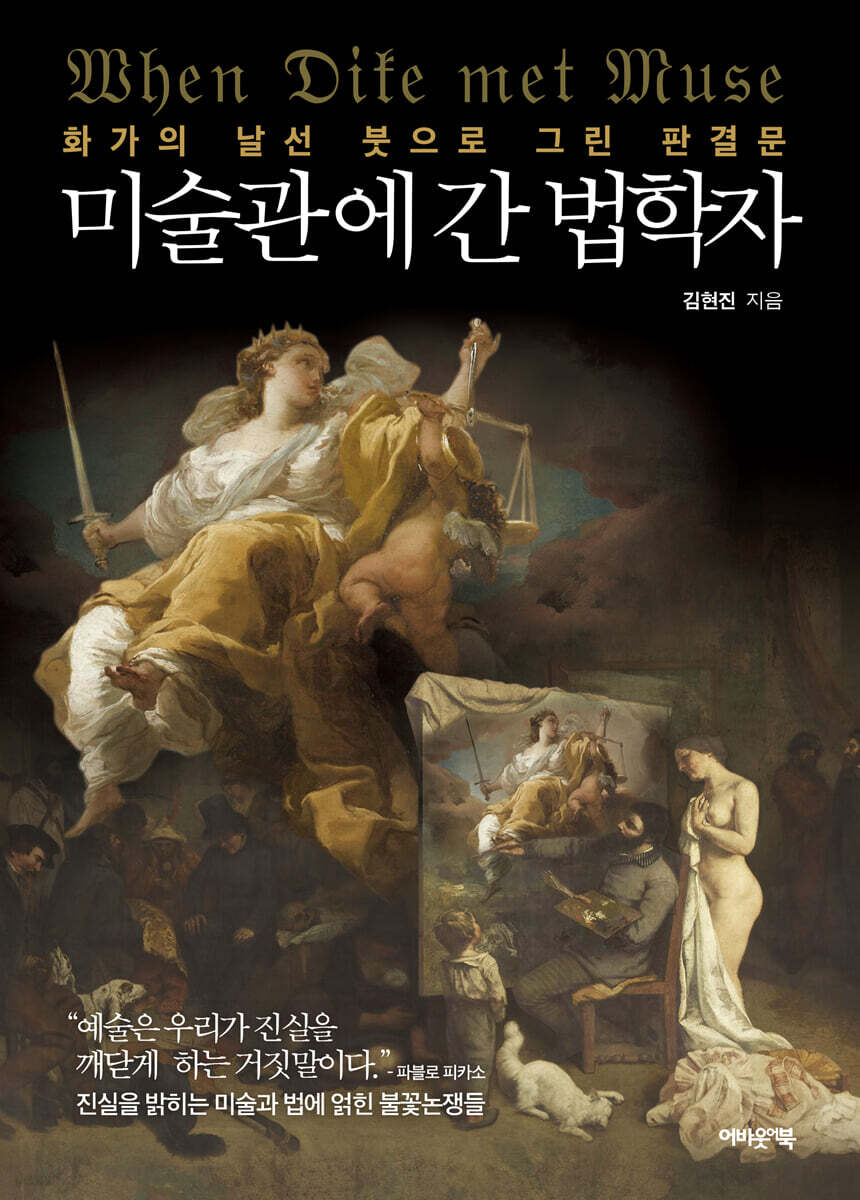 |
Description
Book Introduction
“All art is essentially a violation of the law!”
A Crossover Essay on Masterpieces by a Lawyer Who Turned Art into a Lawyer
Here is a 'law scholar who ran away with art' who travels around art museums all over the world.
The reason he, who is also a lawyer, visits art galleries more often than courts is because he finds new perspectives on law in paintings.
He paints in colorful colors the gray notion that law exists only in solemn courts and brick-book codes.
The 25 colors donned by the legal scholar became the book, “The Legal Scholar Who Went to the Art Museum.”
The author explains the legal relationship of consignment sales under commercial law in the process of Banksy's graffiti being sold at Sotheby's for over 30 billion won, and explains the 'law of fraud and mistake' in an easy-to-understand way while covering the Mark Rothko and Jackson Pollock forgery cases, which are called the 'Lehman Brothers of the art world.'
It poses the provocative question, "Is color art or technology?" and revisits the principles of freedom of contract and the scope of patent and trademark rights related to the exclusive use of color.
The part where the concept of the right of pursuit is brought up while appreciating Millet's "The Angelus" and Lee Jung-seob's "The Cow" is also unique.
Jean Cocteau's statement, "Art is essentially a violation of the law," criticizes art-for-artism while simultaneously defending the freedom of art.
For example, graffiti, which involves drawing on the walls of other people's buildings without permission, is inherently illegal, but the very nature of art should not be denied because of this.
That's why the bundle of stories the lawyer unleashed at the art museum is so controversial.
The crucial scenes from religion, mythology, and history that artists often depict have themselves become important subjects of legal study.
Poussin's painting of Solomon's trial to determine the biological mother led to the debate over surrogacy and anonymous childbirth, and Rubens' painting 'The Judgment of Paris' raises questions about the judge's rejection, avoidance, and evasion, as well as the fairness of the judiciary.
Titian's painting of Marsyas being flayed alive by Apollo evokes the principle of legality, a fundamental principle of modern criminal law.
In this way, law, once the exclusive domain of legal experts, meets art and is reborn as a rich form for the cultured.
A Crossover Essay on Masterpieces by a Lawyer Who Turned Art into a Lawyer
Here is a 'law scholar who ran away with art' who travels around art museums all over the world.
The reason he, who is also a lawyer, visits art galleries more often than courts is because he finds new perspectives on law in paintings.
He paints in colorful colors the gray notion that law exists only in solemn courts and brick-book codes.
The 25 colors donned by the legal scholar became the book, “The Legal Scholar Who Went to the Art Museum.”
The author explains the legal relationship of consignment sales under commercial law in the process of Banksy's graffiti being sold at Sotheby's for over 30 billion won, and explains the 'law of fraud and mistake' in an easy-to-understand way while covering the Mark Rothko and Jackson Pollock forgery cases, which are called the 'Lehman Brothers of the art world.'
It poses the provocative question, "Is color art or technology?" and revisits the principles of freedom of contract and the scope of patent and trademark rights related to the exclusive use of color.
The part where the concept of the right of pursuit is brought up while appreciating Millet's "The Angelus" and Lee Jung-seob's "The Cow" is also unique.
Jean Cocteau's statement, "Art is essentially a violation of the law," criticizes art-for-artism while simultaneously defending the freedom of art.
For example, graffiti, which involves drawing on the walls of other people's buildings without permission, is inherently illegal, but the very nature of art should not be denied because of this.
That's why the bundle of stories the lawyer unleashed at the art museum is so controversial.
The crucial scenes from religion, mythology, and history that artists often depict have themselves become important subjects of legal study.
Poussin's painting of Solomon's trial to determine the biological mother led to the debate over surrogacy and anonymous childbirth, and Rubens' painting 'The Judgment of Paris' raises questions about the judge's rejection, avoidance, and evasion, as well as the fairness of the judiciary.
Titian's painting of Marsyas being flayed alive by Apollo evokes the principle of legality, a fundamental principle of modern criminal law.
In this way, law, once the exclusive domain of legal experts, meets art and is reborn as a rich form for the cultured.
- You can preview some of the book's contents.
Preview
index
Prologue: The "Law", the Guardian Warrior Who Protects "Art"
[Court 1] The History of Fundamental Rights in Pictures
How Work Divides the World: The History of Labor Exploitation, Class, and Slavery That Have Parasitized Within Us
Memento Mori: Why Law Must Remember Death
Paintings that Judge War: Summoning the Laws of War and Conscientious Objection
ㆍThe principle of saying what needs to be said even if your mouth is crooked: When the protection of honor and freedom of expression collide
ㆍHow are your feathers?: A nude painting depicting tax resistance.
"Overcoming" means overcoming the gaze: Misunderstandings and prejudices about "disability" and "discrimination."
ㆍImplications of the Republic: Is Democracy Always Right?
ㆍJudge Paris's Love is Guilty: Dismissal, Avoidance, and Judicial Fairness
[Second Courtroom] Paintings that expose human hypocrisy
Alchemists Who Turn Art into Money: A Look at the Legal Issues Surrounding Art Auctions
ㆍThe Atelier of Hypocrisy: The Law of Fraud and Mistake in Forgery
How Punishment Became Violence: In Search of the Roots of the Principle of Legality
I Know What They Did in the Paintings: A History of Sexual Violence and Revenge in Art by Masters
Paintings Gone with the War: Ownership Disputes Surrounding Holocaust Art
The Cruel History of Art Values: Masterpieces That Became a Bleach for Bribery and Money Laundering
ㆍThe Birth of a Mother: Looking at the Controversy over Surrogacy and Anonymous Birth
Punish the excuse of alcohol: Reduced sentences for drunk driving, the legal contradictions surrounding alcohol
Portrait of a Lawyer: The Shadow of Hypocrisy Hidden by the Lawyer's Robe
[Third Court] How to Save Art, or How to Kill It
Wrong Then, Right Now?: The Line Between Art and Obscenity
Monopolizing Color: The Conflict Surrounding the Artist's Color and Industrial Property Rights
Between Monstrosity and Art: The Conflict Between the Public Interest of Public Art and Copyright
ㆍWhich writer gets the credit for the talent?: The past, present, and future of the right to pursue.
The British Museum Belongs to the World?: The Debate Surrounding the Return of Cultural Assets
Is the Louvre a Museum or an Art Gallery?: The Inside Story of the Legal Distinction Between Art Galleries and Museums
People who simulated art: Artists' freedom of association and modern and contemporary art movements
ㆍUnsettling Paintings, Peaceful Paintings: Different Perspectives of Masters on Scholarship
ㆍFind works / ㆍFind people / ㆍReferences
[Court 1] The History of Fundamental Rights in Pictures
How Work Divides the World: The History of Labor Exploitation, Class, and Slavery That Have Parasitized Within Us
Memento Mori: Why Law Must Remember Death
Paintings that Judge War: Summoning the Laws of War and Conscientious Objection
ㆍThe principle of saying what needs to be said even if your mouth is crooked: When the protection of honor and freedom of expression collide
ㆍHow are your feathers?: A nude painting depicting tax resistance.
"Overcoming" means overcoming the gaze: Misunderstandings and prejudices about "disability" and "discrimination."
ㆍImplications of the Republic: Is Democracy Always Right?
ㆍJudge Paris's Love is Guilty: Dismissal, Avoidance, and Judicial Fairness
[Second Courtroom] Paintings that expose human hypocrisy
Alchemists Who Turn Art into Money: A Look at the Legal Issues Surrounding Art Auctions
ㆍThe Atelier of Hypocrisy: The Law of Fraud and Mistake in Forgery
How Punishment Became Violence: In Search of the Roots of the Principle of Legality
I Know What They Did in the Paintings: A History of Sexual Violence and Revenge in Art by Masters
Paintings Gone with the War: Ownership Disputes Surrounding Holocaust Art
The Cruel History of Art Values: Masterpieces That Became a Bleach for Bribery and Money Laundering
ㆍThe Birth of a Mother: Looking at the Controversy over Surrogacy and Anonymous Birth
Punish the excuse of alcohol: Reduced sentences for drunk driving, the legal contradictions surrounding alcohol
Portrait of a Lawyer: The Shadow of Hypocrisy Hidden by the Lawyer's Robe
[Third Court] How to Save Art, or How to Kill It
Wrong Then, Right Now?: The Line Between Art and Obscenity
Monopolizing Color: The Conflict Surrounding the Artist's Color and Industrial Property Rights
Between Monstrosity and Art: The Conflict Between the Public Interest of Public Art and Copyright
ㆍWhich writer gets the credit for the talent?: The past, present, and future of the right to pursue.
The British Museum Belongs to the World?: The Debate Surrounding the Return of Cultural Assets
Is the Louvre a Museum or an Art Gallery?: The Inside Story of the Legal Distinction Between Art Galleries and Museums
People who simulated art: Artists' freedom of association and modern and contemporary art movements
ㆍUnsettling Paintings, Peaceful Paintings: Different Perspectives of Masters on Scholarship
ㆍFind works / ㆍFind people / ㆍReferences
Detailed image

Into the book
The phrase that Dutch painters kept in their hearts along with 'Homo bulla' when drawing skulls was 'Memento mori'.
Translated into Korean, it means 'Remember death.'
For legal scholars, 'death' has a deeper meaning of Memento mori rather than Homo bulla.
In law, death has both the meaning of ‘extinction’ and ‘creation’.
For example, in civil law, death creates a new legal relationship called 'inheritance'.
In criminal law, some cases end with the death of the suspect (or defendant), while others begin investigation and prosecution as murder.
In that sense, if the tip of the painter's brush is immersed in the transience of life, the tip of the jurist's pen marks the memory of death.
--- From "Memento Mori: Why Law Must Remember Death"
Former Gucci chairman Domenico De Sole sits on the witness stand in a sharp suit in the Southern District Court of Manhattan in January 2016.
He gestures toward a black and red painting on an easel right next to him and states:
“This is a fake painting that I bought for $8.3 million, believing it to be a Mark Rothko painting.
“I know about bags, but I don’t know much about paintings.” The painting in question looks like a work by Mark Rothko, a master of modern abstract painting.
Sole is a Harvard Law School-educated lawyer and CEO of auction house Sotheby's and fashion house Tom Ford.
It's hard to believe that he was the victim of a huge counterfeiting scam, but it's true.
The scandal of the century, dubbed the "Lehman Brothers of the art world," begins like this.
--- From "The Atelier of Hypocrisy: The Law of Fraud and Mistake in Forgery"
So how do you launder money using art?
There is a method where the buyer and seller of a work of art collude to deliberately exchange an amount that is significantly inflated compared to the work's actual value, and then secretly receive the difference back.
For example, if you buy a work of art worth 500 million won for 1 billion won, record it as 1 billion won in the ledger, and then secretly return the difference of 500 million won to the seller in cash or through an offshore account, that 500 million won becomes slush funds.
Furthermore, if a financial institution unaware of these circumstances provides a loan using the work as collateral, it could escalate into a serious financial crime.
--- From "The Cruel History of Art Values: Masterpieces That Became a Bleach for Money Laundering"
French neoclassical painter David painted a scene of representatives of the common people taking an oath on a tennis court.
The Jacobin Party, which had been pushing for radical reform, commissioned David, the greatest painter of the time and an ardent revolutionary, to paint a historical painting to commemorate the Tennis Court Oath, which was the trigger for the Great Revolution.
David spent over a year working on a huge canvas depicting hundreds of cheering revolutionaries, but was never able to complete the painting.
This is because, in the midst of the turbulent revolutionary situation, it was not uncommon for the people appearing in the paintings to be suddenly branded traitors and executed.
Translated into Korean, it means 'Remember death.'
For legal scholars, 'death' has a deeper meaning of Memento mori rather than Homo bulla.
In law, death has both the meaning of ‘extinction’ and ‘creation’.
For example, in civil law, death creates a new legal relationship called 'inheritance'.
In criminal law, some cases end with the death of the suspect (or defendant), while others begin investigation and prosecution as murder.
In that sense, if the tip of the painter's brush is immersed in the transience of life, the tip of the jurist's pen marks the memory of death.
--- From "Memento Mori: Why Law Must Remember Death"
Former Gucci chairman Domenico De Sole sits on the witness stand in a sharp suit in the Southern District Court of Manhattan in January 2016.
He gestures toward a black and red painting on an easel right next to him and states:
“This is a fake painting that I bought for $8.3 million, believing it to be a Mark Rothko painting.
“I know about bags, but I don’t know much about paintings.” The painting in question looks like a work by Mark Rothko, a master of modern abstract painting.
Sole is a Harvard Law School-educated lawyer and CEO of auction house Sotheby's and fashion house Tom Ford.
It's hard to believe that he was the victim of a huge counterfeiting scam, but it's true.
The scandal of the century, dubbed the "Lehman Brothers of the art world," begins like this.
--- From "The Atelier of Hypocrisy: The Law of Fraud and Mistake in Forgery"
So how do you launder money using art?
There is a method where the buyer and seller of a work of art collude to deliberately exchange an amount that is significantly inflated compared to the work's actual value, and then secretly receive the difference back.
For example, if you buy a work of art worth 500 million won for 1 billion won, record it as 1 billion won in the ledger, and then secretly return the difference of 500 million won to the seller in cash or through an offshore account, that 500 million won becomes slush funds.
Furthermore, if a financial institution unaware of these circumstances provides a loan using the work as collateral, it could escalate into a serious financial crime.
--- From "The Cruel History of Art Values: Masterpieces That Became a Bleach for Money Laundering"
French neoclassical painter David painted a scene of representatives of the common people taking an oath on a tennis court.
The Jacobin Party, which had been pushing for radical reform, commissioned David, the greatest painter of the time and an ardent revolutionary, to paint a historical painting to commemorate the Tennis Court Oath, which was the trigger for the Great Revolution.
David spent over a year working on a huge canvas depicting hundreds of cheering revolutionaries, but was never able to complete the painting.
This is because, in the midst of the turbulent revolutionary situation, it was not uncommon for the people appearing in the paintings to be suddenly branded traitors and executed.
--- From "Are Your Feathers Well?: Nude Paintings of Tax Resistance"
Publisher's Review
“Art is a lie that makes us realize the truth.” _Pablo Picasso
25 Fierce Controversies Intertwined with Art and Law that Uncover the Truth!
This book is largely divided into three chapters.
The first chapter, [Court 1], explores various stories related to the fundamental rights and principles guaranteed by the Constitution, such as human dignity and value, the right to pursue happiness, the right to life, the right to labor, freedom of expression, and judicial fairness, through the art works of masters.
In the second [Second Court], civil and criminal legal relationships were also linked to works of art.
Based on the legal mindset, the conflicts and absurdities caused by human hypocrisy were analyzed, including the collusion between Sotheby's and Christie's, the legal principles of fraud and error in forgery, the reduced sentence for drunk driving and the "free act in the cause" in criminal law, and the true face of famous paintings that glorify sexual violence.
The final chapter, [Third Court], delves into key topics in the field of art law, including moral rights, the right of resale, the boundary between art and obscenity, art trends born from the freedom of association of artists, and the return of cultural properties.
Summoning the history of fundamental rights in pictures
The book begins with "The Floor-Cutters" by French Impressionist painter Caillebotte.
In this picture, the author, a legal scholar, invokes the constitutional right to work, or labor rights.
Next, he explained the three labor rights of the right to organize, the right to collective action, and the right to collective bargaining in Italian painter Felizza's "The Fourth Estate," and then explained how the mass production system after the Industrial Revolution led to slavery through labor exploitation through Turner's painting.
In 'Memento Mori (Why Law Must Remember Death)', the legal interpretation and legislative alternatives for euthanasia were presented through Klimt's 'Life and Death'.
In the abstract painting “Nocturne in Black and Gold – Falling Rockets” by American artist Whistler, the conflict of legal interests between “protection of reputation” and “freedom of expression” is examined along with the rulings of British courts in the late 19th century.
In addition, we looked back at the implications of constitutional fundamental rights contained in the painting “Tragic Regrets” by Spanish painter Sorolla, by examining how “discrimination” against marginalized groups, including the disabled, has been perpetrated historically.
Paintings that expose human hypocrisy
As deception, unfairness, illegality, and violence become more sophisticated, the legal interpretations and research of legal scholars also evolve.
It cannot be helped that law and human affairs are an uncomfortable companion.
But if you look into the history of art, you will see that painters did not only paint beautiful things.
Gentileschi vividly depicted the scene of Judith beheading Holofernes, and the jurist who observed it coldly diagnosed the history of sexual violence and revenge.
The Trial of Cambyses, painted by the 15th-century Flemish painter David, vividly depicts the brutal execution of judge Sisamnes, who was tempted by bribery.
This leads directly to the legal interpretation of bribery by legal scholars.
Of course, the message David was trying to convey through his paintings is still valid today.
In addition, the collusion between Sotheby's and Christie's, the absurdity of the art world entangled in forgeries, the story of how astronomically priced masterpieces became a pretext for money laundering, and the dispute over ownership of Holocaust art that disappeared during World War II, all reveal the true face of hypocrisy and greed rampant in the art market, reinterpreted through the sharp eyes of a legal scholar.
A cultured encounter between law and art
In 1884, the painter Sargent was banished from the Paris art world after he painted Madame Gautreau's dress with one shoulder strap hanging down in his painting "Madame X", which was harshly criticized as vulgar and obscene.
In 1815, the Spanish national painter Goya was even tried by the Inquisition for his painting “The Naked Maja.”
However, “Maya Naked” also faced controversy over obscenity in a South Korean court in 1969.
A match manufacturer in Busan put a card with a copy of “Naked Maya” in matchboxes as a marketing tool, and as this became popular among men, matches sold like hotcakes.
Accordingly, the prosecution applied the “crime of manufacturing and selling pornography” under the Criminal Act and indicted, and the Supreme Court stated in its ruling that “Naked Maya” was an pornography.
The reason Manet's masterpiece, "Luncheon on the Grass," was rejected at the 1883 Salon was because of the nude woman in the painting, Victorine-Louise Meurant.
Coincidentally, the work that won first place at the Salon was Cabanel's The Birth of Venus.
The nude bodies of goddesses in mythology were considered art, but the naked bodies of ordinary women were considered obscene at the time.
Yet the debate about art and pornography continues into the 21st century.
An elementary school teacher in Florida, USA, has resigned after showing a photo of Michelangelo's nude David to sixth graders during an art history class.
Parents denounced the David statue as pornographic.
What is interesting is that this statue is erected in the Piazza della Signoria in front of the city hall of Florence, Italy.
This book contains 25 hotly contested issues related to art and law, ranging from the long-running "Naeronambul" scandal in the art world, to the fairness of exclusive color use, to the right of resale and moral rights of authors, to the return of cultural properties, along with over 100 illustrations of famous paintings.
Legal scholars may seem like archaic beings, confined to their labs and wrestling with thick legal texts, but in reality, they must delve deeper into every aspect of the human world than anyone else.
Just as painters capture the invisible side of the world on their canvases, legal scholars must study legal principles while taking into account the subtle reasoning and emotions that flow within human beings.
In that sense, the perspectives of painters and legal scholars on the world are similar.
- From the prologue
25 Fierce Controversies Intertwined with Art and Law that Uncover the Truth!
This book is largely divided into three chapters.
The first chapter, [Court 1], explores various stories related to the fundamental rights and principles guaranteed by the Constitution, such as human dignity and value, the right to pursue happiness, the right to life, the right to labor, freedom of expression, and judicial fairness, through the art works of masters.
In the second [Second Court], civil and criminal legal relationships were also linked to works of art.
Based on the legal mindset, the conflicts and absurdities caused by human hypocrisy were analyzed, including the collusion between Sotheby's and Christie's, the legal principles of fraud and error in forgery, the reduced sentence for drunk driving and the "free act in the cause" in criminal law, and the true face of famous paintings that glorify sexual violence.
The final chapter, [Third Court], delves into key topics in the field of art law, including moral rights, the right of resale, the boundary between art and obscenity, art trends born from the freedom of association of artists, and the return of cultural properties.
Summoning the history of fundamental rights in pictures
The book begins with "The Floor-Cutters" by French Impressionist painter Caillebotte.
In this picture, the author, a legal scholar, invokes the constitutional right to work, or labor rights.
Next, he explained the three labor rights of the right to organize, the right to collective action, and the right to collective bargaining in Italian painter Felizza's "The Fourth Estate," and then explained how the mass production system after the Industrial Revolution led to slavery through labor exploitation through Turner's painting.
In 'Memento Mori (Why Law Must Remember Death)', the legal interpretation and legislative alternatives for euthanasia were presented through Klimt's 'Life and Death'.
In the abstract painting “Nocturne in Black and Gold – Falling Rockets” by American artist Whistler, the conflict of legal interests between “protection of reputation” and “freedom of expression” is examined along with the rulings of British courts in the late 19th century.
In addition, we looked back at the implications of constitutional fundamental rights contained in the painting “Tragic Regrets” by Spanish painter Sorolla, by examining how “discrimination” against marginalized groups, including the disabled, has been perpetrated historically.
Paintings that expose human hypocrisy
As deception, unfairness, illegality, and violence become more sophisticated, the legal interpretations and research of legal scholars also evolve.
It cannot be helped that law and human affairs are an uncomfortable companion.
But if you look into the history of art, you will see that painters did not only paint beautiful things.
Gentileschi vividly depicted the scene of Judith beheading Holofernes, and the jurist who observed it coldly diagnosed the history of sexual violence and revenge.
The Trial of Cambyses, painted by the 15th-century Flemish painter David, vividly depicts the brutal execution of judge Sisamnes, who was tempted by bribery.
This leads directly to the legal interpretation of bribery by legal scholars.
Of course, the message David was trying to convey through his paintings is still valid today.
In addition, the collusion between Sotheby's and Christie's, the absurdity of the art world entangled in forgeries, the story of how astronomically priced masterpieces became a pretext for money laundering, and the dispute over ownership of Holocaust art that disappeared during World War II, all reveal the true face of hypocrisy and greed rampant in the art market, reinterpreted through the sharp eyes of a legal scholar.
A cultured encounter between law and art
In 1884, the painter Sargent was banished from the Paris art world after he painted Madame Gautreau's dress with one shoulder strap hanging down in his painting "Madame X", which was harshly criticized as vulgar and obscene.
In 1815, the Spanish national painter Goya was even tried by the Inquisition for his painting “The Naked Maja.”
However, “Maya Naked” also faced controversy over obscenity in a South Korean court in 1969.
A match manufacturer in Busan put a card with a copy of “Naked Maya” in matchboxes as a marketing tool, and as this became popular among men, matches sold like hotcakes.
Accordingly, the prosecution applied the “crime of manufacturing and selling pornography” under the Criminal Act and indicted, and the Supreme Court stated in its ruling that “Naked Maya” was an pornography.
The reason Manet's masterpiece, "Luncheon on the Grass," was rejected at the 1883 Salon was because of the nude woman in the painting, Victorine-Louise Meurant.
Coincidentally, the work that won first place at the Salon was Cabanel's The Birth of Venus.
The nude bodies of goddesses in mythology were considered art, but the naked bodies of ordinary women were considered obscene at the time.
Yet the debate about art and pornography continues into the 21st century.
An elementary school teacher in Florida, USA, has resigned after showing a photo of Michelangelo's nude David to sixth graders during an art history class.
Parents denounced the David statue as pornographic.
What is interesting is that this statue is erected in the Piazza della Signoria in front of the city hall of Florence, Italy.
This book contains 25 hotly contested issues related to art and law, ranging from the long-running "Naeronambul" scandal in the art world, to the fairness of exclusive color use, to the right of resale and moral rights of authors, to the return of cultural properties, along with over 100 illustrations of famous paintings.
Legal scholars may seem like archaic beings, confined to their labs and wrestling with thick legal texts, but in reality, they must delve deeper into every aspect of the human world than anyone else.
Just as painters capture the invisible side of the world on their canvases, legal scholars must study legal principles while taking into account the subtle reasoning and emotions that flow within human beings.
In that sense, the perspectives of painters and legal scholars on the world are similar.
- From the prologue
GOODS SPECIFICS
- Date of issue: September 25, 2024
- Page count, weight, size: 424 pages | 712g | 150*210*30mm
- ISBN13: 9791192229447
- ISBN10: 1192229444
You may also like
카테고리
korean


korean

![GQ KOREA Mark (Monthly): December [2025]](http://librairie.coreenne.fr/cdn/shop/files/8ef265dbbfbf186523ed75ba7319009d.jpg?v=1765340328&width=3840)


