

The Cruel History of Science
 |
Description
Book Introduction
Early anatomists made deals with grave robbers to obtain corpses, and Thomas Edison tortured dogs and horses with electricity to discredit his competitors' technology.
The only available data on how to revive hypothermic people comes from Nazi German biological experiments.
Scientists have been responsible for some of the most despicable crimes throughout history.
Why do scientists commit evil deeds?
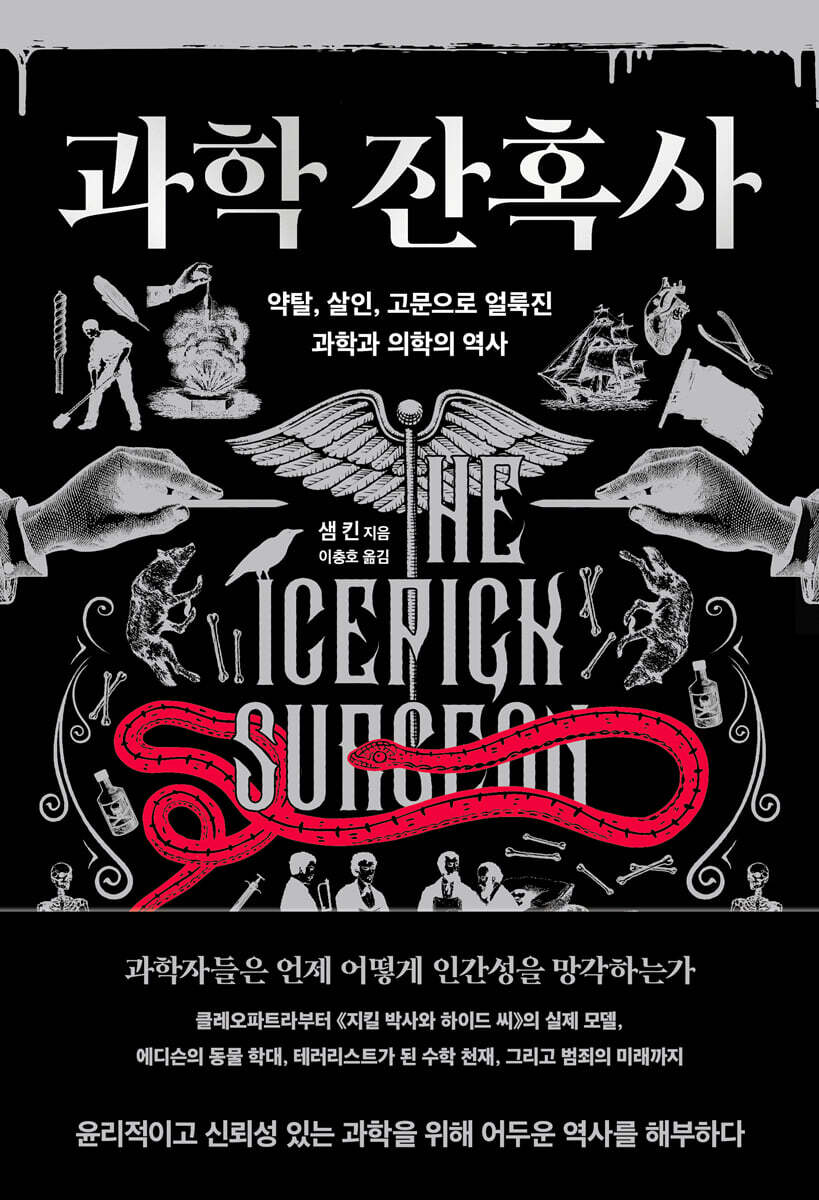
"Science's Cruel History" is a book that illuminates the dark side of scientific achievements.
This book illuminates the scientific crimes that once shook the world and delves into the psychological motivations of corrupt scientists and doctors.
From Cleopatra to colonial plunder, the victims of war and the Cold War, and the crimes of a future transformed by high technology, author Sam Kean, who excels at capturing the conflicts and dramas in the history of science, vividly depicts the brutal and chilling crimes intertwined with scientific achievements.
The only available data on how to revive hypothermic people comes from Nazi German biological experiments.
Scientists have been responsible for some of the most despicable crimes throughout history.
Why do scientists commit evil deeds?
"Science's Cruel History" is a book that illuminates the dark side of scientific achievements.
This book illuminates the scientific crimes that once shook the world and delves into the psychological motivations of corrupt scientists and doctors.
From Cleopatra to colonial plunder, the victims of war and the Cold War, and the crimes of a future transformed by high technology, author Sam Kean, who excels at capturing the conflicts and dramas in the history of science, vividly depicts the brutal and chilling crimes intertwined with scientific achievements.
- You can preview some of the book's contents.
Preview
index
Prologue: Cleopatra's Legacy
introduction
Chapter 1: Piracy: Is it specimen collection or colonial plunder?
Chapter 2: Slave Trade: How Termite Researchers Raise Funds
Chapter 3: Grave Robbery: The Anatomists' Dangerous Trade
Chapter 4: Murder: A Bizarre Incident at Harvard Medical School
Chapter 5: Animal Cruelty: The Current War and the First Electric Execution
Chapter 6: Dirty Competition: Dinosaur Bone Excavation
Chapter 7: Violations of Research Ethics by Doctors: Victims of Syphilis Research
Chapter 8: Blinded by Fame: The Doctor Who Surgeoned the Brain with an Ice Pick
Chapter 9: Espionage: The Chemist Who Gave the Soviets the Blueprints for the Atomic Bomb
Chapter 10: Psychological Torture: Why a Math Genius Became a Terrorist
Chapter 11 Medical Malpractice: The Misfortune of a Child with a Damaged Penis
Chapter 12: Evidence Manipulation: The Truth About the Drug Investigation Bureau's Superwoman
conclusion
Appendix: Crimes of the Future
Acknowledgements
main
References
Image information and sources
Search
introduction
Chapter 1: Piracy: Is it specimen collection or colonial plunder?
Chapter 2: Slave Trade: How Termite Researchers Raise Funds
Chapter 3: Grave Robbery: The Anatomists' Dangerous Trade
Chapter 4: Murder: A Bizarre Incident at Harvard Medical School
Chapter 5: Animal Cruelty: The Current War and the First Electric Execution
Chapter 6: Dirty Competition: Dinosaur Bone Excavation
Chapter 7: Violations of Research Ethics by Doctors: Victims of Syphilis Research
Chapter 8: Blinded by Fame: The Doctor Who Surgeoned the Brain with an Ice Pick
Chapter 9: Espionage: The Chemist Who Gave the Soviets the Blueprints for the Atomic Bomb
Chapter 10: Psychological Torture: Why a Math Genius Became a Terrorist
Chapter 11 Medical Malpractice: The Misfortune of a Child with a Damaged Penis
Chapter 12: Evidence Manipulation: The Truth About the Drug Investigation Bureau's Superwoman
conclusion
Appendix: Crimes of the Future
Acknowledgements
main
References
Image information and sources
Search
Detailed image

Into the book
According to legend, it was none other than Cleopatra who designed the first unethical scientific experiment in history.
---From the "first sentence"
Beyond the question of rationalization, there is also the question of what makes scientific crime unique.
Usually when people commit crimes, they do so to gain money, power, or something dirty.
But the only people who take flight to get data (to improve our understanding of the world) are scientists.
The crimes described in this book have complex and varied motivations.
Because people are that complicated.
But these crimes are often motivated more by a Faustian impulse to seek knowledge.
--- p.18
Among Dampier's fans, Charles Darwin, who had the greatest influence on later generations, bought Dampier's books and took them with him on his voyage on the Beagle in the 1830s.
Darwin chuckled as he read of his pirate mentor's obscene antics, and in his notes he called him 'Old Dampier'.
More importantly, Darwin studied the species and subspecies described by Dampier in detail, and used him effectively as a guide, poring over records from places like the Galapagos Islands.
If it weren't for his pirate predecessors, Darwin might not have become the Darwin we know today.
--- p.50
The collected specimens—ostrich eggs, snakes, butterflies, nests, sloths, snails, and armadillos—were transported to Europe on slave ships, and eventually delivered to research centers and private collections.
Carl von Linne, the father of taxonomy and one of the most influential biologists in history, used such collections as the basis for his groundbreaking 1735 book Systema Naturae.
Overall, these collections were the 'big science' of their time, serving as a central repository of knowledge essential to research planning.
And all of these were based on the infrastructure and economy of slavery.
--- p.61~62
This shortage of supplies led to horrific scenes at public hanging sites, with students from various medical schools scrambling to take the bodies.
There were even those who, in their haste, sometimes dragged people from the gallows who were not yet completely dead.
There were also cases where death row inmates were taken out with their necks still intact, briefly unconscious from lack of oxygen, and then regained consciousness on the dissecting table.
--- p.95
The general public was shocked.
A murder at Harvard? One newspaper described it this way: "Everywhere, on the streets, in the marketplace, and everywhere, people greeted each other with haggard, curious faces, asking, 'Could it really be true?'"
The poet Henry Wadsworth Longfellow, who had been friends with Webster while teaching Italian at Harvard, was devastated.
“Because of this evil deed, everyone’s heart has been damaged.”
--- p.134~135
The only problem was that Kemler wasn't dead yet.
Blood was still flowing from the wrist, and one observer noticed that the spurting blood was rhythmic, a sign of a beating heart.
Someone shouted, “Oh my God! He’s alive!”
As if on cue, Kemler groaned like a wounded pig, spewing purple foam through his mask.
--- p.169~170
To prevent competitors from digging there later, they would fill in the already excavated sites with rocks or even blow them up with dynamite.
The most egregious example seems to have been one of Marsh's men who, when closing down the excavation site, crushed dozens of fossil bones with his foot, thus denying Cope and his men the chance to discover them later.
--- p.196
In February 1948, Cutler injected Bertha with syphilis bacteria into her left arm.
Bertha soon developed lesions and red bumps there, and the skin began to peel.
But still, Cutler left Bertha untreated for three months.
On August 23, Bertha was clearly dying.
Now, believing he could do whatever he wanted, Cutler injected gonorrheal pus into Bertha's urethra, eyes, and rectum, and then injected her with syphilis bacteria again.
--- p.241~242
Neurosurgeons like James Watts performed lobotomy only in the most severe cases, and only as a last resort.
Freeman initially took a similar approach.
But as time passed and its fame grew, the surgery began to be promoted as a preventative measure.
That is, they began to argue that lobotomy should be performed on people in the early stages of mental illness, that is, on people who had been admitted to a mental institution for the mentally ill for only a few months.
--- p.280
The most egregious (almost criminal) counseling session occurred when Brenda and Brian went together.
Money ordered two men to undress in his office (and scolded them harshly if they didn't listen), then made them examine each other's genitals while he watched. (Ron and Janet had no idea this was happening.)
They trusted Money that much.) Money even had the two engage in one of his favorite activities, a "sex rehearsal play."
Although both children were dressed, Money made Brenda kneel down like a dog and had Brian repeatedly ram his groin into Brenda's buttocks.
--- p.385
Doukan's confession threw the entire Massachusetts judicial system into chaos.
Because Doukan couldn't remember which samples he manipulated and which ones he actually tested, the results of all 36,000 analyses he had conducted over his entire career were put on the chopping block.
The Massachusetts General Assembly had to allocate $30 million to deal with the aftermath.
--- p.425
Einstein said, “Many people say that it is intelligence that makes a great scientist.
But that thought was wrong.
“It is character that makes a great scientist,” he said.
When I first read this quote a long time ago, I scoffed.
Who cares whether scientists are good or bad? Isn't discovery the only thing that matters? But after writing this book, I've come to understand that.
--- p.436
Whether it's space exploration, advanced computing, or genetic engineering, new technologies will bring about profound changes in human society.
Every new technological advancement will bring new ways to harm others.
---From the "first sentence"
Beyond the question of rationalization, there is also the question of what makes scientific crime unique.
Usually when people commit crimes, they do so to gain money, power, or something dirty.
But the only people who take flight to get data (to improve our understanding of the world) are scientists.
The crimes described in this book have complex and varied motivations.
Because people are that complicated.
But these crimes are often motivated more by a Faustian impulse to seek knowledge.
--- p.18
Among Dampier's fans, Charles Darwin, who had the greatest influence on later generations, bought Dampier's books and took them with him on his voyage on the Beagle in the 1830s.
Darwin chuckled as he read of his pirate mentor's obscene antics, and in his notes he called him 'Old Dampier'.
More importantly, Darwin studied the species and subspecies described by Dampier in detail, and used him effectively as a guide, poring over records from places like the Galapagos Islands.
If it weren't for his pirate predecessors, Darwin might not have become the Darwin we know today.
--- p.50
The collected specimens—ostrich eggs, snakes, butterflies, nests, sloths, snails, and armadillos—were transported to Europe on slave ships, and eventually delivered to research centers and private collections.
Carl von Linne, the father of taxonomy and one of the most influential biologists in history, used such collections as the basis for his groundbreaking 1735 book Systema Naturae.
Overall, these collections were the 'big science' of their time, serving as a central repository of knowledge essential to research planning.
And all of these were based on the infrastructure and economy of slavery.
--- p.61~62
This shortage of supplies led to horrific scenes at public hanging sites, with students from various medical schools scrambling to take the bodies.
There were even those who, in their haste, sometimes dragged people from the gallows who were not yet completely dead.
There were also cases where death row inmates were taken out with their necks still intact, briefly unconscious from lack of oxygen, and then regained consciousness on the dissecting table.
--- p.95
The general public was shocked.
A murder at Harvard? One newspaper described it this way: "Everywhere, on the streets, in the marketplace, and everywhere, people greeted each other with haggard, curious faces, asking, 'Could it really be true?'"
The poet Henry Wadsworth Longfellow, who had been friends with Webster while teaching Italian at Harvard, was devastated.
“Because of this evil deed, everyone’s heart has been damaged.”
--- p.134~135
The only problem was that Kemler wasn't dead yet.
Blood was still flowing from the wrist, and one observer noticed that the spurting blood was rhythmic, a sign of a beating heart.
Someone shouted, “Oh my God! He’s alive!”
As if on cue, Kemler groaned like a wounded pig, spewing purple foam through his mask.
--- p.169~170
To prevent competitors from digging there later, they would fill in the already excavated sites with rocks or even blow them up with dynamite.
The most egregious example seems to have been one of Marsh's men who, when closing down the excavation site, crushed dozens of fossil bones with his foot, thus denying Cope and his men the chance to discover them later.
--- p.196
In February 1948, Cutler injected Bertha with syphilis bacteria into her left arm.
Bertha soon developed lesions and red bumps there, and the skin began to peel.
But still, Cutler left Bertha untreated for three months.
On August 23, Bertha was clearly dying.
Now, believing he could do whatever he wanted, Cutler injected gonorrheal pus into Bertha's urethra, eyes, and rectum, and then injected her with syphilis bacteria again.
--- p.241~242
Neurosurgeons like James Watts performed lobotomy only in the most severe cases, and only as a last resort.
Freeman initially took a similar approach.
But as time passed and its fame grew, the surgery began to be promoted as a preventative measure.
That is, they began to argue that lobotomy should be performed on people in the early stages of mental illness, that is, on people who had been admitted to a mental institution for the mentally ill for only a few months.
--- p.280
The most egregious (almost criminal) counseling session occurred when Brenda and Brian went together.
Money ordered two men to undress in his office (and scolded them harshly if they didn't listen), then made them examine each other's genitals while he watched. (Ron and Janet had no idea this was happening.)
They trusted Money that much.) Money even had the two engage in one of his favorite activities, a "sex rehearsal play."
Although both children were dressed, Money made Brenda kneel down like a dog and had Brian repeatedly ram his groin into Brenda's buttocks.
--- p.385
Doukan's confession threw the entire Massachusetts judicial system into chaos.
Because Doukan couldn't remember which samples he manipulated and which ones he actually tested, the results of all 36,000 analyses he had conducted over his entire career were put on the chopping block.
The Massachusetts General Assembly had to allocate $30 million to deal with the aftermath.
--- p.425
Einstein said, “Many people say that it is intelligence that makes a great scientist.
But that thought was wrong.
“It is character that makes a great scientist,” he said.
When I first read this quote a long time ago, I scoffed.
Who cares whether scientists are good or bad? Isn't discovery the only thing that matters? But after writing this book, I've come to understand that.
--- p.436
Whether it's space exploration, advanced computing, or genetic engineering, new technologies will bring about profound changes in human society.
Every new technological advancement will bring new ways to harm others.
--- p.439
Publisher's Review
Science also has its faults to atone for.
Scientists corrupted by their obsession with knowledge and mad ambition,
The cruel history of science built on that foundation
Early anatomists made deals with grave robbers to obtain corpses, and Thomas Edison tortured dogs and horses with electricity to discredit his competitors' technology.
The only available data on how to revive hypothermic people comes from Nazi German biological experiments.
Scientists have been responsible for some of the most despicable crimes throughout history.
Why do scientists commit evil deeds?
"Science's Cruel History" is a book that illuminates the dark side of scientific achievements.
This book illuminates the scientific crimes that once shook the world and delves into the psychological motivations of corrupt scientists and doctors.
From Cleopatra to colonial plunder, the victims of war and the Cold War, and the crimes of a future transformed by high technology, author Sam Kean, who excels at capturing the realities of scientific activity, vividly depicts the brutal and chilling crimes intertwined with scientific achievements.
Immerse yourself in an exciting story, as if reading a crime novel.
You will naturally come to understand how the pursuit of knowledge can go astray and why ethical and reliable science is important.
When and How Do Scientists Forget Humanity?
Dissecting a Dark History for Ethical and Reliable Science
Did you know that William Dampier, the greatest naturalist of his time and admired by Charles Darwin, was actually a ruthless pirate who practiced plunder? The specimen collection that Carl Linnaeus, the influential father of taxonomy, consulted for his Systema Naturae was collected under slavery.
The method of suffocating someone without leaving a trace is called 'burking', named after the grave robber William Burk.
Burke is a man who deals with anatomists who need corpses and ends up committing murder.
Thomas Edison, the inventor, tortured dogs and horses with electricity to gain an edge in the electric current industry, and Walter Freeman, a neurologist, popularized the surgery of opening the brains of mentally ill patients with ice picks.
John Money, the psychologist who first coined the term 'gender', ignored the biological basis and forced a child with a mutilated penis to undergo sex reassignment surgery, turning one person's life into a tragedy.
Scientists and doctors usually have the image of being smart, logical, and rational.
However, if we look into history, we see that people have committed acts that go against morality and sometimes even crossed the line of the law.
Today's science owes a debt to such a dark history.
What motivates and psychological factors lead scientists to commit crimes? This book reveals the unique elements of scientific crimes and the path to their downfall: intense curiosity, a thirst for knowledge, a desire for honor born of excessive pride, and the self-justification that some suffering and sacrifice are inevitable.
As science and medicine impact our lives more than ever before, this book will help you develop the discernment to determine whether science and medicine are following the right path.
Why Unethical Science is Bad Science
Why Honesty, Integrity, and Conscientiousness Are More Important Than Intelligence
“Many people say that it is intelligence that makes a great scientist.
But that thought was wrong.
“It is character that makes a great scientist.” ― Albert Einstein
Medicines have saved countless lives, and technology has freed us from hard labor.
Science certainly has the power to bring good things to the world.
But good intentions do not justify all means.
Unethical science creates victims, causes social controversy, and confuses the scientific community.
As a result, researchers' freedom may be restricted.
John Hunter, the 18th-century anatomist and real-life model for the novel Dr. Jekyll and Mr. Hyde, helped expand the corpse trade by buying numerous corpses through deals with grave robbers.
As the number of medical students increased, a shortage of cadavers occurred, causing the price of cadavers to soar, and as the price increased, more people entered the market.
The 2012 arrest of drug analyst Annie Dookan for tampering with evidence has thrown the justice system into disarray and has incurred significant social costs.
Doukan, who entered the industry by falsifying his degree from the beginning, processed two to three times more samples than other researchers, recording police estimates without properly testing drug samples.
As a result, all 36,000 cases that Ducon had tried were put on the chopping block, $30 million was allocated to deal with them, and more than 20,000 appellate court decisions were overturned, the largest such case in U.S. history.
In this book, Sam Keen examines scientific crime cases closely to understand the psychology of scientists and raise questions about scientific ethics.
The events that appear in this book do not remain a story of the past.
Many specimens collected through the slave trade still serve as reference material for scientists, and questions remain about whether it is appropriate to leave data from these suffering subjects unused, and whether using them would make the sacrifices of the deceased in vain.
In an era where moral and ethical issues are now being highlighted even in the fields of science and medicine, once considered inaccessible due to their perceived professional nature, this book reminds us of the importance of honesty, integrity, and a conscientious attitude.
A chilling history of science that will have you hooked like a crime novel.
The power of storytelling to internalize scientific ethics
Sam Keen, a science writer who gained attention when his first book, "The Missing Spoon," became an Amazon bestseller overnight, is now called a "New York Times bestselling author" as his new works, released every one to two years, continue to gain popularity among the public.
He has captivated countless readers with his outstanding talents in discovering materials, characterizing characters, and vivid storytelling.
Sam Keen's ability to capture the conflicts and dramas in the history of science and his captivating writing style not only make this book an engaging read for a general audience, but he also shatters the image of science as striving for logical perfection, persuasively showing that science is "a deeply dynamic and human activity, a blend of reason and emotion."
The new book, "Science's Cruel History," goes beyond the narratives of specific scientific fields to illuminate the darker stories buried within science.
The story of a scientist obsessed with knowledge and mad ambition, the tragic victims, and the historical context and circumstances vividly portrayed, immersing the reader.
Sometimes, we frown at the cruel scenes, and other times, we feel anger at the tragedy of the victims.
Herein lies the power of story.
Sam Keen emphasizes that immersing oneself in a story and reading the shocking history of science is effective in internalizing scientific ethics.
In other words, it is more effective to instill ethical awareness in people through stories than to instruct them to follow ethics.
From Cleopatra to the real-life model for Robinson Crusoe, a chemist turned spy, a math genius turned terrorist, and future criminals, readers will be drawn in as if they were simply reading a thrilling crime novel.
Scientists corrupted by their obsession with knowledge and mad ambition,
The cruel history of science built on that foundation
Early anatomists made deals with grave robbers to obtain corpses, and Thomas Edison tortured dogs and horses with electricity to discredit his competitors' technology.
The only available data on how to revive hypothermic people comes from Nazi German biological experiments.
Scientists have been responsible for some of the most despicable crimes throughout history.
Why do scientists commit evil deeds?
"Science's Cruel History" is a book that illuminates the dark side of scientific achievements.
This book illuminates the scientific crimes that once shook the world and delves into the psychological motivations of corrupt scientists and doctors.
From Cleopatra to colonial plunder, the victims of war and the Cold War, and the crimes of a future transformed by high technology, author Sam Kean, who excels at capturing the realities of scientific activity, vividly depicts the brutal and chilling crimes intertwined with scientific achievements.
Immerse yourself in an exciting story, as if reading a crime novel.
You will naturally come to understand how the pursuit of knowledge can go astray and why ethical and reliable science is important.
When and How Do Scientists Forget Humanity?
Dissecting a Dark History for Ethical and Reliable Science
Did you know that William Dampier, the greatest naturalist of his time and admired by Charles Darwin, was actually a ruthless pirate who practiced plunder? The specimen collection that Carl Linnaeus, the influential father of taxonomy, consulted for his Systema Naturae was collected under slavery.
The method of suffocating someone without leaving a trace is called 'burking', named after the grave robber William Burk.
Burke is a man who deals with anatomists who need corpses and ends up committing murder.
Thomas Edison, the inventor, tortured dogs and horses with electricity to gain an edge in the electric current industry, and Walter Freeman, a neurologist, popularized the surgery of opening the brains of mentally ill patients with ice picks.
John Money, the psychologist who first coined the term 'gender', ignored the biological basis and forced a child with a mutilated penis to undergo sex reassignment surgery, turning one person's life into a tragedy.
Scientists and doctors usually have the image of being smart, logical, and rational.
However, if we look into history, we see that people have committed acts that go against morality and sometimes even crossed the line of the law.
Today's science owes a debt to such a dark history.
What motivates and psychological factors lead scientists to commit crimes? This book reveals the unique elements of scientific crimes and the path to their downfall: intense curiosity, a thirst for knowledge, a desire for honor born of excessive pride, and the self-justification that some suffering and sacrifice are inevitable.
As science and medicine impact our lives more than ever before, this book will help you develop the discernment to determine whether science and medicine are following the right path.
Why Unethical Science is Bad Science
Why Honesty, Integrity, and Conscientiousness Are More Important Than Intelligence
“Many people say that it is intelligence that makes a great scientist.
But that thought was wrong.
“It is character that makes a great scientist.” ― Albert Einstein
Medicines have saved countless lives, and technology has freed us from hard labor.
Science certainly has the power to bring good things to the world.
But good intentions do not justify all means.
Unethical science creates victims, causes social controversy, and confuses the scientific community.
As a result, researchers' freedom may be restricted.
John Hunter, the 18th-century anatomist and real-life model for the novel Dr. Jekyll and Mr. Hyde, helped expand the corpse trade by buying numerous corpses through deals with grave robbers.
As the number of medical students increased, a shortage of cadavers occurred, causing the price of cadavers to soar, and as the price increased, more people entered the market.
The 2012 arrest of drug analyst Annie Dookan for tampering with evidence has thrown the justice system into disarray and has incurred significant social costs.
Doukan, who entered the industry by falsifying his degree from the beginning, processed two to three times more samples than other researchers, recording police estimates without properly testing drug samples.
As a result, all 36,000 cases that Ducon had tried were put on the chopping block, $30 million was allocated to deal with them, and more than 20,000 appellate court decisions were overturned, the largest such case in U.S. history.
In this book, Sam Keen examines scientific crime cases closely to understand the psychology of scientists and raise questions about scientific ethics.
The events that appear in this book do not remain a story of the past.
Many specimens collected through the slave trade still serve as reference material for scientists, and questions remain about whether it is appropriate to leave data from these suffering subjects unused, and whether using them would make the sacrifices of the deceased in vain.
In an era where moral and ethical issues are now being highlighted even in the fields of science and medicine, once considered inaccessible due to their perceived professional nature, this book reminds us of the importance of honesty, integrity, and a conscientious attitude.
A chilling history of science that will have you hooked like a crime novel.
The power of storytelling to internalize scientific ethics
Sam Keen, a science writer who gained attention when his first book, "The Missing Spoon," became an Amazon bestseller overnight, is now called a "New York Times bestselling author" as his new works, released every one to two years, continue to gain popularity among the public.
He has captivated countless readers with his outstanding talents in discovering materials, characterizing characters, and vivid storytelling.
Sam Keen's ability to capture the conflicts and dramas in the history of science and his captivating writing style not only make this book an engaging read for a general audience, but he also shatters the image of science as striving for logical perfection, persuasively showing that science is "a deeply dynamic and human activity, a blend of reason and emotion."
The new book, "Science's Cruel History," goes beyond the narratives of specific scientific fields to illuminate the darker stories buried within science.
The story of a scientist obsessed with knowledge and mad ambition, the tragic victims, and the historical context and circumstances vividly portrayed, immersing the reader.
Sometimes, we frown at the cruel scenes, and other times, we feel anger at the tragedy of the victims.
Herein lies the power of story.
Sam Keen emphasizes that immersing oneself in a story and reading the shocking history of science is effective in internalizing scientific ethics.
In other words, it is more effective to instill ethical awareness in people through stories than to instruct them to follow ethics.
From Cleopatra to the real-life model for Robinson Crusoe, a chemist turned spy, a math genius turned terrorist, and future criminals, readers will be drawn in as if they were simply reading a thrilling crime novel.
GOODS SPECIFICS
- Date of issue: April 20, 2024
- Page count, weight, size: 528 pages | 786g | 153*224*35mm
- ISBN13: 9791164052479
- ISBN10: 1164052470
You may also like
카테고리
korean


korean

![GQ KOREA Mark (Monthly): December [2025]](http://librairie.coreenne.fr/cdn/shop/files/8ef265dbbfbf186523ed75ba7319009d.jpg?v=1765340328&width=3840)


