

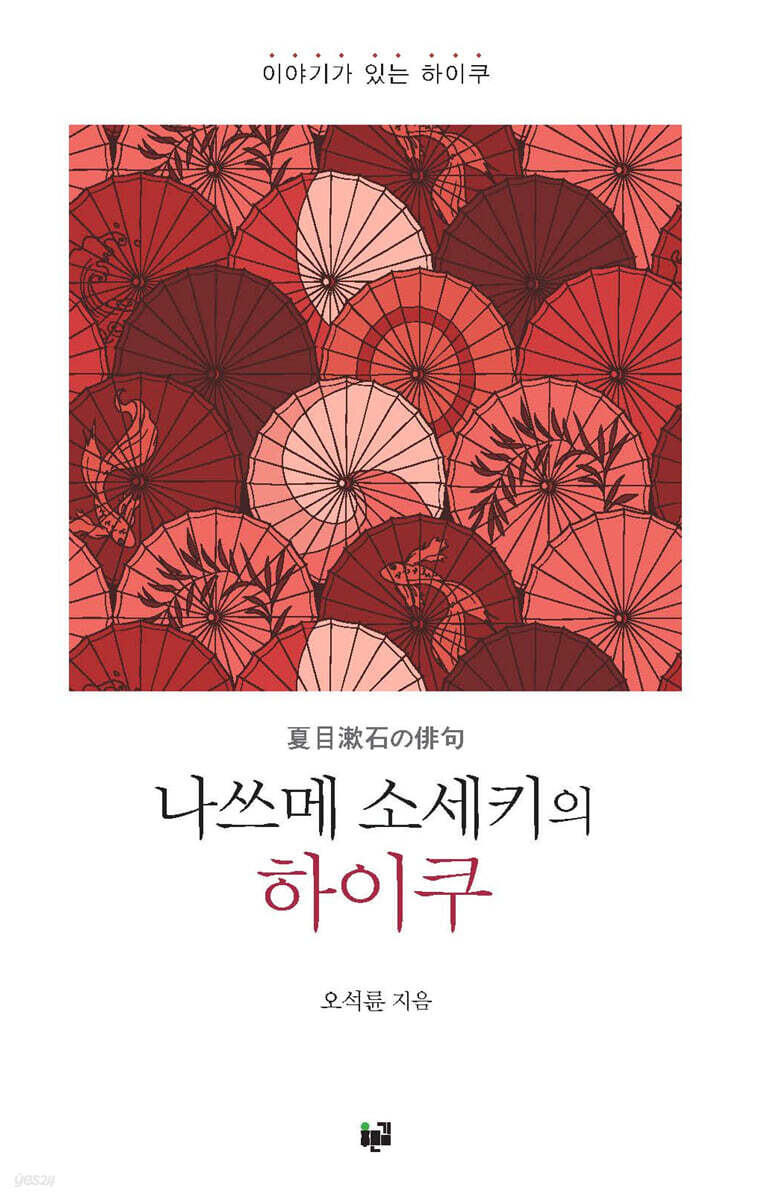
Natsume Soseki's haiku
 |
Description
Book Introduction
Many of my later poems are influenced by haiku.
The poem "Wildflowers" that readers like is one of them.
I received and read the manuscript of a collection of haiku poems by Natsume Soseki, a hero of modern and contemporary Japanese literature.
In a word, it was amazing.
I only knew Soseki as a Japanese novelist, but who knew he was a poet who wrote so many haiku? He was a poet before he was a novelist! For now, I lament my ignorance.
- From the recommendation of poet Na Tae-ju
The first domestic volume containing Natsume Soseki's haiku and commentary
"Natsume Soseki's Haiku" is the first domestic publication to focus on the haiku works of Natsume Soseki, a master of modern Japanese literature, and is a meaningful beginning that opens a new chapter in Soseki's literature.
Haiku, which originated in Japan, is a short seventeen-character poem that connects nature and the inner self of humans, and is now a world cultural heritage beloved around the world.
This book delves into Soseki's poetic world, including the haiku he created, and presents his previously little-known haiku literature to Korean readers for the first time.
In particular, through works that combine the 5-7-5 syllable haiku form with Soseki's unique emotions, one can glimpse a new aspect of modern Japanese literature.
The tangerine tree is not lonely/ with many layers of virtue
(累?と德孤ならず蜜柑哉)
In the style of haiku, he compared a line from the Analects of Confucius, “If you have virtue, you will not be lonely because there will be followers (德不孤必有隣),” to a tangerine tree with many fruits.
I can't help but be amazed by that outrageous idea.
The whistle of the spinning mill is ringing and the winter rain is falling.
(紡績の笛が鳴るなりりㆬの雨)
It was inspired by a new material, the sound of a flute.
The work was created with a novel idea.
It reflects a very free thinking that breaks away from the traditional haiku concept.
Author Oh Seok-ryun, a scholar specializing in modern and contemporary Japanese poetry and a poet who creates Korean literature, carefully selected 133 of Soseki's most exquisite haiku and tells the story of life, seasons, and the order of the universe in a tender and sensitive voice.
This kind explanation will linger in your memory for a long time.
The poem "Wildflowers" that readers like is one of them.
I received and read the manuscript of a collection of haiku poems by Natsume Soseki, a hero of modern and contemporary Japanese literature.
In a word, it was amazing.
I only knew Soseki as a Japanese novelist, but who knew he was a poet who wrote so many haiku? He was a poet before he was a novelist! For now, I lament my ignorance.
- From the recommendation of poet Na Tae-ju
The first domestic volume containing Natsume Soseki's haiku and commentary
"Natsume Soseki's Haiku" is the first domestic publication to focus on the haiku works of Natsume Soseki, a master of modern Japanese literature, and is a meaningful beginning that opens a new chapter in Soseki's literature.
Haiku, which originated in Japan, is a short seventeen-character poem that connects nature and the inner self of humans, and is now a world cultural heritage beloved around the world.
This book delves into Soseki's poetic world, including the haiku he created, and presents his previously little-known haiku literature to Korean readers for the first time.
In particular, through works that combine the 5-7-5 syllable haiku form with Soseki's unique emotions, one can glimpse a new aspect of modern Japanese literature.
The tangerine tree is not lonely/ with many layers of virtue
(累?と德孤ならず蜜柑哉)
In the style of haiku, he compared a line from the Analects of Confucius, “If you have virtue, you will not be lonely because there will be followers (德不孤必有隣),” to a tangerine tree with many fruits.
I can't help but be amazed by that outrageous idea.
The whistle of the spinning mill is ringing and the winter rain is falling.
(紡績の笛が鳴るなりりㆬの雨)
It was inspired by a new material, the sound of a flute.
The work was created with a novel idea.
It reflects a very free thinking that breaks away from the traditional haiku concept.
Author Oh Seok-ryun, a scholar specializing in modern and contemporary Japanese poetry and a poet who creates Korean literature, carefully selected 133 of Soseki's most exquisite haiku and tells the story of life, seasons, and the order of the universe in a tender and sensitive voice.
This kind explanation will linger in your memory for a long time.
- You can preview some of the book's contents.
Preview
index
Poet Na Tae-ju's recommendation
In publishing the book
Part 1
Beaten/ Delicious persimmon/ You couldn't come back/ I think/ Layered and hanging/ Grumbling/ Comfortably/ Falling/ Like violets/ When falling/ In the moonlit night/ At the sound of the bowstring/ In the dry field/ Dying as a human/ At the fly of the horse/ A sparrow came/ Is it Hansan (寒山)/ In the bright spring day/ In the spinning mill/ Painted by Gwangrin/ Then and now/ The autumn wind/ Asks if the forsythia flower/ Has any worries/ I/ See one star/ Long spring day/ The store clerk/ Teacher/ In a sunny place/ At the south window
Part 2
Cold wind/ Falling snow/ Morning glory/ The sky is narrow/ It is a shame to reach/ Mantis/ To the full moon/ The east wind blows/ Without crying/ On a cold spring day/ Wanting to go back/ Even if I try to go back/ Pushing through the green leaves/ Strong and stubborn/ Hiding death/ Quietly/ Kira-nim/ Must have been hot/ If you want to cry/ In the rapeseed flower field/ Change into summer clothes/ Gudabutsu/ Saigyo (Foolish?) is also going west/ Wood fire/ For the first time/ The spring breeze blows/ It is only long/ The child of the priest/ Gracefully/ The passing sun
Part 3
Autumn Paris/ Shaking and moving/ In a daze/ The full moon has risen/ You/ The maid who came to work/ From today/ The inn with plum blossoms/ Looking at the flower pot/ The crows of the New Year/ Flocking/ The sick person/ Does not get better/ The autumn heat/ The east wind blows from all directions/ What is chemistry/ Sorai (??) Kikaku (its corner)/ Forgetting love/ In the autumn river/ Lodging in a temple/ Lush meadow/ Coolness/ Deep in the valley/ Sometimes/ I blow out the candle/ To survive the winter/ The full moon has risen/ With a deep light/ The haze
Part 4
Oh cuckoo / Oh autumn wind / Oh morning glory / As it is / Ask the wind for the spring river / When I turn off the light / It is parting / Even in illness / On a deserted island / It is the beginning of autumn / Even sin is happy / The skull / Hakubotanju (White Peony Wine) / Suddenly the swaying / autumn wind / In the foggy / autumn river / Sits on my shoulder / The cold pulse / Only magnolia / Flower shadow / Flower shadow / The star of the spring night / My shadow / Unplaced and uncrowned / Morning glory / A single chrysanthemum / A gourd bowl / The morning cold / Vanishing into the sky / The autumn sky / Is a suit / Alone / A weakened body / Looking up / Alone / On dumplings / Majestically / At the bottom of the water jug / A girl / On a spring night
supplement
1.
What is Haiku? Its Definition and History
2.
About Natsume Soseki
3.
A few keywords for understanding Natsume Soseki's haiku
References
In publishing the book
Part 1
Beaten/ Delicious persimmon/ You couldn't come back/ I think/ Layered and hanging/ Grumbling/ Comfortably/ Falling/ Like violets/ When falling/ In the moonlit night/ At the sound of the bowstring/ In the dry field/ Dying as a human/ At the fly of the horse/ A sparrow came/ Is it Hansan (寒山)/ In the bright spring day/ In the spinning mill/ Painted by Gwangrin/ Then and now/ The autumn wind/ Asks if the forsythia flower/ Has any worries/ I/ See one star/ Long spring day/ The store clerk/ Teacher/ In a sunny place/ At the south window
Part 2
Cold wind/ Falling snow/ Morning glory/ The sky is narrow/ It is a shame to reach/ Mantis/ To the full moon/ The east wind blows/ Without crying/ On a cold spring day/ Wanting to go back/ Even if I try to go back/ Pushing through the green leaves/ Strong and stubborn/ Hiding death/ Quietly/ Kira-nim/ Must have been hot/ If you want to cry/ In the rapeseed flower field/ Change into summer clothes/ Gudabutsu/ Saigyo (Foolish?) is also going west/ Wood fire/ For the first time/ The spring breeze blows/ It is only long/ The child of the priest/ Gracefully/ The passing sun
Part 3
Autumn Paris/ Shaking and moving/ In a daze/ The full moon has risen/ You/ The maid who came to work/ From today/ The inn with plum blossoms/ Looking at the flower pot/ The crows of the New Year/ Flocking/ The sick person/ Does not get better/ The autumn heat/ The east wind blows from all directions/ What is chemistry/ Sorai (??) Kikaku (its corner)/ Forgetting love/ In the autumn river/ Lodging in a temple/ Lush meadow/ Coolness/ Deep in the valley/ Sometimes/ I blow out the candle/ To survive the winter/ The full moon has risen/ With a deep light/ The haze
Part 4
Oh cuckoo / Oh autumn wind / Oh morning glory / As it is / Ask the wind for the spring river / When I turn off the light / It is parting / Even in illness / On a deserted island / It is the beginning of autumn / Even sin is happy / The skull / Hakubotanju (White Peony Wine) / Suddenly the swaying / autumn wind / In the foggy / autumn river / Sits on my shoulder / The cold pulse / Only magnolia / Flower shadow / Flower shadow / The star of the spring night / My shadow / Unplaced and uncrowned / Morning glory / A single chrysanthemum / A gourd bowl / The morning cold / Vanishing into the sky / The autumn sky / Is a suit / Alone / A weakened body / Looking up / Alone / On dumplings / Majestically / At the bottom of the water jug / A girl / On a spring night
supplement
1.
What is Haiku? Its Definition and History
2.
About Natsume Soseki
3.
A few keywords for understanding Natsume Soseki's haiku
References
Publisher's Review
Natsume Soseki, his literary beginnings were as a haiku poet!
Natsume Soseki, a great Japanese writer and world-renowned author.
He was a haiku poet before becoming a novelist.
He was also a prolific poet who left behind 2,600 haiku.
Terada Torahiko, a disciple of Soseki who worked as a haiku poet, essayist, and physicist, said, “It is impossible to properly understand Soseki’s work without knowing his haiku.”
I am a wooden fish that gets beaten and spits out mosquitoes during the day.
(叩かれて?の蚊を吐く木魚哉)
The moktak is a tool used to make sounds when performing Buddhist rites or gathering people, but it also has symbolic meaning as it is used to enlighten and guide people in the right direction.
Soseki imagined that when a monk struck the moktak, the mosquitoes hiding inside would run away.
Wouldn't that be an escape from suffering through the moktak?
The placement of a moktak and a mosquito in this short haiku demonstrates Soseki's talent as a poet.
He also has a great sense of humor.
Cuckoo, it was hard to get out because I was pooping.
(The bird comes out and goes out at the time)
It was a work that became a hot topic at the time.
It's fun above all else.
It means that I heard the cuckoo's voice, but I regret not being able to see it or hear it because I was busy pooping.
“I’m taking a dump” means ‘I’m taking care of business in the back room.’
At that time, the toilet and bathroom were called the back room.
The Chinese character 'cheok' (厠) in the original text is 'cheok' (back room).
The cuckoo refers to the then Prime Minister Saionji Kinmochi (1849-1940).
Soseki's haiku goes beyond simple poetic form and encapsulates his life and the spirit of the times.
The book is composed to provide a deeper understanding of Soseki's literary world, with faithful commentary added to the original text.
Soseki is considered a great writer, having won first place in a reader popularity poll of Japanese writers of the past thousand years.
The moment you look into the charm of his haiku, happiness comes with a great resonance.
Natsume Soseki, a great Japanese writer and world-renowned author.
He was a haiku poet before becoming a novelist.
He was also a prolific poet who left behind 2,600 haiku.
Terada Torahiko, a disciple of Soseki who worked as a haiku poet, essayist, and physicist, said, “It is impossible to properly understand Soseki’s work without knowing his haiku.”
I am a wooden fish that gets beaten and spits out mosquitoes during the day.
(叩かれて?の蚊を吐く木魚哉)
The moktak is a tool used to make sounds when performing Buddhist rites or gathering people, but it also has symbolic meaning as it is used to enlighten and guide people in the right direction.
Soseki imagined that when a monk struck the moktak, the mosquitoes hiding inside would run away.
Wouldn't that be an escape from suffering through the moktak?
The placement of a moktak and a mosquito in this short haiku demonstrates Soseki's talent as a poet.
He also has a great sense of humor.
Cuckoo, it was hard to get out because I was pooping.
(The bird comes out and goes out at the time)
It was a work that became a hot topic at the time.
It's fun above all else.
It means that I heard the cuckoo's voice, but I regret not being able to see it or hear it because I was busy pooping.
“I’m taking a dump” means ‘I’m taking care of business in the back room.’
At that time, the toilet and bathroom were called the back room.
The Chinese character 'cheok' (厠) in the original text is 'cheok' (back room).
The cuckoo refers to the then Prime Minister Saionji Kinmochi (1849-1940).
Soseki's haiku goes beyond simple poetic form and encapsulates his life and the spirit of the times.
The book is composed to provide a deeper understanding of Soseki's literary world, with faithful commentary added to the original text.
Soseki is considered a great writer, having won first place in a reader popularity poll of Japanese writers of the past thousand years.
The moment you look into the charm of his haiku, happiness comes with a great resonance.
GOODS SPECIFICS
- Date of issue: November 12, 2025
- Page count, weight, size: 132 pages | 130*205*10mm
- ISBN13: 9791172670634
- ISBN10: 1172670633
You may also like
카테고리
korean


korean

![ELLE 엘르 스페셜 에디션 A형 : 12월 [2025]](http://librairie.coreenne.fr/cdn/shop/files/b8e27a3de6c9538896439686c6b0e8fb.jpg?v=1766436872&width=3840)


