

Time
 |
Description
Book Introduction
A master of modern French literature, winner of the 2022 Nobel Prize in Literature
Annie Ernaux's masterpiece
The 2022 Nobel Prize in Literature winner, Annie Ernaux's masterpiece, "Time," is one of the most original attempts in modern literature, precisely intersecting the lives of individuals and the changes in society.
It follows the growth and aging of a woman born in the post-war years of the 1940s, while juxtaposing the upheavals that French society has experienced.
Political events, women's rights, class mobility, consumer culture, changes in the education system, and even fragments of advertising slogans and pop songs that shook the times.
The 'social landscapes' deeply ingrained in individual lives are revived along with the author's memories.
In this work, Annie Ernaux chose not to use the first-person point of view commonly used in autobiographies, but to narrate the story from the perspectives of “she,” “we,” and “people,” excluding “me.”
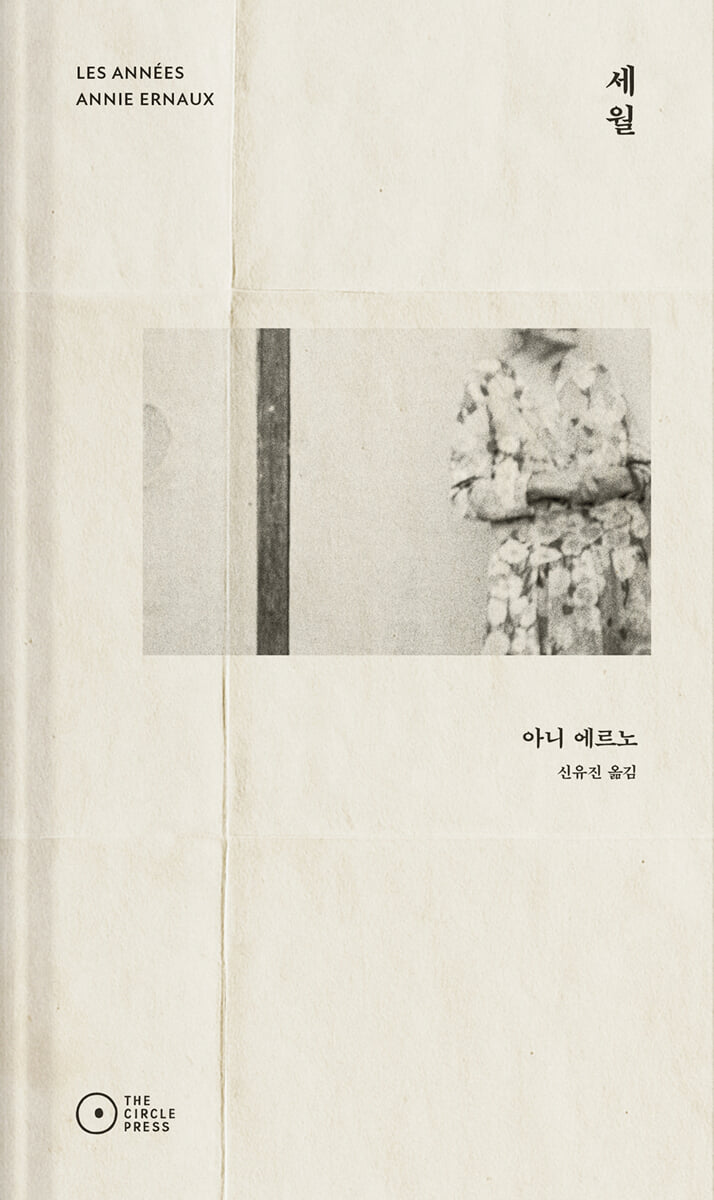
The 'she' in the story is Annie Ernaux herself, and at the same time, the figure in the photograph, a woman's perspective on French society from 1941 to 2006, while 'we' and 'people' can be said to be a more comprehensive, impersonal perspective that has been hidden formlessly within the mentioned era.
As she herself states in the book, “It will not be a retrospective work in the way we usually think of it, seeking to tell a life story or explain oneself,” Annie Ernaux has shown that it is possible to write by projecting collective memory onto personal history by situating her own story within the story of her generation, and has achieved a great literary achievement by giving birth to a new form of ‘impersonal autobiography.’
"Time" won the Prix Marguerite Duras, the Prix Françoise Mauriac, the Prix French, and the Telegram Readers' Award, and was shortlisted for the 2019 Man Booker International Prize.
Annie Ernaux's masterpiece
The 2022 Nobel Prize in Literature winner, Annie Ernaux's masterpiece, "Time," is one of the most original attempts in modern literature, precisely intersecting the lives of individuals and the changes in society.
It follows the growth and aging of a woman born in the post-war years of the 1940s, while juxtaposing the upheavals that French society has experienced.
Political events, women's rights, class mobility, consumer culture, changes in the education system, and even fragments of advertising slogans and pop songs that shook the times.
The 'social landscapes' deeply ingrained in individual lives are revived along with the author's memories.
In this work, Annie Ernaux chose not to use the first-person point of view commonly used in autobiographies, but to narrate the story from the perspectives of “she,” “we,” and “people,” excluding “me.”
The 'she' in the story is Annie Ernaux herself, and at the same time, the figure in the photograph, a woman's perspective on French society from 1941 to 2006, while 'we' and 'people' can be said to be a more comprehensive, impersonal perspective that has been hidden formlessly within the mentioned era.
As she herself states in the book, “It will not be a retrospective work in the way we usually think of it, seeking to tell a life story or explain oneself,” Annie Ernaux has shown that it is possible to write by projecting collective memory onto personal history by situating her own story within the story of her generation, and has achieved a great literary achievement by giving birth to a new form of ‘impersonal autobiography.’
"Time" won the Prix Marguerite Duras, the Prix Françoise Mauriac, the Prix French, and the Telegram Readers' Award, and was shortlisted for the 2019 Man Booker International Prize.
- You can preview some of the book's contents.
Preview
index
Time - 9p
All Scenes Will Not Disappear (Translator's Note) - 260p
All Scenes Will Not Disappear (Translator's Note) - 260p
Into the book
Everything will be erased in the blink of an eye.
The dictionary that has been piled up from cradle to grave will be deleted.
Silence will fall, and no words will be able to be spoken, and when you open your mouth, no 'I', no 'me', nothing will come out.
Language will continue to bring words into the world.
In the conversations around the festive table, we are just names, and we will gradually lose our faces until we disappear into the nameless multitude of distant generations.
--- p.9
Memory, like sexual desire, never stops.
It combines the dead and the living, the real and the imagined, dreams and history.
--- p.13
If there's one important question that will help you understand yourself better, it's whether you can define the years you've lived at each age and how you'll portray the past.
--- p.81
History had no meaning in the life of an individual.
We were either happy or unhappy from day to day.
--- p.100
We looked back at women's history.
I realized that I didn't have enough sexual freedom, creative freedom, all the things that exist for men.
--- p.118
Between 1940 and 1985, the idea of writing about "something like the fate of women" occurred to her, as she rediscovered in her renewed solitude the thoughts and feelings that her married life had left hazy.
Something like Maupassant's 'Life', which allows one to feel the time flowing inside and outside her in history, a 'complete novel' that ends in the loss of beings and things, parents, husband, children leaving home, and furniture that has been sold.
--- p.170
Although she rarely thinks of her husband, traces of their communal life remain within her, as do the tastes he inspired: Bach, sacred music, orange juice in the morning, and so on.
As these images of life pass her by, she asks herself, 'Do I want to be there again?'
I want to say no, but I know the question itself is meaningless.
Any questions about the past are meaningless.
--- p.190
What is important to her is not the period of time during which she lived on this earth in a given era, but the time that permeated her, the world that could only be recorded while she was alive.
In another sense, she had an intuition about what form her book would take.
The dictionary that has been piled up from cradle to grave will be deleted.
Silence will fall, and no words will be able to be spoken, and when you open your mouth, no 'I', no 'me', nothing will come out.
Language will continue to bring words into the world.
In the conversations around the festive table, we are just names, and we will gradually lose our faces until we disappear into the nameless multitude of distant generations.
--- p.9
Memory, like sexual desire, never stops.
It combines the dead and the living, the real and the imagined, dreams and history.
--- p.13
If there's one important question that will help you understand yourself better, it's whether you can define the years you've lived at each age and how you'll portray the past.
--- p.81
History had no meaning in the life of an individual.
We were either happy or unhappy from day to day.
--- p.100
We looked back at women's history.
I realized that I didn't have enough sexual freedom, creative freedom, all the things that exist for men.
--- p.118
Between 1940 and 1985, the idea of writing about "something like the fate of women" occurred to her, as she rediscovered in her renewed solitude the thoughts and feelings that her married life had left hazy.
Something like Maupassant's 'Life', which allows one to feel the time flowing inside and outside her in history, a 'complete novel' that ends in the loss of beings and things, parents, husband, children leaving home, and furniture that has been sold.
--- p.170
Although she rarely thinks of her husband, traces of their communal life remain within her, as do the tastes he inspired: Bach, sacred music, orange juice in the morning, and so on.
As these images of life pass her by, she asks herself, 'Do I want to be there again?'
I want to say no, but I know the question itself is meaningless.
Any questions about the past are meaningless.
--- p.190
What is important to her is not the period of time during which she lived on this earth in a given era, but the time that permeated her, the world that could only be recorded while she was alive.
In another sense, she had an intuition about what form her book would take.
--- p.254
Publisher's Review
* The New York Times' 100 Best Books of the 21st Century
* Marguerite Duras Prize, Françoise Mauriac Prize, French Language Prize, Telegram Readers' Prize, 2019 Man Booker Prize finalist
* A master of modern French literature, winner of the 2022 Nobel Prize in Literature
No, Ernaux's pinnacle of literature, "Time"
"Time" is a revolution.
It is a revolution not only in the art of autobiography, but within art itself.
"Annie Ernaux's book uniquely evokes the times we have lived in and still live in, mixing memory, dreams, facts, and thoughts." ? John Banville, author of The Sea
Annie Ernaux's "Time" is a truly new work, a careful capture of collective memory, a truly remarkable achievement.
- Olivia Lange, author of Strange Weather
“The work of Annie Ernaux, one of the most important writers in French literature, is at once devastatingly intense, vehemently turbulent, and delicate.” ? Édouard Louis, author of The End of Eddy
Without a doubt, one of the greatest works of modern literature! - Emmanuel Carrère, author of The Kingdom
The novel "Times," considered to be Ernaux's masterpiece, follows the growth and aging of a woman born in the immediate aftermath of the 1940s war, while simultaneously juxtaposing the turbulent times French society experienced.
Political events, women's rights, class mobility, consumer culture, changes in the education system, and even fragments of advertising slogans and pop songs that shook the times.
The 'social landscapes' deeply ingrained in individual lives are revived along with the author's memories.
“Memory, like sexual desire, never stops.
It unites the dead and the living, the real and the imagined, dreams and history.”
“Time” is a book of memories.
But this memory is not simply an individual's intimate recollection.
No, the memory Ernaux speaks of is constantly alive and moving, intersecting the dead and the living, the real and the imagined, dreams and history.
She does not simply record her experiences as personal feelings or confessions, but shows how they are connected to the times.
So, the memories in 『Time』 belong to ‘me’ and at the same time to ‘all of us.’
As readers turn the pages, they come to realize how their childhood, youth, and life landscapes are intertwined with the social context.
In this way, the memories that Annie Ernaux deals with are not the private possessions of an individual, but rather become testimony to a universal experience that spans a generation.
“We looked back at women’s history.
“I realized that I didn’t have enough sexual freedom, creative freedom, all the things that exist for men.”
"Time" also brings women's lives and experiences to the forefront of history.
No, Ernaux looks back on her own life and records with sobering clarity what freedoms women were denied and what rights they were deprived of.
This is not just one individual's unfortunate experience, but a persistent question about the historical condition of women that has persisted through generations.
Looking back on the past years when sexual and creative freedom were restricted, she seeks to establish women's voices in literature.
And in the process, the reader sees beyond Annie Ernaux's personal pain and anger, and the commonality of the oppression experienced by women of her time.
"Time" is thus one of the most powerful achievements of feminist literature, demonstrating how women's intimate experiences can be expanded into a social record.
“What matters to her is not the period of time she lived on this earth in a given era, but the time that permeated her, the world that could only be recorded while she was alive.”
What makes “Time” special is its writing style itself.
Instead of writing a personal biography, Ernaux reconstructs the entirety of his life into a single narrative.
She rejects the first-person pronoun 'I' and chooses the collective voice 'we'.
This is not simply a literary strategy to record the life of one woman, but the memories and experiences of an entire generation.
It does not weave together stories with characters and events like a novel, nor does it focus solely on oneself like an autobiography.
Instead, fragments of images, moments, and memories accumulate to reveal the flow of history.
It is precisely for this reason that "Time" is evaluated as a work that breaks down genre boundaries and opens up new possibilities for literature.
Readers will find within it a mirror reflecting their own past and present, and will come to deeply feel that their individual lives are part of history.
Through its universal extensibility of memory, its historical record of women, and its innovative writing style, "Sewol" demonstrates a literary achievement that goes beyond a single author's autobiographical narrative.
The reason Ernaux is called the 'epic of memory' is because this book records the individual's time while also testifying to the time of us all.
* Marguerite Duras Prize, Françoise Mauriac Prize, French Language Prize, Telegram Readers' Prize, 2019 Man Booker Prize finalist
* A master of modern French literature, winner of the 2022 Nobel Prize in Literature
No, Ernaux's pinnacle of literature, "Time"
"Time" is a revolution.
It is a revolution not only in the art of autobiography, but within art itself.
"Annie Ernaux's book uniquely evokes the times we have lived in and still live in, mixing memory, dreams, facts, and thoughts." ? John Banville, author of The Sea
Annie Ernaux's "Time" is a truly new work, a careful capture of collective memory, a truly remarkable achievement.
- Olivia Lange, author of Strange Weather
“The work of Annie Ernaux, one of the most important writers in French literature, is at once devastatingly intense, vehemently turbulent, and delicate.” ? Édouard Louis, author of The End of Eddy
Without a doubt, one of the greatest works of modern literature! - Emmanuel Carrère, author of The Kingdom
The novel "Times," considered to be Ernaux's masterpiece, follows the growth and aging of a woman born in the immediate aftermath of the 1940s war, while simultaneously juxtaposing the turbulent times French society experienced.
Political events, women's rights, class mobility, consumer culture, changes in the education system, and even fragments of advertising slogans and pop songs that shook the times.
The 'social landscapes' deeply ingrained in individual lives are revived along with the author's memories.
“Memory, like sexual desire, never stops.
It unites the dead and the living, the real and the imagined, dreams and history.”
“Time” is a book of memories.
But this memory is not simply an individual's intimate recollection.
No, the memory Ernaux speaks of is constantly alive and moving, intersecting the dead and the living, the real and the imagined, dreams and history.
She does not simply record her experiences as personal feelings or confessions, but shows how they are connected to the times.
So, the memories in 『Time』 belong to ‘me’ and at the same time to ‘all of us.’
As readers turn the pages, they come to realize how their childhood, youth, and life landscapes are intertwined with the social context.
In this way, the memories that Annie Ernaux deals with are not the private possessions of an individual, but rather become testimony to a universal experience that spans a generation.
“We looked back at women’s history.
“I realized that I didn’t have enough sexual freedom, creative freedom, all the things that exist for men.”
"Time" also brings women's lives and experiences to the forefront of history.
No, Ernaux looks back on her own life and records with sobering clarity what freedoms women were denied and what rights they were deprived of.
This is not just one individual's unfortunate experience, but a persistent question about the historical condition of women that has persisted through generations.
Looking back on the past years when sexual and creative freedom were restricted, she seeks to establish women's voices in literature.
And in the process, the reader sees beyond Annie Ernaux's personal pain and anger, and the commonality of the oppression experienced by women of her time.
"Time" is thus one of the most powerful achievements of feminist literature, demonstrating how women's intimate experiences can be expanded into a social record.
“What matters to her is not the period of time she lived on this earth in a given era, but the time that permeated her, the world that could only be recorded while she was alive.”
What makes “Time” special is its writing style itself.
Instead of writing a personal biography, Ernaux reconstructs the entirety of his life into a single narrative.
She rejects the first-person pronoun 'I' and chooses the collective voice 'we'.
This is not simply a literary strategy to record the life of one woman, but the memories and experiences of an entire generation.
It does not weave together stories with characters and events like a novel, nor does it focus solely on oneself like an autobiography.
Instead, fragments of images, moments, and memories accumulate to reveal the flow of history.
It is precisely for this reason that "Time" is evaluated as a work that breaks down genre boundaries and opens up new possibilities for literature.
Readers will find within it a mirror reflecting their own past and present, and will come to deeply feel that their individual lives are part of history.
Through its universal extensibility of memory, its historical record of women, and its innovative writing style, "Sewol" demonstrates a literary achievement that goes beyond a single author's autobiographical narrative.
The reason Ernaux is called the 'epic of memory' is because this book records the individual's time while also testifying to the time of us all.
GOODS SPECIFICS
- Date of issue: September 25, 2025
- Format: Hardcover book binding method guide
- Page count, weight, size: 264 pages | 110*190*20mm
- ISBN13: 9791190533751
- ISBN10: 1190533758
You may also like
카테고리
korean


korean

![GQ KOREA Mark (Monthly): December [2025]](http://librairie.coreenne.fr/cdn/shop/files/8ef265dbbfbf186523ed75ba7319009d.jpg?v=1765340328&width=3840)


