

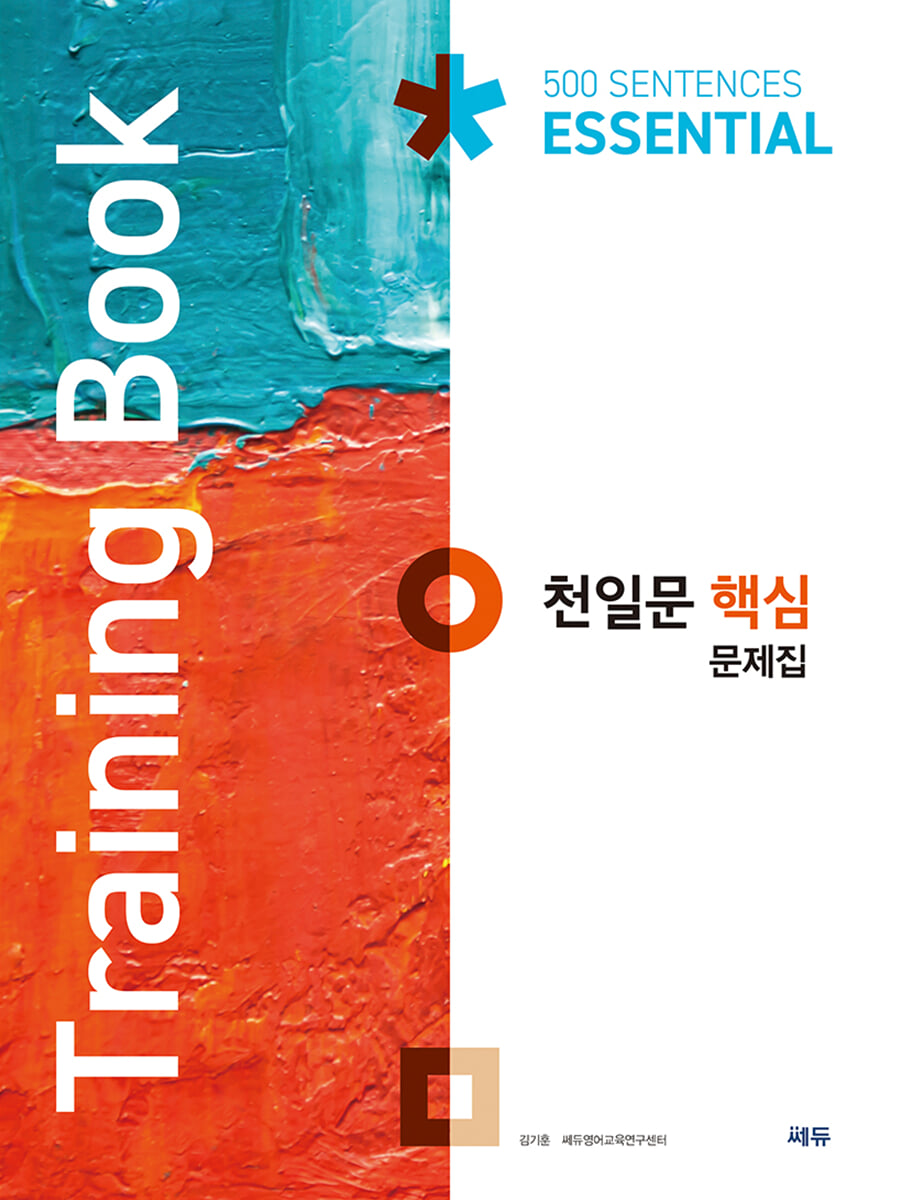
Thousand Character Classic Core Problem Book Training Book
 |
Description
Book Introduction
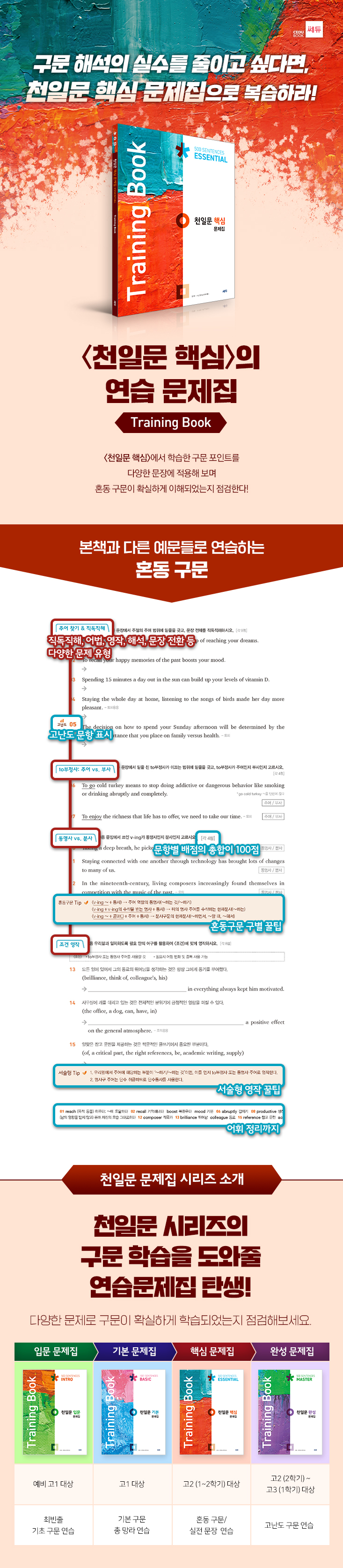
A collection of practice problems that can help you practice confusing sentences with various problems.
Check if the syntax has been learned properly
The Thousand Character Classic series, which first appeared in 2004, became the number one bestseller in Korean literature, with cumulative sales exceeding 4.3 million copies.
The Thousand-Yil Classic, which has established itself as the best English textbook in Korea, has been reborn in a new way to fit learning trends.
The Thousand-Yil Classic is characterized by learning English structure by reading representative phrases in detail, and it allows for quick direct reading and accurate sentence interpretation.
The "Thousand Character Classic Core Problem Book (Training Book)" is a practice book for "Thousand Character Classic Core." It includes sentences that are different from those in the main book, allowing you to encounter a wider variety of sentences containing the relevant phrases and check whether you have thoroughly learned the phrases.
It consists of various types such as direct reading, grammar, composition, interpretation, and sentence transition.
You can learn how to distinguish between phrases that have the same form but different meanings and how to accurately interpret sentences that are easily misunderstood.
If you want to reduce mistakes in grammar interpretation, I highly recommend reviewing the Thousand Character Classic core problem book.
Check if the syntax has been learned properly
The Thousand Character Classic series, which first appeared in 2004, became the number one bestseller in Korean literature, with cumulative sales exceeding 4.3 million copies.
The Thousand-Yil Classic, which has established itself as the best English textbook in Korea, has been reborn in a new way to fit learning trends.
The Thousand-Yil Classic is characterized by learning English structure by reading representative phrases in detail, and it allows for quick direct reading and accurate sentence interpretation.
The "Thousand Character Classic Core Problem Book (Training Book)" is a practice book for "Thousand Character Classic Core." It includes sentences that are different from those in the main book, allowing you to encounter a wider variety of sentences containing the relevant phrases and check whether you have thoroughly learned the phrases.
It consists of various types such as direct reading, grammar, composition, interpretation, and sentence transition.
You can learn how to distinguish between phrases that have the same form but different meanings and how to accurately interpret sentences that are easily misunderstood.
If you want to reduce mistakes in grammar interpretation, I highly recommend reviewing the Thousand Character Classic core problem book.
- You can preview some of the book's contents.
Preview
index
Part 1 Sentence Structure and Transformation
CHAPTER 01 The Beginning and Subject of a Sentence
Unit 01 Beginning of Sentences
Unit 02 Noun phrases that function as subjects
Unit 03 Noun clauses that function as subjects
Unit 04 Long Subjects
Unit 05 Interpreting inanimate subjects
Unit 06 to-v/v-ing far from the semantic subject
Unit 07 〈it is noun that~〉 it
CHAPTER 02 Objects and Complements: Phrases and Clauses
Unit 08 To-v/v-ing Phrases Acting as Objects of Verbs I
Unit 09 To-v/v-ing Phrases Acting as Objects of Verbs II
Unit 10 Noun clauses that serve as objects of verbs
Unit 11 Phrases and clauses that serve as objects of prepositions
Unit 12 Phrases and clauses that supplement the subject
Unit 13: Verb Phrases Acting as Object Complements
CHAPTER 03 Same Form, Different Role
Unit 14 'Nouns' after SV
'Jeon Myeong-gu' after Unit 15 SV
Unit 16 'Jeon Myeong-gu' after SVO
Unit 17 'Noun¹+Noun²' after SV
Unit 18 'to-v' after SVO
Unit 19 'Noun+v-ing' after SV
CHAPTER 04 Transformation of basic sentence structure
Unit 20: Shifting the Position of the Subject
Unit 21: Shifting the Position of the Bore
Unit 22 Moving the Object Position
Unit 23 Elliptic Phrases
Unit 24: Parentheses
Unit 25 Appositive Phrases
PART 2 Understanding Verbs
CHAPTER 05 TENSE AND TIME
Unit 26 Present (Continuous) Tense and Time
Unit 27 Present Perfect Tense and Time
Unit 28 Past [Future] Perfect Tense and Time
Unit 29 Subjunctive Past Tense and Time
Unit 30: Past Perfect Tense and Time
Unit 31 Various constructs that replace if clauses
Unit 32 When Infinitives/Gerunds Indicate
CHAPTER 06 Semantic Information Contained in Verbs
Unit 33 Does the subject perform the action or receive the action?
Unit 34 Does the subject perform the action or receive the action?
Unit 35: Auxiliary Verbs that Add the Meaning of Possibility and Guessing I
Unit 36: Auxiliary Verbs that Add the Meaning of Possibility and Guess II
Unit 37 Special uses of should
Unit 38: The meaning of auxiliary verbs that form sentences
PART 3 Understanding Modifiers
CHAPTER 07 Adjectives (Phrases) / Relative Clauses I
Unit 39 Adjectives (Phrases) Modifying Nouns
Unit 40 v-ing/pp as adjectives
Unit 41 Relative Pronoun Clauses Modifying Nouns I
Unit 42 Relative Pronoun Clauses Modifying Nouns II
Unit 43 Relative Adverbial Clauses Modifying Nouns
Unit 44 Relative Pronouns: what, whoever, etc.
Unit 45 Relative clauses that supplement the antecedent
CHAPTER 08 Adjectives (Phrases) / Relative Clauses II
Unit 46 Omission of relative clauses and antecedents
Unit 47 many of+relative pronoun
Unit 48 Noun + Adjective Phrase + Relative Clause
Unit 49 Noun + Relative Clause + Relative Clause
Unit 50 Subject-Modifying Adjective Phrases/Relative Clauses Far from the Subject
Unit 51 I think after relative pronouns
CHAPTER 09 Adverbial Modifiers: to-infinitive, adverbial clause
Unit 52 The meaning of the adverbial to-v
Unit 53 Adverbial to-v Constructions
Unit 54 Conjunctions with multiple meanings
Unit 55 Conjunctions with similar forms
Unit 56 Unusual Conjunctions
Unit 57: Conjunctions to be careful about when interpreting
CHAPTER 10 Participle Phrases
Unit 58 Interpreting Participle Phrases
Unit 59 When Participle Phrases Mean
Unit 60: Noteworthy Forms of Participle Phrases
Unit 61 Semantic Subject of Participle Phrases
CHAPTER 11 Comparative Phrases
Unit 62 When the comparison results are the same
Unit 63 When the comparison results are different
Unit 64 The most severe of several cases
Unit 65 Key Comparative Expressions
CHAPTER 12 Special Syntax
Unit 66 Emphasis
Unit 67 Common Sentences
Unit 68 Parallel Structure
Unit 69 Negative Sentences
Unit 70 Pronouns and Pronouns
[Book within a Book] Answers and Explanations
CHAPTER 01 The Beginning and Subject of a Sentence
Unit 01 Beginning of Sentences
Unit 02 Noun phrases that function as subjects
Unit 03 Noun clauses that function as subjects
Unit 04 Long Subjects
Unit 05 Interpreting inanimate subjects
Unit 06 to-v/v-ing far from the semantic subject
Unit 07 〈it is noun that~〉 it
CHAPTER 02 Objects and Complements: Phrases and Clauses
Unit 08 To-v/v-ing Phrases Acting as Objects of Verbs I
Unit 09 To-v/v-ing Phrases Acting as Objects of Verbs II
Unit 10 Noun clauses that serve as objects of verbs
Unit 11 Phrases and clauses that serve as objects of prepositions
Unit 12 Phrases and clauses that supplement the subject
Unit 13: Verb Phrases Acting as Object Complements
CHAPTER 03 Same Form, Different Role
Unit 14 'Nouns' after SV
'Jeon Myeong-gu' after Unit 15 SV
Unit 16 'Jeon Myeong-gu' after SVO
Unit 17 'Noun¹+Noun²' after SV
Unit 18 'to-v' after SVO
Unit 19 'Noun+v-ing' after SV
CHAPTER 04 Transformation of basic sentence structure
Unit 20: Shifting the Position of the Subject
Unit 21: Shifting the Position of the Bore
Unit 22 Moving the Object Position
Unit 23 Elliptic Phrases
Unit 24: Parentheses
Unit 25 Appositive Phrases
PART 2 Understanding Verbs
CHAPTER 05 TENSE AND TIME
Unit 26 Present (Continuous) Tense and Time
Unit 27 Present Perfect Tense and Time
Unit 28 Past [Future] Perfect Tense and Time
Unit 29 Subjunctive Past Tense and Time
Unit 30: Past Perfect Tense and Time
Unit 31 Various constructs that replace if clauses
Unit 32 When Infinitives/Gerunds Indicate
CHAPTER 06 Semantic Information Contained in Verbs
Unit 33 Does the subject perform the action or receive the action?
Unit 34 Does the subject perform the action or receive the action?
Unit 35: Auxiliary Verbs that Add the Meaning of Possibility and Guessing I
Unit 36: Auxiliary Verbs that Add the Meaning of Possibility and Guess II
Unit 37 Special uses of should
Unit 38: The meaning of auxiliary verbs that form sentences
PART 3 Understanding Modifiers
CHAPTER 07 Adjectives (Phrases) / Relative Clauses I
Unit 39 Adjectives (Phrases) Modifying Nouns
Unit 40 v-ing/pp as adjectives
Unit 41 Relative Pronoun Clauses Modifying Nouns I
Unit 42 Relative Pronoun Clauses Modifying Nouns II
Unit 43 Relative Adverbial Clauses Modifying Nouns
Unit 44 Relative Pronouns: what, whoever, etc.
Unit 45 Relative clauses that supplement the antecedent
CHAPTER 08 Adjectives (Phrases) / Relative Clauses II
Unit 46 Omission of relative clauses and antecedents
Unit 47 many of+relative pronoun
Unit 48 Noun + Adjective Phrase + Relative Clause
Unit 49 Noun + Relative Clause + Relative Clause
Unit 50 Subject-Modifying Adjective Phrases/Relative Clauses Far from the Subject
Unit 51 I think after relative pronouns
CHAPTER 09 Adverbial Modifiers: to-infinitive, adverbial clause
Unit 52 The meaning of the adverbial to-v
Unit 53 Adverbial to-v Constructions
Unit 54 Conjunctions with multiple meanings
Unit 55 Conjunctions with similar forms
Unit 56 Unusual Conjunctions
Unit 57: Conjunctions to be careful about when interpreting
CHAPTER 10 Participle Phrases
Unit 58 Interpreting Participle Phrases
Unit 59 When Participle Phrases Mean
Unit 60: Noteworthy Forms of Participle Phrases
Unit 61 Semantic Subject of Participle Phrases
CHAPTER 11 Comparative Phrases
Unit 62 When the comparison results are the same
Unit 63 When the comparison results are different
Unit 64 The most severe of several cases
Unit 65 Key Comparative Expressions
CHAPTER 12 Special Syntax
Unit 66 Emphasis
Unit 67 Common Sentences
Unit 68 Parallel Structure
Unit 69 Negative Sentences
Unit 70 Pronouns and Pronouns
[Book within a Book] Answers and Explanations
Detailed image
GOODS SPECIFICS
- Publication date: October 18, 2021
- Page count, weight, size: 188 pages | 532g | 210*280*20mm
- ISBN13: 9788968062322
- ISBN10: 8968062323
- Reference book for use in: 1st year of high school
- Reference book usage semester: Common semester
- Reference book difficulty: Medium Reference book difficulty guide
You may also like
카테고리
korean


korean

![GQ KOREA Mark (Monthly): December [2025]](http://librairie.coreenne.fr/cdn/shop/files/8ef265dbbfbf186523ed75ba7319009d.jpg?v=1765340328&width=3840)


