

Listen to the song of the wind
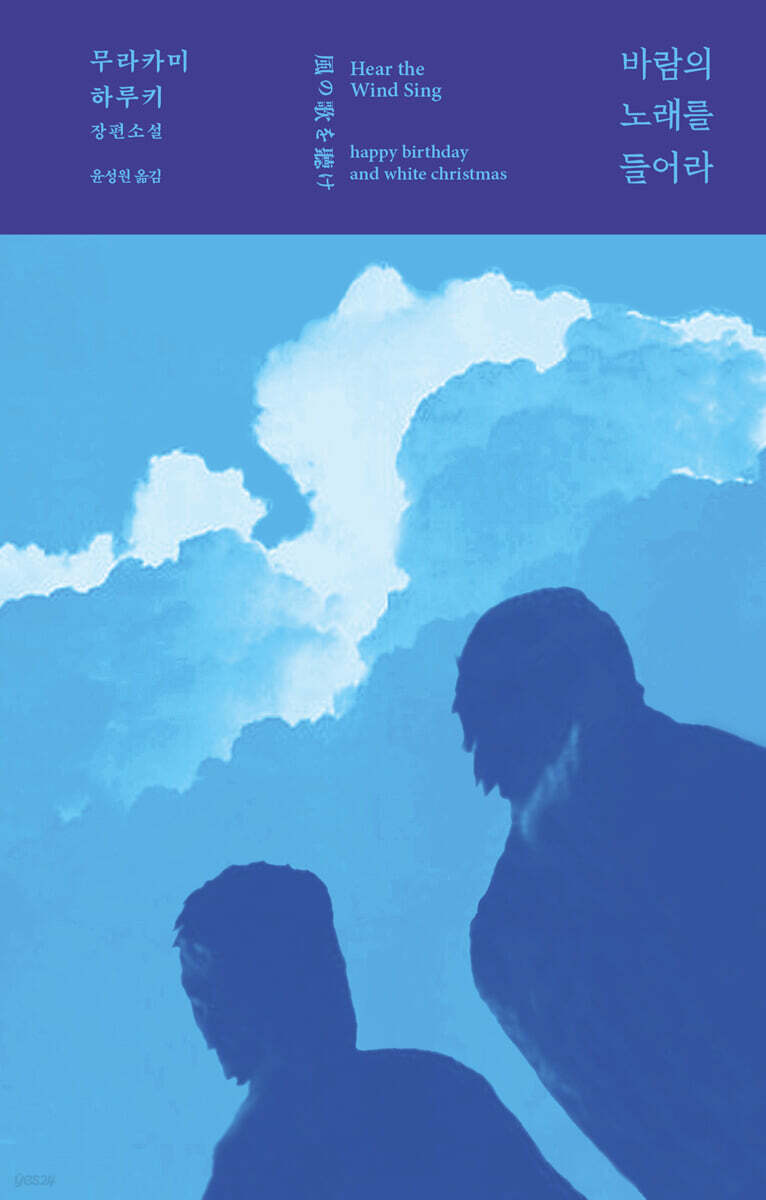 |
Description
Book Introduction
All of Haruki's stories begin with this work!
Haruki Murakami wrote this when he was twenty-nine.
Chun's melancholy
Haruki Murakami's first work made a splendid debut, winning the Gunzo Rookie of the Year Award.
A completely revised edition that fully preserves Haruki's style.
"Hear the Wind Sing," the debut work that heralded the birth of the great writer Haruki Murakami and the winner of the 1979 Gunzo New Writer's Award, is a must-read for those who wish to delve deeper into the archetype of Haruki's literature.
The author's signature short and light sentences capture the emptiness and deep sense of loss that comes after the passionate times of youth, and the journey of young people to overcome and regenerate.
It was also made into a movie by director Kazuki Omori, a junior from Haruki's hometown.
Haruki Murakami wrote this when he was twenty-nine.
Chun's melancholy
Haruki Murakami's first work made a splendid debut, winning the Gunzo Rookie of the Year Award.
A completely revised edition that fully preserves Haruki's style.
"Hear the Wind Sing," the debut work that heralded the birth of the great writer Haruki Murakami and the winner of the 1979 Gunzo New Writer's Award, is a must-read for those who wish to delve deeper into the archetype of Haruki's literature.
The author's signature short and light sentences capture the emptiness and deep sense of loss that comes after the passionate times of youth, and the journey of young people to overcome and regenerate.
It was also made into a movie by director Kazuki Omori, a junior from Haruki's hometown.
- You can preview some of the book's contents.
Preview
index
Listen to the song of the wind
In lieu of a review
Author's Note
Translator's Note
In lieu of a review
Author's Note
Translator's Note
Into the book
“There is no such thing as a perfect sentence.
“Just as there is no such thing as perfect despair… … .”
--- p.11
My grandmother always said this while she was alive.
“People with dark hearts only dream dark dreams.
“They say that people with darker hearts don’t even dream.”
--- p.16
“But in the end, everyone dies.” I said that as a test.
“Of course.
Everyone dies someday.
But you know, I still have fifty more years to live until then, and living fifty years thinking about various things is definitely more tiring than living five thousand years without thinking about anything, right?”
--- p.24
“So you’re saying you don’t read books by living authors?”
“Because a living writer has no value.”
“Why?”
“I feel like I can forgive almost anything when it comes to dead people.”
--- p.30
There are two outstanding points about the rat novel.
First of all, there are no sex scenes and no one dies.
--- p.34
I thought I'd write it a little more simply.
So simple that no one has ever written anything like it before.
By building simple language, we create simple sentences, and by building simple sentences, we end up drawing a reality that is not simple.
“Just as there is no such thing as perfect despair… … .”
--- p.11
My grandmother always said this while she was alive.
“People with dark hearts only dream dark dreams.
“They say that people with darker hearts don’t even dream.”
--- p.16
“But in the end, everyone dies.” I said that as a test.
“Of course.
Everyone dies someday.
But you know, I still have fifty more years to live until then, and living fifty years thinking about various things is definitely more tiring than living five thousand years without thinking about anything, right?”
--- p.24
“So you’re saying you don’t read books by living authors?”
“Because a living writer has no value.”
“Why?”
“I feel like I can forgive almost anything when it comes to dead people.”
--- p.30
There are two outstanding points about the rat novel.
First of all, there are no sex scenes and no one dies.
--- p.34
I thought I'd write it a little more simply.
So simple that no one has ever written anything like it before.
By building simple language, we create simple sentences, and by building simple sentences, we end up drawing a reality that is not simple.
--- From the author's note on p.185
Publisher's Review
Haruki Murakami's Proof of His Existence as a 'Writer'
“There are books that you read like you’re in love.
“Haruki Murakami’s novels are exactly like that.”
―Nam Jin-woo (literary critic)
The title of the novel, "Hear the Wind Sing," is taken from the last line of Truman Capote's short story, "Shut the Door," which reads, "Think nothing things, think of wind."
The title of the work submitted to the Gunzo New Writer's Award was "Happy Birthday and White Christmas," and Haruki Murakami confessed that if he had not won the award for this work, he might not have written novels after that.
He also heard from people in the industry that he would not have won if it had been for a new writer award from another literary magazine, not 『Gunjo』, and even after the book was published with its current title, many people around him said, “If it were a novel, I could write it to that extent.”
The reason I started writing this novel is very simple.
Suddenly I felt like writing something.
That's all.
I suddenly felt like writing.
…I thought I would write it a little more simply.
So simple that no one has ever written anything like it before.
By building simple language, we create simple sentences, and by building simple sentences, we end up drawing a reality that is not simple.
―Haruki Murakami, from 'Author's Note'
How many would have predicted that Haruki Murakami would go on to become a world-renowned author, producing a string of hits like "A Time to Lost" and "The Wind-Up Bird Chronicle"? In that sense, "Hear the Wind Sing" could be considered Haruki Murakami's testament to his authorial prowess.
"Hear the Wind Sing" is the first of Haruki Murakami's early four-part series ("Hear the Wind Sing," "Pinball 1973," "A Wild Sheep Chase," and "Dance Dance Dance"), and serves as a rhythmic link to the following works.
In fact, the 'I' and my friend 'Rat' from the novel also appear in 'Pinball 1973' and 'A Wild Sheep Chase'.
In addition, this novel has already been archetypalized with Haruki Murakami's unique narrative elements that stimulate the reader's imagination, such as a non-linear narrative method that is not restricted by the sequential progression of time and space, a bar with old music playing, a woman without a left little finger, a mysterious old tomb that resembles a low island, and a fictional character named Derek Heartfield.
Wandering between a disorganized present and an uncertain future
A story about the loss of a dry youth
The novel covers 18 days, beginning on August 8, 1970, and ending on August 26.
In the summer of 1970, I, a twenty-one-year-old college student, returned to my hometown for vacation and spent my days bored.
He drops out of college and spends his time drinking beer with his friend, nicknamed "Rat", at a bar run by "J" in his hometown.
'Rat' is a wealthy son whose father started a business that was not morally sound and became successful, and is an aspiring novelist who wants to write a novel without sex scenes and in which no one dies.
Then one day, 'I' takes a strange woman home who is unconscious from drinking, and I become close to her and spend time with her.
While the two of them accept the awkwardness of love as if it were nothing, 'my' summer passes by in an unsettlingly bitter way.
And as August draws to a close, 'I' leave my hometown behind.
When winter came and I returned, the woman with the missing pinky on her left hand had quit her job at the record store and moved out of her apartment.
She disappeared without a trace in the flood of love and the flow of time.
Haruki Murakami depicts something that has been lost, but he does not explicitly say what it is.
It simply repeatedly imprints images of loss through various props and episodes, such as the sea breeze, the smell of hair conditioner in a woman's hair, a family member who has left, a dead girlfriend, and a place with no place to return to.
Through a unique narrative technique that calmly sketches the fragments of a withered youth, broken and fragmented, it tells us that the time of youth flows by, soaked in sadness and regret, and that no one can hold onto it.
“There are books that you read like you’re in love.
“Haruki Murakami’s novels are exactly like that.”
―Nam Jin-woo (literary critic)
The title of the novel, "Hear the Wind Sing," is taken from the last line of Truman Capote's short story, "Shut the Door," which reads, "Think nothing things, think of wind."
The title of the work submitted to the Gunzo New Writer's Award was "Happy Birthday and White Christmas," and Haruki Murakami confessed that if he had not won the award for this work, he might not have written novels after that.
He also heard from people in the industry that he would not have won if it had been for a new writer award from another literary magazine, not 『Gunjo』, and even after the book was published with its current title, many people around him said, “If it were a novel, I could write it to that extent.”
The reason I started writing this novel is very simple.
Suddenly I felt like writing something.
That's all.
I suddenly felt like writing.
…I thought I would write it a little more simply.
So simple that no one has ever written anything like it before.
By building simple language, we create simple sentences, and by building simple sentences, we end up drawing a reality that is not simple.
―Haruki Murakami, from 'Author's Note'
How many would have predicted that Haruki Murakami would go on to become a world-renowned author, producing a string of hits like "A Time to Lost" and "The Wind-Up Bird Chronicle"? In that sense, "Hear the Wind Sing" could be considered Haruki Murakami's testament to his authorial prowess.
"Hear the Wind Sing" is the first of Haruki Murakami's early four-part series ("Hear the Wind Sing," "Pinball 1973," "A Wild Sheep Chase," and "Dance Dance Dance"), and serves as a rhythmic link to the following works.
In fact, the 'I' and my friend 'Rat' from the novel also appear in 'Pinball 1973' and 'A Wild Sheep Chase'.
In addition, this novel has already been archetypalized with Haruki Murakami's unique narrative elements that stimulate the reader's imagination, such as a non-linear narrative method that is not restricted by the sequential progression of time and space, a bar with old music playing, a woman without a left little finger, a mysterious old tomb that resembles a low island, and a fictional character named Derek Heartfield.
Wandering between a disorganized present and an uncertain future
A story about the loss of a dry youth
The novel covers 18 days, beginning on August 8, 1970, and ending on August 26.
In the summer of 1970, I, a twenty-one-year-old college student, returned to my hometown for vacation and spent my days bored.
He drops out of college and spends his time drinking beer with his friend, nicknamed "Rat", at a bar run by "J" in his hometown.
'Rat' is a wealthy son whose father started a business that was not morally sound and became successful, and is an aspiring novelist who wants to write a novel without sex scenes and in which no one dies.
Then one day, 'I' takes a strange woman home who is unconscious from drinking, and I become close to her and spend time with her.
While the two of them accept the awkwardness of love as if it were nothing, 'my' summer passes by in an unsettlingly bitter way.
And as August draws to a close, 'I' leave my hometown behind.
When winter came and I returned, the woman with the missing pinky on her left hand had quit her job at the record store and moved out of her apartment.
She disappeared without a trace in the flood of love and the flow of time.
Haruki Murakami depicts something that has been lost, but he does not explicitly say what it is.
It simply repeatedly imprints images of loss through various props and episodes, such as the sea breeze, the smell of hair conditioner in a woman's hair, a family member who has left, a dead girlfriend, and a place with no place to return to.
Through a unique narrative technique that calmly sketches the fragments of a withered youth, broken and fragmented, it tells us that the time of youth flows by, soaked in sadness and regret, and that no one can hold onto it.
GOODS SPECIFICS
- Date of issue: June 18, 2024
- Format: Hardcover book binding method guide
- Page count, weight, size: 192 pages | 120*188*20mm
- ISBN13: 9788970125954
- ISBN10: 8970125957
You may also like
카테고리
korean


korean

![GQ KOREA Mark (Monthly): December [2025]](http://librairie.coreenne.fr/cdn/shop/files/8ef265dbbfbf186523ed75ba7319009d.jpg?v=1765340328&width=3840)


