

Rainy Ghost Story
 |
Description
Book Introduction
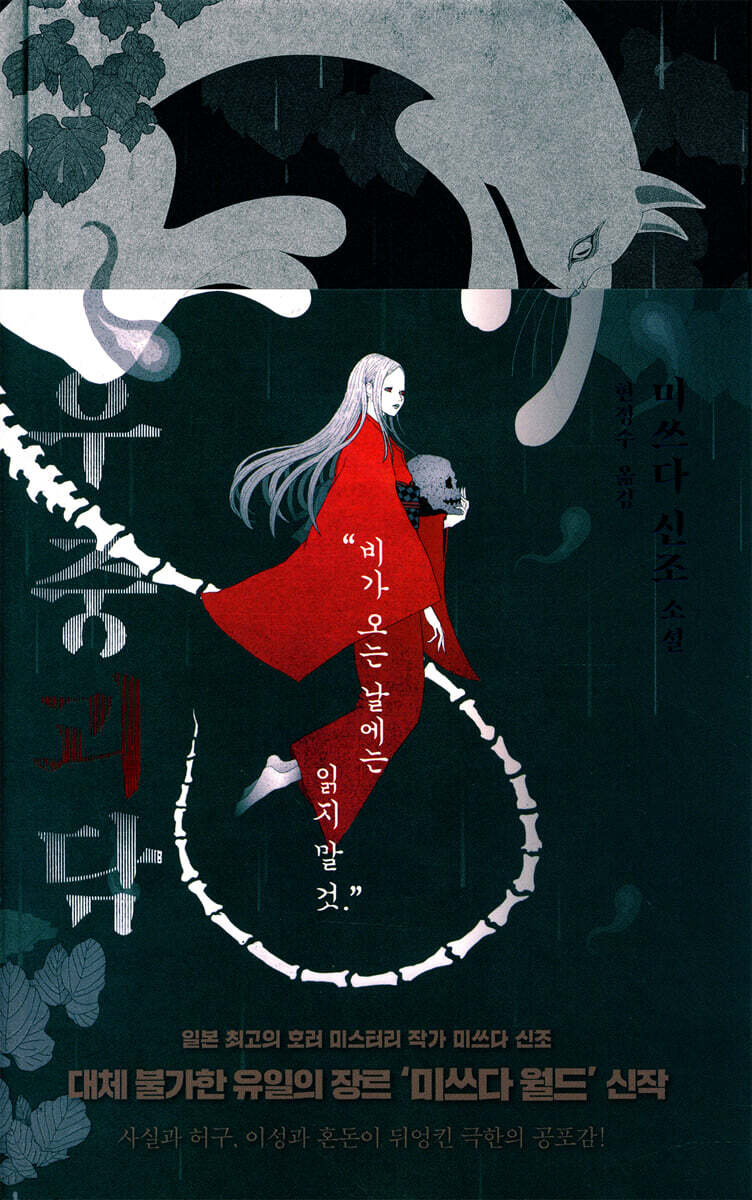
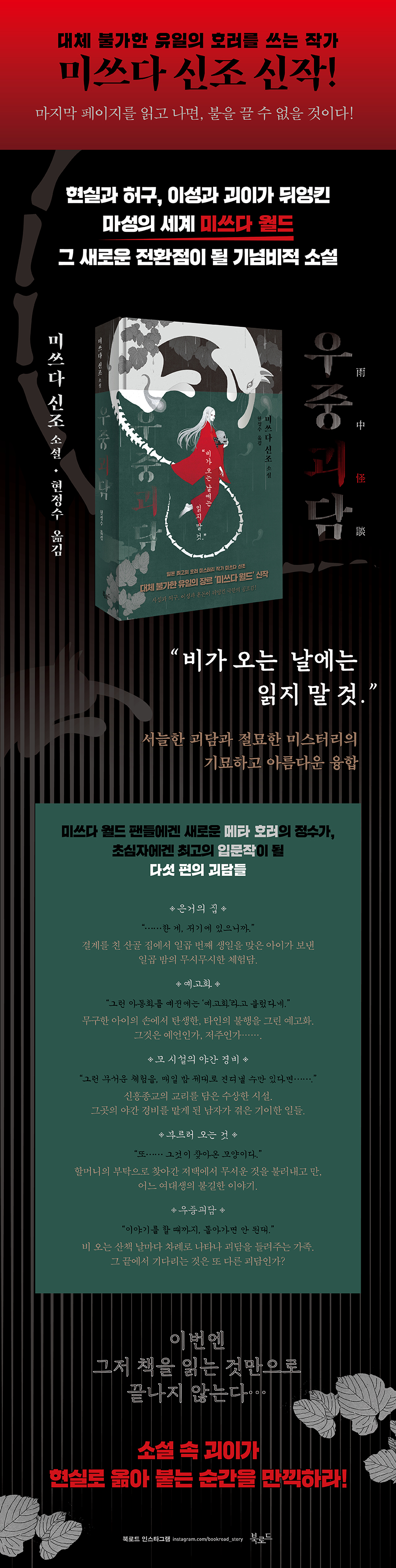
"Rainy Days" is a novel by Shinzo Mitsuda, Japan's greatest horror and mystery writer, and contains five heart-chilling ghost stories. Shinzo Mitsuda is an author who has consistently produced distinctive works, establishing his own unique style through an exquisite and skillful fusion of the two genres of horror and mystery, as well as the use of metafiction. He is also a master recognized as a unique figure among readers of the horror and mystery genres, to the extent that he gave birth to the term "Mitsuda World," which refers to his unique world of works and also refers to the group of enthusiastic supporters of his novels. I am a horror novelist. I've been collecting ghost stories for quite some time, so I often get people asking me to interpret the strange things they've experienced. This time I hear strange experiences from five people. These include the strange experiences of being sent to a country house when he was seven and locked inside for seven nights, the story of a child who draws pictures that portend misfortune for others and his homeroom teacher, an inexplicable anecdote experienced by an unknown writer while working as a security guard at a religious facility, an eerie incident where he summoned unknown things while visiting a mansion in a foreign land at his grandmother's request, and the confession of a man who met a family who showed up every rainy day to tell ghost stories. Containing five stories, each with a distinct flavor and a chilling sense of dread, "Rainy Days" is a novel that fully displays Shinzo Mitsuda's strength of maximizing horror through the combination of reality and fiction. What makes this new work special is that it breaks through the limitations of the past, where 'I' and the reader could only remain as listeners to ghost stories, in a truly 'horror' way. Through 『Rainy Days』, which will be the definitive edition and turning point of Mitsuda's meta-horror, readers will finally 'experience' the moment when Mitsuda's world goes beyond the concept of a hybrid born from the crossbreeding of horror and mystery and solidifies its identity as a unique and irreplaceable genre. |
- You can preview some of the book's contents.
Preview
index
The House of Hermitage / Trailer / Night Watch at a Facility / Calling / A Rainy Ghost Story / Translator's Note
Detailed image
Into the book
The old woman moved to the right along the fence, stopped in front of one corner, and untied the rope from a bamboo pole.
Surprisingly, that was the entrance.
It would be difficult to find the entrance unless you knew that the rope there could be pulled and untied.
But as I said earlier, if you're an adult, you can easily get over it.
There was no point in hiding the entrance like that.
--- p.24
The sound of the bushes being pushed apart—rustling, crackling, whooshing—is annoyingly piercing to the ears.
It sounds like a voice following me.
I can't tell what he's saying.
I had no idea what it meant, but that was why I was so scared I couldn't stand it.
But if you don't want to hear that voice, you have no choice but to stop.
If I do something like that... I think... Then I hear a really loud voice from behind.
It would probably be impossible for humans to reproduce that voice.
Whether I try to say it out loud or write it down, I don't know how to express it...
If I told you I could reproduce it, you'd be out of my mind.
--- p.65
This 'Preface' was written in 1985, and it contains the incredibly disturbing statement that "many newspaper reporters have reported that some of the children's drawings, drawn while they were alive, suggest an accidental death."
That is, it seems that there are other 'foreshadowings', but since no specific examples have been presented, it is unfortunately impossible to know whether there really are a 'large number' of them.
--- p.103
The light from the street lamps on the border between the realm of hungry ghosts and the realm of animals barely reaches there.
So, although the surroundings seemed to be completely covered in pitch-black darkness, the space between the two walls was filled with an even greater darkness.
I heard an eerie whisper there and felt an eerie gaze… … Was it just my anxiety that made me think that?
Atsuo approached the space between the two walls, shining the light of his flashlight.
That's when I came to the wall.
Something flashed through the narrow passage.
… … human form?
--- p.208
“Once you finish what Grandma asked you to do, it would be better to go back quickly rather than staying there too long.”
She added that with a little flinch.
Didn't your grandmother tell you the exact same story?
“Why is that?”
When I asked that question without realizing it, the old man suddenly looked embarrassed.
“No, what should I say?
I just had that thought… … .”
I got the feeling that he wasn't trying to muddle through, but was saying something like, "I can't explain it properly, but it's better not to have anything to do with that house anyway..."
--- p.278
The reason I gave a positive answer while maintaining an ambiguous attitude was, for some reason, because I felt that the 'old tale' the old man was telling contained something mysterious, and so it immediately reminded me of me... ... Matsuo said with a laugh.
Certainly, at that time, I had a hobby of collecting ghost stories.
It was obvious that it would help me become a writer, but I had no way of knowing at the time.
Because I just liked it, I innocently asked people I knew through work, “Do you know any scary stories?”
--- p.350
"fizzle."
Matsuo said, putting his right index finger to his lips.
“Isn’t it raining?”
If you listen closely, you can really hear the sound of drizzle.
But since when has it been raining…?
(…) Matsuo smiled brightly, as if he didn’t know what to do with his joy, and said.
“It’s the perfect situation to tell a ghost story.”
Surprisingly, that was the entrance.
It would be difficult to find the entrance unless you knew that the rope there could be pulled and untied.
But as I said earlier, if you're an adult, you can easily get over it.
There was no point in hiding the entrance like that.
--- p.24
The sound of the bushes being pushed apart—rustling, crackling, whooshing—is annoyingly piercing to the ears.
It sounds like a voice following me.
I can't tell what he's saying.
I had no idea what it meant, but that was why I was so scared I couldn't stand it.
But if you don't want to hear that voice, you have no choice but to stop.
If I do something like that... I think... Then I hear a really loud voice from behind.
It would probably be impossible for humans to reproduce that voice.
Whether I try to say it out loud or write it down, I don't know how to express it...
If I told you I could reproduce it, you'd be out of my mind.
--- p.65
This 'Preface' was written in 1985, and it contains the incredibly disturbing statement that "many newspaper reporters have reported that some of the children's drawings, drawn while they were alive, suggest an accidental death."
That is, it seems that there are other 'foreshadowings', but since no specific examples have been presented, it is unfortunately impossible to know whether there really are a 'large number' of them.
--- p.103
The light from the street lamps on the border between the realm of hungry ghosts and the realm of animals barely reaches there.
So, although the surroundings seemed to be completely covered in pitch-black darkness, the space between the two walls was filled with an even greater darkness.
I heard an eerie whisper there and felt an eerie gaze… … Was it just my anxiety that made me think that?
Atsuo approached the space between the two walls, shining the light of his flashlight.
That's when I came to the wall.
Something flashed through the narrow passage.
… … human form?
--- p.208
“Once you finish what Grandma asked you to do, it would be better to go back quickly rather than staying there too long.”
She added that with a little flinch.
Didn't your grandmother tell you the exact same story?
“Why is that?”
When I asked that question without realizing it, the old man suddenly looked embarrassed.
“No, what should I say?
I just had that thought… … .”
I got the feeling that he wasn't trying to muddle through, but was saying something like, "I can't explain it properly, but it's better not to have anything to do with that house anyway..."
--- p.278
The reason I gave a positive answer while maintaining an ambiguous attitude was, for some reason, because I felt that the 'old tale' the old man was telling contained something mysterious, and so it immediately reminded me of me... ... Matsuo said with a laugh.
Certainly, at that time, I had a hobby of collecting ghost stories.
It was obvious that it would help me become a writer, but I had no way of knowing at the time.
Because I just liked it, I innocently asked people I knew through work, “Do you know any scary stories?”
--- p.350
"fizzle."
Matsuo said, putting his right index finger to his lips.
“Isn’t it raining?”
If you listen closely, you can really hear the sound of drizzle.
But since when has it been raining…?
(…) Matsuo smiled brightly, as if he didn’t know what to do with his joy, and said.
“It’s the perfect situation to tell a ghost story.”
--- p.408
Publisher's Review
For existing fans of Mitsuda World, it is the essence of meta horror.
Five great introductory ghost stories for beginners.
This time, it doesn't end with just reading a book...
Reality and fiction are intertwined and invade each other!
The stories in 『Rainy Days』 blur the line between reality and fiction, and while each story is interconnected, sometimes one story embraces other stories, and sometimes a story within a story embraces another story within itself.
As readers become immersed in this spine-chilling and thrilling horror story, they soon find themselves lost in the gloomy and eerie atmosphere of the strangely structured mansion of Mitsuda World.
But this horror doesn't end in the book.
The narrator and author of the novel, who appears to be the same person as the real 'I', has brought an unclear and unfamiliar fear to the reader by bringing the fictional story into a real ghost story through intentional uncertainty.
But even so, it only remained as a listener in the work.
Although it is possible to borrow the techniques of meta-horror to spread the ominous atmosphere of the novel like dark spores in the atmosphere of reality, there is a clear limit to drawing the readers of reality, who have no choice but to stand behind a double wall and listen to the ghost story with the status of "listener's listener," into the story.
Ironically, it is inherently difficult to expect a true fusion of fiction and reality.
However, in "Rainy Days," Shinzo Mitsuda attempts a new change, even at the risk of destroying the solid world he has built over a long period of chaos and fear.
Where is it now, and what is it doing?
I wonder if this strange incident will ever find its way to the author who wrote the novel, or to the editor or reader who read the work.
(From the text)
This shocking transformation may be a fundamental question about the existence of the "self" that Mitsuda World has long maintained, and also a renewal of it.
Thus, the paper screen that had dimly separated the world where reality and fantasy, reason and chaos were intertwined, finally melts away, and like the boy in “The House of Hermitage” who was picked up by his father and placed inside the house within the barrier, the readers are ‘picked up’ in the middle of an even more remote and shady place in Mitsuda’s world than they had anticipated.
So, the unpleasant pleasure felt at the moment when the ominous energy is transferred to reality is experienced with the whole body.
For existing fans of Mitsuda's World, it will be a refreshing and enjoyable experience, and for beginners who have yet to encounter Mitsuda Shinzo, it will be the perfect introductory work. "Uchugwaedan" is a work that is more than enough to allow any reader to fully experience Mitsuda's World.
Five great introductory ghost stories for beginners.
This time, it doesn't end with just reading a book...
Reality and fiction are intertwined and invade each other!
The stories in 『Rainy Days』 blur the line between reality and fiction, and while each story is interconnected, sometimes one story embraces other stories, and sometimes a story within a story embraces another story within itself.
As readers become immersed in this spine-chilling and thrilling horror story, they soon find themselves lost in the gloomy and eerie atmosphere of the strangely structured mansion of Mitsuda World.
But this horror doesn't end in the book.
The narrator and author of the novel, who appears to be the same person as the real 'I', has brought an unclear and unfamiliar fear to the reader by bringing the fictional story into a real ghost story through intentional uncertainty.
But even so, it only remained as a listener in the work.
Although it is possible to borrow the techniques of meta-horror to spread the ominous atmosphere of the novel like dark spores in the atmosphere of reality, there is a clear limit to drawing the readers of reality, who have no choice but to stand behind a double wall and listen to the ghost story with the status of "listener's listener," into the story.
Ironically, it is inherently difficult to expect a true fusion of fiction and reality.
However, in "Rainy Days," Shinzo Mitsuda attempts a new change, even at the risk of destroying the solid world he has built over a long period of chaos and fear.
Where is it now, and what is it doing?
I wonder if this strange incident will ever find its way to the author who wrote the novel, or to the editor or reader who read the work.
(From the text)
This shocking transformation may be a fundamental question about the existence of the "self" that Mitsuda World has long maintained, and also a renewal of it.
Thus, the paper screen that had dimly separated the world where reality and fantasy, reason and chaos were intertwined, finally melts away, and like the boy in “The House of Hermitage” who was picked up by his father and placed inside the house within the barrier, the readers are ‘picked up’ in the middle of an even more remote and shady place in Mitsuda’s world than they had anticipated.
So, the unpleasant pleasure felt at the moment when the ominous energy is transferred to reality is experienced with the whole body.
For existing fans of Mitsuda's World, it will be a refreshing and enjoyable experience, and for beginners who have yet to encounter Mitsuda Shinzo, it will be the perfect introductory work. "Uchugwaedan" is a work that is more than enough to allow any reader to fully experience Mitsuda's World.
GOODS SPECIFICS
- Publication date: November 4, 2022
- Format: Hardcover book binding method guide
- Page count, weight, size: 416 pages | 528g | 124*195*30mm
- ISBN13: 9791158791971
- ISBN10: 1158791976
You may also like
카테고리
korean


korean

![GQ KOREA Mark (Monthly): December [2025]](http://librairie.coreenne.fr/cdn/shop/files/8ef265dbbfbf186523ed75ba7319009d.jpg?v=1765340328&width=3840)


