

Platycerium Bat Orchid Species Illustrated Guide
 |
Description
Book Introduction
The first bat species in Korea
Publication of a comprehensive plant guide
The precision of the data was achieved through three years of writing and review of over 100 papers.
The obsession of two bat enthusiasts blurs the lines between academics and hobbyists.
2025 Korea Publication Industry Promotion Agency Small and Medium Publishing Company Production Support Selection
The first specialized plant guide in Korea to compile all the original species of bat orchids, “Bat Orchid Species Guide,” has been published by Media Sam.
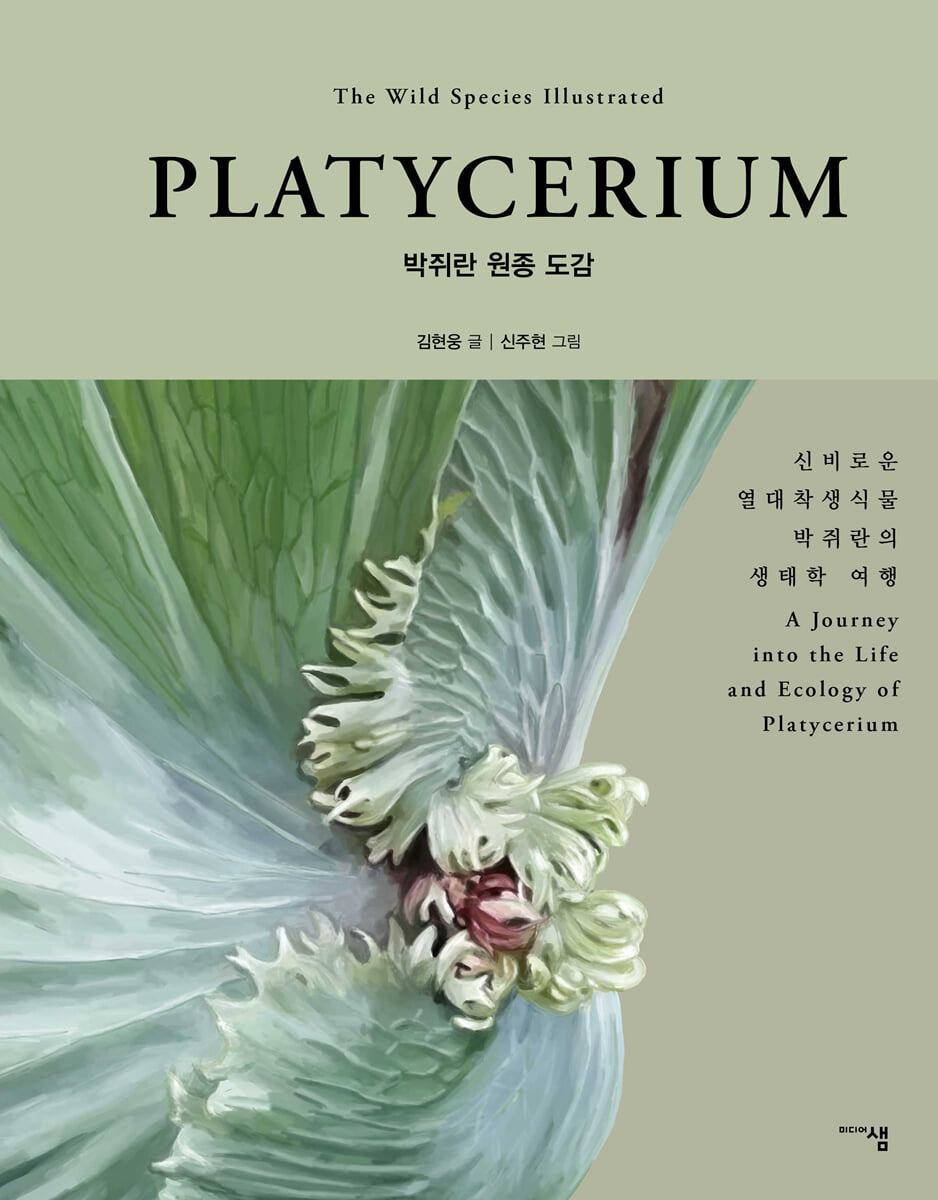
《Bat Orchid Species Illustrated Guide》 is the first bat orchid species Illustrated Guide in Korea, written over three years by two plant enthusiasts who are not botanists.
The bat orchid is a fern of the orchid family that lives in Africa, Southeast Asia, and parts of South America.
It is an epiphyte that mainly attaches to trees and rocks and survives on moisture and nutrients in the air. Due to its unique ecology and structure, it is called a 'piece of the plant world' among plant enthusiasts.
'Wild species' refers to the original form of a plant that grows naturally in nature and has not been artificially improved.
Simply put, it is a 'natural plant' that has survived and reproduced on its own in forests, mountains, jungles, etc. before human intervention.
Publication of a comprehensive plant guide
The precision of the data was achieved through three years of writing and review of over 100 papers.
The obsession of two bat enthusiasts blurs the lines between academics and hobbyists.
2025 Korea Publication Industry Promotion Agency Small and Medium Publishing Company Production Support Selection
The first specialized plant guide in Korea to compile all the original species of bat orchids, “Bat Orchid Species Guide,” has been published by Media Sam.
《Bat Orchid Species Illustrated Guide》 is the first bat orchid species Illustrated Guide in Korea, written over three years by two plant enthusiasts who are not botanists.
The bat orchid is a fern of the orchid family that lives in Africa, Southeast Asia, and parts of South America.
It is an epiphyte that mainly attaches to trees and rocks and survives on moisture and nutrients in the air. Due to its unique ecology and structure, it is called a 'piece of the plant world' among plant enthusiasts.
'Wild species' refers to the original form of a plant that grows naturally in nature and has not been artificially improved.
Simply put, it is a 'natural plant' that has survived and reproduced on its own in forests, mountains, jungles, etc. before human intervention.
- You can preview some of the book's contents.
Preview
index
How to Read This Book | Prologue
Chapter 1: What is a Platycerium? The World of Platycerium
About the scientific name
Classification of bat orchids
The structure of the bat orchid
Sterile fronds | Fertile fronds | Roots | Rhizome | Bud | Stellate hair | Sorus | Branch | Pups
Ecology of bat orchids
Epiphytic plant, Bat Orchid | Various forms of Bat Orchid | Star-shaped hairs for environmental adaptability | Vegetative leaves that support roots | Bat Orchid propagates through spores
Photosynthesis in plants
Bat-ran's lines
Chapter 2 Species of Platycerium
Origin of the species of the genus Batoran
Types of bat orchids
Platycerium alcicorne | Platycerium andinum | Platycerium bifurcatum | Platycerium coronariu | Platycerium elephantotis | Platycerium ellisii | Platycerium grande | Platycerium hillii | Platycerium holttumii | Platycerium madagascariense | Platycerium quadridichotomum | Platycerium ridleyi | Platycerium stemaria | Platycerium superbum | Platycerium veitchii | Platycerium wallichii | Platycerium wandae | Platycerium willinckii
References | Postscript | Glossary
〈Illustration Section〉
Bat orchid native map | Bat orchid structure | Bat orchid constellation | Bat orchid branching pattern | Bulbogenic bat orchid species | Bat orchid trophic fronds | Bat orchid spherical colonies | Bat orchid basket-shaped colonies | Bat orchid ring-shaped colonies | Solitary bat orchid | Alternation of generations in bat orchids | Bat orchid publication chronology | Alsicon 'Africa' | Trophic fronds of Holtumiai | Symbiosis of Madagascariens | Dormancy of Quadridicotomium | Laurentian eye | Trophic fronds of the cleft palate
Chapter 1: What is a Platycerium? The World of Platycerium
About the scientific name
Classification of bat orchids
The structure of the bat orchid
Sterile fronds | Fertile fronds | Roots | Rhizome | Bud | Stellate hair | Sorus | Branch | Pups
Ecology of bat orchids
Epiphytic plant, Bat Orchid | Various forms of Bat Orchid | Star-shaped hairs for environmental adaptability | Vegetative leaves that support roots | Bat Orchid propagates through spores
Photosynthesis in plants
Bat-ran's lines
Chapter 2 Species of Platycerium
Origin of the species of the genus Batoran
Types of bat orchids
Platycerium alcicorne | Platycerium andinum | Platycerium bifurcatum | Platycerium coronariu | Platycerium elephantotis | Platycerium ellisii | Platycerium grande | Platycerium hillii | Platycerium holttumii | Platycerium madagascariense | Platycerium quadridichotomum | Platycerium ridleyi | Platycerium stemaria | Platycerium superbum | Platycerium veitchii | Platycerium wallichii | Platycerium wandae | Platycerium willinckii
References | Postscript | Glossary
〈Illustration Section〉
Bat orchid native map | Bat orchid structure | Bat orchid constellation | Bat orchid branching pattern | Bulbogenic bat orchid species | Bat orchid trophic fronds | Bat orchid spherical colonies | Bat orchid basket-shaped colonies | Bat orchid ring-shaped colonies | Solitary bat orchid | Alternation of generations in bat orchids | Bat orchid publication chronology | Alsicon 'Africa' | Trophic fronds of Holtumiai | Symbiosis of Madagascariens | Dormancy of Quadridicotomium | Laurentian eye | Trophic fronds of the cleft palate
Detailed image

Publisher's Review
Beyond Rarity, Towards Ecological Aesthetics? The Bat Boom Is Coming
The National Arboretum of Sejong held a companion plant exhibition, “The Mysterious Flight of Bat Orchids,” in August 2024, and 18 species of bat orchids were displayed at the exhibition.
This exhibition is not simply a plant exhibition, but is significant in that it is the first time a public institution has highlighted bat orchids as a “culture of living with plants.”
In recent years, the ornamental plant market has grown mainly due to rare tropical plants such as Monstera albo, Philodendron, and Alocasia.
However, this trend is gradually shifting from ‘rarity of form’ to ‘individuality of ecology.’
The bat orchid is a plant that symbolizes that turning point.
This is not simply a rare collectible, but a species that simultaneously demonstrates the structural beauty and evolutionary adaptation of plants.
Bat orchids are aerial epiphytes that absorb moisture and nutrients from the air and have a unique growth form.
These ecological characteristics are also intertwined with interior design trends, and are rapidly spreading in the form of 'living art (plant installation art)' hung on walls, ceilings, and wooden frames.
In fact, in the global plant community, it is already being called the 'Next Monsteras', and an emerging market is being formed centered around bat orchids.
The publication of the "Bat Species Illustrated Guide" is a symbolic event in this movement.
Beyond the traditional niche collector layer, it shows that bat orchids are at the center of a new lifestyle that combines plants, space, and aesthetics.
This book is the only plant guide in Korea that organizes academic information on the ecology, classification, structure, reproduction, and habitat of Platycerium orchids, focusing on the 18 species of Platycerium orchids that exist worldwide.
There are no published books on the original species of bats anywhere in the world.
'Living Botany' Recorded at the Front Line of the Ornamental Plant Market
It has been less than four or five years since the bat orchid began to gain popularity among plant enthusiasts in our country.
It is about 10 years behind Japan or Taiwan.
Nonetheless, this guide holds great significance in that it illuminates the bat orchid not as a mere hobby plant, but as an 'ecological entity'.
Kim Hyeon-ung, who wrote this book, analyzed over 100 papers on bats from around the world and organized the classification, ecology, and structure of 18 original species at an academic level.
Additionally, Shin Joo-hyun, who was in charge of the illustrations for this book, created detailed illustrations that verified even the branching patterns and spore structures of bat orchids across all species, completing an illustrated guide image that was “more accurate than a photograph.”
The world of bat orchids, where ecological understanding and artistic representation meet.
This book not only systematizes the world distribution map of bat orchids, their morphological diagrams, and cases of bat orchids' symbiosis, but also includes explanations for each species, including the taxonomic history, habitat, growth structure, and ecological relationships of the species, and for some species, it also includes in-depth interpretations of their symbiotic ecology.
For example, bats, such as P.
In the ridleyi section, the story of ridleyi living in symbiosis with the ant fern is described in detail.
Kim Hyun-woong explained, “Just as the ant fern provides shelter to ants and survives by using the ants’ byproducts as nutrients, the ridley eye also settles down next to it and shares its survival strategy,” adding, “This kind of ecological cooperation is the wisdom that the bat orchid chose during its evolution.”
The dedication of these two plant enthusiasts is a symbolic achievement that fills a gap in the academic world, and deserves to be evaluated as having accomplished a task that even the academic world has not easily attempted.
Achievement of two bat lovers
Not an academic-centered guidebook,
A book containing the 'language of the field and the market'
The two authors have been at the forefront of the rapidly growing ornamental market, observing the trend of bat orchids that has captured the hearts of plant enthusiasts, collectors, and the younger generation of plant lovers.
Author Kim Hyun-woong said, “The current plant trend is moving beyond simple interior design to understanding ecology and evolution.
“The bat orchid is a plant that represents that change,” he says.
He is a plant lover who lives as an ordinary office worker.
Several years ago, I started growing plants in earnest when I became interested in tropical foliage plants such as Monstera.
Eventually, his passion led him to acquire specialized knowledge by obtaining nationally recognized qualifications such as 'Seed Technician' and 'Urban Agriculture Manager'.
After that, I was fascinated by the unique ecological structure and aesthetic beauty of bat orchids, so I cultivated various bat orchids myself for several years, accumulating growing experience and botanical knowledge.
“The goal of this book is to bridge the gap between academic research and the experiences of hobbyists,” he said. “I focused on conveying the ecological context of plants as much as the accuracy of the information.”
Shin Joo-hyun, who illustrated this book, is the publisher of the publishing company and also the operator of the plant YouTube channel [Apisto TV], which has over 15,000 subscribers.
He has already published about 10 books on tropical foliage plants through his own publishing company, and is a well-known 'plant enthusiast' in the publishing world, to the point of holding an exhibition of his own plant illustrations.
This time, the detailed bat illustrations for 《Bat Species Illustrated Guide》 were also created through his iPad drawing work.
Based on Mr. Kim Hyeon-ung's manuscript, I worked with him for three years to accurately implement all the original illustrations.
He said, “We repeated dozens of revisions to accurately reproduce the actual growth form of the bat orchid, down to its leaves, spores, and branching patterns,” adding, “Our goal was to create a more accurate image than a photograph.”
Achieved through 3 years of thorough research
Ecological records of bat orchids
Although the direction and structure of the leaves of the bat orchid appear to be intricately intertwined, each species grows according to a certain formula.
Because of this, even a slight difference in the width of the leaves and the direction of branching can result in a completely different species, making it a very difficult task to implement in an illustration.
In particular, thorough research is essential, as the adult form of the original bat species can only be identified through photographs or illustrations in old papers.
Author Kim Hyeon-ung carefully explained the morphological characteristics of the original bat species to Shin Ju-hyeon, and based on that, he repeatedly revised the illustrations to improve their completeness.
Digital drawing helped me a lot in that regard.
This book is not just a simple bat guide, but also an ecological record that asks anew about the relationship between humans and plants.
As a result of respecting the original form of nature and translating it into cultural language, "Bat Species Illustrated Guide" will become a new starting point, breaking down the boundaries between academia and hobby, research and art.
Media Sam stated, “We hope that this guide will become a meaningful milestone in the future development of domestic botany research and horticultural culture.”
Meanwhile, this project was recognized for its academic perfection and planning ability when it was selected for the 2025 Korea Publication Industry Promotion Agency's 'Publishing Production Support Competition'.
The National Arboretum of Sejong held a companion plant exhibition, “The Mysterious Flight of Bat Orchids,” in August 2024, and 18 species of bat orchids were displayed at the exhibition.
This exhibition is not simply a plant exhibition, but is significant in that it is the first time a public institution has highlighted bat orchids as a “culture of living with plants.”
In recent years, the ornamental plant market has grown mainly due to rare tropical plants such as Monstera albo, Philodendron, and Alocasia.
However, this trend is gradually shifting from ‘rarity of form’ to ‘individuality of ecology.’
The bat orchid is a plant that symbolizes that turning point.
This is not simply a rare collectible, but a species that simultaneously demonstrates the structural beauty and evolutionary adaptation of plants.
Bat orchids are aerial epiphytes that absorb moisture and nutrients from the air and have a unique growth form.
These ecological characteristics are also intertwined with interior design trends, and are rapidly spreading in the form of 'living art (plant installation art)' hung on walls, ceilings, and wooden frames.
In fact, in the global plant community, it is already being called the 'Next Monsteras', and an emerging market is being formed centered around bat orchids.
The publication of the "Bat Species Illustrated Guide" is a symbolic event in this movement.
Beyond the traditional niche collector layer, it shows that bat orchids are at the center of a new lifestyle that combines plants, space, and aesthetics.
This book is the only plant guide in Korea that organizes academic information on the ecology, classification, structure, reproduction, and habitat of Platycerium orchids, focusing on the 18 species of Platycerium orchids that exist worldwide.
There are no published books on the original species of bats anywhere in the world.
'Living Botany' Recorded at the Front Line of the Ornamental Plant Market
It has been less than four or five years since the bat orchid began to gain popularity among plant enthusiasts in our country.
It is about 10 years behind Japan or Taiwan.
Nonetheless, this guide holds great significance in that it illuminates the bat orchid not as a mere hobby plant, but as an 'ecological entity'.
Kim Hyeon-ung, who wrote this book, analyzed over 100 papers on bats from around the world and organized the classification, ecology, and structure of 18 original species at an academic level.
Additionally, Shin Joo-hyun, who was in charge of the illustrations for this book, created detailed illustrations that verified even the branching patterns and spore structures of bat orchids across all species, completing an illustrated guide image that was “more accurate than a photograph.”
The world of bat orchids, where ecological understanding and artistic representation meet.
This book not only systematizes the world distribution map of bat orchids, their morphological diagrams, and cases of bat orchids' symbiosis, but also includes explanations for each species, including the taxonomic history, habitat, growth structure, and ecological relationships of the species, and for some species, it also includes in-depth interpretations of their symbiotic ecology.
For example, bats, such as P.
In the ridleyi section, the story of ridleyi living in symbiosis with the ant fern is described in detail.
Kim Hyun-woong explained, “Just as the ant fern provides shelter to ants and survives by using the ants’ byproducts as nutrients, the ridley eye also settles down next to it and shares its survival strategy,” adding, “This kind of ecological cooperation is the wisdom that the bat orchid chose during its evolution.”
The dedication of these two plant enthusiasts is a symbolic achievement that fills a gap in the academic world, and deserves to be evaluated as having accomplished a task that even the academic world has not easily attempted.
Achievement of two bat lovers
Not an academic-centered guidebook,
A book containing the 'language of the field and the market'
The two authors have been at the forefront of the rapidly growing ornamental market, observing the trend of bat orchids that has captured the hearts of plant enthusiasts, collectors, and the younger generation of plant lovers.
Author Kim Hyun-woong said, “The current plant trend is moving beyond simple interior design to understanding ecology and evolution.
“The bat orchid is a plant that represents that change,” he says.
He is a plant lover who lives as an ordinary office worker.
Several years ago, I started growing plants in earnest when I became interested in tropical foliage plants such as Monstera.
Eventually, his passion led him to acquire specialized knowledge by obtaining nationally recognized qualifications such as 'Seed Technician' and 'Urban Agriculture Manager'.
After that, I was fascinated by the unique ecological structure and aesthetic beauty of bat orchids, so I cultivated various bat orchids myself for several years, accumulating growing experience and botanical knowledge.
“The goal of this book is to bridge the gap between academic research and the experiences of hobbyists,” he said. “I focused on conveying the ecological context of plants as much as the accuracy of the information.”
Shin Joo-hyun, who illustrated this book, is the publisher of the publishing company and also the operator of the plant YouTube channel [Apisto TV], which has over 15,000 subscribers.
He has already published about 10 books on tropical foliage plants through his own publishing company, and is a well-known 'plant enthusiast' in the publishing world, to the point of holding an exhibition of his own plant illustrations.
This time, the detailed bat illustrations for 《Bat Species Illustrated Guide》 were also created through his iPad drawing work.
Based on Mr. Kim Hyeon-ung's manuscript, I worked with him for three years to accurately implement all the original illustrations.
He said, “We repeated dozens of revisions to accurately reproduce the actual growth form of the bat orchid, down to its leaves, spores, and branching patterns,” adding, “Our goal was to create a more accurate image than a photograph.”
Achieved through 3 years of thorough research
Ecological records of bat orchids
Although the direction and structure of the leaves of the bat orchid appear to be intricately intertwined, each species grows according to a certain formula.
Because of this, even a slight difference in the width of the leaves and the direction of branching can result in a completely different species, making it a very difficult task to implement in an illustration.
In particular, thorough research is essential, as the adult form of the original bat species can only be identified through photographs or illustrations in old papers.
Author Kim Hyeon-ung carefully explained the morphological characteristics of the original bat species to Shin Ju-hyeon, and based on that, he repeatedly revised the illustrations to improve their completeness.
Digital drawing helped me a lot in that regard.
This book is not just a simple bat guide, but also an ecological record that asks anew about the relationship between humans and plants.
As a result of respecting the original form of nature and translating it into cultural language, "Bat Species Illustrated Guide" will become a new starting point, breaking down the boundaries between academia and hobby, research and art.
Media Sam stated, “We hope that this guide will become a meaningful milestone in the future development of domestic botany research and horticultural culture.”
Meanwhile, this project was recognized for its academic perfection and planning ability when it was selected for the 2025 Korea Publication Industry Promotion Agency's 'Publishing Production Support Competition'.
GOODS SPECIFICS
- Date of issue: October 23, 2025
- Format: Hardcover book binding method guide
- Page count, weight, size: 248 pages | 782g | 182*232*23mm
- ISBN13: 9788968572562
- ISBN10: 8968572569
You may also like
카테고리
korean


korean

![GQ KOREA Mark (Monthly): December [2025]](http://librairie.coreenne.fr/cdn/shop/files/8ef265dbbfbf186523ed75ba7319009d.jpg?v=1765340328&width=3840)


