

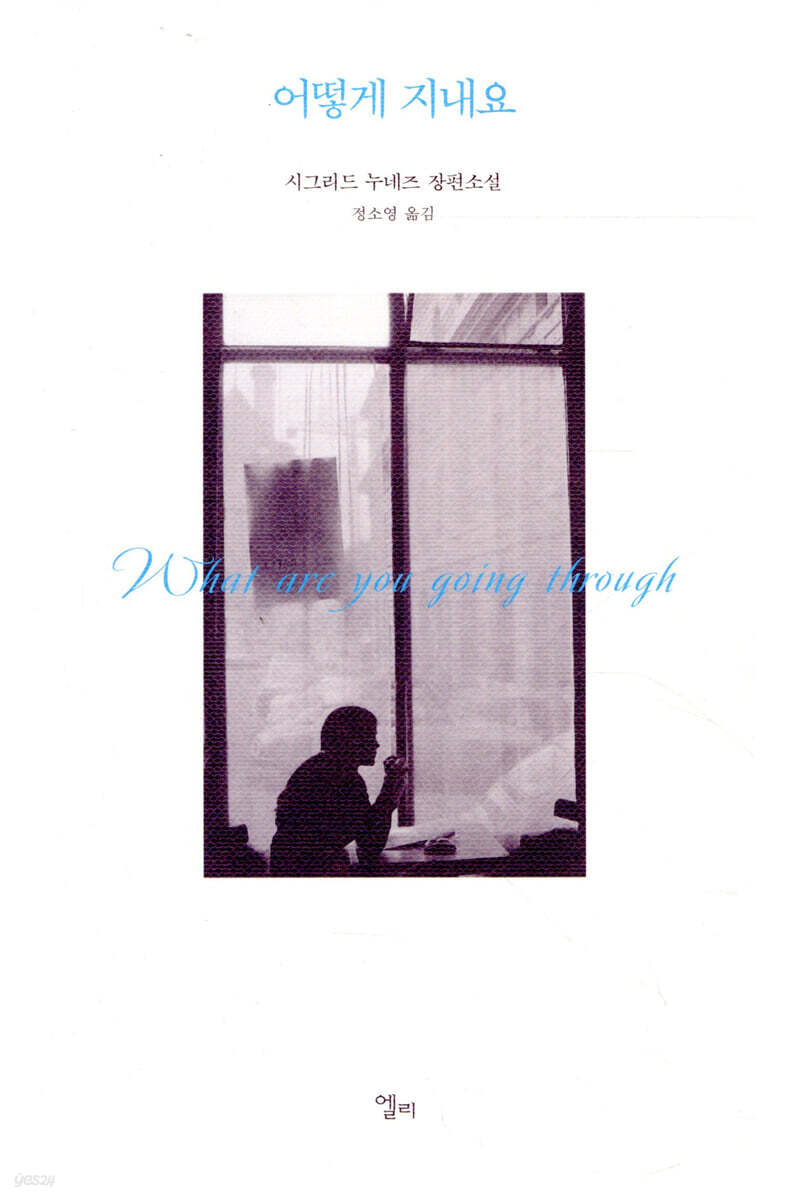
How is it going
 |
Description
Book Introduction
Sigrid Nunez's latest novel, "How Are You Doing?" is a National Book Award winner and translated author in over 25 languages, and is considered to be a further expansion of her literary achievements.
'I' receive a call from a friend who has been diagnosed with terminal cancer and travels to an unfamiliar city to visit him. And then a friend suddenly made an unexpected suggestion. He has obtained euthanasia drugs and is planning to end his life somewhere quiet, and he asks me to stay with him until then. "How Are You Doing?" deals with heavy topics such as death, empathy and compassion for others, and women's lives in a neither sentimental nor light manner through the subject of a journey with a friend facing death. The book depicts the friendship, bond, and mutual understanding and support between two women on their journey, while also meticulously capturing the subtle aspects of life that surround us. [New York Times] It was selected as a book of the year by major media outlets such as [Guardian] and [People], including ‘Critics’ Choice Book of the Year’, and also became a bestseller. This is a highly recommended work by literary critic Shin Hyeong-cheol. |
- You can preview some of the book's contents.
Preview
index
Part 1
Part 2
Part 3
Acknowledgements
Translator's Note
Part 2
Part 3
Acknowledgements
Translator's Note
Detailed image

Into the book
What is prayer?
Is God even listening?
The director wanted the audience/peeker to ponder these two questions.
As I left the theater, a well-known inspirational saying came to mind.
Be kind.
Because everyone you meet is fighting a hard battle.
--- p.59
As with death, most people deny aging.
Even though we see it all around us, even though the stories of our parents and grandparents are right before our eyes, people don't understand it and don't truly believe it could happen to them.
It happens to other people, it happens to everyone else, but it doesn't happen to me.
But I always thought it was a blessing.
Because youth that knows how sad and painful growing old is cannot be considered youth at all.
--- pp.65-66
'Untold' is a good word in that respect.
Of course, it means that it is not spoken or described, but it also means that it is too burdensome to put into words.
Stories from my youth that were not told/could not be told.
Unspoken/unspeakable pain.
--- p.115
When Simone Weil wrote that asking "How are you?" was the true meaning of loving one's neighbor, she was speaking French, her native language.
And in French, that great question comes across quite differently.
What are you suffering from? (Quel est ton tourment)
--- p.122
Everyone is like that.
My friend says.
I hope you fight till the end no matter what happens.
Because that's how we learned about cancer.
It is a fight between the patient and the disease.
It is soon a battle between good and evil.
There is a right way to act and a wrong way to act.
Strong response and weak response.
The way of the fighter and the way of the quitter.
If you win and survive, you become a hero.
If you lose, well, maybe you didn't fight with all your might.
--- p.131
Adventure? If it's adventure, then we were embarking on two different adventures.
My friend's adventures were completely different from mine, and no matter how much we lived together in the future, we would still be largely alone.
Someone once said that when you are born into this world, there are at least two people, but when you leave, you are alone.
Death comes to everyone, yet it is the most solitary of all human experiences, one that separates us rather than unites us.
--- p.149
I don't know who said it, maybe it was Henry James, maybe not, but there are two kinds of people in this world.
There are those who see someone suffering and think, "That could happen to me too," and those who think, "That will never happen to me."
The first type of people allows us to endure and live, while the second type of people makes life a living hell.
--- pp.166-167
I saw him inside the pizza place window.
In an instant, I was back in that time, full of passion and sadness, and I stood there staring intently at him, but he was too busy holding the phone and doing something.
The 'lost days' that I have come to lament bitterly.
I looked inside, oblivious to the other diners' glances, and I wanted to know why I was only feeling this way.
There was once something that was everything, but now nothing can be.
--- p.173
How severely Faulkner scolded the young writers of his time.
He writes as if he is standing among humans and looking at the end of humanity.
I'm writing about the glands, not the chest.
Faulkner said that the author writes this way because he is afraid.
A fear shared with everyone else on Earth.
Fear of being blown up.
But he said that as a writer, you shouldn't give in to such fears.
On that day in Stockholm in 1950, what Faulkner called for was courage.
Then, back to the old universal truths—love, honor, compassion, pride, empathy, and sacrifice.
Without it, Faulkner warned, your story wouldn't survive a single day.
--- p.202
You might think that if you could convince yourself that everything is terrible and that there is no hope for the future, it would be easier to leave the world.
But I can't bear the thought that after I'm gone, this infinitely rich and infinitely beautiful world won't continue.
If even that is taken away, there is no comfort.
--- pp.202-203
Golden hour, magic hour, L'Or Bleu.
An evening where we both quietly immerse ourselves in a hazy state, watching the beauty of the changing sky.
The slanted rays of the sun seemed to touch our feet as they crossed the grass, and then, like a slow, long blessing, they rose up our bodies, and I felt as if I could immediately believe that everything was fine.
Look at the moon.
Count the stars.
There you are all the time.
And the world will exist forever, without end.
(Joyce.) Infinitely rich and infinitely beautiful.
Everything will be okay.
--- p.207
That's living.
That's it.
Life goes on no matter what happens.
A life of chaos.
An unfair life.
A life that must be dealt with somehow.
I have to deal with it.
If not me, who will?
--- p.213
No matter how hard I try, language will never be satisfactory and will never accurately capture what is actually happening.
I knew before I even began that even if I could describe something, it would at best just take up a space next to reality, that reality itself would soon pass me by and slip away, like a cat that leaves the door open without me even knowing when it left.
There are many plausible stories about finding the right words, but when it comes to the most important things, those words are never found.
--- pp.217-218
We each have different languages, so what was clear to me was not clear to others.
Even between lovers? I asked, smiling, as if anticipating, with anticipation.
It was when we had just started dating.
He just smiled.
But years later, at the bitter moment of separation, a bitter answer came.
Those who love are the most like that.
--- p.220
I wonder what it will be like when all this (all this: the merciless, the indescribable) becomes a distant memory.
I've always hated how often the most intense experiences end up being like dreams.
That surreal pollution that completely clouds our view of the past.
Why does it feel like so many things that actually happened never really happened? Life is just a dream.
Think about it.
Could there be a more cruel notion than that?
Is God even listening?
The director wanted the audience/peeker to ponder these two questions.
As I left the theater, a well-known inspirational saying came to mind.
Be kind.
Because everyone you meet is fighting a hard battle.
--- p.59
As with death, most people deny aging.
Even though we see it all around us, even though the stories of our parents and grandparents are right before our eyes, people don't understand it and don't truly believe it could happen to them.
It happens to other people, it happens to everyone else, but it doesn't happen to me.
But I always thought it was a blessing.
Because youth that knows how sad and painful growing old is cannot be considered youth at all.
--- pp.65-66
'Untold' is a good word in that respect.
Of course, it means that it is not spoken or described, but it also means that it is too burdensome to put into words.
Stories from my youth that were not told/could not be told.
Unspoken/unspeakable pain.
--- p.115
When Simone Weil wrote that asking "How are you?" was the true meaning of loving one's neighbor, she was speaking French, her native language.
And in French, that great question comes across quite differently.
What are you suffering from? (Quel est ton tourment)
--- p.122
Everyone is like that.
My friend says.
I hope you fight till the end no matter what happens.
Because that's how we learned about cancer.
It is a fight between the patient and the disease.
It is soon a battle between good and evil.
There is a right way to act and a wrong way to act.
Strong response and weak response.
The way of the fighter and the way of the quitter.
If you win and survive, you become a hero.
If you lose, well, maybe you didn't fight with all your might.
--- p.131
Adventure? If it's adventure, then we were embarking on two different adventures.
My friend's adventures were completely different from mine, and no matter how much we lived together in the future, we would still be largely alone.
Someone once said that when you are born into this world, there are at least two people, but when you leave, you are alone.
Death comes to everyone, yet it is the most solitary of all human experiences, one that separates us rather than unites us.
--- p.149
I don't know who said it, maybe it was Henry James, maybe not, but there are two kinds of people in this world.
There are those who see someone suffering and think, "That could happen to me too," and those who think, "That will never happen to me."
The first type of people allows us to endure and live, while the second type of people makes life a living hell.
--- pp.166-167
I saw him inside the pizza place window.
In an instant, I was back in that time, full of passion and sadness, and I stood there staring intently at him, but he was too busy holding the phone and doing something.
The 'lost days' that I have come to lament bitterly.
I looked inside, oblivious to the other diners' glances, and I wanted to know why I was only feeling this way.
There was once something that was everything, but now nothing can be.
--- p.173
How severely Faulkner scolded the young writers of his time.
He writes as if he is standing among humans and looking at the end of humanity.
I'm writing about the glands, not the chest.
Faulkner said that the author writes this way because he is afraid.
A fear shared with everyone else on Earth.
Fear of being blown up.
But he said that as a writer, you shouldn't give in to such fears.
On that day in Stockholm in 1950, what Faulkner called for was courage.
Then, back to the old universal truths—love, honor, compassion, pride, empathy, and sacrifice.
Without it, Faulkner warned, your story wouldn't survive a single day.
--- p.202
You might think that if you could convince yourself that everything is terrible and that there is no hope for the future, it would be easier to leave the world.
But I can't bear the thought that after I'm gone, this infinitely rich and infinitely beautiful world won't continue.
If even that is taken away, there is no comfort.
--- pp.202-203
Golden hour, magic hour, L'Or Bleu.
An evening where we both quietly immerse ourselves in a hazy state, watching the beauty of the changing sky.
The slanted rays of the sun seemed to touch our feet as they crossed the grass, and then, like a slow, long blessing, they rose up our bodies, and I felt as if I could immediately believe that everything was fine.
Look at the moon.
Count the stars.
There you are all the time.
And the world will exist forever, without end.
(Joyce.) Infinitely rich and infinitely beautiful.
Everything will be okay.
--- p.207
That's living.
That's it.
Life goes on no matter what happens.
A life of chaos.
An unfair life.
A life that must be dealt with somehow.
I have to deal with it.
If not me, who will?
--- p.213
No matter how hard I try, language will never be satisfactory and will never accurately capture what is actually happening.
I knew before I even began that even if I could describe something, it would at best just take up a space next to reality, that reality itself would soon pass me by and slip away, like a cat that leaves the door open without me even knowing when it left.
There are many plausible stories about finding the right words, but when it comes to the most important things, those words are never found.
--- pp.217-218
We each have different languages, so what was clear to me was not clear to others.
Even between lovers? I asked, smiling, as if anticipating, with anticipation.
It was when we had just started dating.
He just smiled.
But years later, at the bitter moment of separation, a bitter answer came.
Those who love are the most like that.
--- p.220
I wonder what it will be like when all this (all this: the merciless, the indescribable) becomes a distant memory.
I've always hated how often the most intense experiences end up being like dreams.
That surreal pollution that completely clouds our view of the past.
Why does it feel like so many things that actually happened never really happened? Life is just a dream.
Think about it.
Could there be a more cruel notion than that?
--- p.239
Publisher's Review
“What I need is someone to be with me.”
A story that calmly and affectionately touches on the meaning and meaninglessness of life.
The latest work from National Book Award-winning author Sigrid Nunez
★The New York Times Critics' Books of the Year
★ Book of the Year by The Guardian, People, O the Oprah Magazine, Kirkus Reviews, Times Literary Supplement, and NPR
“It was impossible to listen to Nunez’s story, so insightful and empathetic, without doing anything else, so I read the novel twice in a row with rare concentration, and then, still not satisfied, I also read the author’s memoirs of Susan Sontag.
“Having grown up in the heart of New York’s intellectual community, her sharp intellect has reached the level of the ‘affectionate sharpness’ or ‘generous clarity’ that I admire, so everything Sigrid Nunez writes now matters to me.”
-Shin Hyeong-cheol (literary critic)
Sigrid Nuñez, winner of the 2018 National Book Award and translated into over 25 languages, has published her latest novel, How Are You?, which is considered to further expand her literary achievements.
'I' receive a call from a friend who has been diagnosed with terminal cancer and travels to an unfamiliar city to visit him.
And then a friend suddenly made an unexpected suggestion.
He has obtained euthanasia drugs and is planning to end his life somewhere quiet, and he asks me to stay with him until then.
I accept my friend's request and we go together to a 'suitable' place that my friend found.
A friend who is about to die, whether from medicine or illness, I stay by his side, crying and laughing, “holding each other like people struggling helplessly to save a drowning person,” and savoring each moment where the meaning and meaninglessness of life intersect in the face of impending death.
The novel begins with two deaths.
My friend is dying of terminal cancer, and my ex-lover goes around giving lectures about the imminent end of the world.
The death of an individual, and the death of an entire ecosystem.
Inevitable death and unnecessary death.
These two deaths raise questions that most of us cannot understand or answer.
What is the meaning of life? How should we live?
The novel confronts these daunting questions calmly, without self-pity or exaggeration.
Yes, what is it, what should I do, I think carefully.
Death poses such overwhelming questions, yet also demands concrete answers.
What choice should I make right now? What should I do with this pain right before my eyes?
Each has its own problem, each has its own answer, countless and solitary questions and answers are exchanged.
Then, for example, you choose euthanasia, thinking, 'I want to kill myself before cancer kills me.'
It's a euthanasia trip with a terminally ill cancer patient, and it feels like something serious could happen at any moment. You wonder what will happen in this situation, but the novel flows as if it's no big deal.
The story progresses without being overwhelmed by the weight of death, as if it were just another part of life, slowly savoring each passing moment in everyday life.
The novel depicts the fleeting, ordinary scenes of life as if they have meaning or are meaningless, and the sections of that life are lonely, ironic, and sometimes funny.
As is the case with most of our lives, which seem to be heavy in the face of unavoidable pain.
Soft voices that scatter
The voices of helpless and weak beings
“Women who are each emotionally turbulent in one way or another, who feel trapped, isolated, anxious, and confused by their place in patriarchal society, and who struggle to find the words to express what they are going through.” (pp. 80-81)
This novel, which depicts the friendship between two women on their final journey together, is filled with the voices of women.
'I' listen to the words of women who, like me, are aging and mourning their 'lost days'.
People deny aging, saying, “It happens to other people, it happens to everyone else, but it doesn’t happen to me,” and then they suddenly become old.
For women, life can play a little more “bad jokes.”
Praises are heaped on youth and beauty, attention and affection pours in, whether you want it or not, and then one day you suddenly find yourself in a strange new place, someone no one notices, no one loves 'that way'.
My interest also turns to other helpless and weak beings.
For the hurting, the lonely, even the cats.
Just as one gazes out the window at the crowd, singling out each person's face, the novel soothes the pain and loss by picking out the passing sounds of words and the soft voices that disperse.
Their stories are not well heard.
Having spent our entire lives searching for the right words, 'I' and 'my' friend no longer believe that language can convey anything significant.
Sometimes, the language we have worked so hard to find is blocked by clichés.
At a cancer support group, a woman confides that she secretly longs for her husband to be free from her, given his limited time.
The woman confronts the truth and bravely brings it out into words, but people immediately deny what she says.
Because such a story does not exist in the world, and should not exist.
But even if it doesn't offer any comfort, we struggle every time to tell the truth, to tell what we're going through.
Because there is “unspoken/unspeakable pain” there, and I, and others, have to understand it.
What it means to be with others
To love someone completely
“It has been said that there are two types of people in the world.
There are those who see someone suffering and think, "That could happen to me too," and those who think, "That will never happen to me."
“The first type of people allows us to endure and live, while the second type makes life a living hell.” (pp. 166-167)
The words we find through such struggle are trying to reach others.
Since we each have different languages, and since language is bound to fail, we cannot convey to others the meaning we know.
Even to someone you love, perhaps even more so to someone you love.
So I start by asking, 'How are you?'
What are you suffering from?
And “willingly sit down” and listen to those words, which are like a strange foreign language.
In this way, we observe the suffering of others and face the truth of the world.
I try to do that.
My ex-lover says:
The knowledge that this world will continue has now disappeared from us.
The catastrophe is just around the corner, and we and our children may not be exempt from it.
My dying friend says:
The idea that the prospect of this world ending without me will help someone facing death is wrong.
I truly couldn't bear it if I didn't have the comfort of knowing that "the world of infinite abundance and infinite beauty will continue."
Without that comfort, we would neither be able to live nor die properly.
'I' and my friend set out together, yet more alone than ever, toward death, which will be "the loneliest experience of all human experience."
But along the way, the two develop a strong bond that requires no words, and they lean on each other like two people “drifting on a raft after being shipwrecked.”
So in the end, you put in a lot of effort.
We ask others what their pain is, we hold on to each other even when it seems hopeless, and we struggle to find the right words to describe what words cannot.
So that even if we as individuals inevitably perish, the world of infinite abundance and infinite beauty may continue forever, and that our lives may be bearable rather than hellish.
The novel ends with:
I tried hard.
What does it matter if it fails?
A story that calmly and affectionately touches on the meaning and meaninglessness of life.
The latest work from National Book Award-winning author Sigrid Nunez
★The New York Times Critics' Books of the Year
★ Book of the Year by The Guardian, People, O the Oprah Magazine, Kirkus Reviews, Times Literary Supplement, and NPR
“It was impossible to listen to Nunez’s story, so insightful and empathetic, without doing anything else, so I read the novel twice in a row with rare concentration, and then, still not satisfied, I also read the author’s memoirs of Susan Sontag.
“Having grown up in the heart of New York’s intellectual community, her sharp intellect has reached the level of the ‘affectionate sharpness’ or ‘generous clarity’ that I admire, so everything Sigrid Nunez writes now matters to me.”
-Shin Hyeong-cheol (literary critic)
Sigrid Nuñez, winner of the 2018 National Book Award and translated into over 25 languages, has published her latest novel, How Are You?, which is considered to further expand her literary achievements.
'I' receive a call from a friend who has been diagnosed with terminal cancer and travels to an unfamiliar city to visit him.
And then a friend suddenly made an unexpected suggestion.
He has obtained euthanasia drugs and is planning to end his life somewhere quiet, and he asks me to stay with him until then.
I accept my friend's request and we go together to a 'suitable' place that my friend found.
A friend who is about to die, whether from medicine or illness, I stay by his side, crying and laughing, “holding each other like people struggling helplessly to save a drowning person,” and savoring each moment where the meaning and meaninglessness of life intersect in the face of impending death.
The novel begins with two deaths.
My friend is dying of terminal cancer, and my ex-lover goes around giving lectures about the imminent end of the world.
The death of an individual, and the death of an entire ecosystem.
Inevitable death and unnecessary death.
These two deaths raise questions that most of us cannot understand or answer.
What is the meaning of life? How should we live?
The novel confronts these daunting questions calmly, without self-pity or exaggeration.
Yes, what is it, what should I do, I think carefully.
Death poses such overwhelming questions, yet also demands concrete answers.
What choice should I make right now? What should I do with this pain right before my eyes?
Each has its own problem, each has its own answer, countless and solitary questions and answers are exchanged.
Then, for example, you choose euthanasia, thinking, 'I want to kill myself before cancer kills me.'
It's a euthanasia trip with a terminally ill cancer patient, and it feels like something serious could happen at any moment. You wonder what will happen in this situation, but the novel flows as if it's no big deal.
The story progresses without being overwhelmed by the weight of death, as if it were just another part of life, slowly savoring each passing moment in everyday life.
The novel depicts the fleeting, ordinary scenes of life as if they have meaning or are meaningless, and the sections of that life are lonely, ironic, and sometimes funny.
As is the case with most of our lives, which seem to be heavy in the face of unavoidable pain.
Soft voices that scatter
The voices of helpless and weak beings
“Women who are each emotionally turbulent in one way or another, who feel trapped, isolated, anxious, and confused by their place in patriarchal society, and who struggle to find the words to express what they are going through.” (pp. 80-81)
This novel, which depicts the friendship between two women on their final journey together, is filled with the voices of women.
'I' listen to the words of women who, like me, are aging and mourning their 'lost days'.
People deny aging, saying, “It happens to other people, it happens to everyone else, but it doesn’t happen to me,” and then they suddenly become old.
For women, life can play a little more “bad jokes.”
Praises are heaped on youth and beauty, attention and affection pours in, whether you want it or not, and then one day you suddenly find yourself in a strange new place, someone no one notices, no one loves 'that way'.
My interest also turns to other helpless and weak beings.
For the hurting, the lonely, even the cats.
Just as one gazes out the window at the crowd, singling out each person's face, the novel soothes the pain and loss by picking out the passing sounds of words and the soft voices that disperse.
Their stories are not well heard.
Having spent our entire lives searching for the right words, 'I' and 'my' friend no longer believe that language can convey anything significant.
Sometimes, the language we have worked so hard to find is blocked by clichés.
At a cancer support group, a woman confides that she secretly longs for her husband to be free from her, given his limited time.
The woman confronts the truth and bravely brings it out into words, but people immediately deny what she says.
Because such a story does not exist in the world, and should not exist.
But even if it doesn't offer any comfort, we struggle every time to tell the truth, to tell what we're going through.
Because there is “unspoken/unspeakable pain” there, and I, and others, have to understand it.
What it means to be with others
To love someone completely
“It has been said that there are two types of people in the world.
There are those who see someone suffering and think, "That could happen to me too," and those who think, "That will never happen to me."
“The first type of people allows us to endure and live, while the second type makes life a living hell.” (pp. 166-167)
The words we find through such struggle are trying to reach others.
Since we each have different languages, and since language is bound to fail, we cannot convey to others the meaning we know.
Even to someone you love, perhaps even more so to someone you love.
So I start by asking, 'How are you?'
What are you suffering from?
And “willingly sit down” and listen to those words, which are like a strange foreign language.
In this way, we observe the suffering of others and face the truth of the world.
I try to do that.
My ex-lover says:
The knowledge that this world will continue has now disappeared from us.
The catastrophe is just around the corner, and we and our children may not be exempt from it.
My dying friend says:
The idea that the prospect of this world ending without me will help someone facing death is wrong.
I truly couldn't bear it if I didn't have the comfort of knowing that "the world of infinite abundance and infinite beauty will continue."
Without that comfort, we would neither be able to live nor die properly.
'I' and my friend set out together, yet more alone than ever, toward death, which will be "the loneliest experience of all human experience."
But along the way, the two develop a strong bond that requires no words, and they lean on each other like two people “drifting on a raft after being shipwrecked.”
So in the end, you put in a lot of effort.
We ask others what their pain is, we hold on to each other even when it seems hopeless, and we struggle to find the right words to describe what words cannot.
So that even if we as individuals inevitably perish, the world of infinite abundance and infinite beauty may continue forever, and that our lives may be bearable rather than hellish.
The novel ends with:
I tried hard.
What does it matter if it fails?
GOODS SPECIFICS
- Publication date: August 19, 2021
- Page count, weight, size: 260 pages | 370g | 135*200*16mm
- ISBN13: 9791191247114
- ISBN10: 1191247112
You may also like
카테고리
korean


korean

![GQ KOREA Mark (Monthly): December [2025]](http://librairie.coreenne.fr/cdn/shop/files/8ef265dbbfbf186523ed75ba7319009d.jpg?v=1765340328&width=3840)


