

sweetness
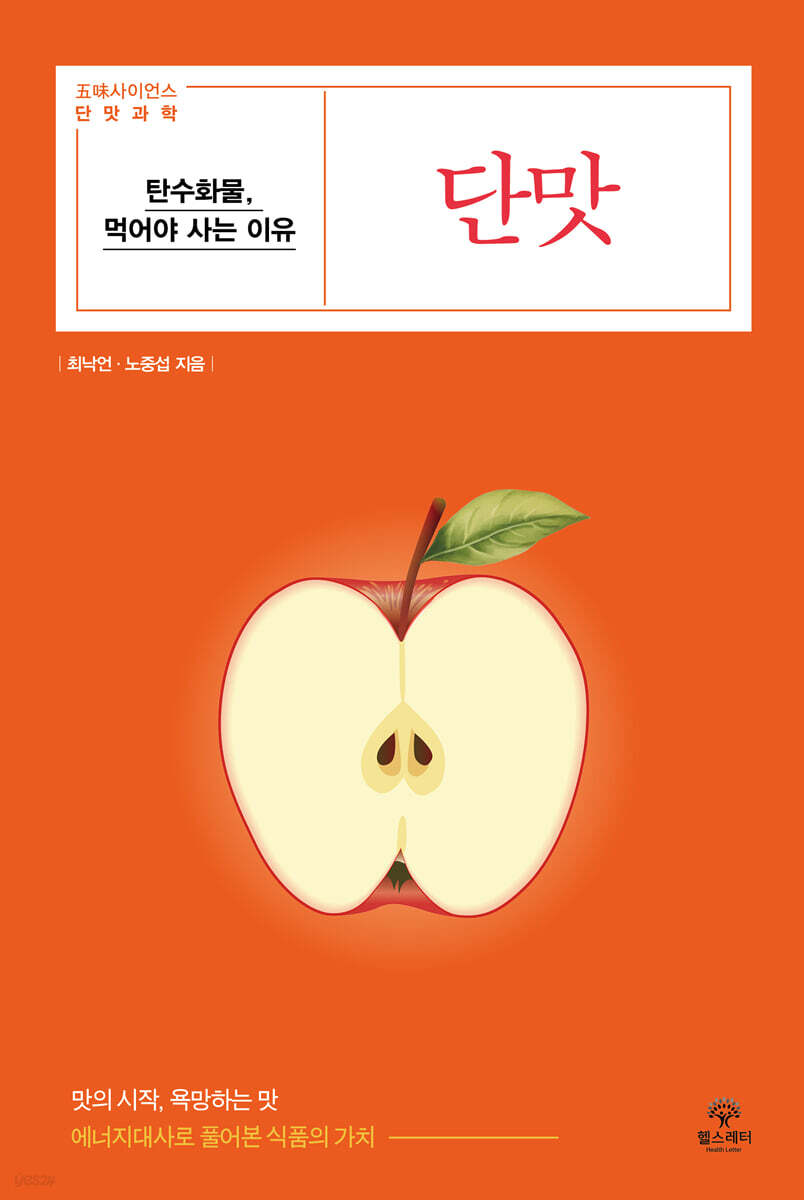 |
Description
Book Introduction
The beginning of taste, the taste of desire
The Value of Food as Seen Through Energy Metabolism
A scientific book that overturns the "sugar-carbohydrate harmfulness theory"
A vast amount of information on sweetness, uncovering the scientific truth.
"Sweetness: Carbohydrates, Why We Eat Them to Live" is a food science textbook that scientifically investigates the truth behind consumer anxiety about sugar fear and prejudice.
Sugar is not poison, but the source of life, and the hidden truth about the misconception about carbohydrates, the sweet tooth's best friend, has been revealed.
It's full of safety information about sweeteners, pointing out carbohydrate phobia and the belief in zero calories.
We focus on making the right food choices based on scientific evidence of sweetness.
We fact-checked the flawed logic and illusions behind the sweetness regulations that have strangled the food industry for the past 50 years with scientific data.
The book is a guidebook on sweetness that resolves all questions about sweetness, starting with the basic premise that "humanity must eat to survive" and going all the way to "sweeteners banned for being toxic."
It is the most comprehensive study on sweetness, which is essential for human survival, and it corrects the misconceptions about obesity and diabetes.
“Sweet things are bad for the body, and bitter things are good for the body.”
Is this common sense, so taken for granted by modern people, truly correct? In "Sweetness: Carbohydrates, Why We Must Eat Them," the fourth book in the "Five Flavors" series, author Choi Nak-eon sets the record straight on this crippling common sense.
For millions of years, humans have lived by the survival instinct of “swallowing what is sweet and spitting out what is bitter,” but the question was asked, “Have our bodies now become so stupid that they like harmful things?”
There are hundreds of books that condemn sugar as a poison.
Yet, no book has properly addressed what sweetness means to survival.
This book explores these inconvenient truths through science.
The Value of Food as Seen Through Energy Metabolism
A scientific book that overturns the "sugar-carbohydrate harmfulness theory"
A vast amount of information on sweetness, uncovering the scientific truth.
"Sweetness: Carbohydrates, Why We Eat Them to Live" is a food science textbook that scientifically investigates the truth behind consumer anxiety about sugar fear and prejudice.
Sugar is not poison, but the source of life, and the hidden truth about the misconception about carbohydrates, the sweet tooth's best friend, has been revealed.
It's full of safety information about sweeteners, pointing out carbohydrate phobia and the belief in zero calories.
We focus on making the right food choices based on scientific evidence of sweetness.
We fact-checked the flawed logic and illusions behind the sweetness regulations that have strangled the food industry for the past 50 years with scientific data.
The book is a guidebook on sweetness that resolves all questions about sweetness, starting with the basic premise that "humanity must eat to survive" and going all the way to "sweeteners banned for being toxic."
It is the most comprehensive study on sweetness, which is essential for human survival, and it corrects the misconceptions about obesity and diabetes.
“Sweet things are bad for the body, and bitter things are good for the body.”
Is this common sense, so taken for granted by modern people, truly correct? In "Sweetness: Carbohydrates, Why We Must Eat Them," the fourth book in the "Five Flavors" series, author Choi Nak-eon sets the record straight on this crippling common sense.
For millions of years, humans have lived by the survival instinct of “swallowing what is sweet and spitting out what is bitter,” but the question was asked, “Have our bodies now become so stupid that they like harmful things?”
There are hundreds of books that condemn sugar as a poison.
Yet, no book has properly addressed what sweetness means to survival.
This book explores these inconvenient truths through science.
index
Sweetness_Carbohydrates, the reason we eat them to survive
Preface: We cannot survive without knowing the taste of sweetness.
Part I.
The role of sweetness
Chapter 1.
The reason why you must swallow what is sweet and spit what is bitter
1.
You have to eat to live
2.
Why Sweet Things Taste Good
3.
It's the quantity that matters, not the type of food.
4.
Food doesn't have to be complicated.
Chapter 2.
Agricultural Culture and the Story of Carbohydrates
1.
What we eat is mainly the seeds of grass.
2.
Why rice farming became central to Eastern culture
3.
Why Wheat Became a Staple Food in the West
4.
Why corn is the most produced crop
5.
Sugarcane: The Bitter History and Misconceptions About Sweetness
Chapter 3.
Glucose, the core of energy metabolism
1.
Oxygen was originally poison
2.
Insulin and Blood Sugar: How Does the Brain Control Glucose?
3.
Mitochondria, the nuclear power plant within my body
4.
A solid reason why you don't need to take vitamins separately.
Part II.
Types and characteristics of sweeteners
Chapter 4.
How do we perceive sweetness?
1.
Principles and characteristics of sweetness perception
2.
Why something tastes sweet
3.
Characteristics and roles of sugars
Chapter 5.
Carbohydrate-based sweeteners
1.
Monosaccharides: glucose, fructose, galactose
2.
Disaccharides: maltose, sugar, lactose
3.
Sugar alcohols: sorbitol, mannitol, xylitol, erythritol,
Isomalt, lactitol and maltitol
4.
Oligosaccharides and polysaccharides
5.
Polysaccharides: Cellulose and dietary fiber
Chapter 6.
Non-saccharide sweeteners (high-potency sweeteners)
1.
Conditions that an alternative sweetener must meet
2.
synthetic high-intensity sweeteners
3.
Natural high-potency sweetener
4.
Sweeteners banned for toxicity
Conclusion - A time to think about the true role of food through sweetness.
Preface: We cannot survive without knowing the taste of sweetness.
Part I.
The role of sweetness
Chapter 1.
The reason why you must swallow what is sweet and spit what is bitter
1.
You have to eat to live
2.
Why Sweet Things Taste Good
3.
It's the quantity that matters, not the type of food.
4.
Food doesn't have to be complicated.
Chapter 2.
Agricultural Culture and the Story of Carbohydrates
1.
What we eat is mainly the seeds of grass.
2.
Why rice farming became central to Eastern culture
3.
Why Wheat Became a Staple Food in the West
4.
Why corn is the most produced crop
5.
Sugarcane: The Bitter History and Misconceptions About Sweetness
Chapter 3.
Glucose, the core of energy metabolism
1.
Oxygen was originally poison
2.
Insulin and Blood Sugar: How Does the Brain Control Glucose?
3.
Mitochondria, the nuclear power plant within my body
4.
A solid reason why you don't need to take vitamins separately.
Part II.
Types and characteristics of sweeteners
Chapter 4.
How do we perceive sweetness?
1.
Principles and characteristics of sweetness perception
2.
Why something tastes sweet
3.
Characteristics and roles of sugars
Chapter 5.
Carbohydrate-based sweeteners
1.
Monosaccharides: glucose, fructose, galactose
2.
Disaccharides: maltose, sugar, lactose
3.
Sugar alcohols: sorbitol, mannitol, xylitol, erythritol,
Isomalt, lactitol and maltitol
4.
Oligosaccharides and polysaccharides
5.
Polysaccharides: Cellulose and dietary fiber
Chapter 6.
Non-saccharide sweeteners (high-potency sweeteners)
1.
Conditions that an alternative sweetener must meet
2.
synthetic high-intensity sweeteners
3.
Natural high-potency sweetener
4.
Sweeteners banned for toxicity
Conclusion - A time to think about the true role of food through sweetness.
Publisher's Review
[Selected for the 2025 Leap Forward category by the Korea Publishing Promotion Agency]
"Sugar is always bad!" - Unfounded marketing
It is the most consumed because it is delicious and economical.
"Sugar is ○○!" - A 'safe' sweetener
Obesity and diabetes,
A Complete Guide to the Sweetness of Wigobi and Alternative Sweeteners
Pointing out the unscientific fallacy of sweet-carbohydrate-metabolic disease
Sugar (sweetness) is the history of health information and diet itself.
#Sugar is the source of all food
What is the true nature of sugar? The facts this book reveals are shocking.
The world's most produced crop is not rice, wheat, or corn, but sugarcane.
It accounts for 21% of total crop production, overwhelmingly surpassing corn (12%), wheat (8%), and rice (8%).
What's even more surprising is that nature itself is a sugar addict.
Plants produce glucose through photosynthesis, then convert half of it into fructose, which is then combined with glucose to make sugar.
Why go through such a cumbersome process? Because sugar is the most efficient way for living things to transport and store energy.
Ninety-five percent of the nutrients transported through the vascular system of plants are sugars, and virtually all plant foods we eat are transformed sugars.
Sugar is the source of all food.
#Pointing out the paradox of health information
Why did we demonize sugar? The author accurately exposes the pitfalls of current health information.
In the past, carbohydrates accounted for 80% of the diet of our parents' generation, but obesity and adult diseases were much less common than they are today.
If sugar were truly toxic, countries with the highest sugar consumption should have the highest rates of diabetes, but that's not the case.
We've gone beyond the days when fat and cholesterol were considered poisons, and now even meat is classified as a Group 2 carcinogen and is avoided.
What are we supposed to eat now? Co-authors Choi Nak-eon and Noh Jung-seop point out, "Over the past 50 years, we've been blaming certain ingredients for diseases caused by overeating, which has only exacerbated the confusion."
#The key is not the ingredients, but the amount consumed
So what's the answer? The book delivers a simple yet powerful message.
Sweetness is essential for survival.
The essence is not 'what you eat' but 'how and how much you eat'.
The brain is a glutton, consuming 20% of total energy, even though it accounts for only 2% of body weight.
The brain's only energy source is glucose.
This is why you get a glucose shot when you are exhausted.
Modern people try to categorize the same glucose as 'good sugar' when it is found in fruit and 'bad sugar' when it is found in snacks.
This is a typical example of an error in which images rather than scientific truth influence judgment.
Co-author Noh Jung-seop, who works at the central research institute of a food company, said, “It was so disappointing that evaluations were based on image rather than scientific truth.
“I hope this book will be a turning point to break away from such a fragmented perspective,” he said, expressing the frustration he felt in the field.
In particular, even food experts expressed concern about the tendency to divide foods into “good” and “bad,” saying, “There are good carbohydrates, but the problem these days is that all carbohydrates are treated as if they are bad.”
〉〉Main contents
The Hidden Truth About Sweetness and Carbohydrates
This is the most comprehensive exploration of sweetness, a key to human survival.
From the shocking fact that “oxygen was originally poison” to “mitochondrion, the nuclear power plant within my body,” this book provides an exciting introduction to the surprising secrets of energy metabolism that occurs in our bodies.
#Rice farming: Why it became the center of Eastern culture
〈Part I〉 revealed the hidden connection between agricultural culture and carbohydrates.
Why did rice farming become central to Eastern culture? Why did wheat become the staple food of the West? What is the real reason corn is produced in such large quantities? The most intriguing aspect is the story of sugarcane.
The book, titled "Sugarcane: The Bitter History and Misconceptions About Sweetness," delves into the roots of prejudice surrounding sugar.
It reveals in detail how sugarcane, the world's most produced crop, became a demon and what scientific truths were missed in the process.
#Pointing out scientific contradictions in sugar regulations
The data presented in the book is shocking.
Sugarcane is the overwhelming number one crop, accounting for 21% of the world's 9.4 billion tons of crop production.
This is more than the combined consumption of corn (12%), wheat (8%), and rice (8%). The OECD predicts that global per capita sugar consumption will reach 22.8 kg by 2033.
However, there is no correlation between sugar consumption and diabetes and obesity rates in each country.
The incidence of diabetes does not increase with the amount of sugar consumed, and eating less sugar does not make you healthier.
Although sugar consumption in developed countries is already decreasing, obesity and metabolic syndrome are actually increasing.
The problem is that sugar itself is a fundamental structure of nature.
Plants create glucose through photosynthesis, then convert half of it into fructose and deliver it throughout the body in the form of sugar.
95% of the nutrients transported through plant vascular tissue are sugars.
All the agricultural products we eat are essentially 'made of sugar'.
Policies that ignore these scientific facts and only target sugar are damaging the industry.
#Brain glucose control
The highlight of 〈Part I〉 is Chapter 3, ‘Glucose, the Core of Energy Metabolism.’
Dissected the most fundamental mechanisms of life.
From the shocking fact that “oxygen was originally poison,” to the intricate interaction between insulin and blood sugar, and the surprising daily life of mitochondria, the “nuclear power plants” hidden within the 37 trillion cells in our bodies, we approach this.
In particular, the reason that 'there is no need to take vitamins separately' is something that shakes up common sense about health.
#The mysterious reason why something tastes sweet
〈Part II〉 is filled with practical information about sweetness.
Chapter 4 begins with the fundamental question, "How do we perceive sweetness?"
It covers in detail the mysterious principles of how we perceive sweetness, why we perceive sweetness when something tastes good, and even the surprising role that sugar plays in our bodies.
Chapters 5 and 6 cover everything about sweeteners that modern people are most curious about.
We objectively analyze the pros and cons of all alternative sweeteners, from glucose and fructose to the recently popular erythritol and xylitol, and from aspartame to stevia.
Even the dark history of the 'forbidden sweet substance' that shakes readers' existing knowledge is revealed, making it impossible to put the book down until the very end.
#Conditions for alternative sweeteners
With the zero-calorie craze flooding the market with alternative sweeteners, what criteria should we use to select them? Chapter 6 presents the "Requirements for Alternative Sweeteners" and distinguishes between synthetic high-intensity sweeteners and natural high-intensity sweeteners.
A noteworthy aspect is the historical examination of 'sweet substances banned for being toxic'.
It shows how humanity's desire for sweetness has led to dangerous experiments and what lessons we have learned from them.
The ending of the book is significant.
The question “What should we eat?” is completed with “What should we not eat?”
Rather than simply presenting a list of prohibitions, it provides the wisdom to enable readers to make their own sound judgments.
#Expert, the most scientific sweetener
Dr. Dae-Young Kwon, a food scientist who wrote “Korean Food Humanities,” said, “This is the most scientific and practical book on sweetness ever published,” and “In particular, the perspective on food from the perspective of energy metabolism is groundbreaking.”
“The scale of the journey across time and space, from agricultural culture to modern alternative sweeteners, is breathtaking, and the insight that permeates the history of human civilization through a single sweetness is astonishing,” he added.
"Sugar is always bad!" - Unfounded marketing
It is the most consumed because it is delicious and economical.
"Sugar is ○○!" - A 'safe' sweetener
Obesity and diabetes,
A Complete Guide to the Sweetness of Wigobi and Alternative Sweeteners
Pointing out the unscientific fallacy of sweet-carbohydrate-metabolic disease
Sugar (sweetness) is the history of health information and diet itself.
#Sugar is the source of all food
What is the true nature of sugar? The facts this book reveals are shocking.
The world's most produced crop is not rice, wheat, or corn, but sugarcane.
It accounts for 21% of total crop production, overwhelmingly surpassing corn (12%), wheat (8%), and rice (8%).
What's even more surprising is that nature itself is a sugar addict.
Plants produce glucose through photosynthesis, then convert half of it into fructose, which is then combined with glucose to make sugar.
Why go through such a cumbersome process? Because sugar is the most efficient way for living things to transport and store energy.
Ninety-five percent of the nutrients transported through the vascular system of plants are sugars, and virtually all plant foods we eat are transformed sugars.
Sugar is the source of all food.
#Pointing out the paradox of health information
Why did we demonize sugar? The author accurately exposes the pitfalls of current health information.
In the past, carbohydrates accounted for 80% of the diet of our parents' generation, but obesity and adult diseases were much less common than they are today.
If sugar were truly toxic, countries with the highest sugar consumption should have the highest rates of diabetes, but that's not the case.
We've gone beyond the days when fat and cholesterol were considered poisons, and now even meat is classified as a Group 2 carcinogen and is avoided.
What are we supposed to eat now? Co-authors Choi Nak-eon and Noh Jung-seop point out, "Over the past 50 years, we've been blaming certain ingredients for diseases caused by overeating, which has only exacerbated the confusion."
#The key is not the ingredients, but the amount consumed
So what's the answer? The book delivers a simple yet powerful message.
Sweetness is essential for survival.
The essence is not 'what you eat' but 'how and how much you eat'.
The brain is a glutton, consuming 20% of total energy, even though it accounts for only 2% of body weight.
The brain's only energy source is glucose.
This is why you get a glucose shot when you are exhausted.
Modern people try to categorize the same glucose as 'good sugar' when it is found in fruit and 'bad sugar' when it is found in snacks.
This is a typical example of an error in which images rather than scientific truth influence judgment.
Co-author Noh Jung-seop, who works at the central research institute of a food company, said, “It was so disappointing that evaluations were based on image rather than scientific truth.
“I hope this book will be a turning point to break away from such a fragmented perspective,” he said, expressing the frustration he felt in the field.
In particular, even food experts expressed concern about the tendency to divide foods into “good” and “bad,” saying, “There are good carbohydrates, but the problem these days is that all carbohydrates are treated as if they are bad.”
〉〉Main contents
The Hidden Truth About Sweetness and Carbohydrates
This is the most comprehensive exploration of sweetness, a key to human survival.
From the shocking fact that “oxygen was originally poison” to “mitochondrion, the nuclear power plant within my body,” this book provides an exciting introduction to the surprising secrets of energy metabolism that occurs in our bodies.
#Rice farming: Why it became the center of Eastern culture
〈Part I〉 revealed the hidden connection between agricultural culture and carbohydrates.
Why did rice farming become central to Eastern culture? Why did wheat become the staple food of the West? What is the real reason corn is produced in such large quantities? The most intriguing aspect is the story of sugarcane.
The book, titled "Sugarcane: The Bitter History and Misconceptions About Sweetness," delves into the roots of prejudice surrounding sugar.
It reveals in detail how sugarcane, the world's most produced crop, became a demon and what scientific truths were missed in the process.
#Pointing out scientific contradictions in sugar regulations
The data presented in the book is shocking.
Sugarcane is the overwhelming number one crop, accounting for 21% of the world's 9.4 billion tons of crop production.
This is more than the combined consumption of corn (12%), wheat (8%), and rice (8%). The OECD predicts that global per capita sugar consumption will reach 22.8 kg by 2033.
However, there is no correlation between sugar consumption and diabetes and obesity rates in each country.
The incidence of diabetes does not increase with the amount of sugar consumed, and eating less sugar does not make you healthier.
Although sugar consumption in developed countries is already decreasing, obesity and metabolic syndrome are actually increasing.
The problem is that sugar itself is a fundamental structure of nature.
Plants create glucose through photosynthesis, then convert half of it into fructose and deliver it throughout the body in the form of sugar.
95% of the nutrients transported through plant vascular tissue are sugars.
All the agricultural products we eat are essentially 'made of sugar'.
Policies that ignore these scientific facts and only target sugar are damaging the industry.
#Brain glucose control
The highlight of 〈Part I〉 is Chapter 3, ‘Glucose, the Core of Energy Metabolism.’
Dissected the most fundamental mechanisms of life.
From the shocking fact that “oxygen was originally poison,” to the intricate interaction between insulin and blood sugar, and the surprising daily life of mitochondria, the “nuclear power plants” hidden within the 37 trillion cells in our bodies, we approach this.
In particular, the reason that 'there is no need to take vitamins separately' is something that shakes up common sense about health.
#The mysterious reason why something tastes sweet
〈Part II〉 is filled with practical information about sweetness.
Chapter 4 begins with the fundamental question, "How do we perceive sweetness?"
It covers in detail the mysterious principles of how we perceive sweetness, why we perceive sweetness when something tastes good, and even the surprising role that sugar plays in our bodies.
Chapters 5 and 6 cover everything about sweeteners that modern people are most curious about.
We objectively analyze the pros and cons of all alternative sweeteners, from glucose and fructose to the recently popular erythritol and xylitol, and from aspartame to stevia.
Even the dark history of the 'forbidden sweet substance' that shakes readers' existing knowledge is revealed, making it impossible to put the book down until the very end.
#Conditions for alternative sweeteners
With the zero-calorie craze flooding the market with alternative sweeteners, what criteria should we use to select them? Chapter 6 presents the "Requirements for Alternative Sweeteners" and distinguishes between synthetic high-intensity sweeteners and natural high-intensity sweeteners.
A noteworthy aspect is the historical examination of 'sweet substances banned for being toxic'.
It shows how humanity's desire for sweetness has led to dangerous experiments and what lessons we have learned from them.
The ending of the book is significant.
The question “What should we eat?” is completed with “What should we not eat?”
Rather than simply presenting a list of prohibitions, it provides the wisdom to enable readers to make their own sound judgments.
#Expert, the most scientific sweetener
Dr. Dae-Young Kwon, a food scientist who wrote “Korean Food Humanities,” said, “This is the most scientific and practical book on sweetness ever published,” and “In particular, the perspective on food from the perspective of energy metabolism is groundbreaking.”
“The scale of the journey across time and space, from agricultural culture to modern alternative sweeteners, is breathtaking, and the insight that permeates the history of human civilization through a single sweetness is astonishing,” he added.
GOODS SPECIFICS
- Date of issue: October 29, 2025
- Page count, weight, size: 374 pages | 152*225*30mm
- ISBN13: 9791191813173
- ISBN10: 1191813177
You may also like
카테고리
korean


korean

![GQ KOREA Mark (Monthly): December [2025]](http://librairie.coreenne.fr/cdn/shop/files/8ef265dbbfbf186523ed75ba7319009d.jpg?v=1765340328&width=3840)


