

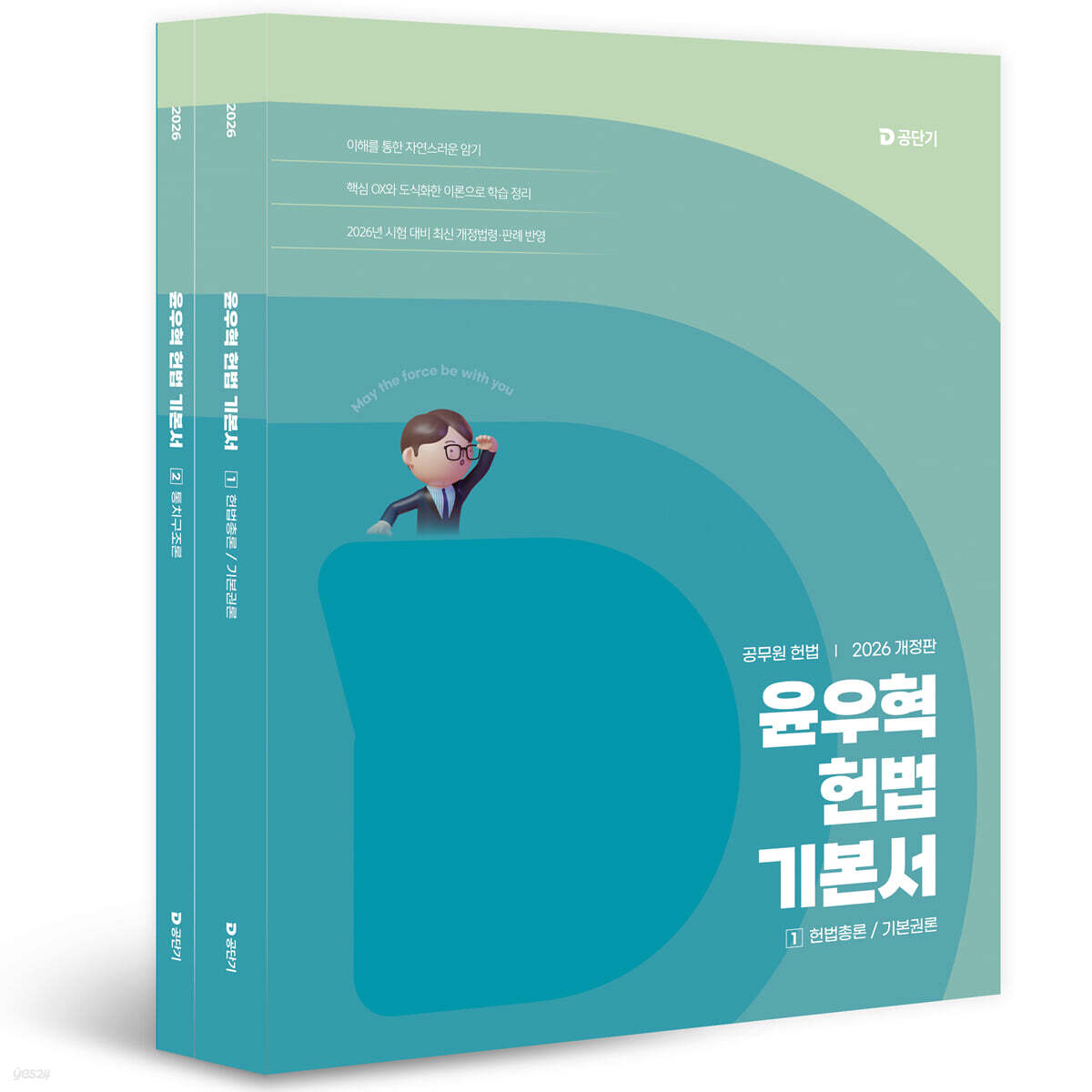
2026 Yoon Woo-hyuk Constitution Basic Book
 |
Description
Book Introduction
The Constitution is a subject that requires thorough understanding.
What the examiners want to ask the test takers is the level of their understanding of the Constitution.
The shortcut to passing the exam lies in reducing the amount of study through understanding, and once understanding is established, memorization will naturally follow through repeated study.
“2026 Yoon Woo-hyuk Constitution Basic Book” was written with a focus on ‘understanding.’
What the examiners want to ask the test takers is the level of their understanding of the Constitution.
The shortcut to passing the exam lies in reducing the amount of study through understanding, and once understanding is established, memorization will naturally follow through repeated study.
“2026 Yoon Woo-hyuk Constitution Basic Book” was written with a focus on ‘understanding.’
- You can preview some of the book's contents.
Preview
index
[Volume 1]
PART 01 General Provisions of the Constitution
CHAPTER 01 Constitution and Constitutional Law
Section 1 Meaning of the Constitution
Section 2: Constitutional Interpretation and Constitutional Views
Section 3: Enactment, Amendment, and Change of the Constitution
Section 4 Protection of the Constitution
CHAPTER 02 General Provisions of the Constitution of the Republic of Korea
Section 1 Constitutional History of the Republic of Korea
Section 2. State form and components of the Republic of Korea
Section 3 Basic Principles of the Constitution of the Republic of Korea
Section 4 Basic Order of the Constitution of the Republic of Korea
PART 02 Fundamental Rights Theory
CHAPTER 01 Basic Pistol Theory
Section 1. Significance of Fundamental Rights
Section 2 Legal Nature of Fundamental Rights
Section 3 Classification and System of Fundamental Rights
Section 4 Subjects of Fundamental Rights
Section 5 Effect of Fundamental Rights
Section 6 Limits and Restrictions on Fundamental Rights
Section 7 Confirmation and Guarantee of Fundamental Rights
CHAPTER 02 Human Dignity and Value, the Right to Pursuit of Happiness, and the Right to Equality
Section 1 Dignity and value as a human being
Section 2 Right to the Pursuit of Happiness
Section 3 Right to Equality
CHAPTER 03 Freedom and Fundamental Rights
Section 1 General Provisions
Section 2: Personal liberty
Section 3: Freedom of privacy
Section 4: Mental Freedom
CHAPTER 04 Basic Economic Rights
Section 1 Property Rights
Section 2 Freedom of occupational choice
Section 3 Consumer Rights
CHAPTER 05 Political Basic Rights
Section 1. Democratic politics and fundamental political rights
Section 2. Right to Vote
Section 3 Voting Rights and Electoral System
Section 4 Freedom of Political Parties and the Political Party System
Section 5. Right to hold public office and career civil service system
CHAPTER 06 Fundamental Rights of Claim
Section 1. Meaning and types of basic rights of claim
Section 2 Right to Petition
Section 3 Right to claim trial
Section 4 Claims for State Compensation
Section 5 Right to claim criminal compensation
Section 6. Crime Victims' Right to Claim Relief
CHAPTER 07 Social Basic Rights
Section 1 Structure and System of Social Basic Rights
Section 2 The right to a human life
Section 3: Right to education and education system
Section 4 Right to Work
Section 5 Three Labor Rights
Section 6 Environmental Rights
Section 7 Rights to Marriage, Family, Maternity Protection, and Health
CHAPTER 08 Basic Duties of Citizens
Section 1: Basic Duties of Citizens
Section 2 Obligation to pay taxes
Section 3 Duty of National Defense
[Volume 2]
PART 03 Governing Structure Theory
CHAPTER 01 Theoretical Basis of Governance Structure Theory
Section 1: Securing the Legitimacy of the Right to Rule
CHAPTER 02 Principles of the Governing Structure
Section 1. Principle of Representative System
Section 2: Principle of Separation of Powers
CHAPTER 03 Forms of Governing Structure
Section 1 Parliamentary and presidential systems
Section 2. The Third Type of Government
Section 3. The Form of Government of Our Country
CHAPTER 04 National Assembly
Section 1 Parliamentarism
Section 2 Constitutional Status of the National Assembly
Section 3 Composition and Organization of the National Assembly
Section 4 Operation and Procedure of the National Assembly
Section 5 Powers of the National Assembly
Section 6 Members of the National Assembly
CHAPTER 05 THE PRESIDENT AND THE EXECUTIVE OFFICE
Section 1 President
Section 2 Government
Section 3 Election Management Committee
Section 4 Local Autonomy System
Section 5 Military System
CHAPTER 06 Judicial Branch (Courts)
Section 1. The meaning and limitations of the judiciary
Section 2 Constitutional status and functions of the courts
CHAPTER 07 The Constitutional Court and Constitutional Litigation
Section 1 General Theory of the Constitutional Court
Section 2 Constitutional Review
Section 3 Constitutional Petition for Unconstitutionality Review
Section 4 Constitutional Petition for Remedy of Rights
Section 5 Impeachment Trial
Section 6 Judgment on dissolution of political party
Section 7 Judgment on disputes over authority
supplement
01 Structure of Constitutional Litigation
02 Constitution of the Republic of Korea
PART 01 General Provisions of the Constitution
CHAPTER 01 Constitution and Constitutional Law
Section 1 Meaning of the Constitution
Section 2: Constitutional Interpretation and Constitutional Views
Section 3: Enactment, Amendment, and Change of the Constitution
Section 4 Protection of the Constitution
CHAPTER 02 General Provisions of the Constitution of the Republic of Korea
Section 1 Constitutional History of the Republic of Korea
Section 2. State form and components of the Republic of Korea
Section 3 Basic Principles of the Constitution of the Republic of Korea
Section 4 Basic Order of the Constitution of the Republic of Korea
PART 02 Fundamental Rights Theory
CHAPTER 01 Basic Pistol Theory
Section 1. Significance of Fundamental Rights
Section 2 Legal Nature of Fundamental Rights
Section 3 Classification and System of Fundamental Rights
Section 4 Subjects of Fundamental Rights
Section 5 Effect of Fundamental Rights
Section 6 Limits and Restrictions on Fundamental Rights
Section 7 Confirmation and Guarantee of Fundamental Rights
CHAPTER 02 Human Dignity and Value, the Right to Pursuit of Happiness, and the Right to Equality
Section 1 Dignity and value as a human being
Section 2 Right to the Pursuit of Happiness
Section 3 Right to Equality
CHAPTER 03 Freedom and Fundamental Rights
Section 1 General Provisions
Section 2: Personal liberty
Section 3: Freedom of privacy
Section 4: Mental Freedom
CHAPTER 04 Basic Economic Rights
Section 1 Property Rights
Section 2 Freedom of occupational choice
Section 3 Consumer Rights
CHAPTER 05 Political Basic Rights
Section 1. Democratic politics and fundamental political rights
Section 2. Right to Vote
Section 3 Voting Rights and Electoral System
Section 4 Freedom of Political Parties and the Political Party System
Section 5. Right to hold public office and career civil service system
CHAPTER 06 Fundamental Rights of Claim
Section 1. Meaning and types of basic rights of claim
Section 2 Right to Petition
Section 3 Right to claim trial
Section 4 Claims for State Compensation
Section 5 Right to claim criminal compensation
Section 6. Crime Victims' Right to Claim Relief
CHAPTER 07 Social Basic Rights
Section 1 Structure and System of Social Basic Rights
Section 2 The right to a human life
Section 3: Right to education and education system
Section 4 Right to Work
Section 5 Three Labor Rights
Section 6 Environmental Rights
Section 7 Rights to Marriage, Family, Maternity Protection, and Health
CHAPTER 08 Basic Duties of Citizens
Section 1: Basic Duties of Citizens
Section 2 Obligation to pay taxes
Section 3 Duty of National Defense
[Volume 2]
PART 03 Governing Structure Theory
CHAPTER 01 Theoretical Basis of Governance Structure Theory
Section 1: Securing the Legitimacy of the Right to Rule
CHAPTER 02 Principles of the Governing Structure
Section 1. Principle of Representative System
Section 2: Principle of Separation of Powers
CHAPTER 03 Forms of Governing Structure
Section 1 Parliamentary and presidential systems
Section 2. The Third Type of Government
Section 3. The Form of Government of Our Country
CHAPTER 04 National Assembly
Section 1 Parliamentarism
Section 2 Constitutional Status of the National Assembly
Section 3 Composition and Organization of the National Assembly
Section 4 Operation and Procedure of the National Assembly
Section 5 Powers of the National Assembly
Section 6 Members of the National Assembly
CHAPTER 05 THE PRESIDENT AND THE EXECUTIVE OFFICE
Section 1 President
Section 2 Government
Section 3 Election Management Committee
Section 4 Local Autonomy System
Section 5 Military System
CHAPTER 06 Judicial Branch (Courts)
Section 1. The meaning and limitations of the judiciary
Section 2 Constitutional status and functions of the courts
CHAPTER 07 The Constitutional Court and Constitutional Litigation
Section 1 General Theory of the Constitutional Court
Section 2 Constitutional Review
Section 3 Constitutional Petition for Unconstitutionality Review
Section 4 Constitutional Petition for Remedy of Rights
Section 5 Impeachment Trial
Section 6 Judgment on dissolution of political party
Section 7 Judgment on disputes over authority
supplement
01 Structure of Constitutional Litigation
02 Constitution of the Republic of Korea
Publisher's Review
With refined content and differentiated texture
Opening a new paradigm for the civil service constitution
2026 Yoon Woo-hyuk Constitution Basic Book
Understanding is the answer!
The Constitution is a subject that requires thorough understanding.
What the examiners want to ask the test takers is the level of their understanding of the Constitution.
The shortcut to passing the exam lies in reducing the amount of study through understanding. Once understanding is established, memorization will naturally follow through repeated study.
"2026 Yoon Woo-hyuk Constitution Basic Book" was written with a focus on 'understanding.'
1 Don't try to memorize.
Understanding comes first.
It is impossible to simply memorize a vast amount of information.
It is not advisable to force yourself to memorize similar expressions because they often produce different results.
2. First, establish the litigation structure.
Law is ultimately a process of resolving specific problems through litigation.
While litigation is the most difficult part of the entire Constitution, understanding how constitutional litigation works provides a comprehensive framework for the Constitution and makes studying it easier.
Please refer to the appendix of Volume 2, which provides a separate summary of the ‘Constitutional Litigation Structure.’
3 Don't get hung up on individual laws.
The most common mistake students make when studying the Constitution is to focus on individual laws and try to memorize them.
Laws have their reasons and relationships.
To properly understand laws and to sustain the effectiveness of memorization, you must properly grasp the overall context of the legal system.
This textbook does not simply list individual laws, but explains the legislative intent and key points of the provisions.
4. Organize so that you can read it in one sitting right before the exam.
To pass any exam, you must be able to read it completely right before the exam.
To do that, you need to organize it systematically from the beginning.
People who have studied to some extent should keep in mind that mistakes are not made because they do not know, but because they do not know accurately.
Opening a new paradigm for the civil service constitution
2026 Yoon Woo-hyuk Constitution Basic Book
Understanding is the answer!
The Constitution is a subject that requires thorough understanding.
What the examiners want to ask the test takers is the level of their understanding of the Constitution.
The shortcut to passing the exam lies in reducing the amount of study through understanding. Once understanding is established, memorization will naturally follow through repeated study.
"2026 Yoon Woo-hyuk Constitution Basic Book" was written with a focus on 'understanding.'
1 Don't try to memorize.
Understanding comes first.
It is impossible to simply memorize a vast amount of information.
It is not advisable to force yourself to memorize similar expressions because they often produce different results.
2. First, establish the litigation structure.
Law is ultimately a process of resolving specific problems through litigation.
While litigation is the most difficult part of the entire Constitution, understanding how constitutional litigation works provides a comprehensive framework for the Constitution and makes studying it easier.
Please refer to the appendix of Volume 2, which provides a separate summary of the ‘Constitutional Litigation Structure.’
3 Don't get hung up on individual laws.
The most common mistake students make when studying the Constitution is to focus on individual laws and try to memorize them.
Laws have their reasons and relationships.
To properly understand laws and to sustain the effectiveness of memorization, you must properly grasp the overall context of the legal system.
This textbook does not simply list individual laws, but explains the legislative intent and key points of the provisions.
4. Organize so that you can read it in one sitting right before the exam.
To pass any exam, you must be able to read it completely right before the exam.
To do that, you need to organize it systematically from the beginning.
People who have studied to some extent should keep in mind that mistakes are not made because they do not know, but because they do not know accurately.
GOODS SPECIFICS
- Date of issue: August 22, 2025
- Page count, weight, size: 952 pages | 205*260*40mm
- ISBN13: 9791169664523
- ISBN10: 1169664520
You may also like
카테고리
korean


korean

![GQ KOREA Mark (Monthly): December [2025]](http://librairie.coreenne.fr/cdn/shop/files/8ef265dbbfbf186523ed75ba7319009d.jpg?v=1765340328&width=3840)


