

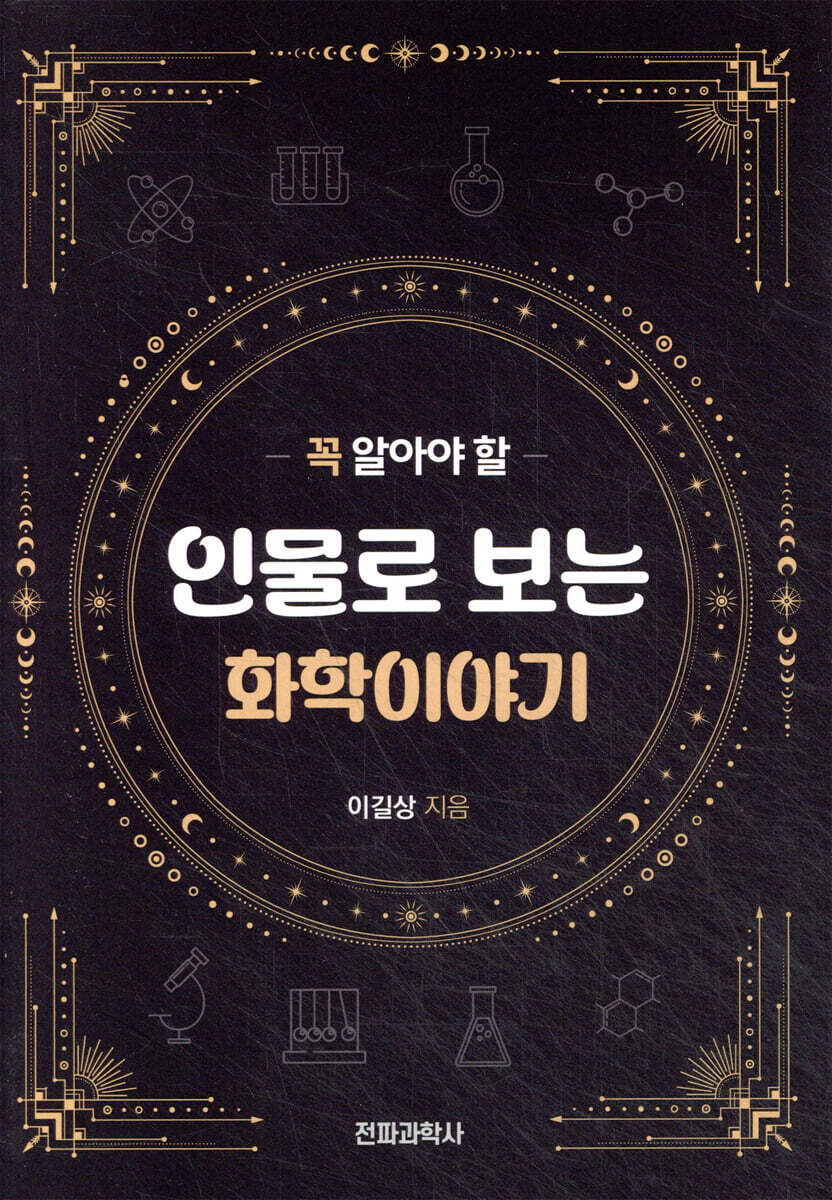
A Story of Chemistry from a Perspective of Must-Know Figures
 |
Description
Book Introduction
"The scientists who changed the world started with a simple curiosity."
This book explores the true meaning of science through the lives and challenges of scientists who played a significant role in the history of chemistry.
The challenges and failures of famous chemists such as Marie Curie, Mendeleev, Boyle, Lavoisier, and Kekulé, as well as the hardships and questions they faced, tell the true stories not contained in the formulas in textbooks.
This book is not simply a list of their achievements; it offers a unique journey through the life of one man, allowing us to read the science of an era.
From alchemy to the atomic age, this book follows the journey of chemists who revolutionized science, revealing how the courage and passion of those who sought to change the world led to scientific discovery.
This story, filled with experimentation, failure, and the constant pursuit of dreams, is not simply a list of theories, but a profound exploration of how science is closely linked to people's lives.
This book makes us realize that chemistry is not just a series of formulas, but a history made up of people's stories.
This book explores the true meaning of science through the lives and challenges of scientists who played a significant role in the history of chemistry.
The challenges and failures of famous chemists such as Marie Curie, Mendeleev, Boyle, Lavoisier, and Kekulé, as well as the hardships and questions they faced, tell the true stories not contained in the formulas in textbooks.
This book is not simply a list of their achievements; it offers a unique journey through the life of one man, allowing us to read the science of an era.
From alchemy to the atomic age, this book follows the journey of chemists who revolutionized science, revealing how the courage and passion of those who sought to change the world led to scientific discovery.
This story, filled with experimentation, failure, and the constant pursuit of dreams, is not simply a list of theories, but a profound exploration of how science is closely linked to people's lives.
This book makes us realize that chemistry is not just a series of formulas, but a history made up of people's stories.
- You can preview some of the book's contents.
Preview
index
preface
1.
Aristotle
Birth│Teacher and Student│Aristotle's Weakness│The Invader's Teacher│Aristotle's Geocentrism│Aristotle's Falling Motion│Democritus's Atomic Theory and Aristotle's Dangerous Thoughts│Plato's Thoughts│Aristotle's Transmutation Theory of the Four Elements
2.
Chemists of the Alchemical Age
Hellenism│The appearance of Egypt│Papyrus│Alchemy│Saracenic culture (Islamic culture)│Latin culture in Europe│Gebert's Book│The Alchemist's Three-Element Novel│Albertus Magnus│Roger Bacon│Raimundus Lullus│Francis Bacon
3.
Renaissance Chemists
Iatro-Chemistry│Paracelsus│Van Helmont│Georgius Agricola│Glauber
4.
Robert Boyle
The historical background of Boyle's era│Boyle's life│Nature does not abhor a vacuum│Vacuum pump│Boyle's law│Particle hypothesis│『The Skeptical Chemist』│The founder of modern chemistry│Elements│Induction and deduction│The purpose of chemistry│Elemental theory and atomic theory│Discovery of indicators│Discovery of ink│Properties of silver chloride│Phosphoric acid and white phosphorus│Analytical chemistry│Other achievements│Boyle's later years
5.
Joseph Priestley
Life│Phlogiston hypothesis│Priestley's gas chemistry│Pioneers of gas chemistry│Finally discovering oxygen│Meeting Lavoisier│Returning to England│Another discoverer of oxygen│Origin of the name 'lover'│Various gases discovered by Priestley│Other achievements│Old age
6.
Antoine Laurent Lavoisier
Boyhood│Life│Lavoisier's Achievements│Lavoisier's Regrettable Mistakes│Lavoisier's Execution│A Cunning and Painful Stain on the History of Chemistry│Glory
7.
John Dalton
Boyhood│Life│Atomic theory│Indirect proof of atomic theory│Two methods of scientific inquiry│Atomic weight│Dalton's incorrect simple law│Elemental symbols│Elements and atoms│The laws of gaseous reactions that supported atomic theory│Avogadro's molecular theory│Cannizzaro's contributions│Dalton's last days
8.
Humphry Davy
Boyhood│Life│A disciple│Davy, the best day of his life│Finally, the invention of the safety light│The battery that supported Davy's success│Discovery of a new element│Contact theory and chemical theory│Grotters' idea│Ions│The group nature of chlorine│The electrochemical hypothesis│Davy's later years
9.
Justus von Liebig
Boyhood│Two problematic figures│Study abroad│A 21-year-old university professor│Family happiness│Liebig's personality│Vitalism in organic matter│The fall of vitalism and the synthesis of organic compounds│How two chemists met│Isomers│Discovery of atomic groups│Establishment of organic element analysis method│Benefactor of agricultural chemistry│Old age
10.
Friedrich August Kekule
Boyhood│Life│Kekulé's brief happiness, his family life│Organic chemistry in Kekulé's time│Carbon chain bond structure│Carbon ring bond structure│Optical isomers of organic substances│Asymmetric carbon elements│Old age
11.
Robert Wilhelm Bunsen
Boyhood│Life│Bunsen's Character│Bunsen's Achievements│Bunsen and Kirchhoff's Spectrum│Old Age
12.
Dmitry Ivatovich Mendeleev
Boyhood│Departure│Disappointment and Courage│Mendeleev Becomes an Orphan│Graduation from University│Startup as a Scholar│Personality│Marriage and Hobbies│Mendeleev's Precursors│Mendeleev's Periodic Table│Prophecy│Mendeleev's Chemical Knowledge│Old Age
13.
William Ramsey
Boyhood│Life│Discovery of the noble gases│Ramsey's appearance│Argon│O elements│Helium│Prophecy and fulfillment│Study of the density of radon│Ramsey's writings│Old age
14.
Marie Skłodowska Curie
Girlhood│Poor schoolgirl│Marriage│Life│Personality│Nobel Prize family│Cathode rays│X-rays│Becquerel's experiments│Radioactivity│Polonium│Radium│Old age
15.
Enrico Fermi
Life│Nuclear reaction│Artificial radioisotope│Neutron│Geiger-Müller counter│Fermi's experiment│Fermi's exile│Fragment of uranium fission│Atomic physics society│Advice to President Roosevelt│Chain reaction│Fermi's inspiration│Second fire│Atomic bomb│Dropping of the atomic bomb│Old age
1.
Aristotle
Birth│Teacher and Student│Aristotle's Weakness│The Invader's Teacher│Aristotle's Geocentrism│Aristotle's Falling Motion│Democritus's Atomic Theory and Aristotle's Dangerous Thoughts│Plato's Thoughts│Aristotle's Transmutation Theory of the Four Elements
2.
Chemists of the Alchemical Age
Hellenism│The appearance of Egypt│Papyrus│Alchemy│Saracenic culture (Islamic culture)│Latin culture in Europe│Gebert's Book│The Alchemist's Three-Element Novel│Albertus Magnus│Roger Bacon│Raimundus Lullus│Francis Bacon
3.
Renaissance Chemists
Iatro-Chemistry│Paracelsus│Van Helmont│Georgius Agricola│Glauber
4.
Robert Boyle
The historical background of Boyle's era│Boyle's life│Nature does not abhor a vacuum│Vacuum pump│Boyle's law│Particle hypothesis│『The Skeptical Chemist』│The founder of modern chemistry│Elements│Induction and deduction│The purpose of chemistry│Elemental theory and atomic theory│Discovery of indicators│Discovery of ink│Properties of silver chloride│Phosphoric acid and white phosphorus│Analytical chemistry│Other achievements│Boyle's later years
5.
Joseph Priestley
Life│Phlogiston hypothesis│Priestley's gas chemistry│Pioneers of gas chemistry│Finally discovering oxygen│Meeting Lavoisier│Returning to England│Another discoverer of oxygen│Origin of the name 'lover'│Various gases discovered by Priestley│Other achievements│Old age
6.
Antoine Laurent Lavoisier
Boyhood│Life│Lavoisier's Achievements│Lavoisier's Regrettable Mistakes│Lavoisier's Execution│A Cunning and Painful Stain on the History of Chemistry│Glory
7.
John Dalton
Boyhood│Life│Atomic theory│Indirect proof of atomic theory│Two methods of scientific inquiry│Atomic weight│Dalton's incorrect simple law│Elemental symbols│Elements and atoms│The laws of gaseous reactions that supported atomic theory│Avogadro's molecular theory│Cannizzaro's contributions│Dalton's last days
8.
Humphry Davy
Boyhood│Life│A disciple│Davy, the best day of his life│Finally, the invention of the safety light│The battery that supported Davy's success│Discovery of a new element│Contact theory and chemical theory│Grotters' idea│Ions│The group nature of chlorine│The electrochemical hypothesis│Davy's later years
9.
Justus von Liebig
Boyhood│Two problematic figures│Study abroad│A 21-year-old university professor│Family happiness│Liebig's personality│Vitalism in organic matter│The fall of vitalism and the synthesis of organic compounds│How two chemists met│Isomers│Discovery of atomic groups│Establishment of organic element analysis method│Benefactor of agricultural chemistry│Old age
10.
Friedrich August Kekule
Boyhood│Life│Kekulé's brief happiness, his family life│Organic chemistry in Kekulé's time│Carbon chain bond structure│Carbon ring bond structure│Optical isomers of organic substances│Asymmetric carbon elements│Old age
11.
Robert Wilhelm Bunsen
Boyhood│Life│Bunsen's Character│Bunsen's Achievements│Bunsen and Kirchhoff's Spectrum│Old Age
12.
Dmitry Ivatovich Mendeleev
Boyhood│Departure│Disappointment and Courage│Mendeleev Becomes an Orphan│Graduation from University│Startup as a Scholar│Personality│Marriage and Hobbies│Mendeleev's Precursors│Mendeleev's Periodic Table│Prophecy│Mendeleev's Chemical Knowledge│Old Age
13.
William Ramsey
Boyhood│Life│Discovery of the noble gases│Ramsey's appearance│Argon│O elements│Helium│Prophecy and fulfillment│Study of the density of radon│Ramsey's writings│Old age
14.
Marie Skłodowska Curie
Girlhood│Poor schoolgirl│Marriage│Life│Personality│Nobel Prize family│Cathode rays│X-rays│Becquerel's experiments│Radioactivity│Polonium│Radium│Old age
15.
Enrico Fermi
Life│Nuclear reaction│Artificial radioisotope│Neutron│Geiger-Müller counter│Fermi's experiment│Fermi's exile│Fragment of uranium fission│Atomic physics society│Advice to President Roosevelt│Chain reaction│Fermi's inspiration│Second fire│Atomic bomb│Dropping of the atomic bomb│Old age
Detailed image

Into the book
However, it was Galileo who experimentally proved this 2000 years later.
For 2,000 years, material explorers have all accepted Aristotle's idea that "nature abhors a vacuum."
Aristotle made another mistake with his geocentrism.
--- p.24
As the idea spread that the true purpose of chemistry was not to make gold but to make medicine, medicine and alchemy were combined into one, and the era of 'iatrochemistry' (early 16th century - 17th century), or medicinal chemistry, began.
The first person to propose this idea was Paracelsus, a Swiss-born medical chemist.
--- p.59
In 1808, a few years after Dalton published his atomic theory, the French chemist Gay-Lussac (JL)
Gay-Lussac (1778-1850) proposed the following law:
He announced the law of gas reactions, which states that when gases react to form new gases, there is a simple whole number ratio between the volumes of the reacting gases and the newly formed gases.
--- p.169
Liebig then began meeting with Wöhler frequently and conducting joint research, and the two soon became closest friends.
Perhaps if there were two scientists on this planet who maintained a deep and enduring friendship until death, it would be the two great chemists, Wöhler and Liebig.
Liebig died first, and Wöhler was left alone and lived a lonely life until he died at the age of 82.
--- p.219
Fermi, who created the terrifying atomic bomb that threatened humanity, became a professor at the Institute for Nuclear Research in 1945, but he himself suffered from radiation-related illnesses and died of cancer on November 28, 1954, in Chicago, where he had discovered the second fire.
For 2,000 years, material explorers have all accepted Aristotle's idea that "nature abhors a vacuum."
Aristotle made another mistake with his geocentrism.
--- p.24
As the idea spread that the true purpose of chemistry was not to make gold but to make medicine, medicine and alchemy were combined into one, and the era of 'iatrochemistry' (early 16th century - 17th century), or medicinal chemistry, began.
The first person to propose this idea was Paracelsus, a Swiss-born medical chemist.
--- p.59
In 1808, a few years after Dalton published his atomic theory, the French chemist Gay-Lussac (JL)
Gay-Lussac (1778-1850) proposed the following law:
He announced the law of gas reactions, which states that when gases react to form new gases, there is a simple whole number ratio between the volumes of the reacting gases and the newly formed gases.
--- p.169
Liebig then began meeting with Wöhler frequently and conducting joint research, and the two soon became closest friends.
Perhaps if there were two scientists on this planet who maintained a deep and enduring friendship until death, it would be the two great chemists, Wöhler and Liebig.
Liebig died first, and Wöhler was left alone and lived a lonely life until he died at the age of 82.
--- p.219
Fermi, who created the terrifying atomic bomb that threatened humanity, became a professor at the Institute for Nuclear Research in 1945, but he himself suffered from radiation-related illnesses and died of cancer on November 28, 1954, in Chicago, where he had discovered the second fire.
--- p.347
GOODS SPECIFICS
- Date of issue: June 17, 2025
- Page count, weight, size: 350 pages | 148*210*30mm
- ISBN13: 9791194832058
- ISBN10: 1194832059
You may also like
카테고리
korean


korean

![GQ KOREA Mark (Monthly): December [2025]](http://librairie.coreenne.fr/cdn/shop/files/8ef265dbbfbf186523ed75ba7319009d.jpg?v=1765340328&width=3840)


