

First Steps in Observational Astronomy
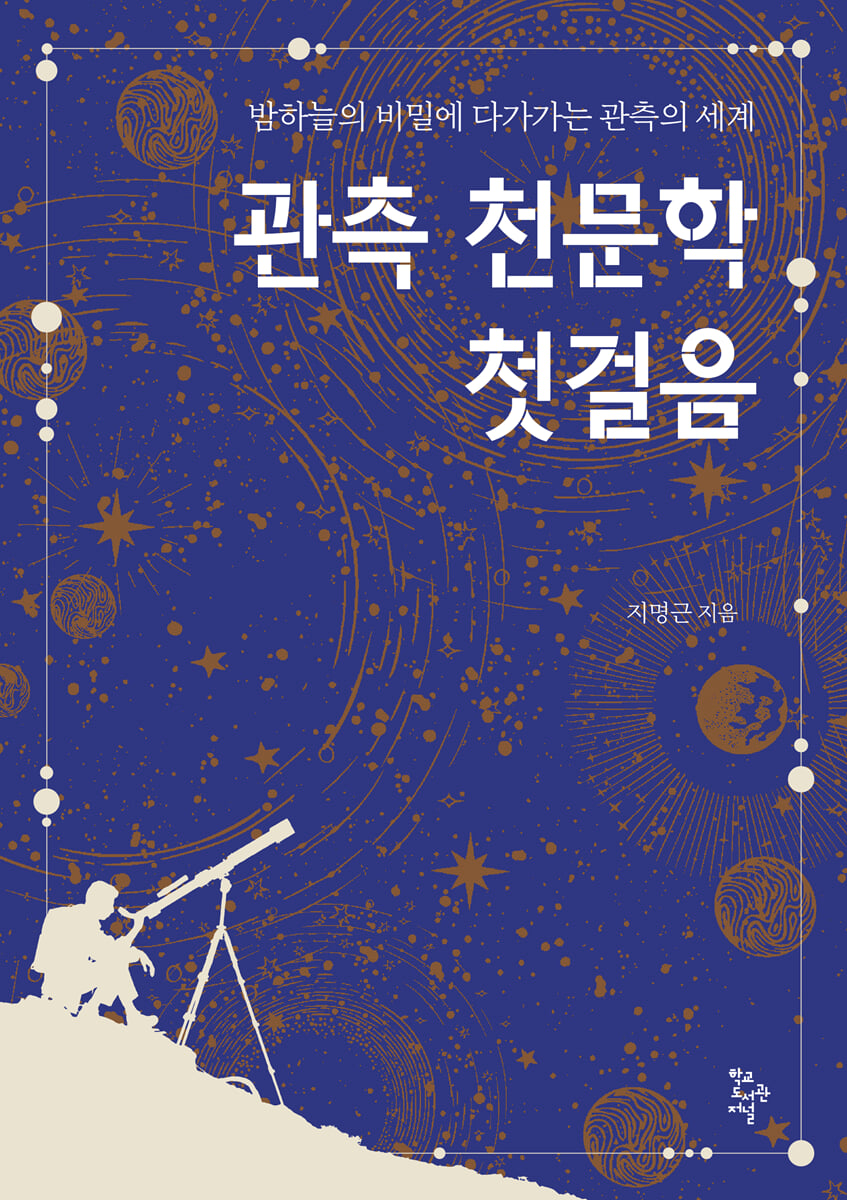 |
Description
Book Introduction
Astronomy completed through observation and interpretation
Discover real astronomy with 27 astronomical experiments.
This book goes beyond simply covering the theories of important discoveries in the history of astronomy, and introduces the entire process of observation and analysis that recreates major astronomical experiments throughout history.
From basic school equipment to smartphones, you can gain a living experience and knowledge of astronomy through 27 diverse astronomical experiments using tools around us.
In particular, it provides detailed guidance on the interpretation process that requires formulas, helping not only astronomy majors but also students and the general public interested in astronomy to get closer to the secrets of astronomy and the universe.
Discover real astronomy with 27 astronomical experiments.
This book goes beyond simply covering the theories of important discoveries in the history of astronomy, and introduces the entire process of observation and analysis that recreates major astronomical experiments throughout history.
From basic school equipment to smartphones, you can gain a living experience and knowledge of astronomy through 27 diverse astronomical experiments using tools around us.
In particular, it provides detailed guidance on the interpretation process that requires formulas, helping not only astronomy majors but also students and the general public interested in astronomy to get closer to the secrets of astronomy and the universe.
- You can preview some of the book's contents.
Preview
index
Entering
Recommendation
Chapter 1: Astrophotography
1. Get to know your telescope
2 Taking pictures with a DSLR camera
3 Taking pictures using a smartphone
4 Photo shoot with Sistar
5 Astronomical Observation Software
Chapter 2: Warming Up: Learning How to Use Excel
1 Excel Basic Settings
2. Learn how to use Excel
Chapter 3 Exploratory Activities
Find the angular diameter of the moon
Find the distance up to 2 months
Find the orbital period of 3 months
Finding the eccentricity of the moon's orbit
5 Finding the Sun's Rotation Period
Verification of general relativity using a solar eclipse
7 Finding the radius of the Earth
8 Finding the Earth's orbital speed
9 Finding the mass of Jupiter
10 Measuring the speed of light
11-1 Drawing the orbits of the inner and outer planets
11-2 Finding Kepler's First Law
11-3 Does the Earth move in a circle or an ellipse?
11-4 Finding Kepler's Second Law
11-5 Simulation of planetary motion using Excel
11-6 Finding Kepler's Third Law
12 Measuring the distance from the Earth to the Sun
13 61 Proper motion of Cygni star
14. Movement of Bernard's Star
Exploring the Spectra of 15 Stars
16 Measuring the Distance and Age of the Pleiades
Finding the distance to the M100 galaxy using 17 Cepheid variables
Finding the distance to 18 SN1987A
19 Finding the location of the center of our galaxy
20 Rotational speed of our galaxy and its mass
21 Hubble's Law
22 The Mystery of the Quasars
supplement
References
Search
Recommendation
Chapter 1: Astrophotography
1. Get to know your telescope
2 Taking pictures with a DSLR camera
3 Taking pictures using a smartphone
4 Photo shoot with Sistar
5 Astronomical Observation Software
Chapter 2: Warming Up: Learning How to Use Excel
1 Excel Basic Settings
2. Learn how to use Excel
Chapter 3 Exploratory Activities
Find the angular diameter of the moon
Find the distance up to 2 months
Find the orbital period of 3 months
Finding the eccentricity of the moon's orbit
5 Finding the Sun's Rotation Period
Verification of general relativity using a solar eclipse
7 Finding the radius of the Earth
8 Finding the Earth's orbital speed
9 Finding the mass of Jupiter
10 Measuring the speed of light
11-1 Drawing the orbits of the inner and outer planets
11-2 Finding Kepler's First Law
11-3 Does the Earth move in a circle or an ellipse?
11-4 Finding Kepler's Second Law
11-5 Simulation of planetary motion using Excel
11-6 Finding Kepler's Third Law
12 Measuring the distance from the Earth to the Sun
13 61 Proper motion of Cygni star
14. Movement of Bernard's Star
Exploring the Spectra of 15 Stars
16 Measuring the Distance and Age of the Pleiades
Finding the distance to the M100 galaxy using 17 Cepheid variables
Finding the distance to 18 SN1987A
19 Finding the location of the center of our galaxy
20 Rotational speed of our galaxy and its mass
21 Hubble's Law
22 The Mystery of the Quasars
supplement
References
Search
Detailed image

Into the book
“Many of the exploratory activities included in this book are the result of a process of challenging students to observe important historical discoveries in the history of astronomy in school settings.
I believe that learning science is not only about obtaining accurate results, but also about students thinking about their own research topics, brainstorming, designing experimental procedures, and analyzing experimental data to determine results.
Even if the experiment fails, the experiences of students who put in a lot of time and effort are invaluable, and these experiences of failure will help them grow into outstanding scientists.”
--- From "Entering"
There is something about astrophotography that fascinates people.
When I look at the night sky filled with stars and the Milky Way, I can't help but exclaim in awe at its beauty.
For astronomers, astronomical photography was the foundation that enabled systematic astronomical research by capturing the appearance of stars, galaxies, and the universe as they were.
--- From "Astronomical Photography"
Excel is generally useful software for office work or calculations.
And Excel can be very useful in analyzing the data we observe to obtain physical quantities related to celestial bodies.
In the future, I plan to use Excel to set variables, check how values change according to those variables, and express this in a graph to discover laws of nature.
--- From "Warming Up: Learning How to Use Excel"
Having taught natural science to students for many years, I have become convinced that the best way to understand natural phenomena is to explore them directly, like scientists do.
The activity I am starting from now on is an exploratory activity that describes the author's experience of observing, interpreting, and deriving results from astronomical phenomena that he has been curious about.
Let's take our first steps into the world of astronomy together.
I believe that learning science is not only about obtaining accurate results, but also about students thinking about their own research topics, brainstorming, designing experimental procedures, and analyzing experimental data to determine results.
Even if the experiment fails, the experiences of students who put in a lot of time and effort are invaluable, and these experiences of failure will help them grow into outstanding scientists.”
--- From "Entering"
There is something about astrophotography that fascinates people.
When I look at the night sky filled with stars and the Milky Way, I can't help but exclaim in awe at its beauty.
For astronomers, astronomical photography was the foundation that enabled systematic astronomical research by capturing the appearance of stars, galaxies, and the universe as they were.
--- From "Astronomical Photography"
Excel is generally useful software for office work or calculations.
And Excel can be very useful in analyzing the data we observe to obtain physical quantities related to celestial bodies.
In the future, I plan to use Excel to set variables, check how values change according to those variables, and express this in a graph to discover laws of nature.
--- From "Warming Up: Learning How to Use Excel"
Having taught natural science to students for many years, I have become convinced that the best way to understand natural phenomena is to explore them directly, like scientists do.
The activity I am starting from now on is an exploratory activity that describes the author's experience of observing, interpreting, and deriving results from astronomical phenomena that he has been curious about.
Let's take our first steps into the world of astronomy together.
--- From "Exploration Activities"
Publisher's Review
Observational astronomy for the first time in the classroom
We provide friendly guidance to break away from complex theories and allow students to directly observe and explore astronomical phenomena using equipment and teaching aids readily available at school.
As a long-time science teacher who has mentored gifted students and science club activities, the author designs lessons to encourage active participation and understanding, presenting concrete methods for fostering astronomical curiosity in the classroom and fostering scientific inquiry.
Colorful astronomical observation experiments
A total of 27 interesting astronomical observation experiments are introduced in detail, including measuring the angular diameter of the moon, calculating the eccentricity of its orbit, measuring the distance from the Earth to the sun, analyzing the motion of planets, and exploring the spectra of stars.
Each experiment is systematically structured with clear objectives, materials, step-by-step process explanations, and results analysis methods, helping readers experience the astronomical research process and develop scientific thinking skills.
The thrill of observing in the city with your smartphone
We introduce a new observation method suitable for the digital age so that anyone can easily enjoy the pleasure of astronomy regardless of time and place.
Even in cities with severe light pollution, you can observe the moon, planets, and stars by making good use of simple tools like smartphones, digital cameras, and apps.
Detailed analysis that anyone can do with just basic math knowledge
It explains in simple and detailed terms so that anyone with only a basic high school level knowledge of mathematics can analyze observational data and reach meaningful scientific conclusions.
By learning how to use Excel, you can directly process data, draw graphs, and calculate and prove the laws of celestial motion and physical quantities, thereby gaining a deeper understanding of astronomical principles.
All observation data by difficulty level provided free of charge
Exploration activities categorized by difficulty help readers challenge themselves according to their level and interests.
Additionally, all observation data sheets, analysis templates, additional materials, and learning videos required for research activities are provided free of charge.
Additionally, the author has created a separate Padlet Q&A space so that readers can immediately resolve any questions or concerns they may have.
Readers can use this to improve the efficiency of their experiments and to help write their own research reports.
We provide friendly guidance to break away from complex theories and allow students to directly observe and explore astronomical phenomena using equipment and teaching aids readily available at school.
As a long-time science teacher who has mentored gifted students and science club activities, the author designs lessons to encourage active participation and understanding, presenting concrete methods for fostering astronomical curiosity in the classroom and fostering scientific inquiry.
Colorful astronomical observation experiments
A total of 27 interesting astronomical observation experiments are introduced in detail, including measuring the angular diameter of the moon, calculating the eccentricity of its orbit, measuring the distance from the Earth to the sun, analyzing the motion of planets, and exploring the spectra of stars.
Each experiment is systematically structured with clear objectives, materials, step-by-step process explanations, and results analysis methods, helping readers experience the astronomical research process and develop scientific thinking skills.
The thrill of observing in the city with your smartphone
We introduce a new observation method suitable for the digital age so that anyone can easily enjoy the pleasure of astronomy regardless of time and place.
Even in cities with severe light pollution, you can observe the moon, planets, and stars by making good use of simple tools like smartphones, digital cameras, and apps.
Detailed analysis that anyone can do with just basic math knowledge
It explains in simple and detailed terms so that anyone with only a basic high school level knowledge of mathematics can analyze observational data and reach meaningful scientific conclusions.
By learning how to use Excel, you can directly process data, draw graphs, and calculate and prove the laws of celestial motion and physical quantities, thereby gaining a deeper understanding of astronomical principles.
All observation data by difficulty level provided free of charge
Exploration activities categorized by difficulty help readers challenge themselves according to their level and interests.
Additionally, all observation data sheets, analysis templates, additional materials, and learning videos required for research activities are provided free of charge.
Additionally, the author has created a separate Padlet Q&A space so that readers can immediately resolve any questions or concerns they may have.
Readers can use this to improve the efficiency of their experiments and to help write their own research reports.
GOODS SPECIFICS
- Date of issue: April 30, 2025
- Page count, weight, size: 484 pages | 170*240*30mm
- ISBN13: 9788969151810
- ISBN10: 8969151818
You may also like
카테고리
korean


korean

![GQ KOREA Mark (Monthly): December [2025]](http://librairie.coreenne.fr/cdn/shop/files/8ef265dbbfbf186523ed75ba7319009d.jpg?v=1765340328&width=3840)


