

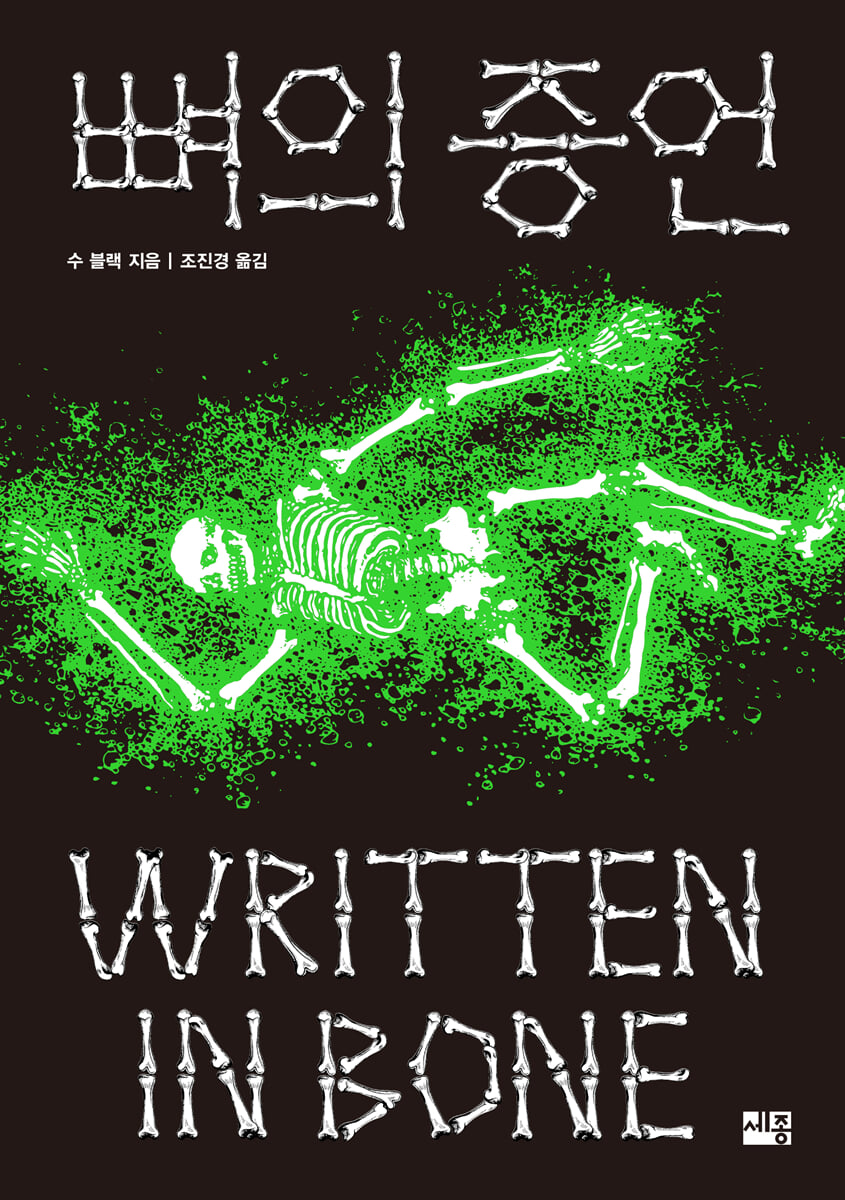
Testimony of the bones
 |
Description
Book Introduction
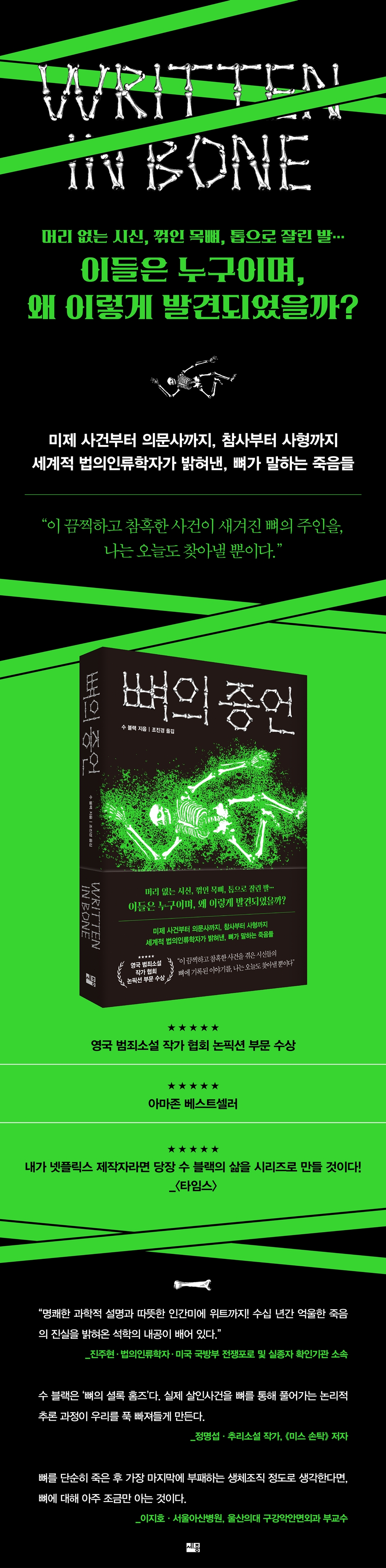
“Headless corpses, broken necks, sawed-off feet…
Who are they and why were they discovered this way?
“After experiencing this terrible and tragic incident,
“I am still searching for the stories written on the bones of the corpses.”
Who dumped the body's head in a plastic bag? Who was he, buried in the garden so long ago? Why was a piece of his wife's bone in the washing machine? If someone has to solve this dark puzzle, Sue Black does it through a tiny piece of bone.
《The Testimony of Bones》 is a record of real events more brutal and horrific than any crime novel, written by world-renowned forensic anthropologist Sue Black based on her lifelong experiences.
Much of the work of forensic scientists, especially forensic anthropologists, is related to 'identification'.
The job of a forensic anthropologist is to find the 'name' of the deceased among countless corpses, to find out why they were found in that state, and ultimately to return them to their families and let them rest in peace.
In this book, the author identifies a dismembered and mutilated body found in a suitcase without ever being reported missing, and finds evidence of childhood trauma and abuse in the deceased's leg bones.
Sometimes, they look at the skull and reconstruct the victim's face.
In particular, Sue Black shocked the world by revealing evidence of torture during the Syrian genocide through traces found in foot bones. Even when shattered, almost burned to the point of barely a trace remaining, bones provide a multifaceted glimpse into their owner's final moments.
“If you think of bones as simply the living tissue that provides mechanical strength to the human body and is the last to decay after death, then you know very little about them.” (Recommendation by Professor Lee Ji-ho) The author calmly conveys the meaning of human existence and the beautiful yet sad lives hidden behind each incident through the process of unraveling the mystery of the incident one by one through various knowledge about bones.
Who are they and why were they discovered this way?
“After experiencing this terrible and tragic incident,
“I am still searching for the stories written on the bones of the corpses.”
Who dumped the body's head in a plastic bag? Who was he, buried in the garden so long ago? Why was a piece of his wife's bone in the washing machine? If someone has to solve this dark puzzle, Sue Black does it through a tiny piece of bone.
《The Testimony of Bones》 is a record of real events more brutal and horrific than any crime novel, written by world-renowned forensic anthropologist Sue Black based on her lifelong experiences.
Much of the work of forensic scientists, especially forensic anthropologists, is related to 'identification'.
The job of a forensic anthropologist is to find the 'name' of the deceased among countless corpses, to find out why they were found in that state, and ultimately to return them to their families and let them rest in peace.
In this book, the author identifies a dismembered and mutilated body found in a suitcase without ever being reported missing, and finds evidence of childhood trauma and abuse in the deceased's leg bones.
Sometimes, they look at the skull and reconstruct the victim's face.
In particular, Sue Black shocked the world by revealing evidence of torture during the Syrian genocide through traces found in foot bones. Even when shattered, almost burned to the point of barely a trace remaining, bones provide a multifaceted glimpse into their owner's final moments.
“If you think of bones as simply the living tissue that provides mechanical strength to the human body and is the last to decay after death, then you know very little about them.” (Recommendation by Professor Lee Ji-ho) The author calmly conveys the meaning of human existence and the beautiful yet sad lives hidden behind each incident through the process of unraveling the mystery of the incident one by one through various knowledge about bones.
- You can preview some of the book's contents.
Preview
index
As we begin, a person's life is engraved on his bones.
PART 1.
THE HEAD
1.
Brain Box_ The thing that most clearly shows that we are human
The Head Murder in the Warehouse | The Odragareng Orphanage and Coconuts | Wife's Bone Found in the Washing Machine | The Suspicious Death of a 92-Year-Old Man
2.
Face_ The most unique feature created by 14 bones
The case of Jin Hyo-jeong, a Korean woman found in a suitcase | A face reconstructed from a skull | A monster made of terrazzo | You can see the person by looking at their eyes, nose, teeth, and chin.
PART 2.
THE BODY
3.
Spine: 33 Bones That Estimate Age and Manner of Death
Outlander and the Old Lovat Fox | The Neck Bone Is the Evidence of a Hanging | Was William Barry Hanged? | The Saw Murder of a Dismemberment Expert | Who Killed the 'Angel of the Prairie'? | Dismembered Bodies Wash Up on the Shore
4.
Chest_ The protective wall of the organ and the most frequently attacked
The End of Pedophile Huckle | A Rib Shows Transgender People | The Bone Evidence of Child Abuse | Man Dissolves Mother-in-Law's Body | Grenada's New Jewel Movement
5.
Neck_ Not all necks break when strangled
Jenny's broken hyoid bone
PART 3.
THE LIMBS
6.
The cuboid bone - a collection of bones with the lowest and highest risk of fracture.
Newborn remains found under the floor | Baby in a pillowcase | The death of 19-year-old sex worker Marcela
7.
The scapula: The only bone that can be used to determine gender and age
Bones showing age and gender | Fossilized fetuses in pelvises | Men with genital piercings
8.
Long bones: 6 bones that infer height and growth process
My grandfather's sexual abuse and the Harris Line | A thin, slanted line etched into my life | Dismembered bodies in black trash bags | Animals that eat corpses | Evidence left on soft tissue and skin
9.
Hands - the most perfect and delicate symbol of evolution
Hand bones found on the beach | How to tell the difference between cat and child bones | The man who boiled his own finger | When did fingerprints become used in criminal investigations? | The Ramduan wedding ring
10.
Feet_ The most human part, differentiating it from many animals
Footprints and the Meredith Kercher Murder Case | Gait Analysis and Tracking the Murderer's Movements | People Who Use Feet Instead of Hands | Severed Feet with Shoes on | Signs of Torture and the Syrian Genocide
In closing, a story that still lingers in my heart
PART 1.
THE HEAD
1.
Brain Box_ The thing that most clearly shows that we are human
The Head Murder in the Warehouse | The Odragareng Orphanage and Coconuts | Wife's Bone Found in the Washing Machine | The Suspicious Death of a 92-Year-Old Man
2.
Face_ The most unique feature created by 14 bones
The case of Jin Hyo-jeong, a Korean woman found in a suitcase | A face reconstructed from a skull | A monster made of terrazzo | You can see the person by looking at their eyes, nose, teeth, and chin.
PART 2.
THE BODY
3.
Spine: 33 Bones That Estimate Age and Manner of Death
Outlander and the Old Lovat Fox | The Neck Bone Is the Evidence of a Hanging | Was William Barry Hanged? | The Saw Murder of a Dismemberment Expert | Who Killed the 'Angel of the Prairie'? | Dismembered Bodies Wash Up on the Shore
4.
Chest_ The protective wall of the organ and the most frequently attacked
The End of Pedophile Huckle | A Rib Shows Transgender People | The Bone Evidence of Child Abuse | Man Dissolves Mother-in-Law's Body | Grenada's New Jewel Movement
5.
Neck_ Not all necks break when strangled
Jenny's broken hyoid bone
PART 3.
THE LIMBS
6.
The cuboid bone - a collection of bones with the lowest and highest risk of fracture.
Newborn remains found under the floor | Baby in a pillowcase | The death of 19-year-old sex worker Marcela
7.
The scapula: The only bone that can be used to determine gender and age
Bones showing age and gender | Fossilized fetuses in pelvises | Men with genital piercings
8.
Long bones: 6 bones that infer height and growth process
My grandfather's sexual abuse and the Harris Line | A thin, slanted line etched into my life | Dismembered bodies in black trash bags | Animals that eat corpses | Evidence left on soft tissue and skin
9.
Hands - the most perfect and delicate symbol of evolution
Hand bones found on the beach | How to tell the difference between cat and child bones | The man who boiled his own finger | When did fingerprints become used in criminal investigations? | The Ramduan wedding ring
10.
Feet_ The most human part, differentiating it from many animals
Footprints and the Meredith Kercher Murder Case | Gait Analysis and Tracking the Murderer's Movements | People Who Use Feet Instead of Hands | Severed Feet with Shoes on | Signs of Torture and the Syrian Genocide
In closing, a story that still lingers in my heart
Detailed image
Into the book
The forensic anthropologist's job is to read the bones of a skeleton as if the bones were records, moving the needle of a phonograph to find fragments of the song of life, to draw out the melodies recorded long ago.
Forensic anthropologists are interested in finding out what life was like and who the person was.
It is also about finding the person's experiences recorded in the bones.
We can find out a person's story through bones and give the dead their name back.
--- From "Starting with: A person's life is engraved in the bones"
Looking at this work by Hirst, I couldn't help but ponder two questions.
Was it the case that diamonds were used sparingly in a situation where it was unclear how the work's value would be assessed? No.
That was out of my interest.
The problem was that the author had purchased the skull prototype from a taxidermy shop in Islington, North London.
The fact that remains can be bought and sold raises ethical questions.
The remains were once living people, someone's son or daughter.
If someone were to sell my family's ashes, wouldn't most people be upset? Then, of course, we should treat other ashes with the same courtesy.
--- From "Brain Box: The Clearest Proof of Being Human"
Full-scale excavation and body recovery work began, and intact remains were unearthed.
But there was no head on the remains.
When I told the police, they asked me if I was sure.
It sounded like he was saying I might not have recognized the head, and I felt indescribably angry.
I answered concisely.
“How could you not see something the size of a soccer ball? I didn’t miss it.” Everything below the fourth cervical vertebra was there, but the head and Cervical vertebrae 1-3 were definitely not there.
--- From "The Murder of the Head in the Warehouse"
What we knew from the beginning was that the piece was actually a bone fragment, a skull fragment.
Now the puzzle has entered the process of excluding places that are not location-specific.
(...) The last remaining possibility was the butterfly bone.
(...) After committing the crime, the husband put his bloody clothes in the washing machine, and accidentally got a piece of Mary's butterfly bone on them.
I was glad I didn't put enzyme detergent in hot water and run the washing machine.
If that had been the case, the DNA might not have been recovered.
--- From "A Piece of Wife's Bone Found in the Washing Machine"
The woman's name was 'Jin Hyo-jeong'.
She was a tourist visiting England and rented a room in an apartment in London owned by a Korean man.
Police found Gilbert and George gift wrapping tape in the apartment.
The tape belonged to the landlord's girlfriend and matched the one found wrapped around the young woman's face.
The tape was sold in the Tate Gallery gift shop in London in a run of perhaps 850 copies, and the one found in the flat had her blood on it.
Jin Hyo-jeong's blood was also found in the apartment and the landlord's car.
--- From "The Case of Korean Jin Hyo-jeong Found in a Suitcase"
First, the victim's age, gender, height, blunt force trauma, and strangulation were confirmed through a body analysis.
(...) Using a computer, muscles and soft tissues were superimposed one by one on the skull CT images, and skin was placed over the bone.
Using the woman's age and hair provided by the team, Caroline created an incredibly realistic and striking portrait for press release.
(...) And in fact, the victim's family saw the restored face through the news.
The victim had come to Edinburgh to see her son and was identified by DNA.
The son was later arrested on charges of murdering his mother.
--- From "Faces Restored from Skulls"
The chest is probably the most commonly targeted area of assault along with the skull.
(...) Therefore, the chest is the most frequently chosen site when trying to harm someone using various weapons and methods, such as trauma from stabbing, blunt force trauma from kicking, and ballistic trauma from shooting.
The bones of the chest are easily fractured and have gaps that can easily be penetrated by sharp instruments.
Richard Huckle, Britain's most prolific paedophile, apparently met his end this way.
-From 'The End of the Pedophile Huckle'
The collarbone (clavicle) is a reliable guide to the age of a fetus or young child.
It is possible to determine age even up to the late 30s.
This bone is not only the first to begin forming in the fetus, but it is also the last bone to grow in the human body.
(...) Eventually, as the cartilage continues to turn into bone, the clavicle in the plug will begin to fuse with the main bone shaft.
Depending on the degree of convergence, there are clearly defined ranges: under 15, 15-25, and 25 and over.
So when trying to determine the age of a child or adult by looking at the skeleton, the first bone to look at is the clavicle.
--- From "The Baby in the Pillowcase"
The lines seen on the X-ray were probably the body's response to fear and stress.
The boy had to anticipate and fear the annual visits from his grandfather and the events he would endure when his parents were away.
Perhaps he was so distressed that he would have committed suicide by hanging himself with a rope rather than face the trauma again or tell anyone about his dark secret.
The boy's horrific story came to light too late.
It was only made clear by the evidence of small white lines on the long bones that appeared on X-rays.
--- From "My Grandfather's Sexual Abuse and the Harris Line"
I took off all my clothes.
It had to be cleaned up so that no one would know.
I had to keep it a secret.
I washed my bloody clothes really hard to hide them from my mom, but I couldn't get all the blood stains out, and I started to get scared.
I realized that I had to 'lose' those clothes and think of an excuse when my mother asked where they were.
I became an adult that day.
You might have gotten a Harris line or two.
Anyway, I lost my childhood in the process.
--- From "A Thin, Slanted Line Engraved in My Life"
We need to be realistic about what a stranger might learn from our bodies and how valuable or invaluable that information might be in identifying the body.
After I die, I hope that whatever remains of me will be viewed by a good forensic anthropologist who can determine that I am a woman, my age when I died, my height, and my red hair (if it is still red).
Even if they can't do that, they can always find the red in my genetic makeup, and they'll figure out my skin color and whether I have freckles or not (I do).
I also hope to be able to confirm that my ancestors are white, typical Celtic.
Forensic anthropologists are interested in finding out what life was like and who the person was.
It is also about finding the person's experiences recorded in the bones.
We can find out a person's story through bones and give the dead their name back.
--- From "Starting with: A person's life is engraved in the bones"
Looking at this work by Hirst, I couldn't help but ponder two questions.
Was it the case that diamonds were used sparingly in a situation where it was unclear how the work's value would be assessed? No.
That was out of my interest.
The problem was that the author had purchased the skull prototype from a taxidermy shop in Islington, North London.
The fact that remains can be bought and sold raises ethical questions.
The remains were once living people, someone's son or daughter.
If someone were to sell my family's ashes, wouldn't most people be upset? Then, of course, we should treat other ashes with the same courtesy.
--- From "Brain Box: The Clearest Proof of Being Human"
Full-scale excavation and body recovery work began, and intact remains were unearthed.
But there was no head on the remains.
When I told the police, they asked me if I was sure.
It sounded like he was saying I might not have recognized the head, and I felt indescribably angry.
I answered concisely.
“How could you not see something the size of a soccer ball? I didn’t miss it.” Everything below the fourth cervical vertebra was there, but the head and Cervical vertebrae 1-3 were definitely not there.
--- From "The Murder of the Head in the Warehouse"
What we knew from the beginning was that the piece was actually a bone fragment, a skull fragment.
Now the puzzle has entered the process of excluding places that are not location-specific.
(...) The last remaining possibility was the butterfly bone.
(...) After committing the crime, the husband put his bloody clothes in the washing machine, and accidentally got a piece of Mary's butterfly bone on them.
I was glad I didn't put enzyme detergent in hot water and run the washing machine.
If that had been the case, the DNA might not have been recovered.
--- From "A Piece of Wife's Bone Found in the Washing Machine"
The woman's name was 'Jin Hyo-jeong'.
She was a tourist visiting England and rented a room in an apartment in London owned by a Korean man.
Police found Gilbert and George gift wrapping tape in the apartment.
The tape belonged to the landlord's girlfriend and matched the one found wrapped around the young woman's face.
The tape was sold in the Tate Gallery gift shop in London in a run of perhaps 850 copies, and the one found in the flat had her blood on it.
Jin Hyo-jeong's blood was also found in the apartment and the landlord's car.
--- From "The Case of Korean Jin Hyo-jeong Found in a Suitcase"
First, the victim's age, gender, height, blunt force trauma, and strangulation were confirmed through a body analysis.
(...) Using a computer, muscles and soft tissues were superimposed one by one on the skull CT images, and skin was placed over the bone.
Using the woman's age and hair provided by the team, Caroline created an incredibly realistic and striking portrait for press release.
(...) And in fact, the victim's family saw the restored face through the news.
The victim had come to Edinburgh to see her son and was identified by DNA.
The son was later arrested on charges of murdering his mother.
--- From "Faces Restored from Skulls"
The chest is probably the most commonly targeted area of assault along with the skull.
(...) Therefore, the chest is the most frequently chosen site when trying to harm someone using various weapons and methods, such as trauma from stabbing, blunt force trauma from kicking, and ballistic trauma from shooting.
The bones of the chest are easily fractured and have gaps that can easily be penetrated by sharp instruments.
Richard Huckle, Britain's most prolific paedophile, apparently met his end this way.
-From 'The End of the Pedophile Huckle'
The collarbone (clavicle) is a reliable guide to the age of a fetus or young child.
It is possible to determine age even up to the late 30s.
This bone is not only the first to begin forming in the fetus, but it is also the last bone to grow in the human body.
(...) Eventually, as the cartilage continues to turn into bone, the clavicle in the plug will begin to fuse with the main bone shaft.
Depending on the degree of convergence, there are clearly defined ranges: under 15, 15-25, and 25 and over.
So when trying to determine the age of a child or adult by looking at the skeleton, the first bone to look at is the clavicle.
--- From "The Baby in the Pillowcase"
The lines seen on the X-ray were probably the body's response to fear and stress.
The boy had to anticipate and fear the annual visits from his grandfather and the events he would endure when his parents were away.
Perhaps he was so distressed that he would have committed suicide by hanging himself with a rope rather than face the trauma again or tell anyone about his dark secret.
The boy's horrific story came to light too late.
It was only made clear by the evidence of small white lines on the long bones that appeared on X-rays.
--- From "My Grandfather's Sexual Abuse and the Harris Line"
I took off all my clothes.
It had to be cleaned up so that no one would know.
I had to keep it a secret.
I washed my bloody clothes really hard to hide them from my mom, but I couldn't get all the blood stains out, and I started to get scared.
I realized that I had to 'lose' those clothes and think of an excuse when my mother asked where they were.
I became an adult that day.
You might have gotten a Harris line or two.
Anyway, I lost my childhood in the process.
--- From "A Thin, Slanted Line Engraved in My Life"
We need to be realistic about what a stranger might learn from our bodies and how valuable or invaluable that information might be in identifying the body.
After I die, I hope that whatever remains of me will be viewed by a good forensic anthropologist who can determine that I am a woman, my age when I died, my height, and my red hair (if it is still red).
Even if they can't do that, they can always find the red in my genetic makeup, and they'll figure out my skin color and whether I have freckles or not (I do).
I also hope to be able to confirm that my ancestors are white, typical Celtic.
--- From "In Closing: Stories Still Remaining in My Heart"
Publisher's Review
"When we give them names, they return to their families and sleep peacefully."
Massive disasters, countless bodies from terror attacks, horrific bodies found without even knowing when they died… .
When DNA or fingerprint evidence fails to reveal the truth, when the flesh is so decomposed and damaged that the body is unrecognizable, the dead lose their "names" and cannot return to their families. At such times, forensic anthropologists view the bones, the last remaining evidence, as if they were records.
And he moves the phonograph needle, trying to read the song of life through the bones.
Their interest is in finding out what the life of the bone owner was like and who that person was.
Find the person's experiences detailed in the bones, find out the person's story, and give the dead person their name back.
Sue Black says in her book, "The job of a forensic anthropologist is like a quiz where you have to guess the name of a song by listening to a short melody."
Because you have to read a person's life from just a tiny piece of bone.
《Bone Testimony》 details the process of Sue Black, a world-renowned forensic anthropologist who has spent decades uncovering the truth behind wrongful deaths, finding the names of the dead through bones.
“I continue to search for the stories already written in their bones so that the bodies of those who suffered this terrible and tragic event can return to their loved ones.”
“If you think of bone simply as the tissue that provides mechanical strength to the human body and is the last to decay after death, you know very little about it.”
Our lives are still being recorded in our bones.
Our bones tell us everything about us: what foods we enjoy, whether we've ever fallen off a mountain bike, how old we are, what color our hair is.
For example, a plant-based diet is etched into his bones, and a fall from a mountain bike is evidenced by a healed collarbone.
The author details how his knowledge of bone anatomy can aid in criminal investigations.
The skull can be used to determine age, gender, and race.
It is also possible to restore faces using digital montage programs.
The spine is often associated with mutilation cases, and the ribs are the most frequently targeted body parts when committing a crime, making them useful for determining the weapon used in the murder.
Also, because the rib cartilage is affected by the male hormone testosterone, it can also be used as evidence to determine whether one is transgender.
If there was extreme psychological shock during the growth process, growth may stop for a while and a thin white line may remain on the leg bones. This Harris line can be important evidence when uncovering child abuse crimes.
The exceptional storytelling of world-renowned scholar Sue Black, praised by British mystery writers.
Sue Black is a world-renowned forensic anthropologist, considered one of the best even in the UK, a country known for advanced forensic science, and has written a textbook on children's skeletons that is known to be difficult to handle even among experts.
He won the Crime Writers of Britain's Crime Writers' Award for Non-Fiction for this book, once again demonstrating his status as a world-class scholar.
In "Testimony of Bones," the author presents real-life cases he experienced while working as a forensic anthropologist, and describes the process of solving the questions of the cases one by one through bones.
The clear scientific explanations added to each chapter further broaden our knowledge, and the shocking yet admirable investigative process guides readers into the vivid world of forensic science investigation.
Massive disasters, countless bodies from terror attacks, horrific bodies found without even knowing when they died… .
When DNA or fingerprint evidence fails to reveal the truth, when the flesh is so decomposed and damaged that the body is unrecognizable, the dead lose their "names" and cannot return to their families. At such times, forensic anthropologists view the bones, the last remaining evidence, as if they were records.
And he moves the phonograph needle, trying to read the song of life through the bones.
Their interest is in finding out what the life of the bone owner was like and who that person was.
Find the person's experiences detailed in the bones, find out the person's story, and give the dead person their name back.
Sue Black says in her book, "The job of a forensic anthropologist is like a quiz where you have to guess the name of a song by listening to a short melody."
Because you have to read a person's life from just a tiny piece of bone.
《Bone Testimony》 details the process of Sue Black, a world-renowned forensic anthropologist who has spent decades uncovering the truth behind wrongful deaths, finding the names of the dead through bones.
“I continue to search for the stories already written in their bones so that the bodies of those who suffered this terrible and tragic event can return to their loved ones.”
“If you think of bone simply as the tissue that provides mechanical strength to the human body and is the last to decay after death, you know very little about it.”
Our lives are still being recorded in our bones.
Our bones tell us everything about us: what foods we enjoy, whether we've ever fallen off a mountain bike, how old we are, what color our hair is.
For example, a plant-based diet is etched into his bones, and a fall from a mountain bike is evidenced by a healed collarbone.
The author details how his knowledge of bone anatomy can aid in criminal investigations.
The skull can be used to determine age, gender, and race.
It is also possible to restore faces using digital montage programs.
The spine is often associated with mutilation cases, and the ribs are the most frequently targeted body parts when committing a crime, making them useful for determining the weapon used in the murder.
Also, because the rib cartilage is affected by the male hormone testosterone, it can also be used as evidence to determine whether one is transgender.
If there was extreme psychological shock during the growth process, growth may stop for a while and a thin white line may remain on the leg bones. This Harris line can be important evidence when uncovering child abuse crimes.
The exceptional storytelling of world-renowned scholar Sue Black, praised by British mystery writers.
Sue Black is a world-renowned forensic anthropologist, considered one of the best even in the UK, a country known for advanced forensic science, and has written a textbook on children's skeletons that is known to be difficult to handle even among experts.
He won the Crime Writers of Britain's Crime Writers' Award for Non-Fiction for this book, once again demonstrating his status as a world-class scholar.
In "Testimony of Bones," the author presents real-life cases he experienced while working as a forensic anthropologist, and describes the process of solving the questions of the cases one by one through bones.
The clear scientific explanations added to each chapter further broaden our knowledge, and the shocking yet admirable investigative process guides readers into the vivid world of forensic science investigation.
GOODS SPECIFICS
- Date of issue: August 5, 2023
- Page count, weight, size: 444 pages | 594g | 148*210*21mm
- ISBN13: 9788984078192
- ISBN10: 8984078190
You may also like
카테고리
korean


korean

![GQ KOREA Mark (Monthly): December [2025]](http://librairie.coreenne.fr/cdn/shop/files/8ef265dbbfbf186523ed75ba7319009d.jpg?v=1765340328&width=3840)


