

Useful Food Science Stories to Know
 |
Description
Book Introduction
The food we eat every day,
What is the identity of food?
Every day we eat food.
I wake up in the morning, eat breakfast, have a sweet snack because I'm bored, and drink coffee to cleanse my palate after eating.
Food, which corresponds to 'food' in the basic necessities of food, clothing, and shelter for humans, can be said to be a friend that accompanies us throughout our lives.
If we could gain even a little understanding of these foods, wouldn't we be able to take care of both their taste and health? This book organizes them so that we can view food from a scientific perspective.
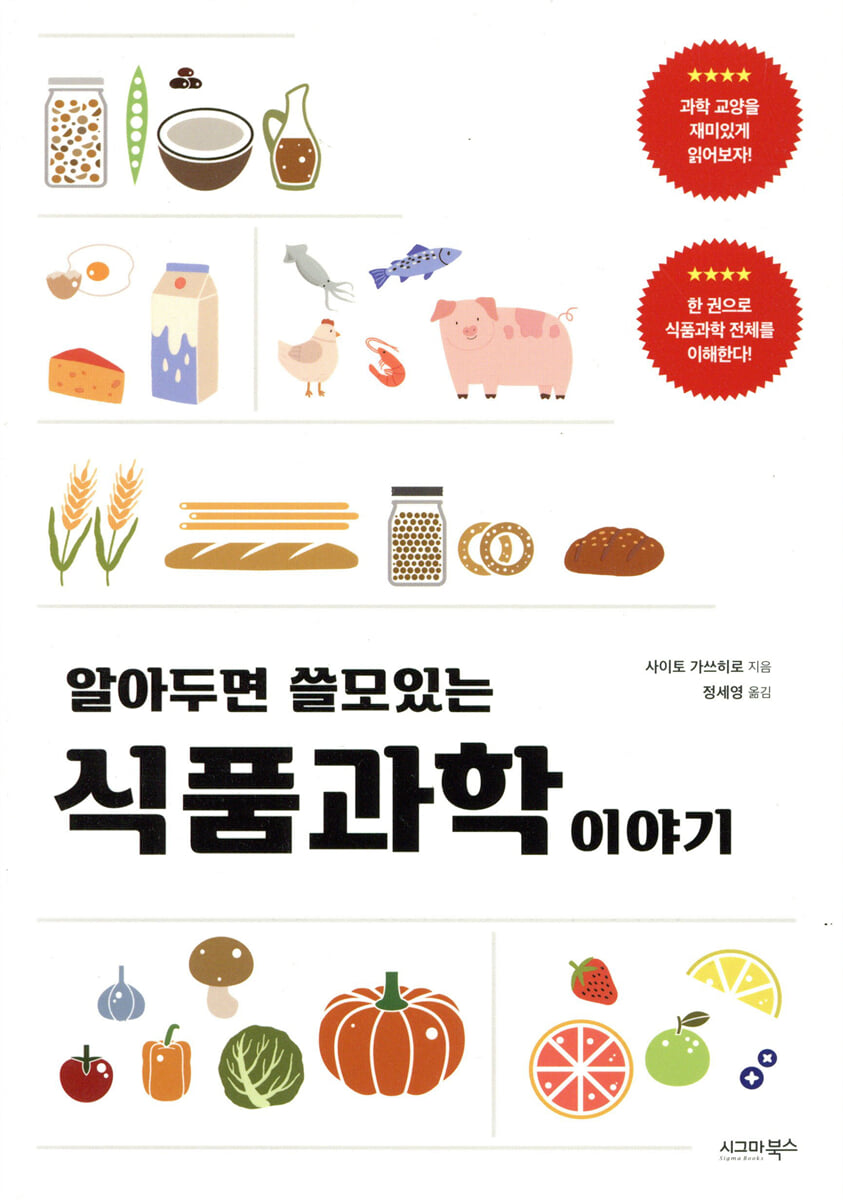
Starting with water, which is not a food but the basis of cooking, you will be able to look at meat, fish, bread, noodles, eggs, vegetables, fruits, and even seasonings and processed foods through a new scientific perspective!
What is the identity of food?
Every day we eat food.
I wake up in the morning, eat breakfast, have a sweet snack because I'm bored, and drink coffee to cleanse my palate after eating.
Food, which corresponds to 'food' in the basic necessities of food, clothing, and shelter for humans, can be said to be a friend that accompanies us throughout our lives.
If we could gain even a little understanding of these foods, wouldn't we be able to take care of both their taste and health? This book organizes them so that we can view food from a scientific perspective.
Starting with water, which is not a food but the basis of cooking, you will be able to look at meat, fish, bread, noodles, eggs, vegetables, fruits, and even seasonings and processed foods through a new scientific perspective!
- You can preview some of the book's contents.
Preview
index
To begin with
Chapter 1: The Basics of Food: Water!
01 The basis of cooking is water!
02 Do flour and sugar dissolve in water?
03 What are acidic foods and alkaline foods?
Chapter 2 Meat is a treasure trove of protein!
04 Let's take a closer look at the beef.
05 Pork is the most consumed meat
06 Other various mammal meats
07 Fresh meat is healthy food
08 Let's compare the nutritional value of meat.
09 What role does protein play?
10 What is heat denaturation of meat?
Let's learn about 11 meat products!
Chapter 3: Seafood is a healthy food source that is high in protein, low in calories, and low in fat.
Let's learn about the 12 types and characteristics of fish!
13 What types and characteristics of clams are there?
14 What are the characteristics of crustaceans as food ingredients?
15 Is Zara good for skin beauty?
16 What is the nutritional value of seafood?
17 Preserved seafood
18 Be careful of poison in seafood!
19 Structure of seafood food poisoning
Chapter 4 Fat Makes You Healthy!
Let's learn about the types and characteristics of 20 regions.
21 Looking at the provinces through scientific eyes
22 What is the nutritional value of fat?
23 Are artificial fats harmful to your body?
24 Is fat the enemy of dieting?
25 Knowledge about oil and fire
Chapter 5: The World of Carbohydrates Through Grains
26 Let's learn about the types and characteristics of grains.
27 Increasing food production saved the world from starvation
28 Each disease and vitamin B1
29 Looking at carbohydrates through scientific eyes
30 What impact will gene editing have on agriculture?
Chapter 6 What are the characteristics of vegetables and fruits?
31 What types of vegetables, fruits, and seaweed are there?
32 Components and Science of Vegetables and Fruits
33 What is the nutritional value of vegetables and fruits?
34 Toxic substances in vegetables and mushrooms around us
35 Beware of pesticide residues!
Chapter 7: Seasoning through Five Flavors and Fermentation
36 Seasonings to enhance flavor
37 Seasonings are also nutritious
38 Table salt is not NaCl!
39 Artificial sweeteners were created by accident?
40 Discovered the '6th Taste'!
41 Fermented Seasonings Through the Eyes of Science
Chapter 8: Raw Milk and Eggs Are Complete Foods
42 What are the ingredients and characteristics of raw milk?
43 Why wasn't there liquid milk powder in Japan?
44 What is a colloidal solution?
45 What are the types and characteristics of commercial milk?
46 The composition of milk is also diverse.
47 Let's learn about raw milk products
48 Is raw milk also toxic?
49 What is the nutritional value of milk and dairy products?
50 eggs when viewed through the eyes of science
Chapter 9: Let's look at bread and noodles from the perspective of gluten!
51 What are the types and characteristics of bread?
What are the types and characteristics of the 52 sides?
53 Strong flour? All-purpose flour? Strong flour?
54 How to make bread?
55 How to make noodles?
56 What is the nutritional value of bread and noodles?
Chapter 10: Sweets and Drinks: Enhancing Meals
57 Types of Japanese Confectionery and Their Nutritional Value
58 Types of Western Sweets and Their Nutritional Value
59 The Science of Smell and Fragrance
60 The Science of Tea and Coffee
61 Types and knowledge of alcohol
Chapter 11: Science of Processed Foods
62 Let's learn about the principles of freeze-dried foods.
63 Until the tofu is made
64 What is Goya Tofu?
65 Konjac and frozen konjac
66 How to make 'After'?
67 What are the ingredients of Nicogori, Jelly, and Gummy Jelly?
68 Ganten-yose, dried agar
69 Popular Nata de Coco and Tapioca
70 The Hidden Face of Jam and Marshmallow
Chapter 1: The Basics of Food: Water!
01 The basis of cooking is water!
02 Do flour and sugar dissolve in water?
03 What are acidic foods and alkaline foods?
Chapter 2 Meat is a treasure trove of protein!
04 Let's take a closer look at the beef.
05 Pork is the most consumed meat
06 Other various mammal meats
07 Fresh meat is healthy food
08 Let's compare the nutritional value of meat.
09 What role does protein play?
10 What is heat denaturation of meat?
Let's learn about 11 meat products!
Chapter 3: Seafood is a healthy food source that is high in protein, low in calories, and low in fat.
Let's learn about the 12 types and characteristics of fish!
13 What types and characteristics of clams are there?
14 What are the characteristics of crustaceans as food ingredients?
15 Is Zara good for skin beauty?
16 What is the nutritional value of seafood?
17 Preserved seafood
18 Be careful of poison in seafood!
19 Structure of seafood food poisoning
Chapter 4 Fat Makes You Healthy!
Let's learn about the types and characteristics of 20 regions.
21 Looking at the provinces through scientific eyes
22 What is the nutritional value of fat?
23 Are artificial fats harmful to your body?
24 Is fat the enemy of dieting?
25 Knowledge about oil and fire
Chapter 5: The World of Carbohydrates Through Grains
26 Let's learn about the types and characteristics of grains.
27 Increasing food production saved the world from starvation
28 Each disease and vitamin B1
29 Looking at carbohydrates through scientific eyes
30 What impact will gene editing have on agriculture?
Chapter 6 What are the characteristics of vegetables and fruits?
31 What types of vegetables, fruits, and seaweed are there?
32 Components and Science of Vegetables and Fruits
33 What is the nutritional value of vegetables and fruits?
34 Toxic substances in vegetables and mushrooms around us
35 Beware of pesticide residues!
Chapter 7: Seasoning through Five Flavors and Fermentation
36 Seasonings to enhance flavor
37 Seasonings are also nutritious
38 Table salt is not NaCl!
39 Artificial sweeteners were created by accident?
40 Discovered the '6th Taste'!
41 Fermented Seasonings Through the Eyes of Science
Chapter 8: Raw Milk and Eggs Are Complete Foods
42 What are the ingredients and characteristics of raw milk?
43 Why wasn't there liquid milk powder in Japan?
44 What is a colloidal solution?
45 What are the types and characteristics of commercial milk?
46 The composition of milk is also diverse.
47 Let's learn about raw milk products
48 Is raw milk also toxic?
49 What is the nutritional value of milk and dairy products?
50 eggs when viewed through the eyes of science
Chapter 9: Let's look at bread and noodles from the perspective of gluten!
51 What are the types and characteristics of bread?
What are the types and characteristics of the 52 sides?
53 Strong flour? All-purpose flour? Strong flour?
54 How to make bread?
55 How to make noodles?
56 What is the nutritional value of bread and noodles?
Chapter 10: Sweets and Drinks: Enhancing Meals
57 Types of Japanese Confectionery and Their Nutritional Value
58 Types of Western Sweets and Their Nutritional Value
59 The Science of Smell and Fragrance
60 The Science of Tea and Coffee
61 Types and knowledge of alcohol
Chapter 11: Science of Processed Foods
62 Let's learn about the principles of freeze-dried foods.
63 Until the tofu is made
64 What is Goya Tofu?
65 Konjac and frozen konjac
66 How to make 'After'?
67 What are the ingredients of Nicogori, Jelly, and Gummy Jelly?
68 Ganten-yose, dried agar
69 Popular Nata de Coco and Tapioca
70 The Hidden Face of Jam and Marshmallow
Into the book
Although we don't usually call them foods, there are some important substances that are found in almost all foods and must be consumed with every meal.
We can survive for a few days without food, but we would struggle to survive even a day without this substance.
Such an important substance is water.
Since all foods, except for heat-dried foods, contain water, water greatly affects the taste and quality of food and has a great impact on human health.
---From "01 The Basics of Cooking is Water!"
The main component of meat is protein.
If you think of protein as the main component of muscles and the star of grilled meat, it is almost an insult to protein.
This is because proteins not only form the body of animals as muscles, but also serve as the ‘center of life activities’ as various enzymes.
Without enzymes, life could not survive even for a second.
It's that important.
---From "09 What role does protein play?"
When we think of fat, we tend to think of high-calorie foods as the cause of metabolic syndrome, but that's not true at all.
The body of a living thing is made up of cells.
The cell membrane surrounding the cell and the nuclear membrane surrounding the nucleus are all made of the same molecules.
Those molecules are called phospholipids, and phospholipids are made from fat.
---From "Let's learn about the types and characteristics of 20 regions"
The method of crossbreeding crops with desired characteristics was used, but there were limitations to crossbreeding.
Because it is difficult to overcome the barrier of species.
Even if you crossbreed rice, a cereal, and soybeans, a legume, the resulting crop will not produce fruit that will be passed on to the next generation.
Furthermore, the mere thought of crossbreeding between plants and animals is absurd.
But in modern times, when knowledge of and technology for dealing with genes have rapidly developed, such a chilling nightmare can actually happen.
---From "30 What Effects Will Gene Editing Have on Agriculture?"
Although raw milk is a complete food that contains all the nutrients that babies need, it does not mean that it is completely safe.
In fact, there are risks.
One of them is milk allergy.
It is an allergy to a protein called α-casein found in milk.
Especially for children, milk is the food with the second highest rate of food allergies after eggs.
It usually causes stomachache, and the symptoms disappear naturally as tolerance builds up around the age of 2 to 3.
However, as with other allergies, caution is required as anaphylactic shock can be fatal.
---From "48 Is raw milk also toxic?"
Tofu is still a food whose recipe feels mysterious.
How do you make such soft, white tofu from hard soybeans? The process is simple.
Soak the beans in water overnight, then grind the softened beans in a blender.
Boil this, then strain it through a cloth.
At this time, the solid part that remains after squeezing is called soy milk, and the liquid part is called soy milk.
We can survive for a few days without food, but we would struggle to survive even a day without this substance.
Such an important substance is water.
Since all foods, except for heat-dried foods, contain water, water greatly affects the taste and quality of food and has a great impact on human health.
---From "01 The Basics of Cooking is Water!"
The main component of meat is protein.
If you think of protein as the main component of muscles and the star of grilled meat, it is almost an insult to protein.
This is because proteins not only form the body of animals as muscles, but also serve as the ‘center of life activities’ as various enzymes.
Without enzymes, life could not survive even for a second.
It's that important.
---From "09 What role does protein play?"
When we think of fat, we tend to think of high-calorie foods as the cause of metabolic syndrome, but that's not true at all.
The body of a living thing is made up of cells.
The cell membrane surrounding the cell and the nuclear membrane surrounding the nucleus are all made of the same molecules.
Those molecules are called phospholipids, and phospholipids are made from fat.
---From "Let's learn about the types and characteristics of 20 regions"
The method of crossbreeding crops with desired characteristics was used, but there were limitations to crossbreeding.
Because it is difficult to overcome the barrier of species.
Even if you crossbreed rice, a cereal, and soybeans, a legume, the resulting crop will not produce fruit that will be passed on to the next generation.
Furthermore, the mere thought of crossbreeding between plants and animals is absurd.
But in modern times, when knowledge of and technology for dealing with genes have rapidly developed, such a chilling nightmare can actually happen.
---From "30 What Effects Will Gene Editing Have on Agriculture?"
Although raw milk is a complete food that contains all the nutrients that babies need, it does not mean that it is completely safe.
In fact, there are risks.
One of them is milk allergy.
It is an allergy to a protein called α-casein found in milk.
Especially for children, milk is the food with the second highest rate of food allergies after eggs.
It usually causes stomachache, and the symptoms disappear naturally as tolerance builds up around the age of 2 to 3.
However, as with other allergies, caution is required as anaphylactic shock can be fatal.
---From "48 Is raw milk also toxic?"
Tofu is still a food whose recipe feels mysterious.
How do you make such soft, white tofu from hard soybeans? The process is simple.
Soak the beans in water overnight, then grind the softened beans in a blender.
Boil this, then strain it through a cloth.
At this time, the solid part that remains after squeezing is called soy milk, and the liquid part is called soy milk.
---From "63 Until Tofu is Made"
Publisher's Review
What ingredients are in the food we eat?
If you look into it, the world of scientific food,
Let's be smart about what we eat and drink!!
It goes without saying, but there's science to food! Science is at work in what makes our food taste good or not, and how it cooks properly or burns.
We're already surrounded by the science of food, but we don't quite understand why.
But if you take a closer look, there's some interesting science hidden within.
For example, when we usually think of 'acidic foods', we think of sour lemons, but if you look into it, lemons are actually alkaline foods.
Rather, meat and fish that are not seasoned or used at all are acidic foods.
Why is this so? The criteria for determining a food's acidity or alkalinity are not determined by the properties of the food itself, but by the properties of the solution formed when the ash (the residue left after burning the food) is dissolved in water.
Meat and fish are mainly composed of protein, and protein contains nitrogen and sulfur.
When this nitrogen oxidizes, it becomes sulfur oxide, and when this dissolves, it becomes a strong acid.
There's even a science to grilling meat! Why does meat become tough after just a short time of grilling? This is because the collagen, myofibrillar proteins, and sarcoplasmic proteins that make up meat muscle each take different amounts of time to heat denature.
When grilling meat, the 'myofibrils', which are the outer part of the muscle, coagulate first, but if the temperature is slightly higher or time passes, the inside coagulates as well, making it tough.
In this way, the exciting world of science unfolds in food.
In this book, you will discover interesting facts that you may have overlooked while eating.
This book consists of 11 chapters and 70 chapters.
Chapter 1 covers water, which is not a food but is essential for cooking.
Chapters 2 and 3 cover meat and seafood, and Chapter 4 covers the importance of fat.
In addition, you will encounter the world of food science of vegetables, fruits, seasonings, milk, eggs, bread, and noodles in this book.
If you look into it, the world of scientific food,
Let's be smart about what we eat and drink!!
It goes without saying, but there's science to food! Science is at work in what makes our food taste good or not, and how it cooks properly or burns.
We're already surrounded by the science of food, but we don't quite understand why.
But if you take a closer look, there's some interesting science hidden within.
For example, when we usually think of 'acidic foods', we think of sour lemons, but if you look into it, lemons are actually alkaline foods.
Rather, meat and fish that are not seasoned or used at all are acidic foods.
Why is this so? The criteria for determining a food's acidity or alkalinity are not determined by the properties of the food itself, but by the properties of the solution formed when the ash (the residue left after burning the food) is dissolved in water.
Meat and fish are mainly composed of protein, and protein contains nitrogen and sulfur.
When this nitrogen oxidizes, it becomes sulfur oxide, and when this dissolves, it becomes a strong acid.
There's even a science to grilling meat! Why does meat become tough after just a short time of grilling? This is because the collagen, myofibrillar proteins, and sarcoplasmic proteins that make up meat muscle each take different amounts of time to heat denature.
When grilling meat, the 'myofibrils', which are the outer part of the muscle, coagulate first, but if the temperature is slightly higher or time passes, the inside coagulates as well, making it tough.
In this way, the exciting world of science unfolds in food.
In this book, you will discover interesting facts that you may have overlooked while eating.
This book consists of 11 chapters and 70 chapters.
Chapter 1 covers water, which is not a food but is essential for cooking.
Chapters 2 and 3 cover meat and seafood, and Chapter 4 covers the importance of fat.
In addition, you will encounter the world of food science of vegetables, fruits, seasonings, milk, eggs, bread, and noodles in this book.
GOODS SPECIFICS
- Publication date: November 7, 2022
- Page count, weight, size: 344 pages | 566g | 148*210*20mm
- ISBN13: 9791168620834
- ISBN10: 116862083X
You may also like
카테고리
korean


korean

![GQ KOREA Mark (Monthly): December [2025]](http://librairie.coreenne.fr/cdn/shop/files/8ef265dbbfbf186523ed75ba7319009d.jpg?v=1765340328&width=3840)


