

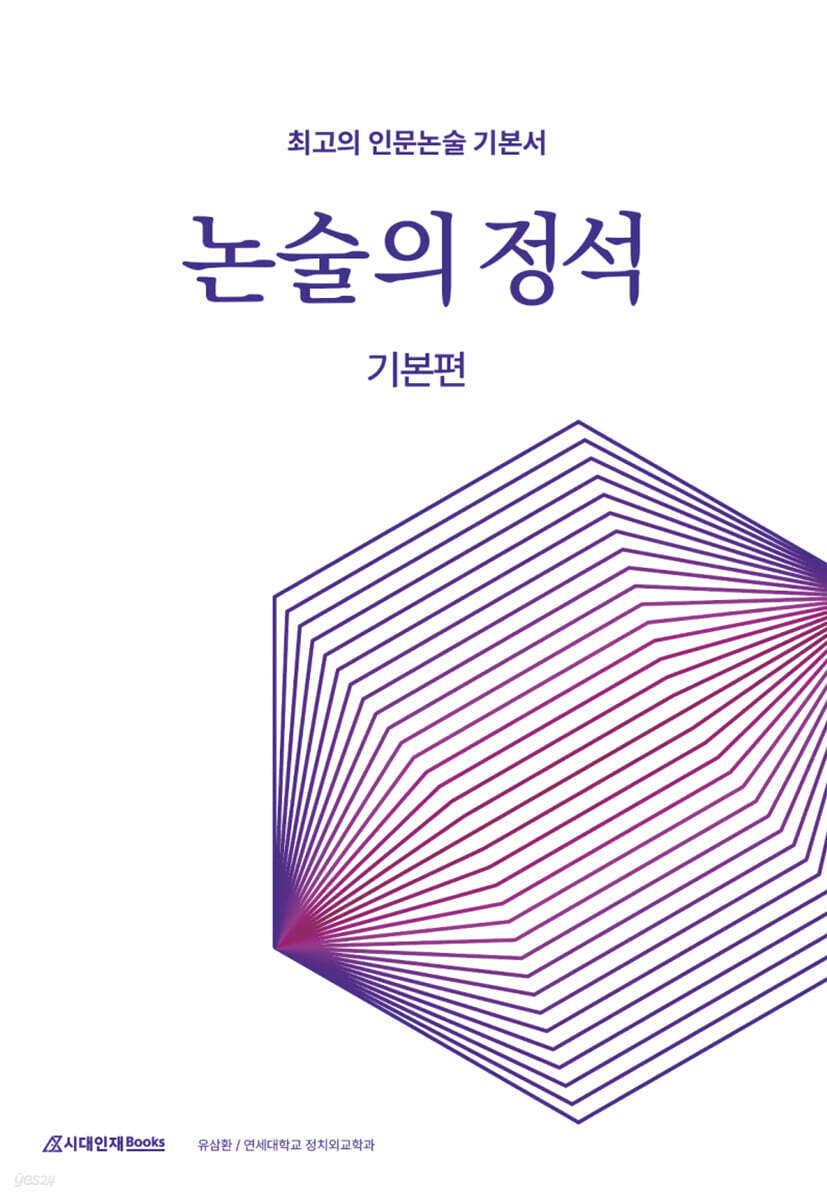
The Basics of Essay Writing
 |
Description
Book Introduction
The fastest route to passing the exam: the best humanities essay writing textbook.
1.
The quickest answer to the question, 'How do I write an answer?'
2.
A book optimized for specifically learning the basic formats of writing by type.
3.
Provides effective example answers for self-editing
1.
The quickest answer to the question, 'How do I write an answer?'
2.
A book optimized for specifically learning the basic formats of writing by type.
3.
Provides effective example answers for self-editing
- You can preview some of the book's contents.
Preview
index
Theme01.
summation
Theme02.
Explanation (argument)
Theme03.
comparison
Theme04.
Criticism (evaluation)
Theme05.
Summary after classification
Theme06.
chart
Theme07.
Poetry literature
Theme08.
Three-way comparison
Theme09.
Humanities and Mathematics
summation
Theme02.
Explanation (argument)
Theme03.
comparison
Theme04.
Criticism (evaluation)
Theme05.
Summary after classification
Theme06.
chart
Theme07.
Poetry literature
Theme08.
Three-way comparison
Theme09.
Humanities and Mathematics
Publisher's Review
The textbook, "The Essay Writing Principles - Basic Edition," focuses thoroughly on the question, "How to write an answer?"
I know that many students who are new to the humanities essay writing feel lost about what and how to write on the answer sheet.
This book will be of great help to students who feel such a sense of loss.
If you master the writing format taught in this book, you'll be able to easily tackle any university exam.
Regardless of how the topic is presented, those who have mastered the basic writing format can write a proper answer by slightly modifying that format.
While it's true that there aren't specific areas requiring special attention when writing answers for each school, I believe it's undoubtedly more effective to first master the basic writing formats contained in this textbook before studying the strategies required for each school.
So this book does not devote much space to explaining the topic.
To put it simply, it does not go into depth about things like 'what is the answer to this question and how to find this answer'.
If you're curious about the topic explanation, you can read the purpose of the question and the grading criteria in the prior learning impact assessment report published by the school.
Since the sources are listed next to the introductions to all the past exam questions I've included here, if you're curious about the explanations of the topics, I recommend checking the prior learning impact assessment report published by the university that presented the topic.
I also cannot help but mention the differences between the textbook published in October 2024 and this revised edition.
The biggest difference is that we added a [Example Answer Sentence Function Analysis] part that lists the function of each sentence in the example answer.
Reading through the example answers several times while recalling the function of each sentence in the example answers is a very effective review method. If you look at the [Example Answer Sentence Function Analysis] section, it will help you determine whether you are properly aware of the function of the sentences in the example answers.
Also, Theme06.
I've added a couple of topics to the diagram.
One is a topic about experimental analysis, and the other is a topic that requires you to use the given text to provide a causal explanation for the information in the diagram.
And, we have revised the descriptions throughout the textbook to make the explanations more detailed and friendly.
You won't be able to improve your skills just by reading this textbook.
Be sure to write your answers to all the past exam questions in this textbook on manuscript paper, compare them with the example answers, and take the time to think about what you should add or subtract from your answers.
If you study all the contents of this textbook in this way, you will undoubtedly be able to effectively study past exam questions from top universities such as Yonsei University, Sungkyunkwan University, Sogang University, Ewha Womans University, Kyunghee University, Chung-Ang University, and Hankuk University of Foreign Studies.
I wish you all the best in your exams.
Book review
@Kim Gyu-ri (2024 Ewha Womans University, Department of Public Administration, Chung-Ang University, German Literature, Essay Admission)
I strongly recommend that students preparing for the essay-based exam for the first time read and prepare for this book, “The Essay Writing Principles - Basic Edition.”
This book was very helpful for getting a feel for how to set up an answer writing framework, as the author, who has passed the actual essay-based exam multiple times, has written his own example answers for each type of question.
@Kim So-eun (2024 Sungkyunkwan University, Humanities Department, Ewha Womans University, Chinese Language and Literature Department, essay-based admission)
The most important thing for students to succeed in college entrance is a 'strategy for studying' for the subject.
This book will be very useful for establishing the fundamentals of essay writing by organizing the "strategy" for humanities essays by problem type.
@Yoo Seo-young (2024 academic year, Hankuk University of Foreign Studies, Department of Russian Language, Dongguk University, Department of Police Administration, Hongik University, Department of Law, essay-based admissions)
This book helps you study systematically by organizing essay answers by type.
The sample answers in the book clearly explain the function of each sentence.
I know that many students who are new to the humanities essay writing feel lost about what and how to write on the answer sheet.
This book will be of great help to students who feel such a sense of loss.
If you master the writing format taught in this book, you'll be able to easily tackle any university exam.
Regardless of how the topic is presented, those who have mastered the basic writing format can write a proper answer by slightly modifying that format.
While it's true that there aren't specific areas requiring special attention when writing answers for each school, I believe it's undoubtedly more effective to first master the basic writing formats contained in this textbook before studying the strategies required for each school.
So this book does not devote much space to explaining the topic.
To put it simply, it does not go into depth about things like 'what is the answer to this question and how to find this answer'.
If you're curious about the topic explanation, you can read the purpose of the question and the grading criteria in the prior learning impact assessment report published by the school.
Since the sources are listed next to the introductions to all the past exam questions I've included here, if you're curious about the explanations of the topics, I recommend checking the prior learning impact assessment report published by the university that presented the topic.
I also cannot help but mention the differences between the textbook published in October 2024 and this revised edition.
The biggest difference is that we added a [Example Answer Sentence Function Analysis] part that lists the function of each sentence in the example answer.
Reading through the example answers several times while recalling the function of each sentence in the example answers is a very effective review method. If you look at the [Example Answer Sentence Function Analysis] section, it will help you determine whether you are properly aware of the function of the sentences in the example answers.
Also, Theme06.
I've added a couple of topics to the diagram.
One is a topic about experimental analysis, and the other is a topic that requires you to use the given text to provide a causal explanation for the information in the diagram.
And, we have revised the descriptions throughout the textbook to make the explanations more detailed and friendly.
You won't be able to improve your skills just by reading this textbook.
Be sure to write your answers to all the past exam questions in this textbook on manuscript paper, compare them with the example answers, and take the time to think about what you should add or subtract from your answers.
If you study all the contents of this textbook in this way, you will undoubtedly be able to effectively study past exam questions from top universities such as Yonsei University, Sungkyunkwan University, Sogang University, Ewha Womans University, Kyunghee University, Chung-Ang University, and Hankuk University of Foreign Studies.
I wish you all the best in your exams.
Book review
@Kim Gyu-ri (2024 Ewha Womans University, Department of Public Administration, Chung-Ang University, German Literature, Essay Admission)
I strongly recommend that students preparing for the essay-based exam for the first time read and prepare for this book, “The Essay Writing Principles - Basic Edition.”
This book was very helpful for getting a feel for how to set up an answer writing framework, as the author, who has passed the actual essay-based exam multiple times, has written his own example answers for each type of question.
@Kim So-eun (2024 Sungkyunkwan University, Humanities Department, Ewha Womans University, Chinese Language and Literature Department, essay-based admission)
The most important thing for students to succeed in college entrance is a 'strategy for studying' for the subject.
This book will be very useful for establishing the fundamentals of essay writing by organizing the "strategy" for humanities essays by problem type.
@Yoo Seo-young (2024 academic year, Hankuk University of Foreign Studies, Department of Russian Language, Dongguk University, Department of Police Administration, Hongik University, Department of Law, essay-based admissions)
This book helps you study systematically by organizing essay answers by type.
The sample answers in the book clearly explain the function of each sentence.
GOODS SPECIFICS
- Date of issue: February 28, 2025
- Page count, weight, size: 290 pages | 210*297*20mm
- ISBN13: 9791166767470
- ISBN10: 1166767477
You may also like
카테고리
korean


korean

![GQ KOREA Mark (Monthly): December [2025]](http://librairie.coreenne.fr/cdn/shop/files/8ef265dbbfbf186523ed75ba7319009d.jpg?v=1765340328&width=3840)


