

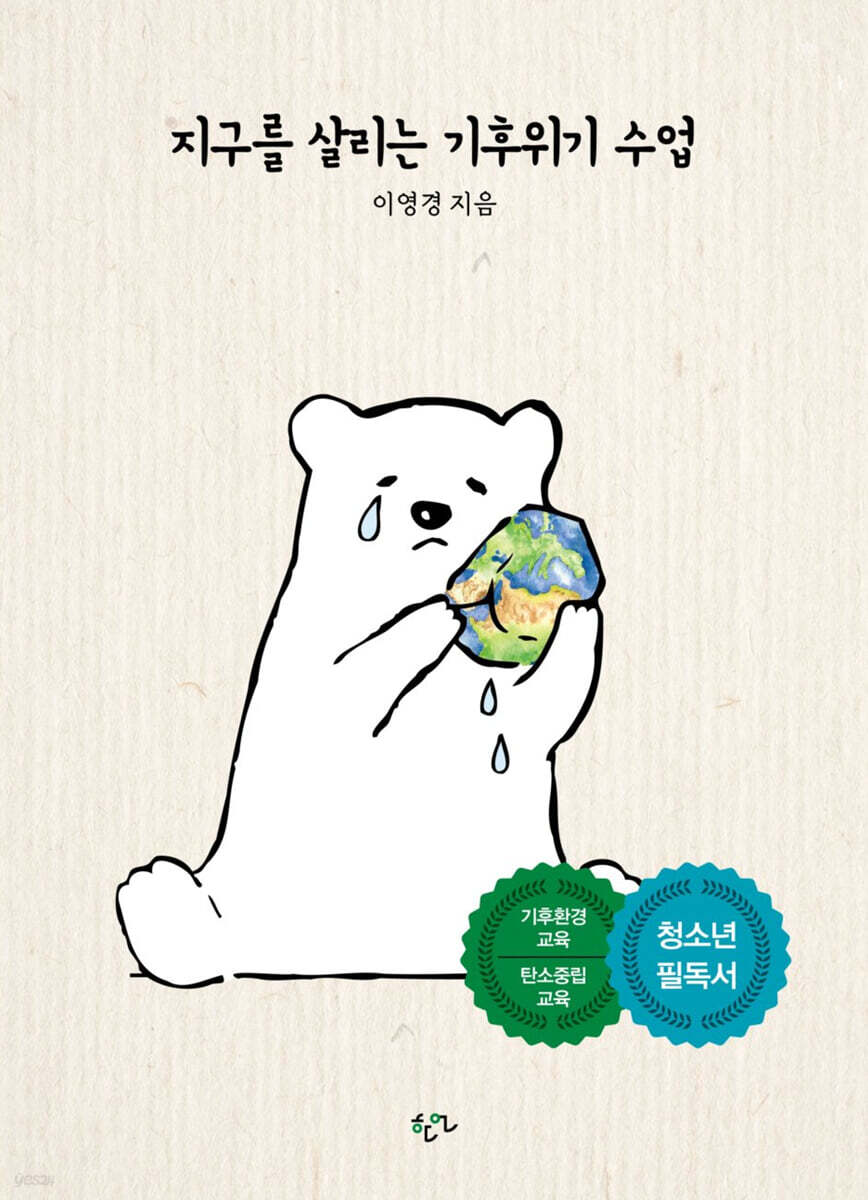
Climate Crisis Class to Save the Earth
 |
Description
Book Introduction
Wisdom and action to change the future by confronting the climate crisis
“Once you know, a lot of things will change!”
“What’s the problem with rising global temperatures?” “Wouldn’t driving electric cars solve the climate crisis?” “Can’t we just use eco-bags and tumblers more diligently?” These are the questions that everyone has at least once when they hear terms like the climate crisis or climate change.
But few people truly understand how serious, how desperate, and how urgent this problem is.
Experts predict that if the world does not take drastic measures to address the climate crisis now, temperatures will rise by more than 1.5 degrees Celsius by 2030.
When the Earth's temperature rises by 1.5 degrees, 15% of the world's population will be exposed to extreme heat waves, and more than 10% of terrestrial species will be at risk of extinction, so you can see how serious the crisis is.
Teenagers are particularly sensitive to this issue.
Young people, or those born in 2020, who have many years left to live, will have little carbon budget.
This is a passage that can be seen as a violation of the constitutional fundamental rights of young people (right to life, right to the environment, right to the pursuit of happiness, etc.) due to the older generation's passive response to the climate crisis.
So how should young people respond to this issue? First, they must properly understand what the climate crisis is, where it comes from, and why it poses a threat to their very survival.
Next, we need to understand what we can and must do to solve this problem at a human level, at a government level, and as individual youth.
This book, written by a long-time energy activist, conveys shocking truths and the only hope not only to the youth of the future generation but also to ordinary people who aspire to live as global ecological citizens, based on the voices of the field and long-term experience.
He speaks vividly about how to view the already-emerging climate crisis, how to solve it, and what actions I can take.
Through "Climate Crisis Class to Save the Earth," you will come to understand what it means to take a step forward in a just and confident manner to join hands with all life on Earth.
* The cover of this book is made of ‘eco-friendly paper.’
“Once you know, a lot of things will change!”
“What’s the problem with rising global temperatures?” “Wouldn’t driving electric cars solve the climate crisis?” “Can’t we just use eco-bags and tumblers more diligently?” These are the questions that everyone has at least once when they hear terms like the climate crisis or climate change.
But few people truly understand how serious, how desperate, and how urgent this problem is.
Experts predict that if the world does not take drastic measures to address the climate crisis now, temperatures will rise by more than 1.5 degrees Celsius by 2030.
When the Earth's temperature rises by 1.5 degrees, 15% of the world's population will be exposed to extreme heat waves, and more than 10% of terrestrial species will be at risk of extinction, so you can see how serious the crisis is.
Teenagers are particularly sensitive to this issue.
Young people, or those born in 2020, who have many years left to live, will have little carbon budget.
This is a passage that can be seen as a violation of the constitutional fundamental rights of young people (right to life, right to the environment, right to the pursuit of happiness, etc.) due to the older generation's passive response to the climate crisis.
So how should young people respond to this issue? First, they must properly understand what the climate crisis is, where it comes from, and why it poses a threat to their very survival.
Next, we need to understand what we can and must do to solve this problem at a human level, at a government level, and as individual youth.
This book, written by a long-time energy activist, conveys shocking truths and the only hope not only to the youth of the future generation but also to ordinary people who aspire to live as global ecological citizens, based on the voices of the field and long-term experience.
He speaks vividly about how to view the already-emerging climate crisis, how to solve it, and what actions I can take.
Through "Climate Crisis Class to Save the Earth," you will come to understand what it means to take a step forward in a just and confident manner to join hands with all life on Earth.
* The cover of this book is made of ‘eco-friendly paper.’
- You can preview some of the book's contents.
Preview
index
Entering… cars, jajangmyeon, and dryers
Chapter 1: A Perspective on the Climate Crisis
Climate of Life, Climate of Extinction
Changes to the Earth caused by humans
└ Animals at risk of extinction due to climate change
An irreversible planet, an unpredictable future
Climate Crisis Signals from the Earth
└ Is the COVID-19 situation caused by corporate livestock farming?
Chapter 2: Rising Earth Temperatures: What's the Problem?
The implications of rising global temperatures
Impacts of Rising Global Temperatures - Extreme Climate Change
└ Climate change has changed Korea's four seasons and 24 solar terms!
The Impact of Rising Global Temperatures - Water and Food Crises
The Impact of Rising Global Temperatures - Conflict and Security
The Impact of Rising Global Temperatures - Increased Infectious Diseases and Health Crises
The Impact of Rising Global Temperatures - Human Rights
Chapter 3: Greenhouse Gases That Follow All Consumption
What are greenhouse gases?
Greenhouse gases emitted just by turning on the lights
Why young climate activists poured green paint
Even the houses we live in emit carbon.
└ Nowon Zero Energy House
You, the person who bought the clothes, emitted greenhouse gases.
└ Have you heard about the anticipated fashion show?
Eating meat increases carbon emissions
└ Those who protect the Amazon
Can electric cars solve the climate crisis?
Are hydrogen cars eco-friendly? The question is how to make hydrogen!
Can eco-bags and tumblers save the planet?
└ Choose a 'companion' eco-bag
The Climate Impact of Shrimp Salad
Chapter 4: Climate Crisis, Inequality, and Responsibility
Inequality Between Nations - Common and Differentiated Responsibilities
└ The minister who went into the sea and gave a speech
Regional inequality - injustice in energy production and consumption
└ A 478km long journey from Samcheok, Gangwon-do to the Blue House
Inequality as seen through income
Corporate Responsibility: What Should Change?
Intergenerational Inequality - Carbon Budget
└ Are teenagers suing the government?
Climate Inequality through Gender
└ Women who float water
Our Planet: Life and the Impact on the Environment
The lie that everyone is responsible for the climate crisis
Chapter 5: Responding to the Climate Crisis Justly
How can we solve the climate crisis?
Coal phase-out, nuclear phase-out, and renewable energy
Which technology should we choose?
└ Amazing imagination to solve the climate crisis
To protect our food
└ Changes in the cultivation areas of major crops in our country
A car-free city, not just personal electric vehicles
└ If our neighborhood bus disappears
Recycling is not the answer
Our efforts to prevent infectious diseases
Climate Crisis Response Policies Proposed by the Climate Crisis Emergency Action
Chapter 6: Daily Actions - Knowing, Speaking, and Doing
The precious meaning of personal practice
Taking action one step further
Climate action we create together
The right to speak out and demand climate justice
Again, a look at the climate crisis
Chapter 1: A Perspective on the Climate Crisis
Climate of Life, Climate of Extinction
Changes to the Earth caused by humans
└ Animals at risk of extinction due to climate change
An irreversible planet, an unpredictable future
Climate Crisis Signals from the Earth
└ Is the COVID-19 situation caused by corporate livestock farming?
Chapter 2: Rising Earth Temperatures: What's the Problem?
The implications of rising global temperatures
Impacts of Rising Global Temperatures - Extreme Climate Change
└ Climate change has changed Korea's four seasons and 24 solar terms!
The Impact of Rising Global Temperatures - Water and Food Crises
The Impact of Rising Global Temperatures - Conflict and Security
The Impact of Rising Global Temperatures - Increased Infectious Diseases and Health Crises
The Impact of Rising Global Temperatures - Human Rights
Chapter 3: Greenhouse Gases That Follow All Consumption
What are greenhouse gases?
Greenhouse gases emitted just by turning on the lights
Why young climate activists poured green paint
Even the houses we live in emit carbon.
└ Nowon Zero Energy House
You, the person who bought the clothes, emitted greenhouse gases.
└ Have you heard about the anticipated fashion show?
Eating meat increases carbon emissions
└ Those who protect the Amazon
Can electric cars solve the climate crisis?
Are hydrogen cars eco-friendly? The question is how to make hydrogen!
Can eco-bags and tumblers save the planet?
└ Choose a 'companion' eco-bag
The Climate Impact of Shrimp Salad
Chapter 4: Climate Crisis, Inequality, and Responsibility
Inequality Between Nations - Common and Differentiated Responsibilities
└ The minister who went into the sea and gave a speech
Regional inequality - injustice in energy production and consumption
└ A 478km long journey from Samcheok, Gangwon-do to the Blue House
Inequality as seen through income
Corporate Responsibility: What Should Change?
Intergenerational Inequality - Carbon Budget
└ Are teenagers suing the government?
Climate Inequality through Gender
└ Women who float water
Our Planet: Life and the Impact on the Environment
The lie that everyone is responsible for the climate crisis
Chapter 5: Responding to the Climate Crisis Justly
How can we solve the climate crisis?
Coal phase-out, nuclear phase-out, and renewable energy
Which technology should we choose?
└ Amazing imagination to solve the climate crisis
To protect our food
└ Changes in the cultivation areas of major crops in our country
A car-free city, not just personal electric vehicles
└ If our neighborhood bus disappears
Recycling is not the answer
Our efforts to prevent infectious diseases
Climate Crisis Response Policies Proposed by the Climate Crisis Emergency Action
Chapter 6: Daily Actions - Knowing, Speaking, and Doing
The precious meaning of personal practice
Taking action one step further
Climate action we create together
The right to speak out and demand climate justice
Again, a look at the climate crisis
Into the book
New viruses, never before discovered, lie dormant in the glacier.
If the glaciers melt, these viruses may come back to life at some point.
For humanity already reeling from the COVID-19 crisis, the emergence of a new virus could be another disaster.
The Earth provides ample space for life to exist, but it also has the power to lead to extinction.
And human activities are playing a role in hastening this extinction.
Before the Earth accelerates into a state of no return, we need to consider whether we are on the right path.
---From "Irrecoverable Earth, Unpredictable Future"
If we have previously thought of the climate crisis as an impact on natural phenomena, we must now view it as a matter of human rights and survival.
The climate crisis is widening and exacerbating global inequalities.
The climate crisis affects developing countries and island nations more than developed countries, the poor more than the rich, children and women more than adult men, and young people more than older generations.
Governments around the world, aware of the climate crisis but failing to respond effectively, are in fact the biggest human rights violators.
Every human being wants to live safely and happily.
For that, he must be able to protect his life and health, have a stable supply of water and food, and have energy to use as essentials.
And we also need a safe place to live.
But the climate crisis could shake all of this up.
---From "The Impact of Rising Global Temperatures - Human Rights"
What happens to the clothes we don't throw away but instead put into a collection box? We naturally expect that someone will put the clothes we wear cleanly and put into a collection box to good use.
However, only about 5% of the waste is actually recycled, and most of it is sent to developing countries and thrown away again.
The amount is said to exceed 80,000 tons every year, which is a huge amount.
The industry estimates the lifespan of modern clothing to be between 2 and 10 years.
Underwear lasts about 1 to 2 years, and suits and coats last about 4 to 6 years.
Most clothes are thrown away not because they are worn out or damaged, but because trends or tastes have changed.
---From "You who bought clothes, you emitted greenhouse gases"
Mangrove forests not only serve as habitats for living things and as a defense against natural disasters, but they also act as a carbon sink for the Earth, absorbing five times more carbon dioxide than tropical rainforests of the same area.
It is estimated that mangrove forests around the world absorb more than 20 million tons of carbon dioxide annually, and together with the Amazon forest, they are called the "Earth's carbon sink."
Moreover, mangrove trees grow very quickly, so it only takes a few years to create a mangrove forest.
If maintained continuously, it can contribute significantly to carbon absorption.
So why did the mangrove forests in this area disappear? It was to farm the shrimp we eat.
What has taken the place of the mangrove forest is a large shrimp farm.
If the glaciers melt, these viruses may come back to life at some point.
For humanity already reeling from the COVID-19 crisis, the emergence of a new virus could be another disaster.
The Earth provides ample space for life to exist, but it also has the power to lead to extinction.
And human activities are playing a role in hastening this extinction.
Before the Earth accelerates into a state of no return, we need to consider whether we are on the right path.
---From "Irrecoverable Earth, Unpredictable Future"
If we have previously thought of the climate crisis as an impact on natural phenomena, we must now view it as a matter of human rights and survival.
The climate crisis is widening and exacerbating global inequalities.
The climate crisis affects developing countries and island nations more than developed countries, the poor more than the rich, children and women more than adult men, and young people more than older generations.
Governments around the world, aware of the climate crisis but failing to respond effectively, are in fact the biggest human rights violators.
Every human being wants to live safely and happily.
For that, he must be able to protect his life and health, have a stable supply of water and food, and have energy to use as essentials.
And we also need a safe place to live.
But the climate crisis could shake all of this up.
---From "The Impact of Rising Global Temperatures - Human Rights"
What happens to the clothes we don't throw away but instead put into a collection box? We naturally expect that someone will put the clothes we wear cleanly and put into a collection box to good use.
However, only about 5% of the waste is actually recycled, and most of it is sent to developing countries and thrown away again.
The amount is said to exceed 80,000 tons every year, which is a huge amount.
The industry estimates the lifespan of modern clothing to be between 2 and 10 years.
Underwear lasts about 1 to 2 years, and suits and coats last about 4 to 6 years.
Most clothes are thrown away not because they are worn out or damaged, but because trends or tastes have changed.
---From "You who bought clothes, you emitted greenhouse gases"
Mangrove forests not only serve as habitats for living things and as a defense against natural disasters, but they also act as a carbon sink for the Earth, absorbing five times more carbon dioxide than tropical rainforests of the same area.
It is estimated that mangrove forests around the world absorb more than 20 million tons of carbon dioxide annually, and together with the Amazon forest, they are called the "Earth's carbon sink."
Moreover, mangrove trees grow very quickly, so it only takes a few years to create a mangrove forest.
If maintained continuously, it can contribute significantly to carbon absorption.
So why did the mangrove forests in this area disappear? It was to farm the shrimp we eat.
What has taken the place of the mangrove forest is a large shrimp farm.
---From "The Impact of Shrimp Salad on Climate"
GOODS SPECIFICS
- Date of issue: January 20, 2022
- Page count, weight, size: 272 pages | 152*210*20mm
- ISBN13: 9788955969238
- ISBN10: 8955969236
You may also like
카테고리
korean


korean

![GQ KOREA Mark (Monthly): December [2025]](http://librairie.coreenne.fr/cdn/shop/files/8ef265dbbfbf186523ed75ba7319009d.jpg?v=1765340328&width=3840)


