

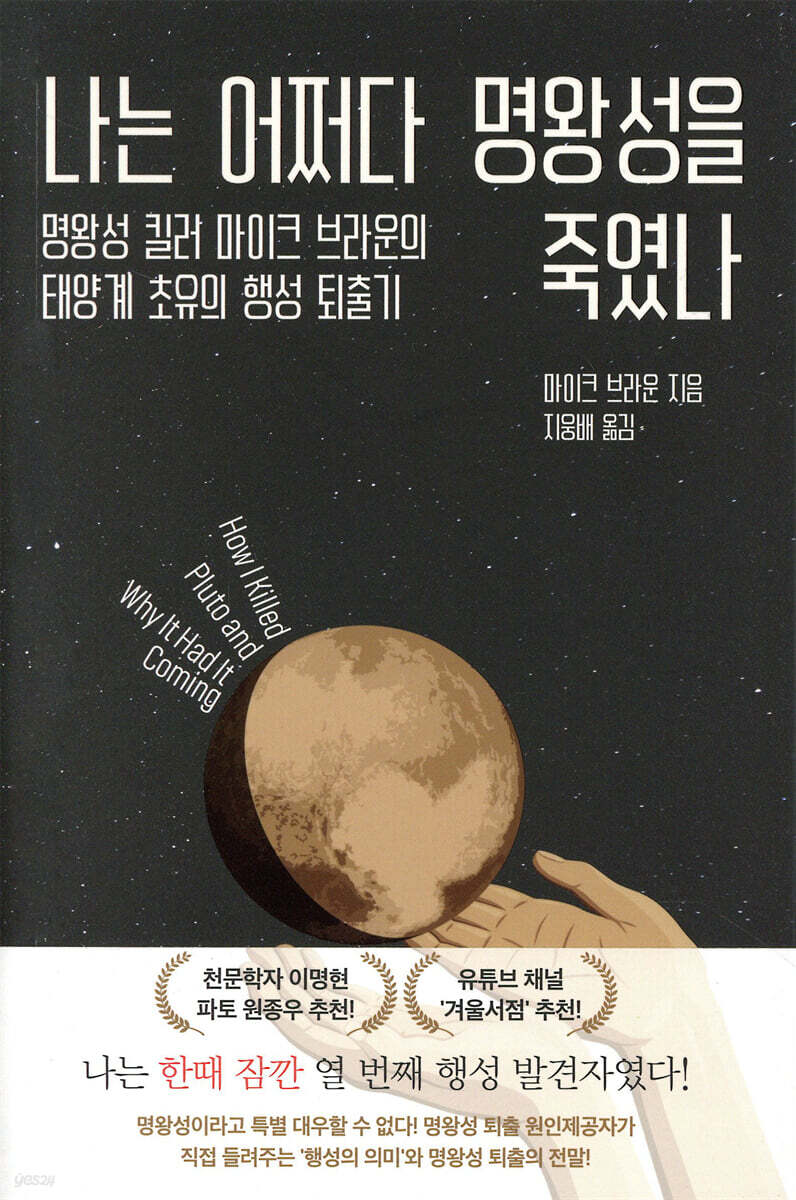
How I Killed Pluto
 |
Description
Book Introduction
What the heck is a planet?
What should astronomers do?
Pluto was stripped of its planet status and demoted to a dwarf planet at the 2006 International Astronomical Union (IAU) meeting.
People around the world, especially many children who dream of space, did not understand this decision, and some protested and threatened to return Pluto, and there were even protests.
The blame was focused on one person: astronomer Mike Brown.
Mike Brown could have been credited with being the "discoverer of the tenth planet" and the "only living person to have discovered a planet," but he was dubbed the "Pluto Killer" for his insistence that Pluto and Eris should not be classified as planets, and for his discovery of Eris, which helped shape that decision.
This book is a memoir that records the whole story of this event through the process of him being the cause of Pluto's demotion of its planetary status, searching for a new celestial body, and contemplating the meaning of a planet.
Through the lonely life of Mike Brown, the only 'new star' hunter remaining to this day and the 'successor to medieval astronomers,' you will encounter an interesting universe you never knew about.
What should astronomers do?
Pluto was stripped of its planet status and demoted to a dwarf planet at the 2006 International Astronomical Union (IAU) meeting.
People around the world, especially many children who dream of space, did not understand this decision, and some protested and threatened to return Pluto, and there were even protests.
The blame was focused on one person: astronomer Mike Brown.
Mike Brown could have been credited with being the "discoverer of the tenth planet" and the "only living person to have discovered a planet," but he was dubbed the "Pluto Killer" for his insistence that Pluto and Eris should not be classified as planets, and for his discovery of Eris, which helped shape that decision.
This book is a memoir that records the whole story of this event through the process of him being the cause of Pluto's demotion of its planetary status, searching for a new celestial body, and contemplating the meaning of a planet.
Through the lonely life of Mike Brown, the only 'new star' hunter remaining to this day and the 'successor to medieval astronomers,' you will encounter an interesting universe you never knew about.
- You can preview some of the book's contents.
Preview
index
Prologue _ Pluto is dead
01 What is a planet?
02 1000 Years of Planetary History
03 The moon is my enemy
04 The second best thing
05 Ice Nail
06 The End of the Solar System
07 It's raining = pouring
08 Lila, Intermission
09 The Tenth Planet
10 Stolen Stage
11 Planets or not
12 A very wicked person
13 Conflict and Discord
Epilogue _ Jupiter Moves
Acknowledgements
Translator's Note
Search
01 What is a planet?
02 1000 Years of Planetary History
03 The moon is my enemy
04 The second best thing
05 Ice Nail
06 The End of the Solar System
07 It's raining = pouring
08 Lila, Intermission
09 The Tenth Planet
10 Stolen Stage
11 Planets or not
12 A very wicked person
13 Conflict and Discord
Epilogue _ Jupiter Moves
Acknowledgements
Translator's Note
Search
Detailed image

Into the book
If Ceres is not a planet but just one asteroid among many, why should Pluto be given special treatment compared to Ceres? So what exactly is a planet?
--- p.56
If even one or two new planets are lurking in the distance, waiting to be discovered, perhaps we've been searching the wrong part of the sky, where there are no planets? How can we be certain that no new planet exists, when we haven't even searched every possible sliver of the sky?
I thought that perhaps there were hidden whales that our nets were still missing.
--- p.100
It's already been two years since I finished my first research project, which was aimed at discovering a new planet.
Friends around me who remember my research sometimes contact me by phone or email.
“Hey, did you hear in the paper that someone else discovered a new planet?” Whenever that happened, my heart rate would double.
I checked the news with trembling hands, as if I was out of breath.
“Oh, no! I haven’t seen it yet, but please, it can’t be anything serious, please.” I checked the news, desperately hoping that would happen every time.
--- p.100
I hadn't thought about that part yet, but I had a very firm stance on the planet.
I didn't think Pluto should be classified as a planet.
I thought the word planet should be reserved for only a very small number of truly important celestial bodies in the solar system.
Although Xena was larger than Pluto, it was difficult to consider it significant enough to be called a planet in the context of the entire solar system.
--- p.255
That night I came home and told Diane.
We opened a bottle of champagne and drank together to celebrate the amazing news that I was the only living person to have discovered a planet.
It's a planet.
I've discovered a planet! After this remaining time passes, Jenna will become a planet.
And I officially become the only person still alive to have discovered a planet.
--- p.325
For this criminal act to make me one of the world's most famous astronomers overnight was tantamount to making me a passive accomplice in the crime.
I had to stop this no matter what.
--- p.343
The number of dissenting astronomers has now increased, and they have made it clear that they do not agree with the resolutions reached by the secret committee.
The only resolution they could support was to return Pluto to its proper place based on logic (not emotion).
Pluto, Charon, Ceres, and even Xena, which I discovered, all had to do the same.
The press, and even astronomers on the ground in Prague, found it quite amusing that one of the people who strongly advocated for demoting Pluto, Charon, Ceres, and Xena was the very person who personally benefited from Xena's status as a planet.
That's me.
--- p.346
When Pluto was first discovered in 1930, there wasn't a good way to call it, but we now know it's just one of thousands of objects orbiting beyond Neptune.
Today's vote should be one to correct the forgivable mistake of 1930.
Moving from nine planets to eight is the way forward for science.
--- p.56
If even one or two new planets are lurking in the distance, waiting to be discovered, perhaps we've been searching the wrong part of the sky, where there are no planets? How can we be certain that no new planet exists, when we haven't even searched every possible sliver of the sky?
I thought that perhaps there were hidden whales that our nets were still missing.
--- p.100
It's already been two years since I finished my first research project, which was aimed at discovering a new planet.
Friends around me who remember my research sometimes contact me by phone or email.
“Hey, did you hear in the paper that someone else discovered a new planet?” Whenever that happened, my heart rate would double.
I checked the news with trembling hands, as if I was out of breath.
“Oh, no! I haven’t seen it yet, but please, it can’t be anything serious, please.” I checked the news, desperately hoping that would happen every time.
--- p.100
I hadn't thought about that part yet, but I had a very firm stance on the planet.
I didn't think Pluto should be classified as a planet.
I thought the word planet should be reserved for only a very small number of truly important celestial bodies in the solar system.
Although Xena was larger than Pluto, it was difficult to consider it significant enough to be called a planet in the context of the entire solar system.
--- p.255
That night I came home and told Diane.
We opened a bottle of champagne and drank together to celebrate the amazing news that I was the only living person to have discovered a planet.
It's a planet.
I've discovered a planet! After this remaining time passes, Jenna will become a planet.
And I officially become the only person still alive to have discovered a planet.
--- p.325
For this criminal act to make me one of the world's most famous astronomers overnight was tantamount to making me a passive accomplice in the crime.
I had to stop this no matter what.
--- p.343
The number of dissenting astronomers has now increased, and they have made it clear that they do not agree with the resolutions reached by the secret committee.
The only resolution they could support was to return Pluto to its proper place based on logic (not emotion).
Pluto, Charon, Ceres, and even Xena, which I discovered, all had to do the same.
The press, and even astronomers on the ground in Prague, found it quite amusing that one of the people who strongly advocated for demoting Pluto, Charon, Ceres, and Xena was the very person who personally benefited from Xena's status as a planet.
That's me.
--- p.346
When Pluto was first discovered in 1930, there wasn't a good way to call it, but we now know it's just one of thousands of objects orbiting beyond Neptune.
Today's vote should be one to correct the forgivable mistake of 1930.
Moving from nine planets to eight is the way forward for science.
--- p.351
Publisher's Review
The discoverer of the tenth planet, 'once upon a time'
Astronomer Mike Brown, the only living person to have discovered a planet,
Why did he have to give up his honor and go down the path of the 'Pluto Killer'?
Pluto is dead
In August 2006, one of the most heated debates in modern astronomy took place in Prague, Czech Republic.
Although commonly known as the meeting of the International Astronomical Union (IAU) that decided the fate of Pluto, it was also the meeting that decided the definition of a planet and whether or not new planets would be added to the Solar System.
Pluto, which had enjoyed the status of the ninth planet in the solar system for 76 years since its discovery in 1930, was stripped of its status and demoted to a dwarf planet at this meeting.
The celestial body 'Eris', discovered in 2005, was 'briefly' called the tenth planet, but this meeting decided that its official status was 'dwarf planet'.
A proposal was made by American astronomers to increase the number of planets to 12, including Eris and Pluto, in an attempt to protect Pluto, the only planet discovered by an American. However, IAU meeting attendees voted to classify Pluto and Eris as "dwarf planets" and recognize only eight celestial bodies as planets.
Memoirs of the Pluto Killer
Voices of protest against the IAU's decision erupted here and there.
Even among astronomers, there were those who spoke out against it, some protesting that Pluto should be returned to its place, and some making threatening phone calls.
Letters from children dreaming of space followed, and a rally opposing Pluto's demotion was held in New Mexico, where Pluto's discoverer, Clyde Tombaugh, was a professor.
This outcry and criticism has been focused on one person in particular: Mike Brown, the astronomer who discovered Eris.
Mike Brown could have been credited with being the "discoverer of the tenth planet" and the "only living person to have discovered a planet," but he was dubbed the "Pluto Killer" for his insistence that Pluto and Eris should not be classified as planets, and for his discovery of Eris, which helped shape that decision.
This book is a memoir that records the whole story of this event through the process of him being the cause of Pluto's demotion of its planetary status, searching for a new celestial body, and contemplating the meaning of a planet.
A lonely hunter and astronomer still searching for new stars
In the world of astronomy, it is generally believed that all the important celestial bodies, such as planets, in the solar system have already been discovered, and that there are no more celestial bodies left to discover.
Automated, cutting-edge computers and massive telescopes have rapidly photographed the entire sky, creating a vast map that contains detailed records of the coordinates and brightness of almost every star, along with other physical quantities.
In this 21st century, Mike Brown is almost the only astronomer who is finding new celestial bodies.
Although everyone expected it to fail, Mike Brown began discovering new objects in 2002, and by 2003 had proven that many small objects similar in size to Pluto exist in the outermost regions of the solar system.
And in 2005, Eris, an object orbiting the Sun similar in size to Pluto, was discovered!
In "How I Killed Pluto," Mike Brown and his team persistently observe the universe, discover new celestial bodies, and verify and announce their findings.
When you discover a new celestial body through obsessive observation of astronomical images every night, the sense of accomplishment and joy is conveyed as it is, and when you see scientists worrying about whether someone will announce it first while verifying their findings before announcing them, you empathize with their worries and feel anxious along with them (in fact, while they were discovering and reviewing another dwarf planet, Haumea, a Spanish research team accessed the Brown team's observation records and announced it first).
Additionally, the book exudes the scientist's "scientific" wit, along with his "astronomical" love for his family, which is more important than the universe, and his collaboration with colleagues in optimal partnerships.
This book is a chronicle of Mike Brown's life as an astronomer and the controversy surrounding Pluto's demotion from planet status, but it is also filled with the process of persistent observation to find a 'new star,' the fierce debate in the astronomical community surrounding what a planet is, and human curiosity and passion for exploration toward the universe.
Astronomer Mike Brown, the only living person to have discovered a planet,
Why did he have to give up his honor and go down the path of the 'Pluto Killer'?
Pluto is dead
In August 2006, one of the most heated debates in modern astronomy took place in Prague, Czech Republic.
Although commonly known as the meeting of the International Astronomical Union (IAU) that decided the fate of Pluto, it was also the meeting that decided the definition of a planet and whether or not new planets would be added to the Solar System.
Pluto, which had enjoyed the status of the ninth planet in the solar system for 76 years since its discovery in 1930, was stripped of its status and demoted to a dwarf planet at this meeting.
The celestial body 'Eris', discovered in 2005, was 'briefly' called the tenth planet, but this meeting decided that its official status was 'dwarf planet'.
A proposal was made by American astronomers to increase the number of planets to 12, including Eris and Pluto, in an attempt to protect Pluto, the only planet discovered by an American. However, IAU meeting attendees voted to classify Pluto and Eris as "dwarf planets" and recognize only eight celestial bodies as planets.
Memoirs of the Pluto Killer
Voices of protest against the IAU's decision erupted here and there.
Even among astronomers, there were those who spoke out against it, some protesting that Pluto should be returned to its place, and some making threatening phone calls.
Letters from children dreaming of space followed, and a rally opposing Pluto's demotion was held in New Mexico, where Pluto's discoverer, Clyde Tombaugh, was a professor.
This outcry and criticism has been focused on one person in particular: Mike Brown, the astronomer who discovered Eris.
Mike Brown could have been credited with being the "discoverer of the tenth planet" and the "only living person to have discovered a planet," but he was dubbed the "Pluto Killer" for his insistence that Pluto and Eris should not be classified as planets, and for his discovery of Eris, which helped shape that decision.
This book is a memoir that records the whole story of this event through the process of him being the cause of Pluto's demotion of its planetary status, searching for a new celestial body, and contemplating the meaning of a planet.
A lonely hunter and astronomer still searching for new stars
In the world of astronomy, it is generally believed that all the important celestial bodies, such as planets, in the solar system have already been discovered, and that there are no more celestial bodies left to discover.
Automated, cutting-edge computers and massive telescopes have rapidly photographed the entire sky, creating a vast map that contains detailed records of the coordinates and brightness of almost every star, along with other physical quantities.
In this 21st century, Mike Brown is almost the only astronomer who is finding new celestial bodies.
Although everyone expected it to fail, Mike Brown began discovering new objects in 2002, and by 2003 had proven that many small objects similar in size to Pluto exist in the outermost regions of the solar system.
And in 2005, Eris, an object orbiting the Sun similar in size to Pluto, was discovered!
In "How I Killed Pluto," Mike Brown and his team persistently observe the universe, discover new celestial bodies, and verify and announce their findings.
When you discover a new celestial body through obsessive observation of astronomical images every night, the sense of accomplishment and joy is conveyed as it is, and when you see scientists worrying about whether someone will announce it first while verifying their findings before announcing them, you empathize with their worries and feel anxious along with them (in fact, while they were discovering and reviewing another dwarf planet, Haumea, a Spanish research team accessed the Brown team's observation records and announced it first).
Additionally, the book exudes the scientist's "scientific" wit, along with his "astronomical" love for his family, which is more important than the universe, and his collaboration with colleagues in optimal partnerships.
This book is a chronicle of Mike Brown's life as an astronomer and the controversy surrounding Pluto's demotion from planet status, but it is also filled with the process of persistent observation to find a 'new star,' the fierce debate in the astronomical community surrounding what a planet is, and human curiosity and passion for exploration toward the universe.
GOODS SPECIFICS
- Date of issue: April 5, 2021
- Page count, weight, size: 420 pages | 516g | 135*205*25mm
- ISBN13: 9791191311020
- ISBN10: 1191311023
You may also like
카테고리
korean


korean

![GQ KOREA Mark (Monthly): December [2025]](http://librairie.coreenne.fr/cdn/shop/files/8ef265dbbfbf186523ed75ba7319009d.jpg?v=1765340328&width=3840)


