

Museum of Physical and Chemical Laws
 |
Description
Book Introduction
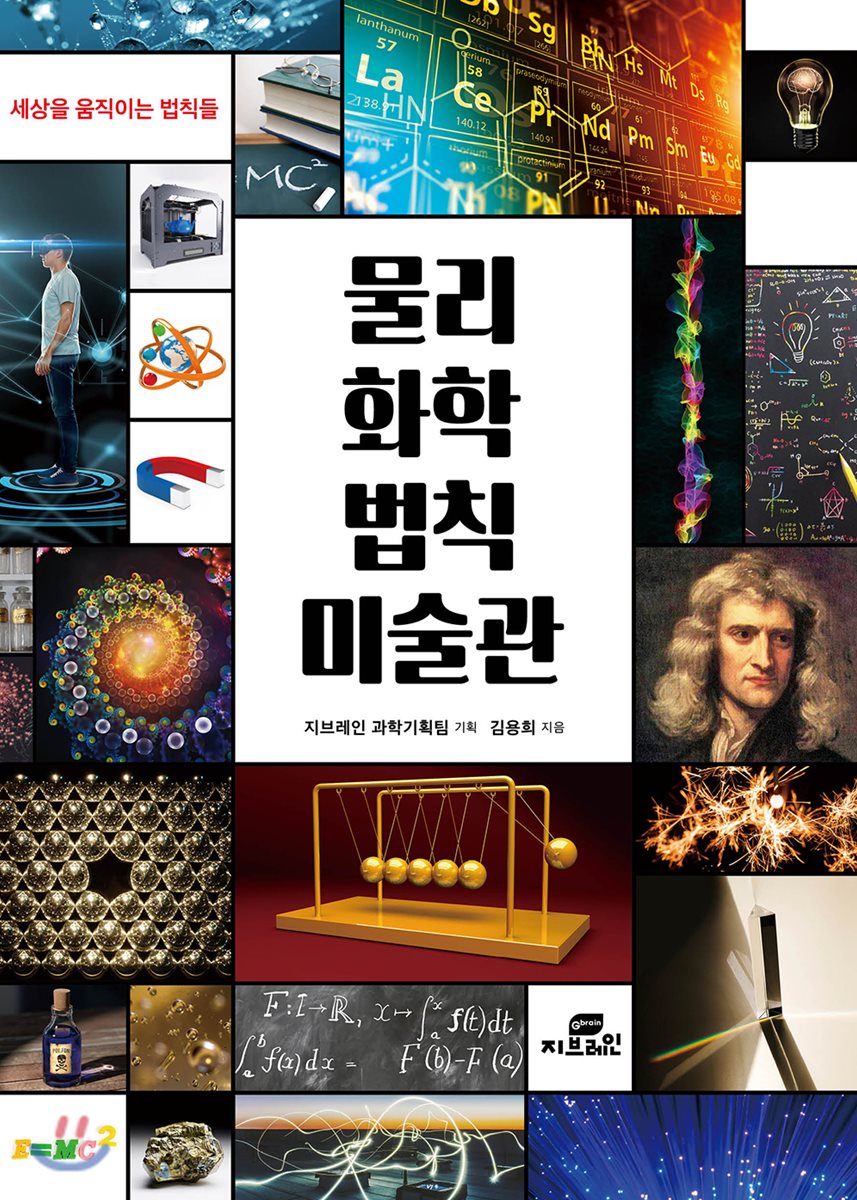
What innovative scientific fields will lead the Fourth Industrial Revolution? What scientific knowledge will drive more change than the achievements of the past 100 years? And what will be the foundation of that science? We introduce 50 scientific laws that have transformed our lives, making them easier, freer, and faster, and offer a glimpse into the fundamentals of science we need to know.
- You can preview some of the book's contents.
Preview
index
Preface 4
1 Einstein's Theory of Relativity 12
2 Boyle's Law 22
Charles's Law 27
Gay-Lussac's Law of Gas Reactions 32
5 Lavoisier's Law of Conservation of Mass 36
6 Avogadro's Law 40
7 Dalton's Atomic Theory 44
Pascal's Principle 49
9 Proust's Law of Definite Proportions 53
10 Henry's Law 57
11 Van't Hoff's Law of Osmosis 61
12 Raoult's Law 66
13 Archimedes' Principle 70
14 Newton's Law of Inertia 76
15 Hooke's Law 81
16 Ohm's Law 85
17 Amonton-Coulomb law of friction 89
18 Mendeleev's Periodic Table 93
19 Volta's Chemical Cell 102
20 The Principle of the Lever 106
21 The Principle of Pulleys 110
The 22nd Principle 115
23 The Law of the Pendulum 120
24 Laws of Free Fall 125
25 Law of Acceleration 130
26 Law of Action and Reaction 134
27 Law of Conservation of Momentum 137
28 Law of Conservation of Mechanical Energy 141
29 Meyer's First Law of Thermodynamics 145
30 The Second Law of Thermodynamics 149
31 The Third Law of Thermodynamics 153
32 Doppler Effect 157
The Rule of 33 Lines 161
34 Coriolis Force 165
35 Kepler's Laws 170
36 Newton's Law of Gravitation 175
37 Bernoulli's Law 179
38 Law of Reflection of Light 183
39 Snell's Law 189
40 Fermat's Law of Shortest Time 194
41 Huygens' Principle 198
42 The Principle of Spiritual Interference 202
43 Ampere's Law 206
44 Faraday's electromagnetic induction 211
45 Coulomb's Law 216
46 Maxwell's Equations 220
47 Lorenz Force 225
48 Einstein's Light Quantum Theory 230
49 Heisenberg's Uncertainty Principle 236
50 Schrödinger Equation 240
Find 244
Reference Book 248
Image copyright 248
1 Einstein's Theory of Relativity 12
2 Boyle's Law 22
Charles's Law 27
Gay-Lussac's Law of Gas Reactions 32
5 Lavoisier's Law of Conservation of Mass 36
6 Avogadro's Law 40
7 Dalton's Atomic Theory 44
Pascal's Principle 49
9 Proust's Law of Definite Proportions 53
10 Henry's Law 57
11 Van't Hoff's Law of Osmosis 61
12 Raoult's Law 66
13 Archimedes' Principle 70
14 Newton's Law of Inertia 76
15 Hooke's Law 81
16 Ohm's Law 85
17 Amonton-Coulomb law of friction 89
18 Mendeleev's Periodic Table 93
19 Volta's Chemical Cell 102
20 The Principle of the Lever 106
21 The Principle of Pulleys 110
The 22nd Principle 115
23 The Law of the Pendulum 120
24 Laws of Free Fall 125
25 Law of Acceleration 130
26 Law of Action and Reaction 134
27 Law of Conservation of Momentum 137
28 Law of Conservation of Mechanical Energy 141
29 Meyer's First Law of Thermodynamics 145
30 The Second Law of Thermodynamics 149
31 The Third Law of Thermodynamics 153
32 Doppler Effect 157
The Rule of 33 Lines 161
34 Coriolis Force 165
35 Kepler's Laws 170
36 Newton's Law of Gravitation 175
37 Bernoulli's Law 179
38 Law of Reflection of Light 183
39 Snell's Law 189
40 Fermat's Law of Shortest Time 194
41 Huygens' Principle 198
42 The Principle of Spiritual Interference 202
43 Ampere's Law 206
44 Faraday's electromagnetic induction 211
45 Coulomb's Law 216
46 Maxwell's Equations 220
47 Lorenz Force 225
48 Einstein's Light Quantum Theory 230
49 Heisenberg's Uncertainty Principle 236
50 Schrödinger Equation 240
Find 244
Reference Book 248
Image copyright 248
Publisher's Review
The era of the Internet of Things and artificial intelligence is dawning, where all objects in our lives are connected to networks, artificial intelligence learns on its own to handle all tasks, and information is processed based on big data accumulated from our actions.
This is called the era of the 4th Industrial Revolution.
The leading technologies driving this 4th Industrial Revolution are those that apply countless scientific laws based on physics, digital technology, biology, and other fields.
Among them, nanotechnology, which is considered an innovative technology of the 4th industrial revolution, utilizes quantum mechanical knowledge created by a combination of several laws, such as Einstein's quantum theory of light, Heisenberg's uncertainty principle, and the Schrödinger equation.
Quantum physics has led to the creation of computers, solar cells, MRIs, and semiconductors, while Einstein's mass-energy equivalence principle has made the atomic bomb and nuclear power generation possible, and has ushered in an era of renewable energy sources such as nuclear fusion energy and hydrogen fuel cells.
The theory of relativity allows GPS satellites to maintain accuracy and allows us to consider spacetime travel through black holes, wormholes, and other such places.
Cutting-edge weapons such as wireless power transmission, coil guns, and rail guns that transmit electricity wirelessly are being created through principles such as Faraday's electromagnetic induction, Lorentz's force, and Maxwell's equations.
The Industrial Revolution refers to the tremendous social and economic changes that occur as scientific and technological advancements are combined with industry.
We have lived through the First Industrial Revolution, which enabled mechanized production with the invention of the steam engine; the Second Industrial Revolution, which brought about mass production using electric energy; and the Third Industrial Revolution, which led to the automation of production through information and communication technologies such as computers, the Internet, and semiconductors.
Steam engines were created by applying the laws of thermodynamics, Newton's laws of motion, and Boyle's and Charles's laws.
The development of electromagnetism through Ampere's law, Faraday's electromagnetic induction, and Maxwell's equations made it possible to use electrical energy in our lives.
Using the periodic table and Avogadro's law, new elements were discovered and their properties were used to create various items necessary for daily life.
The development of electronic products that utilize electromagnetic phenomena and the application of quantum mechanics have allowed computers and the Internet to become a part of our lives.
When science and technology advance through the discovery of new scientific laws or the integration of existing research findings, amazing changes occur in our society.
Each and every law of natural science that we found boring in science class has come together to revolutionize our society, economy, and culture.
As the laws of natural science were discovered and studied, human life became more convenient and abundant.
In the future, these laws of natural science will be more important.
This is because the laws of natural science that have been studied in various fields will evolve through convergence and lead to changes in future society.
This book provides an easy and light-hearted approach to the laws of physics and chemistry that are important to human history among the laws of natural science.
Of course, we explained the concepts so that we could cover the essential content, and we also looked at how these laws are used in our lives.
The story of the lives and achievements of scientists and the principles and concepts explained through experiments to help people understand the laws are presented.
As you see how these laws are applied in real life, you may find that the way you look at many things around you changes.
Science becomes more interesting when you realize that 'this law is used here.'
To survive in the era of the Fourth Industrial Revolution, we need creative thinking and an understanding of core technologies.
Just as Einstein said that imagination is more important than knowledge, I hope that you will also be able to build your knowledge through the many laws of physics and chemistry presented in this book and use that knowledge to develop creative and diverse imaginations.
This is called the era of the 4th Industrial Revolution.
The leading technologies driving this 4th Industrial Revolution are those that apply countless scientific laws based on physics, digital technology, biology, and other fields.
Among them, nanotechnology, which is considered an innovative technology of the 4th industrial revolution, utilizes quantum mechanical knowledge created by a combination of several laws, such as Einstein's quantum theory of light, Heisenberg's uncertainty principle, and the Schrödinger equation.
Quantum physics has led to the creation of computers, solar cells, MRIs, and semiconductors, while Einstein's mass-energy equivalence principle has made the atomic bomb and nuclear power generation possible, and has ushered in an era of renewable energy sources such as nuclear fusion energy and hydrogen fuel cells.
The theory of relativity allows GPS satellites to maintain accuracy and allows us to consider spacetime travel through black holes, wormholes, and other such places.
Cutting-edge weapons such as wireless power transmission, coil guns, and rail guns that transmit electricity wirelessly are being created through principles such as Faraday's electromagnetic induction, Lorentz's force, and Maxwell's equations.
The Industrial Revolution refers to the tremendous social and economic changes that occur as scientific and technological advancements are combined with industry.
We have lived through the First Industrial Revolution, which enabled mechanized production with the invention of the steam engine; the Second Industrial Revolution, which brought about mass production using electric energy; and the Third Industrial Revolution, which led to the automation of production through information and communication technologies such as computers, the Internet, and semiconductors.
Steam engines were created by applying the laws of thermodynamics, Newton's laws of motion, and Boyle's and Charles's laws.
The development of electromagnetism through Ampere's law, Faraday's electromagnetic induction, and Maxwell's equations made it possible to use electrical energy in our lives.
Using the periodic table and Avogadro's law, new elements were discovered and their properties were used to create various items necessary for daily life.
The development of electronic products that utilize electromagnetic phenomena and the application of quantum mechanics have allowed computers and the Internet to become a part of our lives.
When science and technology advance through the discovery of new scientific laws or the integration of existing research findings, amazing changes occur in our society.
Each and every law of natural science that we found boring in science class has come together to revolutionize our society, economy, and culture.
As the laws of natural science were discovered and studied, human life became more convenient and abundant.
In the future, these laws of natural science will be more important.
This is because the laws of natural science that have been studied in various fields will evolve through convergence and lead to changes in future society.
This book provides an easy and light-hearted approach to the laws of physics and chemistry that are important to human history among the laws of natural science.
Of course, we explained the concepts so that we could cover the essential content, and we also looked at how these laws are used in our lives.
The story of the lives and achievements of scientists and the principles and concepts explained through experiments to help people understand the laws are presented.
As you see how these laws are applied in real life, you may find that the way you look at many things around you changes.
Science becomes more interesting when you realize that 'this law is used here.'
To survive in the era of the Fourth Industrial Revolution, we need creative thinking and an understanding of core technologies.
Just as Einstein said that imagination is more important than knowledge, I hope that you will also be able to build your knowledge through the many laws of physics and chemistry presented in this book and use that knowledge to develop creative and diverse imaginations.
GOODS SPECIFICS
- Date of issue: April 3, 2019
- Page count, weight, size: 248 pages | 422g | 150*210*15mm
- ISBN13: 9788959796045
- ISBN10: 8959796042
You may also like
카테고리
korean


korean

![GQ KOREA Mark (Monthly): December [2025]](http://librairie.coreenne.fr/cdn/shop/files/8ef265dbbfbf186523ed75ba7319009d.jpg?v=1765340328&width=3840)


