

Cross Science
 |
Description
Book Introduction
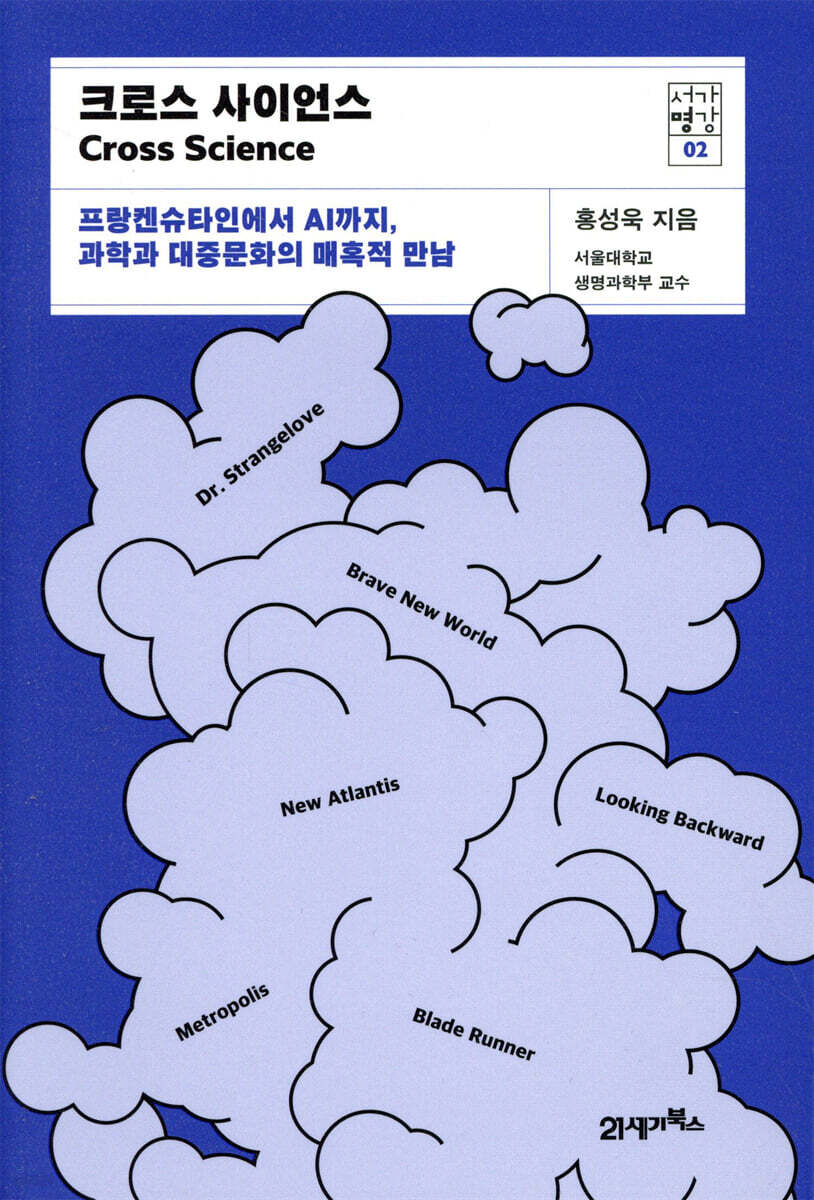
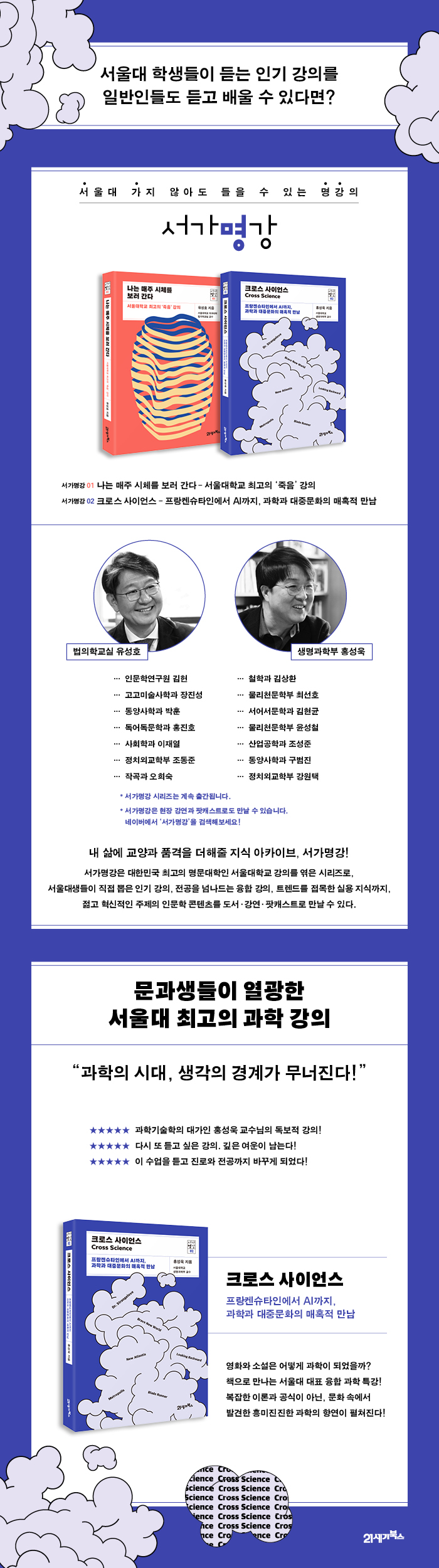
Popular lectures taken by Seoul National University students What if ordinary people could listen and learn? Discover Korea's finest lectures in book form! The "Seogamyeonggang" series, featuring carefully curated lectures by current Seoul National University faculty, has been published. Since the summer of 2017, Seoul National University's top professors in various fields, including history, philosophy, science, medicine, and art, have been giving lectures on different topics every month under the name of "Seo Ga-myeong-gang." Each lecture drew an audience of around 100, who were deeply moved and enthralled by the feast of these renowned lectures. The Seoga Myunggang series, which has translated this learning experience into a book, will provide readers with the knowledge and culture necessary for life. "Cross Science" is a book based on the liberal arts science lectures of Professor Hong Seong-wook, a professor of life sciences at Seoul National University and a communicative science and technology scholar. To help readers understand science in an easy and accessible way, we cover movies like [Dr. Strangelove] and [Ghost in the Shell], as well as modern classics like [Frankenstein] and [Brave New World], and discover scientific issues and unique perspectives hidden within them. This book is not about learning science through complex theories and formulas, but rather about discovering it in our lives and culture, and enhancing our ability to think in an integrated way. * Book21's offline lecture www.book21.com/lecture * Seo Ga-myeong's podcast audioclip.naver.com/channels/345 |
- You can preview some of the book's contents.
Preview
index
Before reading this book - Classification of Academic Studies
Main keywords
Introduction - The 'Cross' of Science and Humanities, Fact and Value
Part 1
The Crossroads of Popular Culture and Science: Mad Scientists, Superwoman Scientists, and Arrogant Scientists
The image of a scientist, either crazy or eccentric
Frankenstein, Dr. Strangelove
There are no superwoman scientists.
Madame Curie
A long history of pseudoscience
Gulliver's Travels, King Kong
Q/A Ask and Answer
Part 2
The Crossroads of World and Science: Is the Future Utopia or Dystopia?
The back of a perfect utopia
Utopia, New Atlantis, Looking Back
Invisible Big Brother is watching you
1984, Brave New World
Q/A Ask and Answer
Part 3
The Crossroads of Humanity and Science: Can Robots and Humans Coexist?
A world where only superior genes survive
Okja, Gattaca
Are cyborgs human or machine?
Robocop, Ghost in the Shell, Blade Runner
Robot Rebellion: What is the Future of Humanity?
『RUR』, [Metropolis], [Automata], [Ex Machina]
Q/A Ask and Answer
Part 4
The Crossroads of Humanities and Science: In the Age of Science, Boundaries of Thought Collapse
Bizarre Science Through the Eyes of Modern Boy
『A Day in the Life of Novelist Gubo』, 『Blood Rain』, and "Gyeongseong Travelogue"
A fusion worldview presented by the universe
Cosmos, The Young Ladies of Avignon, The Blue Marble
Q/A Ask and Answer
Outgoing post
Publishing the Seoga Myunggang series
References
Main keywords
Introduction - The 'Cross' of Science and Humanities, Fact and Value
Part 1
The Crossroads of Popular Culture and Science: Mad Scientists, Superwoman Scientists, and Arrogant Scientists
The image of a scientist, either crazy or eccentric
Frankenstein, Dr. Strangelove
There are no superwoman scientists.
Madame Curie
A long history of pseudoscience
Gulliver's Travels, King Kong
Q/A Ask and Answer
Part 2
The Crossroads of World and Science: Is the Future Utopia or Dystopia?
The back of a perfect utopia
Utopia, New Atlantis, Looking Back
Invisible Big Brother is watching you
1984, Brave New World
Q/A Ask and Answer
Part 3
The Crossroads of Humanity and Science: Can Robots and Humans Coexist?
A world where only superior genes survive
Okja, Gattaca
Are cyborgs human or machine?
Robocop, Ghost in the Shell, Blade Runner
Robot Rebellion: What is the Future of Humanity?
『RUR』, [Metropolis], [Automata], [Ex Machina]
Q/A Ask and Answer
Part 4
The Crossroads of Humanities and Science: In the Age of Science, Boundaries of Thought Collapse
Bizarre Science Through the Eyes of Modern Boy
『A Day in the Life of Novelist Gubo』, 『Blood Rain』, and "Gyeongseong Travelogue"
A fusion worldview presented by the universe
Cosmos, The Young Ladies of Avignon, The Blue Marble
Q/A Ask and Answer
Outgoing post
Publishing the Seoga Myunggang series
References
Detailed image
Into the book
If we pay even a little attention to the intersection of science and popular culture, we can see that science does not deal solely with facts, and the humanities do not deal solely with values.
In our everyday culture, facts and values are already mixed together like a hodgepodge.
Therefore, the task of accurately interpreting the intertwining of science and humanities, facts and values within culture becomes a bridgehead that can narrow the gap between the two cultures.
--- From the "Introductory Note"
What message does the novel "Frankenstein" convey to us? The possibility that humans can breathe life into other beings simultaneously reveals the hopes and fears inherent in new science. Just as Prometheus shared fire, once the domain of the gods, with humanity, Frankenstein, too, defied taboos and yearned to gain knowledge previously inaccessible to humans.
However, the important message conveyed by this work is that the knowledge gained in this way was not used responsibly and was not controlled.
--- From "Part 1: The Image of Scientists, Crazy or Freaky"
Just as women typically lose time to marriage, childbirth, and childcare, the same is true for female scientists.
Most people navigate their lives by negotiating and compromising with the various desires they encounter, and scientists (whether male or female) are no exception.
The only difference between scientists and ordinary people is that they have a very strong desire to do good research, and sometimes this desire can overwhelm other desires.
Scientists are human beings with reason, emotions, and desires.
So obviously.
So science is a product of humans, by humans, and for humans.
_From page 82, 'Part 1: There Are No Superwoman Scientists' --- From "Part 1: There Are No Superwoman Scientists"
The message of the work "1984" cannot help but emphasize the dangers of totalitarianism, the totalitarian governments seen in countries like Germany and the Soviet Union at the time, and the dangers of thought control.
In particular, there is a strong message here that we should not trust the media.
The surprising thing is that this book was written in 1948, before the development of computers and information and communication technology.
Yet, it is remarkable for its insight, as it shows a future where highly developed information and communication technologies can be used as surveillance technologies.
--- From "Part 2: The Invisible Big Brother Is Watching You"
It is said that eugenics was briefly popular in Korea during the Japanese colonial period and then disappeared, but the reality is that the legacy of eugenics is still widespread.
“As expected, it’s superior genes.
The story that “even celebrities have handsome younger siblings” is broadcast on TV without a care in the world.
"Superior genes"? Whether you're good at studying, good-looking, or athletic, they say it's all due to superior genes.
Thinking this way can lead to the idea that people at the other extreme are 'not worth living'.
Eugenic thinking is that not only people who study well and are smart, but also their families have superior genes.
In reality, that is not the case at all.
--- From "Part 3: A World Where Only Superior Genes Survive"
Kusunagi, the protagonist of the movie [Ghost in the Shell], comes to the conclusion that just as a person needs many complex things to be human, a cyborg himself also needs many things to become his true self.
The face and voice that distinguish us from others, the hand we look at when we open our eyes, memories from childhood, premonitions about the future, vast amounts of information, a wide network, etc.
She saw all these things as part of her cyborg self, creating her consciousness.
In other words, I thought that since cyborgs like myself are beings created through a complex self-organizing process just like humans, they could be said to have souls just like humans.
--- From "Part 3: Are Cyborgs Human or Machine?"
Among the novels written during the Japanese colonial period in the 1920s and 1930s, there are many that depict electricity as relatively dark, inexplicably uncomfortable, or mechanically cold.
These descriptions can be seen as revealing the contradictions of colonial everyday life, such as the gloom, imbalance, helplessness, and irony that exist behind colonial development.
Whether the authors were conscious of it or not, the biographies recreated in novels from the 1920s and 1930s revealed the discomforts of colonial daily life, which were difficult to define logically, through literary imagination and sensibility.
--- From "Part 4: Strange Science Through the Eyes of Modern Boy"
The first complete photograph of the entire Earth, taken by Apollo 17 in 1971, titled “Blue Marble.”
What's remarkable about this photo is that the blue Earth seen from space looks so fragile.
This photo completely changes people's perception of the environment.
Looking at the pictures, we can see that the place we live in is at best this small Earth.
Here, not only humans but also millions of species of plants and animals live together.
In the West, based on the Bible, it was believed that a person resembling God was the king of all animals and could do whatever he wanted with all living things on Earth.
But after this photo appeared, I began to think anew about the position of humans on Earth and the relationship between humans and other living beings.
In our everyday culture, facts and values are already mixed together like a hodgepodge.
Therefore, the task of accurately interpreting the intertwining of science and humanities, facts and values within culture becomes a bridgehead that can narrow the gap between the two cultures.
--- From the "Introductory Note"
What message does the novel "Frankenstein" convey to us? The possibility that humans can breathe life into other beings simultaneously reveals the hopes and fears inherent in new science. Just as Prometheus shared fire, once the domain of the gods, with humanity, Frankenstein, too, defied taboos and yearned to gain knowledge previously inaccessible to humans.
However, the important message conveyed by this work is that the knowledge gained in this way was not used responsibly and was not controlled.
--- From "Part 1: The Image of Scientists, Crazy or Freaky"
Just as women typically lose time to marriage, childbirth, and childcare, the same is true for female scientists.
Most people navigate their lives by negotiating and compromising with the various desires they encounter, and scientists (whether male or female) are no exception.
The only difference between scientists and ordinary people is that they have a very strong desire to do good research, and sometimes this desire can overwhelm other desires.
Scientists are human beings with reason, emotions, and desires.
So obviously.
So science is a product of humans, by humans, and for humans.
_From page 82, 'Part 1: There Are No Superwoman Scientists' --- From "Part 1: There Are No Superwoman Scientists"
The message of the work "1984" cannot help but emphasize the dangers of totalitarianism, the totalitarian governments seen in countries like Germany and the Soviet Union at the time, and the dangers of thought control.
In particular, there is a strong message here that we should not trust the media.
The surprising thing is that this book was written in 1948, before the development of computers and information and communication technology.
Yet, it is remarkable for its insight, as it shows a future where highly developed information and communication technologies can be used as surveillance technologies.
--- From "Part 2: The Invisible Big Brother Is Watching You"
It is said that eugenics was briefly popular in Korea during the Japanese colonial period and then disappeared, but the reality is that the legacy of eugenics is still widespread.
“As expected, it’s superior genes.
The story that “even celebrities have handsome younger siblings” is broadcast on TV without a care in the world.
"Superior genes"? Whether you're good at studying, good-looking, or athletic, they say it's all due to superior genes.
Thinking this way can lead to the idea that people at the other extreme are 'not worth living'.
Eugenic thinking is that not only people who study well and are smart, but also their families have superior genes.
In reality, that is not the case at all.
--- From "Part 3: A World Where Only Superior Genes Survive"
Kusunagi, the protagonist of the movie [Ghost in the Shell], comes to the conclusion that just as a person needs many complex things to be human, a cyborg himself also needs many things to become his true self.
The face and voice that distinguish us from others, the hand we look at when we open our eyes, memories from childhood, premonitions about the future, vast amounts of information, a wide network, etc.
She saw all these things as part of her cyborg self, creating her consciousness.
In other words, I thought that since cyborgs like myself are beings created through a complex self-organizing process just like humans, they could be said to have souls just like humans.
--- From "Part 3: Are Cyborgs Human or Machine?"
Among the novels written during the Japanese colonial period in the 1920s and 1930s, there are many that depict electricity as relatively dark, inexplicably uncomfortable, or mechanically cold.
These descriptions can be seen as revealing the contradictions of colonial everyday life, such as the gloom, imbalance, helplessness, and irony that exist behind colonial development.
Whether the authors were conscious of it or not, the biographies recreated in novels from the 1920s and 1930s revealed the discomforts of colonial daily life, which were difficult to define logically, through literary imagination and sensibility.
--- From "Part 4: Strange Science Through the Eyes of Modern Boy"
The first complete photograph of the entire Earth, taken by Apollo 17 in 1971, titled “Blue Marble.”
What's remarkable about this photo is that the blue Earth seen from space looks so fragile.
This photo completely changes people's perception of the environment.
Looking at the pictures, we can see that the place we live in is at best this small Earth.
Here, not only humans but also millions of species of plants and animals live together.
In the West, based on the Bible, it was believed that a person resembling God was the king of all animals and could do whatever he wanted with all living things on Earth.
But after this photo appeared, I began to think anew about the position of humans on Earth and the relationship between humans and other living beings.
--- From "The Fusion Worldview Presented by the Fourth Universe"
Publisher's Review
An archive of knowledge that will add sophistication and elegance to your life.
"Seogamyeonggang": A famous lecture you can attend without going to Seoul National University.
It's like a gift to me who is tired of work life!
It was a real study I needed in my life!
A masterpiece lecture that reawakened my passion for learning!
Seoga Myunggang is a series of lectures from Seoul National University, the most prestigious university in Korea. It contains informative and interesting lectures by current Seoul National University professors reconstructed and included in the book.
From popular lectures selected directly by Seoul National University students, to interdisciplinary lectures that cross majors, to practical knowledge incorporating trends, the course covers young and innovative topics.
Seo Ga-myeong's diverse humanities content can be found not only in books but also through live lectures and podcasts.
This program provides an opportunity for working professionals seeking to acquire general knowledge during their commute, young people exploring career paths, and all educated individuals in Korea who always harbor a passion for learning to easily watch, listen to, and learn from Korea's best lectures.
In the age of science, boundaries of thought are collapsing.
Artificial intelligence and Ghost in the Shell, big data and 1984…
A special lecture on convergence science that even liberal arts students are excited about!
Professor Hong Seong-wook of the Department of Life Sciences at Seoul National University, who strives to popularize science, analyzes the relationship between science and our society through popular culture content such as movies, novels, and comics.
"Cross Science," which showcases the convergence of science and culture, and science and humanities, is a book that reconstructs the lecture content of "Science and Technology and Popular Culture," a class taken by Seoul National University science and engineering students and humanities and social science students, to suit the readers' level.
In fact, students who took this class left reviews saying, “It was a lecture that left a deep impression on me, and I wanted to take it again,” and “After taking this class, I even changed my career path and major.”
There was an enthusiastic response that this lecture allowed people to think about science within a cultural and social context.
This book examines how issues in modern science affect our lives through novels such as 1984 and The New Atlantis, films such as Metropolis and Blade Runner, and works of art such as Les Demoiselles d'Avignon, bringing science one step closer to our daily lives.
Furthermore, from the cool perspective of a science and technology scholar, we analyze how key issues in modern science, such as artificial intelligence, big data, and genetic scissors, are hidden within our culture and what their true nature is.
It addresses issues directly related to our lives that we all must consider at least once as we live in an era of rapidly shifting scientific paradigms, such as bioethics, privacy, and the boundary between humans and cyborgs.
The author, who says that “the work of reading the intersection of science and humanities within culture is the work of narrowing the gap between the two cultures,” keenly discovers that science is closely connected to our culture and that science and humanities constantly intersect in our daily lives.
In this way, 『Cross Science』 is a book that fosters the ability to think about science in a cultural and social context, moving beyond theories and formulas, and ultimately guides us on how to learn science in our daily lives.
How Film and Novels Became Science
A fascinating intersection of science and pop culture
Beyond simply examining scientific knowledge and contemporary scientific issues, "Cross Science" expands our perspective on the world and culture around us through the lens of science.
“Will the era come when artificial intelligence robots rule over humans? Are cyborgs human or machine?” Through works such as [Ghost in the Shell] and [Blade Runner], which contain philosophical messages about the differences between humans and machines, and 『RUR』 and [Metropolis], which depict a world where robots threaten humans, we discover our anxieties and fears about highly advanced science and technology, and examine whether it is possible for it to become a reality and what we should prepare for.
“How and why was the image of the ‘mad scientist’ created?” Through the story of the scientist who created the monster in 『Frankenstein』, a modern classic, and the scientist who drove humanity to destruction in the movie [Dr. Strangelove], it reminds us of the path science should take and the ethics and responsibility that scientists must uphold.
“Will science give us utopia?” We will examine the role that science can play in a utopian society through novels such as Thomas More’s “Utopia,” which first created the concept of utopia, and “New Atlantis” and “Looking Backward,” which depict the utopia we dream of.
A photo of Earth in the vastness of space [Blue Marble].
This one photo completely changed our world view.
What is the meaning of my existence, which is like a 'dot' in the vast universe?
This book demonstrates that science is not separate from our existence, our spirit, and our lives, and that science and the humanities are not completely separated by fact and value.
Through this book, which discovers the "cross" between science and our lives, science and the humanities, readers will experience an expansion of perspective that allows them to think in an integrated manner and creatively encounter the world.
"Seogamyeonggang": A famous lecture you can attend without going to Seoul National University.
It's like a gift to me who is tired of work life!
It was a real study I needed in my life!
A masterpiece lecture that reawakened my passion for learning!
Seoga Myunggang is a series of lectures from Seoul National University, the most prestigious university in Korea. It contains informative and interesting lectures by current Seoul National University professors reconstructed and included in the book.
From popular lectures selected directly by Seoul National University students, to interdisciplinary lectures that cross majors, to practical knowledge incorporating trends, the course covers young and innovative topics.
Seo Ga-myeong's diverse humanities content can be found not only in books but also through live lectures and podcasts.
This program provides an opportunity for working professionals seeking to acquire general knowledge during their commute, young people exploring career paths, and all educated individuals in Korea who always harbor a passion for learning to easily watch, listen to, and learn from Korea's best lectures.
In the age of science, boundaries of thought are collapsing.
Artificial intelligence and Ghost in the Shell, big data and 1984…
A special lecture on convergence science that even liberal arts students are excited about!
Professor Hong Seong-wook of the Department of Life Sciences at Seoul National University, who strives to popularize science, analyzes the relationship between science and our society through popular culture content such as movies, novels, and comics.
"Cross Science," which showcases the convergence of science and culture, and science and humanities, is a book that reconstructs the lecture content of "Science and Technology and Popular Culture," a class taken by Seoul National University science and engineering students and humanities and social science students, to suit the readers' level.
In fact, students who took this class left reviews saying, “It was a lecture that left a deep impression on me, and I wanted to take it again,” and “After taking this class, I even changed my career path and major.”
There was an enthusiastic response that this lecture allowed people to think about science within a cultural and social context.
This book examines how issues in modern science affect our lives through novels such as 1984 and The New Atlantis, films such as Metropolis and Blade Runner, and works of art such as Les Demoiselles d'Avignon, bringing science one step closer to our daily lives.
Furthermore, from the cool perspective of a science and technology scholar, we analyze how key issues in modern science, such as artificial intelligence, big data, and genetic scissors, are hidden within our culture and what their true nature is.
It addresses issues directly related to our lives that we all must consider at least once as we live in an era of rapidly shifting scientific paradigms, such as bioethics, privacy, and the boundary between humans and cyborgs.
The author, who says that “the work of reading the intersection of science and humanities within culture is the work of narrowing the gap between the two cultures,” keenly discovers that science is closely connected to our culture and that science and humanities constantly intersect in our daily lives.
In this way, 『Cross Science』 is a book that fosters the ability to think about science in a cultural and social context, moving beyond theories and formulas, and ultimately guides us on how to learn science in our daily lives.
How Film and Novels Became Science
A fascinating intersection of science and pop culture
Beyond simply examining scientific knowledge and contemporary scientific issues, "Cross Science" expands our perspective on the world and culture around us through the lens of science.
“Will the era come when artificial intelligence robots rule over humans? Are cyborgs human or machine?” Through works such as [Ghost in the Shell] and [Blade Runner], which contain philosophical messages about the differences between humans and machines, and 『RUR』 and [Metropolis], which depict a world where robots threaten humans, we discover our anxieties and fears about highly advanced science and technology, and examine whether it is possible for it to become a reality and what we should prepare for.
“How and why was the image of the ‘mad scientist’ created?” Through the story of the scientist who created the monster in 『Frankenstein』, a modern classic, and the scientist who drove humanity to destruction in the movie [Dr. Strangelove], it reminds us of the path science should take and the ethics and responsibility that scientists must uphold.
“Will science give us utopia?” We will examine the role that science can play in a utopian society through novels such as Thomas More’s “Utopia,” which first created the concept of utopia, and “New Atlantis” and “Looking Backward,” which depict the utopia we dream of.
A photo of Earth in the vastness of space [Blue Marble].
This one photo completely changed our world view.
What is the meaning of my existence, which is like a 'dot' in the vast universe?
This book demonstrates that science is not separate from our existence, our spirit, and our lives, and that science and the humanities are not completely separated by fact and value.
Through this book, which discovers the "cross" between science and our lives, science and the humanities, readers will experience an expansion of perspective that allows them to think in an integrated manner and creatively encounter the world.
GOODS SPECIFICS
- Date of issue: January 23, 2019
- Page count, weight, size: 356 pages | 438g | 128*188*30mm
- ISBN13: 9788950979416
- ISBN10: 8950979411
You may also like
카테고리
korean


korean

![GQ KOREA Mark (Monthly): December [2025]](http://librairie.coreenne.fr/cdn/shop/files/8ef265dbbfbf186523ed75ba7319009d.jpg?v=1765340328&width=3840)


