

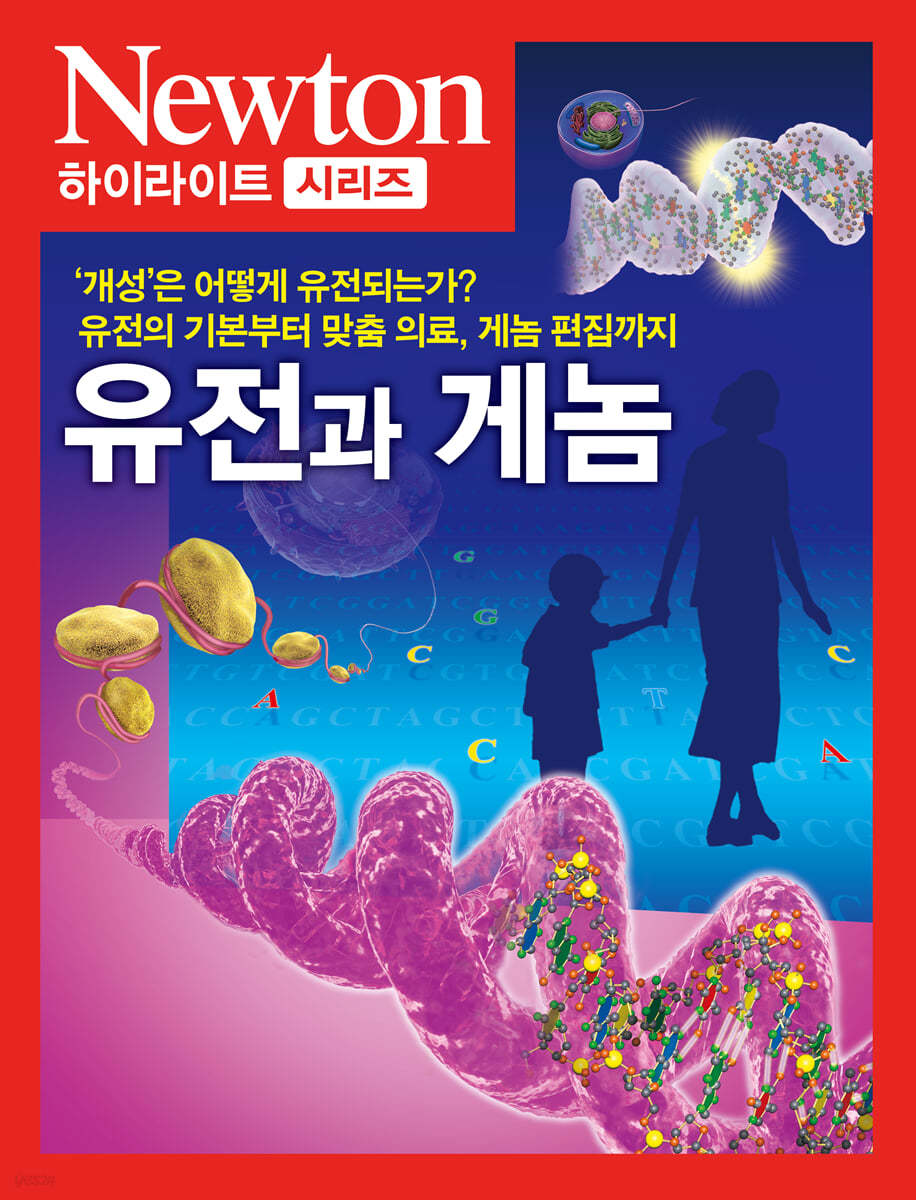
NEWTON HIGHLIGHT Genetics and Genomes
 |
Description
Book Introduction
From the basics of genetics to genome editing
Everyone has a different face, motor skills, personality, etc.
This is because the 'genome (entire genetic information),' which is the blueprint for a person that determines their 'individuality,' is slightly different for each person. In other words, extremely small differences in the genome result in different personalities.
Genome decoding technology is advancing at a remarkable pace, and decoding each individual's genome is no longer a dream.
Furthermore, genes that create diverse personalities are being discovered one after another.
For example, genes related to a person's appearance, such as face and height, or athletic ability; genes related to constitution, such as the way one perceives taste and how well one can drink alcohol; genes related to the ability to empathize and personality, such as liking new things; and genes related to intelligence or state of mind.
This book provides a clear overview of the knowledge about genetics and genomes, which is developing at an unprecedented rate.
The book consists of a total of nine chapters.
First, in the prologue and chapters 1 and 2, we will learn about what genes, DNA, and genomes are, how they differ from each other, and how to identify individuals by decoding DNA.
Chapters 3 to 6 introduce how various characteristics of our body are related to genes.
We can learn how our appearance, athletic ability, constitution, personality, intelligence, mind, and diseases are determined by genes.
Chapter 7 explains the mechanisms of inheritance.
It is the core of chromosome distribution, Mendel's laws, blood types, laws of specific inheritance, polygenic inheritance, sex-linked inheritance, and maternal inheritance.
Chapters 8 and 9 introduce the latest research on modifying and replacing genes, including optogenetics, genome editing, and genetic modification (genetic engineering), along with special cases of inheritance such as mutations, DNA methylation, and inheritance of growth environment.
I believe this book, which provides the latest information on genetics and genomes, will be a good companion.
Everyone has a different face, motor skills, personality, etc.
This is because the 'genome (entire genetic information),' which is the blueprint for a person that determines their 'individuality,' is slightly different for each person. In other words, extremely small differences in the genome result in different personalities.
Genome decoding technology is advancing at a remarkable pace, and decoding each individual's genome is no longer a dream.
Furthermore, genes that create diverse personalities are being discovered one after another.
For example, genes related to a person's appearance, such as face and height, or athletic ability; genes related to constitution, such as the way one perceives taste and how well one can drink alcohol; genes related to the ability to empathize and personality, such as liking new things; and genes related to intelligence or state of mind.
This book provides a clear overview of the knowledge about genetics and genomes, which is developing at an unprecedented rate.
The book consists of a total of nine chapters.
First, in the prologue and chapters 1 and 2, we will learn about what genes, DNA, and genomes are, how they differ from each other, and how to identify individuals by decoding DNA.
Chapters 3 to 6 introduce how various characteristics of our body are related to genes.
We can learn how our appearance, athletic ability, constitution, personality, intelligence, mind, and diseases are determined by genes.
Chapter 7 explains the mechanisms of inheritance.
It is the core of chromosome distribution, Mendel's laws, blood types, laws of specific inheritance, polygenic inheritance, sex-linked inheritance, and maternal inheritance.
Chapters 8 and 9 introduce the latest research on modifying and replacing genes, including optogenetics, genome editing, and genetic modification (genetic engineering), along with special cases of inheritance such as mutations, DNA methylation, and inheritance of growth environment.
I believe this book, which provides the latest information on genetics and genomes, will be a good companion.
- You can preview some of the book's contents.
Preview
index
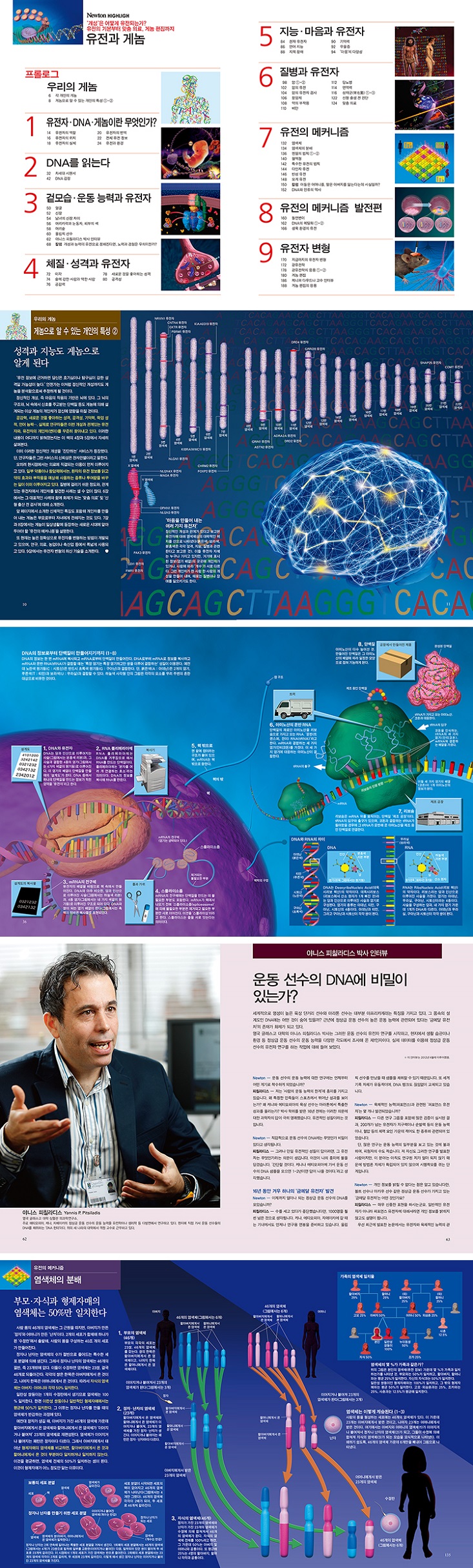
Prologue: Our Genome
Each individual's genome / Individual characteristics that can be known from the genome ①~②
Chapter 1: What are genes, DNA, and genomes?
Role of genes / Location of genes / Identity of genes / Translation of genes / Complete genetic information / Heredity and environment
Chapter 2: Reading DNA
Next-generation sequencer / DNA identification
Chapter 3 Appearance, Athletic Ability, and Genes
Face / Height / Height differences between men and women / Hair, eye, and skin color / Hair volume / Olympic athletes
* Interview with Dr. Yannis Pitsiladis
* If personality and ability are determined by genetics, are efforts and experiences meaningless?
Chapter 4: Constitution, Personality, and Genes
Taste / People who are strong or weak to alcohol / Empathy / Personality that likes new things / Aggression
Chapter 5 Intelligence, Mind, and Genes
Genius genes / verbal intelligence / intellectual disability / memory / depression / diversity of the 'mind'
Chapter 6 Disease and Genes
Cancer ①~② / Cancer genetics / Cancer genetic testing / Anticancer drugs / Side effects of drugs / Obesity / Diabetes / Immunity / Common bacteria ①~③ / New prenatal diagnosis / Personalized medicine
Chapter 7 Mechanisms of Inheritance
Chromosomes / Chromosome distribution / Mendel's laws ①~② / Blood types / Laws of inheritance / Polygenic inheritance / Sex-linked inheritance / Maternal inheritance
* Is it true that a son resembles his mother and a daughter resembles her father?
* DNA and human history
Chapter 8: Development of the Mechanism of Genetics
Mutation / DNA methylation ①~② / Inheritance of growth environment
Chapter 9 Genetic Modification
Genetic modification / Optogenetics / Applications of Optogenetics ①~② / Genome editing
* Interview with Professor Jennifer Doudna
* Applications of genome editing
Each individual's genome / Individual characteristics that can be known from the genome ①~②
Chapter 1: What are genes, DNA, and genomes?
Role of genes / Location of genes / Identity of genes / Translation of genes / Complete genetic information / Heredity and environment
Chapter 2: Reading DNA
Next-generation sequencer / DNA identification
Chapter 3 Appearance, Athletic Ability, and Genes
Face / Height / Height differences between men and women / Hair, eye, and skin color / Hair volume / Olympic athletes
* Interview with Dr. Yannis Pitsiladis
* If personality and ability are determined by genetics, are efforts and experiences meaningless?
Chapter 4: Constitution, Personality, and Genes
Taste / People who are strong or weak to alcohol / Empathy / Personality that likes new things / Aggression
Chapter 5 Intelligence, Mind, and Genes
Genius genes / verbal intelligence / intellectual disability / memory / depression / diversity of the 'mind'
Chapter 6 Disease and Genes
Cancer ①~② / Cancer genetics / Cancer genetic testing / Anticancer drugs / Side effects of drugs / Obesity / Diabetes / Immunity / Common bacteria ①~③ / New prenatal diagnosis / Personalized medicine
Chapter 7 Mechanisms of Inheritance
Chromosomes / Chromosome distribution / Mendel's laws ①~② / Blood types / Laws of inheritance / Polygenic inheritance / Sex-linked inheritance / Maternal inheritance
* Is it true that a son resembles his mother and a daughter resembles her father?
* DNA and human history
Chapter 8: Development of the Mechanism of Genetics
Mutation / DNA methylation ①~② / Inheritance of growth environment
Chapter 9 Genetic Modification
Genetic modification / Optogenetics / Applications of Optogenetics ①~② / Genome editing
* Interview with Professor Jennifer Doudna
* Applications of genome editing
Detailed image
Publisher's Review
Technologies for understanding genetic information, including the reality and differences between genes, DNA, and genomes, and genome decoding devices
Everyone has their own individuality.
The genome, which is the blueprint of a person, is largely responsible for determining individuality, from physical features such as face and height to motor skills, intelligence, constitution, and personality.
First, let's define what genes, DNA, and genome are and what the differences are between them.
Meanwhile, in 2003, the decoding of the human genome was completed.
The genome decoding device, the 'sequencer', has become essential not only for decoding the genome but also for research into finding the meaning written in the genome.
We will also learn more about the development and uses of sequencers.
The mechanisms of inheritance, including chromosomes, blood types, laws of inheritance, polygenic inheritance, sex-linked inheritance, and maternal inheritance.
Most of us resemble our parents in some way.
This is because genes are inherited from parents.
However, not all of us have exactly the same set of genes as our parents, and of course, no one has the exact same face as their parents.
By what laws are genes passed on to offspring? This illustration provides a detailed explanation of the basic mechanisms of inheritance, as well as specific forms of inheritance that deviate from the basics.
Genes that determine face, height, hair, eye color, skin color, and athletic ability
In terms of appearance, such as face, height, hair, eye color, and skin color, parents and children or siblings often resemble each other, and anyone can tell right away.
These characteristics appear to be caused by multiple genes interacting with each other.
In recent years, research has been conducted on the genes of athletes who demonstrate outstanding athletic ability, and the relationship between athletic nerves and genes in each sport with different characteristics is steadily being revealed.
Let's summarize the genes that determine a person's external characteristics.
Genes related to constitution and personality, such as senses, tolerance to alcohol, emotions, curiosity, and aggression
We know from experience that there are people who 'come from a family that drinks a lot' or 'people who are constitutionally unable to drink'.
Genes play a role here too.
And it is also being discovered that subtle differences in genes create each person's unique personality.
The level of curiosity and aggression is also determined by a person's genes.
Let's find out the details.
Genes related to intelligence and the mind, such as genius, intelligence, intellectual disability, memory, and depression
Are there genes that determine how well a person is mentally strong? To answer this frequently asked question, the search for genes related to intelligence is actively underway.
Additionally, certain genetic characteristics are being discovered in patients with autism and schizophrenia, which are known as 'diseases of the mind'.
Genes related to diseases such as cancer, obesity, diabetes, immunity, resident bacteria, prenatal testing, and personalized medicine, as well as side effects of anticancer drugs and medications.
Genes related to various diseases, including cancer, diabetes, and immune diseases, have been investigated so far.
Recently, it has become possible to examine a patient's DNA to prescribe the right medication for the patient, or to examine the fetus's DNA to determine the fetus's health status before birth.
Even if you have the same disease, the degree to which it progresses and the extent to which medications are effective can vary greatly from person to person.
We will also learn about the principles of providing treatment tailored to each individual's genetic characteristics.
Genetic manipulation, including mutations, DNA methylation, optogenetics, and genome editing
Nowadays, genetic modification (genetic engineering) technology has improved to the point where it is possible to destroy or add genes as desired.
Furthermore, groundbreaking manipulation technologies such as ‘optogenetics’ and ‘genome editing’ are also becoming widespread.
What potential do these technologies hold? What challenges might arise when actually applied? We also explain how countries around the world are preparing to address these challenges.
Everyone has their own individuality.
The genome, which is the blueprint of a person, is largely responsible for determining individuality, from physical features such as face and height to motor skills, intelligence, constitution, and personality.
First, let's define what genes, DNA, and genome are and what the differences are between them.
Meanwhile, in 2003, the decoding of the human genome was completed.
The genome decoding device, the 'sequencer', has become essential not only for decoding the genome but also for research into finding the meaning written in the genome.
We will also learn more about the development and uses of sequencers.
The mechanisms of inheritance, including chromosomes, blood types, laws of inheritance, polygenic inheritance, sex-linked inheritance, and maternal inheritance.
Most of us resemble our parents in some way.
This is because genes are inherited from parents.
However, not all of us have exactly the same set of genes as our parents, and of course, no one has the exact same face as their parents.
By what laws are genes passed on to offspring? This illustration provides a detailed explanation of the basic mechanisms of inheritance, as well as specific forms of inheritance that deviate from the basics.
Genes that determine face, height, hair, eye color, skin color, and athletic ability
In terms of appearance, such as face, height, hair, eye color, and skin color, parents and children or siblings often resemble each other, and anyone can tell right away.
These characteristics appear to be caused by multiple genes interacting with each other.
In recent years, research has been conducted on the genes of athletes who demonstrate outstanding athletic ability, and the relationship between athletic nerves and genes in each sport with different characteristics is steadily being revealed.
Let's summarize the genes that determine a person's external characteristics.
Genes related to constitution and personality, such as senses, tolerance to alcohol, emotions, curiosity, and aggression
We know from experience that there are people who 'come from a family that drinks a lot' or 'people who are constitutionally unable to drink'.
Genes play a role here too.
And it is also being discovered that subtle differences in genes create each person's unique personality.
The level of curiosity and aggression is also determined by a person's genes.
Let's find out the details.
Genes related to intelligence and the mind, such as genius, intelligence, intellectual disability, memory, and depression
Are there genes that determine how well a person is mentally strong? To answer this frequently asked question, the search for genes related to intelligence is actively underway.
Additionally, certain genetic characteristics are being discovered in patients with autism and schizophrenia, which are known as 'diseases of the mind'.
Genes related to diseases such as cancer, obesity, diabetes, immunity, resident bacteria, prenatal testing, and personalized medicine, as well as side effects of anticancer drugs and medications.
Genes related to various diseases, including cancer, diabetes, and immune diseases, have been investigated so far.
Recently, it has become possible to examine a patient's DNA to prescribe the right medication for the patient, or to examine the fetus's DNA to determine the fetus's health status before birth.
Even if you have the same disease, the degree to which it progresses and the extent to which medications are effective can vary greatly from person to person.
We will also learn about the principles of providing treatment tailored to each individual's genetic characteristics.
Genetic manipulation, including mutations, DNA methylation, optogenetics, and genome editing
Nowadays, genetic modification (genetic engineering) technology has improved to the point where it is possible to destroy or add genes as desired.
Furthermore, groundbreaking manipulation technologies such as ‘optogenetics’ and ‘genome editing’ are also becoming widespread.
What potential do these technologies hold? What challenges might arise when actually applied? We also explain how countries around the world are preparing to address these challenges.
GOODS SPECIFICS
- Date of issue: March 15, 2018
- Page count, weight, size: 192 pages | 476g | 210*275*20mm
- ISBN13: 9791161960265
- ISBN10: 1161960260
You may also like
카테고리
korean


korean

![GQ KOREA Mark (Monthly): December [2025]](http://librairie.coreenne.fr/cdn/shop/files/8ef265dbbfbf186523ed75ba7319009d.jpg?v=1765340328&width=3840)


