

Open Architecture as Told by Ryue Nishizawa
 |
Description
Book Introduction
An architectural essay by Ryue Nishizawa, winner of the 2010 Pritzker Prize
‘Open space’ that breaks down the walls of space and time,
Incorporating modern sensibilities into architecture
The name ‘Ryuue Nishizawa’ is still somewhat unfamiliar in Korea.
However, he is a Japanese architect who has received worldwide attention for designing the New Museum, which was highly praised as “the building that restored the cultural identity of New York,” and the 21st Century Museum of Contemporary Art (located in Kanazawa, Japan), which is recognized as a representative example of modern architecture.
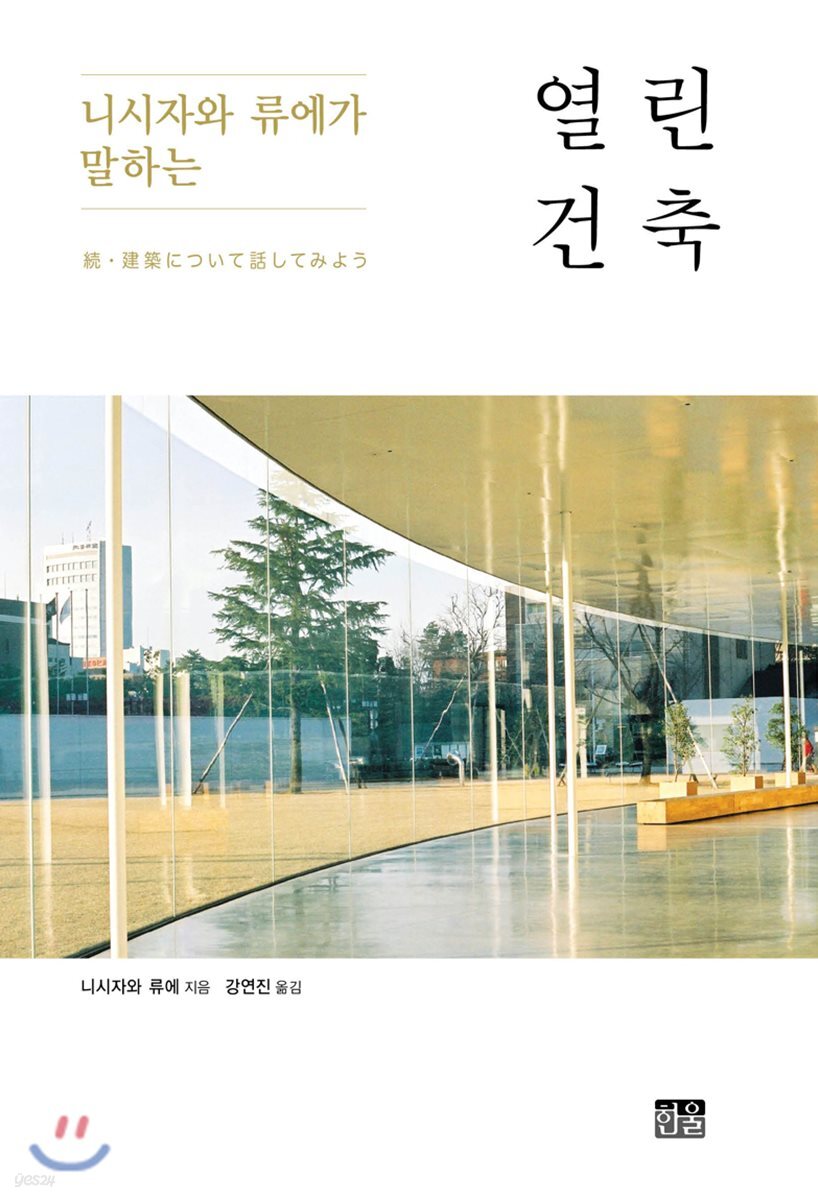
??Open Architecture as Spoken by Ryue Nishizawa?? is a collection of architectural essays that contains stories and photographs related to his work, as well as his philosophy and individuality.
Through photographs of his work, floor plans, and interviews with various individuals, you can learn about the "open architecture" that Ryue Nishizawa pursues, why it is called a modern sensibility, how he obtains such inspiration, and how it is expressed in architecture.
Ryue Nishizawa is an architect I would like to strongly introduce not only to architecture students but also to domestic readers interested in architecture and cities.
Let's redefine the meaning of 'modern architecture' by looking at the architecture of Ryue Nishizawa, which is motivated by communication and exchange.
‘Open space’ that breaks down the walls of space and time,
Incorporating modern sensibilities into architecture
The name ‘Ryuue Nishizawa’ is still somewhat unfamiliar in Korea.
However, he is a Japanese architect who has received worldwide attention for designing the New Museum, which was highly praised as “the building that restored the cultural identity of New York,” and the 21st Century Museum of Contemporary Art (located in Kanazawa, Japan), which is recognized as a representative example of modern architecture.
??Open Architecture as Spoken by Ryue Nishizawa?? is a collection of architectural essays that contains stories and photographs related to his work, as well as his philosophy and individuality.
Through photographs of his work, floor plans, and interviews with various individuals, you can learn about the "open architecture" that Ryue Nishizawa pursues, why it is called a modern sensibility, how he obtains such inspiration, and how it is expressed in architecture.
Ryue Nishizawa is an architect I would like to strongly introduce not only to architecture students but also to domestic readers interested in architecture and cities.
Let's redefine the meaning of 'modern architecture' by looking at the architecture of Ryue Nishizawa, which is motivated by communication and exchange.
index
Part 1: Environment and Architecture
New nature
Design Concept of the Towada City Museum of Modern Art
A house like a garden
Integrating inside and outside
Stories about furniture and architecture
What are the details in a house?
From the Netherlands to New York to Tokyo: 10 Years Since the Beginning of an Overseas Project
Beyond Regional Differences: An Interview with the 2010 Pritzker Prize Winner
Art, Architecture, and Nature: Harmony and Continuity of the Three
Part 2: Architects and Architecture
English story
Le Corbusier
To a new life
About the size of imagination
Venice Story
Memories of Brazil
Building ahead of Part 3
About the study
About the details
About the environment and modern nature
About relationships
earthquake disaster
Reviews
New nature
Design Concept of the Towada City Museum of Modern Art
A house like a garden
Integrating inside and outside
Stories about furniture and architecture
What are the details in a house?
From the Netherlands to New York to Tokyo: 10 Years Since the Beginning of an Overseas Project
Beyond Regional Differences: An Interview with the 2010 Pritzker Prize Winner
Art, Architecture, and Nature: Harmony and Continuity of the Three
Part 2: Architects and Architecture
English story
Le Corbusier
To a new life
About the size of imagination
Venice Story
Memories of Brazil
Building ahead of Part 3
About the study
About the details
About the environment and modern nature
About relationships
earthquake disaster
Reviews
Into the book
Architectural design contains social aspects.
I have always wanted to create architecture that is open to society and others, rather than designing only for myself.
In that sense, creating possibilities is a very important task.
I want to create architecture that makes people feel a sense of possibility.
However, on the other hand, there are cases where users are surprised when things turn out differently than expected.
Of course, the residents will understand my concept or design intentions, but there are still times when I would have made completely different choices, whether it be furniture or curtains.
There are ways of living and using things that I cannot do and that only they can do.
Pages 25-26
I value 'easy understanding'.
I want to make the sentences I write myself and the architecture as simple and easy to understand as possible.
Architecture is fundamentally designed to be usable by anyone.
I like that kind of easy understanding and simplicity.
… … I am interested in the universality of architecture, and confronting that universality does not make the story difficult for me, but rather makes it very understandable.
At both the 21st Century Museum of Contemporary Art, Kanazawa and the Towada City Museum of Contemporary Art (2008), we aimed for an easily understandable state that many people would see and feel was "open."
Clearly, the architecture was focused on what it wanted to say.
Architecture that is conveyed in a casual and sensual manner without any professional knowledge or preliminary information.
I want to build with that kind of clarity.
Pages 30-31
Rather than being indoors, it feels like a garden, with furniture and plants scattered around under the blue sky.
I thought it might be possible to create a bright environment overflowing with light.
For example, the sunroom/laundry room in the center of the building can be used for drying laundry, watering flowers, or hosting parties, making it the space closest to a garden in terms of both its use and the impression of the space.
There is a large skylight, so when you open it wide during lunchtime or in the summer and fall, the entire room becomes a courtyard, with a gentle breeze flowing through.
However, it was designed with the hope that it would not be limited to this room, but would be a transparent and open space like a garden, where one would feel as if there was no distinction between inside and outside, no matter where one was.
The 'transparency' mentioned here is not the oppressive transparency of glass and steel seen in modern architecture, but rather aims for a peaceful and comfortable space like the spring sunshine.
Page 43
“Whenever I build a building, I think about the furniture, no matter what its purpose is.
Furniture, architecture, gardens, streets and cities are all connected and linked into one world.
I am an architect in the sense that I create buildings, but I also want to create urban environments and actively think about cities, such as regions, communities, and streets.
“To create the environment I desire, furniture is just as important as the appearance of the street.” _Page 80
Architecture is a landscape created by the combination of various details that create harmony.
For example, a building is completed by the assembly of various details, such as a roof or beams, a kitchen or bedroom, a facility plan, a structural plan, or a landscape.
How they come together is a matter of 'harmony', of detail.
Another way to say this is that it is a process of architecture.
Detail is the process of 'how architecture is established.'
… …Architecture is a large world that is related to the entirety of human life, such as ‘eating’, ‘sleeping’, and ‘wearing’.
You could call it a worldview.
Page 85
“In architecture, regionality and culture are really important.
When you do architecture, you directly reveal that your values are fundamentally Japanese or Asian.
Because architecture is directly connected to human life and living, everything from how to build a kitchen to how to build an office or bedroom, to how to think about structures, all come from one's own culture and values.
Architecture seems to be a product of local culture.
Conversely, by building, it becomes clear what the region is and what the regional culture is.
In any case, when building, you must consider the region.” _Page 111
When looking at Le Corbusier's fierce architecture, one feels that there is something extra in his architectural methods.
The dynamism that keeps increasing, the rough force, you could say.
It's as if we're seeing creation and destruction at the same time, adding and subtracting.
There is a true work of art in progress, as if to say that there was no grand plan from the beginning.
In that respect, I feel Le Corbusier's enormous individual talent, while also feeling the freedom of his architectural creation, which is very European.
Page 139
If you ask why we do open architecture, the reason is to create relationships.
When you break off a relationship, nothing more happens.
However, when you connect relationships, it can lead to various creative developments.
This can be said to be true both in the sense of the relationship between inside and outside, and to some extent in the sense of the relationship between places.
Also, if we think about it in terms of the relationship between humans and architecture, wouldn't human activities be based on such architecture to create more creative architecture?
Architecture acts as a catalyst to bring about various relationships.
Page 233
Although the work of an architect designing and constructing a building is called architectural creation, the act of a resident using a completed building is also a creative act.
For example, just by moving into a building and hanging a curtain, you can express your own style, and just by placing your own furniture or clothes in your room, you can create a space that reflects your personality.
The act of 'using' and the act of 'dwelling' are creative acts.
_Page 240
Another important thing is that once a building is built, it doesn't end there. Only then do people begin to use it.
In other words, architecture is not about the past, but rather is made for the future and for the people of the future.
This is why creators design with the future in mind.
When we imagine what the future could be, it takes shape and becomes architecture.
Architecture symbolically represents the dreams, imagination, and possibilities of the people who built it.
In other words, architecture affirms that we live toward the future.
Page 248
I have always wanted to create architecture that is open to society and others, rather than designing only for myself.
In that sense, creating possibilities is a very important task.
I want to create architecture that makes people feel a sense of possibility.
However, on the other hand, there are cases where users are surprised when things turn out differently than expected.
Of course, the residents will understand my concept or design intentions, but there are still times when I would have made completely different choices, whether it be furniture or curtains.
There are ways of living and using things that I cannot do and that only they can do.
Pages 25-26
I value 'easy understanding'.
I want to make the sentences I write myself and the architecture as simple and easy to understand as possible.
Architecture is fundamentally designed to be usable by anyone.
I like that kind of easy understanding and simplicity.
… … I am interested in the universality of architecture, and confronting that universality does not make the story difficult for me, but rather makes it very understandable.
At both the 21st Century Museum of Contemporary Art, Kanazawa and the Towada City Museum of Contemporary Art (2008), we aimed for an easily understandable state that many people would see and feel was "open."
Clearly, the architecture was focused on what it wanted to say.
Architecture that is conveyed in a casual and sensual manner without any professional knowledge or preliminary information.
I want to build with that kind of clarity.
Pages 30-31
Rather than being indoors, it feels like a garden, with furniture and plants scattered around under the blue sky.
I thought it might be possible to create a bright environment overflowing with light.
For example, the sunroom/laundry room in the center of the building can be used for drying laundry, watering flowers, or hosting parties, making it the space closest to a garden in terms of both its use and the impression of the space.
There is a large skylight, so when you open it wide during lunchtime or in the summer and fall, the entire room becomes a courtyard, with a gentle breeze flowing through.
However, it was designed with the hope that it would not be limited to this room, but would be a transparent and open space like a garden, where one would feel as if there was no distinction between inside and outside, no matter where one was.
The 'transparency' mentioned here is not the oppressive transparency of glass and steel seen in modern architecture, but rather aims for a peaceful and comfortable space like the spring sunshine.
Page 43
“Whenever I build a building, I think about the furniture, no matter what its purpose is.
Furniture, architecture, gardens, streets and cities are all connected and linked into one world.
I am an architect in the sense that I create buildings, but I also want to create urban environments and actively think about cities, such as regions, communities, and streets.
“To create the environment I desire, furniture is just as important as the appearance of the street.” _Page 80
Architecture is a landscape created by the combination of various details that create harmony.
For example, a building is completed by the assembly of various details, such as a roof or beams, a kitchen or bedroom, a facility plan, a structural plan, or a landscape.
How they come together is a matter of 'harmony', of detail.
Another way to say this is that it is a process of architecture.
Detail is the process of 'how architecture is established.'
… …Architecture is a large world that is related to the entirety of human life, such as ‘eating’, ‘sleeping’, and ‘wearing’.
You could call it a worldview.
Page 85
“In architecture, regionality and culture are really important.
When you do architecture, you directly reveal that your values are fundamentally Japanese or Asian.
Because architecture is directly connected to human life and living, everything from how to build a kitchen to how to build an office or bedroom, to how to think about structures, all come from one's own culture and values.
Architecture seems to be a product of local culture.
Conversely, by building, it becomes clear what the region is and what the regional culture is.
In any case, when building, you must consider the region.” _Page 111
When looking at Le Corbusier's fierce architecture, one feels that there is something extra in his architectural methods.
The dynamism that keeps increasing, the rough force, you could say.
It's as if we're seeing creation and destruction at the same time, adding and subtracting.
There is a true work of art in progress, as if to say that there was no grand plan from the beginning.
In that respect, I feel Le Corbusier's enormous individual talent, while also feeling the freedom of his architectural creation, which is very European.
Page 139
If you ask why we do open architecture, the reason is to create relationships.
When you break off a relationship, nothing more happens.
However, when you connect relationships, it can lead to various creative developments.
This can be said to be true both in the sense of the relationship between inside and outside, and to some extent in the sense of the relationship between places.
Also, if we think about it in terms of the relationship between humans and architecture, wouldn't human activities be based on such architecture to create more creative architecture?
Architecture acts as a catalyst to bring about various relationships.
Page 233
Although the work of an architect designing and constructing a building is called architectural creation, the act of a resident using a completed building is also a creative act.
For example, just by moving into a building and hanging a curtain, you can express your own style, and just by placing your own furniture or clothes in your room, you can create a space that reflects your personality.
The act of 'using' and the act of 'dwelling' are creative acts.
_Page 240
Another important thing is that once a building is built, it doesn't end there. Only then do people begin to use it.
In other words, architecture is not about the past, but rather is made for the future and for the people of the future.
This is why creators design with the future in mind.
When we imagine what the future could be, it takes shape and becomes architecture.
Architecture symbolically represents the dreams, imagination, and possibilities of the people who built it.
In other words, architecture affirms that we live toward the future.
Page 248
--- From the text
Publisher's Review
Architects who create environments
Ryue Nishizawa
If you go to Kanazawa, Japan, you can find a very unique art museum.
In this ancient capital that flourished during the Edo period, a spacious, white, round, modern object mysteriously stands.
It is the '21st Century Museum of Modern Art', which is considered a representative example of modern architecture along with the Guggenheim Museum in Bilbao, Spain.
This art museum is the work of the Japanese architectural firm SANAA (Sejima and Nishizawa and Associates), which has swept prestigious architectural awards in the field of architecture, including the Pritzker Prize, which is called the Nobel Prize of architecture, as well as the Architectural Institute of Japan Award and the Golden Lion Award.
Ryue Nishizawa, along with Kazuyo Sejima, is the founder of SANAA and is considered one of Japan's leading modern architects.
After graduating from Yokohama National University, he established Nishizawa Architects in 1997, separately from the SANNA Group, and has been working concurrently with them.
Ryue Nishizawa, who has his own philosophy of “architecture that is open to everyone, open to the street, architecture that relates to the street, architecture that is easy to enter and easy to exit,” has built up his skills through creative activities that are not influenced by size or fame.
From small homes for city dwellers to public buildings in famous cities around the world, he has carried out a wide range of works regardless of scale or importance.
Open passageways that allow access from any direction, undefined movement paths, large windows that let in plenty of natural light, and white walls create a sense of the beauty of blank space that holds countless possibilities.
Architecture and People, Talking About the Future
Nishizawa Ryue's Travel-like Essay
This book is a collection of essays by Ryue Nishizawa, who more faithfully expresses the modern sensibility of 'communication and connection' through architectural art than anyone else.
Ryue Nishizawa, who is active in various places around the world with his own style and individuality.
Part 1, 'Environment and Architecture', contains several interviews and short essays that provide a glimpse into his architectural philosophy and experience.
You can see the story of when Ryue Nishizawa designed the New Museum in Manhattan, New York, which made his name known to the world, as well as anecdotes and photos of his major works, such as the Teshima Art Museum and the Rolex Learning Center (located in Lausanne, Switzerland).
Part 2, 'Architects and Architecture', contains candid stories about the encounter with Brazilian architectural master Oscar Niemeyer and modern architects Le Corbusier and Ludwig Mies van der Rohe.
Not only will you learn about several famous architects, but you will also discover many of the backgrounds that influenced Nishizawa Ryue, making this an even more interesting read.
Part 3, 'Architecture of the Future', is where Ryue Nishizawa reflects on his architectural philosophy and methods and writes calmly about the architecture of the future, and it is where you can feel his individuality most concisely.
By the time readers finish this book, they will realize that the fragments of each story represent a holistic picture of 'open architecture.'
Dreaming of a park-like architecture
Ryue Nishizawa's architectural philosophy
In the pure white, round, water drop-shaped space, there is a large, naturally curved hole in the ceiling that looks like it was drawn and cut by hand.
This is the 'Teshima Art Museum' built by Ryue Nishizawa on Teshima Island in the Seto Inland Sea of Japan.
Built on a site with a view of the ocean, this art museum resembles an unknown creature floating in the sea and taking a short break.
Although it could easily be seen as an avant-garde work of art that would not fit in with the rural island, it does not feel out of place because Ryue Nishizawa built it with his own vision of a 'combination of environment, architecture, and nature.'
When looking more closely at Ryue Nishizawa's architectural philosophy, the keywords to keep in mind are 'detail, naturalness, and continuity.'
These three are not independent, but appear in common in his architecture.
Ryue Nishizawa on "Detail"
Nishizawa Ryue's details are in line with 'emptying for more possibilities'.
He doesn't take things lightly, such as installing windows, deciding where to place doorways, and setting the height of the ceiling.
I think about and imagine the terrain and direction of light, what furniture to bring in, and how the space can be used differently depending on the day of the week and season.
By keeping possibilities open and paying attention to details, architecture is created that is transparent and highly practical in every way.
Ryue Nishizawa on "Naturality"
Ryue Nishizawa is an architect who knows the fine line between what fits and what doesn't.
As seen at the 21st Century Museum of Contemporary Art, Kanazawa and the Teshima Art Museum, modern architecture intriguingly blends into the old town and wild natural environment, injecting new value into the area.
Ryue Nishizawa on "Continuity"
This characteristic, which can also be called 'relationship', corresponds to time, space, and people.
His representative works, such as the 'Moriyama House' in Tokyo, which is connected to each other with a garden in between, and 'HOUSE A', also in Tokyo, which is an integrated house with a garden, show the continuity between inside and outside, and between nature and people.
Ryue Nishizawa said, “Architecture is a world (or worldview) related to the whole of life.”
His vibrant architecture, which connects with its surroundings and establishes social relationships, is intertwined with the modern keywords of communication and exchange.
He is an architect who faithfully expresses modern values and the spirit of the times in his architecture, saying that each era must incorporate its own individuality and values.
In that sense, Ryue Nishizawa can be said to be an architect who presents a new vision for modern architecture.
This book will allow us to rethink the identity of architecture in this era.
Ryue Nishizawa
If you go to Kanazawa, Japan, you can find a very unique art museum.
In this ancient capital that flourished during the Edo period, a spacious, white, round, modern object mysteriously stands.
It is the '21st Century Museum of Modern Art', which is considered a representative example of modern architecture along with the Guggenheim Museum in Bilbao, Spain.
This art museum is the work of the Japanese architectural firm SANAA (Sejima and Nishizawa and Associates), which has swept prestigious architectural awards in the field of architecture, including the Pritzker Prize, which is called the Nobel Prize of architecture, as well as the Architectural Institute of Japan Award and the Golden Lion Award.
Ryue Nishizawa, along with Kazuyo Sejima, is the founder of SANAA and is considered one of Japan's leading modern architects.
After graduating from Yokohama National University, he established Nishizawa Architects in 1997, separately from the SANNA Group, and has been working concurrently with them.
Ryue Nishizawa, who has his own philosophy of “architecture that is open to everyone, open to the street, architecture that relates to the street, architecture that is easy to enter and easy to exit,” has built up his skills through creative activities that are not influenced by size or fame.
From small homes for city dwellers to public buildings in famous cities around the world, he has carried out a wide range of works regardless of scale or importance.
Open passageways that allow access from any direction, undefined movement paths, large windows that let in plenty of natural light, and white walls create a sense of the beauty of blank space that holds countless possibilities.
Architecture and People, Talking About the Future
Nishizawa Ryue's Travel-like Essay
This book is a collection of essays by Ryue Nishizawa, who more faithfully expresses the modern sensibility of 'communication and connection' through architectural art than anyone else.
Ryue Nishizawa, who is active in various places around the world with his own style and individuality.
Part 1, 'Environment and Architecture', contains several interviews and short essays that provide a glimpse into his architectural philosophy and experience.
You can see the story of when Ryue Nishizawa designed the New Museum in Manhattan, New York, which made his name known to the world, as well as anecdotes and photos of his major works, such as the Teshima Art Museum and the Rolex Learning Center (located in Lausanne, Switzerland).
Part 2, 'Architects and Architecture', contains candid stories about the encounter with Brazilian architectural master Oscar Niemeyer and modern architects Le Corbusier and Ludwig Mies van der Rohe.
Not only will you learn about several famous architects, but you will also discover many of the backgrounds that influenced Nishizawa Ryue, making this an even more interesting read.
Part 3, 'Architecture of the Future', is where Ryue Nishizawa reflects on his architectural philosophy and methods and writes calmly about the architecture of the future, and it is where you can feel his individuality most concisely.
By the time readers finish this book, they will realize that the fragments of each story represent a holistic picture of 'open architecture.'
Dreaming of a park-like architecture
Ryue Nishizawa's architectural philosophy
In the pure white, round, water drop-shaped space, there is a large, naturally curved hole in the ceiling that looks like it was drawn and cut by hand.
This is the 'Teshima Art Museum' built by Ryue Nishizawa on Teshima Island in the Seto Inland Sea of Japan.
Built on a site with a view of the ocean, this art museum resembles an unknown creature floating in the sea and taking a short break.
Although it could easily be seen as an avant-garde work of art that would not fit in with the rural island, it does not feel out of place because Ryue Nishizawa built it with his own vision of a 'combination of environment, architecture, and nature.'
When looking more closely at Ryue Nishizawa's architectural philosophy, the keywords to keep in mind are 'detail, naturalness, and continuity.'
These three are not independent, but appear in common in his architecture.
Ryue Nishizawa on "Detail"
Nishizawa Ryue's details are in line with 'emptying for more possibilities'.
He doesn't take things lightly, such as installing windows, deciding where to place doorways, and setting the height of the ceiling.
I think about and imagine the terrain and direction of light, what furniture to bring in, and how the space can be used differently depending on the day of the week and season.
By keeping possibilities open and paying attention to details, architecture is created that is transparent and highly practical in every way.
Ryue Nishizawa on "Naturality"
Ryue Nishizawa is an architect who knows the fine line between what fits and what doesn't.
As seen at the 21st Century Museum of Contemporary Art, Kanazawa and the Teshima Art Museum, modern architecture intriguingly blends into the old town and wild natural environment, injecting new value into the area.
Ryue Nishizawa on "Continuity"
This characteristic, which can also be called 'relationship', corresponds to time, space, and people.
His representative works, such as the 'Moriyama House' in Tokyo, which is connected to each other with a garden in between, and 'HOUSE A', also in Tokyo, which is an integrated house with a garden, show the continuity between inside and outside, and between nature and people.
Ryue Nishizawa said, “Architecture is a world (or worldview) related to the whole of life.”
His vibrant architecture, which connects with its surroundings and establishes social relationships, is intertwined with the modern keywords of communication and exchange.
He is an architect who faithfully expresses modern values and the spirit of the times in his architecture, saying that each era must incorporate its own individuality and values.
In that sense, Ryue Nishizawa can be said to be an architect who presents a new vision for modern architecture.
This book will allow us to rethink the identity of architecture in this era.
GOODS SPECIFICS
- Date of issue: February 5, 2018
- Format: Hardcover book binding method guide
- Page count, weight, size: 256 pages | 391g | 132*195*20mm
- ISBN13: 9788946063563
- ISBN10: 8946063564
You may also like
카테고리
korean


korean

![GQ KOREA Mark (Monthly): December [2025]](http://librairie.coreenne.fr/cdn/shop/files/8ef265dbbfbf186523ed75ba7319009d.jpg?v=1765340328&width=3840)


